Artwork
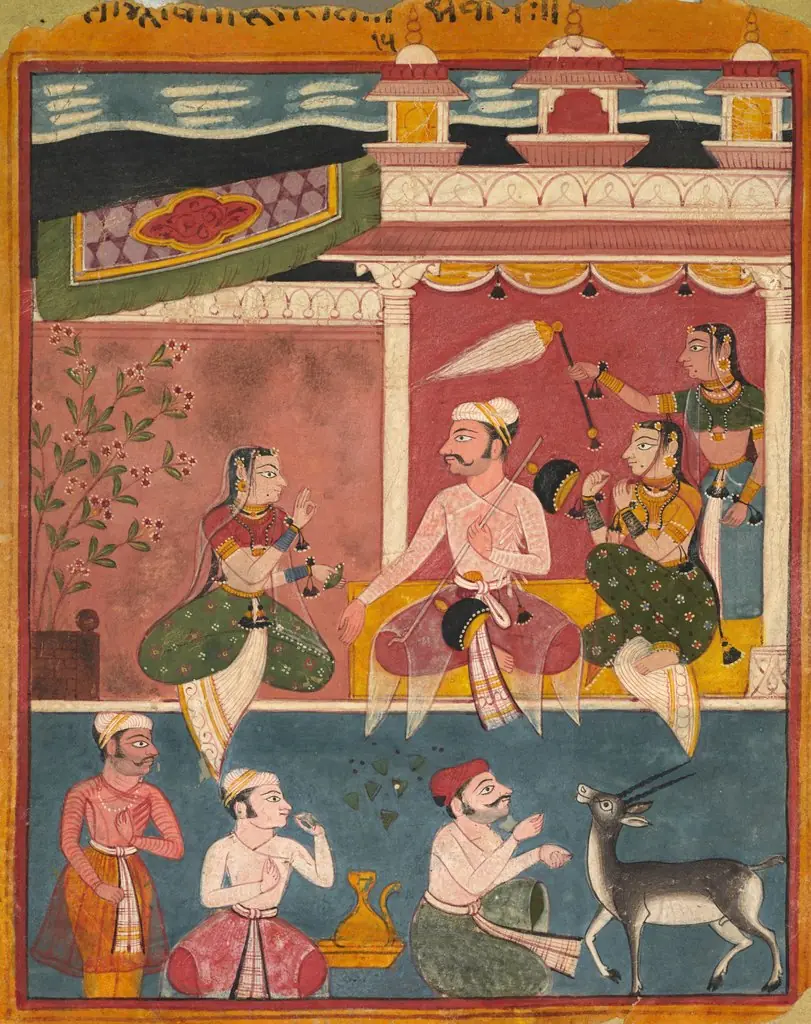
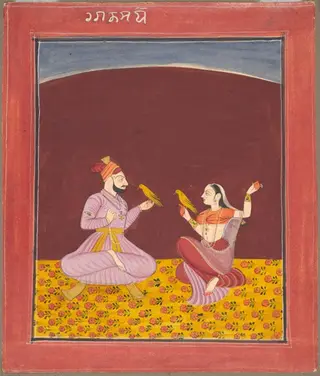
Kamod Raga of the "Dipak Raga" Family, page from a Ragamala Series
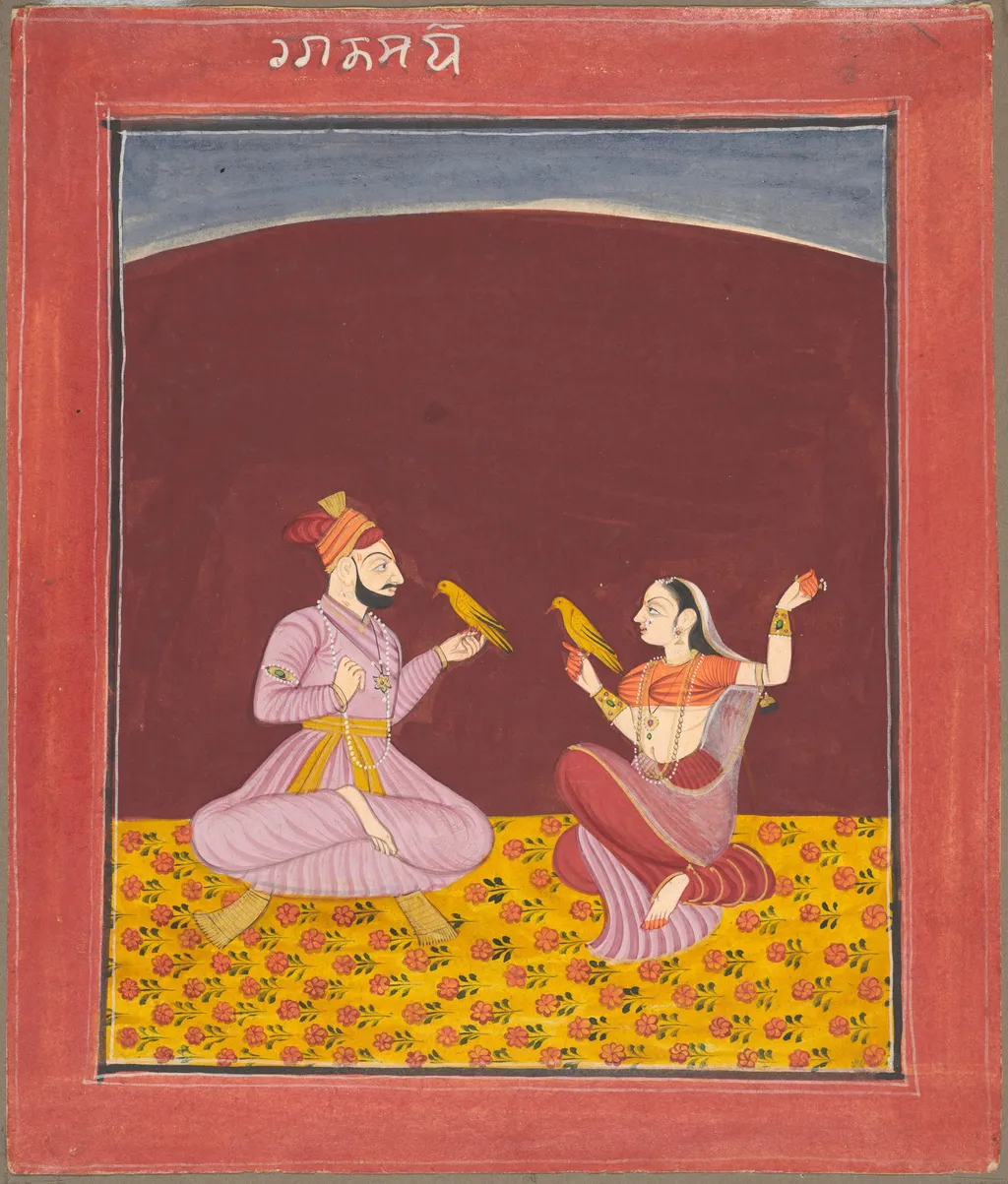
Kamod Raga of the "Dipak Raga" Family, page from a Ragamala Series is an unspecified painting. It dates from 1750 and is held in the collection of the Cleveland Museum of Art. The work is a page from a Ragamala series titled “Kamod Raga of the ‘Dipak Raga’ Family.
About this work
Subject & Meaning
The painting in the Cleveland Museum of Art collection, attributed to an unknown artist and dated to 1750, exemplifies this devotional and symbolic tradition.
The painting portrays a musical mode linked to the Dipak raga family, depicting a symbolic scene that conveys spiritual and seasonal themes through traditional iconography. The subject reflects devotional narratives common in Indian miniature traditions, using color and gesture to represent emotional and cosmic harmony. The work is part of a Ragamala series, a visual cycle connecting musical modes to specific times of day or seasons, often illustrating poetic and mythological associations.
The painting in the Cleveland Museum of Art collection, attributed to an unknown artist and dated to 1750, exemplifies this devotional and symbolic tradition.
History & Provenance
Kamod Raga of the "Dipak Raga" Family, a page from a Ragamala Series, was created in 1750. It belongs to the Dipak Raga family within the broader Ragamala tradition of Indian miniature painting. The work is attributed to an unknown artist and is part of the collection of the Cleveland Museum of Art.
Its provenance and creation history are documented through archival records identifying its inception in 1750 and inclusion in the museum's holdings.
Overview
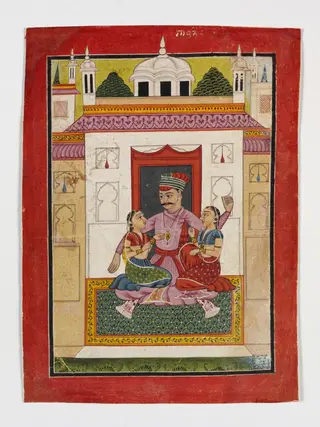
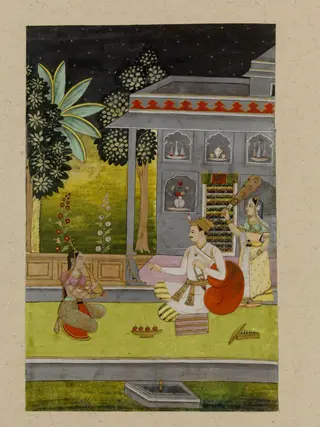
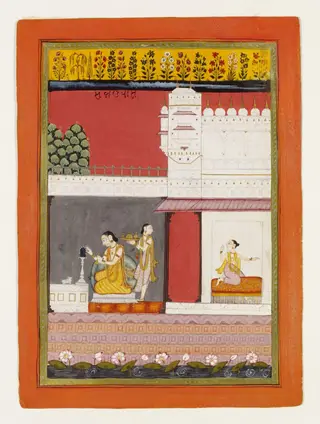
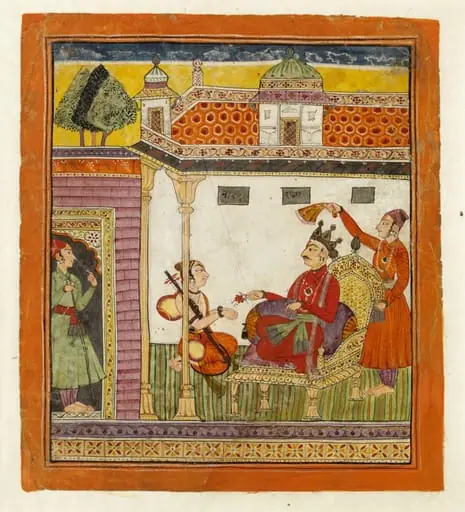
The work is a page from a Ragamala series titled “Kamod Raga of the ‘Dipak Raga’ Family.” It portrays a seated male and female figure on a yellow floral carpet before a red wall, their forms framed by a gray arch. Both hold small yellow birds, and the composition is rendered in vivid pink, red, and yellow hues, creating a calm, balanced scene.
Technique & Style
Executed in miniature painting technique, the piece employs fine brushwork to delineate intricate jewelry, patterned textiles, and delicate bird feathers. The palette relies on saturated pinks, reds, and yellows, while the use of flat areas of color and stylized outlines reflects the traditional Indian courtly aesthetic of the Ragamala tradition.
Context
The Ragamala genre visually interprets musical modes, linking sound to visual symbolism. In this cultural context, the depiction of Kamod within the “Dipak” family situates it among ragas associated with light and illumination, reinforcing the theme of serene, luminous expression.
Legacy
Pages such as this continue to inform scholars of the interplay between Indian visual art and music, illustrating how courtly aesthetics conveyed complex emotional states through color, composition, and iconography.
Artist & collection