Artwork
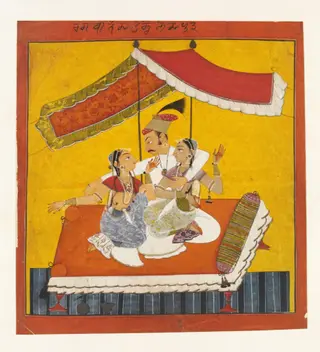
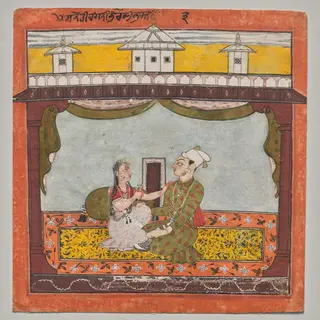
King and Queen in Zenana: Sandehi Ragini, Wife of Bhairava, from the “Second Basohli Ragamala"
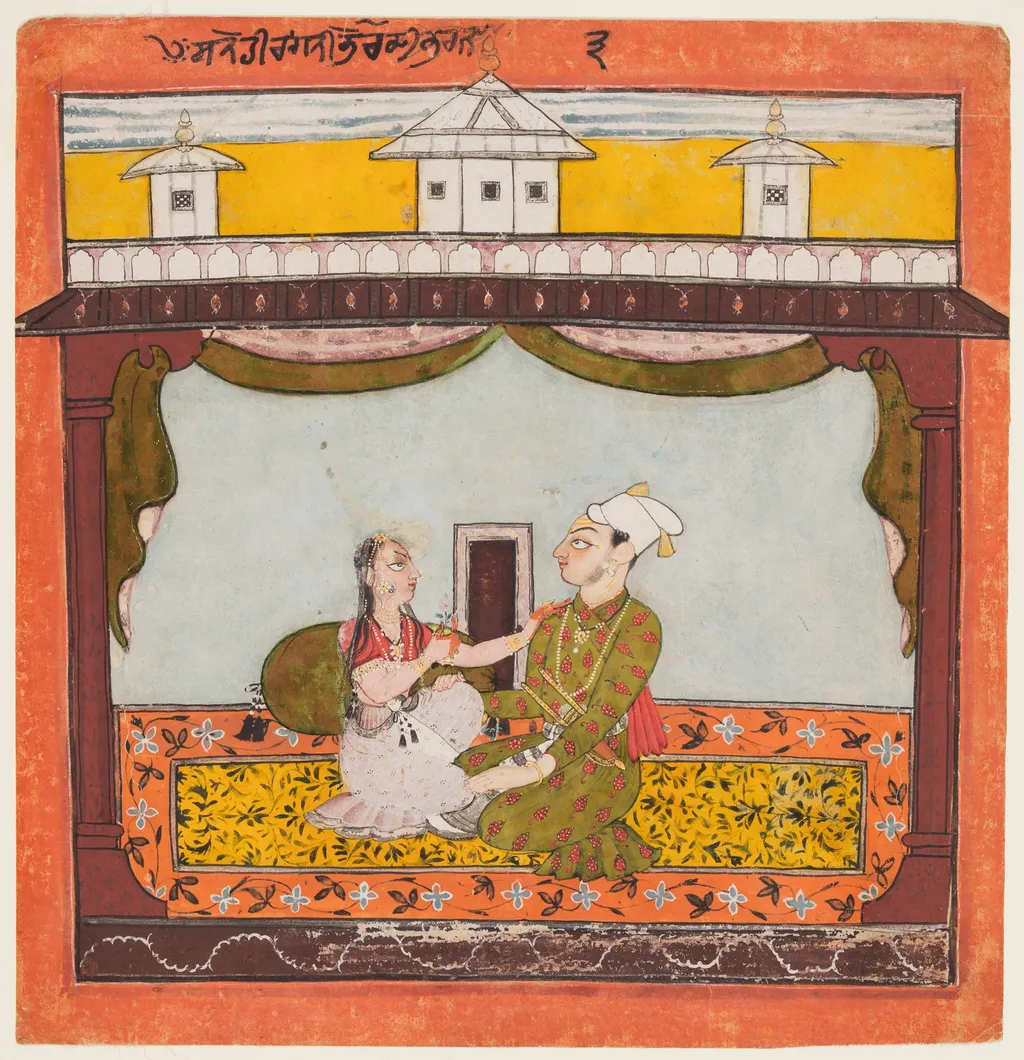
King and Queen in Zenana: Sandehi Ragini, Wife of Bhairava, from the “Second Basohli Ragamala" is an unspecified painting. It dates from 1696 and is held in the collection of the Cleveland Museum of Art.
About this work
Technique & Style
Executed circa 1692 on paper, the work exemplifies the delicate brushwork and vibrant color fields characteristic of Basohli school compositions.
The painting King and Queen in Zenana: Sandehi Ragini, Wife of Bhairava, from the “Second Basohli Ragamala” is executed in the Pahari style of painting, a technique prominent in the hilly regions of North India during the 17th century. Executed circa 1692 on paper, the work exemplifies the delicate brushwork and vibrant color fields characteristic of Basohli school compositions. The figures of the king and queen are rendered with stylized forms and intricate patterning, reflecting the devotional narrative tradition of Hindu mythological subjects.
The painting’s condition is stable, with minimal surface wear observed in the Cleveland Museum of Art’s conservation records.
History & Provenance
The painting titled King and Queen in Zenana: Sandehi Ragini, Wife of Bhairava, from the “Second Basohli Ragamala” was created in 1692. It is part of the collection of the Cleveland Museum of Art, where it has been catalogued under the accession number 2018.82. The work is attributed to an unknown artist and represents a miniature from the Basohli school of painting, reflecting the stylistic conventions of 17th‑century Pahari art.
The painting King and Queen in Zenana: Sandehi Ragini, Wife of Bhairava, from the “Second Basohli Ragamala” is part of the Cleveland Museum of Art collection, accessioned as 2018.82. It entered the museum in 2018 and is cataloged under the accession number 2018.82. The work was included in the museum’s exhibition "Picturing the Divine: Indian Paintings from the Collection," which ran from March 1 to June 30, 2022.
Overview
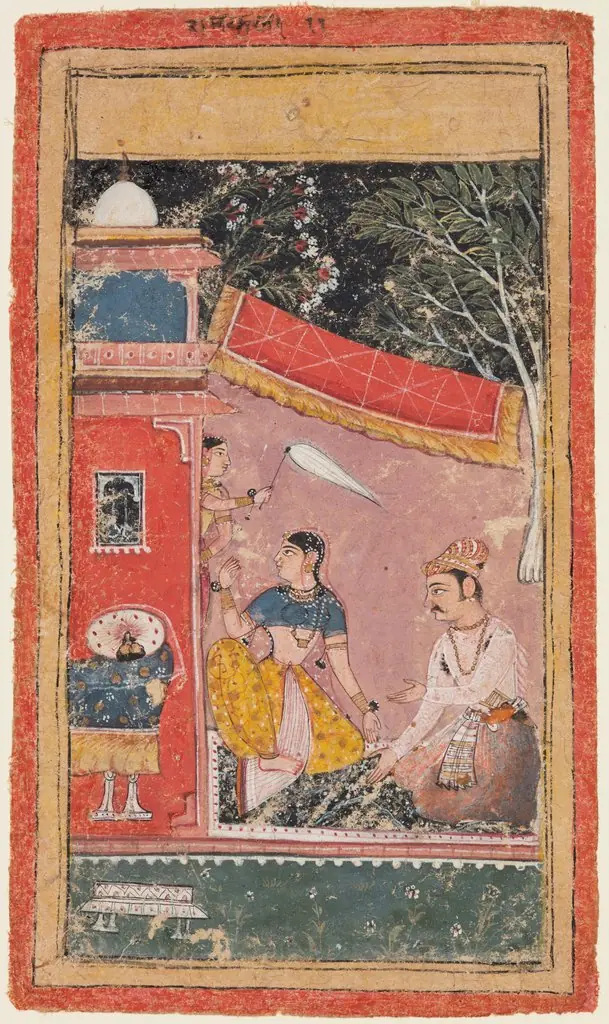
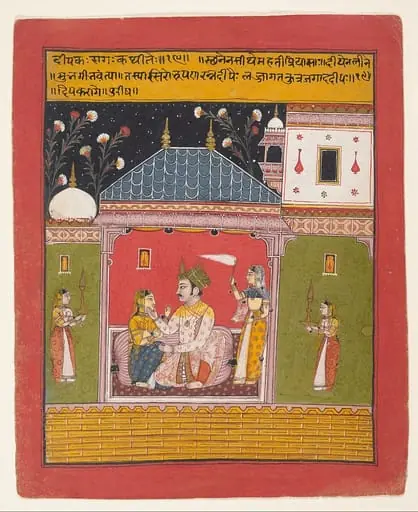
The work titled “King and Queen in Zenana: Sandehi Ragini, Wife of Bhairava” is a miniature painting belonging to the Second Basohli Ragamala series. Executed on paper, it portrays a seated male figure in a green robe with red embroidery and a turban, alongside a female figure in a white sari with red and gold detailing, set within an interior space marked by a bright yellow wall and architectural elements.
Subject & Meaning
The composition captures an intimate moment between a royal couple, identified as the king and his consort, Sandehi Ragini, who is associated with the deity Bhairava. The setting, a zenana or women’s quarters, suggests a private, domestic scene, while the presence of a small object in the woman’s hand may allude to ritual or courtly symbolism.
Context
Ragamala paintings originated in the 16th‑century northern Indian courts, linking visual art with classical Indian music. The Basohli variant, emerging in the early 18th century, is noted for its bold colors and expressive figures, situating this work within a broader tradition of courtly devotional and secular imagery.
Legacy
As an example of the Second Basohli Ragamala, the painting contributes to scholarly understanding of how musical concepts were visualized in pre‑colonial Indian art. Its preservation in a museum collection allows continued study of the stylistic and cultural exchanges that shaped Pahari miniature painting.
Artist & collection