Artwork
Kamsa deploys Akrura and Keshi to Braj, from a Bhagavata Purana
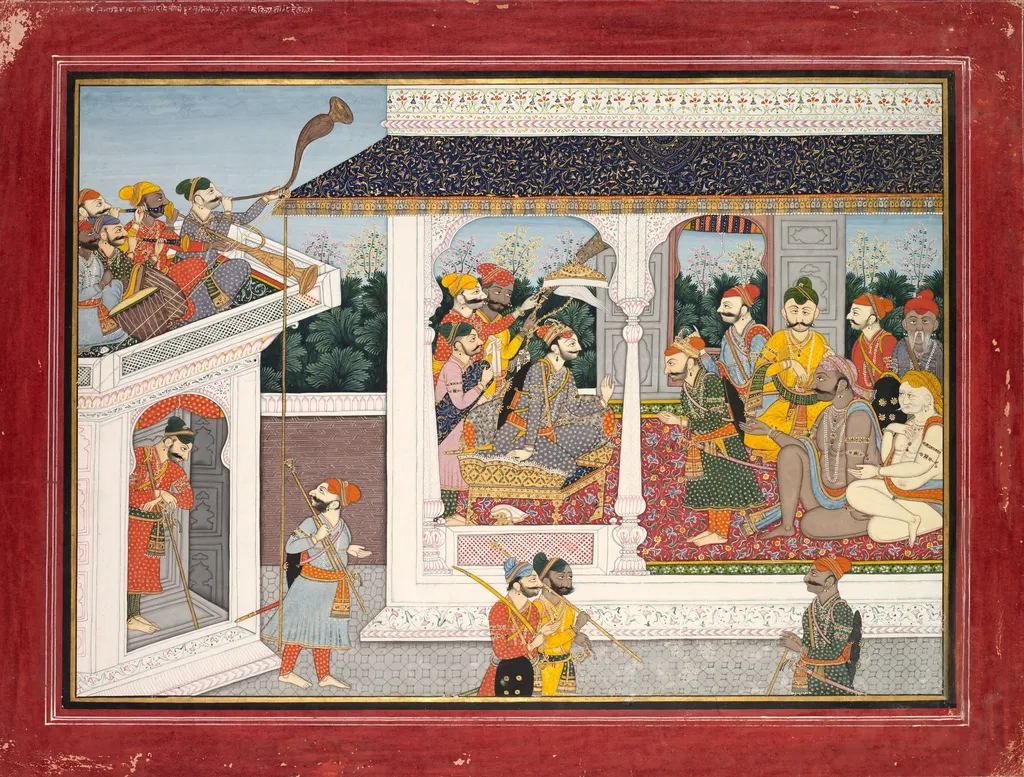
Kamsa deploys Akrura and Keshi to Braj, from a Bhagavata Purana is an unspecified painting. It dates from 1830 and is held in the collection of the Cleveland Museum of Art. The work depicts a lively interior scene in which several men, dressed in richly colored garments, gather around a large window.
About this work
History & Provenance
The painting titled Kamsa deploys Akrura and Keshi to Braj, from a Bhagavata Purana, is held in the collection of the Cleveland Museum of Art in Cleveland.
The painting entered the Cleveland Museum of Art in 1993 as accession number 1993.166. Its creation is dated to 1830 by the museum’s records and the internal corpus entry for the work. No record of a named artist survives, and the piece is classified as a painting within the museum’s collection.
The painting titled Kamsa deploys Akrura and Keshi to Braj, from a Bhagavata Purana, is held in the collection of the Cleveland Museum of Art in Cleveland. The work, created in 1830 by an unknown artist, carries the accession number 1993.166. No specific exhibition history is recorded in the available documentation.
The piece is classified as a painting within the museum's holdings, reflecting its origin in early 19th-century Indian art traditions.
Overview
The work depicts a lively interior scene in which several men, dressed in richly colored garments, gather around a large window. One figure holds a staff while another plays a stringed instrument, and the setting includes a view of a garden with trees and flowers beyond the glass. The composition conveys a festive atmosphere, suggesting a moment of conversation or celebration.
Subject & Meaning
The painting illustrates an episode from the Bhagavata Purana in which Kamsa dispatches his agents Akrura and Keshi to the region of Braj. The gathering of musicians and the open window framing a garden evoke the cultural milieu of the narrative, emphasizing hospitality and the spread of divine intrigue within a domestic space.
Technique & Style
Executed in the vibrant palette characteristic of Indian subcontinental art, the piece employs intricate detailing in both costume patterns and architectural elements. The use of bright, saturated hues and fine brushwork creates a sense of depth, while the careful rendering of the window and garden view demonstrates a balanced interplay between interior and exterior spaces.
Context
Rooted in the visual tradition of religious manuscript illustration, the painting reflects the devotional purpose of depicting scenes from Hindu scripture. Its narrative focus on Kamsa’s envoys aligns with the broader iconographic program that visualizes key moments from the life of Krishna, intended for both instructional and contemplative use.
Legacy
Works of this type continue to inform contemporary understandings of South Asian narrative painting, offering insight into historical aesthetics, storytelling conventions, and the integration of music and courtly life within mythological contexts.
Artist & collection

 Rama and Sita
 Illustrations to Life of Dhurva Maharaj: #1 Durbar of King Uttan Pad
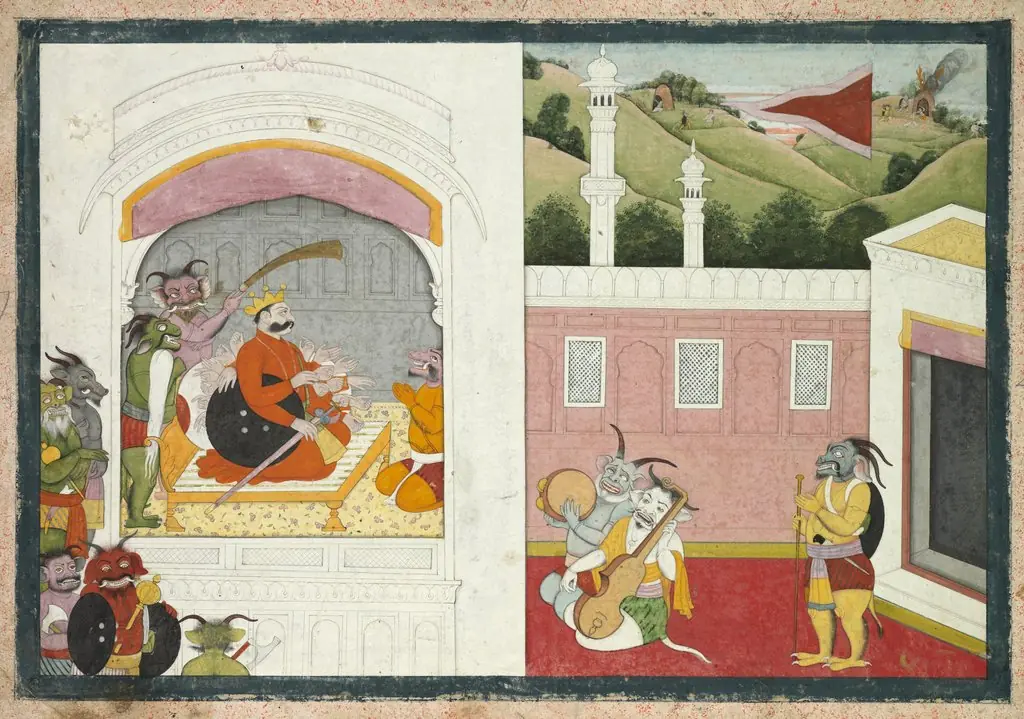 King Bana enjoying music in his court, from the Usha-Aniruddha section of a Krishna Lila
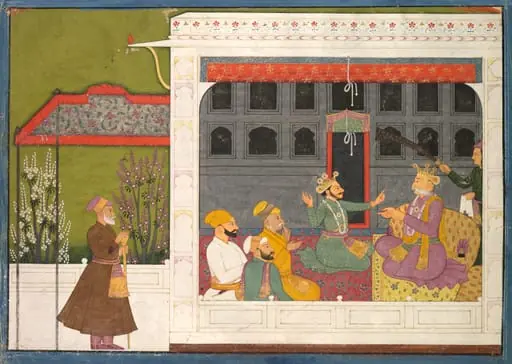 Shishupala arguing with Rukmini’s father, Bhishmaka, from a Rukmini Haran
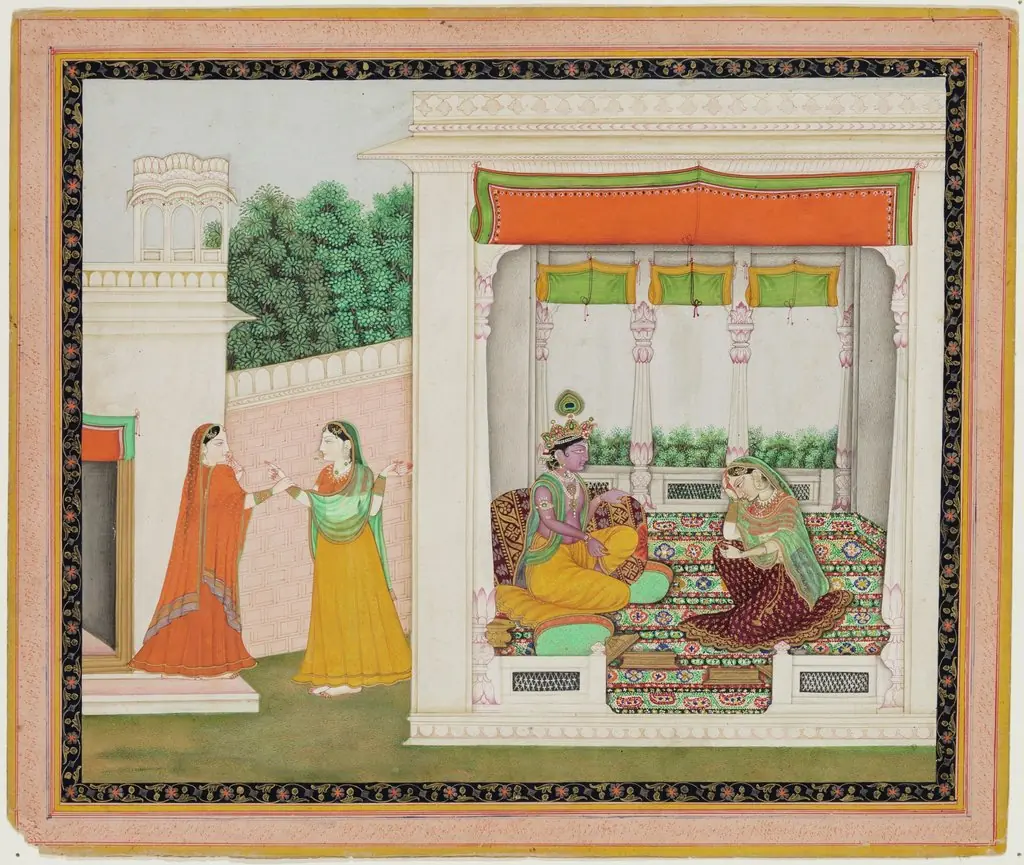 Story of Krishna and Radha
 King Bana in his court, from an Usha-Aniruddha
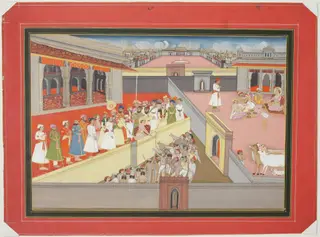 Court Scene
![The Marriage of Rukmini [Mangal]](https://artifactworldgallery.com/img/the-marriage-of-rukmini-mangal--60723f5d8b6d4a1d-w320.webp) The Marriage of Rukmini [Mangal]
The Marriage of Rukmini [Mangal]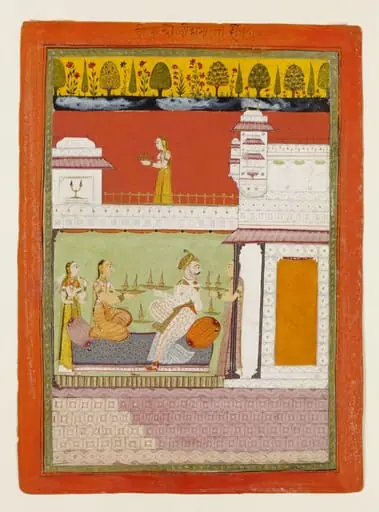 Dipak ragini
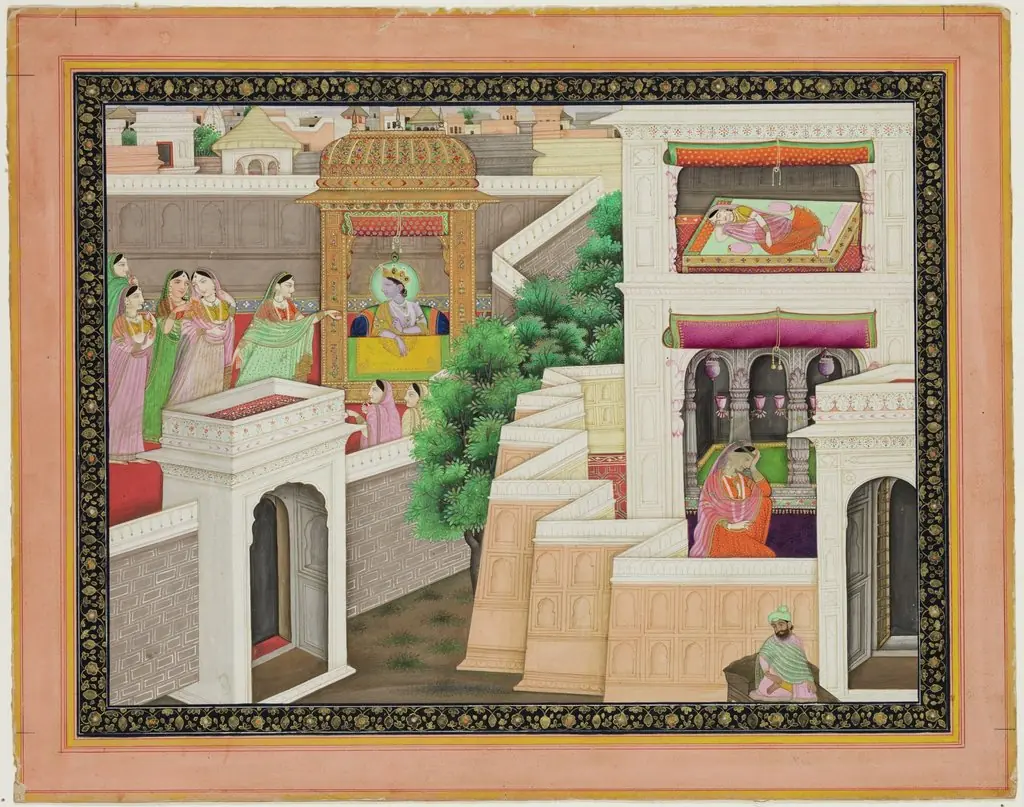 Story of Krishna and Radha
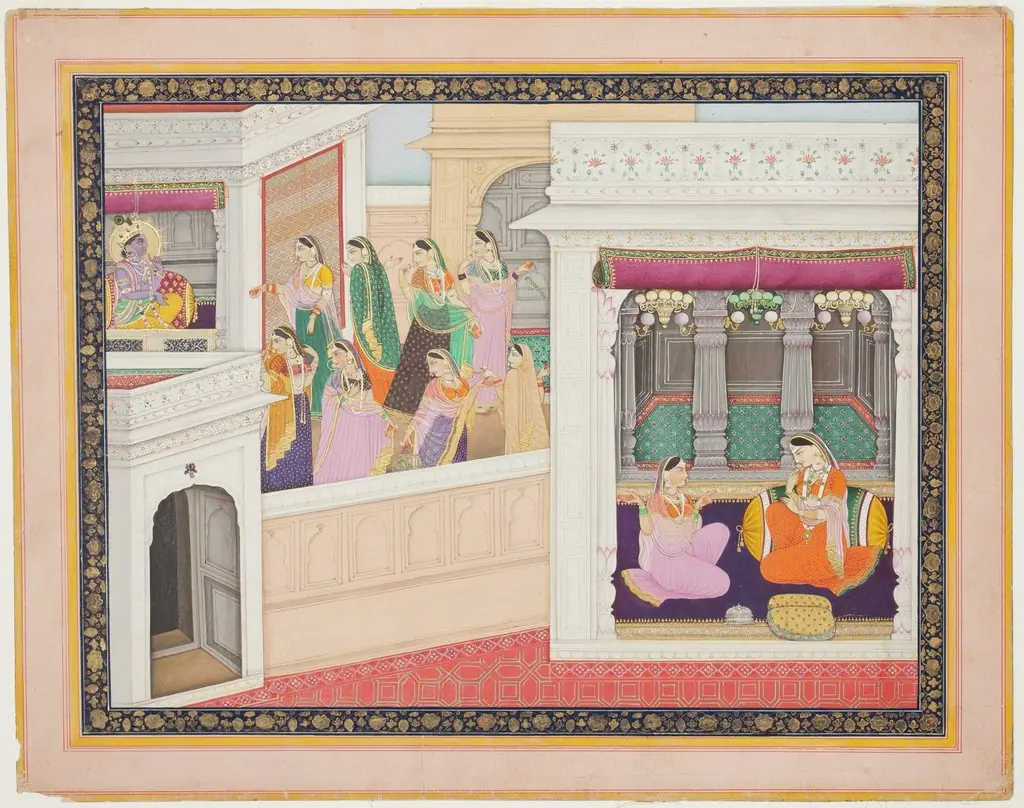 Krishna and Radha: Court Scene
- Kamsa deploys Akrura and Keshi to Braj, from a Bhagavata Purana