Artwork
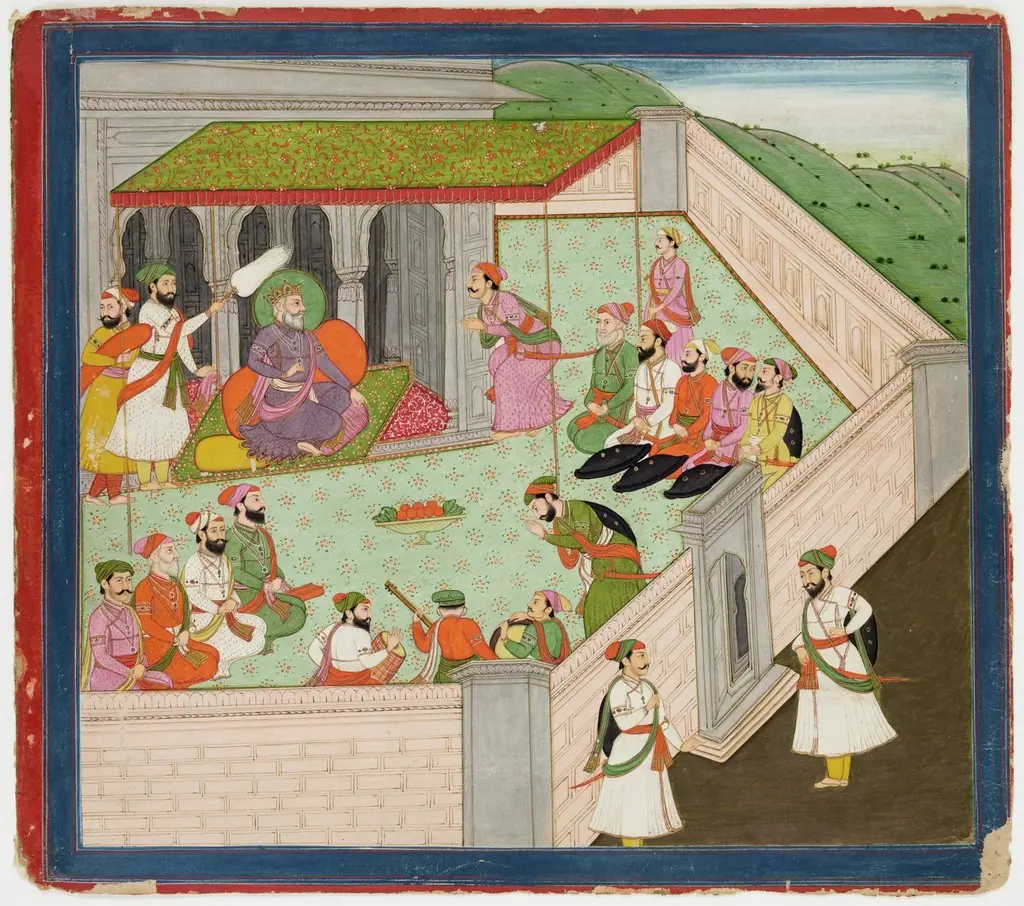
King Bana in his court, from an Usha-Aniruddha
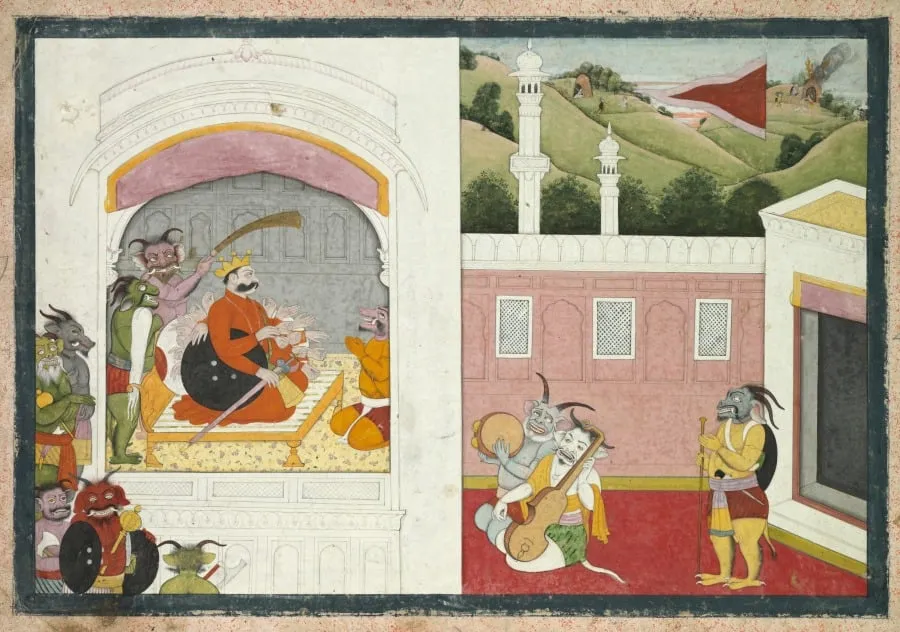
King Bana in his court, from an Usha-Aniruddha is an unspecified painting by the Pahari Painting artist Unknown. It dates from 1765 and is held in the collection of the Cleveland Museum of Art.
- Accession no.
- 1986.62
- Credit line
- Gift of Clara Taplin Rankin
About this work
Overview
This painting originates from the Pahari region of northern India, where artists blended Hindu mythology with vivid, imaginative storytelling. It portrays King Bana, a demon ruler, seated on his throne as a minister leans close to deliver urgent news. The scene is rich with symbolic detail, reflecting both royal authority and mythic tension, characteristic of Pahari miniature traditions.
Subject & Meaning
King Bana, a powerful asura monarch, is depicted receiving word of his daughter Usha’s clandestine meetings with Aniruddha, the grandson of Krishna. The moment captures impending conflict between divine order and demonic defiance. The minister’s whispered report suggests a turning point in the myth, where personal betrayal threatens political stability and cosmic balance.
Technique & Style
Bana’s twenty arms emerge organically from his torso, not as separate limbs but as fluid extensions, enhancing his otherworldly presence.
Bana’s twenty arms emerge organically from his torso, not as separate limbs but as fluid extensions, enhancing his otherworldly presence. The courtiers are hybrid figures, part human, part beast, rendered with intricate brushwork and vivid pigments. Background elements, such as demons destroying ascetics’ dwellings, are rendered with rhythmic detail, reinforcing the moral dichotomy between sacred and chaotic forces.
History & Provenance
The work belongs to the Pahari school of painting, active in the hill kingdoms of western Himalayas between the 17th and 19th centuries. Likely commissioned by a local ruler or temple patron, it illustrates episodes from the Bhagavata Purana. Its style reflects regional influences, combining Mughal precision with indigenous folk motifs, and survives as part of a broader corpus of illustrated Hindu epics.
Context
In Hindu cosmology, Bana represents the archetype of the powerful but morally flawed ruler who resists divine will. The narrative of Usha and Aniruddha was popular in Pahari courts as a vehicle for exploring themes of love, duty, and cosmic justice. Artists used such stories to engage patrons with emotionally charged scenes, grounded in religious texts but enriched with local aesthetic sensibilities.
Legacy
This painting exemplifies how Pahari artists transformed mythological narratives into intimate, psychologically nuanced compositions. Its imaginative figuration and layered symbolism influenced later regional styles and remain a reference for understanding the interplay of devotion, power, and visual storytelling in pre-colonial Indian art.
Artist & collection









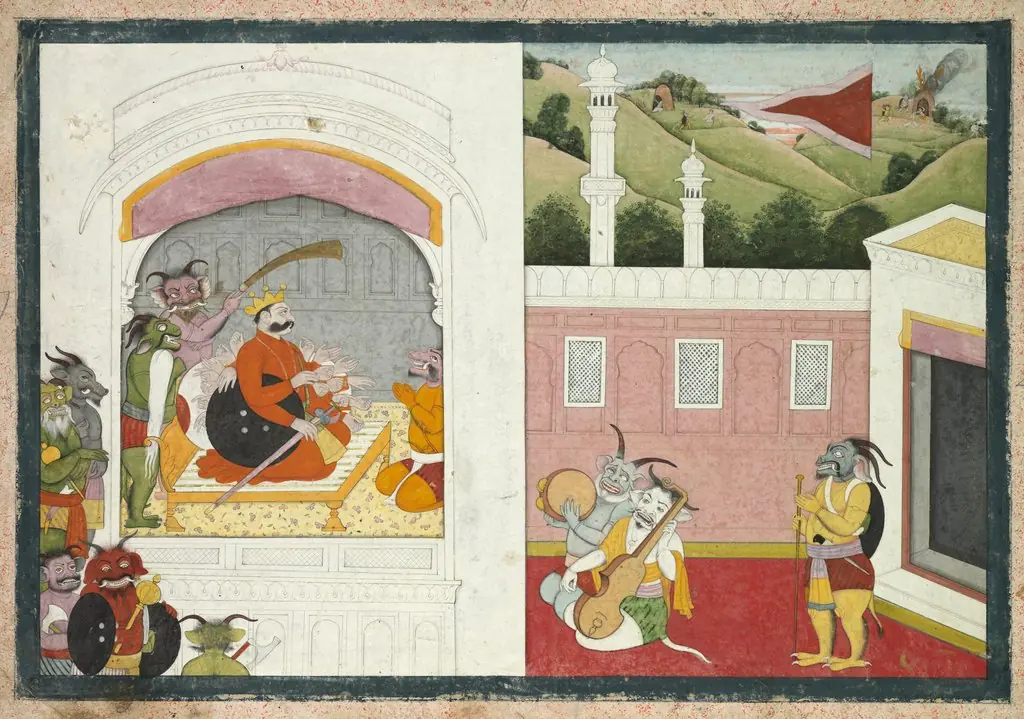
- King Bana enjoying music in his court, from the Usha-Aniruddha section of a Krishna Lila
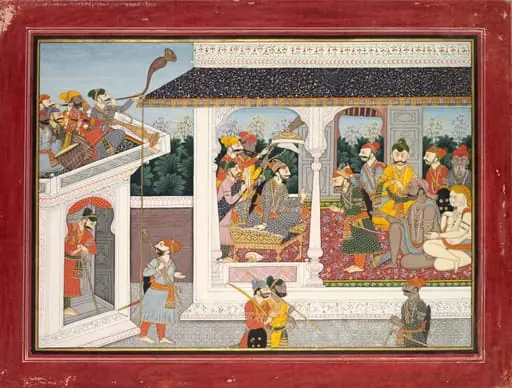 Kamsa deploys Akrura and Keshi to Braj, from a Bhagavata Purana
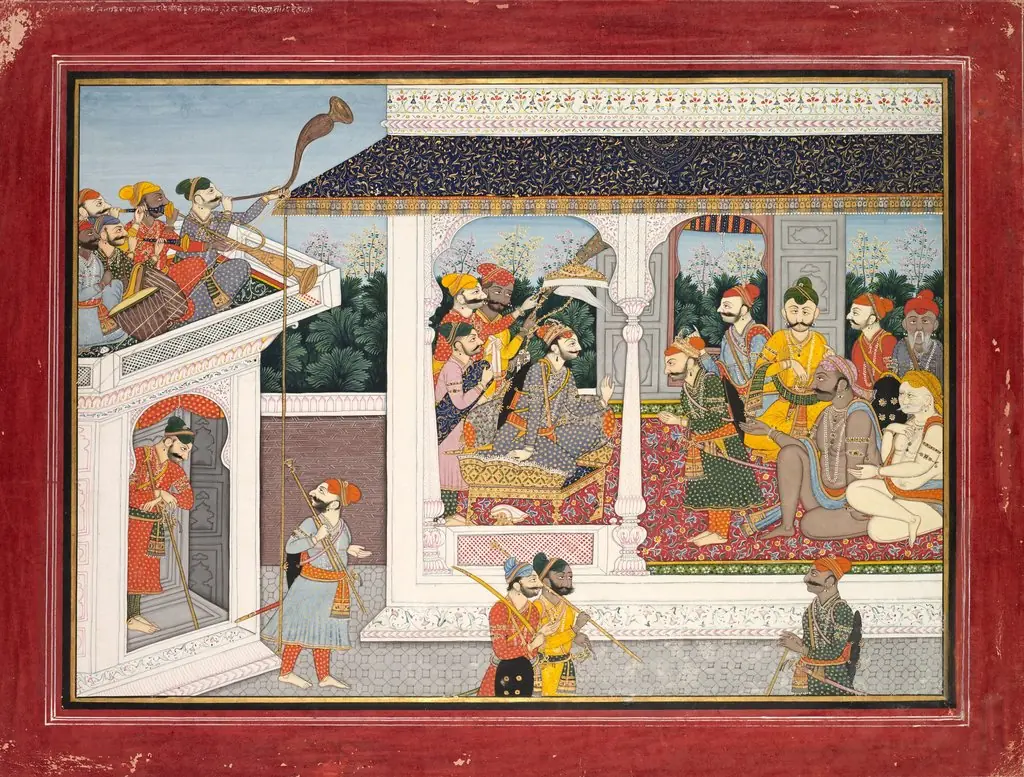 Kamsa deploys Akrura and Keshi to Braj, from a Bhagavata Purana
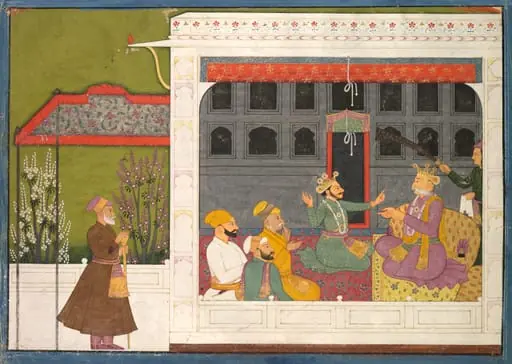 Shishupala arguing with Rukmini’s father, Bhishmaka, from a Rukmini Haran
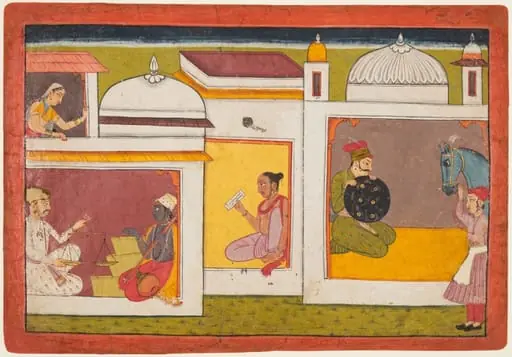 Madhava faces a man holding a scale, folio 1 from a Madhavanala-Kamakandala
![The Marriage of Rukmini [Mangal], by Unknown](https://artifactworldgallery.com/img/unknown--the-marriage-of-rukmini-mangal--7178947364f7bdb5-w320.webp) The Marriage of Rukmini [Mangal]
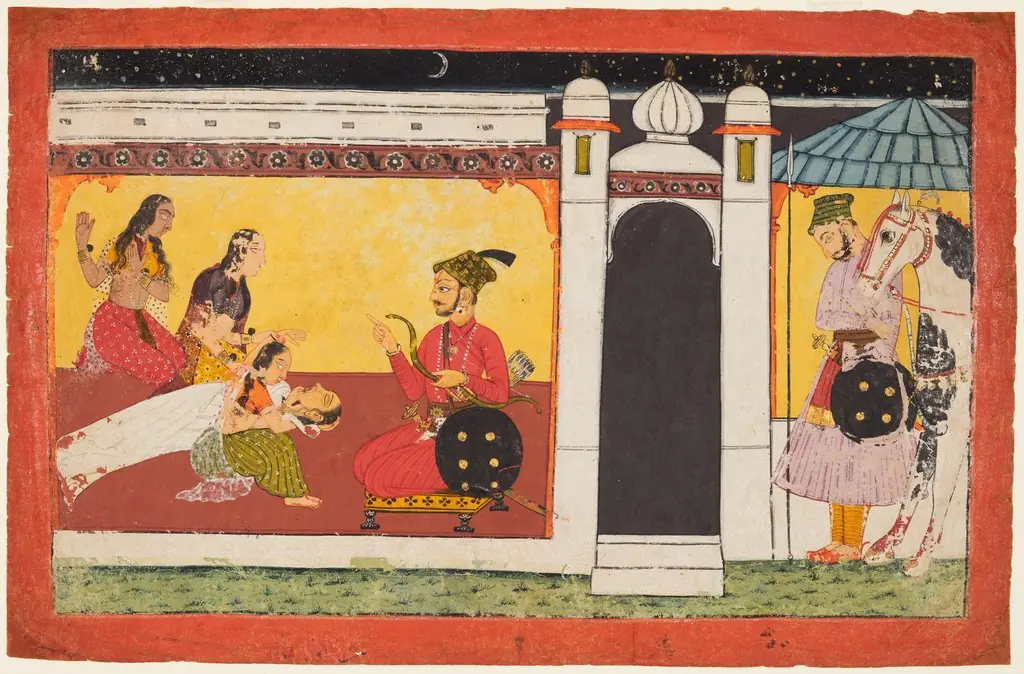
The Marriage of Rukmini [Mangal]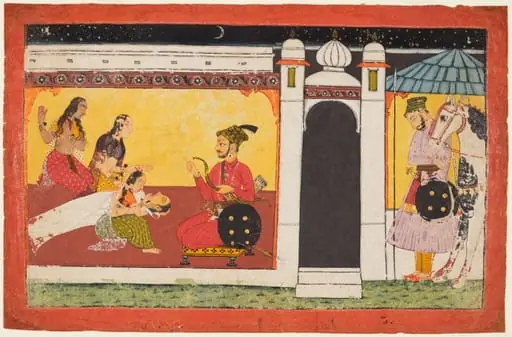 Kamakandala dies on hearing the news of Madhava’s death, folio 19 from a Madhavanala-Kamakandala of Alam
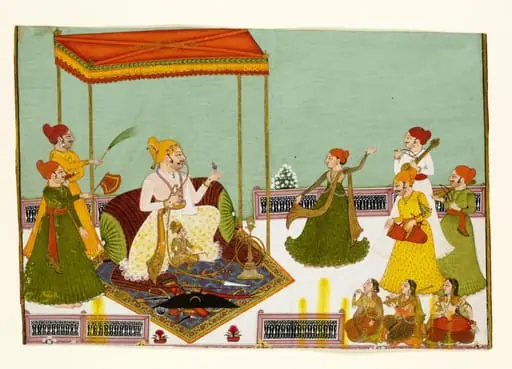 Raja Ajit Singh of Bundi
 Illustrations to Life of Dhurva Maharaj: #1 Durbar of King Uttan Pad
 Kandala Dies on Hearing the News of Madhava’s Death, from a Madhavanala Kamakandala