Artwork
Untitled
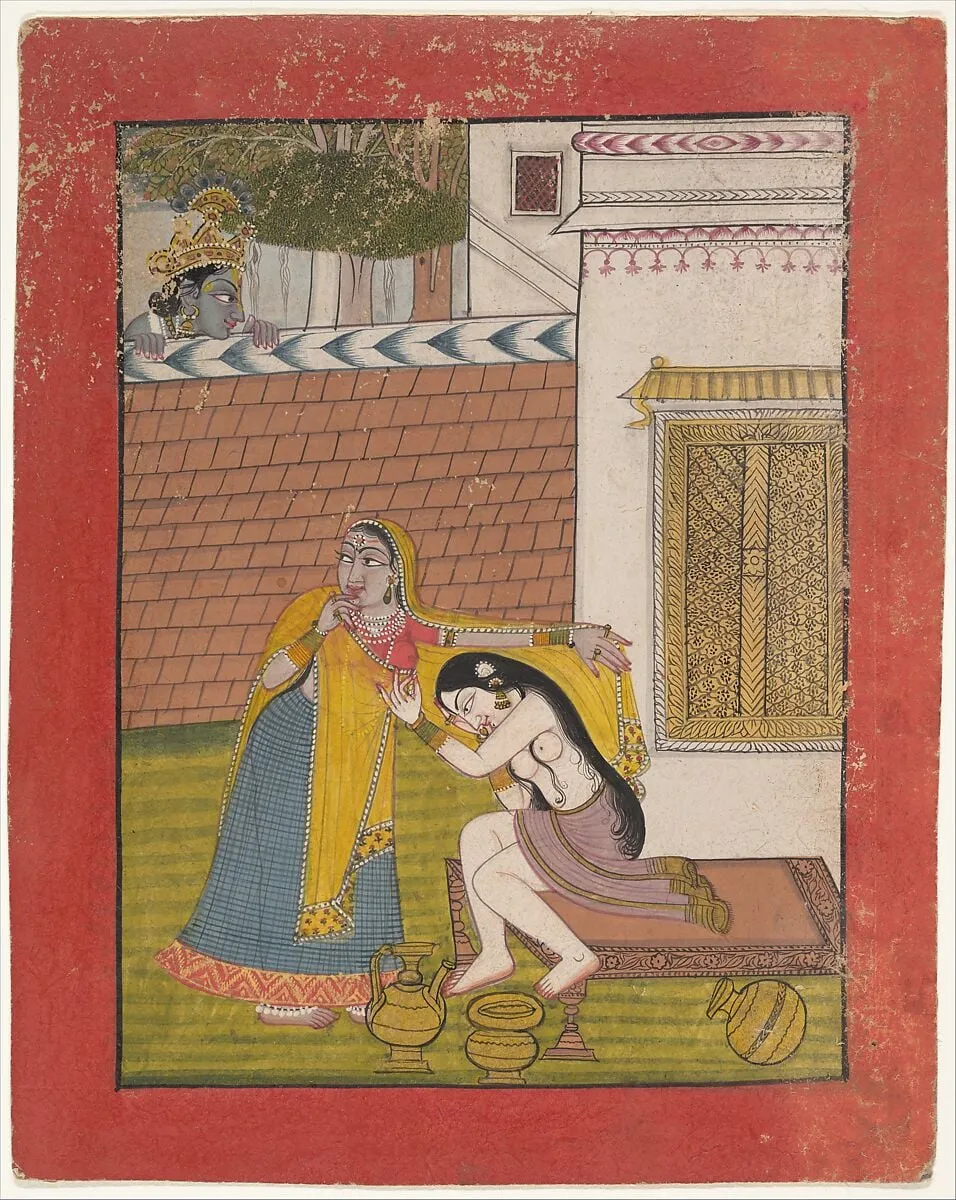
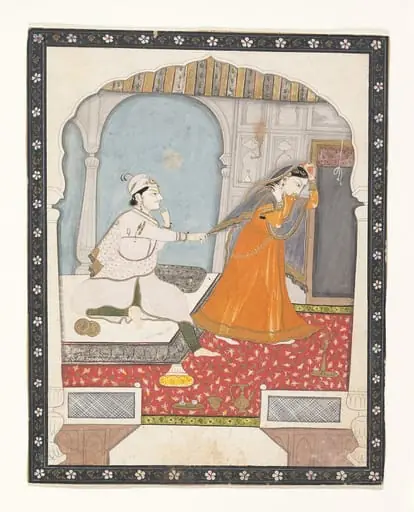
Untitled is a watercolor painting. It dates from 1785 and is held in the collection of the Metropolitan Museum of Art.
About this work
Subject & Meaning
The iconography centers on these two central figures of Hindu tradition, whose relationship symbolizes divine love and spiritual union.
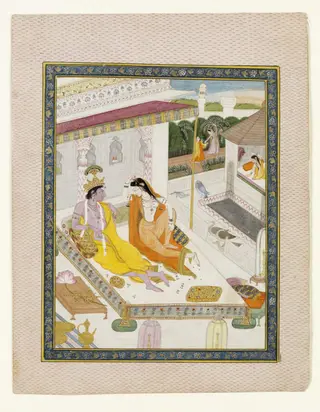
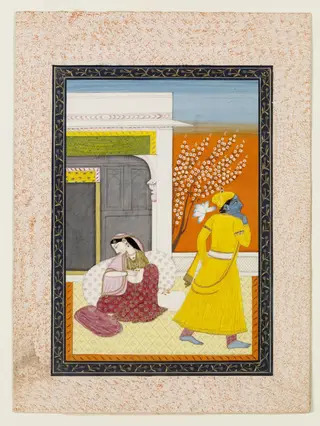
Created in 1785 by an anonymous Indian artist, this ink and opaque watercolor work depicts the divine figures of Krishna and Rādhā. The composition features a nude woman, identified as Rādhā, alongside Krishna, situating the piece firmly within the religious genre. The iconography centers on these two central figures of Hindu tradition, whose relationship symbolizes divine love and spiritual union.
By portraying Rādhā in a state of nudity, the artwork likely explores themes of vulnerability, purity, or the shedding of worldly attachments inherent in mystical devotion. The visual narrative focuses on the interaction between the two figures, representing a moment of intimacy or theological significance within the broader context of Krishna bhakti traditions.
Technique & Style
The work is executed in ink and opaque watercolor on paper, a combination typical of late eighteenth-century Pahari painting, where fine line and saturated color produce both detail and luminosity. Handling is precise, with controlled washes and delicate brushwork defining costume, jewelry, and physiognomy. The composition centers on two figures, Krishna and Radha, rendered with attenuated proportions and soft modeling of form, aligned with the lyrical line and intimate mood of the Guler style.
The palette is restrained, relying on earthy ochres and deep indigo, with white highlights, to convey the intimate nocturnal scene.
History & Provenance
Created in 1785, this untitled work is attributed to an anonymous painter active in India. The piece, executed in ink and opaque watercolor on paper, depicts the religious figures Krishna and Rādhā. While the specific commission details and the identity of the original patron remain unrecorded in available documentation, the work's creation history places it firmly within the late 18th-century Indian artistic tradition.
The painting subsequently entered the collection of the Metropolitan Museum of Art, where it is currently held. Its provenance prior to this institutional acquisition is not detailed in the provided records, though its dimensions and medium are documented as part of its museum cataloging.
Overview
This untitled painting, rendered in ink and opaque watercolor on paper, originates from the Punjab Hills in northern India. It depicts Radha, a central figure in Hindu devotional poetry, shown in a moment of anticipation. Created for a regional royal court, the work exemplifies the artistic traditions of the area, characterized by its delicate palette and narrative focus. The artist remains anonymous, a common practice for such courtly commissions.
Context
This painting belongs to a rich tradition of courtly art from the Punjab Hills, a region celebrated for its distinctive miniature painting style. These works frequently illustrated themes from Hindu mythology and poetry, particularly narratives centered on Krishna and Radha. The art produced here is often grouped under the broader category of "India (Punjab Hills)" in art historical discourse, signifying a shared aesthetic and thematic lineage.
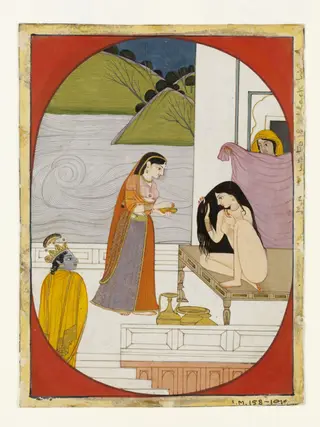
Artist & collection

- Krishna and Radha
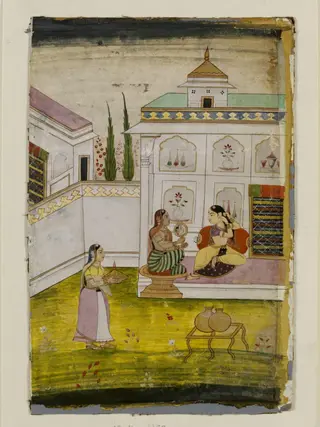 Vilaval Ragini
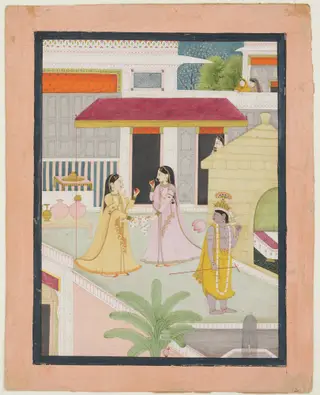 Krishna and Radha with Attendant
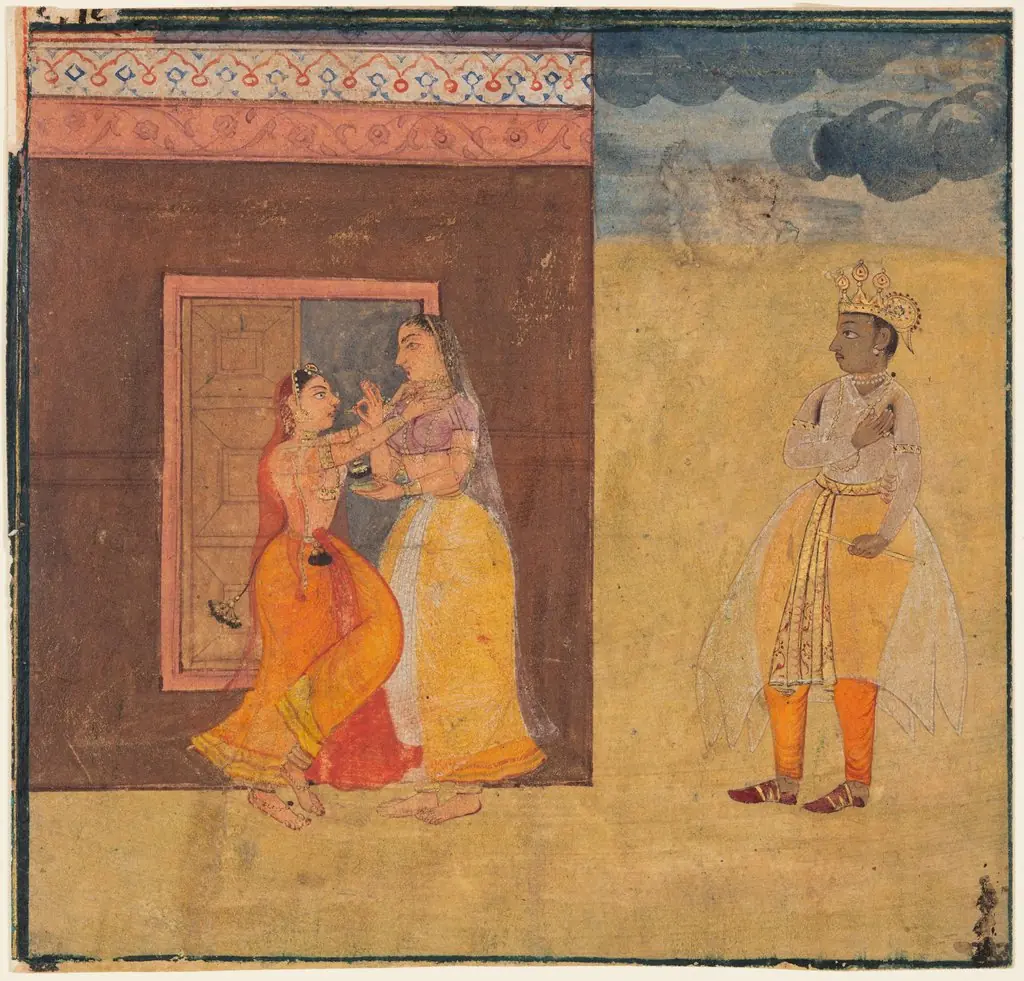 Krishna Abhisarika Nayika, from a Rasikapriya manuscript
 Untitled
 Krishna Abhisarika Nayika, from a Rasikapriya manuscript
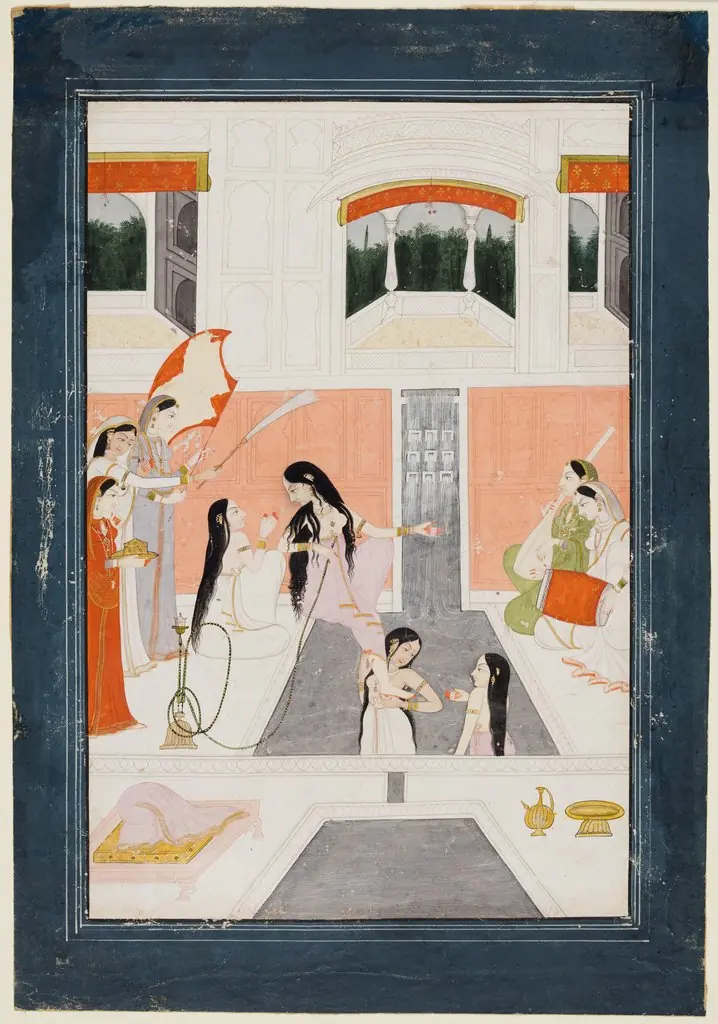 Palace Women Enjoy Music by the Side of a Water Cascade
 A Disconsolate Lady on a Terrace with Attendants
 Untitled
 Patamanjari Ragini
 Radha and Krishna
 Abhisandita Nayika