Artwork
Kali Dancing on Shiva (recto), from a Kalighat album
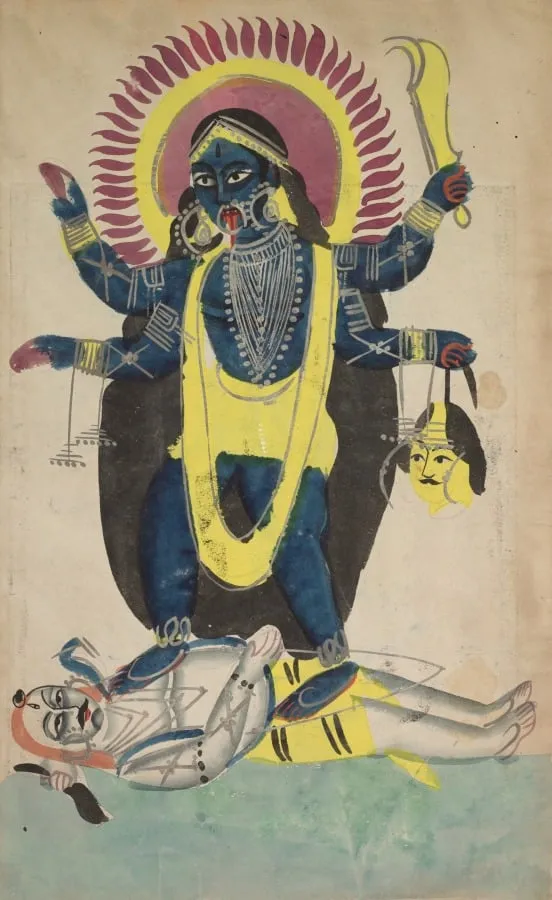
Kali Dancing on Shiva (recto), from a Kalighat album is an unspecified painting by the Impressionist artist Unknown. It dates from 1890 and is held in the collection of the Cleveland Museum of Art.
- Accession no.
- 1980.216.a
- Credit line
- Gift of Mr. and Mrs. William E. Ward in memory of Dr. William G. Archer
About this work
Overview
The work titled Kali Dancing on Shiva (recto) is a painted sheet from a Kalighat album, a form of popular folk art that emerged in the 19th‑century environs of the Kalighat temple in Calcutta. Executed on paper with water‑based pigments, the image presents a dramatic encounter between two mythological figures rendered in vivid, flat color and strong contour lines.
Subject & Meaning
The subdued figure below appears frightened, underscoring the power dynamic inherent in the mythic episode.
At the center stands a dark‑blue deity with four arms, identified as the goddess Kali. She balances on a smaller, pallid figure, presumed to be Shiva, who lies prostrate on the ground. Kali brandishes a sword in one hand and a severed head in another, while a red disc behind her head functions as a halo, emphasizing her fierce, protective aspect. The subdued figure below appears frightened, underscoring the power dynamic inherent in the mythic episode.
Technique & Style
The composition relies on bold outlines and saturated pigments, bright yellow for the skirt, blue for jewelry, and stark white for the lower figure’s face. The flat application of color, without shading or perspective, is characteristic of Kalighat’s commercial sheet‑painting tradition, which favored rapid production and visual immediacy for a broad audience.
History & Provenance
Kalighat sheets were produced by itinerant artists serving pilgrims and visitors to the Kalighat shrine. This particular piece, as a recto from an album, would have been bound with other images for personal or devotional use. The album format suggests it circulated among lay collectors rather than elite patrons, reflecting the democratization of religious imagery in colonial Calcutta.
Context
The image draws on Hindu myth where Kali, the fierce aspect of the Mother Goddess, dances upon Shiva after slaying demons. In the Kalighat tradition, such narratives were simplified and stylized, allowing the artist to convey complex theological ideas through accessible visual motifs that resonated with everyday worshippers.
Legacy
Kalighat paintings like this one influenced later Indian popular art, informing the visual language of modernist painters who sought indigenous sources. The work remains a valuable document of 19th‑century devotional culture, illustrating how folk aesthetics mediated sacred stories for a mass audience.
Artist & collection









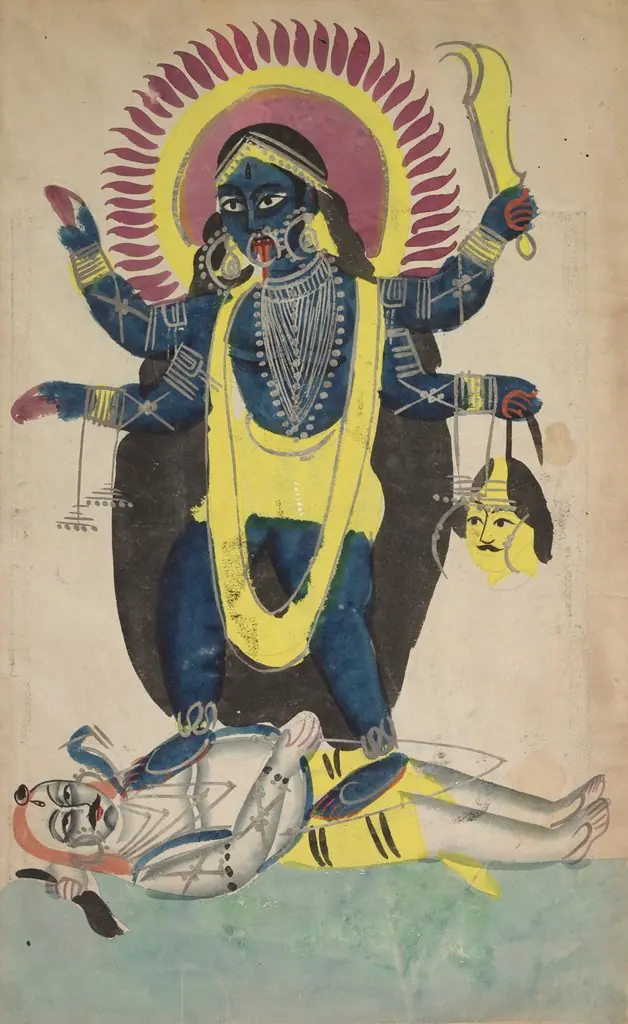
- Kali Dancing on Shiva (recto), from a Kalighat album
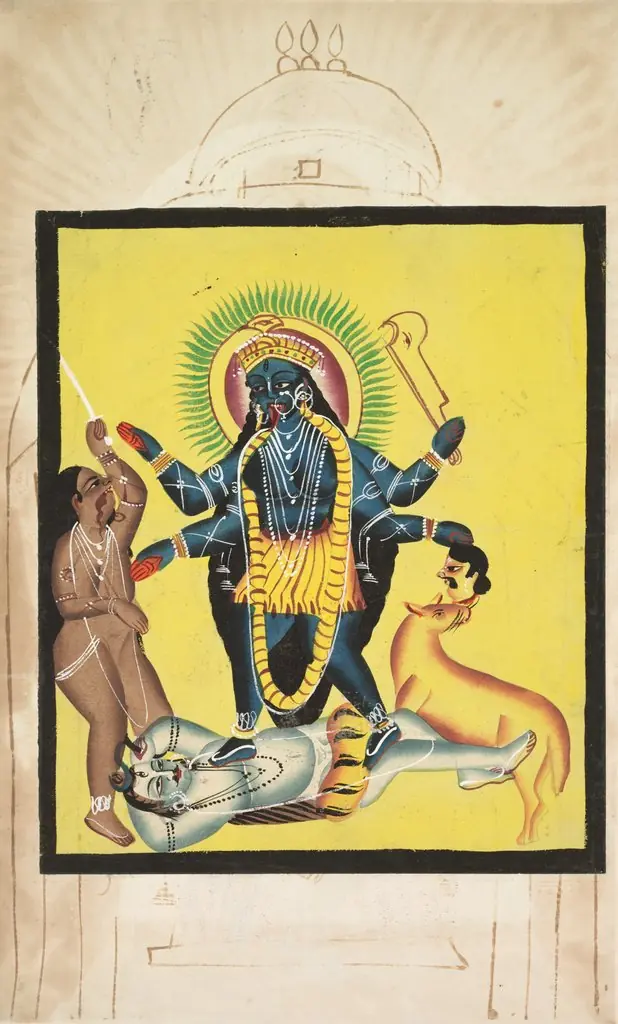 Kali Standing on Shiva (verso), from a Kalighat album
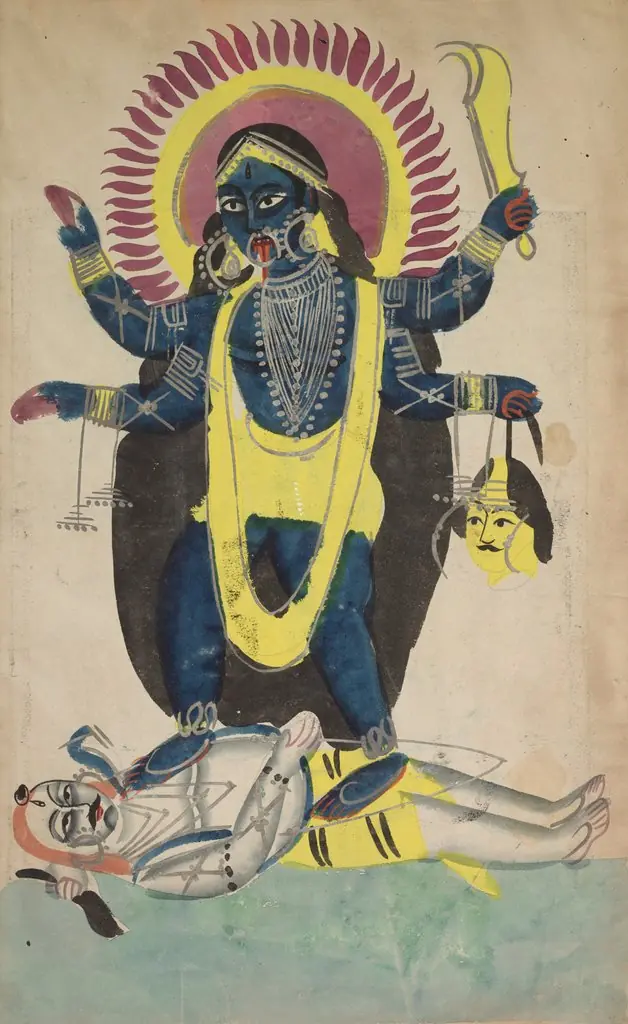 Leaf from a Kalighat album: Two Aspects of Kali
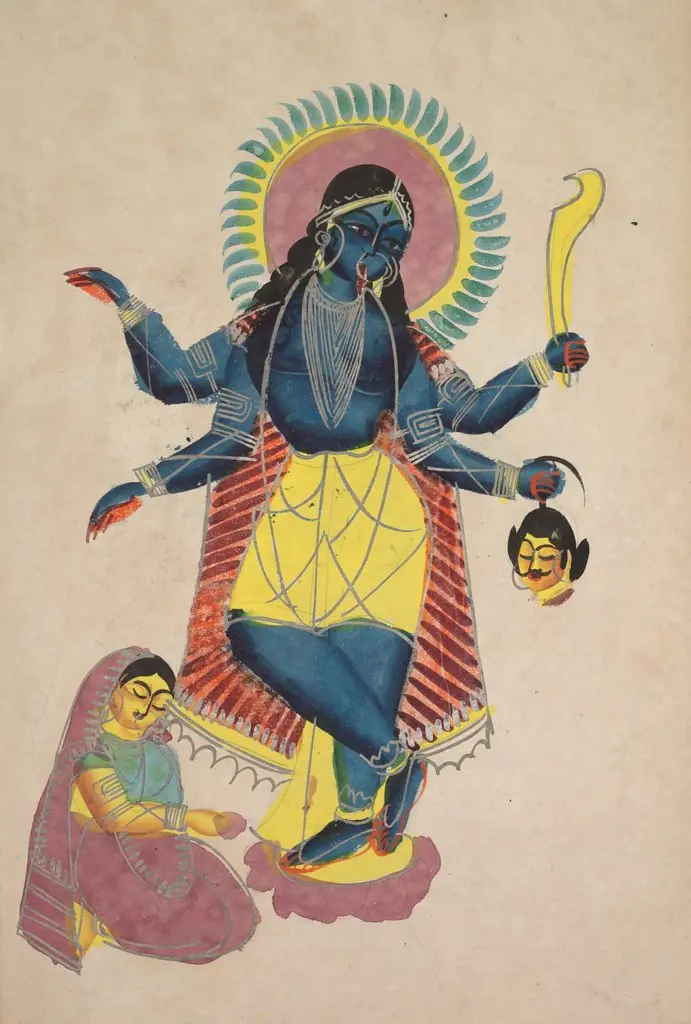 Krishna as Kali worshipped by Radha (recto), from a Kalighat album
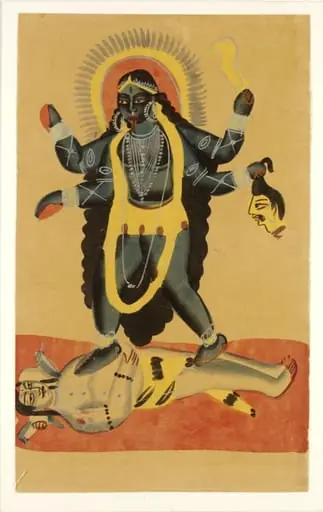 Kali and Shiva
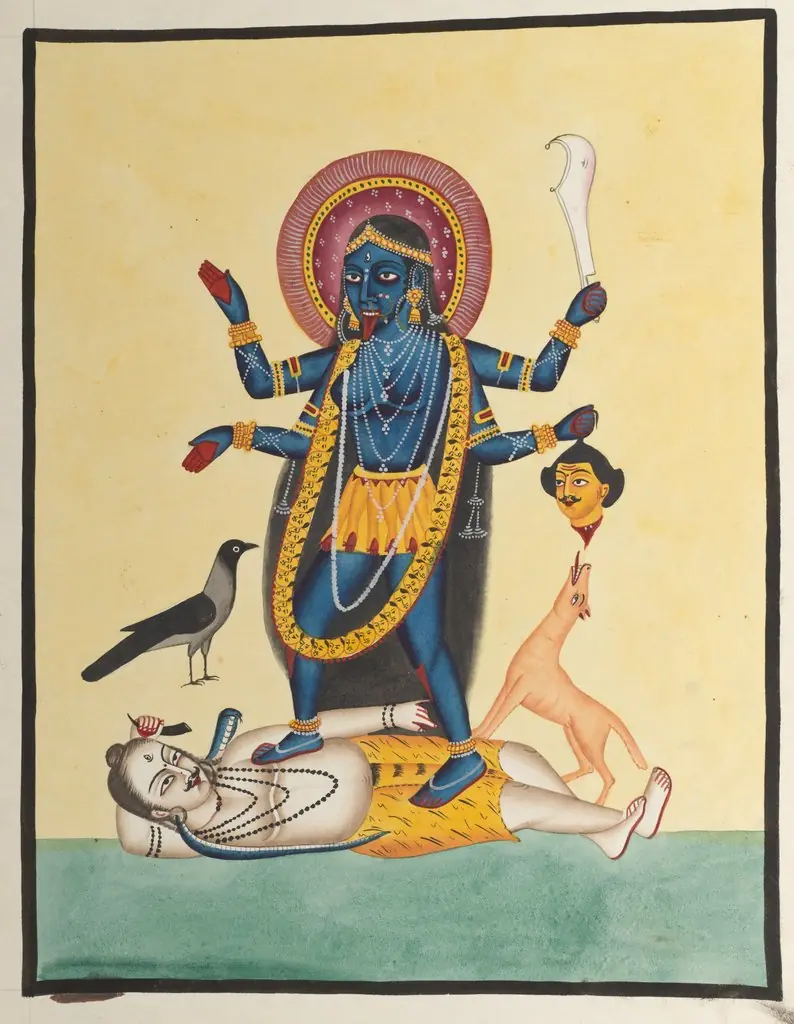 Kali, from a Kalighat album
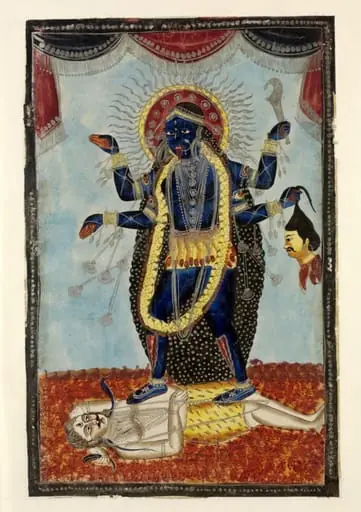 Kali and Shiva
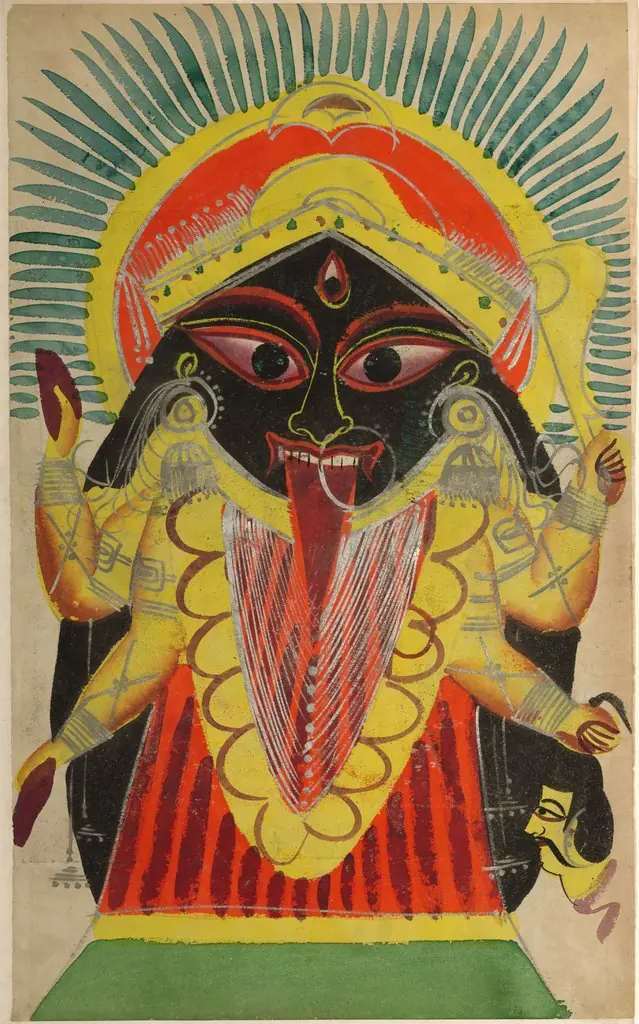 The Goddess Kali (recto), from a Kalighat album
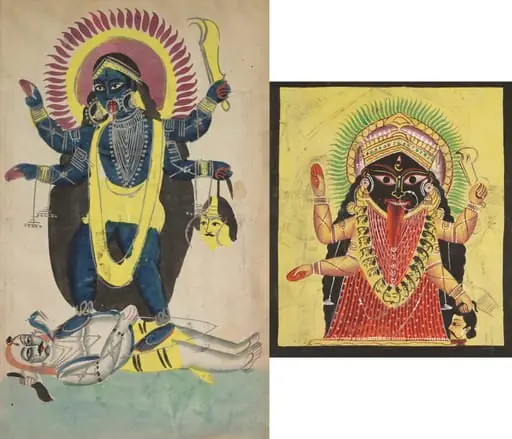 Leaf from a Kalighat album: Two Aspects of Kali
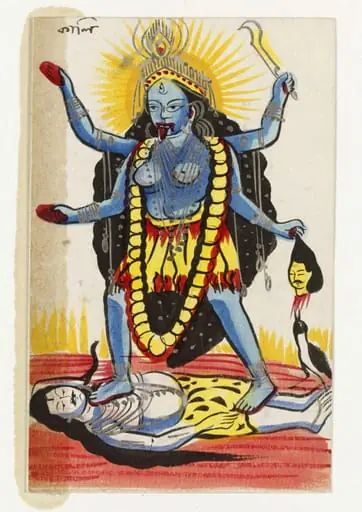 Kali and Shiva
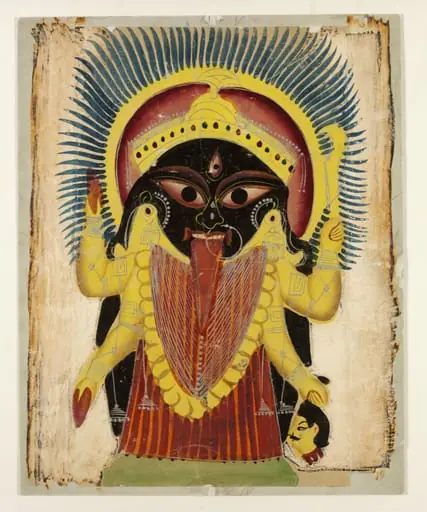 Kali
Kali