Artwork
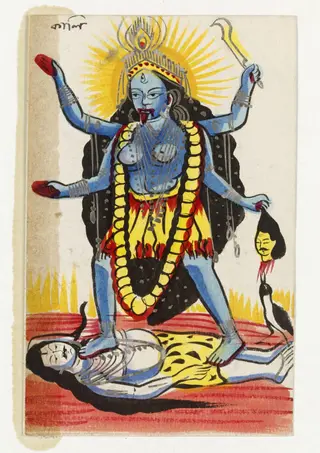
Kali Dancing on Shiva (recto), from a Kalighat album
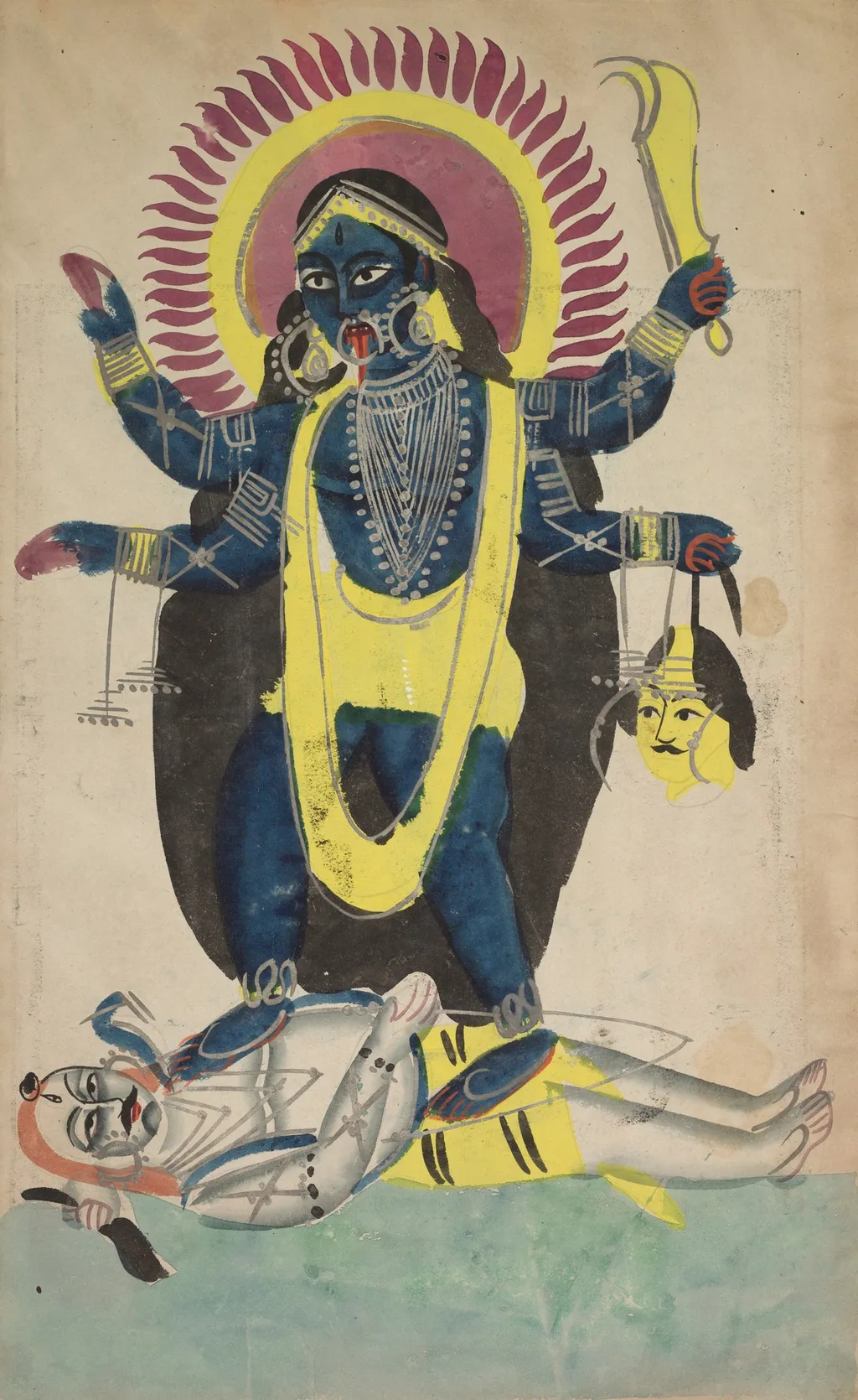
Kali Dancing on Shiva (recto), from a Kalighat album is an unspecified painting. It dates from 1896 and is held in the collection of the Cleveland Museum of Art.
About this work
Technique & Style
The piece shows signs of gentle handling consistent with archival preservation, with no major condition issues noted in the collection records.
Kali Dancing on Shiva (recto) is a tempera painting on paper, part of a Kalighat album produced in the late nineteenth century. The work measures 27.9 cm in height and 35.6 cm in width, reflecting the typical dimensions of Kalighat lithographs from that period. Its composition depicts the goddess Kali in dynamic motion atop the dormant form of Shiva, employing bold outlines and flat areas of color characteristic of the folk style.
The piece shows signs of gentle handling consistent with archival preservation, with no major condition issues noted in the collection records.
History & Provenance
Kali Dancing on Shiva (recto) is a painting from a Kalighat album, created in 1890. It originates from the Cleveland Museum of Art collection, which holds the work (accession 1980.216.a). The piece is attributed to an unknown artist and was produced during the late 19th century, reflecting the stylistic output of Kalighat painters in colonial Calcutta.
The painting Kali Dancing on Shiva (recto), from a Kalighat album, is held in the collection of the Cleveland Museum of Art, where it is catalogued under accession number 1980.216.a. The work dates to 1890 and has not been recorded in any major exhibition histories according to available documentation.
Overview
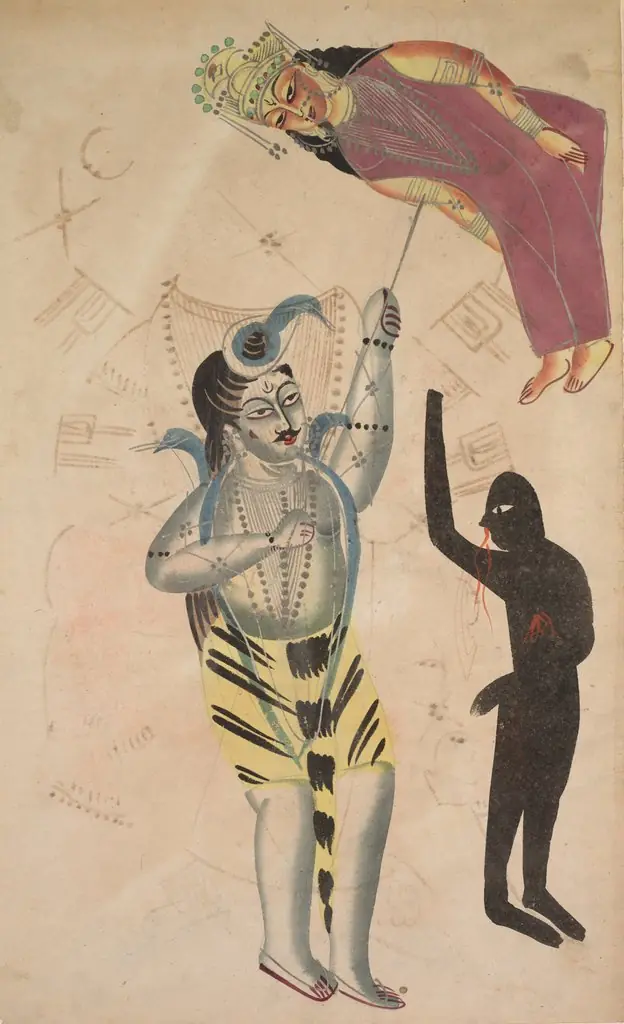
The work, titled Kali Dancing on Shiva (recto), is a Kalighat school painting that depicts the Hindu goddess Kali in a dynamic pose atop a reclining figure identified as Shiva. Rendered with vivid primary hues and strong contour lines, the composition emphasizes contrast between the dominant, blue‑skinned deity and the pale, vulnerable figure below.
Subject & Meaning
Kali, shown with four arms, a red‑and‑yellow headdress, and a necklace, holds a sword, a small face, and a drum‑stick‑like implement, symbols of destruction, protection, and rhythmic cosmic order. Shiva lies supine, his body entwined with a snake, representing the subdued masculine principle beneath the fierce feminine energy embodied by Kali.
Context
Kalighat paintings emerged during British colonial rule, reflecting a synthesis of traditional iconography and emerging popular visual culture. The depiction of Kali atop Shiva aligns with longstanding mythological narratives, yet the bold, graphic treatment signals a shift toward mass‑produced, accessible art forms.
Legacy
Works like this exemplify the Kalighat school's influence on later Indian popular art, informing modern graphic styles and contributing to the visual vocabulary of devotional imagery that continues to appear in contemporary media.
Artist & collection

- Kali Dancing on Shiva (recto), from a Kalighat album
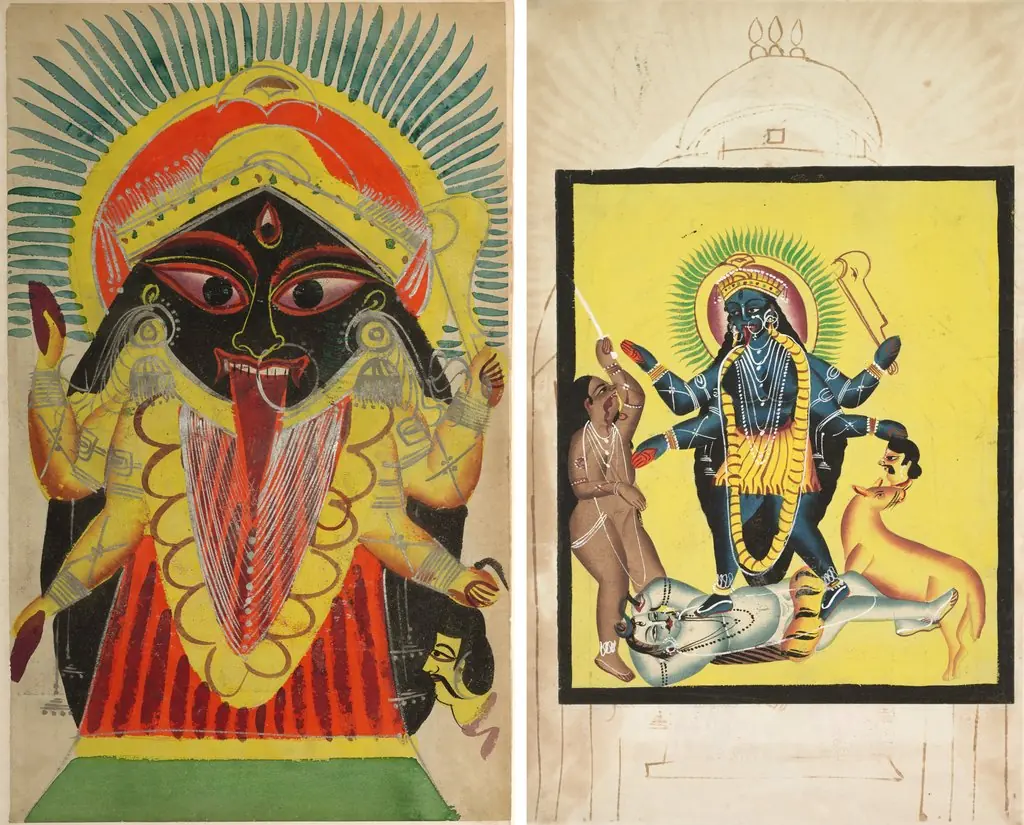
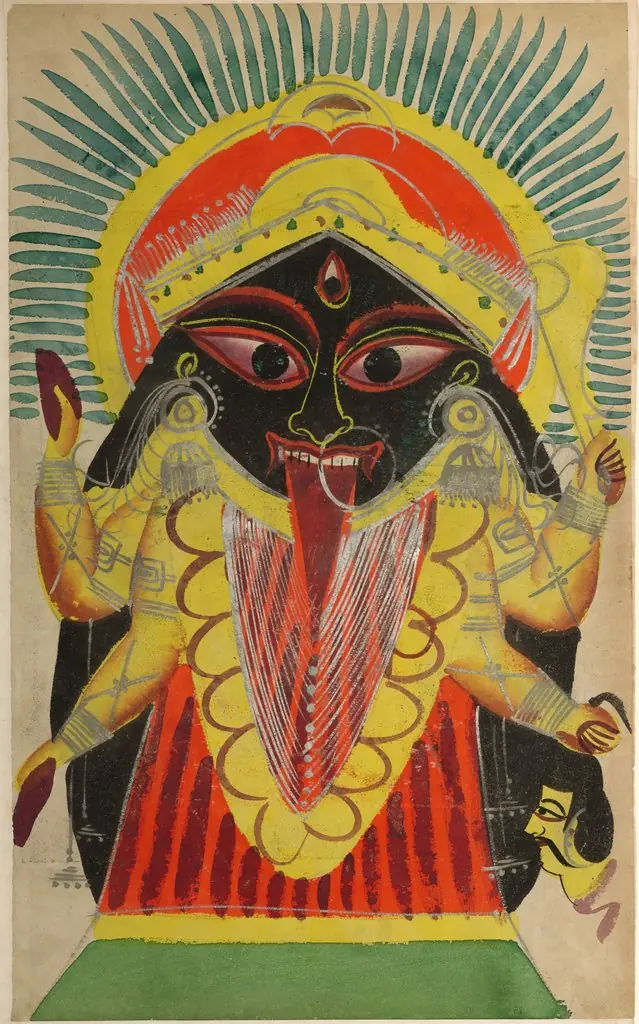 The Goddess Kali (recto), from a Kalighat album
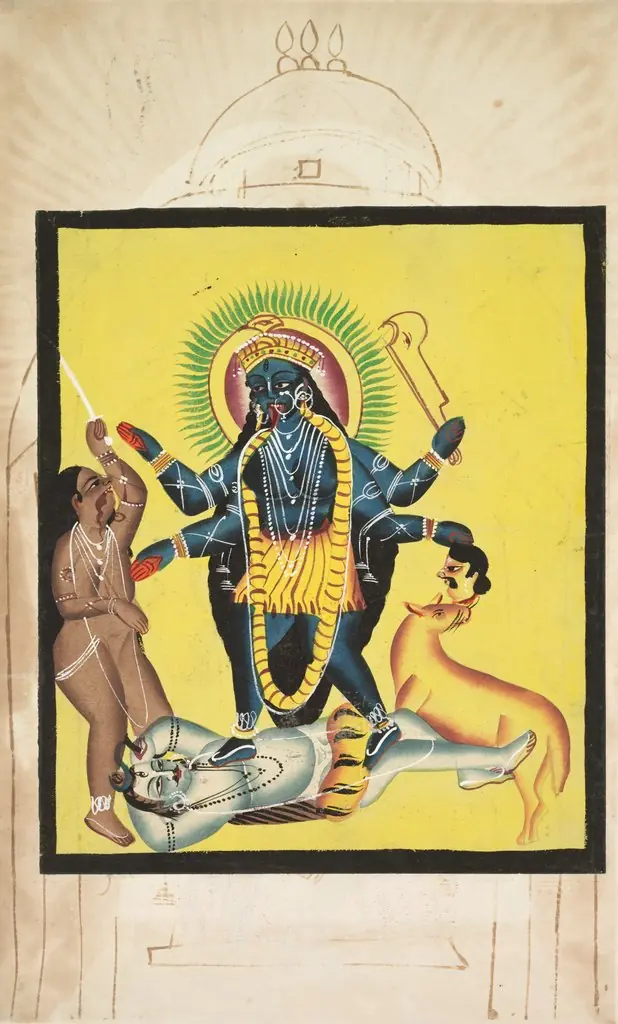 Kali Standing on Shiva (verso), from a Kalighat album
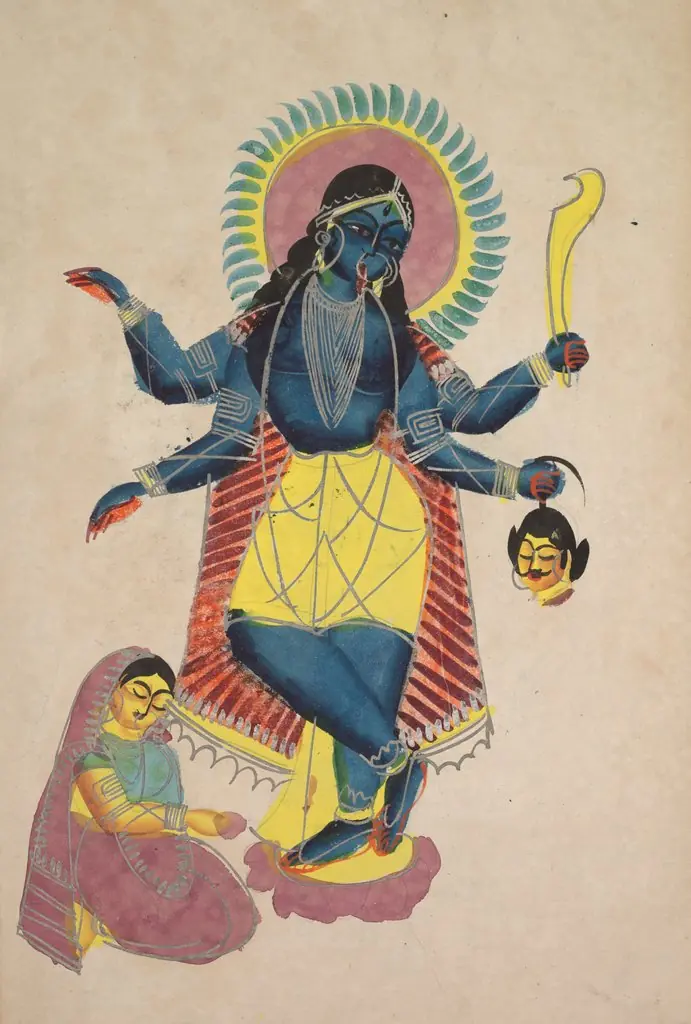 Krishna as Kali worshipped by Radha (recto), from a Kalighat album
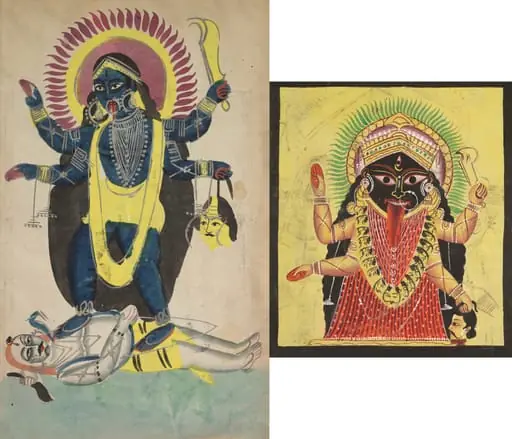
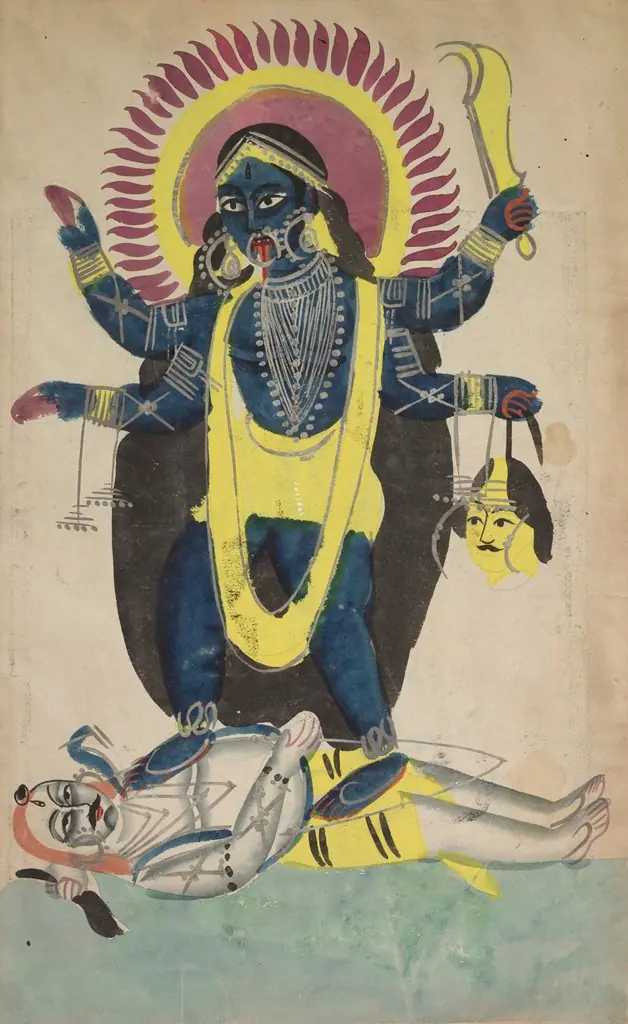 Leaf from a Kalighat album: Two Aspects of Kali
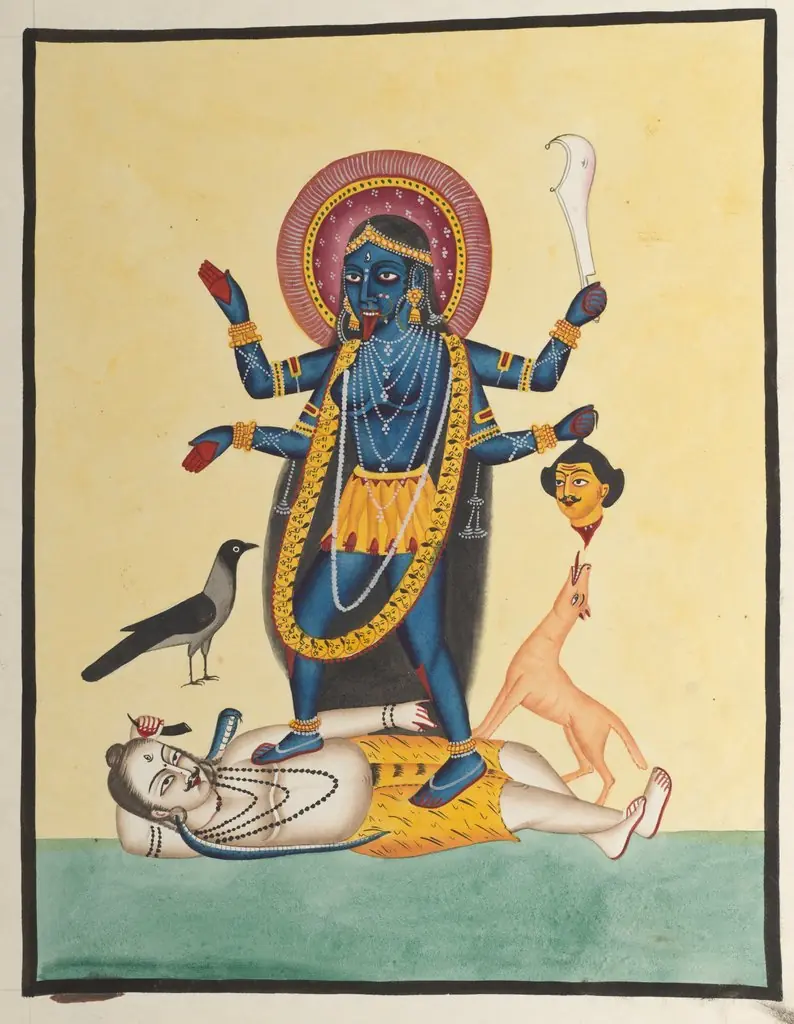 Kali, from a Kalighat album
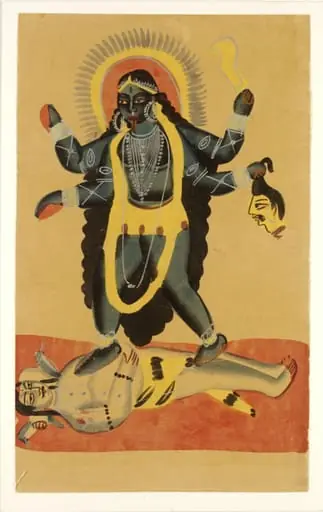 Kali and Shiva
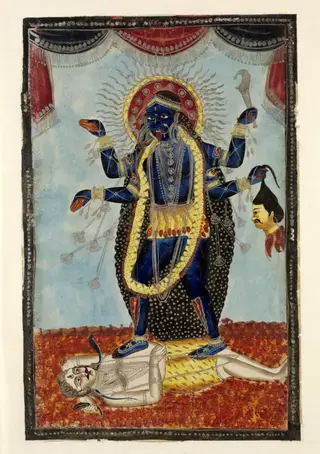 Kali and Shiva
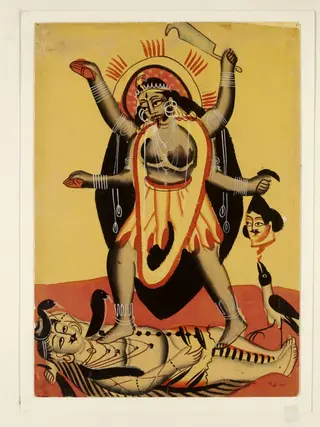 Kali dancing on Shiva
 Kali and Shiva
 Leaf from a Kalighat album: Two Aspects of Kali
 Leaf from a Kalighat album: The Goddess Kali (recto); Kali Standing on Shiva (verso)