Artwork
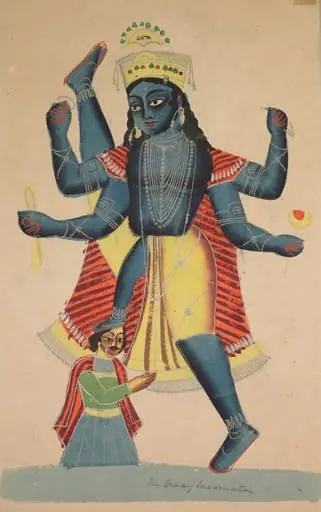
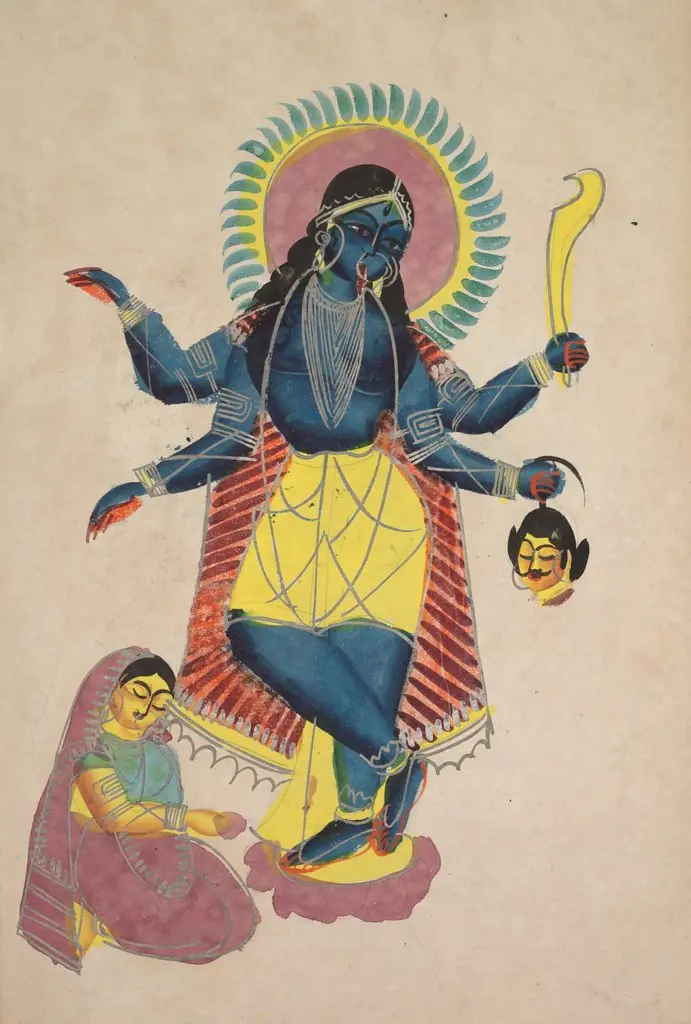
Krishna as Kali worshipped by Radha (recto), from a Kalighat album
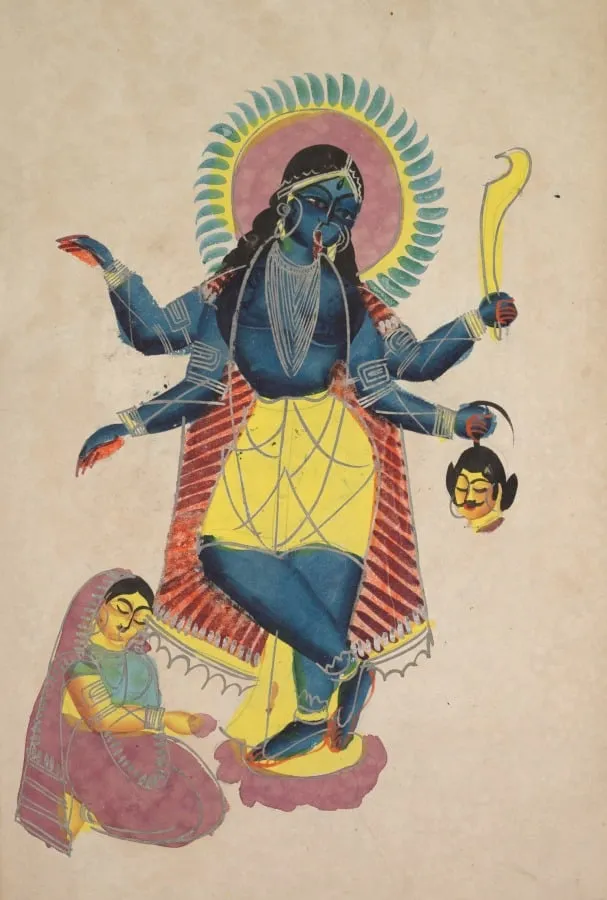
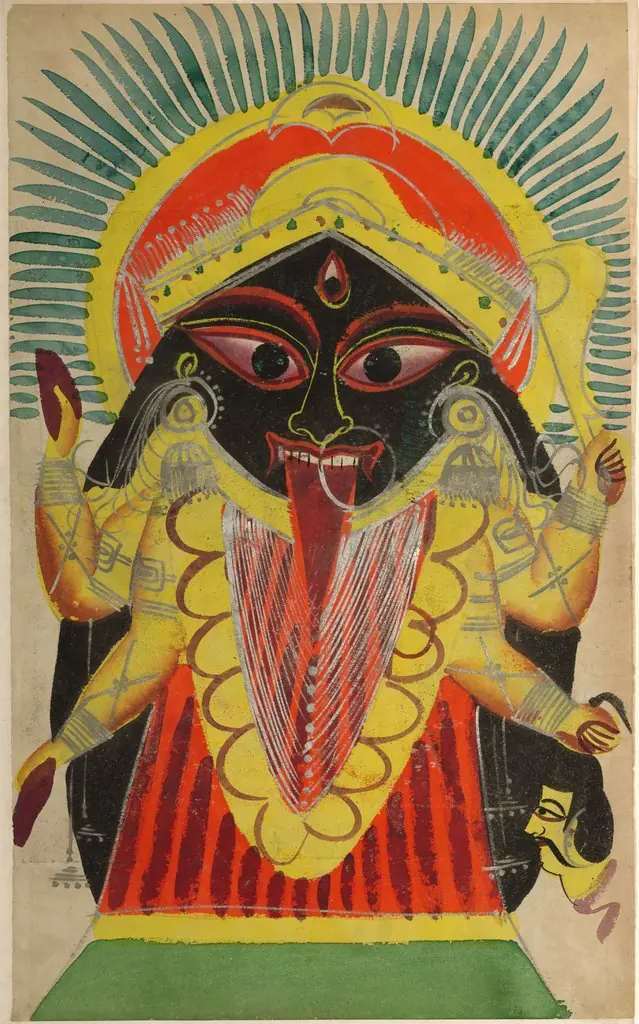
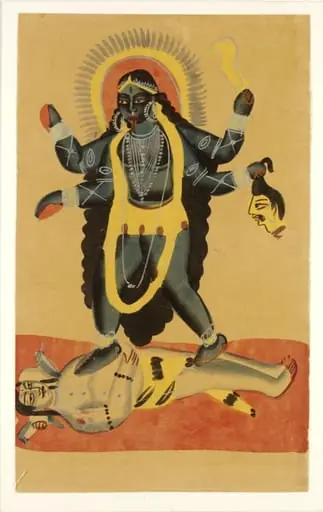
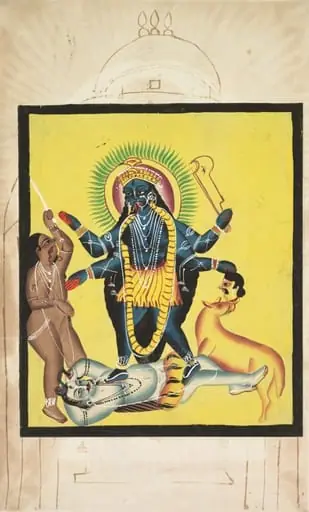
Krishna as Kali worshipped by Radha (recto), from a Kalighat album is an unspecified painting by the Bengal School artist Unknown. It dates from 1890 and is held in the collection of the Cleveland Museum of Art.
- Accession no.
- 2003.113.a
About this work
Overview
This small panel, part of a Kalighat album, depicts a striking scene in which the deity Krishna assumes the fierce form of Kali, while his beloved Radha, dressed in a red sari, kneels before him. The figure of Kali is rendered in bright blue, with four arms, an extended tongue, and a skirt composed of human hands, creating a vivid contrast with the devotee’s humble posture.
Subject & Meaning
The composition reinterprets a well‑known Hindu narrative: when Radha is in the presence of Krishna and her husband Ayanaghosha appears, the god instantly transforms into the goddess Kali, allowing Radha to continue her worship without violating marital duty. Radha’s devotion, portrayed as a model of the soul’s yearning for the divine, underscores the theme of transcending social obligations in pursuit of spiritual union.
Technique & Style
Executed in the characteristic Kalighat manner, the painting employs bold outlines, flat areas of saturated color, and simplified forms that emphasize narrative clarity over realism. The use of a vivid blue palette for the deity and the stark red of Radha’s sari highlights the contrast between the divine and the mortal, while the decorative motif of hands forming the goddess’s skirt adds a graphic, almost caricatured quality typical of the genre.
History & Provenance
Such albums were sold in markets and served both devotional and popular entertainment functions, disseminating mythic stories in an accessible visual format.
Originating from the Kalighat district of Kolkata, the work reflects the 19th‑century practice of itinerant artists producing inexpensive, colorful prints for pilgrims visiting the nearby shrine. Such albums were sold in markets and served both devotional and popular entertainment functions, disseminating mythic stories in an accessible visual format. The piece remains a representative example of this regional folk tradition.
Artist & collection