Artwork
Lakshmana, Rama and Hanuman
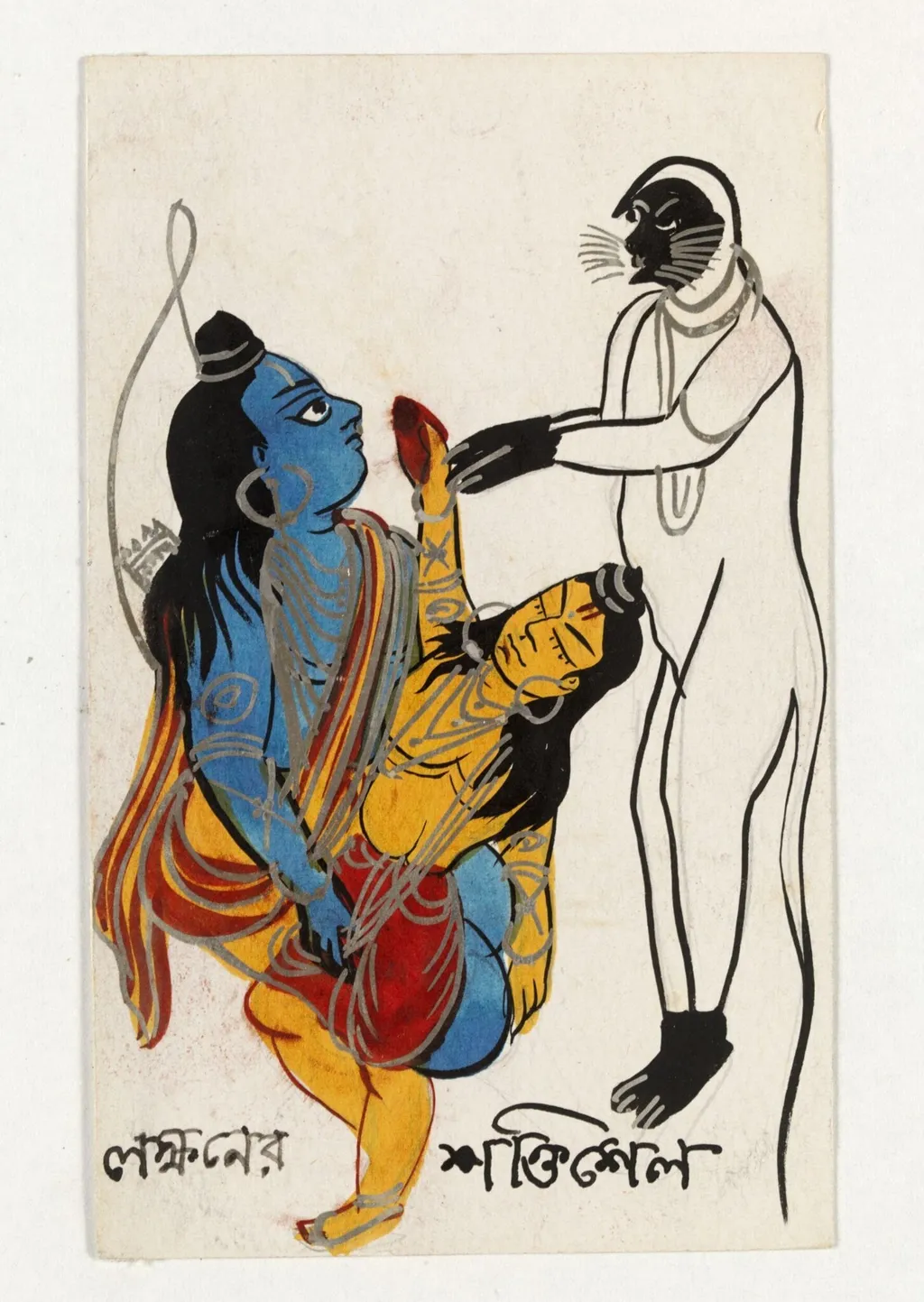
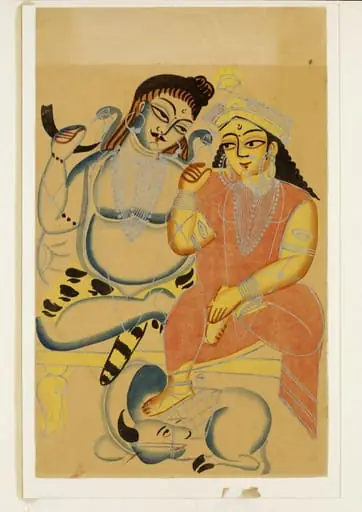
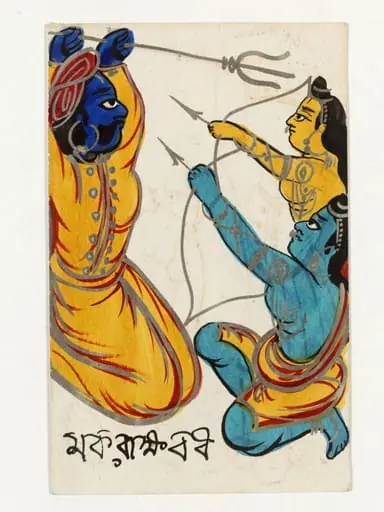
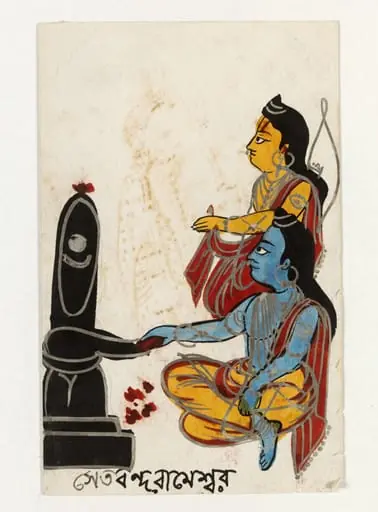
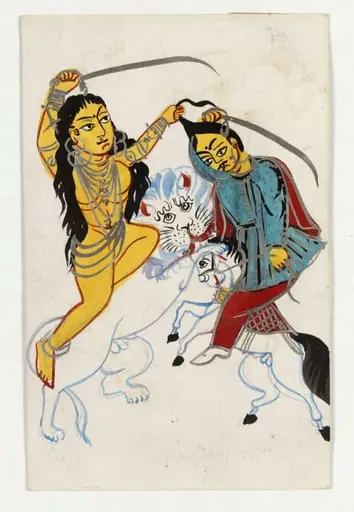
Lakshmana, Rama and Hanuman is a paint painting by the Impressionist artist Unknown. It dates from 1890 and is held in the collection of the Victoria and Albert Museum. This 19th-century watercolor and tin alloy painting on paper originates from Calcutta during British colonial rule.
About this work
Overview
It belongs to the Kalighat tradition, a style developed by artists who relocated from rural Bengal to the urban center.
This 19th-century watercolor and tin alloy painting on paper originates from Calcutta during British colonial rule. It belongs to the Kalighat tradition, a style developed by artists who relocated from rural Bengal to the urban center. The work captures a dramatic episode from the Ramayana, rendered with bold outlines and vivid, flat pigments. Its production reflects the commercial art market catering to pilgrims and collectors in the city.
Subject & Meaning
The scene illustrates Lakshmana, wounded by Ravana’s divine weapon, kneeling as Rama, his brother, prepares to respond. Hanuman, the devoted monkey god, stands watchful beside them, staff in hand. The moment conveys vulnerability and impending action within the epic’s moral framework.
The figures’ postures and expressions emphasize emotional gravity without theatricality, aligning with the narrative’s spiritual stakes rather than physical spectacle.
Technique & Style
The painting employs rapid, confident brushwork and unmodulated colors, blue for Rama, yellow for Lakshmana, white for Hanuman, outlined in thick black ink. Tin alloy adds subtle metallic sheen to key elements. Forms are simplified, backgrounds omitted, and details minimized to focus attention on gesture and identity.
This economy of form characterizes Kalighat art, optimized for mass production and visual clarity in crowded urban settings.
History & Provenance
Created in Calcutta during the 1830s–1890s, the work emerged from a community of patuas, traditional scroll painters, who adapted their craft for city markets near the Kalighat temple. These artists shifted from religious narrative scrolls to single-image depictions of mythological and contemporary subjects. This piece likely served as a devotional object or souvenir, produced for sale to pilgrims and British residents alike.
Context
As Calcutta became the administrative hub of British India, traditional art forms evolved under new economic pressures. Kalighat paintings responded to urban life by blending myth with social commentary, yet retained religious themes for broad appeal. This work reflects a cultural intersection: indigenous iconography adapted through commercial imperatives, shaped by both local devotion and colonial urbanization.
Legacy
Kalighat paintings like this one influenced later Indian modernist movements by demonstrating how folk aesthetics could convey complex narratives with minimal means. Though produced for transient markets, these works preserved regional visual language amid rapid change. Today, they are studied as documents of cultural adaptation, offering insight into how traditional art sustained itself in the face of modernization.
Artist & collection