Artwork
Lamentation of Christ
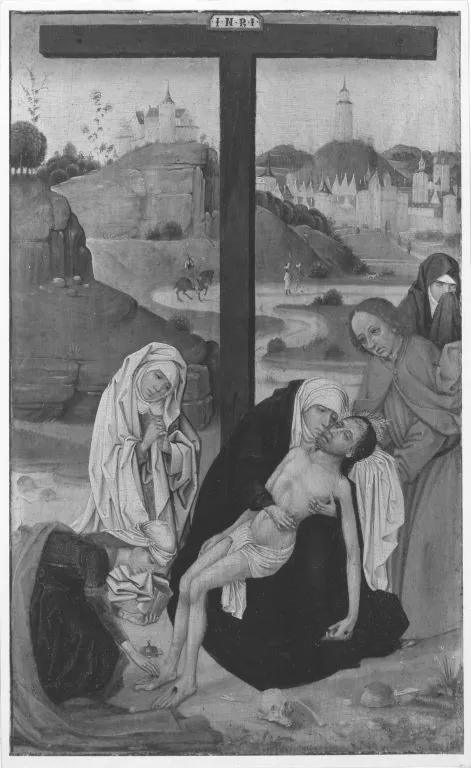
Lamentation of Christ is an unspecified painting by the Early Renaissance artist Unknown. It dates from 1490 and is held in the collection of the Bavarian State Painting Collections.
About this work
Subject & Meaning
The painting’s meaning is rooted in its function as an altar piece intended to evoke contemplation of Christ’s suffering and the promise of salvation.
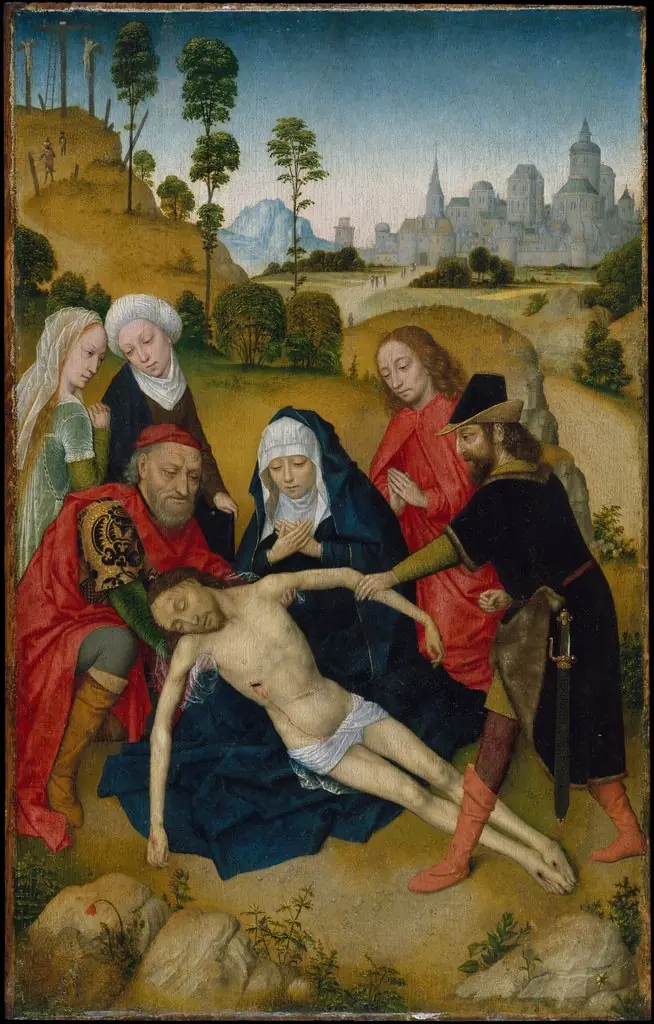
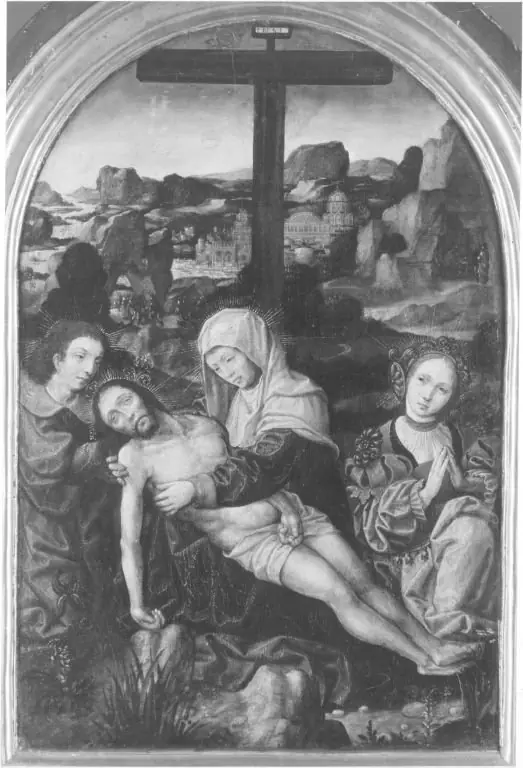
The work portrays the biblical moment of mourning after the crucifixion, showing the Virgin Mary cradling the dead Christ supported by Saint John and other figures, a composition that emphasizes themes of sacrifice and redemption within the religious narrative. The iconography includes traditional attributes such as the crown of thorns and the lamenting posture of the mourners, reinforcing the devotional context of the scene. The painting’s meaning is rooted in its function as an altar piece intended to evoke contemplation of Christ’s suffering and the promise of salvation.
Technique & Style
The work is an oil painting on wood panel created circa 1480 in Swabia, depicting the Lamentation of Christ. It measures 30 cm in height and 19 cm in width, and is housed in the Bavarian State Painting Collections at the Alte Pinakothek in Munich. The composition emphasizes the emotional gravity of the scene through restrained color and careful spatial arrangement, reflecting a regional devotional style of the late 15th century.
History & Provenance
The Lamentation of Christ is assigned to circa 1480 based on stylistic analysis of Swabian painting from that period.
The work entered the collection of the Bavarian State Painting Collections, where it has been held at the Alte Pinakothek in Munich. Its dimensions are recorded as 30 cm in height and 19 cm in width.
Legacy
The Lamentation of Christ has exerted quiet yet enduring influence through its presence in Bavarian collections, particularly at the Alte Pinakothek where it remains on permanent display. Its status as a representative Swabian religious work of the 1480s has contributed to scholarly understanding of late medieval devotional painting, though specific later receptions are sparsely documented. The work’s formal qualities, its restrained composition and emotional gravity, continue to inform studies of regional painting traditions in southern Germany.
Overview
The work titled Lamentation of Christ portrays a somber gathering of women surrounding the lifeless figure of Jesus. A kneeling figure touches the body, another supports it, while a third watches from a short distance. Behind them, a modest town rests on a hill, dominated by a solitary cross that rises above the scene.
Context
The scene aligns with medieval traditions of the Lamentation, a subject frequently depicted to aid contemplation of Christ’s sacrifice. The inclusion of a distant town and cross situates the event within a recognizable landscape, reflecting the period’s tendency to blend biblical narrative with contemporary settings.
Artist & collection