Artwork
Landscape
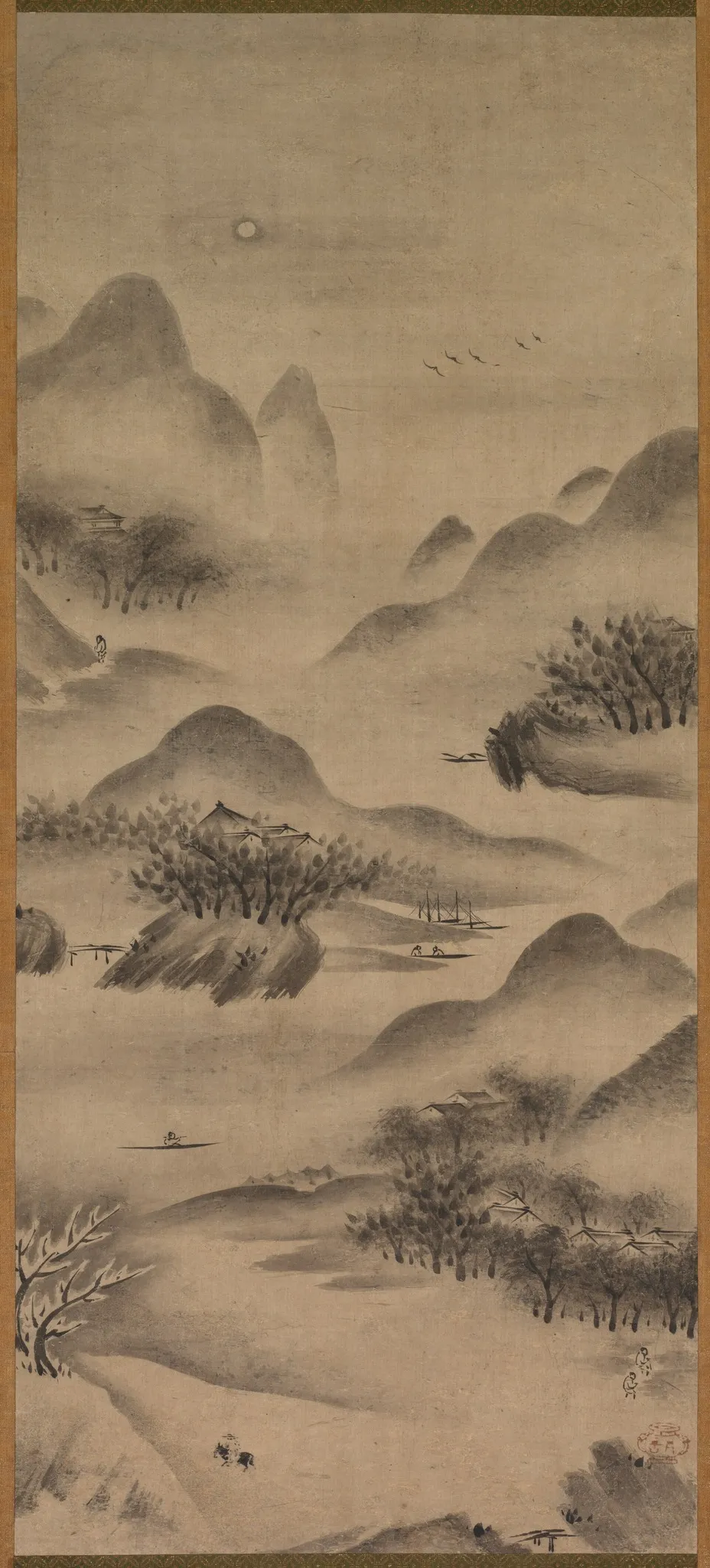
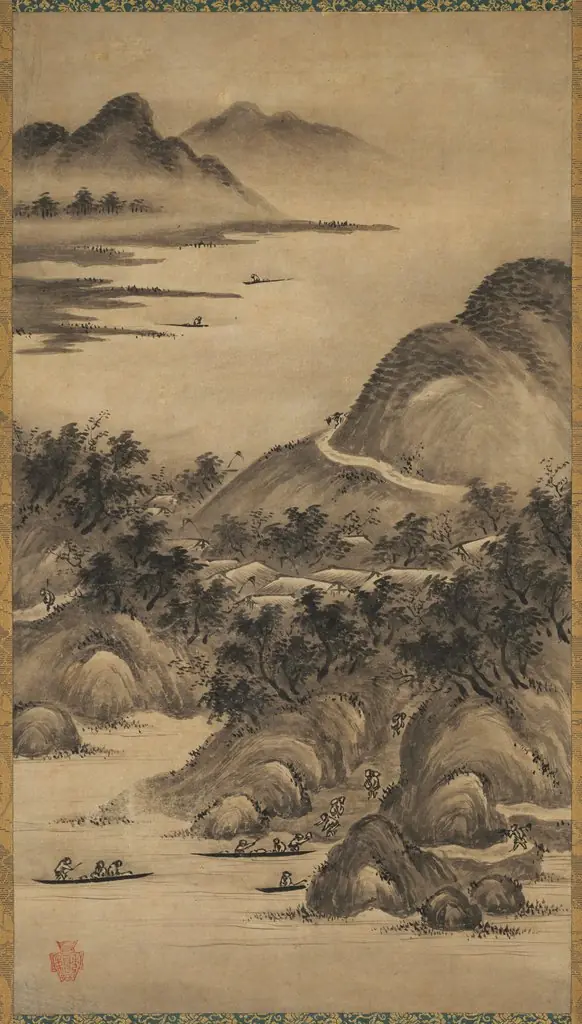
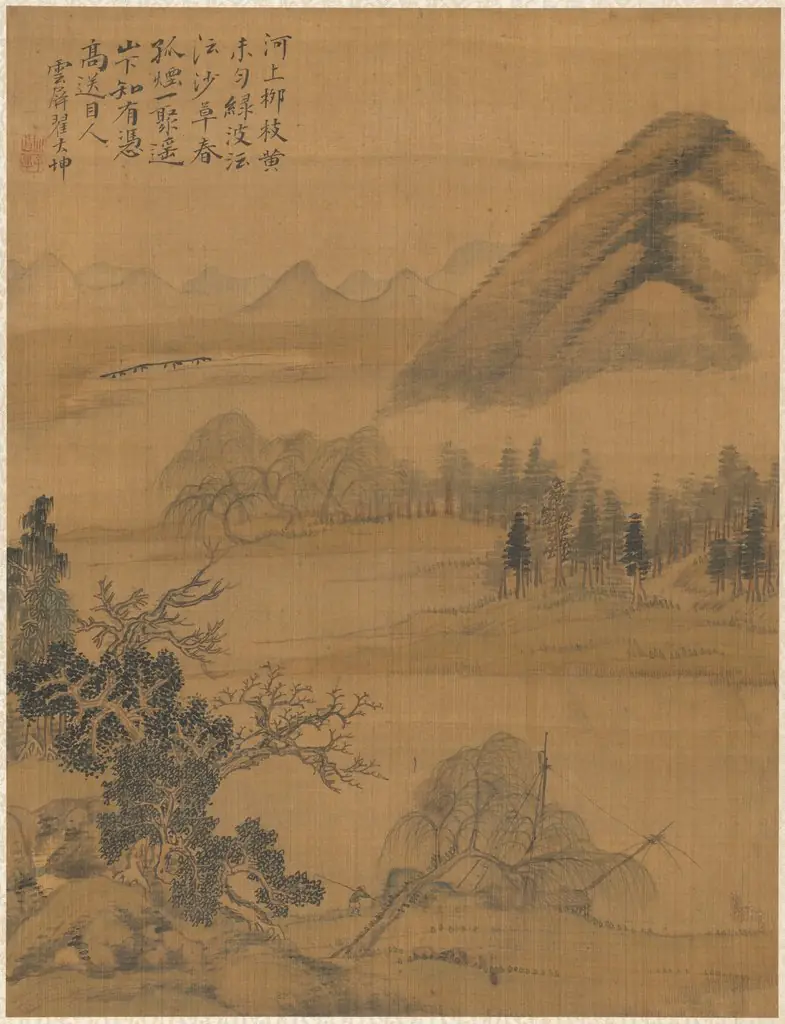
Landscape is an unspecified painting. It dates from 1549 and is held in the collection of the Cleveland Museum of Art.
About this work
History & Provenance
The painting entered the holdings of the Cleveland Museum of Art and is currently catalogued under accession number 2015.
Landscape is a painting executed in 1549 by the Japanese artist Getsugaku while he was working in Japan. Classified as a landscape work, it bears the inception date 1549-01-01 in the museum’s records. The painting entered the holdings of the Cleveland Museum of Art and is currently catalogued under accession number 2015.490.
No earlier owners, commissions, or exhibition history are recorded in the available sources, so the documented provenance of the work begins with its acquisition by the museum.
Landscape is an oil painting by the Japanese artist Getsugaku, created in 1549. It is part of the Cleveland Museum of Art's collection and has been accessioned under the inventory number 2015.490. The work has been exhibited at the Cleveland Museum of Art as part of its landscape painting collection.
Context
The work titled Landscape was painted by Getsugaku in 1549, situating it within the broader tradition of Japanese landscape painting and reflecting the cultural emphasis on nature during the Muromachi period. Its creation in Japan and inclusion in the Cleveland Museum of Art's collection underscore its significance as a representative example of the genre, studied for its stylistic and historical context within East Asian art. Scholars analyze its composition and symbolism to trace influences on later movements in both Eastern and Western art.
Overview
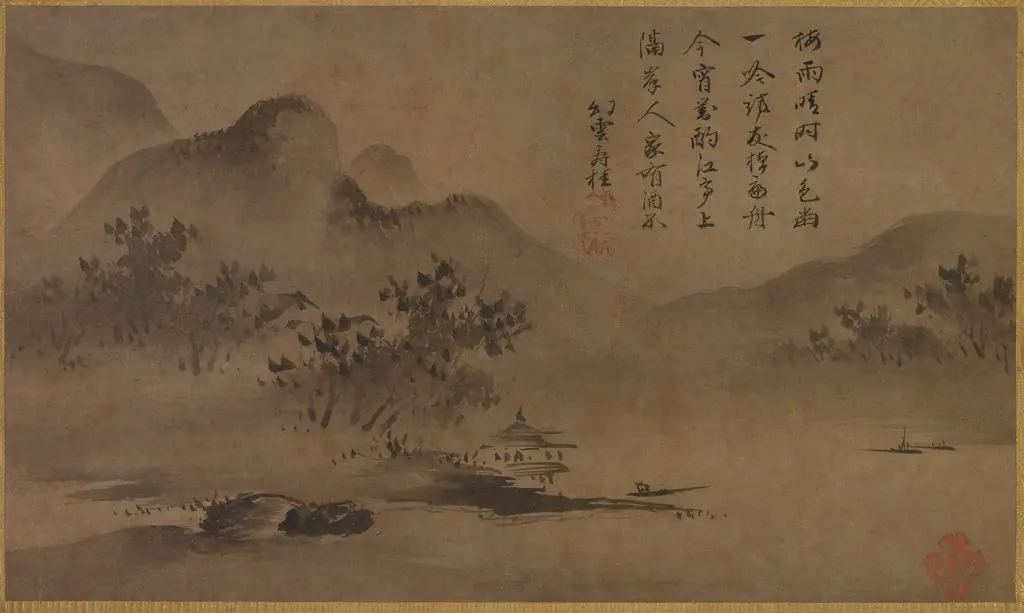
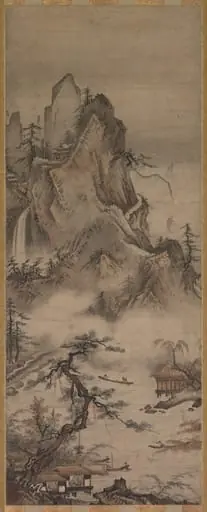
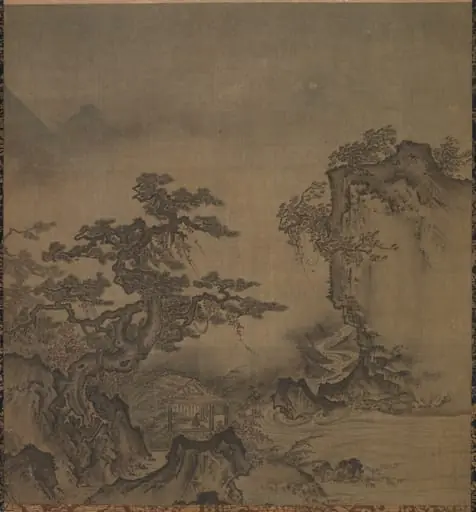
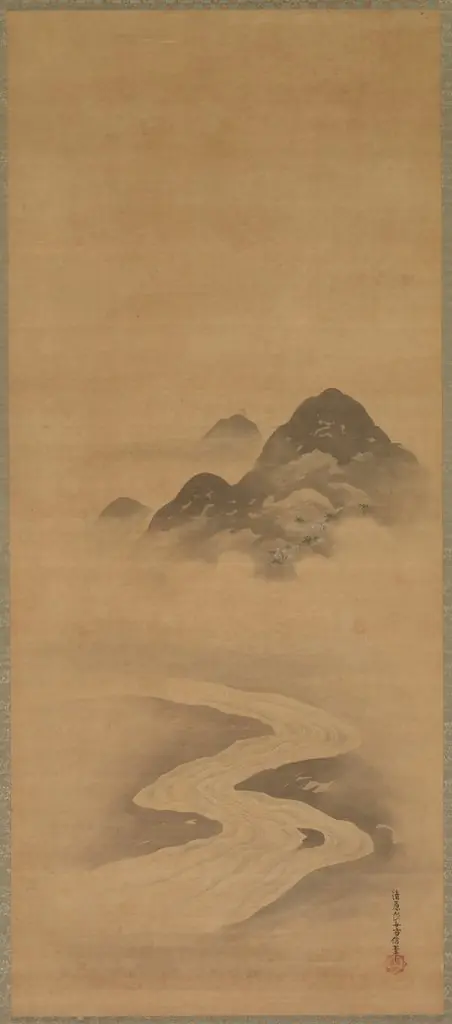
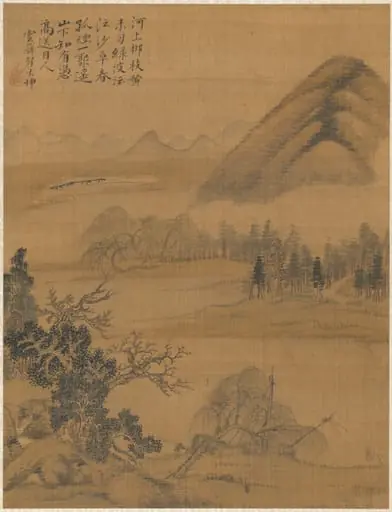
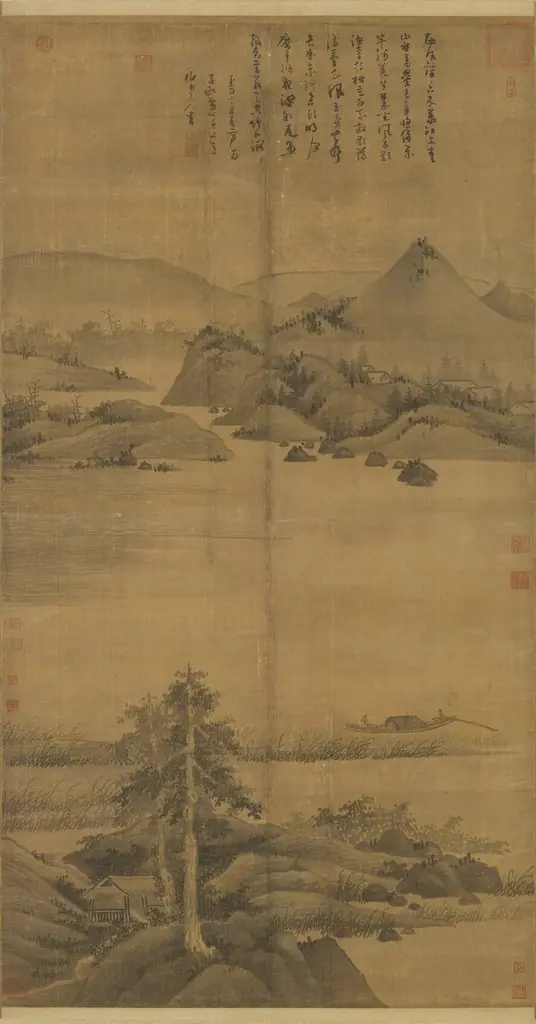
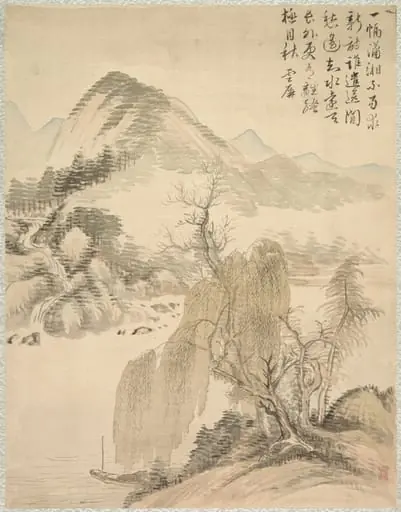
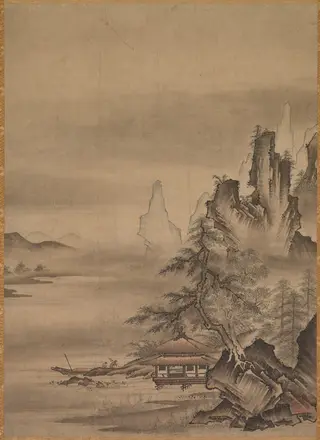
The work presents a quiet, expansive landscape rendered primarily in monochrome tones. Gentle hills rise and fall across the canvas, punctuated by clusters of trees and modest structures that suggest dwellings or temples. Distant mountains recede into a hazy backdrop, while birds trace subtle arcs in the sky, contributing to an overall atmosphere of stillness.
Subject & Meaning
The composition invites contemplation of a serene natural setting, where human habitation integrates harmoniously with the surrounding terrain. The muted palette and soft illumination emphasize a mood of calm, suggesting a timeless, perhaps idealized view of rural life and the quiet interplay between architecture and nature.
Technique & Style
The artist employs chiaroscuro, exploiting stark contrasts between deep shadows and illuminated areas to model forms and convey depth. This manipulation of light and dark creates a sense of volume in the hills, trees, and buildings, while the lighter patches evoke mist or fog, enhancing the painting’s atmospheric quality.
Artist & collection