Artwork
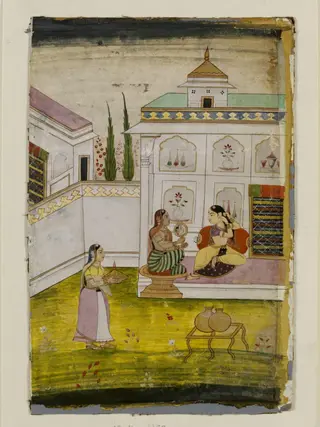
Madhava Plays his Vina before Five Women Drawing Water from a Well, from a Madhavanala Kamakandala
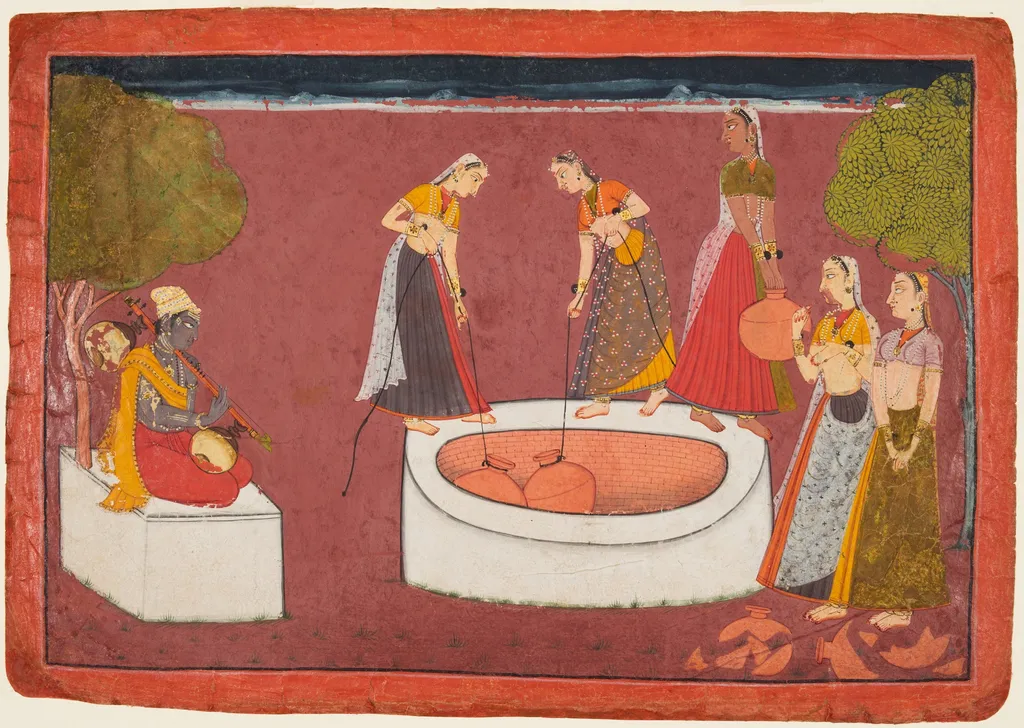
Madhava Plays his Vina before Five Women Drawing Water from a Well, from a Madhavanala Kamakandala is an unspecified painting. It dates from 1720 and is held in the collection of the Cleveland Museum of Art.
About this work
Overview
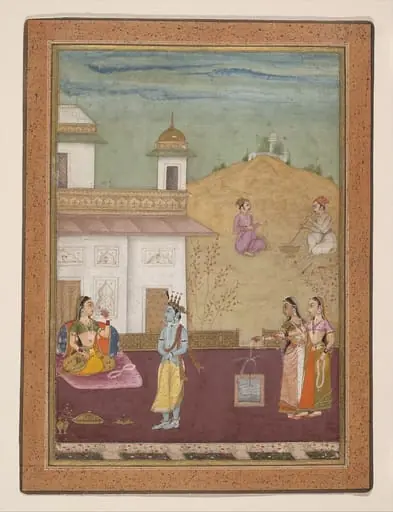
The work titled Madhava Plays his Vina before Five Women Drawing Water from a Well depicts a domestic scene in which a male musician performs beside a shallow well attended by five women. Rendered in vivid, unmodulated hues against a dominant red field, the composition balances the figure of the player with the surrounding figures and landscape elements.
Subject & Meaning
The central figure, Madhava, is shown strumming a small lute‑like instrument, while the women, dressed in long skirts and adorned with jewelry, appear to be waiting their turn to fetch water. Their gestures, one woman leaning on a staff, others holding clay pots, suggest a moment of communal routine interrupted by music, highlighting the interplay of daily labor and artistic expression.
Technique & Style
Executed in flat, saturated colors, primarily reds, yellows, and greens, the painting eschews chiaroscuro, giving the scene a two‑dimensional, decorative quality. The lack of shading and the clear outlines of figures, trees, and a fence create a stylized visual language typical of manuscript illustration traditions.
History & Provenance
The image originates from the Madhavanala Kamakandala, a literary work that combines narrative poetry with illustrative plates. Though the precise date of the painting’s production is not recorded here, its stylistic traits align with Indian courtly art that accompanied devotional and romantic texts.
Context
Set within a courtyard environment, the inclusion of a well, surrounding vegetation, and a low fence situates the scene in a typical South Asian domestic setting. The presence of a musician performing for laboring women reflects cultural practices wherein music accompanied communal tasks.
Legacy
As an example of narrative illustration, the painting offers insight into the visual conventions of its source manuscript and contributes to the broader understanding of how music and everyday life were intertwined in pre‑modern South Asian art.
Artist & collection

- Madhava plays his vina before five women drawing water from a well, folio 3 from a Madhavanala-Kamakandala
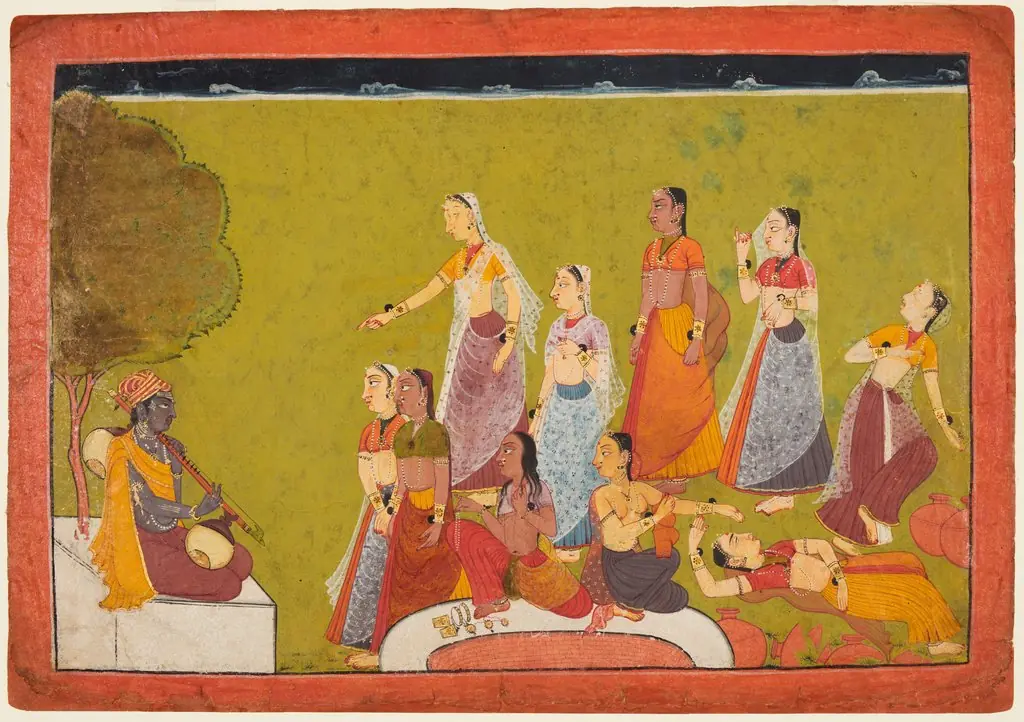 A Group of Women in Ecstasy Before Madhava, from a Madhavanala Kamakandala
 A group of women in ecstasy before Madhava, folio 4 from a Madhavanala-Kamakandala
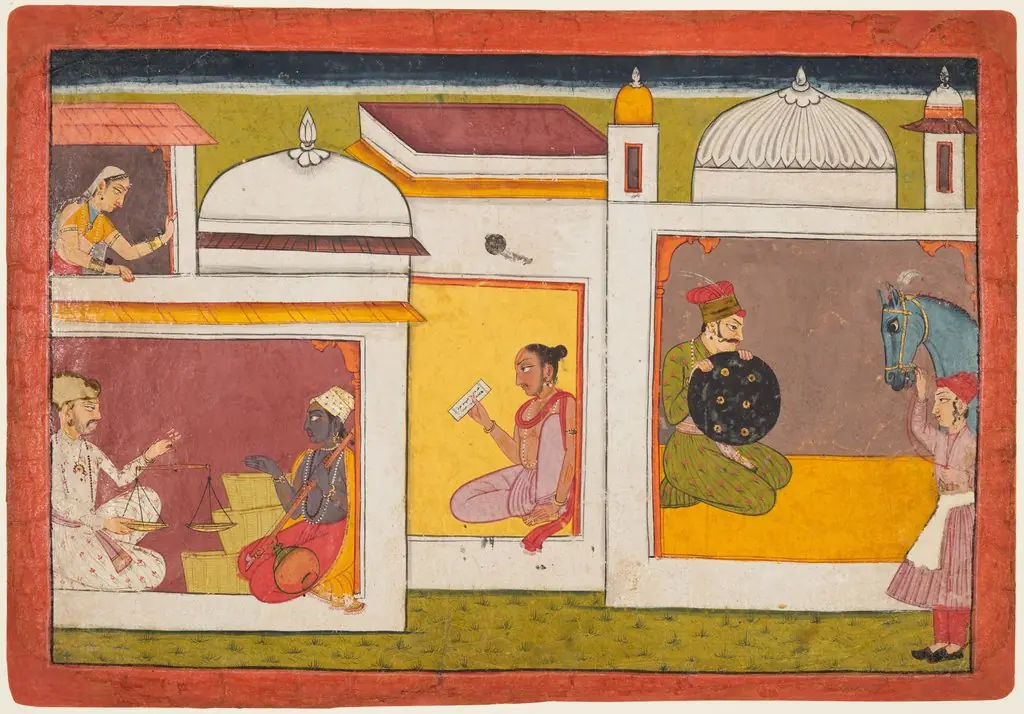 Madhava Faces a Man Holding a Scale, from a Madhavanala Kamakandala
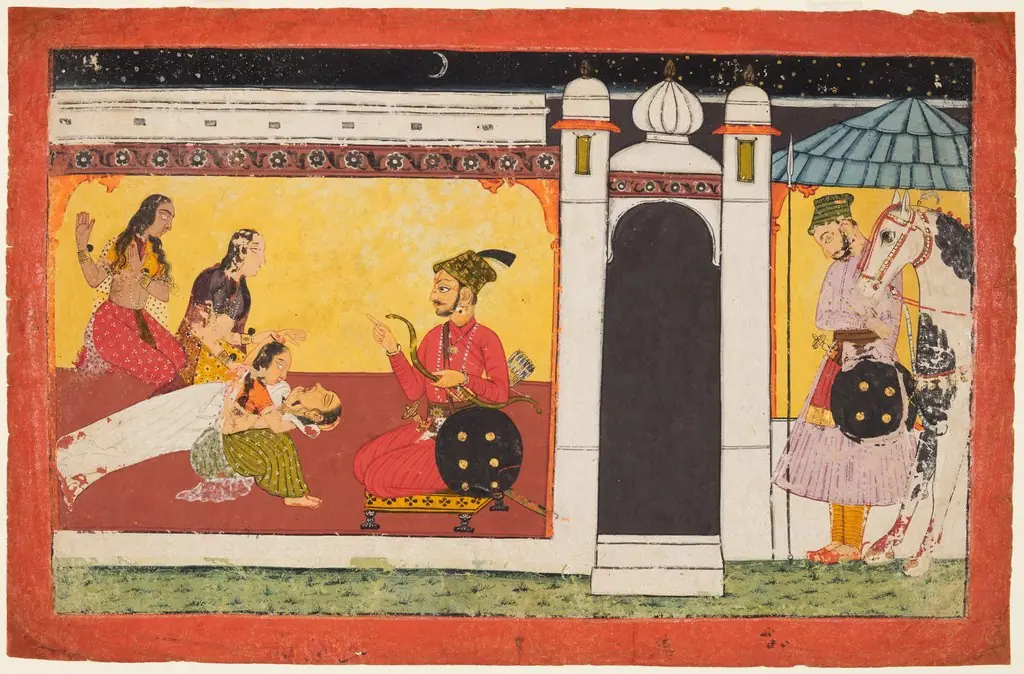 Kandala Dies on Hearing the News of Madhava’s Death, from a Madhavanala Kamakandala
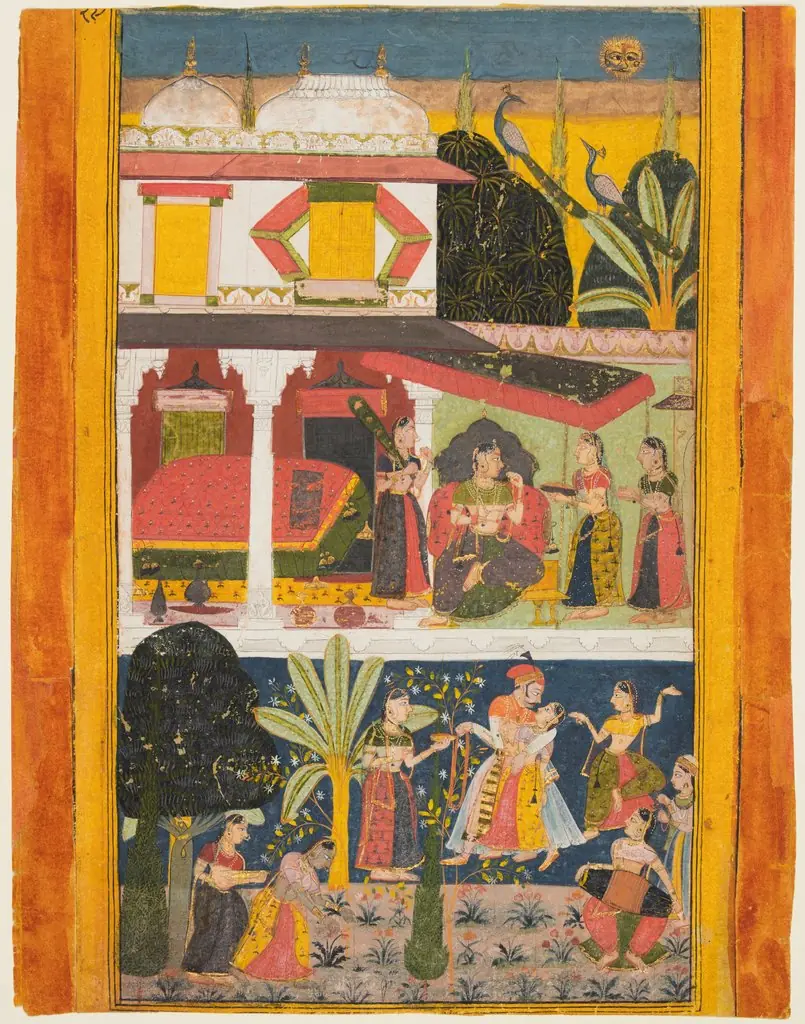 A Heroine and Her Paramour: Malavi Ragini, from a Ragamala
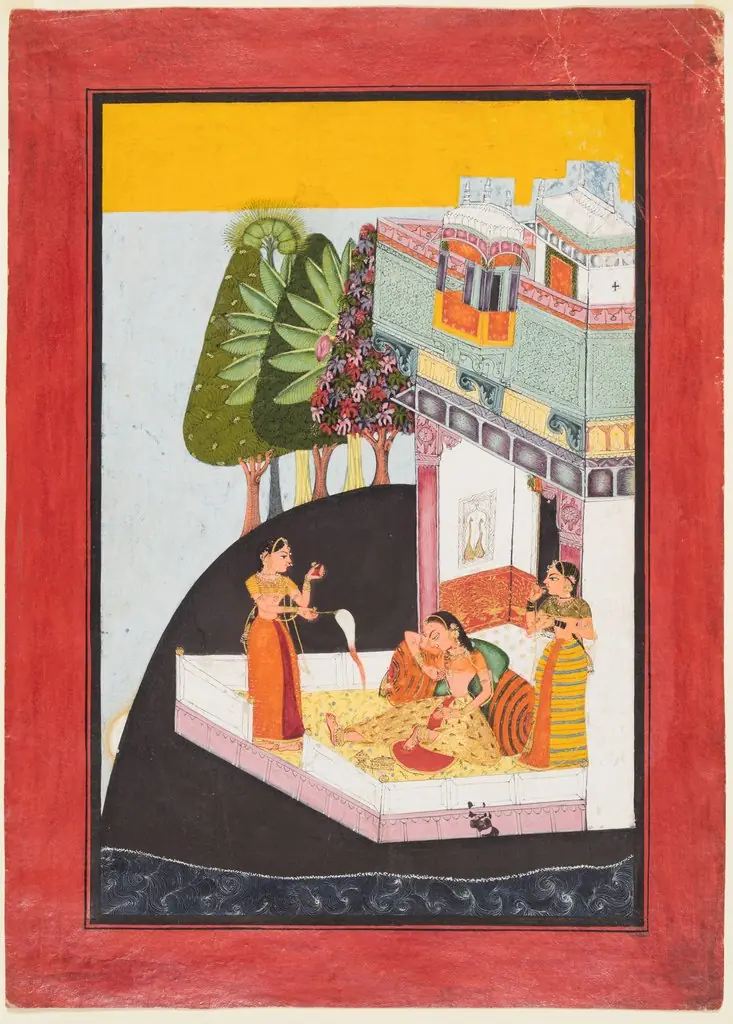 A Disconsolate Lady on a Terrace with Attendants
 The royal priest Shatananda confirms that the four princesses of Mithila should marry the sons of King Dasharatha, from Chapter 70 of the Bala Kanda (Book of Childhood), folio 13 from a “Shangri” Ramayana (Rama’s Journey)
 Dipak ragini
 Untitled
 A Man Dips His Hand into a Cauldron as Ladies of the Harem Stand in Amazement: A Page from a Manuscript of Religious History
 Vilaval Ragini