Artwork
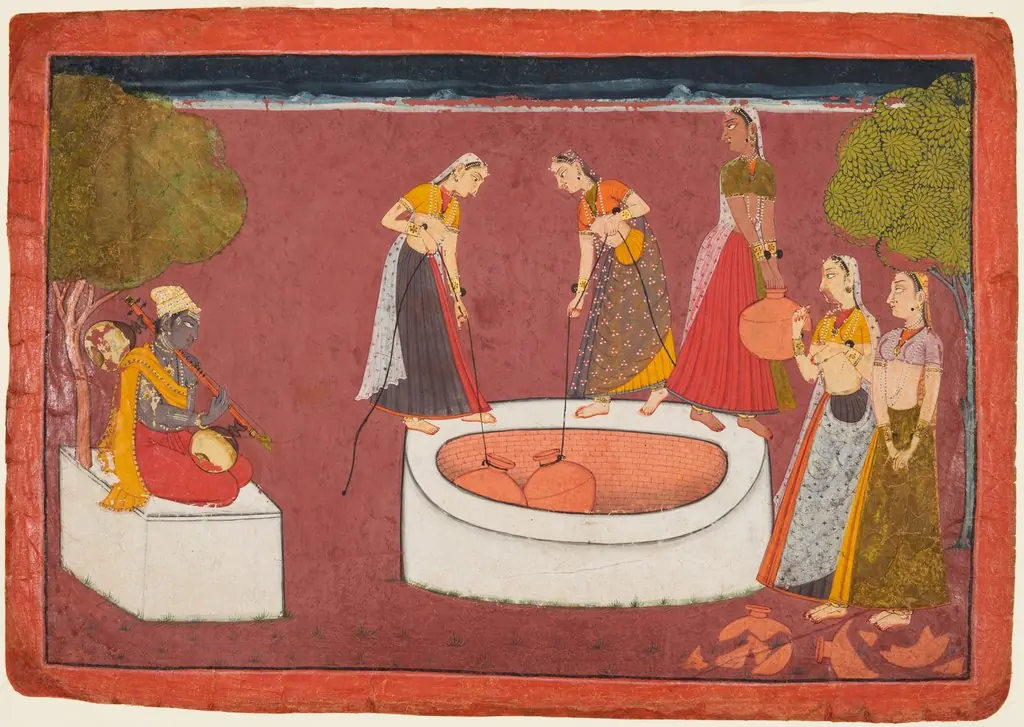
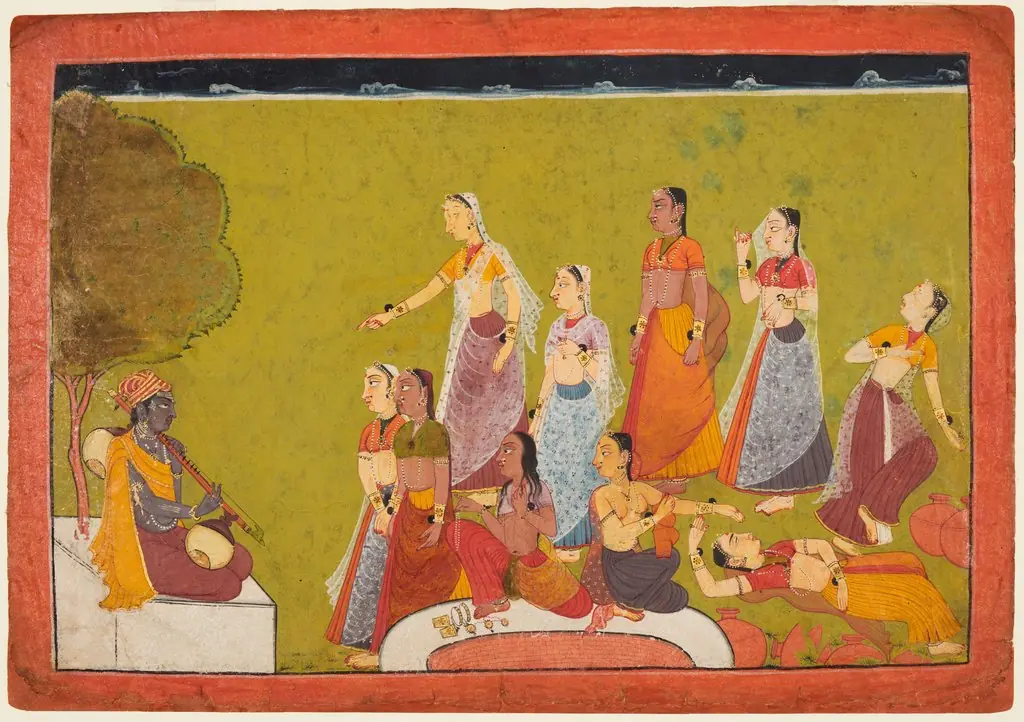
Madhava plays his vina before five women drawing water from a well, folio 3 from a Madhavanala-Kamakandala
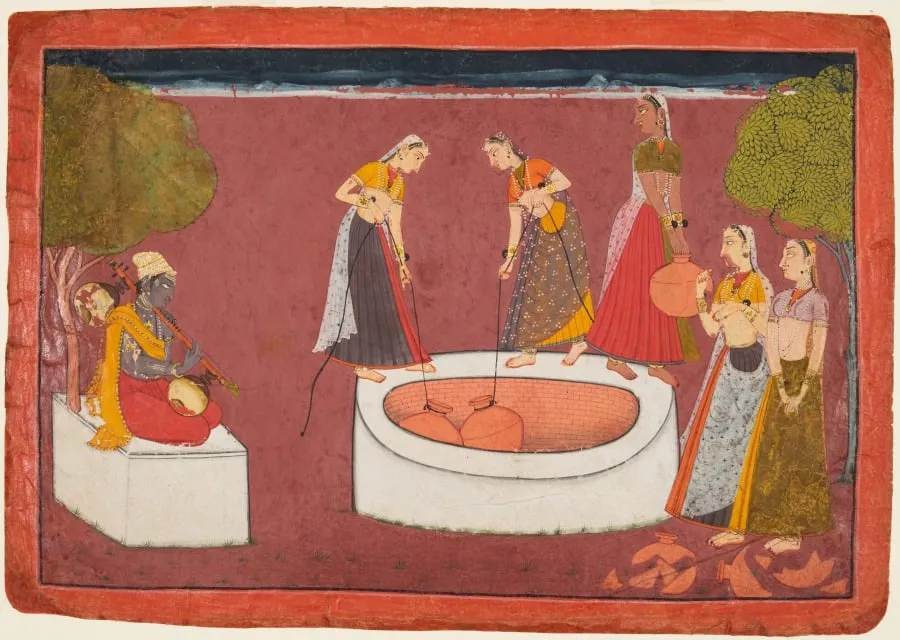
Madhava plays his vina before five women drawing water from a well, folio 3 from a Madhavanala-Kamakandala is an unspecified painting by the Baroque artist Unknown. It dates from 1720 and is held in the collection of the Cleveland Museum of Art. The painting depicts Madhava seated beneath a tree, playing a vina while five women draw water from a nearby well.
- Accession no.
- 2018.93
- Credit line
- Purchase and partial gift from the Catherine and Ralph Benkaim Collection; Severance and Greta Millikin Purchase Fund
About this work
Overview
The painting depicts Madhava seated beneath a tree, playing a vina while five women draw water from a nearby well. The scene captures a single morning moment, yet the figures convey a sequence of actions as the music spreads across the gathering.
Subject & Meaning
Madhava’s music draws the attention of the women, whose responses vary: two women continue lifting full pots, one halts mid‑step, and two are so captivated that their pots slip and break. The work illustrates how sound can interrupt and transform ordinary labor.
Technique & Style
Rendered in the delicate brushwork characteristic of Pahari court painting, the composition uses a shallow depth of field to focus on the tree, the musician, and the well. Subtle color shifts and fine line work differentiate each woman's movement, creating a visual rhythm that mirrors the musical theme.
History & Provenance
This folio, numbered three in the Madhavanala‑Kamakandala manuscript, originates from the Pahari kingdoms of northern India, a region noted for its miniature paintings in the 17th–18th centuries. The manuscript is now part of a private collection that acquired it in the early 20th century.
Context
The scene reflects a common motif in Indian art where music influences daily life, linking artistic expression with routine tasks. The depiction of multiple temporal moments within a single frame is a narrative device found in other Pahari works, emphasizing the fluidity of time.
Artist & collection









- Madhava Plays his Vina before Five Women Drawing Water from a Well, from a Madhavanala Kamakandala
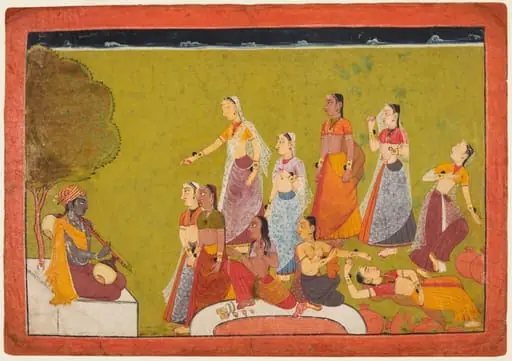 A group of women in ecstasy before Madhava, folio 4 from a Madhavanala-Kamakandala
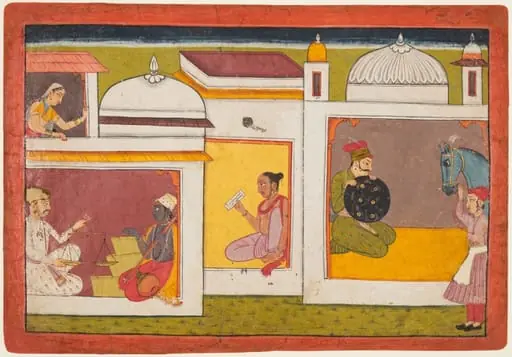 Madhava faces a man holding a scale, folio 1 from a Madhavanala-Kamakandala
 A Group of Women in Ecstasy Before Madhava, from a Madhavanala Kamakandala
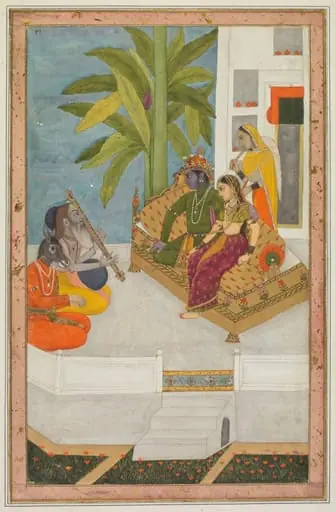 Shri Raga: An Illustration from a Ragamala Series
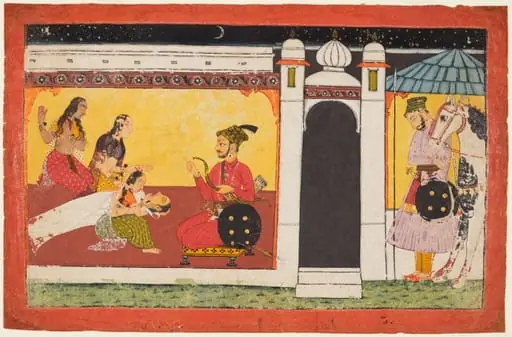 Kamakandala dies on hearing the news of Madhava’s death, folio 19 from a Madhavanala-Kamakandala of Alam
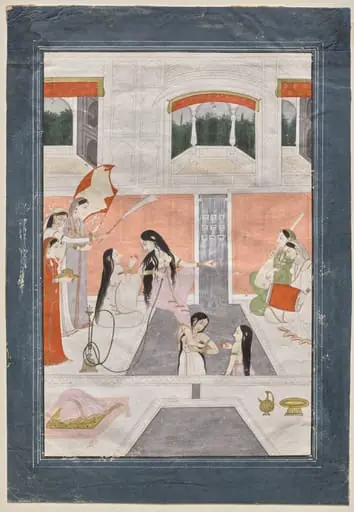 Palace women enjoy music by the side of a cascade