Artwork
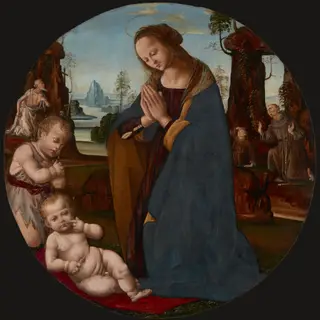
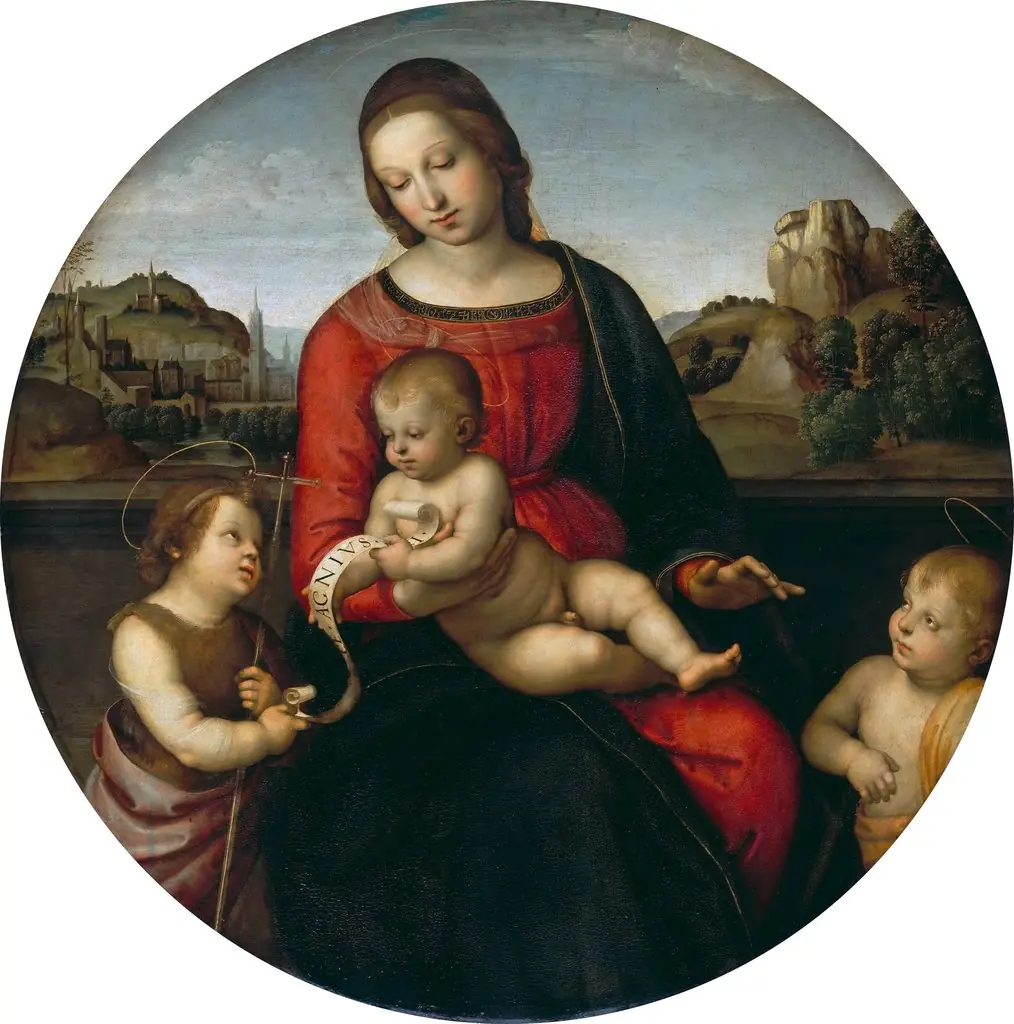
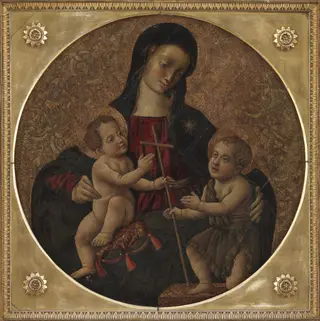
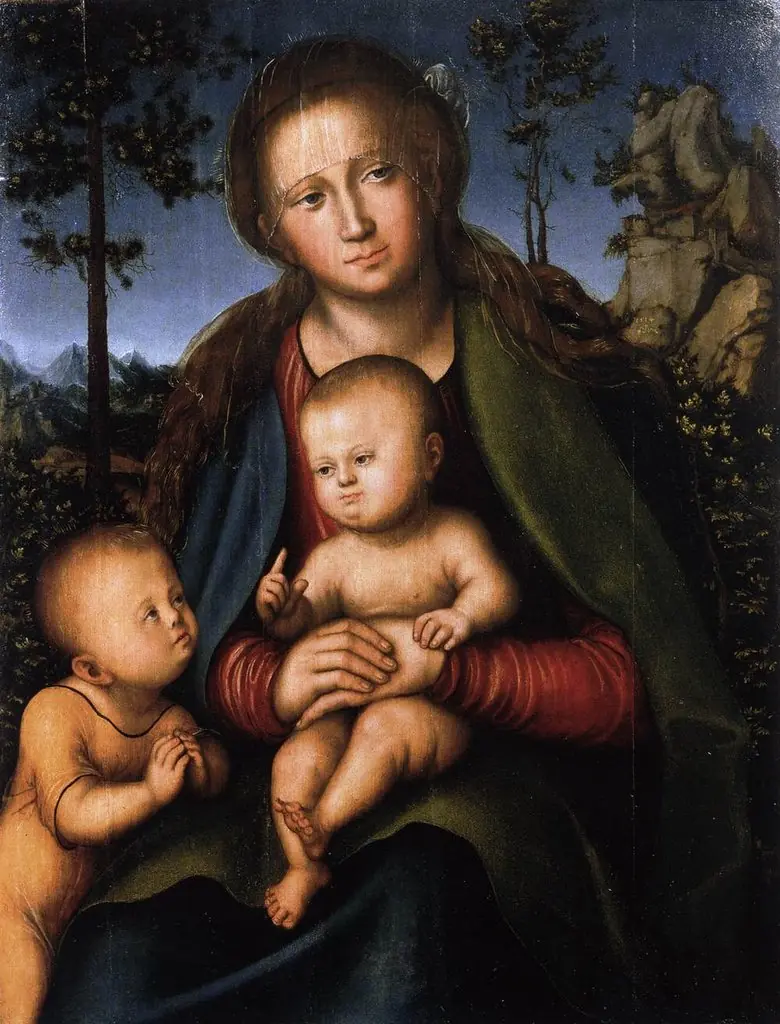
Madonna and Child with the Infant John the Baptist and St Clara
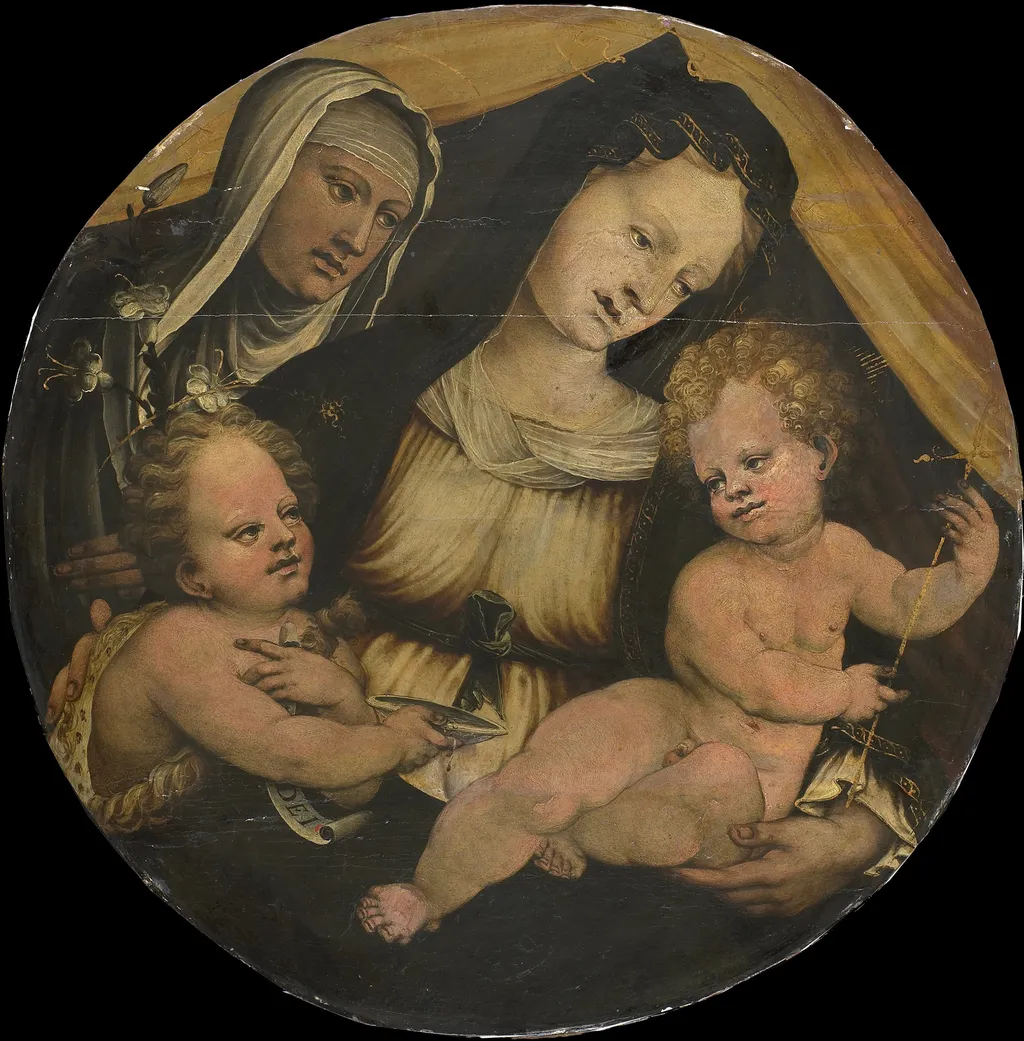
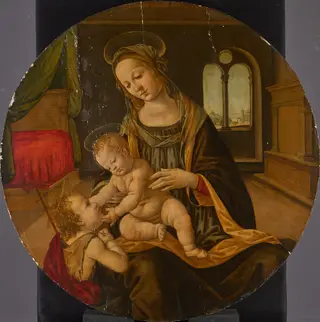
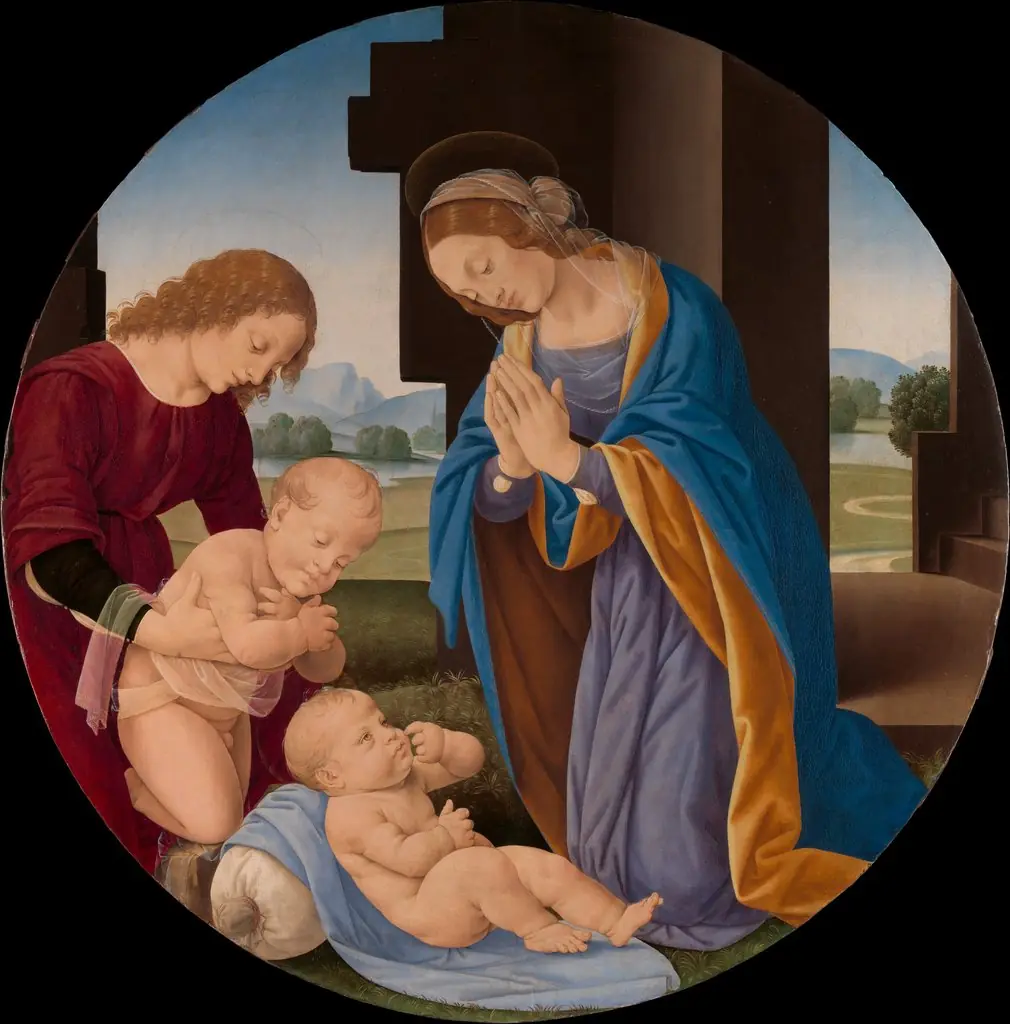
Madonna and Child with the Infant John the Baptist and St Clara is an oil painting. It dates from 1520 and is held in the collection of the Rijksmuseum. The oil painting presents a quiet domestic scene centered on the Virgin Mary holding the infant Jesus.
About this work
Subject & Meaning
Mary's central role as the Madonna underscores her intercessory function, while the infant John the Baptist signifies his future role as forerunner of Christ.
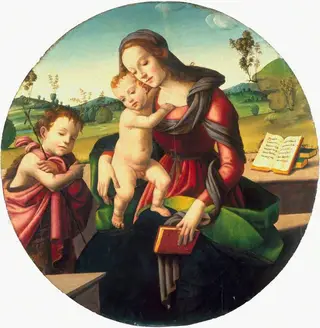
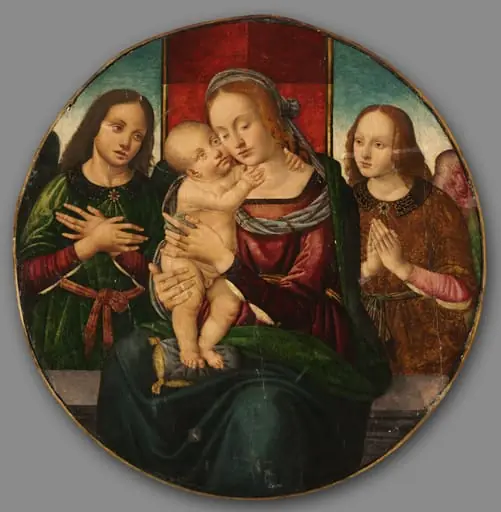
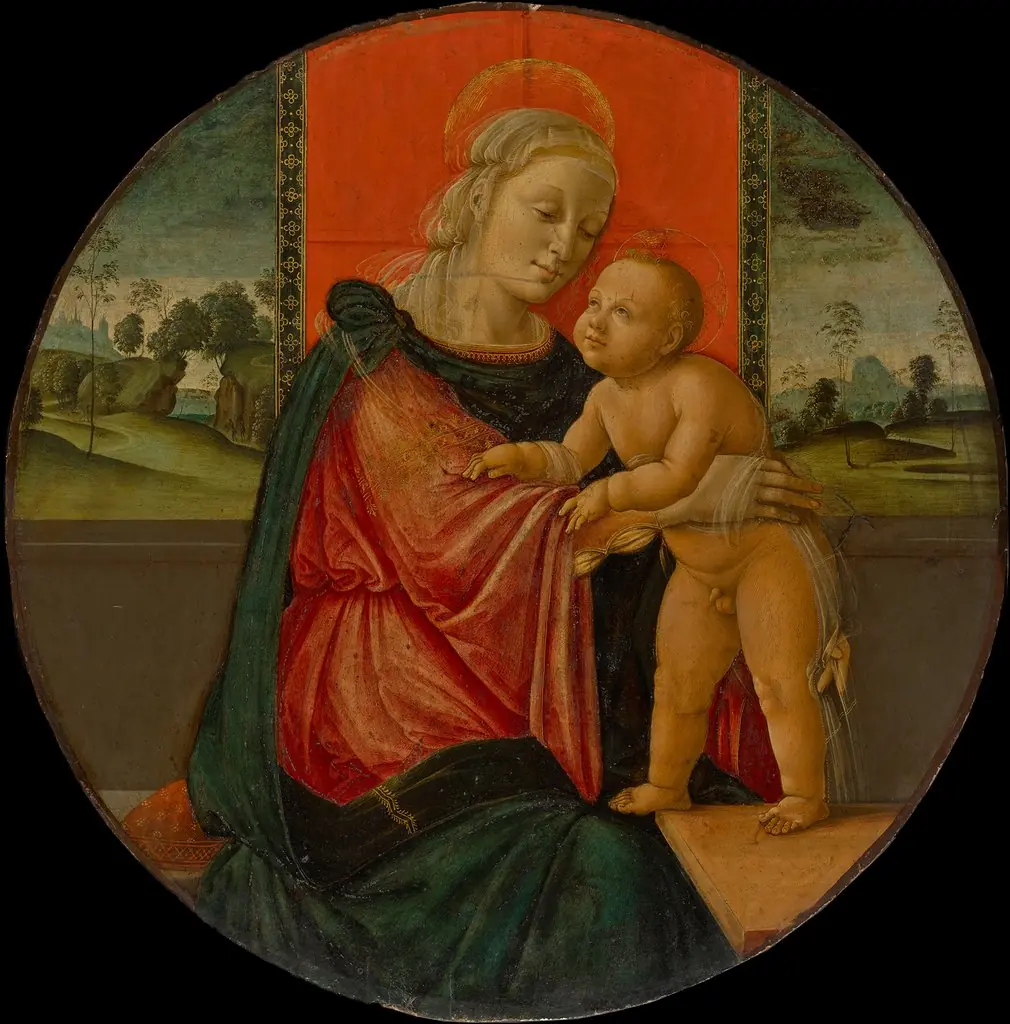
The painting portrays the Virgin Mary cradling the infant Christ Child, accompanied by the infant John the Baptist and Saint Clara, reflecting a common Franciscan devotional theme in early sixteenth-century Sienese art. Mary's central role as the Madonna underscores her intercessory function, while the infant John the Baptist signifies his future role as forerunner of Christ. Saint Clara, founder of the Poor Clares, is included as a saint associated with the Franciscan order, linking the composition to Franciscan spirituality.
The work's iconography combines sacred narrative with hagiographic symbolism, emphasizing divine maternity and Franciscan devotion within a religious context.
Technique & Style
Madonna and Child with the Infant John the Baptist and St Clara is executed in oil paint on a wooden panel, a common technique for early sixteenth-century Italian panels. The work is anonymous, but its place of manufacture is given as Siena and its inception dated to 1520. As a religious painting it follows the devotional imagery typical of the period, presenting the Virgin, the Christ Child, the infant John the Baptist, and Saint Clara in a unified composition. No further details about the artist's handling or the painting's current condition are provided in the sources.
Overview
The oil painting presents a quiet domestic scene centered on the Virgin Mary holding the infant Jesus. Flanking them are the young John the Baptist, clutching a diminutive cross, and Saint Clara, whose gaze conveys calm attentiveness. The composition is arranged within a warm interior, emphasizing the intimate interaction among the figures.
History & Provenance
Specific details regarding the artwork’s creation date, artist, and ownership history are not provided in the available information. Consequently, its chronological placement and prior collections remain undocumented, limiting a fuller contextual understanding of its origin and subsequent journey.
Artist & collection