Artwork
Madonna and Child with John the Baptist
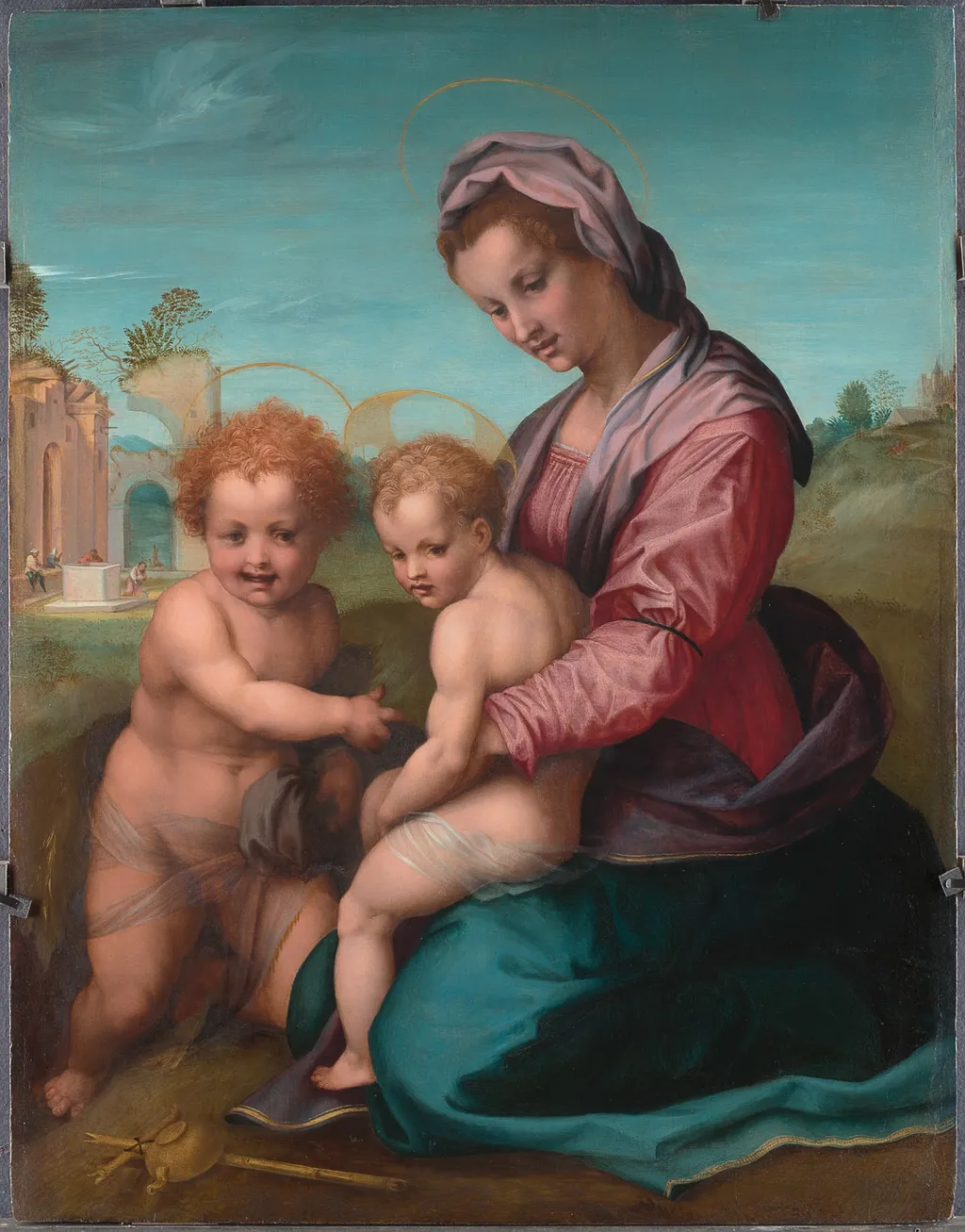
Madonna and Child with John the Baptist is a wood painting by the High Renaissance artist Franciabigio. It dates from 1518 and is held in the collection of the Kunsthistorisches Museum. Created in 1518, this panel painting on poplar wood presents a devotional scene typical of the High Renaissance.
About this work
Subject & Meaning
As a work of religious art, the subject matter focuses on these three sacred figures interacting within the frame.
The painting depicts a religious scene centered on the main subject of the Madonna and Child. The composition includes the Virgin Mary and the Christ Child, accompanied by the figure of John the Baptist. As a work of religious art, the subject matter focuses on these three sacred figures interacting within the frame.
The iconography establishes a traditional devotional image common to the genre, highlighting the relationship between the holy mother, the infant Jesus, and the future prophet.
Technique & Style
Executed in 1518 by Franciabigio, this religious painting depicts the Virgin Mary with the Christ Child and John the Baptist. The work is realized on a support of poplar wood. Visually, the composition arranges the three sacred figures within a vertical format measuring 144 cm in height and 88.5 cm in width. The piece is classified as a painting and remains part of the collection at the Kunsthistorisches Museum.
Context
Scholarship on the Madonna and Child with John the Baptist centers on its early 16th-century provenance and artistic significance within the Florentine Renaissance. The work, painted by Franciabigio in 1518 on poplar wood, is housed in the Kunsthistorisches Museum in Vienna and exemplifies devotional imagery of the period. Its depiction of the Christ Child, Mary, and John the Baptist reflects evolving theological interpretations in sacred art, particularly the inclusion of John as a child-precursor to Christ.
Critical reception has highlighted the painting's compositional harmony and naturalistic detail as characteristic of Franciabigio's mature style, situating it within broader discussions of High Renaissance workshops and the transition toward Mannerist tendencies. Art historical analysis emphasizes its role in understanding the artist's development alongside contemporaries like Raphael, while its material and technical execution informs studies of Venetian-influenced panel painting in Northern Italy.
Overview
Created in 1518, this panel painting on poplar wood presents a devotional scene typical of the High Renaissance. Executed by the Florentine artist known as Franciabigio, the work is part of the collection of the Kunsthistorisches Museum in Vienna. It brings together the Virgin Mary, the infant Christ, and a youthful John the Baptist in a compact, intimate composition.
History & Provenance
The painting entered the holdings of the Kunsthistorisches Museum during the 19th century, where it remains on display. Its attribution to Franciabigio, whose full name was Francesco di Cristofano, has been supported by stylistic analysis and documentary evidence linking the work to his workshop in Florence.
Own this work as a print
Artist & collection
Artist
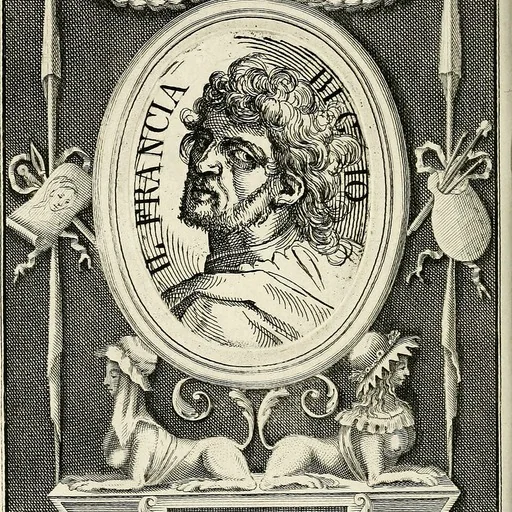
Franciabigio (1482 – 24 January 1525) was an Italian painter of the Florentine Renaissance. His true name may have been Francesco di Cristofano; he is also referred to as either Marcantonio Franciabigio or Francia Bigio.

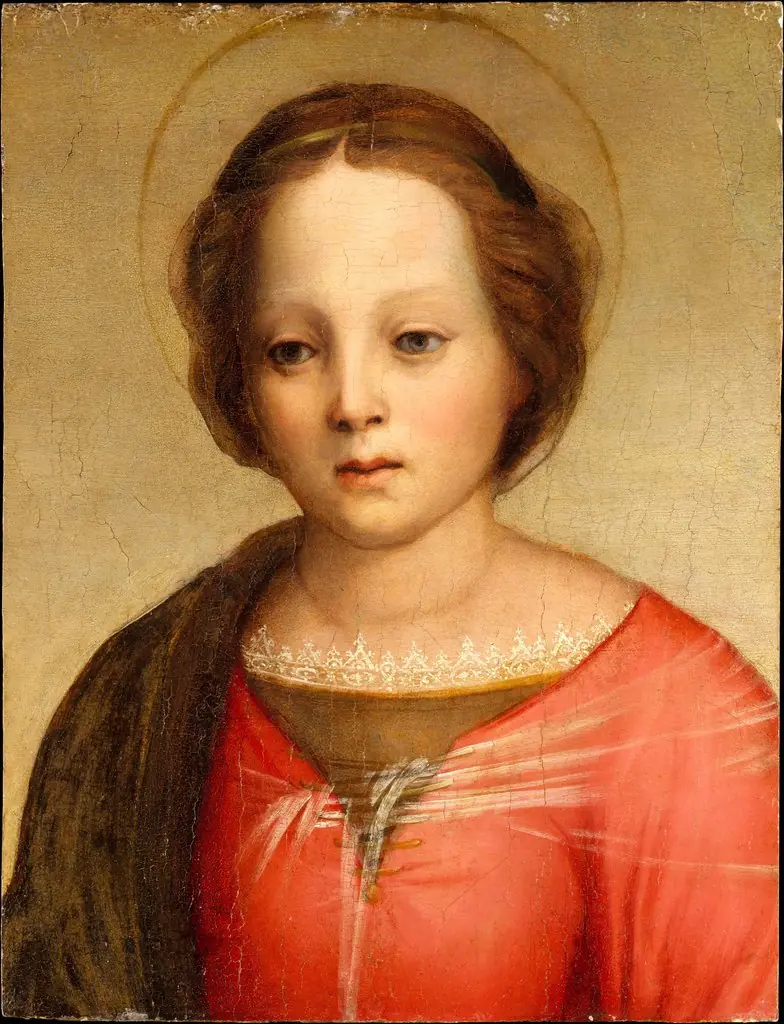
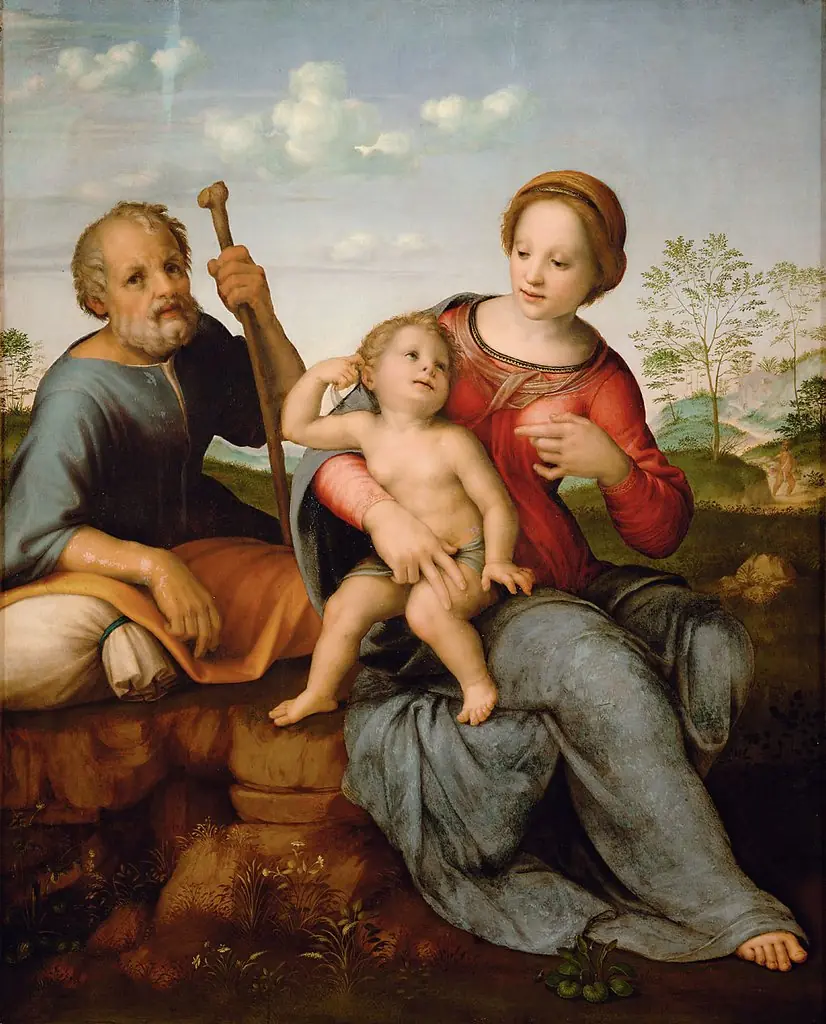
- Madonna and Child with Saint John the Baptist
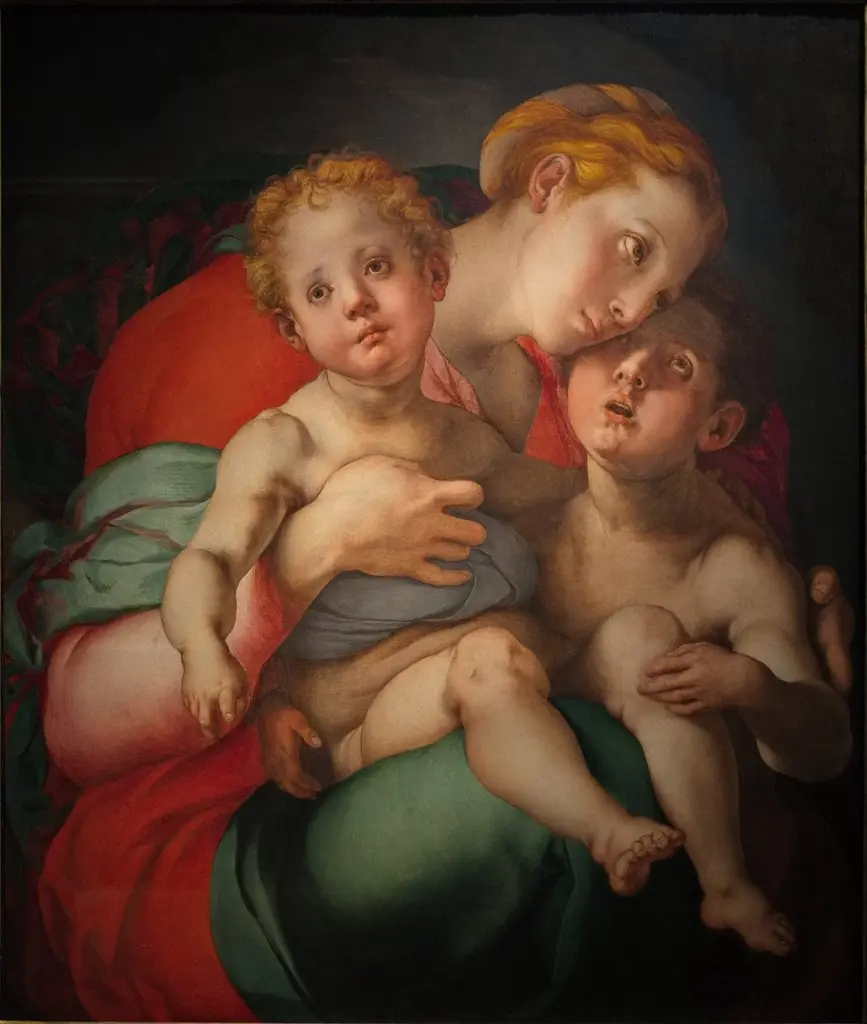 Madonna and Child with Saint John the Baptist
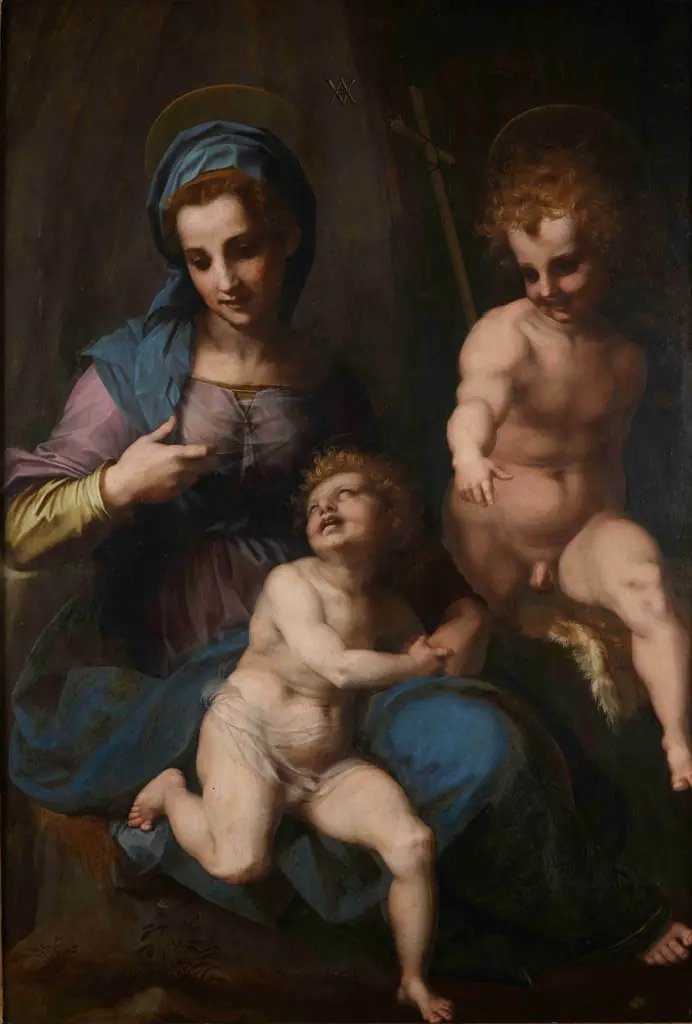 Madonna and Child with Young St John
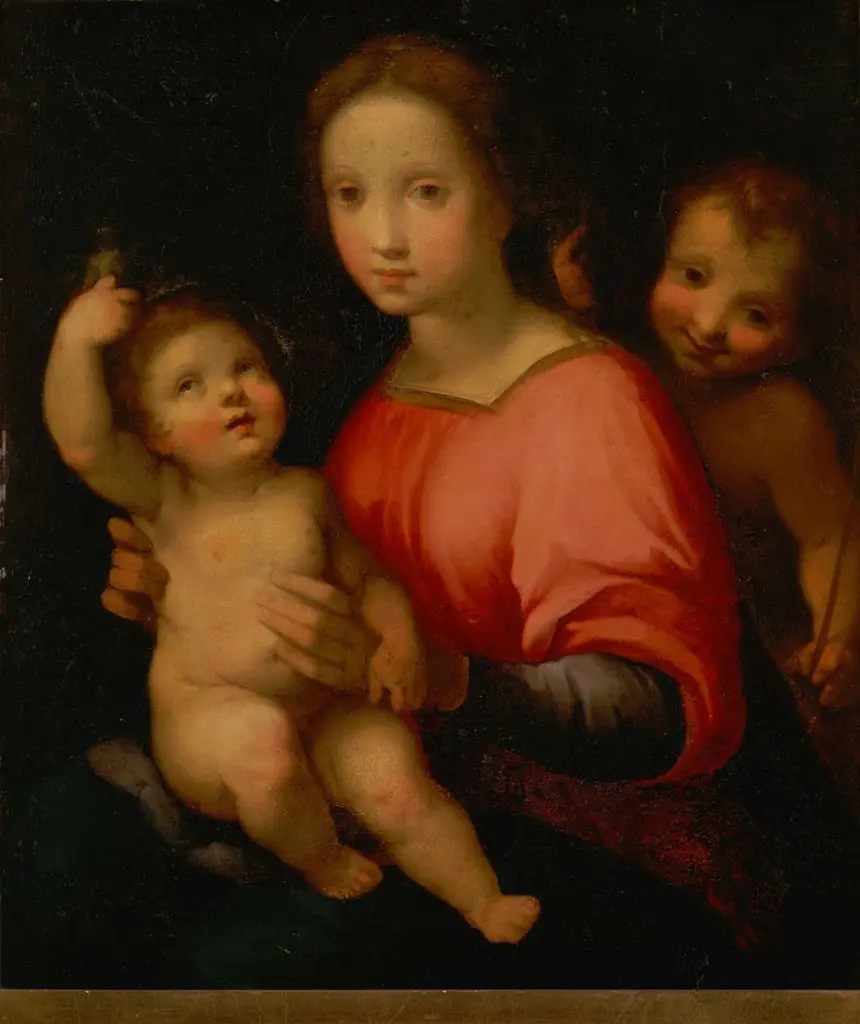 Madonna and Child with Saint John
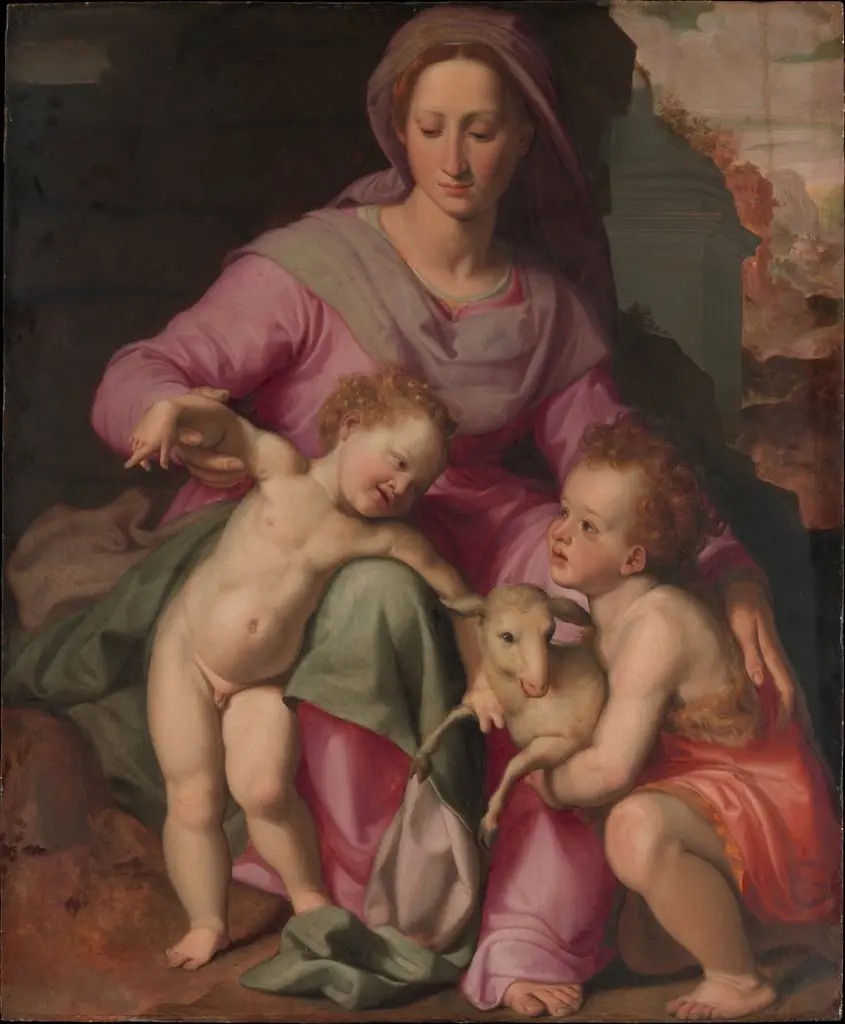 Madonna and Child with the Infant Saint John the Baptist
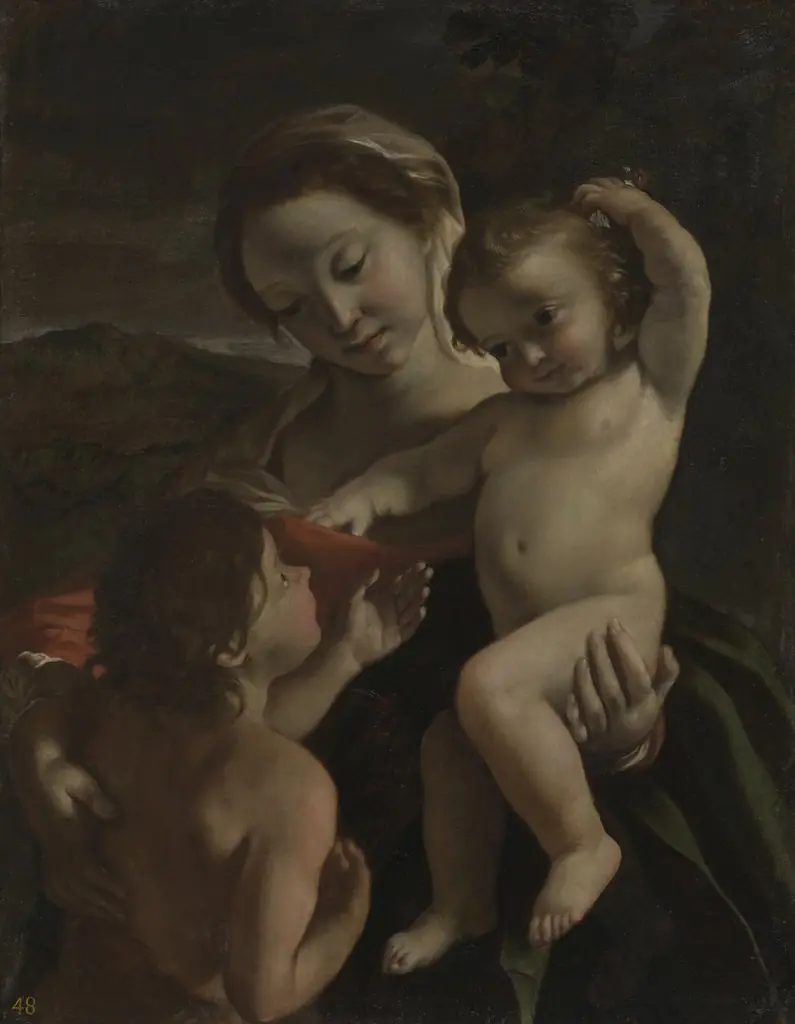 Madonna and Child with the Infant Saint John the Baptist
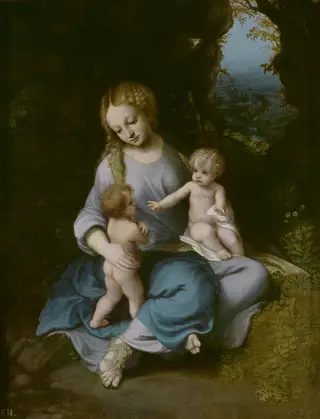 Madonna and Child with the Young Saint John
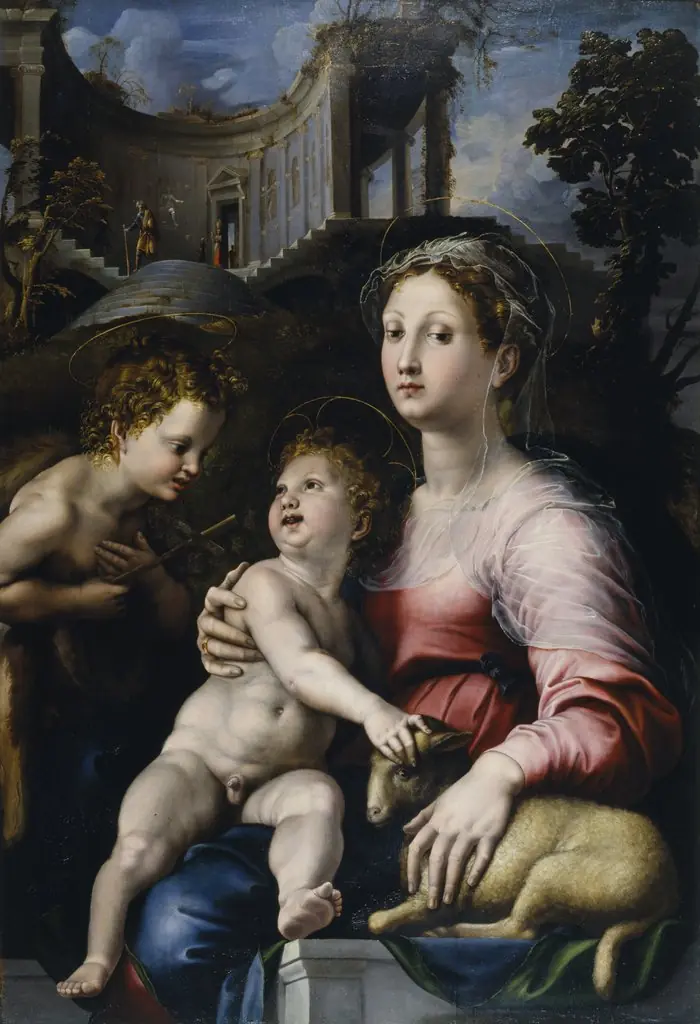 The Madonna and Child with Saint John the Baptist
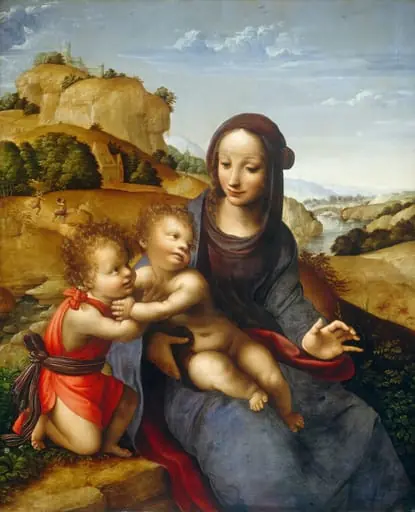 Madonna and Child with the Infant Saint John
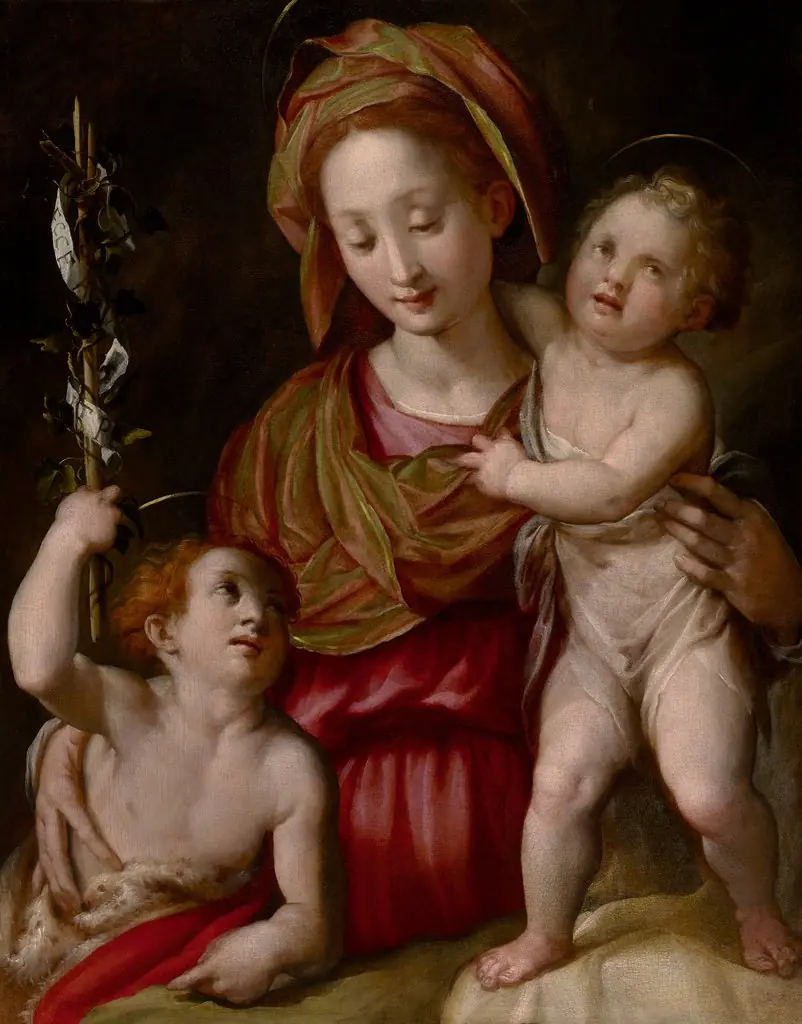 Madonna and Child with the Young St. John the Baptist
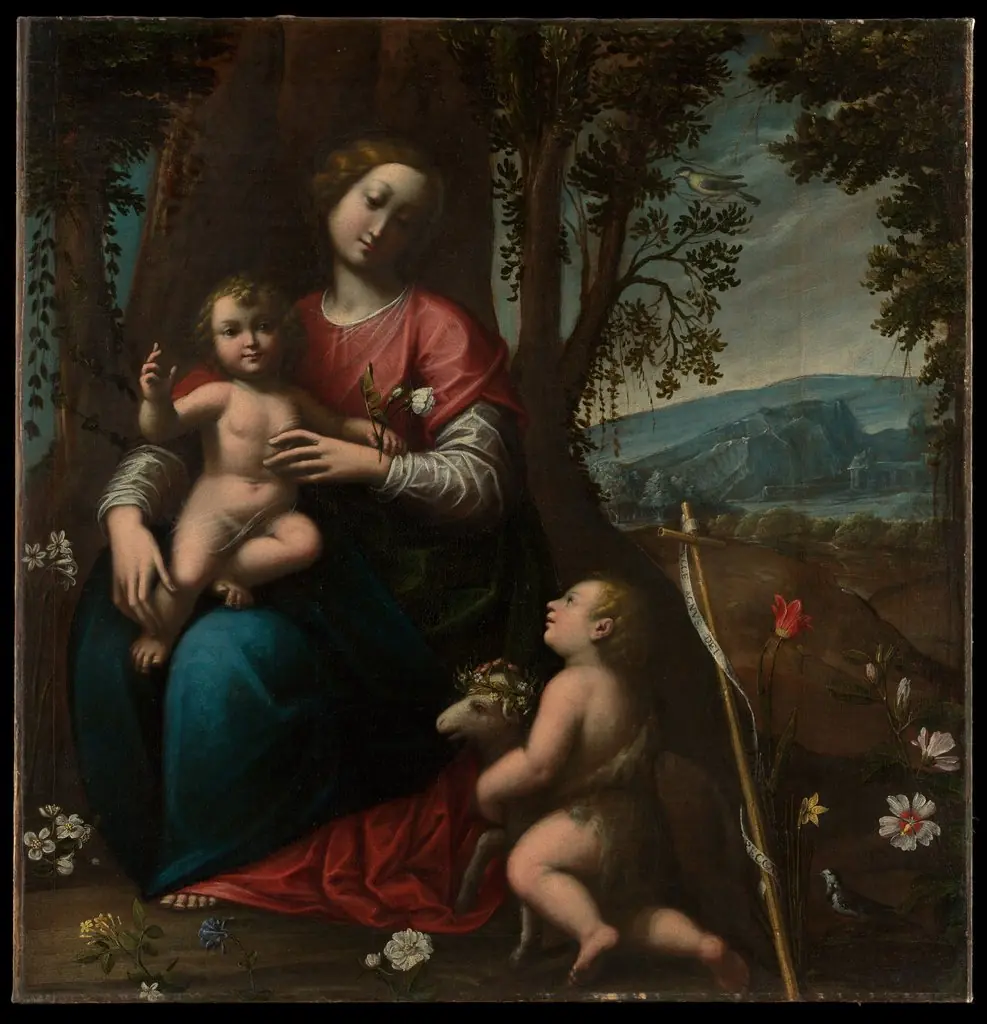 Madonna and Child with the Infant Saint John the Baptist
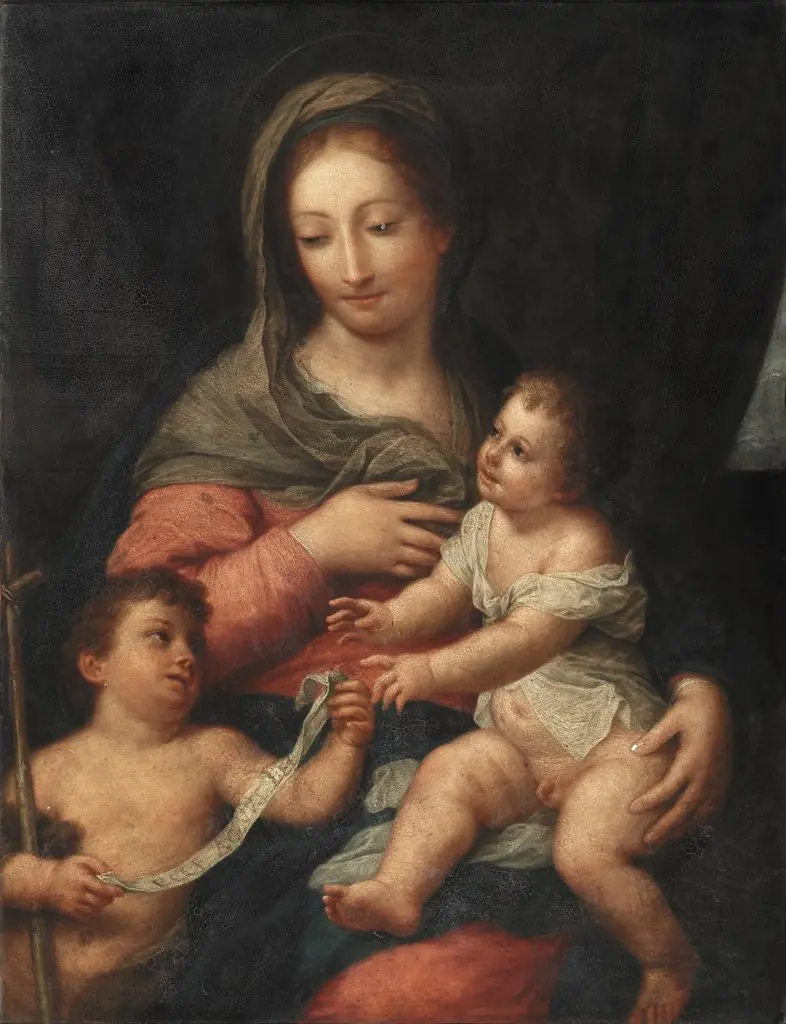 Madonna and Child with the Young Saint John the Baptist