Artwork
Madonna on a Crescent Moon in Hortus Conclusus
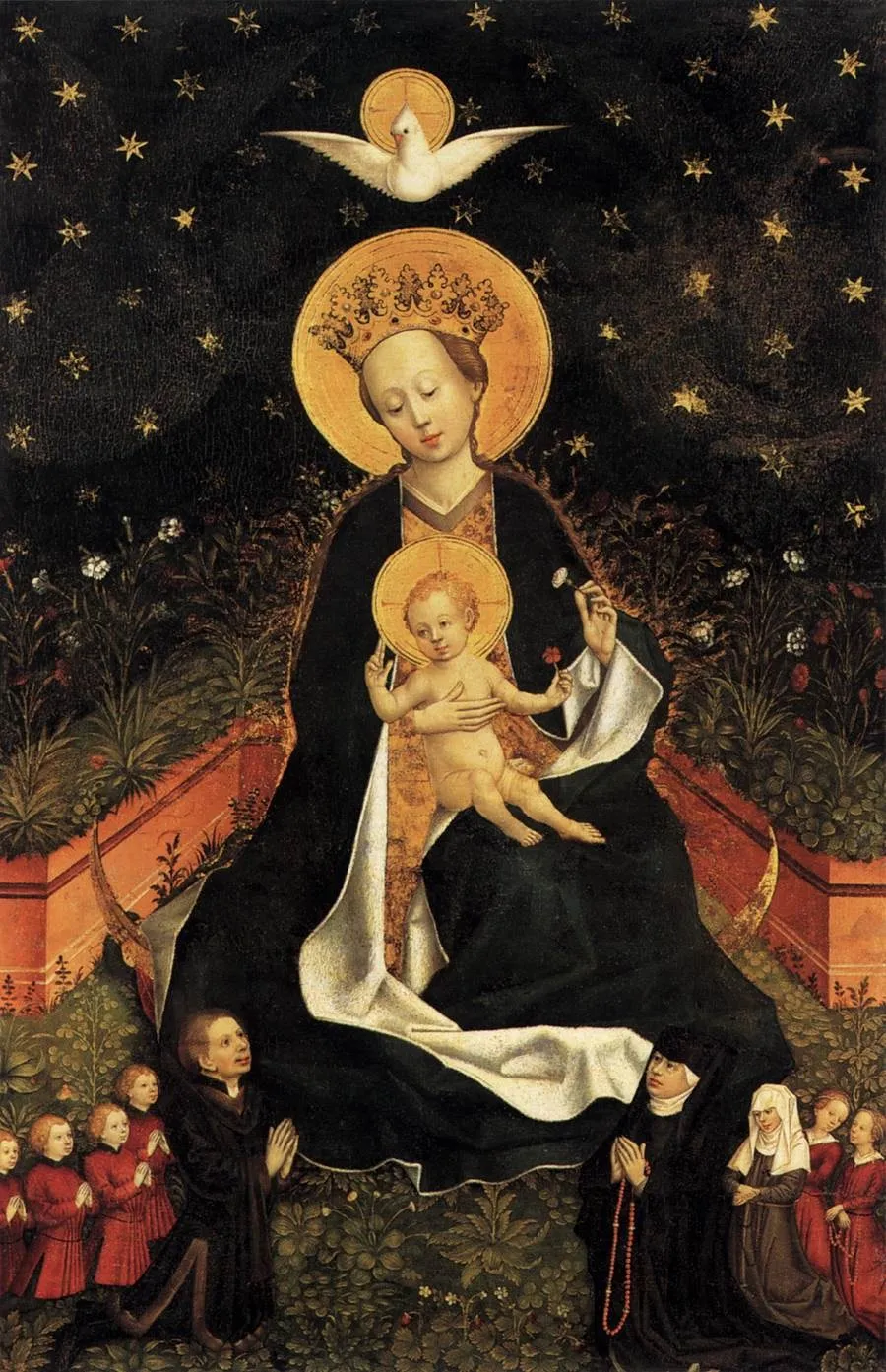
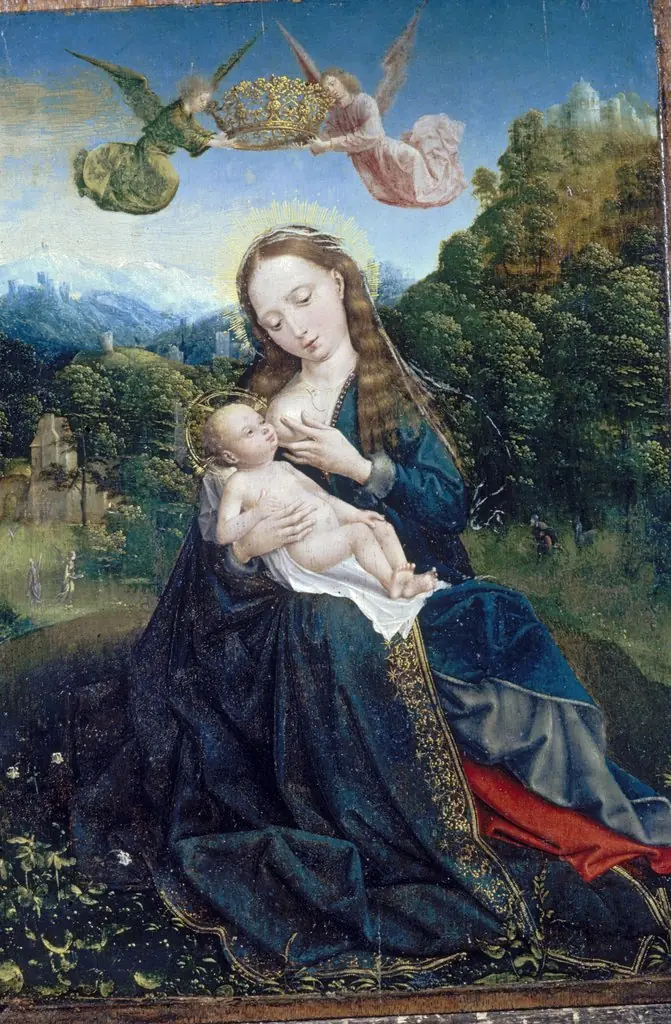
Madonna on a Crescent Moon in Hortus Conclusus is a paint painting. It dates from 1450 and is held in the collection of the Gemäldegalerie Berlin.
About this work
This painting is called Madonna on a Crescent Moon in Hortus Conclusus. It was made in 1450.
The painting is held by the Gemäldegalerie Berlin. It's also known for being created by an unknown artist, referred to as the Master of 1456.
To learn more about the style and techniques used in this painting, look up the technique of sfumato.
Technique & Style
The medium consists of layered paint applied to the prepared wooden surface, a common technique in mid-fifteenth-century Northern European devotional works.
The painting Madonna on a Crescent Moon in Hortus Conclusus is executed on an oakwood panel, serving as both support and structural foundation. The medium consists of layered paint applied to the prepared wooden surface, a common technique in mid-fifteenth-century Northern European devotional works.
Stylistically, the work exhibits precise, delicate handling characteristic of the Master of 1456’s anonymous circle. The figures, particularly the Madonna and Child, are rendered with refined linear detailing, while the hortus conclusus motif is depicted through meticulous botanical accuracy. The crescent moon beneath Mary’s feet and the celestial backdrop reflect a fusion of biblical symbolism and naturalistic observation, achieved through controlled glazing and fine brushwork.
The condition of the panel appears stable, though specific conservation records are not detailed in the available sources.
History & Provenance
Created circa 1450, this panel painting on oak is attributed to an anonymous artist conventionally identified as the Master of 1456. The work depicts the Virgin and Child within an enclosed garden, a motif symbolizing Mary's purity, accompanied by a donor family portrayed in adoration at the figures' sides.
The painting is currently held in the collection of the Gemäldegalerie in Berlin, Germany. While the specific details of its original commission and earlier ownership history are not detailed in the available records, its presence in the Berlin museum establishes its modern provenance.
The painting Madonna on a Crescent Moon in Hortus Conclusus is held in the collection of the Gemäldegalerie in Berlin, Germany. Created around 1450 by an anonymous artist known as the Master of 1456, the work depicts the Virgin and Child within an enclosed garden motif. While the piece is documented as part of the Berlin museum's holdings, the provided sources do not list specific inventory numbers, accession dates, or a history of public exhibitions.
Overview
Created in the mid‑15th century, this oak‑panel painting depicts the Virgin Mary seated upon a crescent moon within an enclosed garden, a visual metaphor drawn from medieval symbolism. The work is attributed to an anonymous figure known to scholars as the Master of 1456 and is part of the collection of the Gemäldegalerie in Berlin.
Subject & Meaning
The composition combines two longstanding iconographic elements: the Virgin as the focal figure of devotion and the hortus conclusus, a Latin term for ‘enclosed garden’ that traditionally represents Mary’s purity and virginity. The crescent moon beneath her adds a celestial dimension, linking the earthly setting to heavenly realms.
Artist & collection

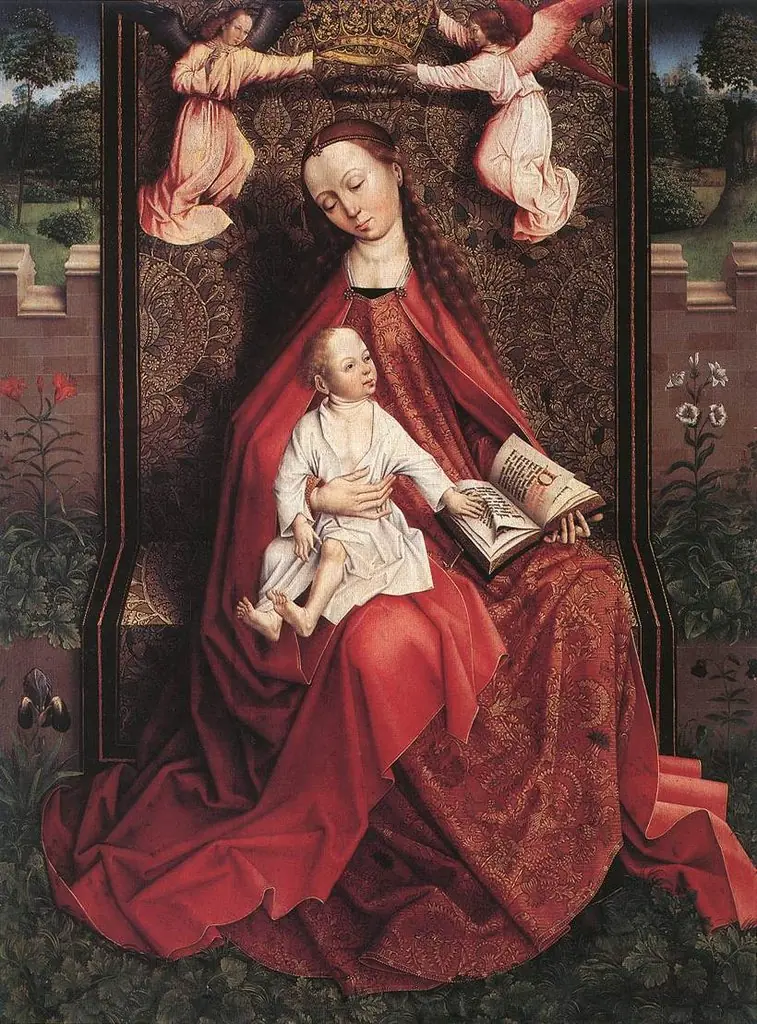 Madonna crowned by angels
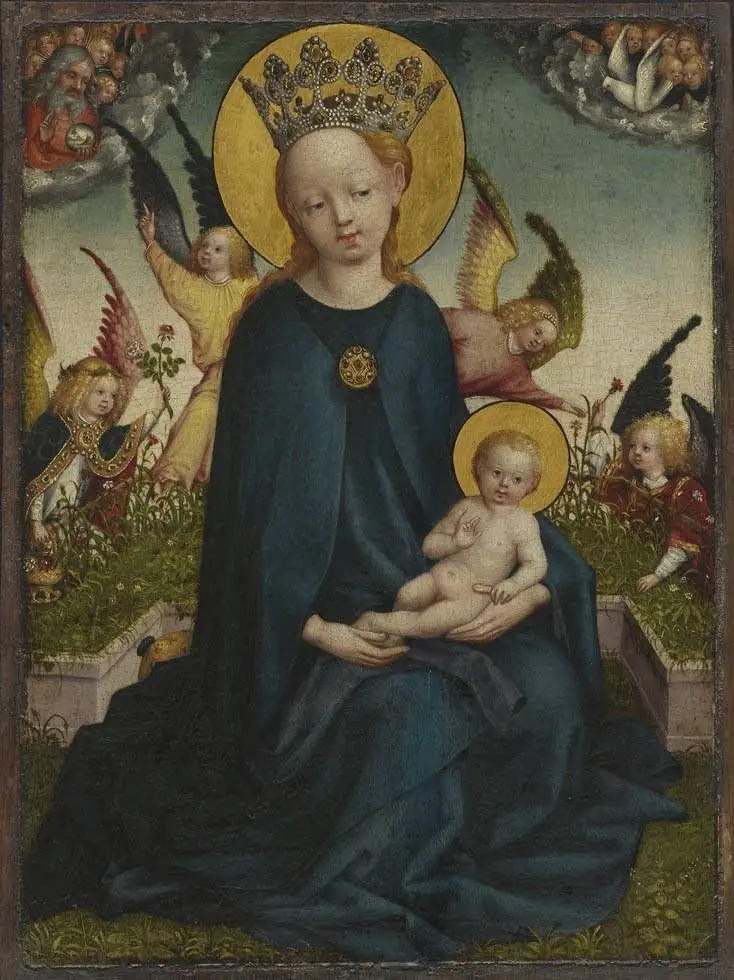 Mary with the Christ-child next to a plant trough
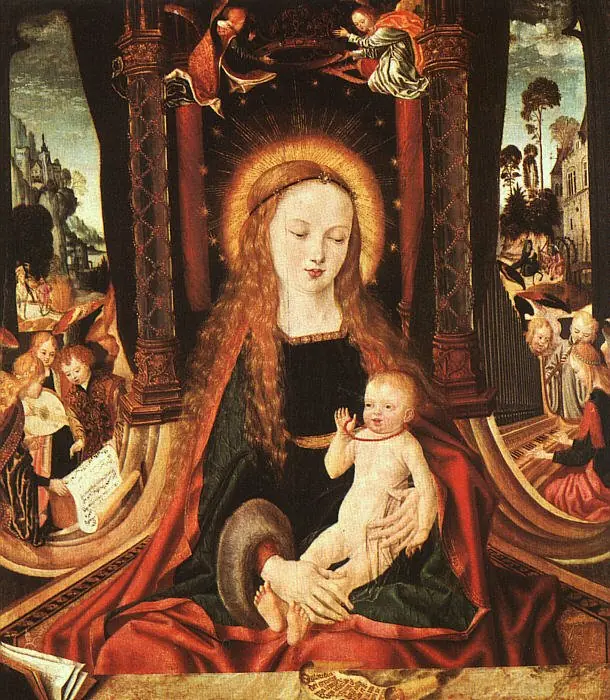 Madonna and Child
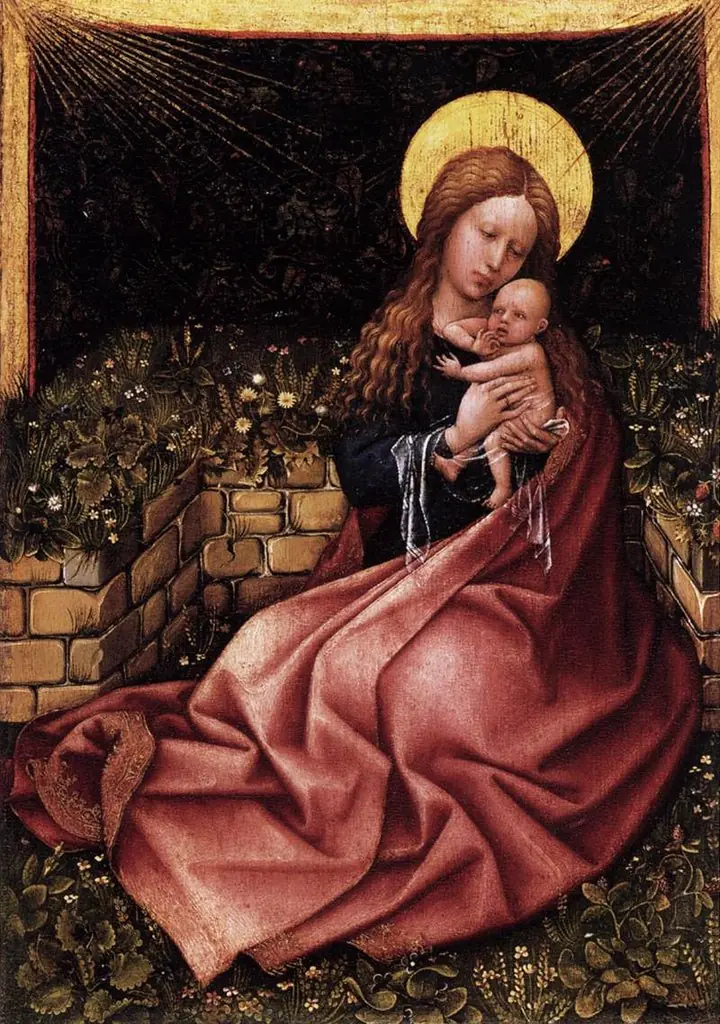 Madonna by a Grassy Bank
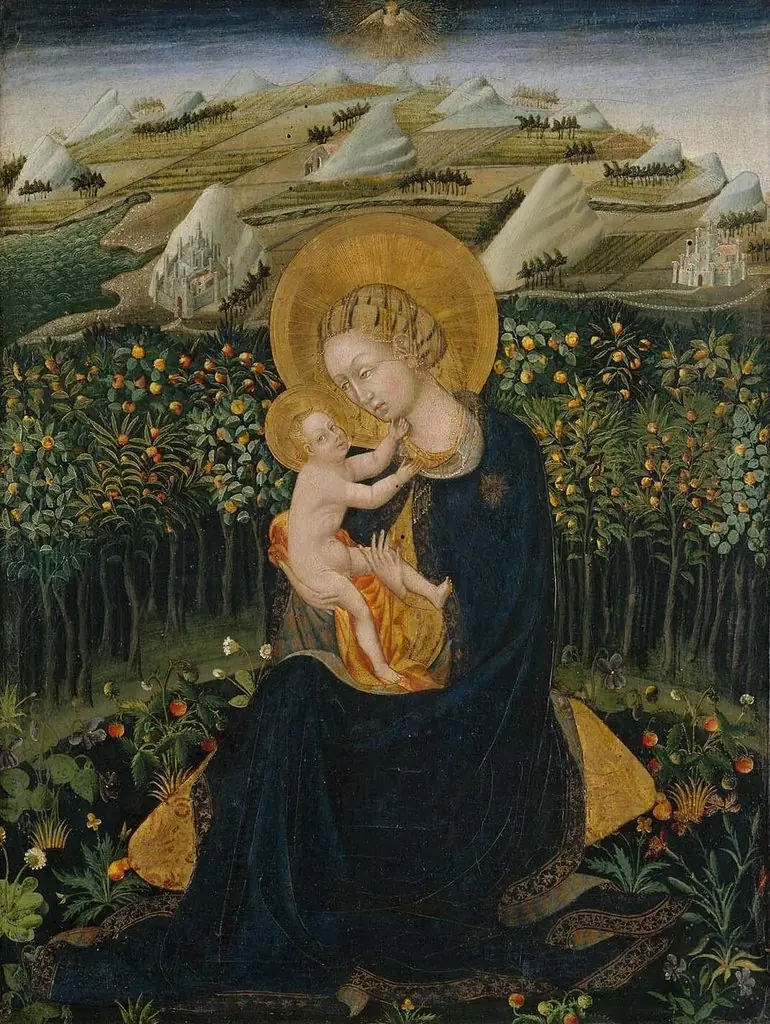 Madonna of Humility
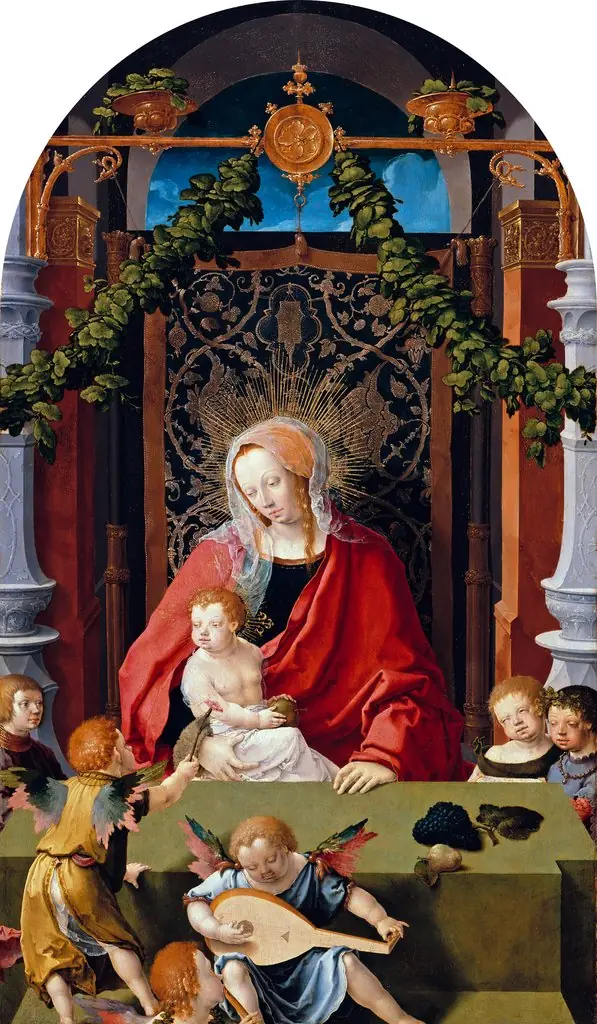 Virgin and Child with Angels
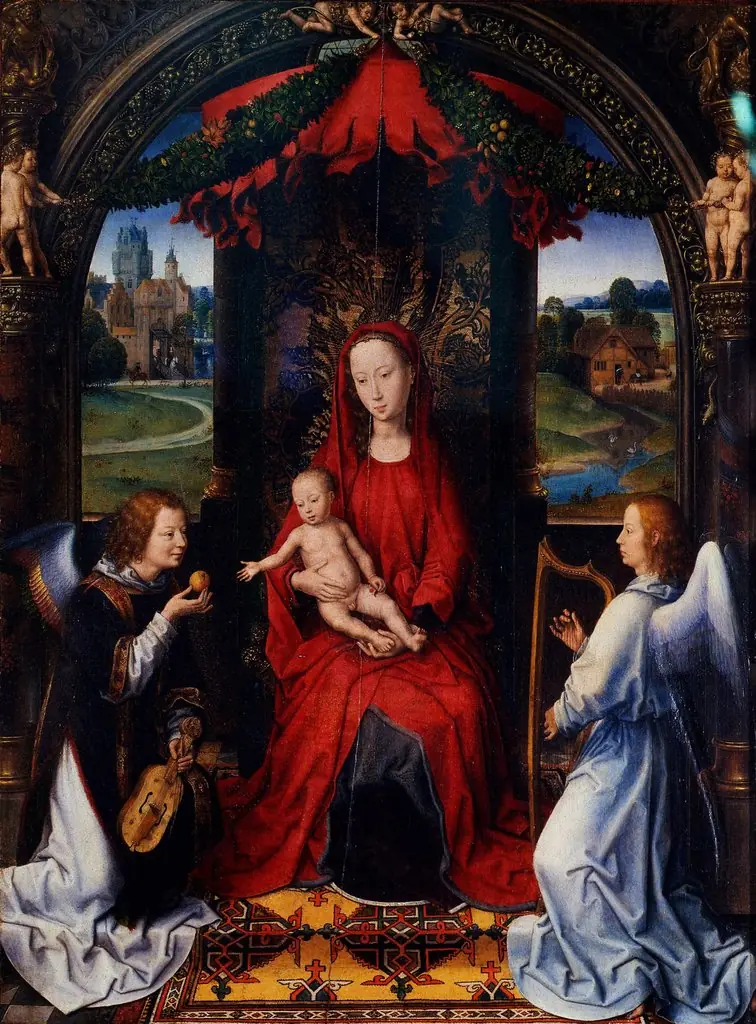 Madonna enthroned with child and two musical angels
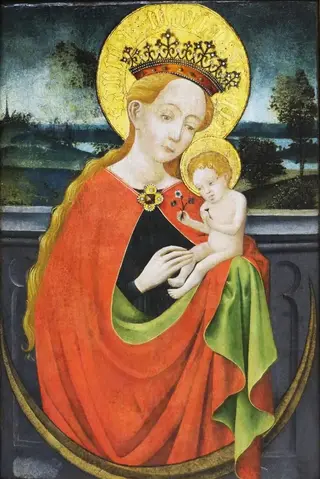 Fecioara cu Pruncul
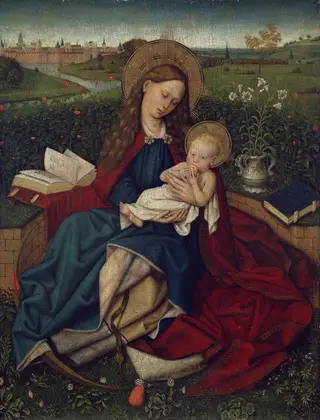 The Madonna of Humility
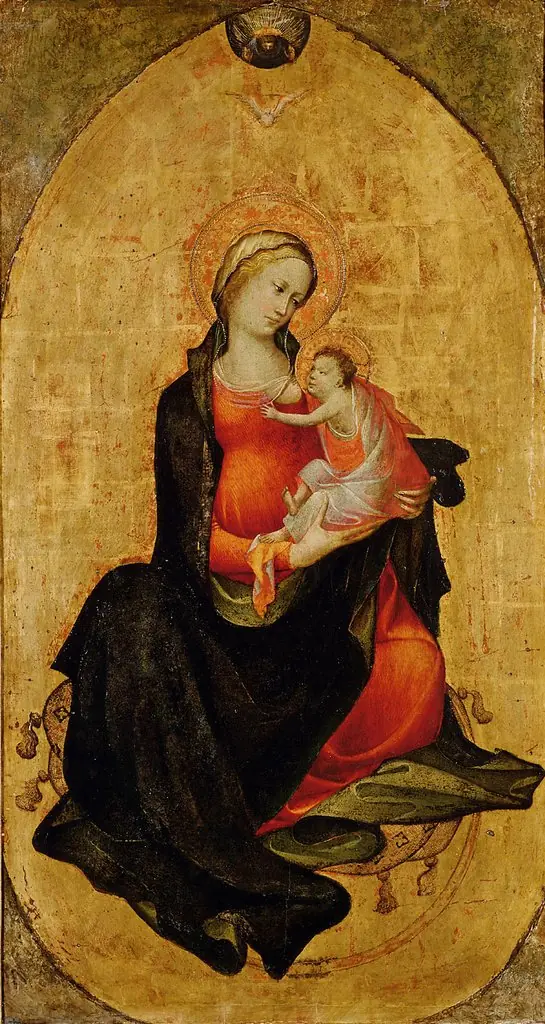 Madonna and child
 Rest on the Flight into Egypt
- Madonna with Angels