Artwork
Madonna and Child
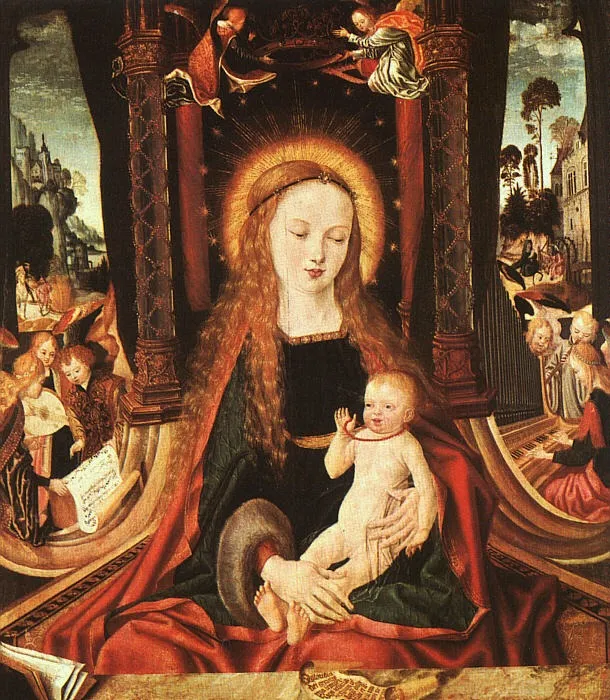
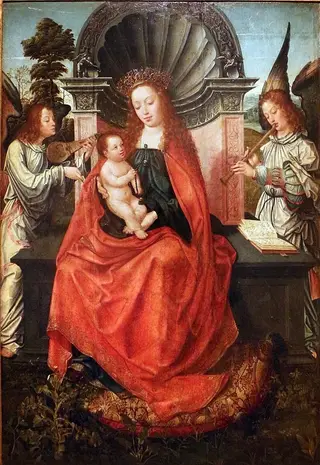
Madonna and Child is a wood painting by the Northern Renaissance artist Master of the Aachen Altar. It dates from 1500 and is held in the collection of the Bavarian State Painting Collections. Created around the turn of the sixteenth century, this panel painting presents the Virgin Mary cradling the infant Jesus.
About this work
Subject & Meaning
The work belongs to the genre of religious art, presenting a devotional image intended for contemplation and veneration.
The painting depicts the Madonna and Child, a central theme in Christian religious art. Mary is shown with the infant Jesus, a subject that emphasizes the divine motherhood and the Incarnation. The work belongs to the genre of religious art, presenting a devotional image intended for contemplation and veneration.
The intimate pairing of mother and child serves as a visual meditation on the human and sacred bond between the Virgin Mary and Christ, a foundational image in Western Christian iconography.
Technique & Style
The Madonna and Child is executed on a wood support, consistent with early sixteenth-century Northern European panel painting practice. The work measures 53.7 cm in height by 47.1 cm in width, a relatively modest format suited to private devotional use. Its medium is classified as painting, and the genre is religious, with the composition centered on the Virgin Mary and the Christ Child as its main subject.
Stylistically, the work is attributed to the Master of the Aachen Altar and dated to 1500, situating it within the late Gothic devotional tradition of the Rhineland. Beyond these cataloged facts, the available sources do not specify the binding medium, pigment palette, surface preparation, or present condition of the panel.
History & Provenance
The painting Madonna and Child was created around the year 1500 by the artist known as the Master of the Aachen Altar. Executed on a wood panel, the work depicts the Virgin Mary and the Christ Child within a religious context. The piece is currently held in the collection of the Bavarian State Painting Collections, where it is housed at the Alte Pinakothek.
No specific details regarding the original commission or the intermediate ownership history prior to its current museum location are provided in the available records.
The Madonna and Child is housed in the Alte Pinakothek within the Bavarian State Painting Collections, listed under inventory number 2178. It was painted circa 1500 by the Master of the Aachen Altar and has been part of the museum's exhibition schedule since at least 1950, featured in the "German Renaissance Masterpieces" display in 1978 and again in the "Religion and Art" exhibition in 2005.
Overview
Created around the turn of the sixteenth century, this panel painting presents the Virgin Mary cradling the infant Jesus. Executed on a wooden support, the work belongs to the late Gothic tradition that flourished in the Rhineland. It is presently housed in Munich’s Alte Pinakothek, where it forms part of the museum’s collection of Northern European religious art.
Context
Cologne’s artistic scene at the end of the Middle Ages was marked by a network of painters who blended International Gothic elegance with emerging Renaissance influences. This painting illustrates that transitional moment, combining a courtly setting with symbolic iconography typical of the region’s devotional practices.
Artist & collection
Artist
The notname Master of the Aachen Altar is given to an anonymous late gothic painter active in Cologne between 1495 and 1520 or 1480 and 1520, named for his master work, the Aachen Altar triptych owned by the Aachen Cathedral Treasury.

- Madonna and child
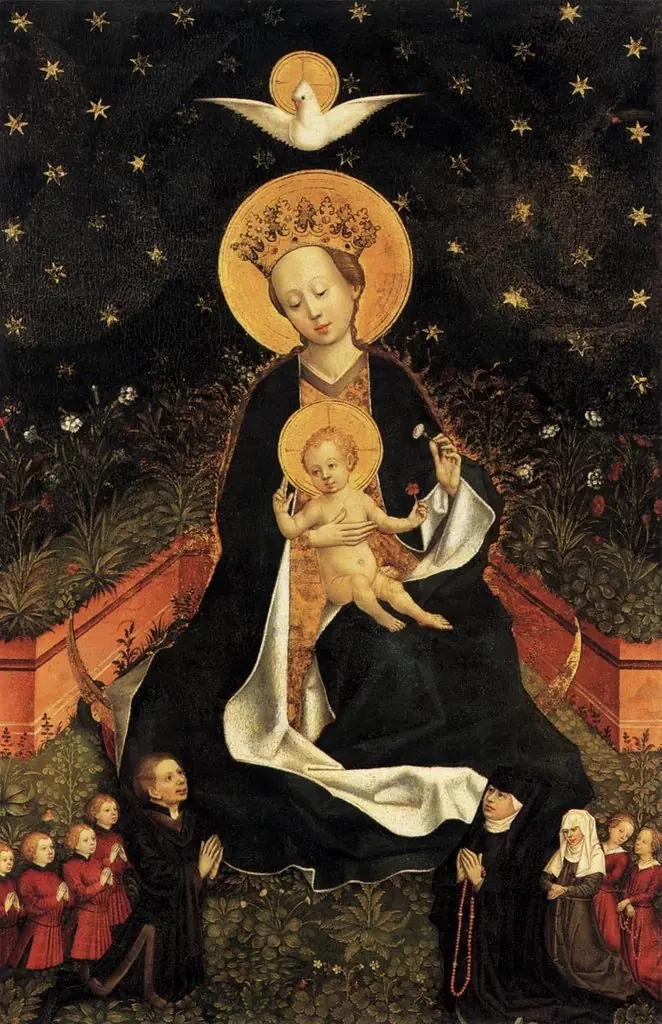 Madonna on a Crescent Moon in Hortus Conclusus
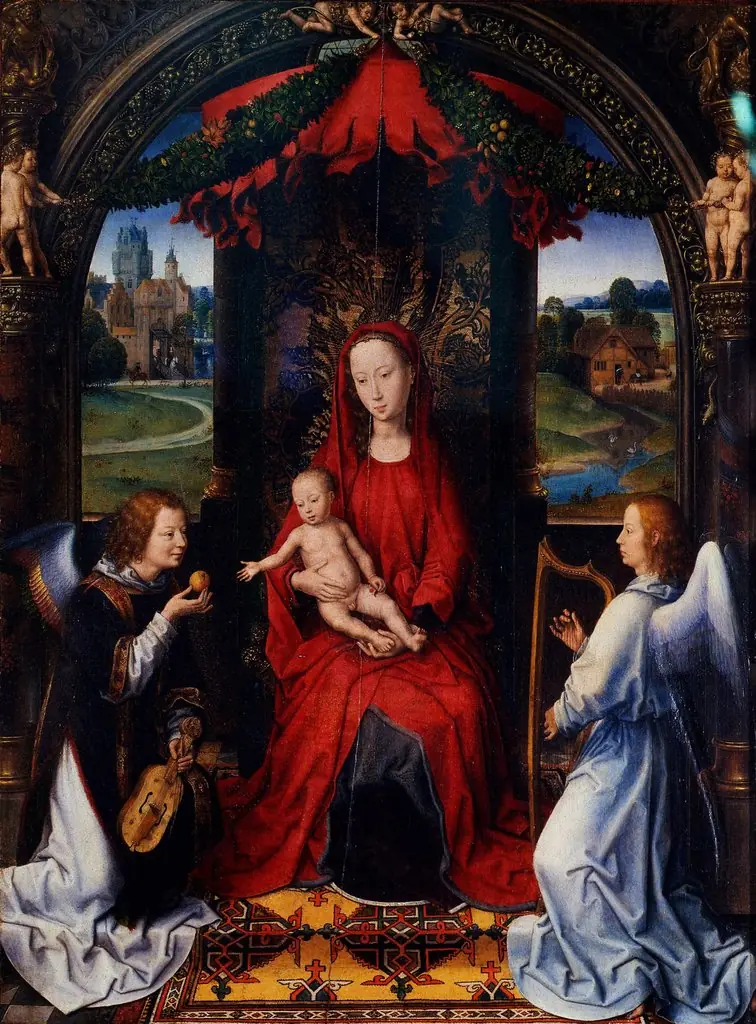 Madonna enthroned with child and two musical angels
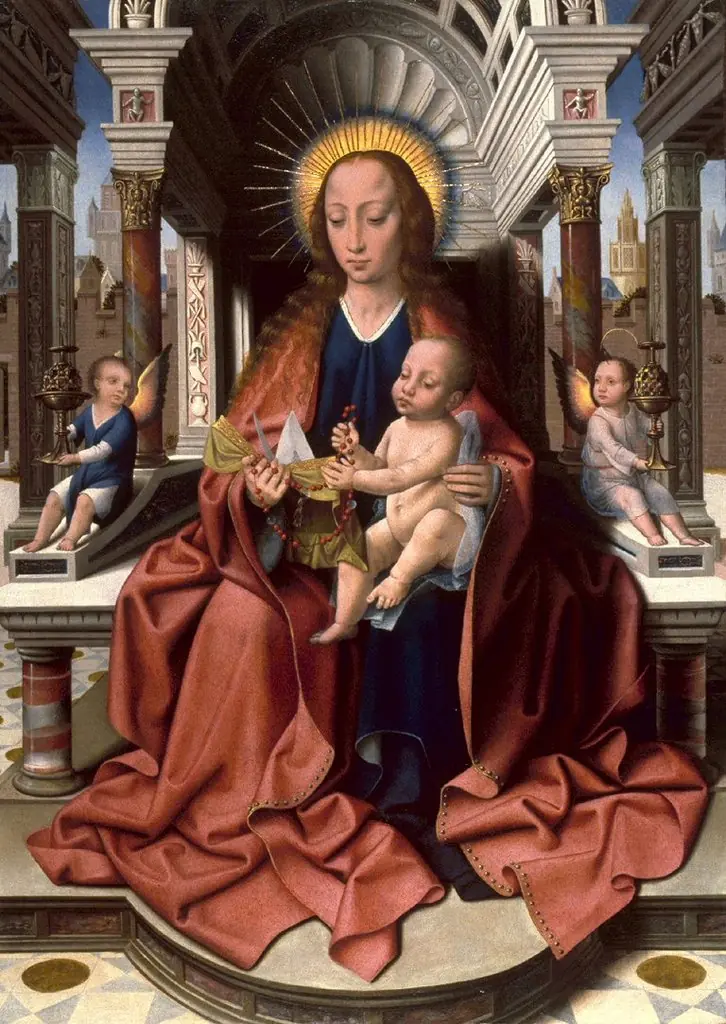 Virgin and Child Enthroned
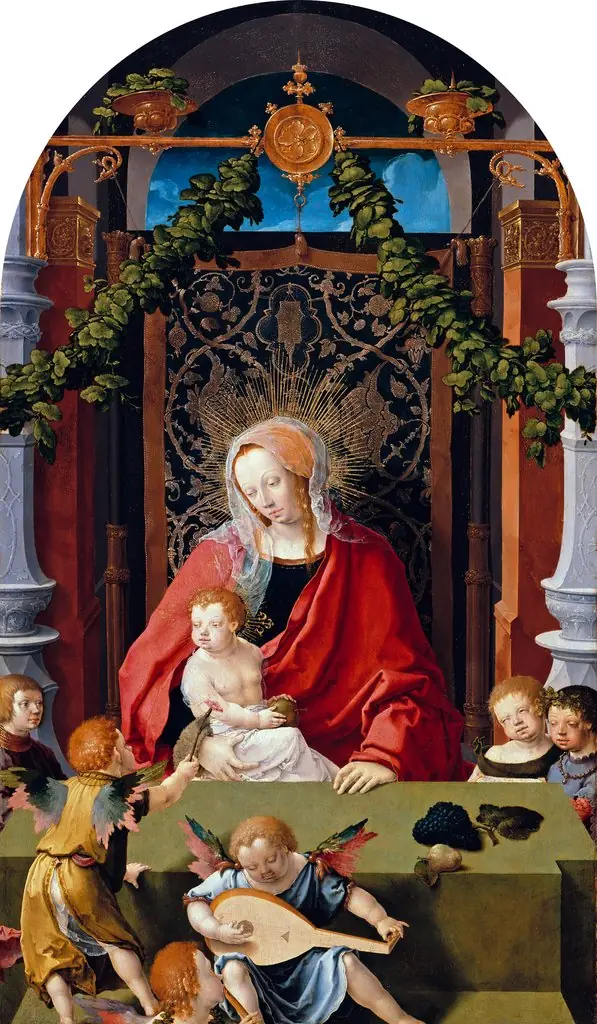 Virgin and Child with Angels
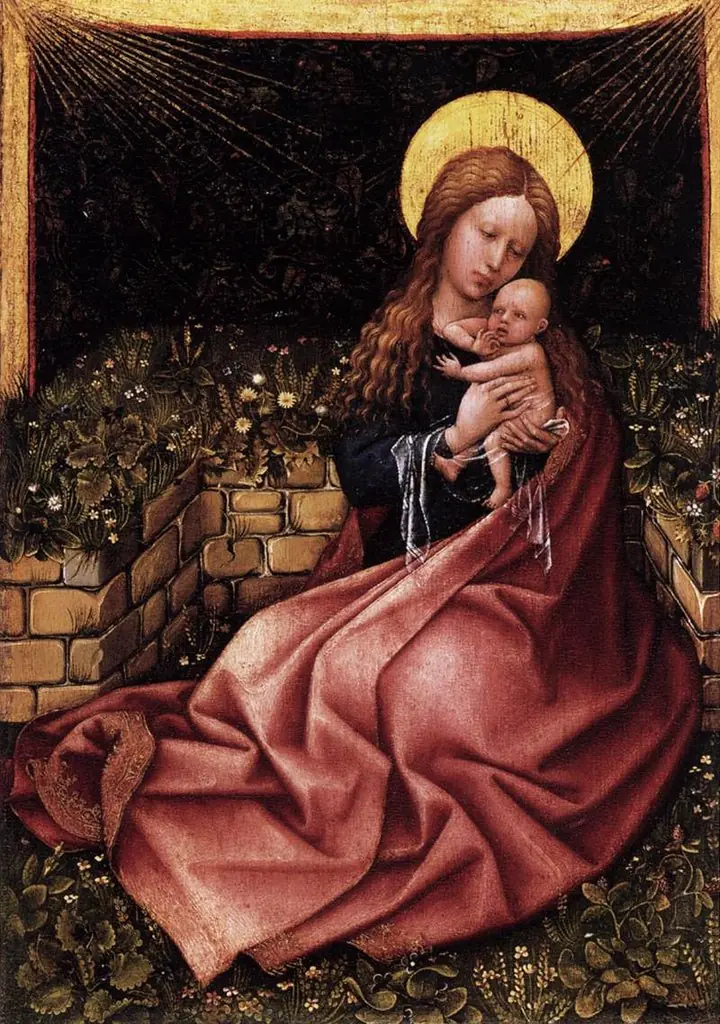 Madonna by a Grassy Bank
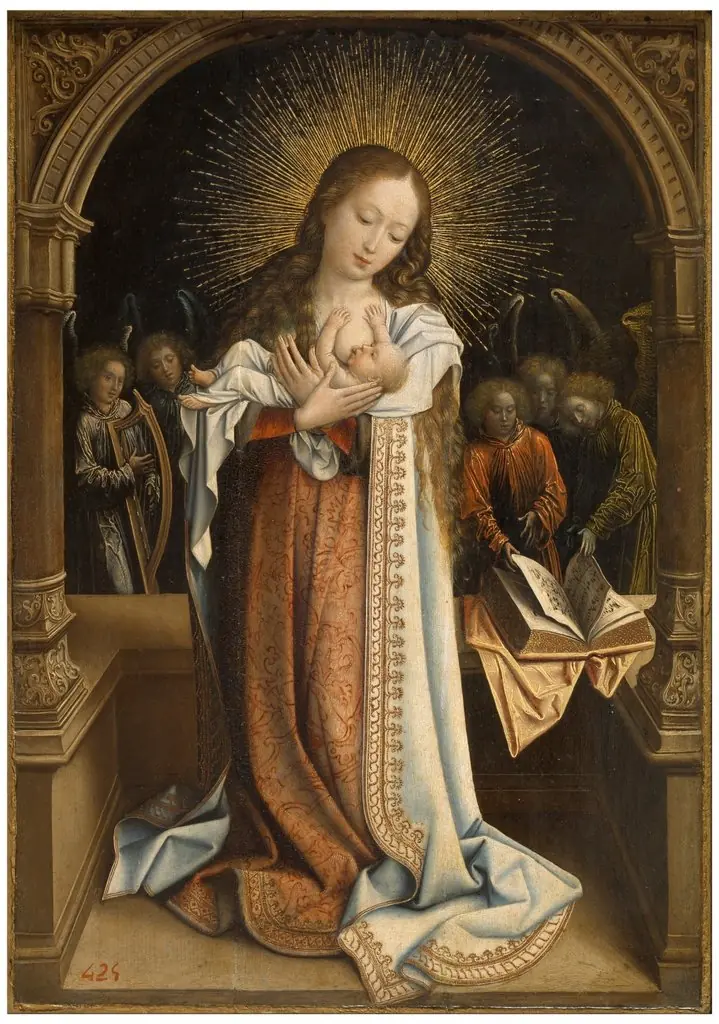 The Virgin Nursing the Child
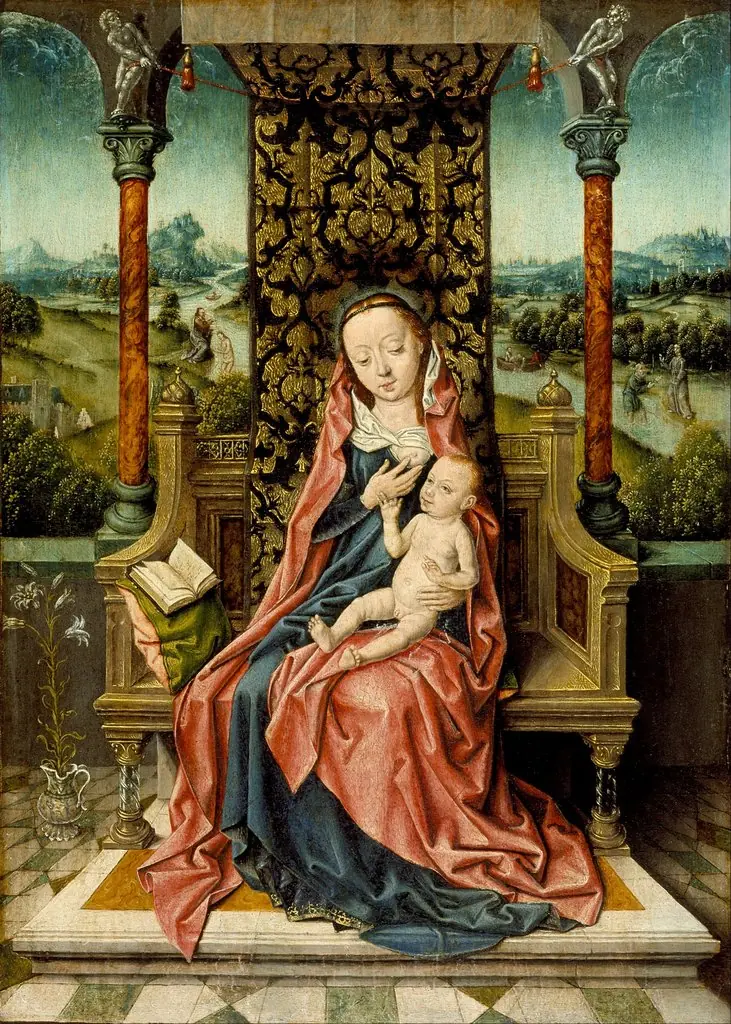 Madonna and Child Enthroned
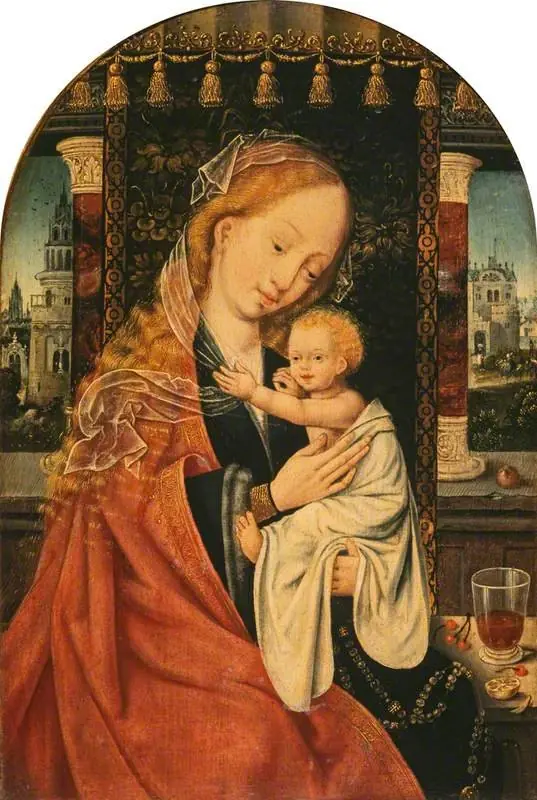 The Virgin and Child
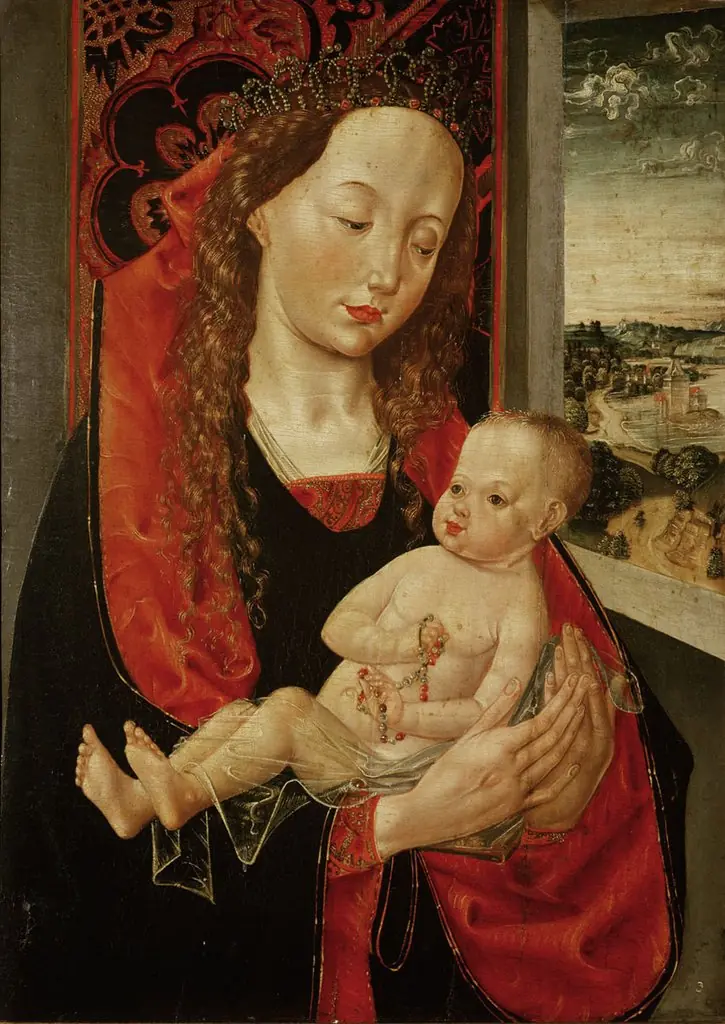 Madonna and Child
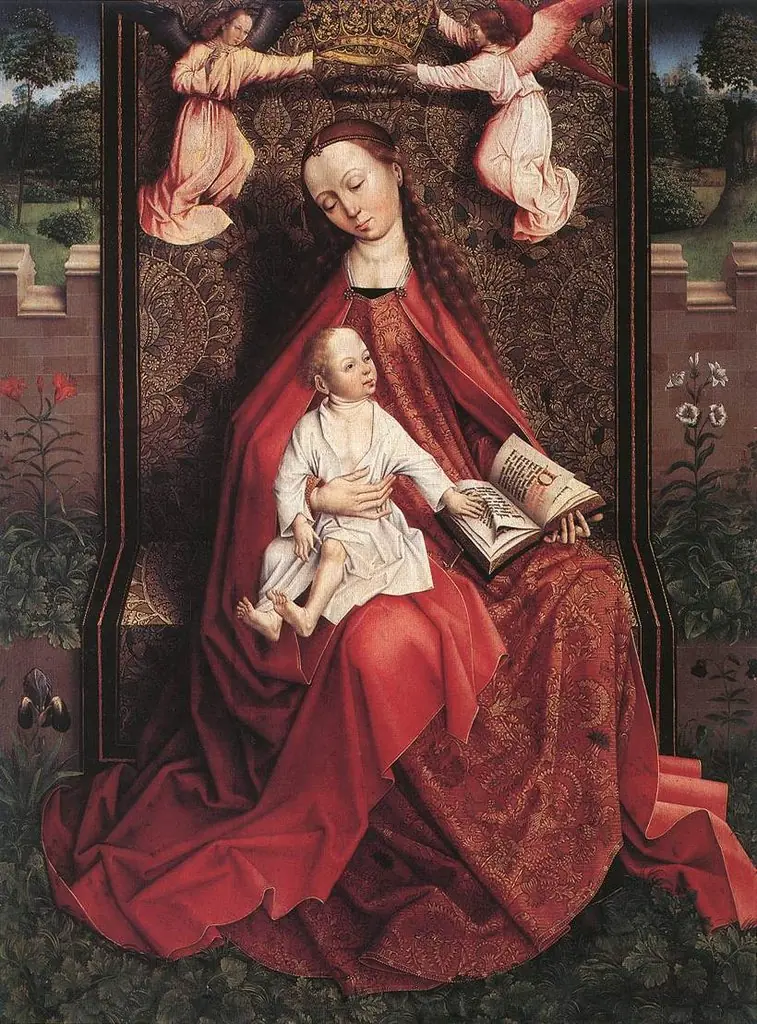 Madonna crowned by angels
 A Virgem Maria e o Menino Jesus com Anjos