Artwork
Madonna with Angels
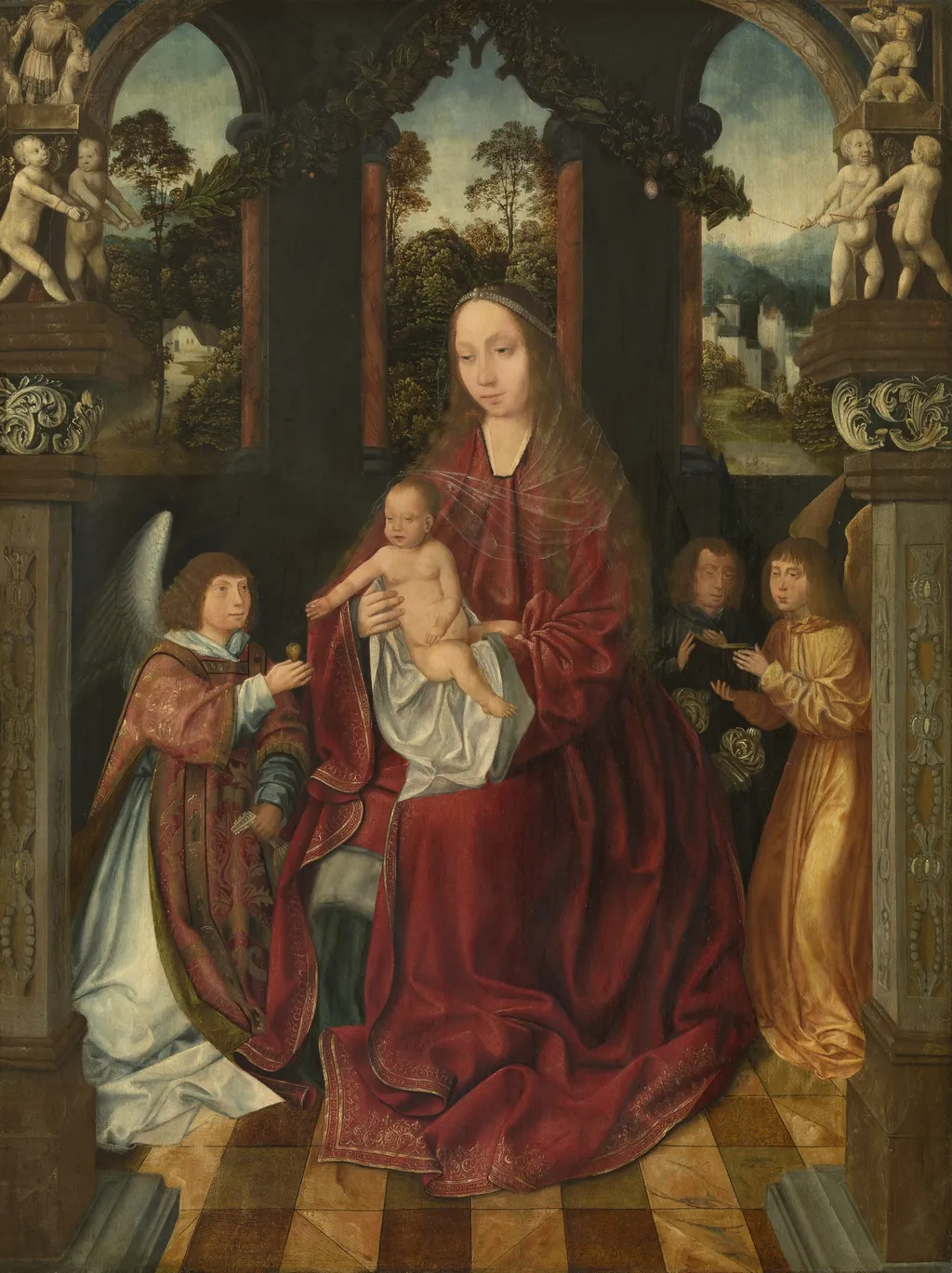
Madonna with Angels is an oil painting by the Northern Renaissance artist Master of the Holy Blood. It dates from 1510 and is held in the collection of the Royal Museum of Fine Arts Antwerp. Created in 1510, this oil painting portrays the Virgin Mary holding the infant Christ, surrounded by two kneeling angels.
About this work
Subject & Meaning
This religious panel painting, created in 1510 by the Master of the Holy Blood, depicts the Madonna and Child as its central subject.
This religious panel painting, created in 1510 by the Master of the Holy Blood, depicts the Madonna and Child as its central subject. The composition features the Virgin Mary accompanied by the Christ Child, a standard iconographic theme in Christian art representing the motherhood of Mary and the incarnation of Jesus. Angels are present in the work, reinforcing the sacred nature of the scene and the divine status of the figures.
The piece serves as a devotional image, utilizing oil paint on panel to render these holy figures for spiritual contemplation within the tradition of Flemish religious art.
Technique & Style
Created in 1510, the Madonna with Angels is an oil painting executed on a wooden panel support. The work measures 73 cm in height and 55 cm in width. Executed by the Master of the Holy Blood, the piece employs oil paint to render its religious subject matter, specifically depicting the Madonna and Child accompanied by angels.
The handling of the medium and the formal qualities align with the artist's known style within the genre of religious art.
Legacy
The Madonna with Angels by the Master of the Holy Blood, painted in 1510, contributed to the evolution of devotional imagery in early 16th-century Flemish art. Its composition, featuring the Virgin Mary with the infant Christ surrounded by angels, influenced subsequent religious paintings emphasizing intimate sacred encounters. The work remains part of the Royal Museum of Fine Arts Antwerp's collection, where it is recognized for its stylistic significance within the Master of the Holy Blood's oeuvre.
Overview
Created in 1510, this oil painting portrays the Virgin Mary holding the infant Christ, surrounded by two kneeling angels. The composition is set against a stone floor and a distant landscape, with small cherubic figures visible through arched openings above. The work exemplifies the devotional imagery typical of early 16th‑century Flemish art and is part of the collection of the Royal Museum of Fine Arts in Antwerp.
History & Provenance
Attributed to the Master of the Holy Blood, an anonymous Early Netherlandish painter active in Bruges, the piece reflects the workshop’s characteristic devotional subjects. After remaining in private hands for several centuries, it entered the Royal Museum of Fine Arts Antwerp’s holdings, where it has been displayed as part of the museum’s Flemish Renaissance collection.
Context
The painting emerges from a period when Bruges artists blended Gothic traditions with emerging Renaissance naturalism, producing works that balanced intricate detail with emotional restraint. Its iconography, Mary, Christ, angels, and cherubs, mirrors the liturgical commissions of the era, intended for private contemplation or chapel adornment, and illustrates the region’s devotional practices during the early 1500s.
Own this work as a print
Artist & collection
Artist
Master of the Holy Blood (active 1510–1520) was an Early Netherlandish painter, whose workshop was located in Bruges (Belgium).

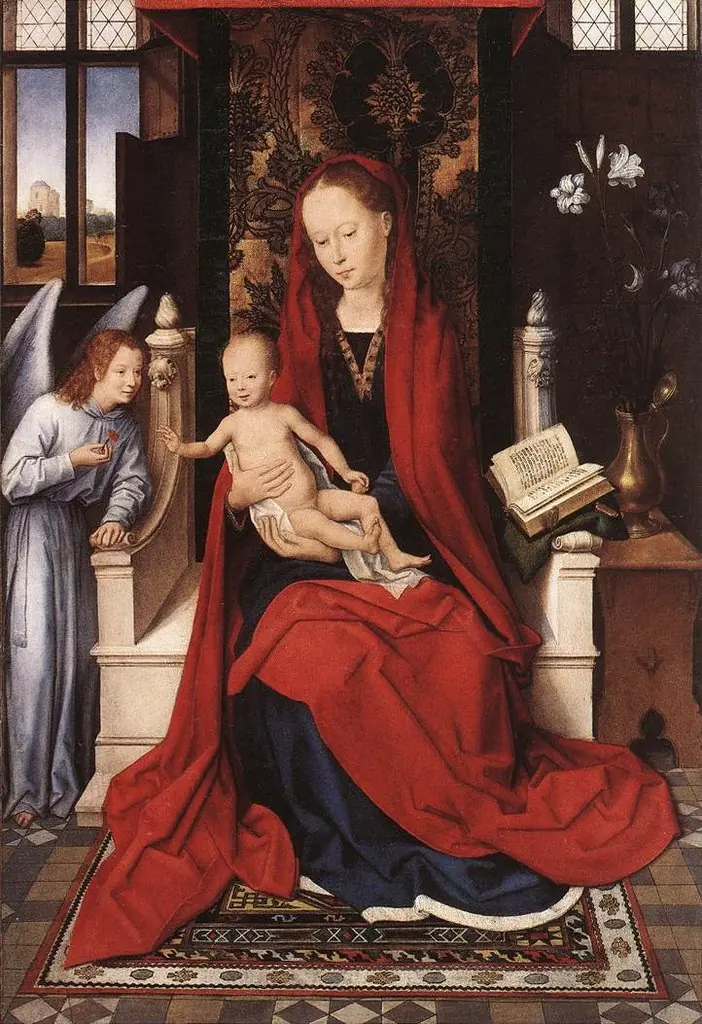 Enthroned Madonna and Child with Angel
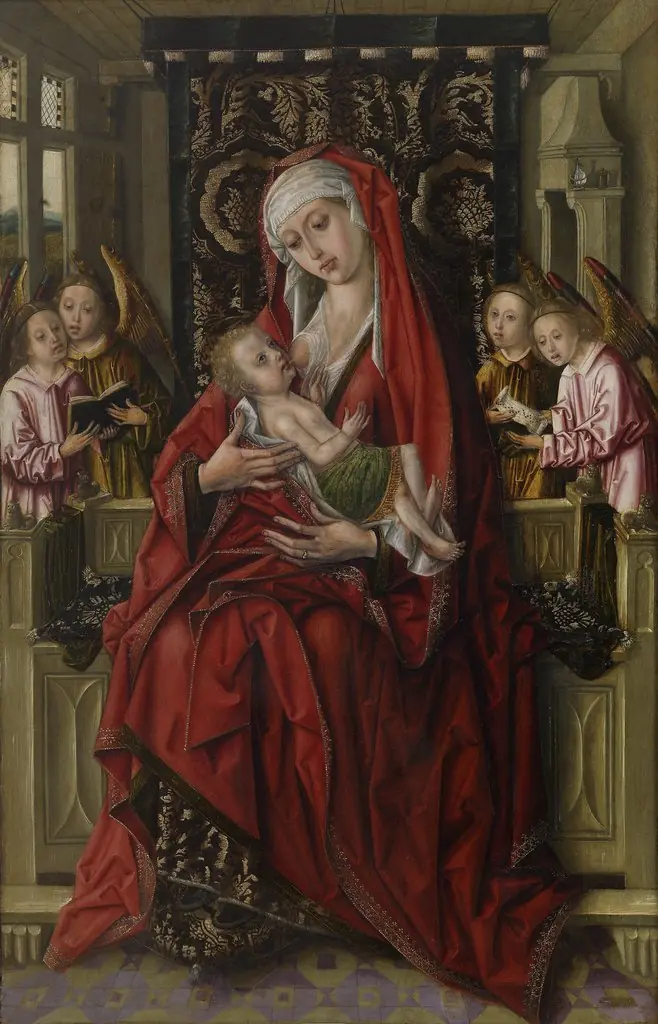 The Virgin Nursing the Child
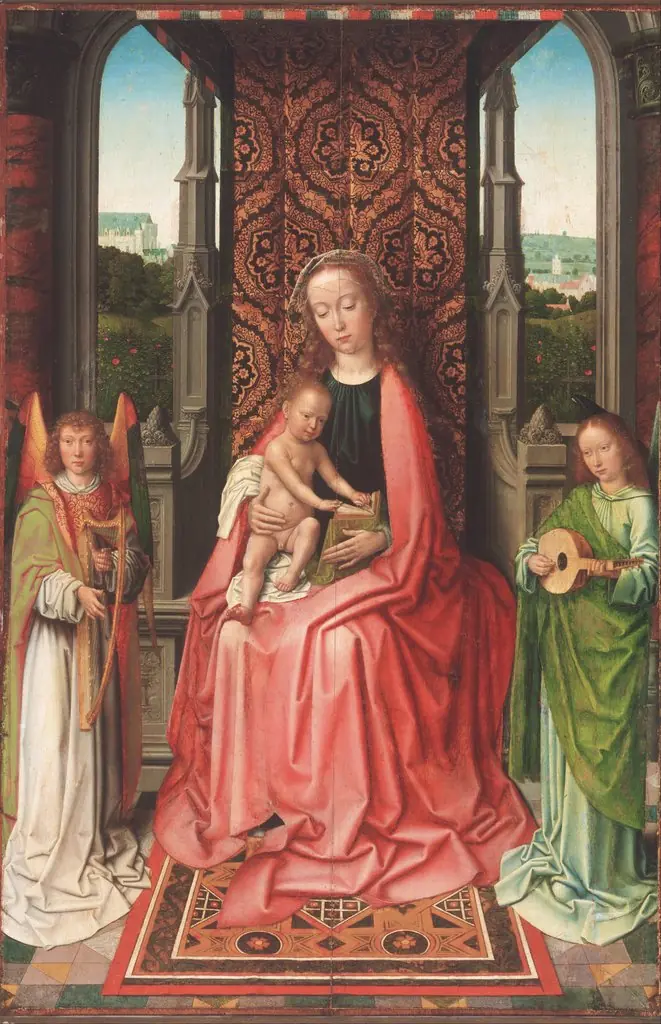 Enthroned Virgin and Child, with Angels
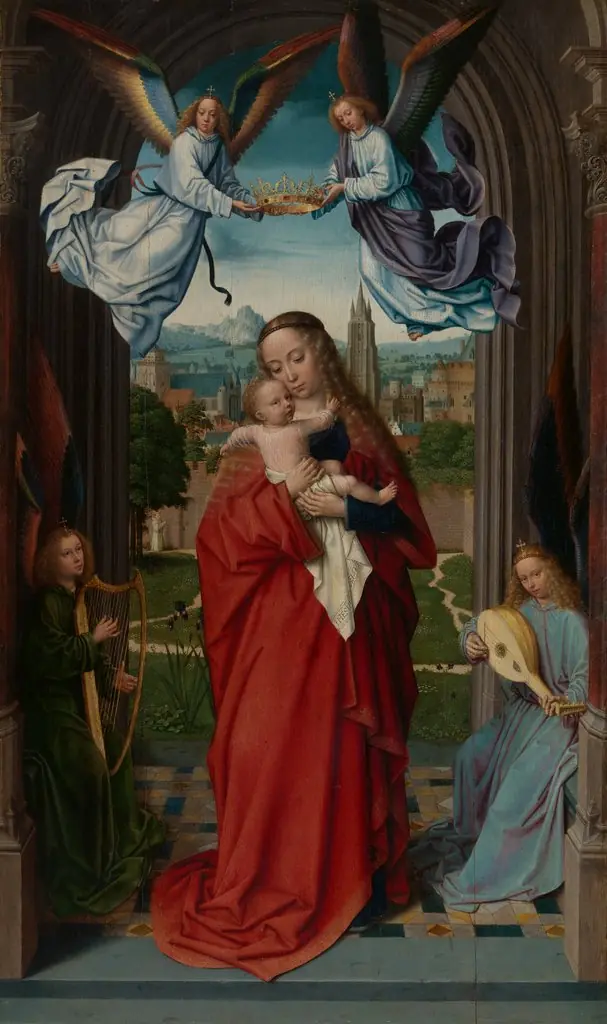 Virgin and Child with Four Angels
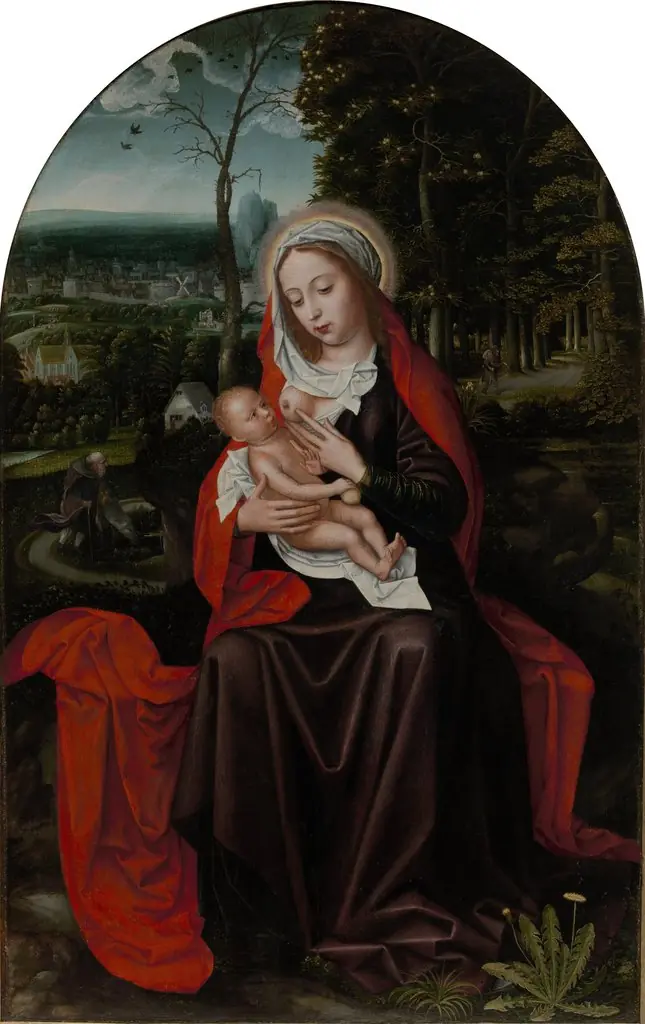 Rest on the flight into Egypt
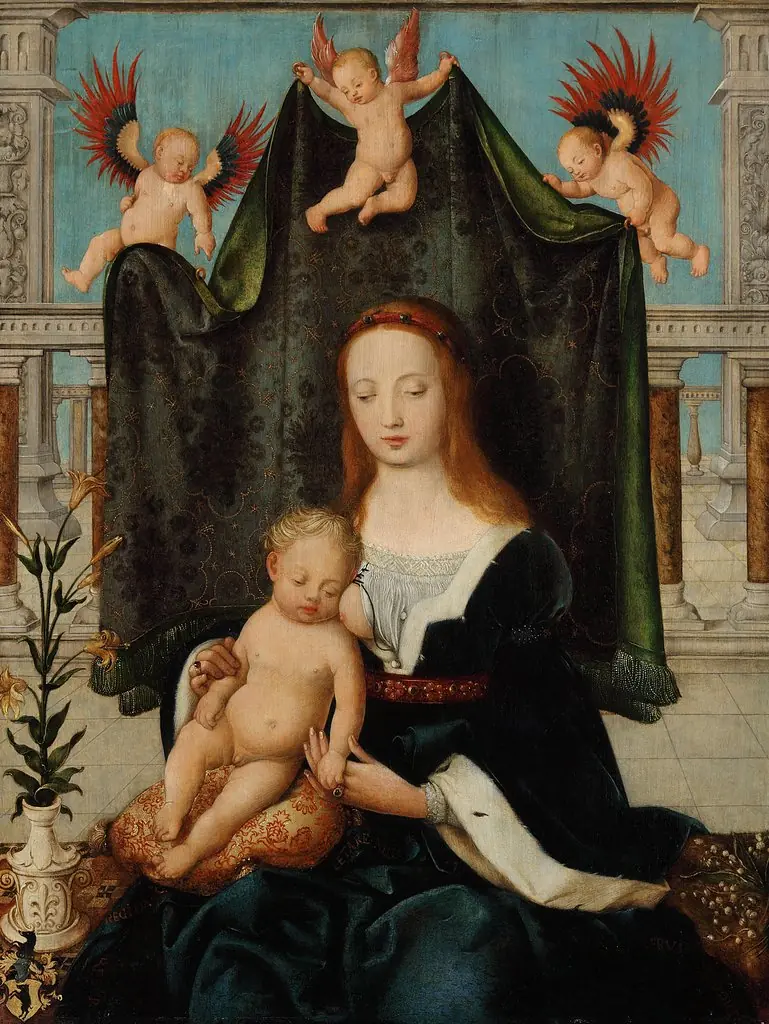 The Virgin and Sleeping Child
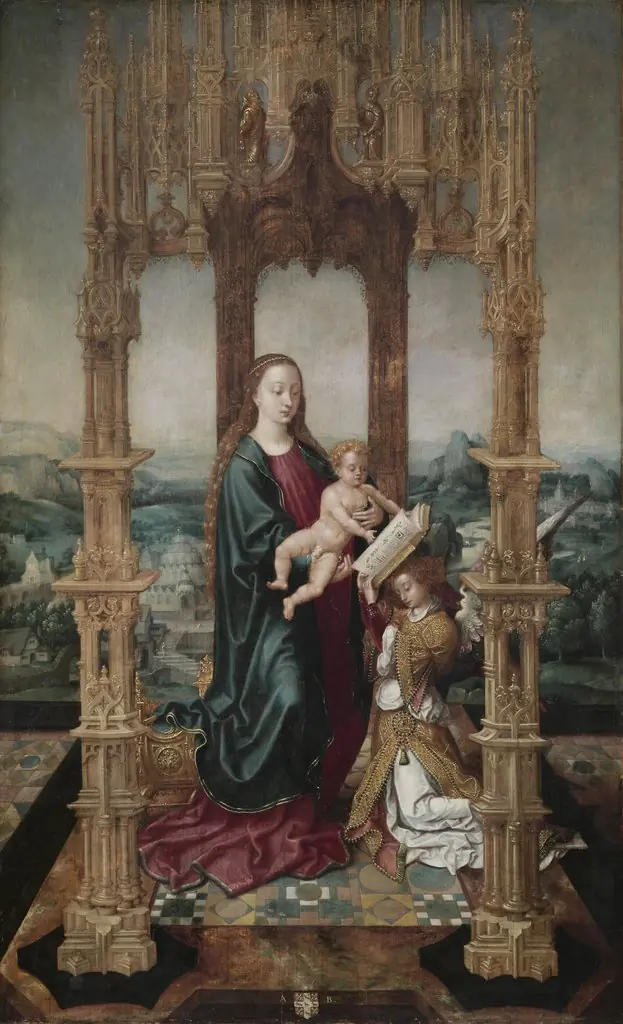 Virgin and Child under a Canopy
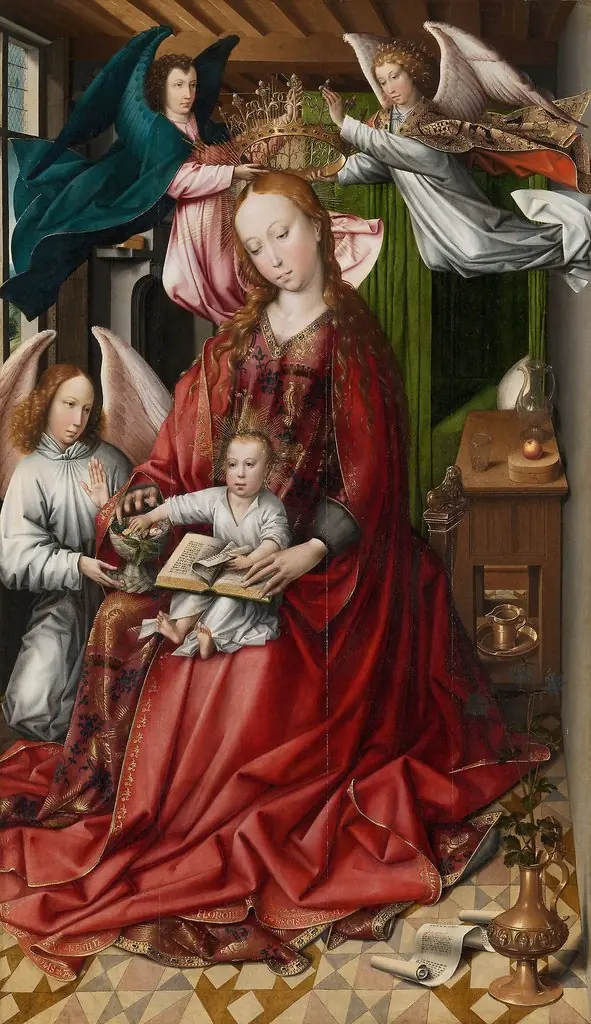 Virgin and Child Crowned by Angels
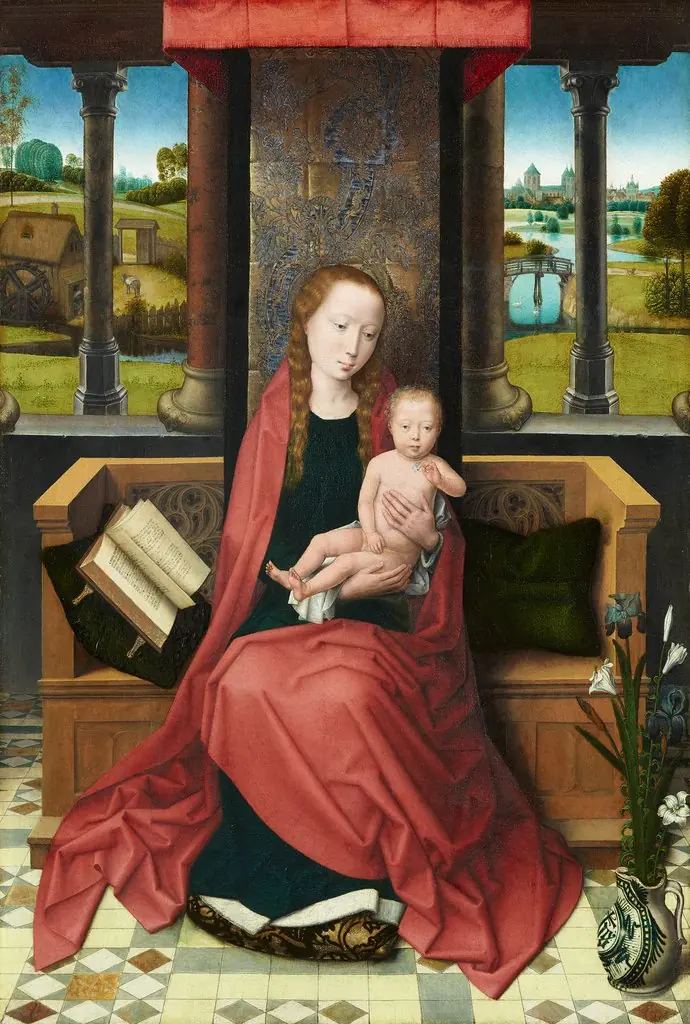 The Virgin and Child Enthroned
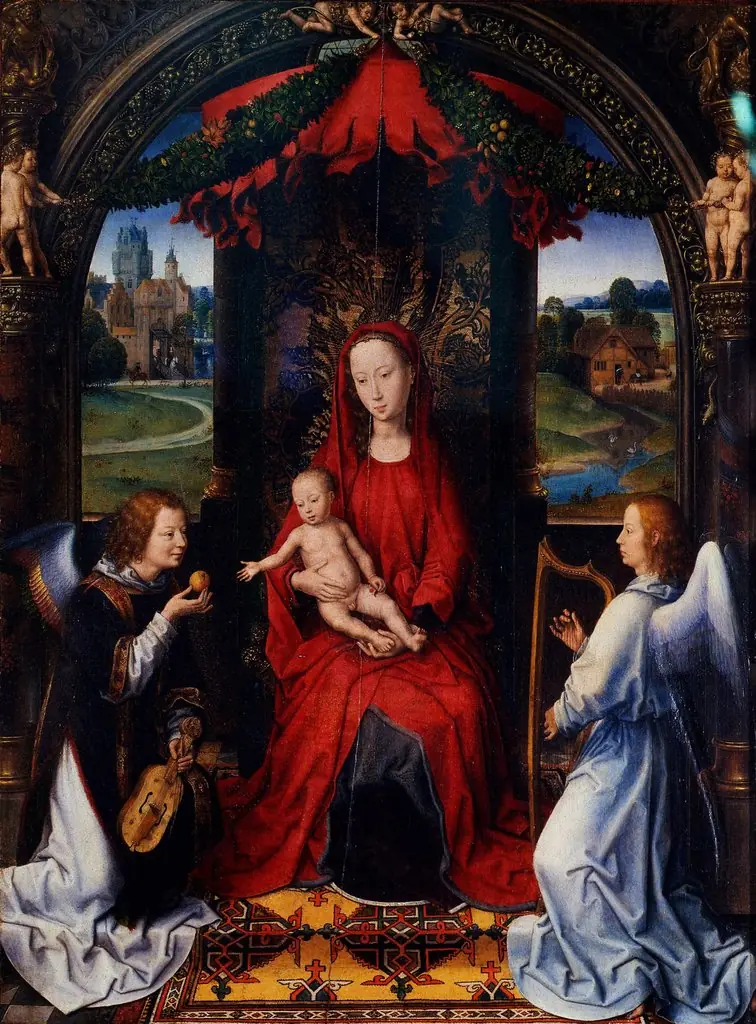 Madonna enthroned with child and two musical angels