Artwork
Madonna by a Grassy Bank
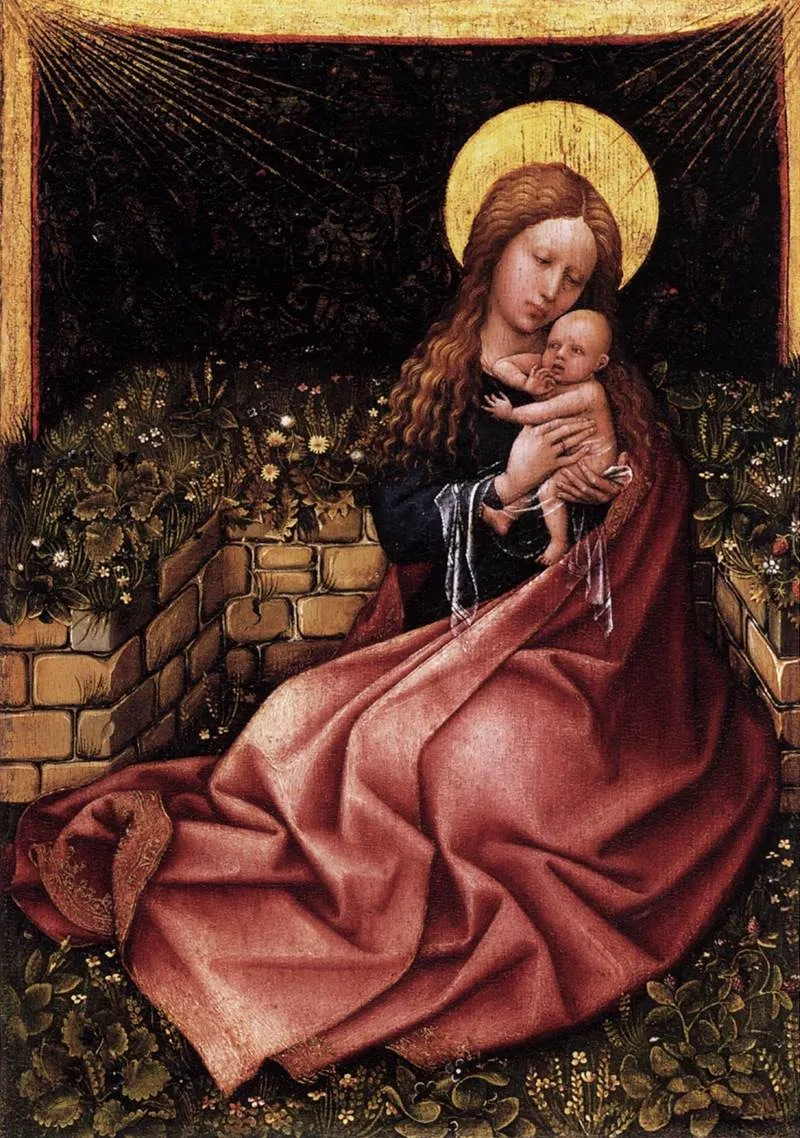
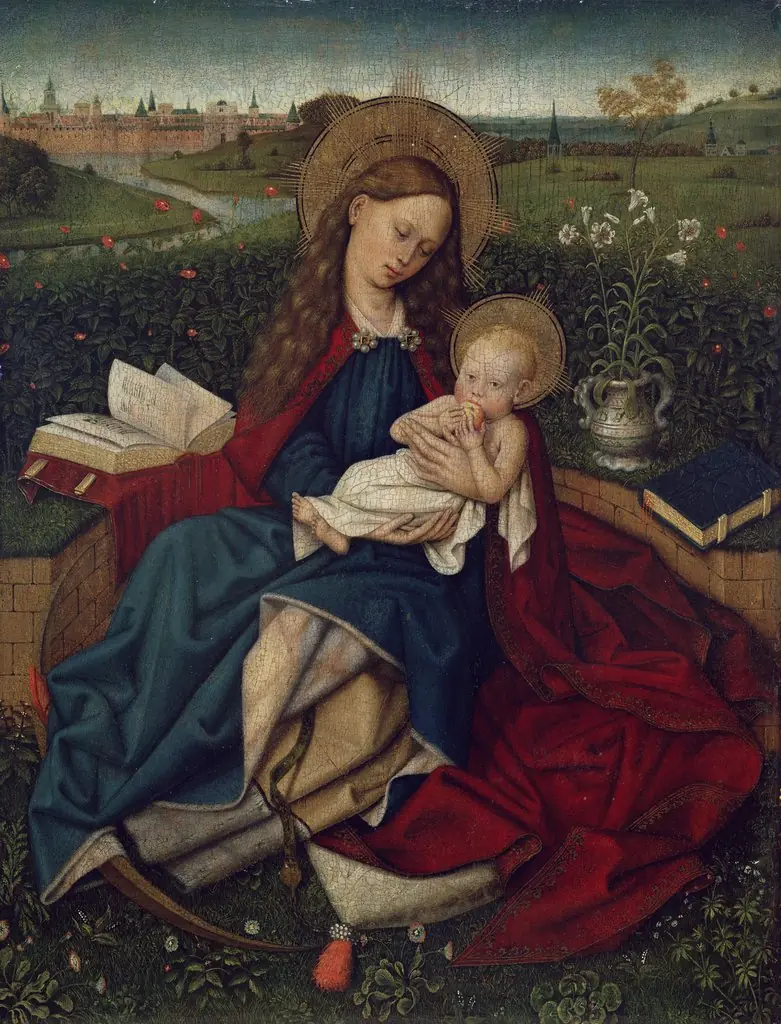
Madonna by a Grassy Bank is an oil painting by the Northern Renaissance artist Robert Campin. It dates from 1422 and is held in the collection of the Gemäldegalerie Berlin.
About this work
Overview
The panel's modest scale suggests it was intended for private devotion, a common function for such works in the early fifteenth century.
Madonna by a Grassy Bank is a small devotional panel painting by Robert Campin, also known as the Master of Flémalle, a foundational figure of Early Netherlandish painting. Dated to 1422 or circa 1425, the work is executed in oil on oak panel and measures 39 by 27 centimeters, or 39.2 by 27 centimeters according to some measurements. The painting is held in the collection of the Gemäldegalerie in Berlin. As one of Campin's preserved works, it exemplifies the transition to oil painting in Northern Europe and the emergence of naturalistic religious imagery that would define the Northern Renaissance. The panel's modest scale suggests it was intended for private devotion, a common function for such works in the early fifteenth century.
Subject & Meaning
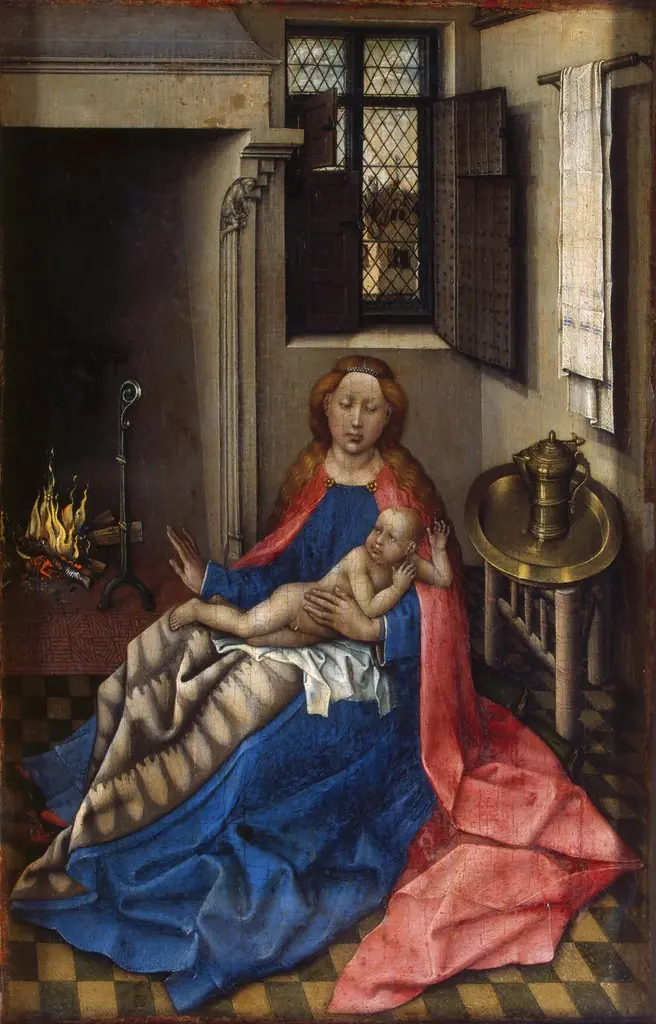
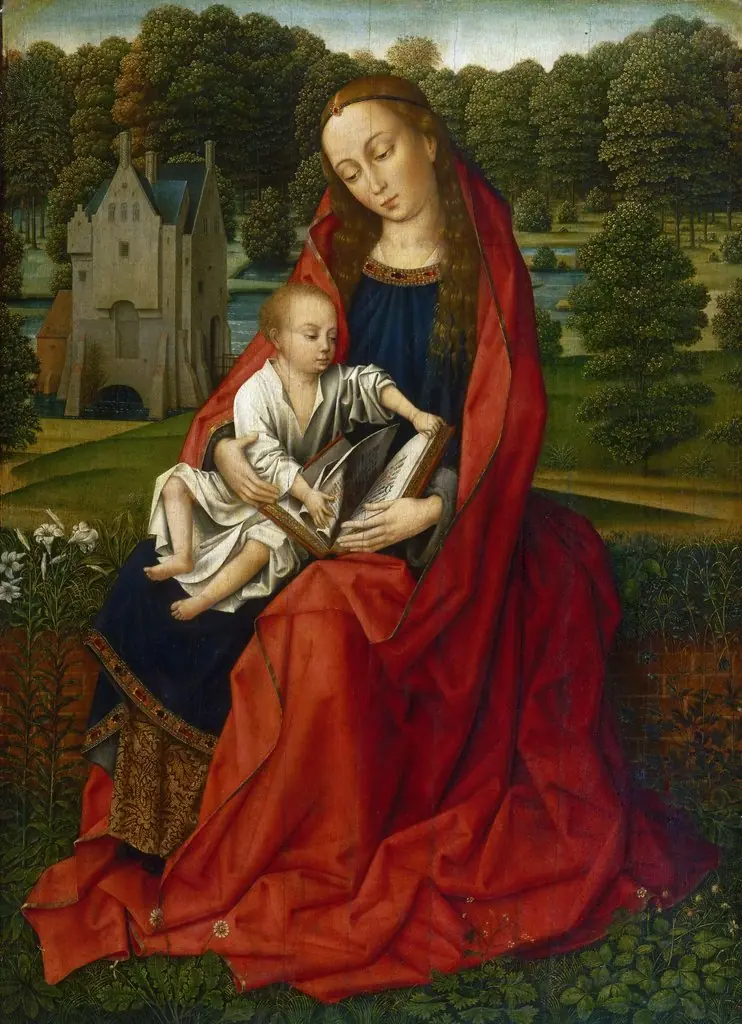
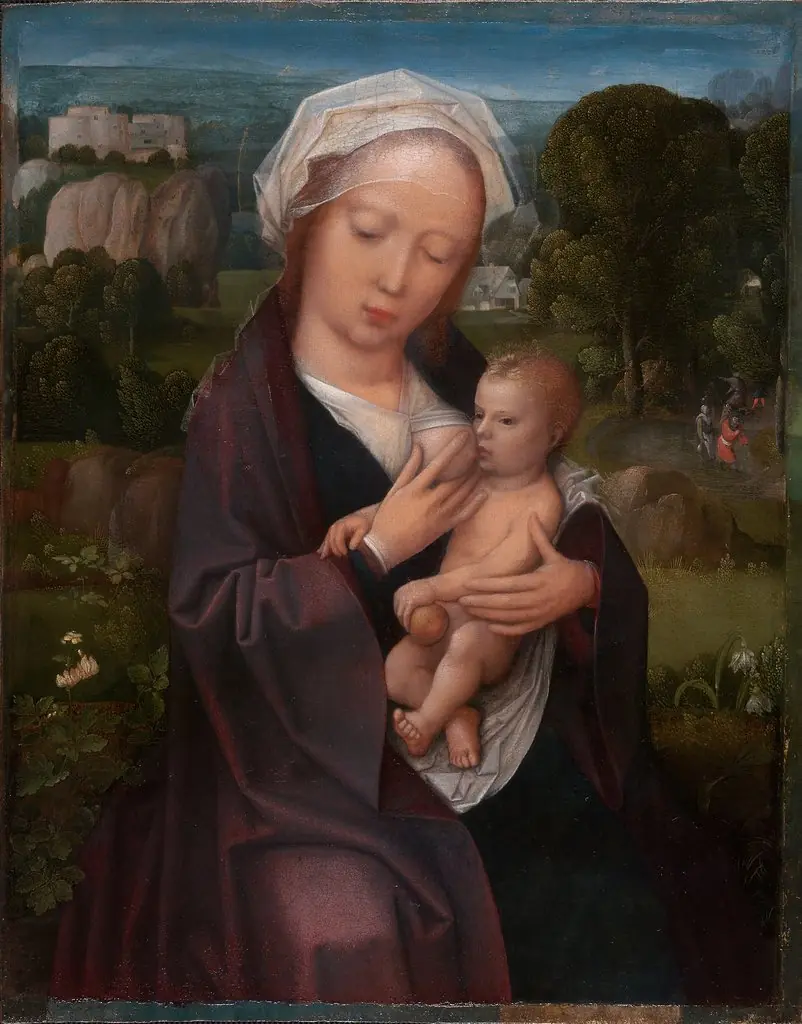
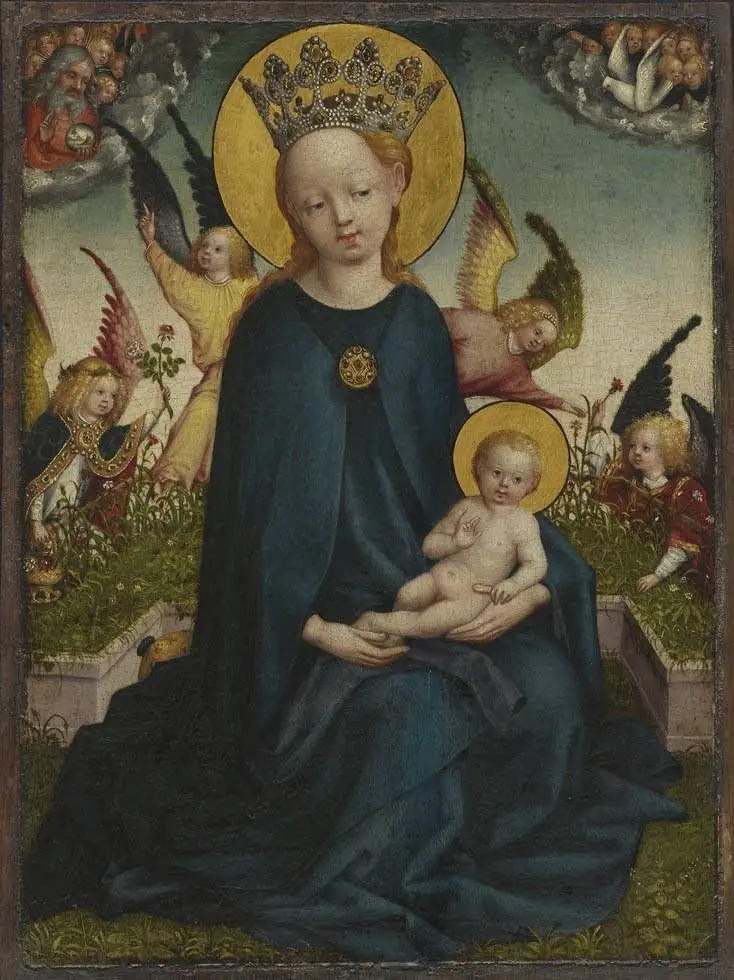
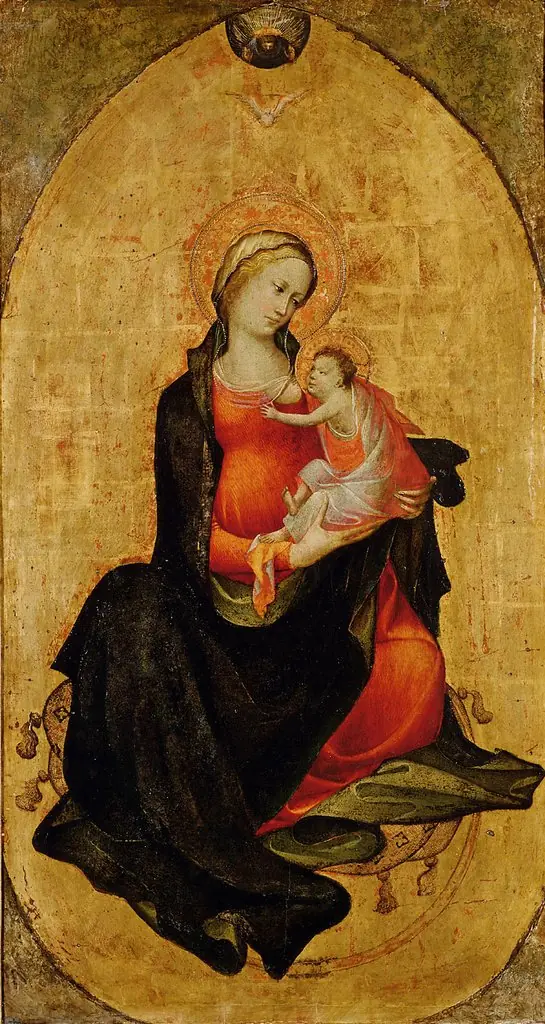
The painting depicts the Virgin Mary seated on a grassy bank, holding the naked Christ Child on her lap. Mary wears a dark blue garment beneath a voluminous rose-red cloak that spreads across her knees and pools onto the ground, while a gold halo crowns her head. The infant turns toward the viewer as Mary gazes downward, creating a tender interaction between mother and child. The figures occupy a narrow enclosed garden, or hortus conclusus, with low brick walls on either side, dense green plants, and small flowers growing behind and around them. This enclosed garden is a traditional symbol of Mary's virginity and purity in medieval and Renaissance iconography. Small white flowers dot the grassy bank in the foreground, reinforcing themes of purity and the natural world. Above the figures, a dark canopy with radiating gold lines suggests a cloth of honor or celestial space, with rays of golden light emanating from the upper background to illuminate the holy pair. The combination of divine symbolism, the serene halo emphasizing sanctity, and the naturalistic setting creates a harmonious blend of the earthly and the sacred characteristic of Campin's approach to religious subjects.
Technique & Style
The work is painted in oil on oak panel, a support and medium combination that became increasingly favored in the Netherlands during the early fifteenth century for its durability and the rich, saturated colors it permitted. The palette is dominated by deep reds, warm golds, and dark greens set against a black background. The surface shows fine linear detail in the hair and drapery folds, with a smooth, enamel-like finish and visible craquelure throughout. This meticulous attention to texture and weight in the garments demonstrates Campin's technical skill in conveying the material qualities of fabric through paint. The handling of oil paint allows for subtle modeling and the luminous quality of the gold embellishments. The relatively small dimensions, approximately 39 by 27 centimeters, suitability for intimate viewing, and the refined finish indicate a work crafted for close contemplation rather than public display.
History & Provenance
The painting is dated to either 1422 according to internal corpus records, or circa 1425 as suggested by some scholarly sources and online databases. This slight discrepancy in dating reflects the challenges of precisely chronologizing Campin's oeuvre, as many works attributed to him and his workshop lack definitive documentary evidence for their creation. The panel is currently located in the Gemäldegalerie in Berlin, Germany, where it is accessioned as part of the museum's collection of Early Netherlandish painting. The specific details of its provenance and ownership chain before its acquisition by the Gemäldegalerie are not recorded in the available sources. Exhibition history for this particular panel is likewise not documented in the provided materials, though works of this type and period are frequently included in surveys of Northern Renaissance art.
Context
Robert Campin, also identified as the Master of Flémalle, was a leading painter of the Early Netherlandish movement, active in Tournai and instrumental in developing the oil painting techniques that would transform European art. The attribution of works to Campin has been a subject of scholarly debate, with some panels associated with him through documentary evidence and others through stylistic analysis linked to the Master of Flémalle. Madonna by a Grassy Bank represents the Northern Renaissance approach to religious painting, combining traditional iconographic elements with an emerging naturalism in the depiction of figures, space, and the natural world. The work's classification within the religious genre and its movement within Early Netherlandish painting place it within a broader artistic context where artists increasingly sought to make the sacred tangible and immediate through detailed, observable reality. Critical reception of Campin's work has emphasized his role in this transition, and scholarship continues to refine understanding of his workshop practices and the attribution of specific panels.
Legacy
As a preserved work attributed to Robert Campin, Madonna by a Grassy Bank contributes to the understanding of early Netherlandish panel painting and the technical innovations of the period. The painting's current location in the Gemäldegalerie, Berlin, ensures its accessibility for scholarly study and public viewing within one of Europe's major collections of Old Master paintings. The work's reproduction and circulation through art historical databases and educational resources, including its presence on platforms documenting Northern Renaissance art, indicates its continued role in shaping understanding of Campin's oeuvre and the broader development of European painting. The panel's modest scale and devotional character are representative of a significant category of early fifteenth-century artistic production, preserving evidence of the intimate religious practices and aesthetic preferences of its era. Its survival provides valuable material for studying the techniques, materials, and iconographic conventions that Campin and his contemporaries employed as they established the foundations of Netherlandish painting tradition.
Artist & collection
Artist
Robert Campin (Valenciennes (France) c. 1375 - Tournai (Belgium) 26 April 1444) now usually identified with the Master of Flémalle (earlier the Master of the Merode Triptych, before the discovery of three other similar…