Artwork
Maharana Jagat Singh II of Mewar (r. 1734–51) Dressed as a Bhil, Hunting Deer at Night
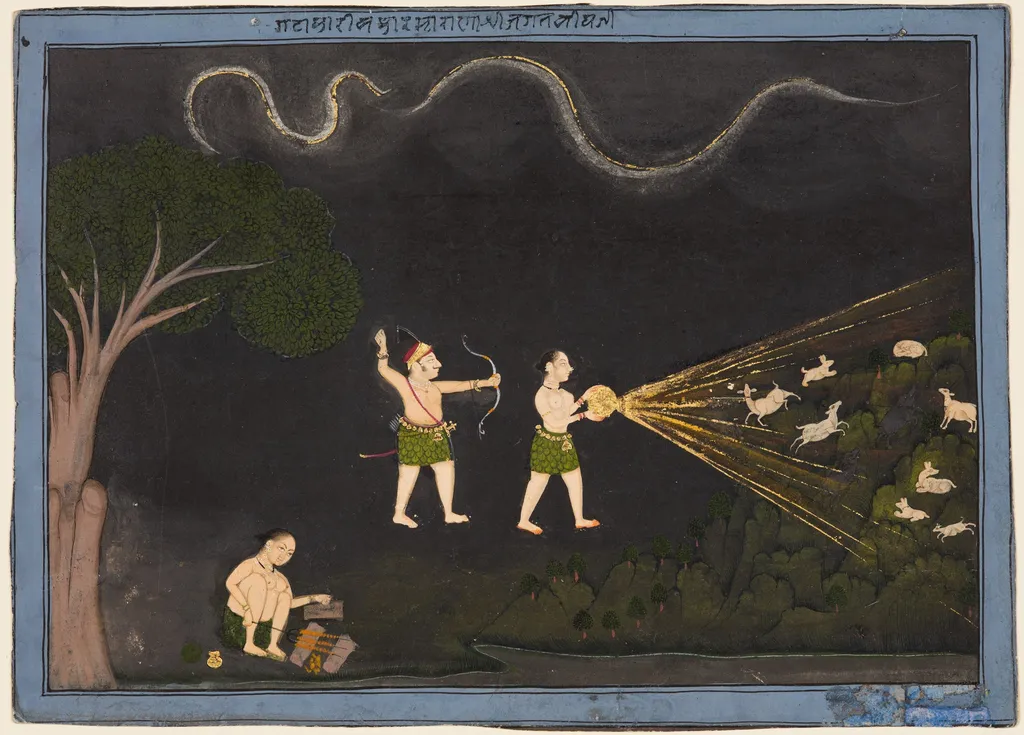
Maharana Jagat Singh II of Mewar (r. 1734–51) Dressed as a Bhil, Hunting Deer at Night is an unspecified painting. It dates from 1725 and is held in the collection of the Cleveland Museum of Art.
About this work
Overview
The work depicts a nocturnal hunting scene in a dense forest, featuring three figures amid a scattering of deer illuminated by a golden glow. One figure draws a bow, another directs a luminous disc toward the animals, while a third crouches with a small box. The composition is framed by thick foliage and a snake winding across the upper edge, emphasizing the tension of the chase.
Subject & Meaning
The central figure is Maharana Jagat Singh II of Mewar, portrayed in the attire of a Bhil hunter, suggesting a deliberate identification with tribal customs of the region. By adopting Bhil dress, the ruler aligns himself with local martial traditions and the wilderness, reinforcing his authority as both sovereign and participant in the hunt.
Technique & Style
The painting employs a pronounced chiaroscuro effect, contrasting the bright, almost ethereal illumination of the deer and the glowing disc with the deep shadows of the forest. This stark light‑dark interplay creates a sense of immediacy and drama, while the detailed rendering of foliage and the sinuous snake adds texture and depth to the scene.
History & Provenance
Created during the reign of Maharana Jagat Singh II (1734–1751), the piece reflects courtly patronage in Mewar. Its provenance traces back to the royal collection, where it was likely displayed as a visual record of the ruler’s exploits and as a symbol of his connection to the land and its peoples.
Context
In early‑18th‑century Rajasthan, royal hunts were both a sport and a political statement, demonstrating control over nature and subjects. The depiction of a Bhil‑clad Maharana underscores the cultural exchange between the Rajput elite and indigenous tribal groups, a dynamic often highlighted in courtly art of the period.
Legacy
The painting remains a valuable example of regional court art that blends portraiture, narrative, and dramatic lighting. It offers insight into how Mewar’s rulers used visual media to construct identity and legitimize power through association with local traditions and the natural world.
Artist & collection

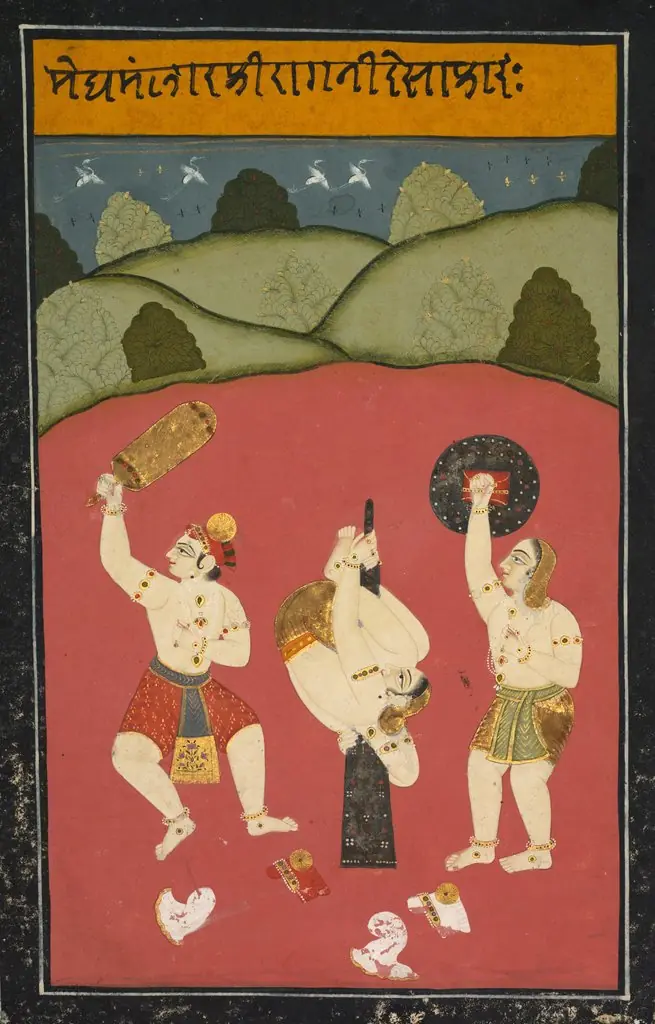 Ragini Desakh of Meghamalhar
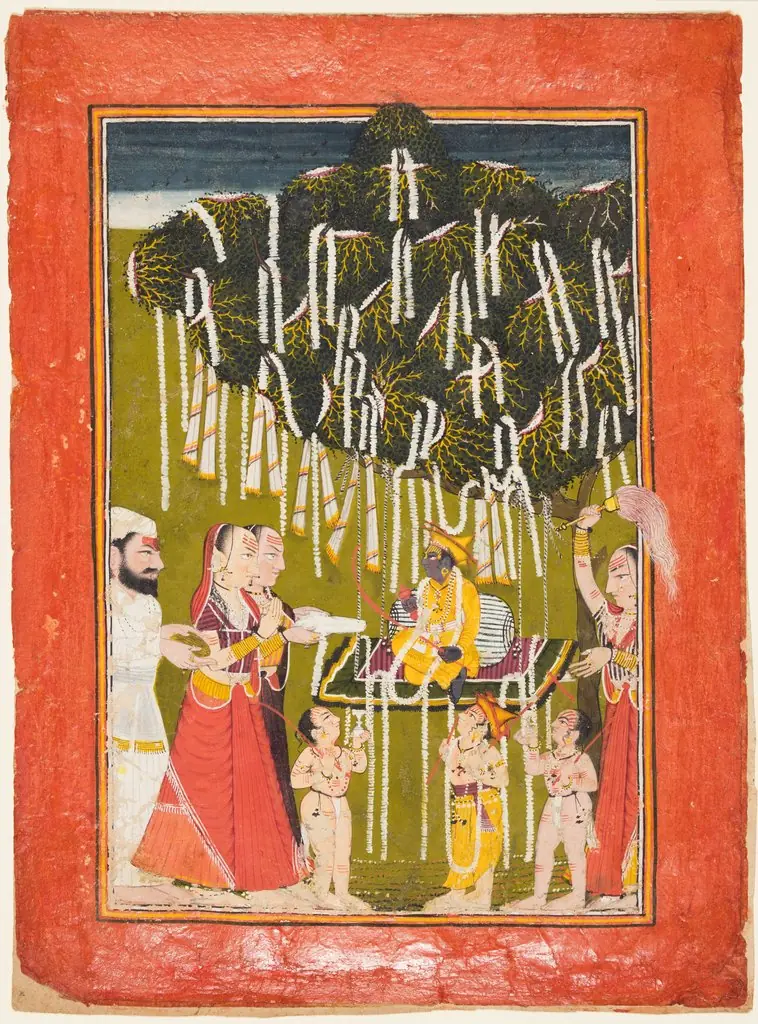 Fertility Worship of Krishna
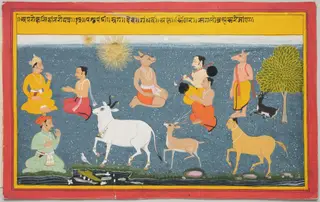 Worship of the Gods (14 of 17)
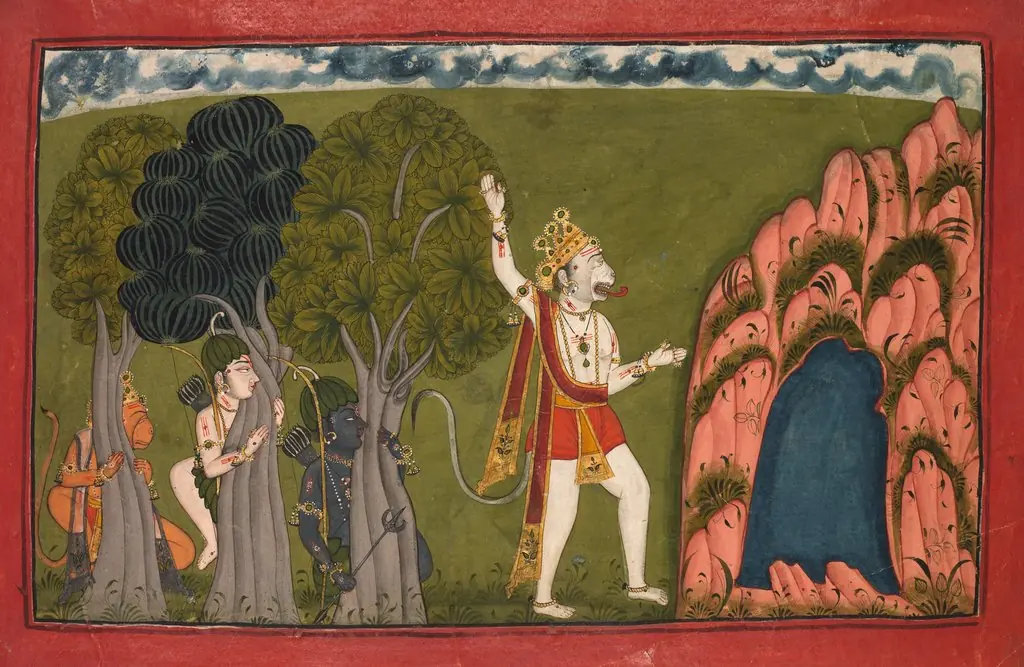 Sugriva challenges his brother Vali, King of the Forest Dwellers, to a duel, folio 10 from the Kishkindha Kanda (Book of Kishkindha) of a Ramayana (Rama’s Journey)
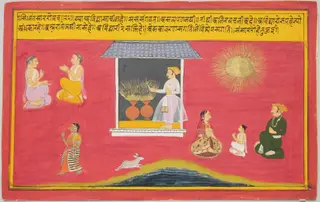 Worship of the Gods (13 of 17)
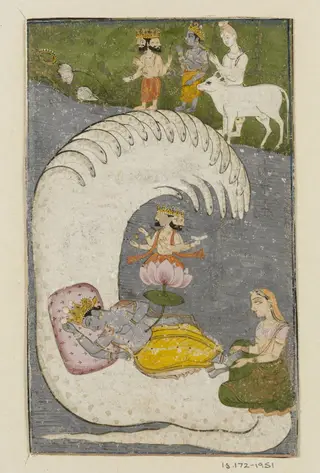 Vishnu and Lakshmi
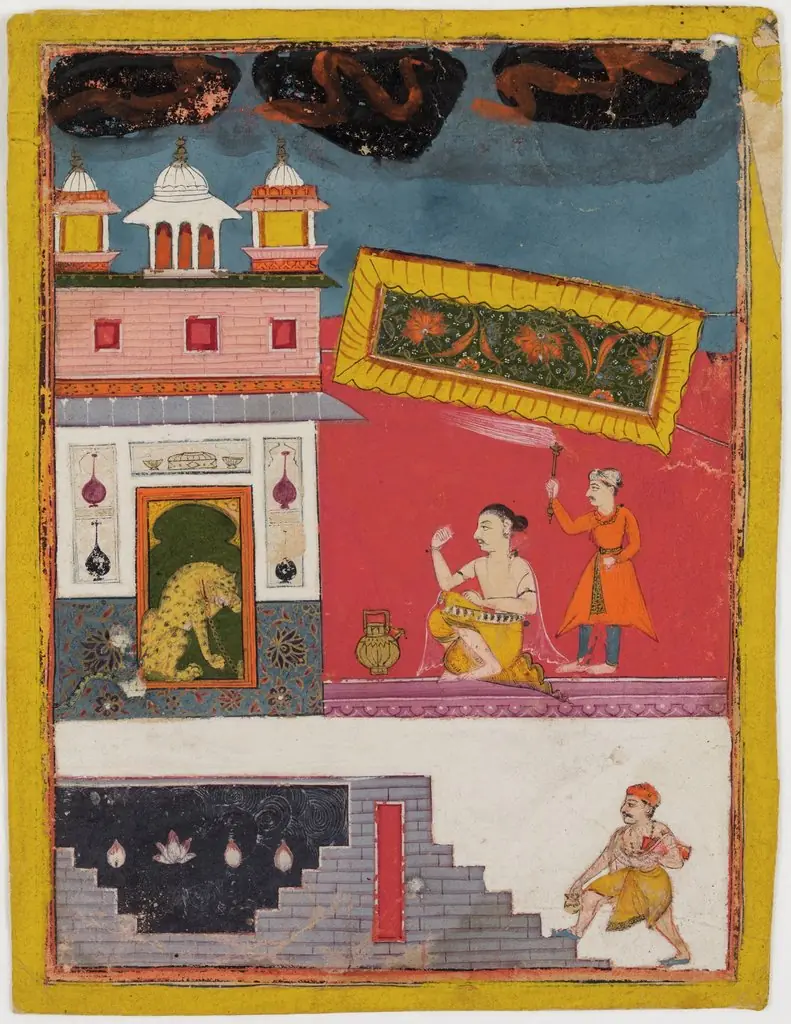 Palace Scene with Cheetah on Chain, Prince and Attendant
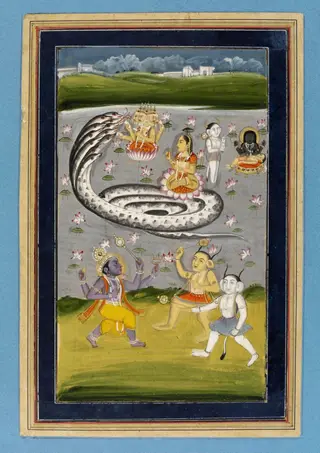 Krishna and Kaliya
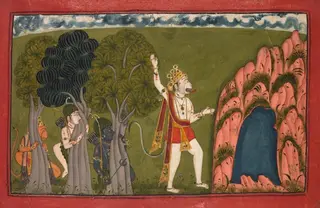 Sugriva challenges his brother Vali, King of the Forest Dwellers, to a duel, folio 10 from the Kishkindha Kanda (Book of Kishkindha) of a Ramayana (Rama’s Journey)
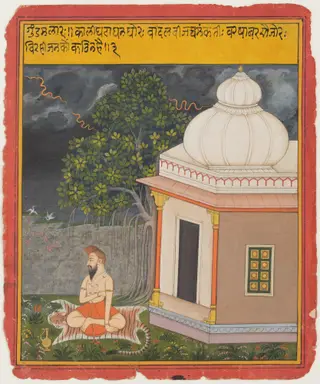 Ascetic Enduring a Thunderstorm
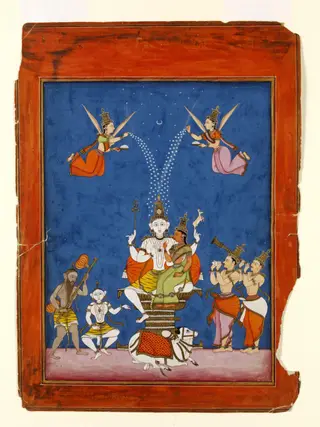 Shiva and Parvati
- Maharana Jagat Singh II of Mewar (r. 1734–51) Dressed as a Bhil, Hunting Deer at Night