Artwork
Maharana Jagat Singh II of Mewar (r. 1734–51) Dressed as a Bhil, Hunting Deer at Night
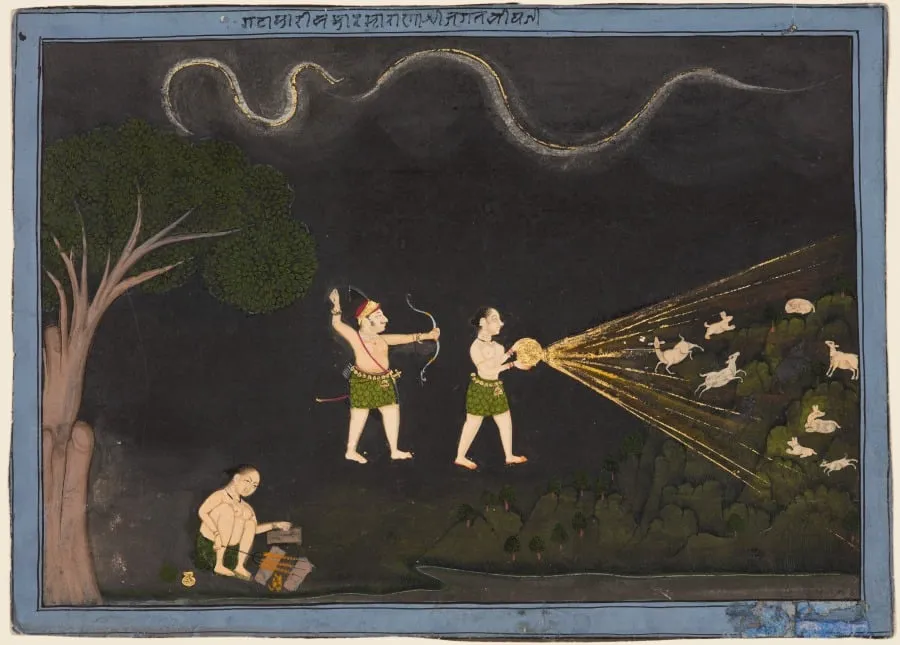
Maharana Jagat Singh II of Mewar (r. 1734–51) Dressed as a Bhil, Hunting Deer at Night is an unspecified painting by the Baroque artist Chokha. It dates from 1738 and is held in the collection of the Cleveland Museum of Art.
- Accession no.
- 2018.146
- Credit line
- Purchase and partial gift from the Catherine and Ralph Benkaim Collection; Severance and Greta Millikin Purchase Fund
About this work
Overview
This painting depicts Maharana Jagat Singh II of Mewar, who ruled from 1734 to 1751, dressed in the attire of the Bhil community while hunting deer at night.
This painting depicts Maharana Jagat Singh II of Mewar, who ruled from 1734 to 1751, dressed in the attire of the Bhil community while hunting deer at night. The scene captures a moment of ceremonial role reversal, where royal identity is temporarily set aside to engage in a practice associated with indigenous trackers. The composition emphasizes movement and light, with animals fleeing and a lamp casting focused illumination through the darkness.
Subject & Meaning
The ruler’s adoption of Bhil dress reflects a deliberate act of cultural emulation, acknowledging the hunting expertise of the Bhil people, who were respected for their knowledge of the terrain. The presence of a female tracker underscores her vital role in the hunt, challenging conventional gender roles in courtly imagery. The act of dressing as a tribesman may have served both as a ritual gesture and a symbolic affirmation of the ruler’s connection to the land and its people.
Technique & Style
The artist employs strong contrasts of light and shadow to heighten the drama of the nocturnal scene. A clay pot lamp emits a concentrated glow, illuminating the figures and the wounded deer while leaving the surrounding brush in deep twilight. Fine brushwork defines the textures of leaf skirts, fur, and fabric, while the scattered animals suggest motion through dynamic poses and partial concealment in the dark.
History & Provenance
The painting originates from the court of Mewar in Rajasthan, likely commissioned during Jagat Singh II’s reign. It belongs to a tradition of Rajput portraiture that occasionally depicted rulers in non-royal guises, often tied to seasonal or ritual activities. Its survival suggests it was valued within the royal collection, possibly displayed in a private chamber rather than a public audience hall.
Context
In 18th-century Mewar, royal patrons frequently commissioned artworks that blended myth, ritual, and real-life activities. Depictions of rulers engaging with tribal communities were uncommon but not unprecedented, reflecting a complex relationship between sovereignty and local knowledge. This painting aligns with broader trends in Rajput art that valued narrative detail and symbolic gesture over strict formalism.
Legacy
The painting remains a rare example of a Rajput ruler portrayed in the costume of a marginalized group, offering insight into cross-cultural interactions within the court. While not widely replicated, it contributes to scholarly understanding of how royal identity could be performative and context-dependent. It continues to be studied for its nuanced portrayal of power, tradition, and the natural world.
Artist & collection


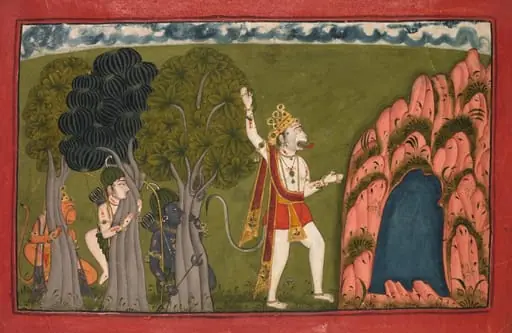 Sugriva challenges his brother Vali, King of the Forest Dwellers, to a duel, folio 10 from the Kishkindha Kanda (Book of Kishkindha) of a Ramayana (Rama’s Journey)
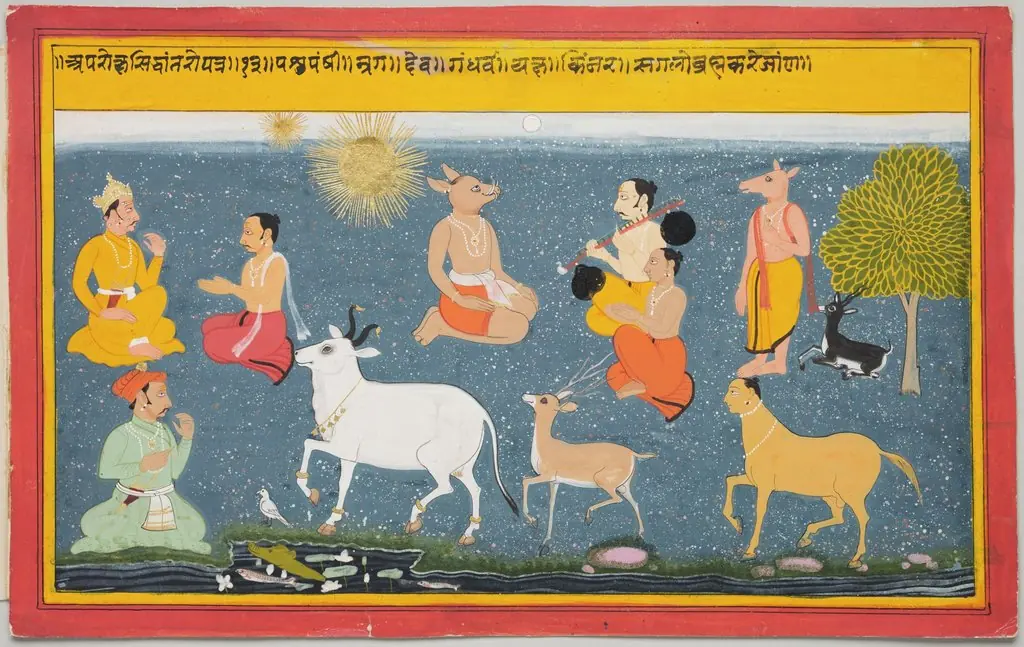 Worship of the Gods (14 of 17)
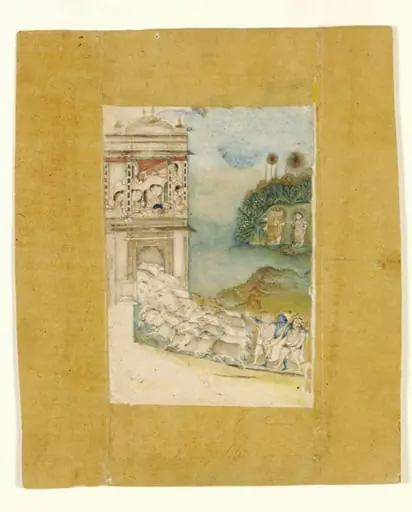
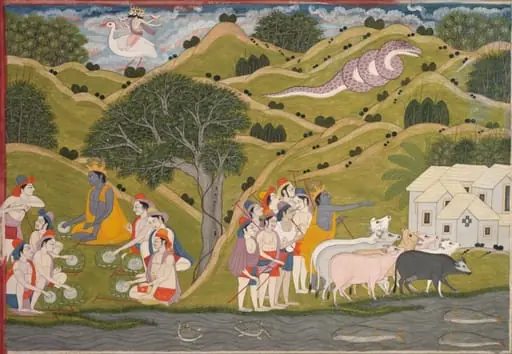 Krishna returns with the cowherds to Braj, from a Bhagavata Purana
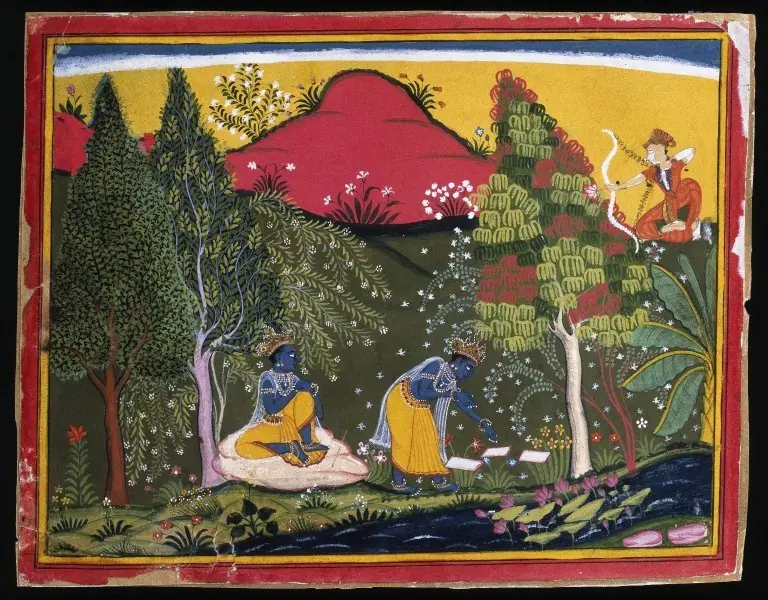 Cupid Disturbs Krishna's Penance, Page from a Gita Govinda
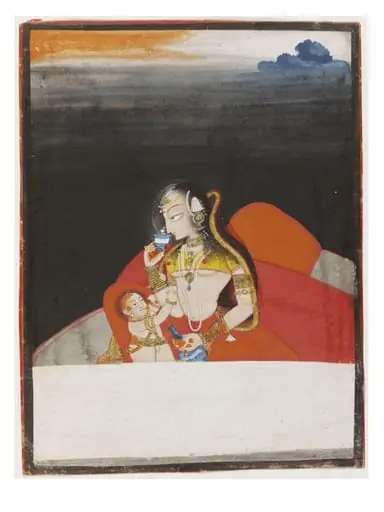
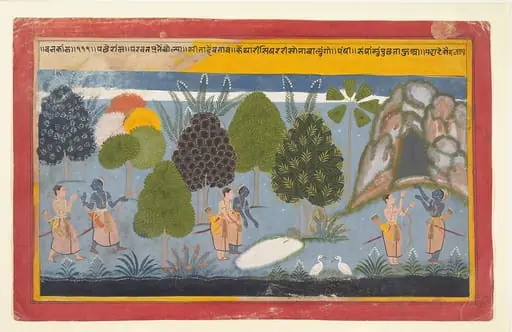 Untitled
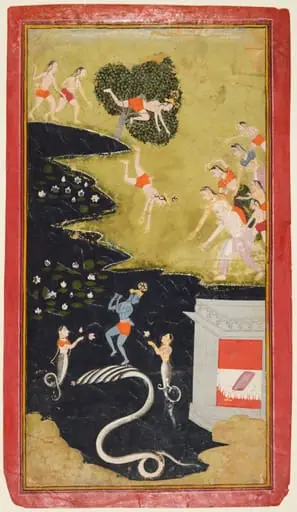 Krishna Quells the Serpent Kaliya, from a Bhagavata Purana
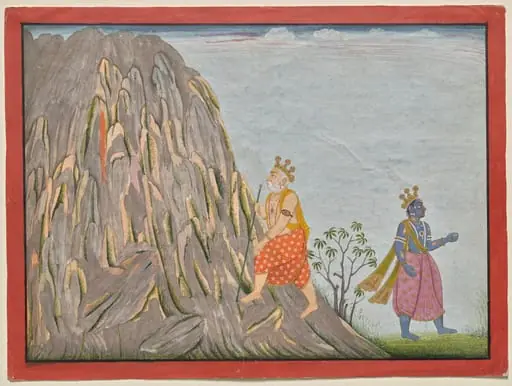 King Muchukunda Enters the Realm of Mount Gandhamadana to Attain Salvation, from the “Fifth Basohli Bhagavata Purana”
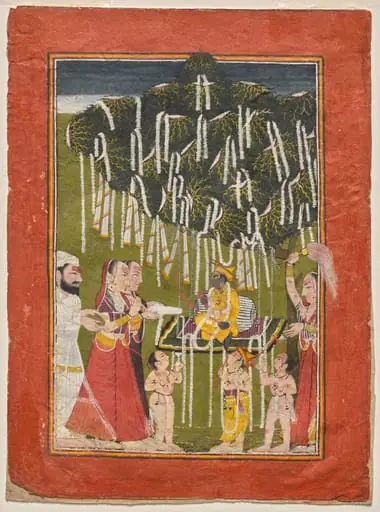 Adoration of young Krishna
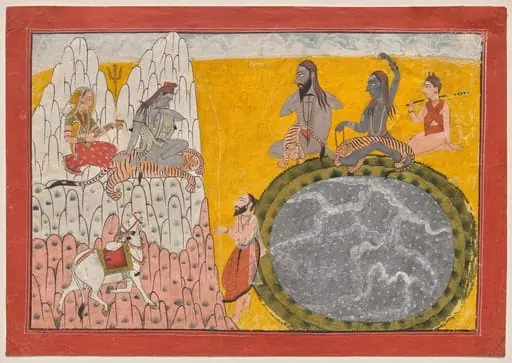 Descent of the Ganges
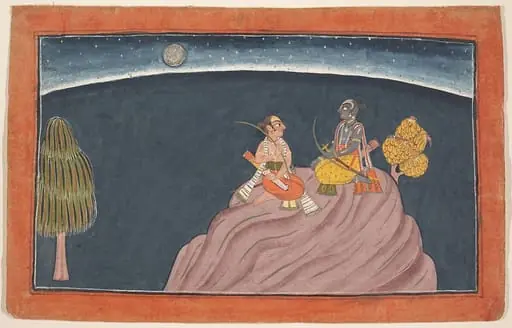 Untitled