Artwork
Mahliqa, Daughter of the Emperor of China, Pointing at the Bird-Man Khwaja Mubarak: A Leaf from a Poetical Romance Relating to Shah Alam I (recto)
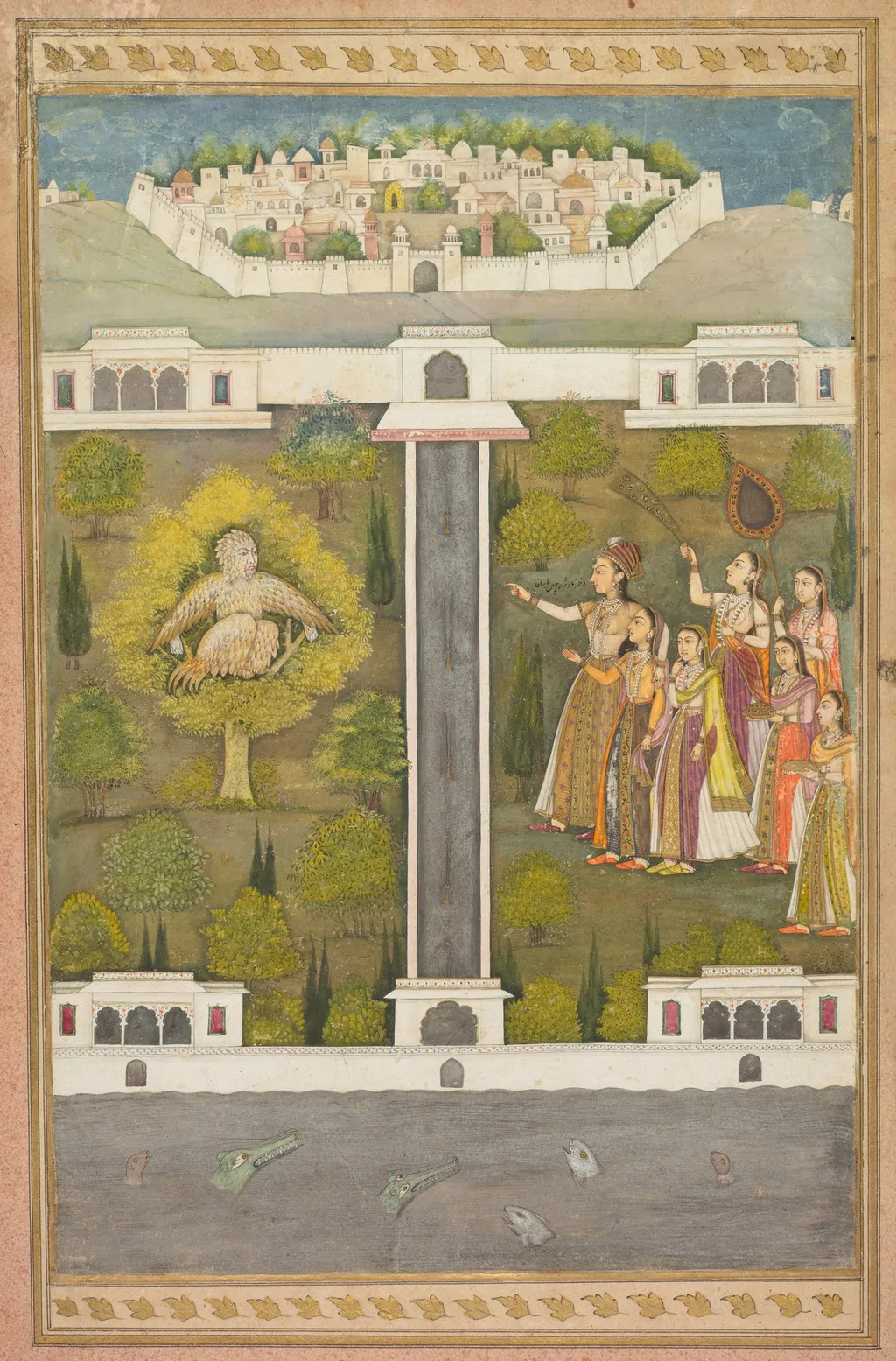
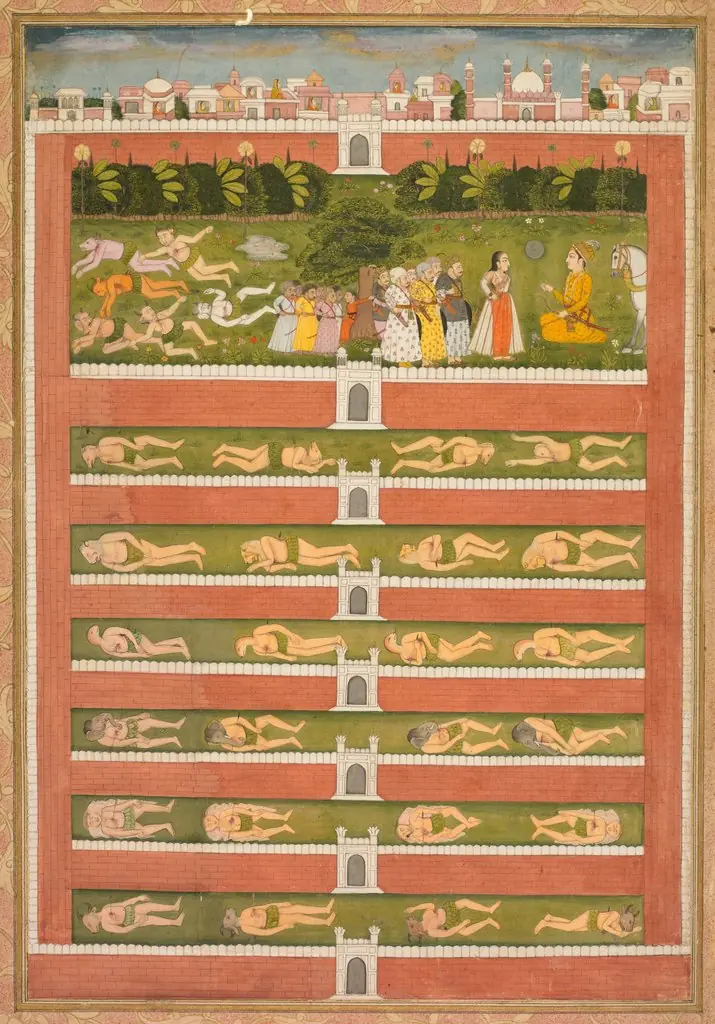
Mahliqa, Daughter of the Emperor of China, Pointing at the Bird-Man Khwaja Mubarak: A Leaf from a Poetical Romance Relating to Shah Alam I (recto) is an unspecified painting. It dates from 1710 and is held in the collection of the Cleveland Museum of Art. The work is a miniature painting that juxtaposes two distinct tableaux.
About this work
Subject & Meaning
The artwork depicts Mahliqa, the daughter of the Emperor of China, pointing toward the bird‑man figure Khwaja Mubarak. It is a single leaf from a poetical romance associated with Shah Alam I, illustrating a narrative moment in which Mahliqa gestures to the avian hybrid character.
History & Provenance
It is a leaf from a poetical romance relating to Shah Alam I (recto) and is classified as a painting.
The leaf is dated to 1710 and was produced in the Mughal Empire by an unknown artist. It is a leaf from a poetical romance relating to Shah Alam I (recto) and is classified as a painting. Its commission and any earlier owners are not recorded in the available sources.
The work entered the Cleveland Museum of Art’s collection with the accession number 2013.336.a, where it is presently housed. No further provenance details are provided.
The painting Mahliqa, Daughter of the Emperor of China, Pointing at the Bird‑Man Khwaja Mubarak is a leaf from a poetical romance relating to Shah Alam I (recto). It is held by the Cleveland Museum of Art in Cleveland, Ohio, under accession number 2013.336.a. The work dates to 1710, originates from the Mughal Empire, and is attributed to an unknown artist. No exhibition history for this leaf is recorded in the available sources.
Overview
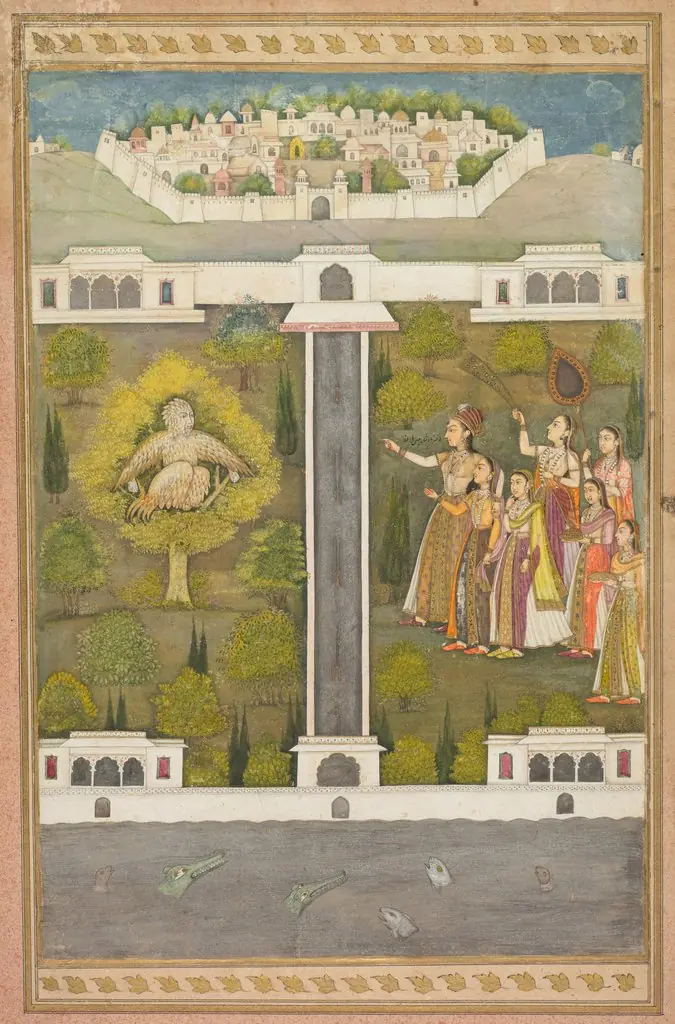
The work is a miniature painting that juxtaposes two distinct tableaux. On the left, a hybrid bird‑man figure rests beneath a tree in a verdant garden, while on the right a group of women in richly patterned garments gather beside an architectural column, one of them gesturing toward the creature. A walled city with domed structures forms the distant backdrop, rendered in subdued gold, green and blue tones.
Technique & Style
Executed in the traditional Indian miniature manner, the painting employs fine brushwork and delicate line to delineate intricate textile patterns and gold embroidery. The palette is restrained, favoring muted metallics and earth tones that create a luminous yet understated surface. Spatial depth is suggested through layered foliage and architectural elements rather than linear perspective.
Context
Miniature paintings of this period often served to visualize literary texts, merging visual and poetic storytelling. The depiction of a Chinese imperial daughter reflects the Mughal court's fascination with foreign dignitaries and the broader diplomatic networks of the early 18th century.
Artist & collection

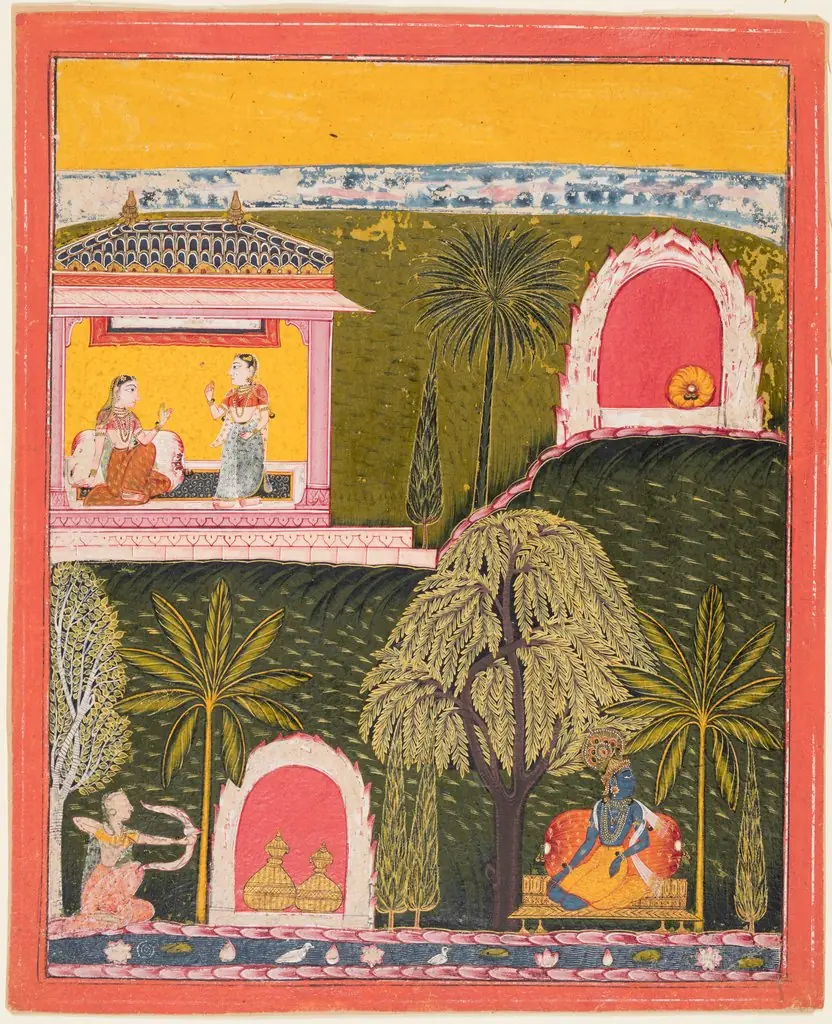 Rati, the Goddess of Erotic Love, Takes Aim at Krishna, from a Rasikapriya
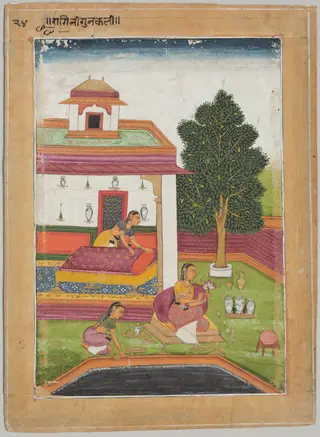 Illustration to the Musical Mode Malasari Ragini
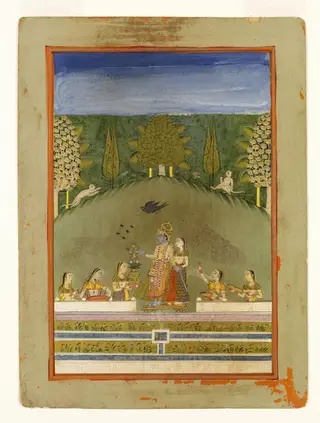 Vasant Ragini
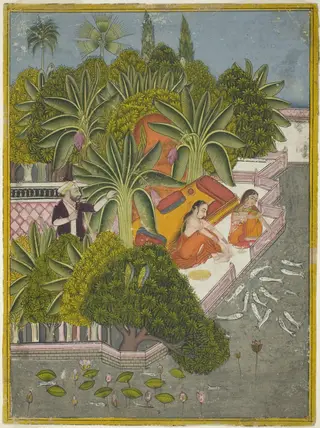 Royal Women Feeding Fish
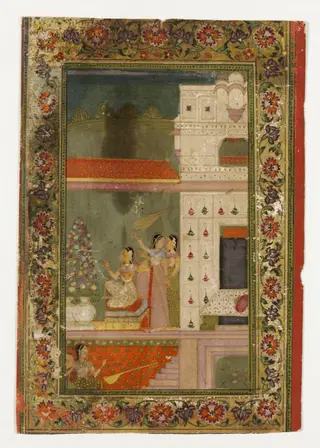 Gunakali Ragini
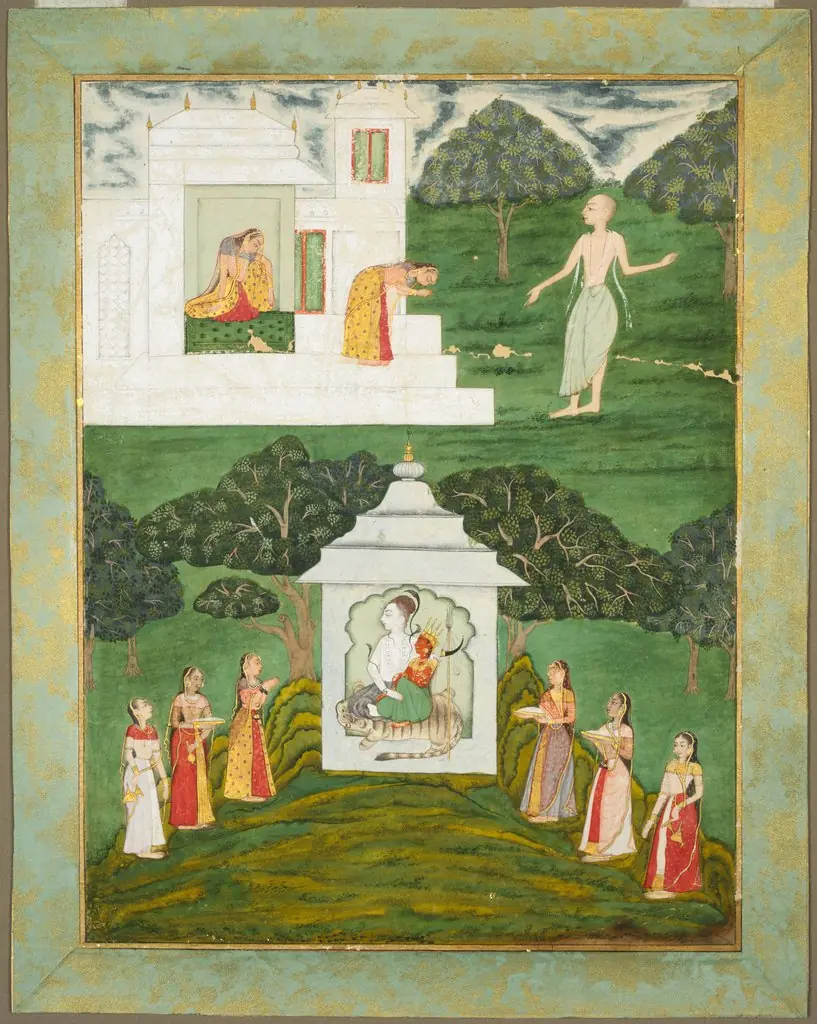 Worship of Shiva and Devi
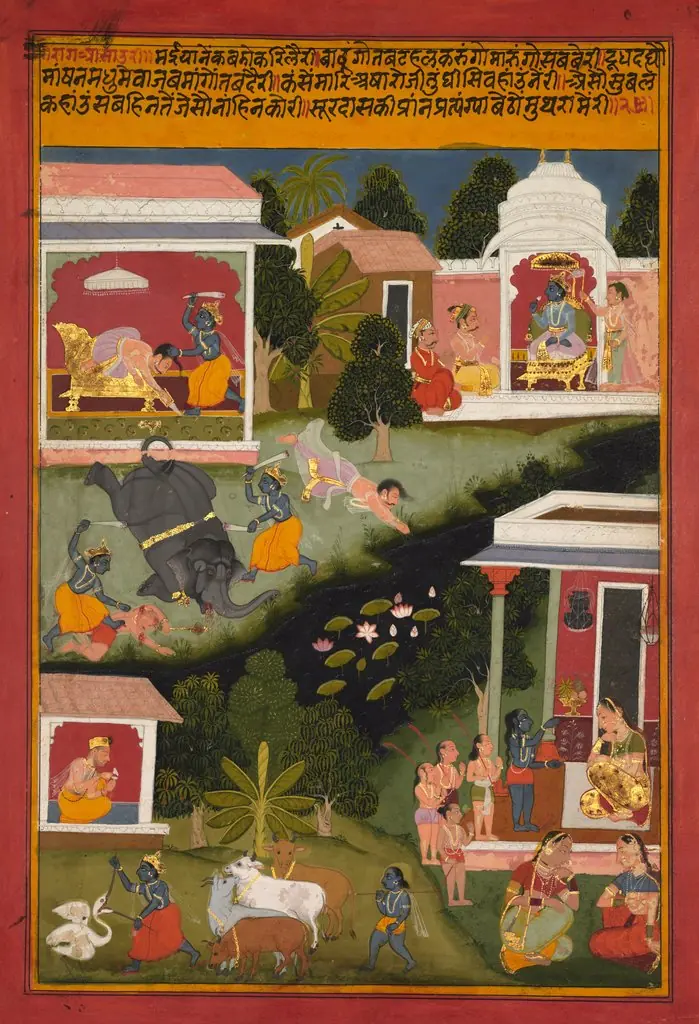 Krishna asks for sweets, from a Sursagar of Surdas (Indian, c. 1480–1580)
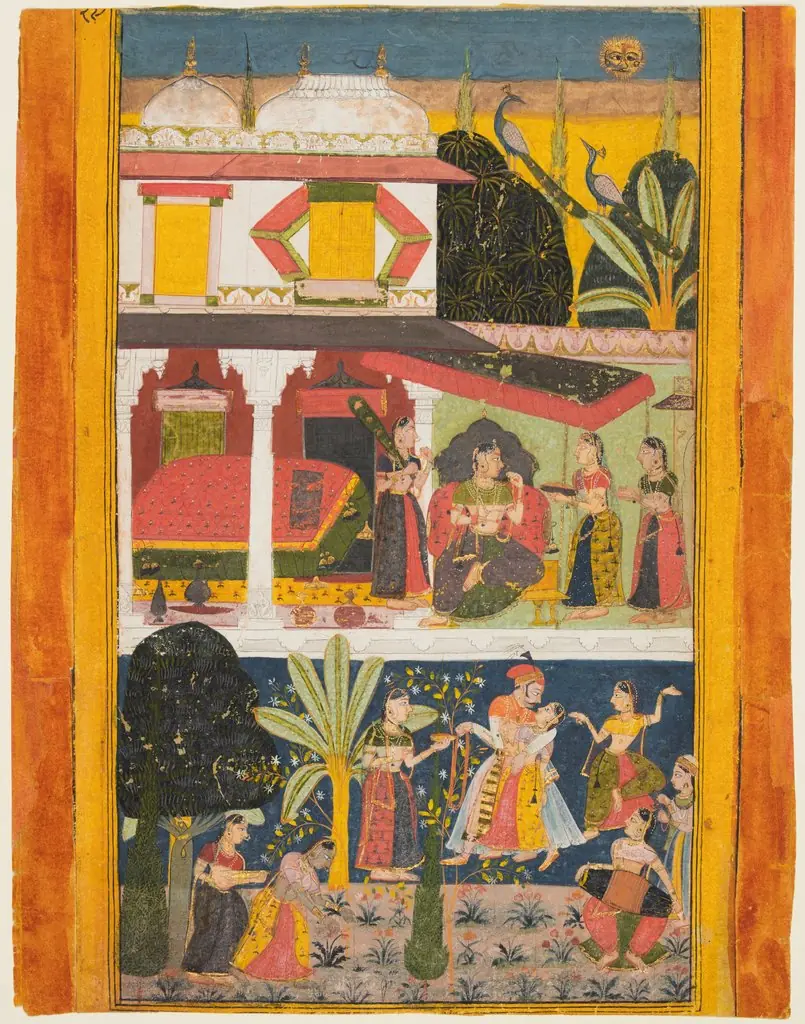 A Heroine and Her Paramour: Malavi Ragini, from a Ragamala
 Untitled
- Mahliqa, Daughter of the Emperor of China, Pointing at the Bird-Man Khwaja Mubarak: A Leaf from a Poetical Romance Relating to Shah Alam I (verso); Stenciled Scenes of Lion and Gazelle (verso)
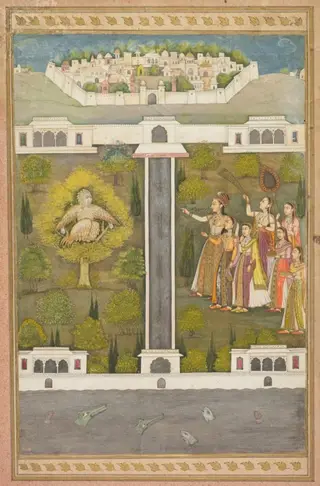 Mahliqa, Daughter of the Emperor of China, Pointing at the Bird-Man Khwaja Mubarak: A Leaf from a Poetical Romance Relating to Shah Alam I (verso); Stenciled Scenes of Lion and Gazelle (verso)
 A Princess and Demons before a Nobleman: A Leaf from a Poetical Romance Relating to Shah Alam I (recto)