Artwork
Man of Sorrows
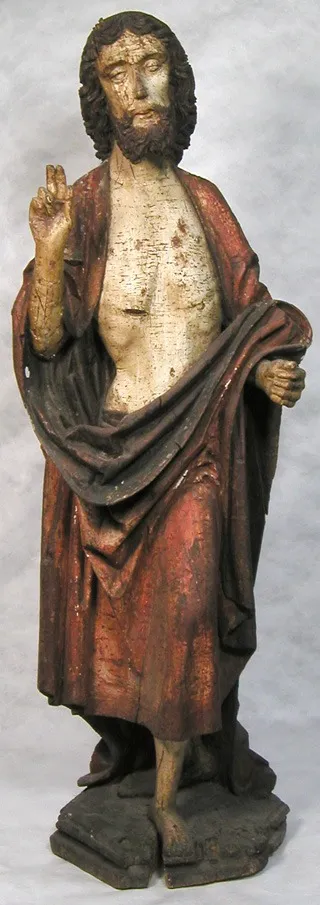
Man of Sorrows is an unspecified painting. It dates from 1450 and is held in the collection of the Metropolitan Museum of Art.
About this work
Subject & Meaning
The composition therefore serves as a devotional image that invites contemplation of Christ’s sacrificial love.
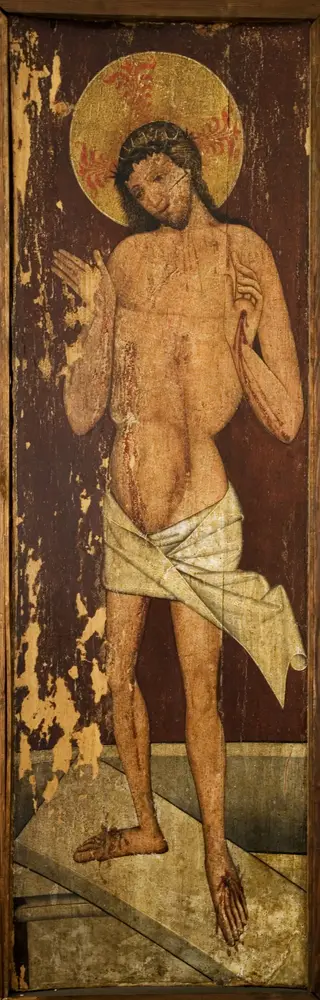
The work titled Man of Sorrows portrays Christ in a moment of intense suffering, a subject drawn from the biblical prophecy of Isaiah that emphasizes his redemptive pain. Its iconography follows the traditional “Man of Sorrows” motif, showing the Savior crowned with thorns and gazing downward, a visual shorthand for the Passion narrative. The painting is classified as religious art and was created circa 1450, as recorded in the catalog data.
According to the source records, it is housed in the Metropolitan Museum of Art, where it is listed under the main subject heading “Man of Sorrows” and described as depicting Jesus Christ. The composition therefore serves as a devotional image that invites contemplation of Christ’s sacrificial love.
History & Provenance
The painting titled Man of Sorrows, dated to approximately 1450, is held in the collection of the Metropolitan Museum of Art in New York. The work, attributed to an anonymous artist, was accessioned by the museum in 1971 under the inventory number 1971.194. While the source material confirms the artwork's current location and accession details, it does not provide a record of specific exhibitions in which the piece has participated. The painting remains part of the museum's permanent holdings, categorized within the realm of religious art.
Overview
This painting, titled "Man of Sorrows," depicts a solitary figure with a somber expression. The work portrays a traditional Christian subject, emphasizing the suffering of Christ after his crucifixion but before his resurrection. The figure's bare chest and the worn appearance of his skin convey a sense of physical hardship, inviting contemplation on themes of sacrifice and redemption.
Technique & Style
Rendered on a wooden panel, the artwork exhibits signs of age and wear. The surface displays visible cracks and areas where the paint has chipped away, revealing the underlying material. These physical characteristics contribute to the painting's historical presence, suggesting a long existence and perhaps a devotional context where it was handled or displayed over centuries. The medium itself reinforces its traditional artistic heritage.
Artist & collection