Artwork
Virgin and Child
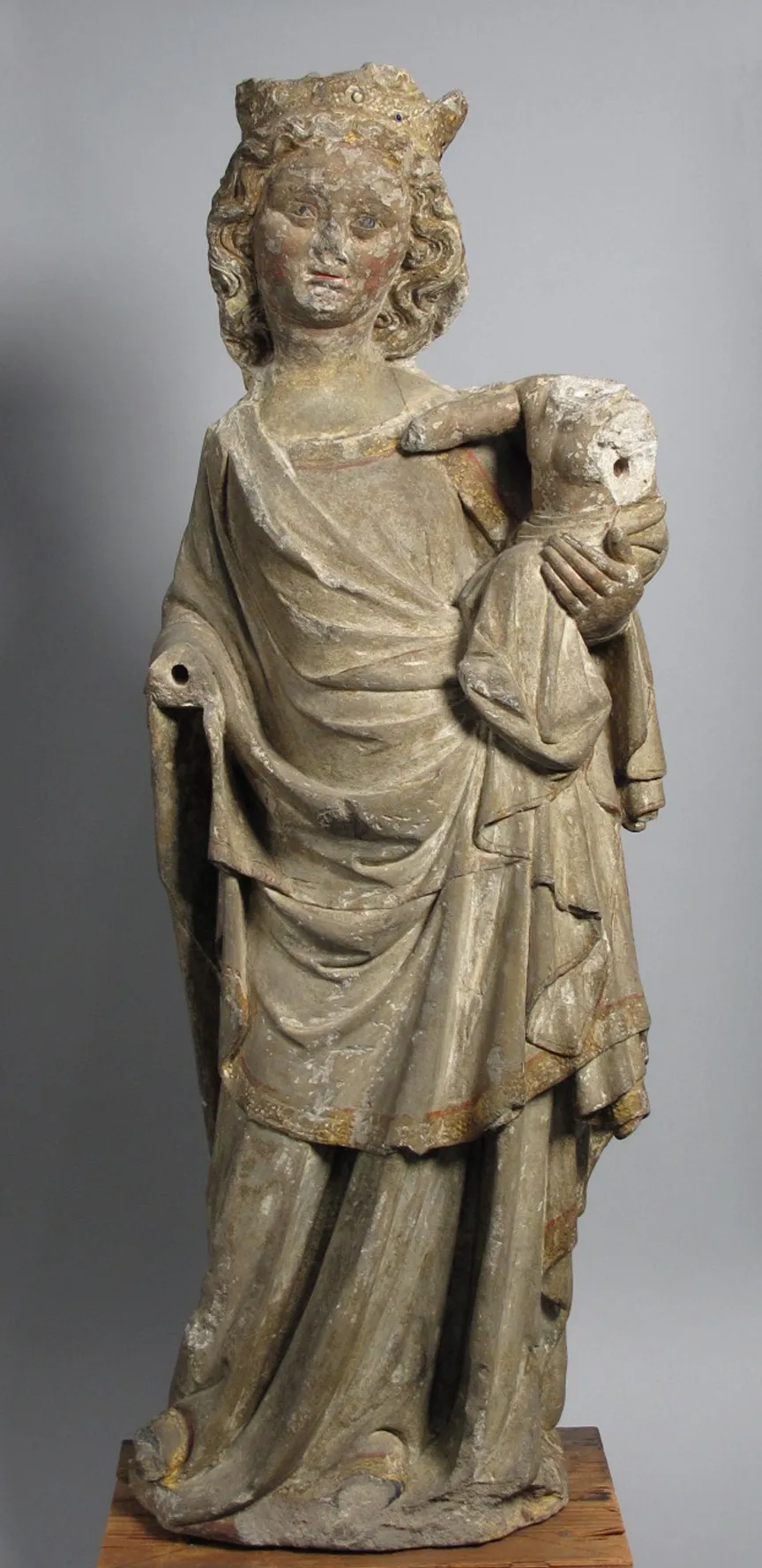
Virgin and Child is an unspecified painting. It dates from 1350 and is held in the collection of the Metropolitan Museum of Art.
About this work
Subject & Meaning
Created around 1350, this painting belongs to the genre of religious art and focuses entirely on the maternal bond between Mary and her son.
The artwork depicts the Madonna and Child, a central subject in religious art portraying the Virgin Mary with the Christ Child. Created around 1350, this painting belongs to the genre of religious art and focuses entirely on the maternal bond between Mary and her son. As a representation of the Virgin and Child, the work embodies core Christian themes of divine motherhood and the incarnation.
This iconography serves to visualize the theological concept of Mary as the bearer of God, a common motif in 14th-century devotional imagery, anchoring the work's meaning in traditional Christian narrative and veneration.
History & Provenance
The painting titled Virgin and Child, classified as a religious work depicting the Madonna and Child, was created circa 1350 by an anonymous artist. It is currently held in the collection of the Metropolitan Museum of Art, cataloged under accession number 25.120.229. The work measures 80 centimeters in height.
Specific details regarding the original commission, the identity of the initial patron, or the chain of ownership prior to its arrival at the museum are not documented in the available records.
Overview
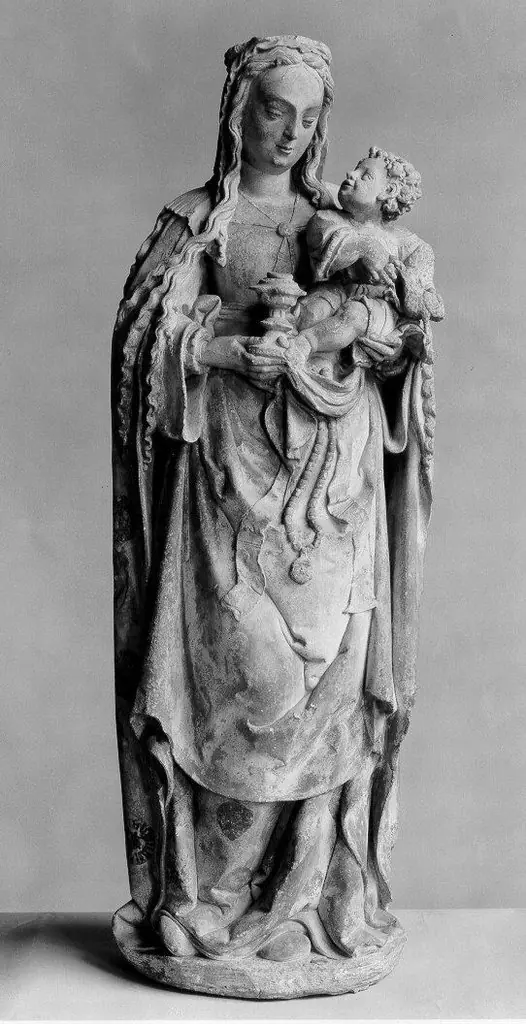
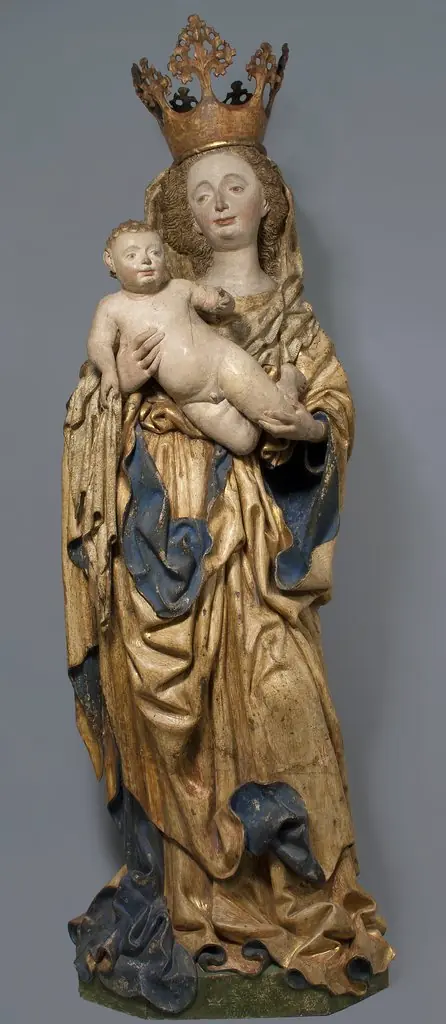
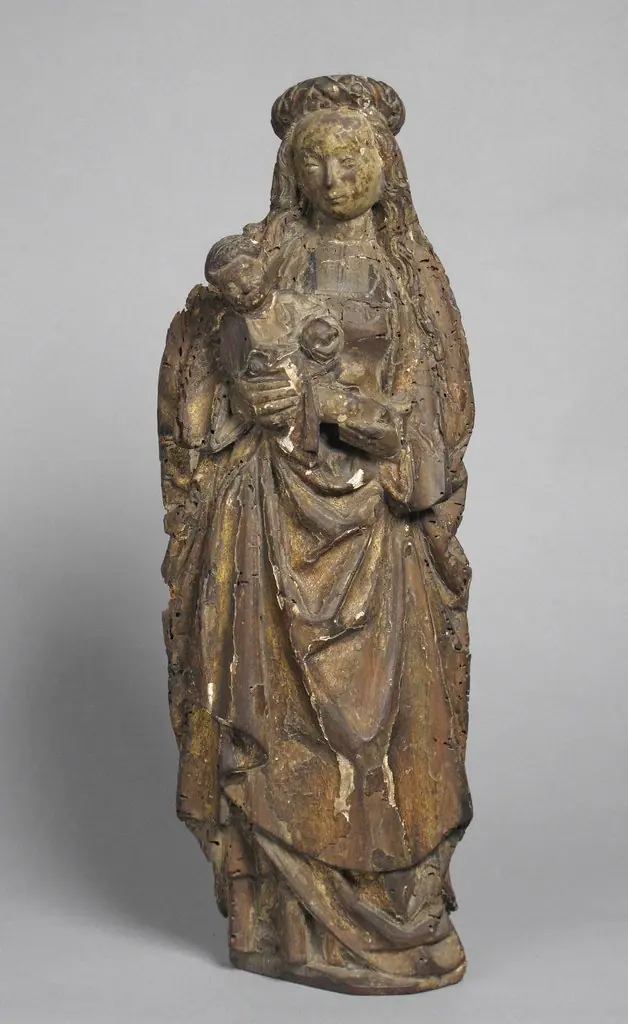
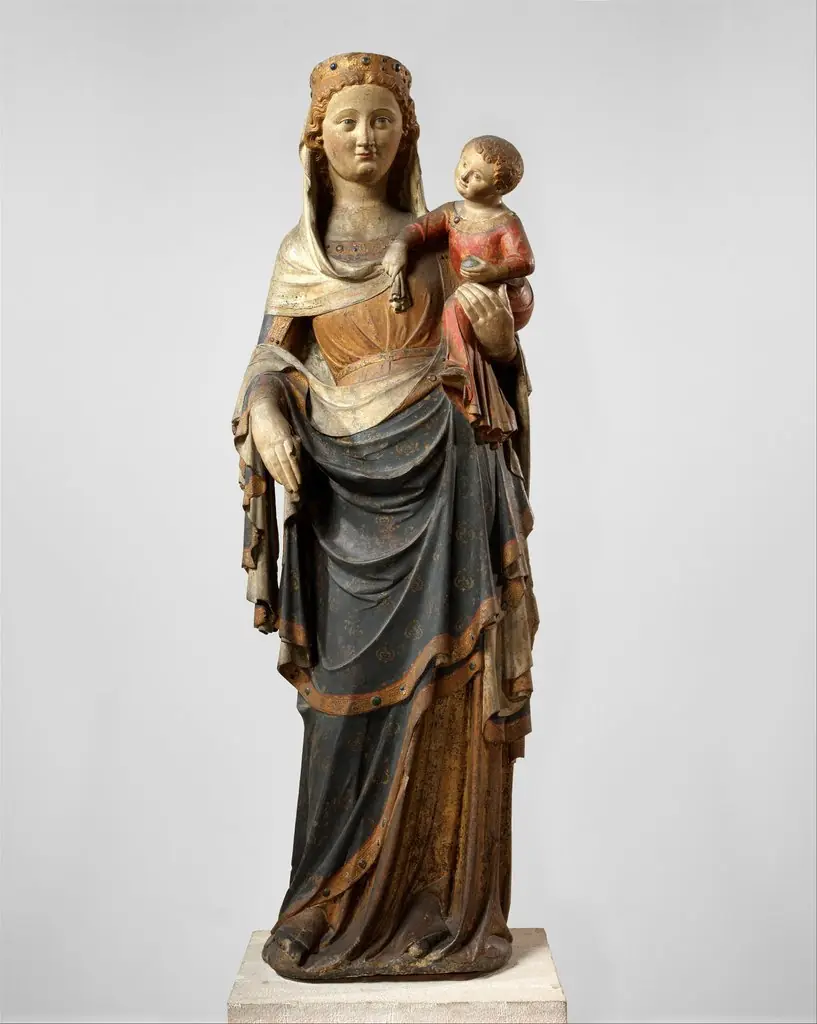
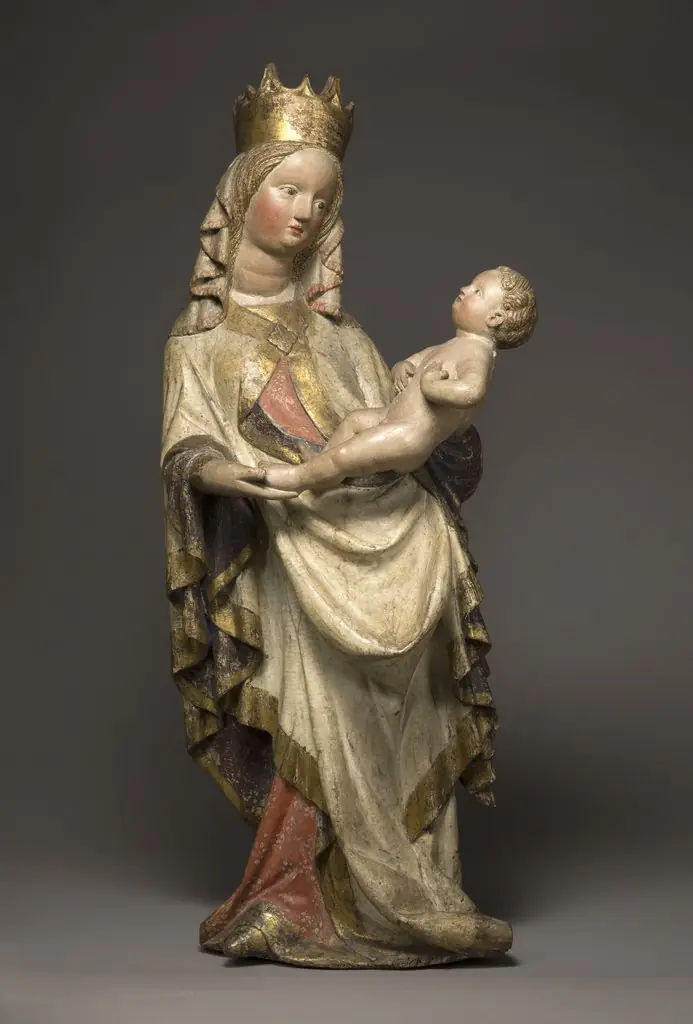
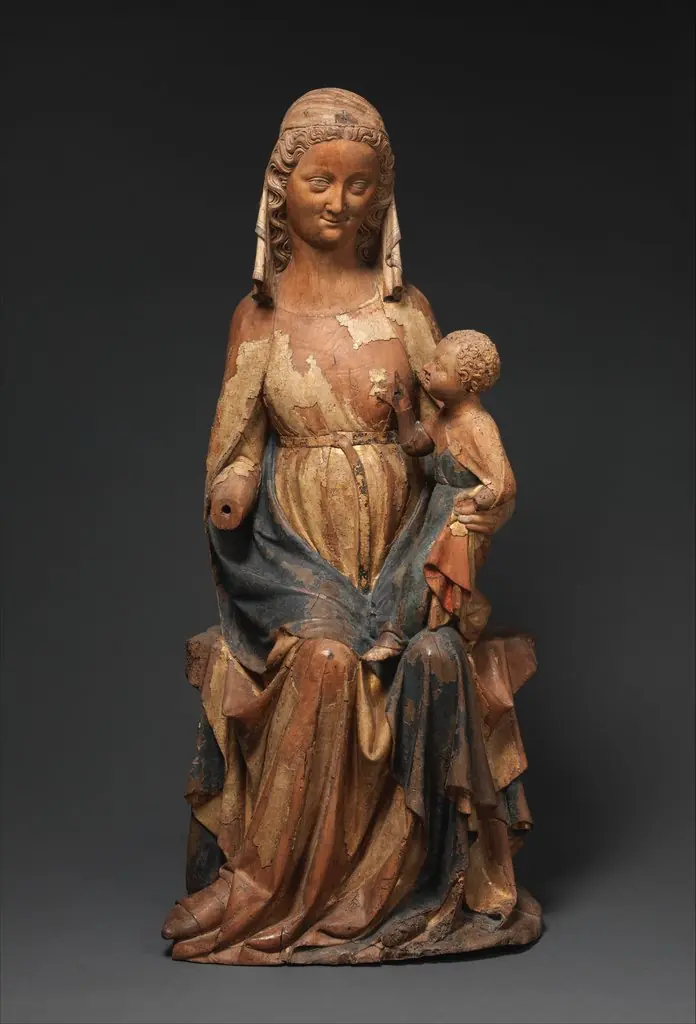
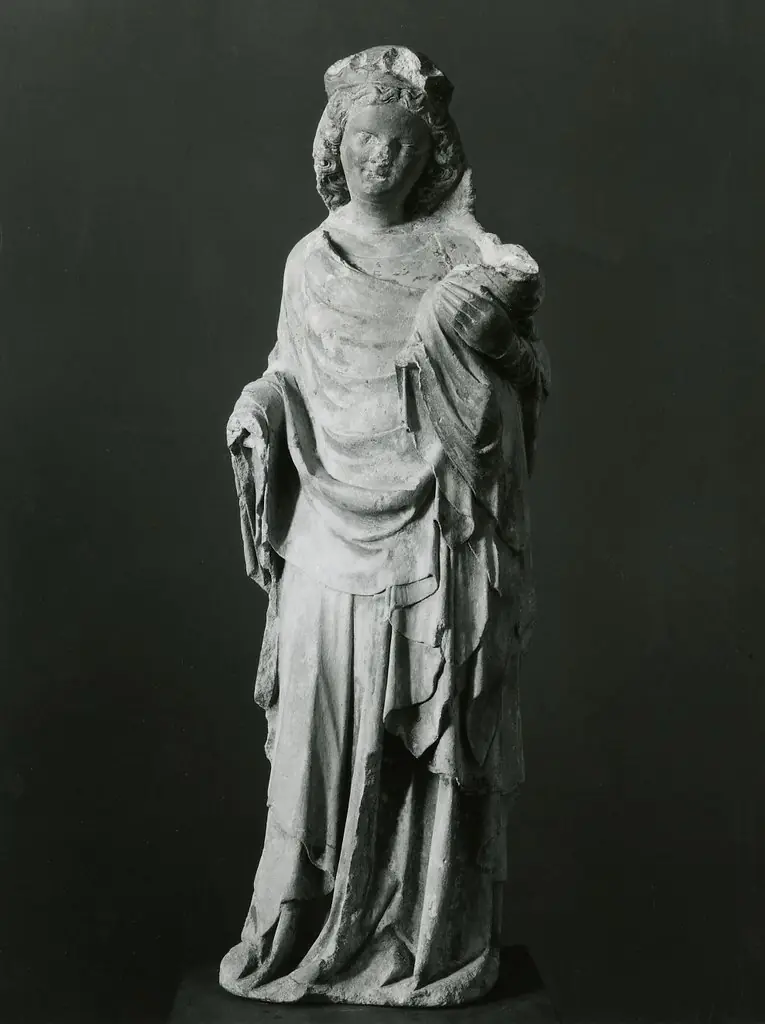
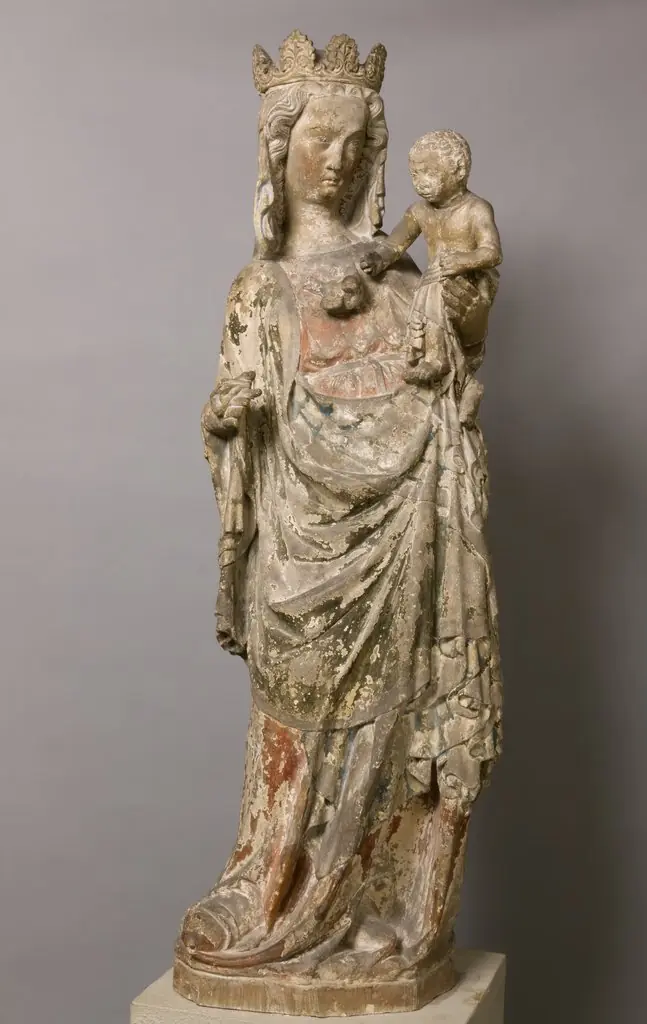
This sculpture, titled Virgin and Child, depicts a crowned female figure holding an infant. Both subjects are rendered standing upright, enveloped in long, flowing robes that feature deeply carved folds. The child gently grasps the woman's cloak, while both figures display serene, simplified facial features and soft, compassionate expressions, characteristic of devotional art of its period.
Technique & Style
The sculpture exhibits a style characterized by its clear, defined forms and the rhythmic drapery of the figures' robes, achieved through precise carving. The artist rendered the faces with smooth, unadorned features, contributing to their tranquil expressions. This approach prioritizes clarity and emotional resonance over intricate naturalism, aligning with the devotional purpose of such works.
Artist & collection