Artwork
Munja-Chaekgeori Screen (Character-Books Screen)
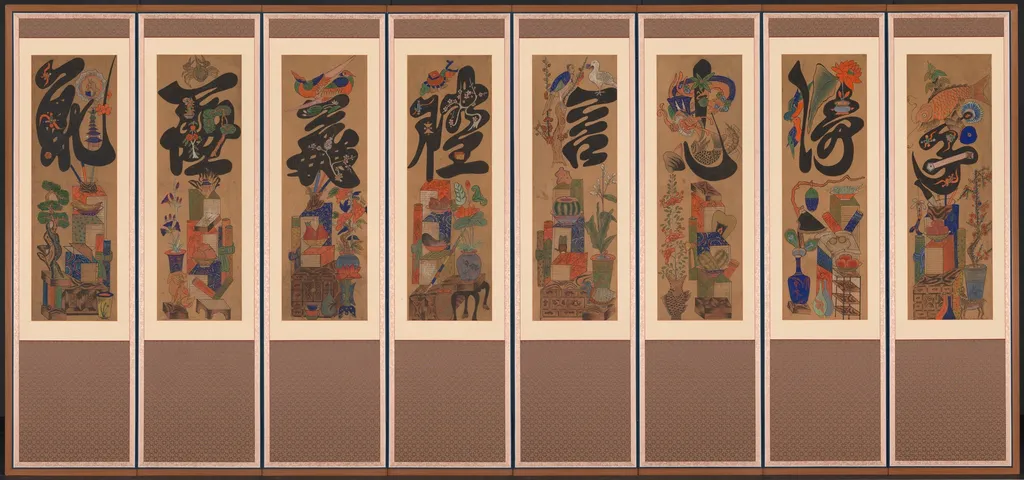
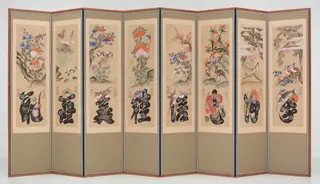
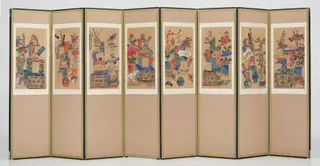
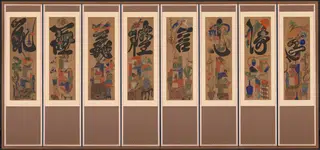
Munja-Chaekgeori Screen (Character-Books Screen) is an unspecified painting. It dates from 1000 and is held in the collection of the Cleveland Museum of Art. The work is a six‑panel painted screen, known as a Munja‑Chaekgeori, or “character‑books” screen.
About this work
Overview
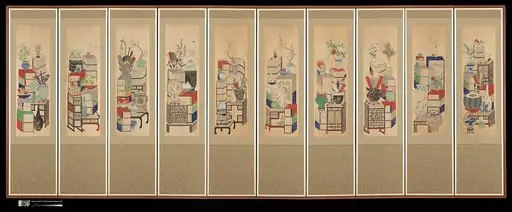
The work is a six‑panel painted screen, known as a Munja‑Chaekgeori, or “character‑books” screen. Each vertical panel is topped with a large Korean character, beneath which a lively tableau of scholars, books, vases and foliage unfolds. The composition balances bold black lettering with a vivid palette of greens, blues and reds that animate the light‑toned background.
Subject & Meaning
The scenes depict literati in modest interiors, surrounded by stacks of books and natural motifs such as pine branches and blossoms. The inclusion of the Korean characters, each representing a Confucian virtue or literary concept, underscores the screen’s didactic function, celebrating learning and the cultivated life.
Technique & Style
Executed in pigment on paper affixed to a wooden frame, the screen combines the flat decorative quality of Korean folk painting with delicate brushwork that suggests both drawing and miniature painting. The bright, contrasting colors and rhythmic arrangement of motifs are characteristic of the chaekgeori genre, which prized visual richness and scholarly symbolism.
History & Provenance
Created during the late Joseon period, the screen reflects the era’s fascination with books and the written word as symbols of status. It entered the collection of the Cleveland Museum of Art in the 20th century, where it remains on view as an example of Korean decorative painting.
Context
Chaekgeori screens were popular decorative objects in Korean elite households, serving both aesthetic and educational purposes. By integrating Hangul characters with detailed still‑life elements, the work aligns with contemporary trends that merged Confucian ideals with vibrant visual culture.
Legacy
The screen illustrates the enduring appeal of scholarly motifs in Korean art and informs modern understandings of Joseon‑period interior decoration. Its preservation in a major museum allows scholars to study the interplay of text and image that defined the chaekgeori tradition.
Artist & collection