Artwork
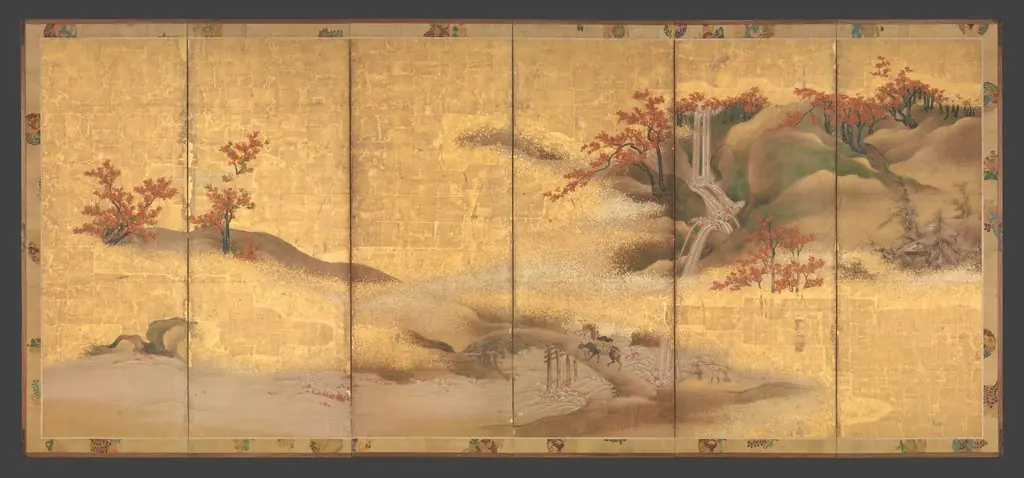
Autumn Maples with Poem Slips
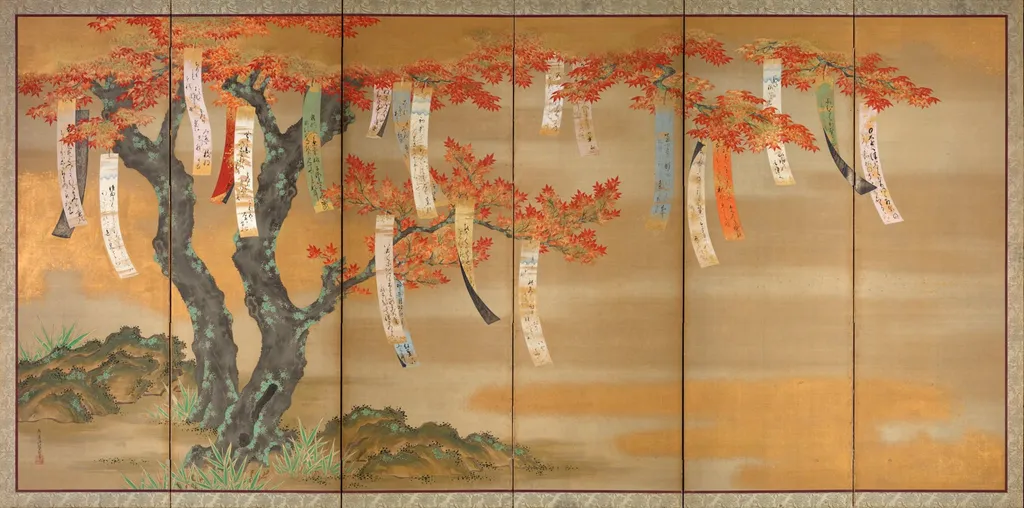
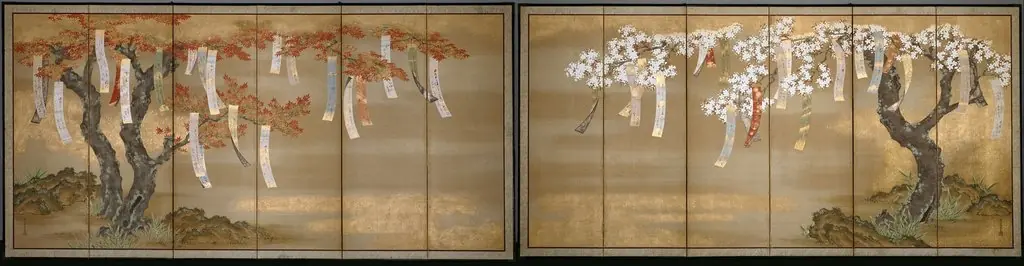
Autumn Maples with Poem Slips is an ink painting by the Baroque artist Tosa Mitsuoki. It dates from 1675 and is held in the collection of the Art Institute of Chicago. This six-panel screen, one of a matching pair, depicts autumn maples adorned with poem slips, rendered in ink, color, and gold leaf on silk.
- Accession no.
- 127644
- Credit line
- Kate S. Buckingham Endowment
About this work
Overview
Its companion screen portrays spring cherry blossoms, completing a seasonal diptych that reflects the cyclical nature of courtly observances.
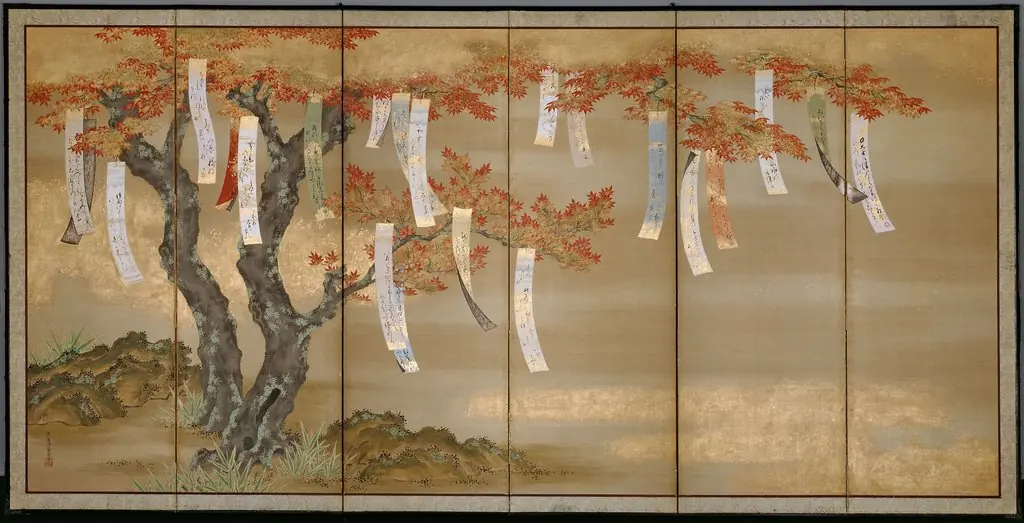
This six-panel screen, one of a matching pair, depicts autumn maples adorned with poem slips, rendered in ink, color, and gold leaf on silk. Created in the 17th century by Tosa Mitsuoki, a leading court painter, it captures a quiet aftermath: the courtly revelers have departed, leaving behind only their verses fluttering in the breeze. Its companion screen portrays spring cherry blossoms, completing a seasonal diptych that reflects the cyclical nature of courtly observances.
Subject & Meaning
The screen illustrates the ephemeral beauty of autumn through fallen leaves and abandoned tanzaku, small paper slips bearing classical poems from medieval anthologies. These fragments, still tied to the branches, suggest the passage of time and the impermanence of human celebration. The absence of people emphasizes solitude, transforming the scene into a meditation on memory and loss rather than a depiction of festivity.
Technique & Style
Tosa Mitsuoki employed fine brushwork to render delicate maple leaves in gradations of red and orange, set against a luminous ground of gold leaf and powder. The gold does not merely decorate but evokes the glow of recollection, softening edges and blurring boundaries between reality and memory. The poem slips, rendered in precise script, are nearly invisible unless examined closely, reinforcing their role as quiet, fleeting traces of human presence.
History & Provenance
Commissioned for or gifted to Empress Tōfukumon-in, daughter of the Tokugawa shogun and wife of Emperor Gomizunoo, the screens reflect a deliberate revival of Heian-era court aesthetics during a time of shogunal dominance. Their creation signaled a cultural reassertion by the imperial family, who, despite political marginalization, sustained traditions of poetry, nature appreciation, and refined artistic patronage.
Context
In 17th-century Japan, seasonal poetry gatherings were formalized rituals among the aristocracy, linking literary expression to natural cycles. Though political power resided with the shogunate, the imperial court preserved these customs as symbols of cultural legitimacy. Mitsuoki’s work, produced under imperial patronage, revived medieval poetic ideals, embedding them in visual form for private contemplation rather than public display.
Legacy
The pair of screens stands as a rare surviving example of early Edo-period court painting that bridges classical Heian sensibilities with contemporary artistic practice. Their preservation in the Art Institute of Chicago allows continued study of how imperial aesthetics persisted amid political change, offering insight into the quiet resilience of cultural memory through art.
Artist & collection


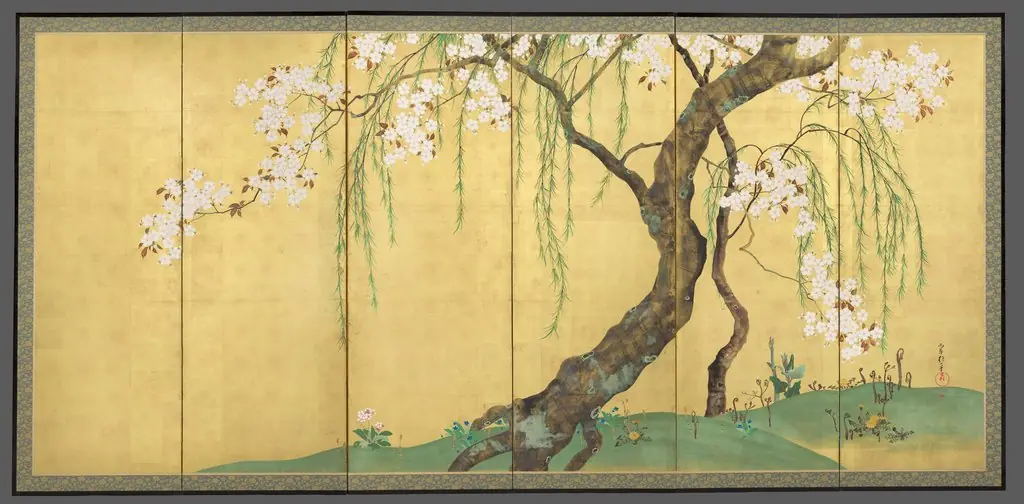 Cherry and Maple Trees
 Winter Scene with Plum Trees and Pheasants (Birds Left)
 Mountains and Rivers in Autumn
 Munja-Chaekgeori Screen (Character-Books Screen)
 Spring and Autumn Farming (Spring)
 山本梅逸筆 四季山水図|Landscapes of the Four Seasons
 Summer and Winter Landscapes (one of a pair)
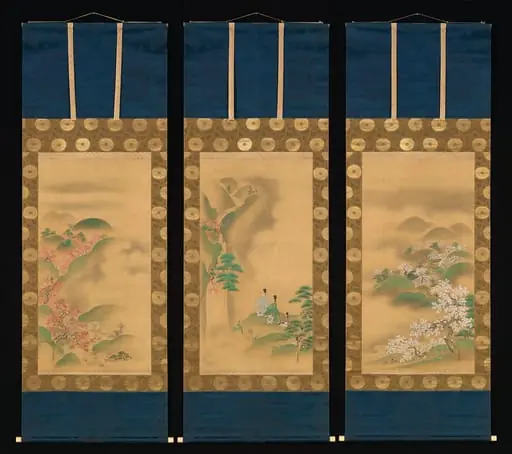 狩野常信筆 滝見業平図|Nunobiki Waterfall, Mount Yoshino, and Tatsuta River