Artwork
Noah's Ark
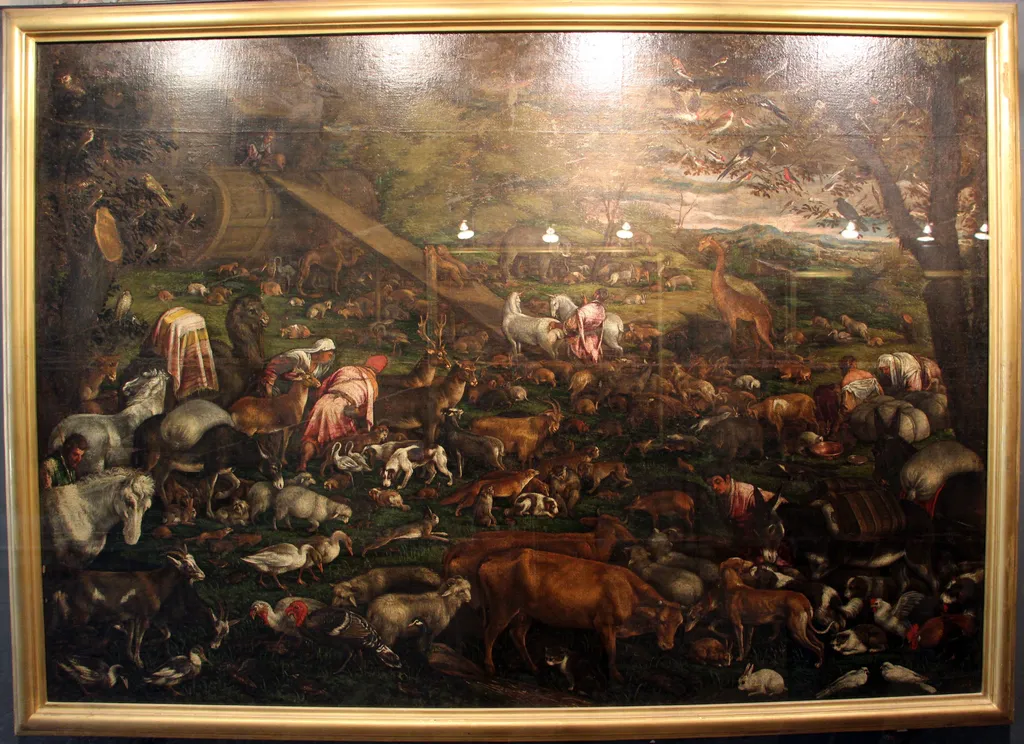
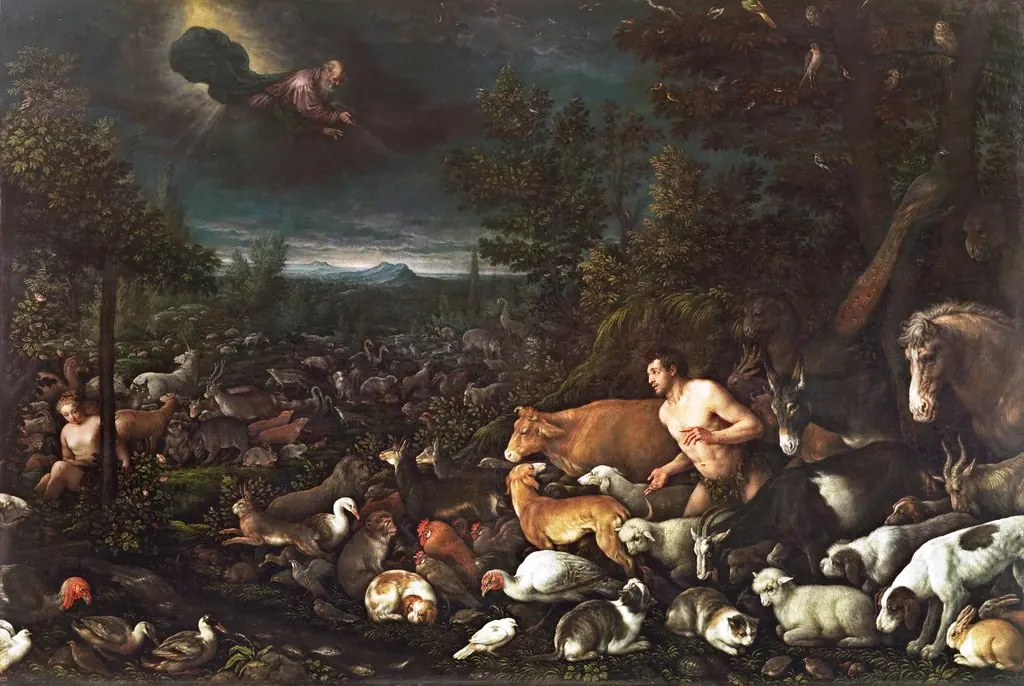
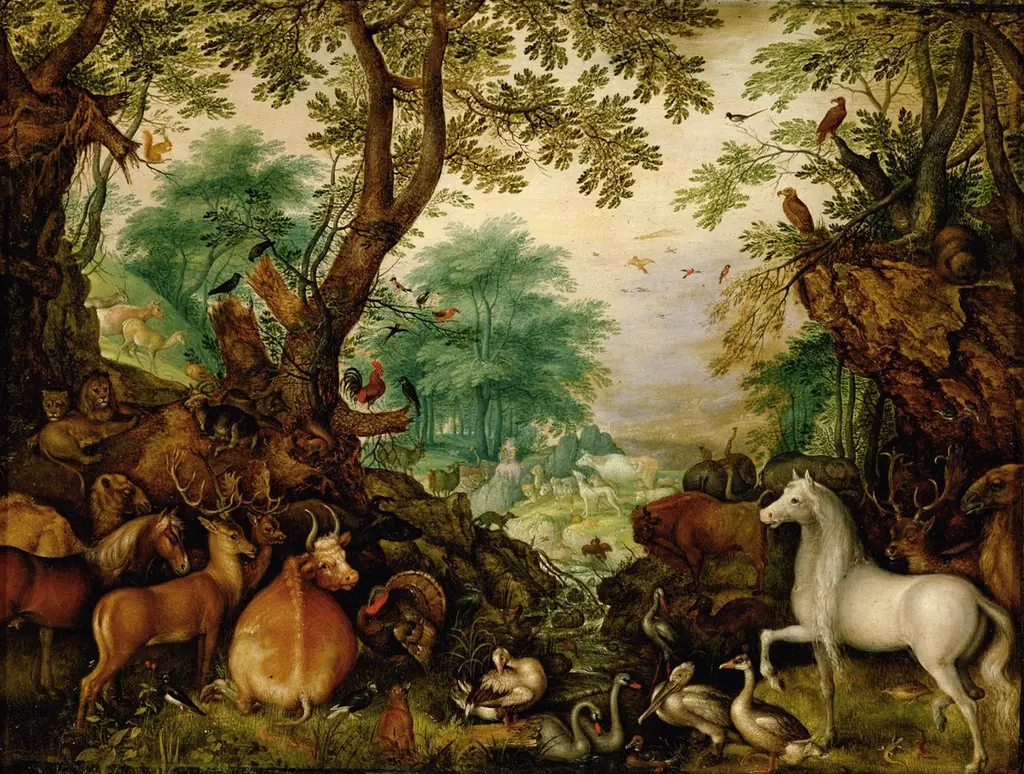
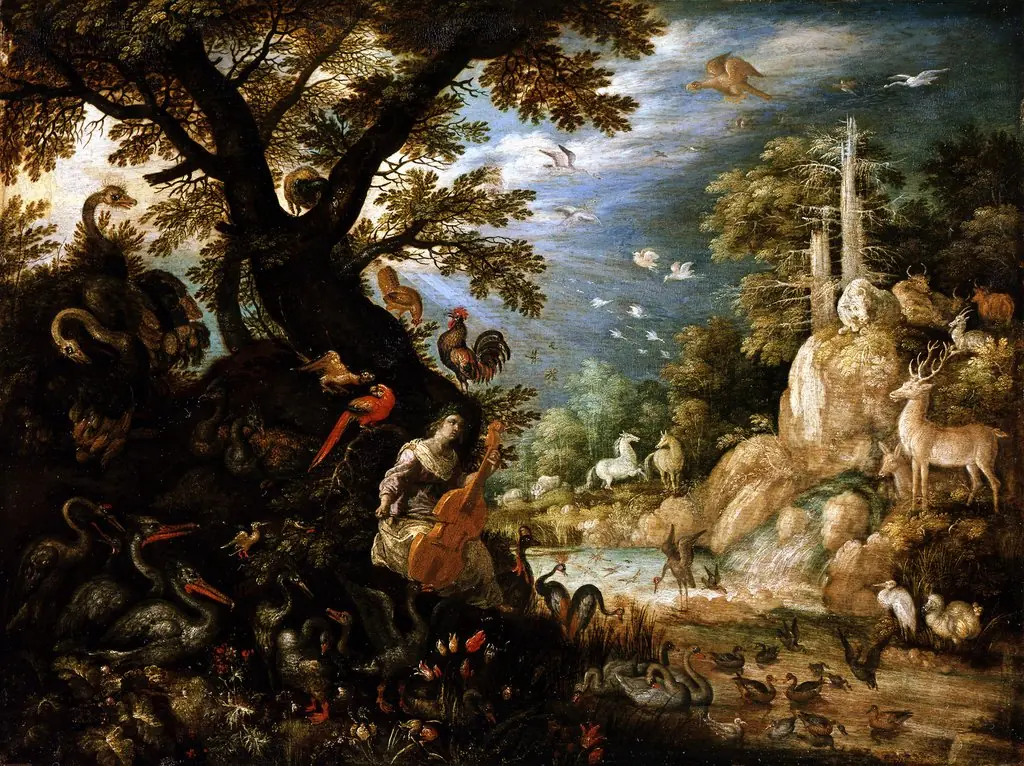
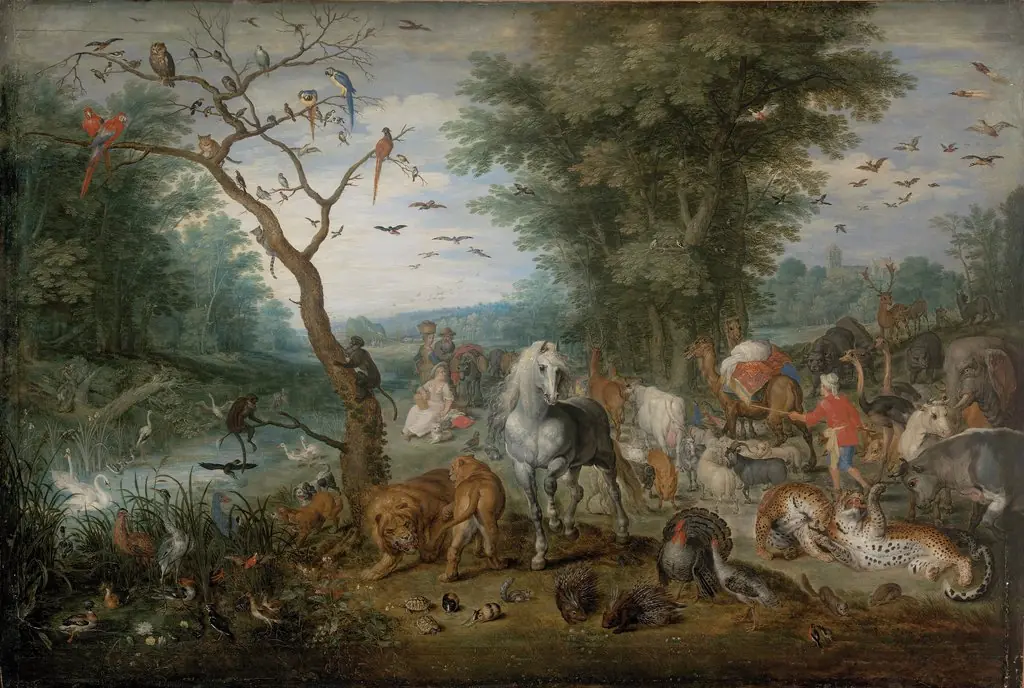
Noah's Ark is an unspecified painting by Unknown. It dates from 1850 and is held in the collection of the Doge's Palace. This painting depicts a moment from the biblical narrative of Noah’s Ark, focusing on the gathering of animals prior to the flood.
About this work
Overview
The composition avoids dramatic action, instead conveying quiet anticipation through stillness and careful observation of animal behavior.
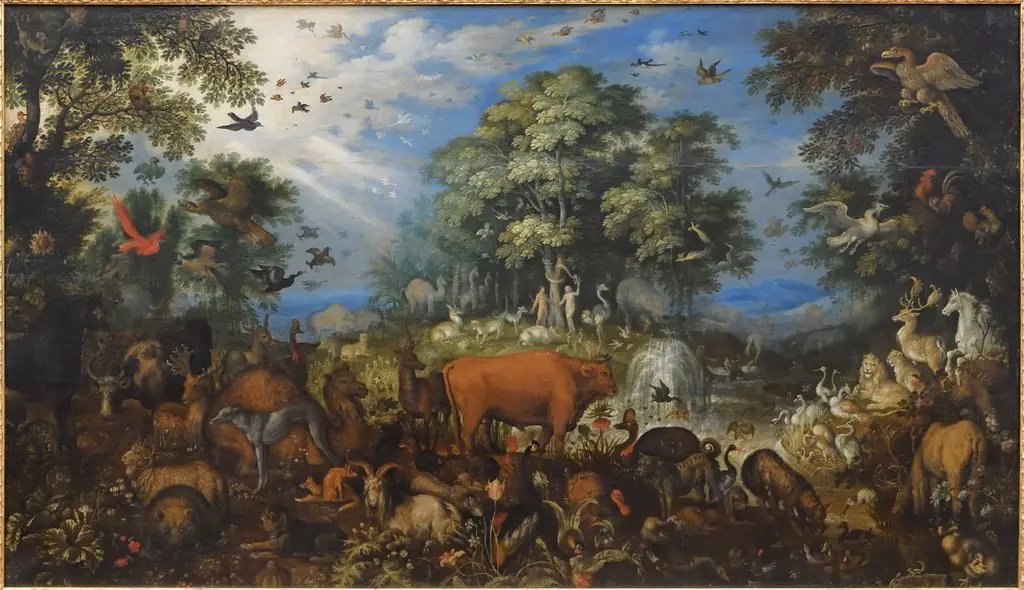
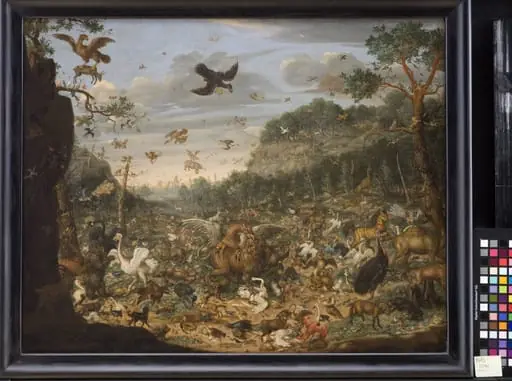
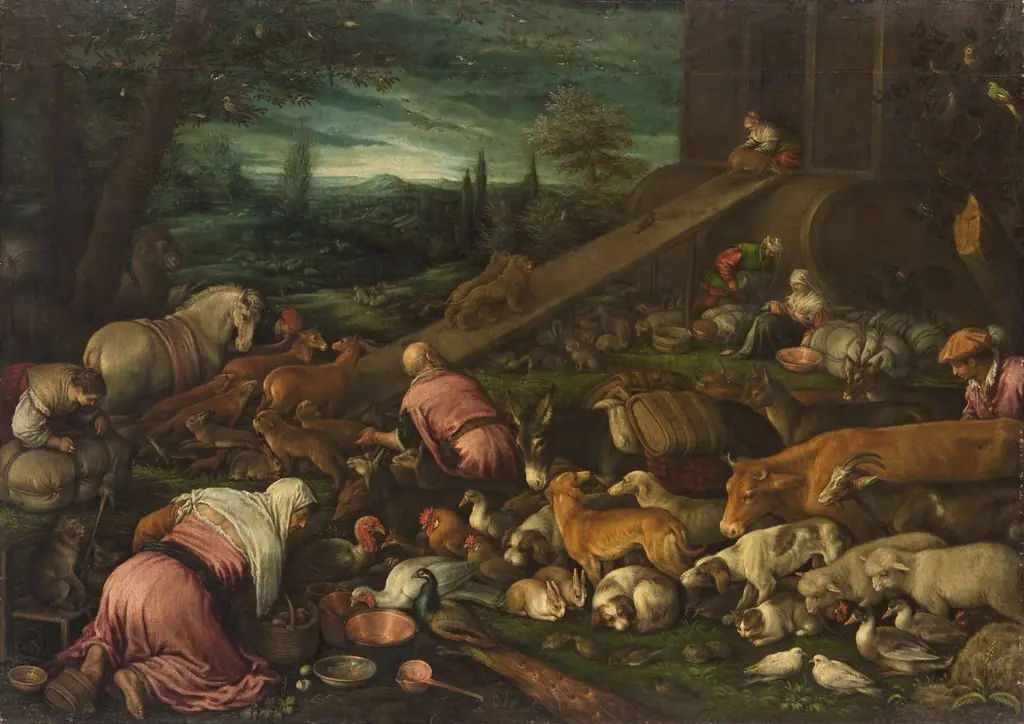
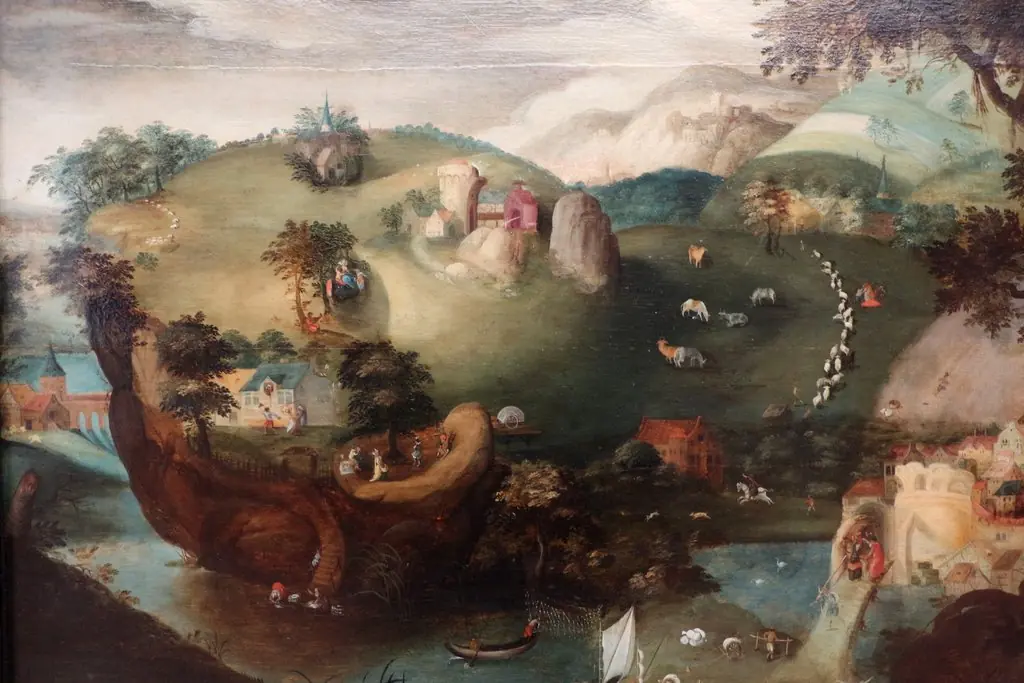
This painting depicts a moment from the biblical narrative of Noah’s Ark, focusing on the gathering of animals prior to the flood. Rather than showing the vessel itself, the scene centers on a diverse assembly of wildlife within a wooded landscape. Human figures are present but distant, minimized in scale to emphasize the natural world. The composition avoids dramatic action, instead conveying quiet anticipation through stillness and careful observation of animal behavior.
Subject & Meaning
The work illustrates the moment when pairs of animals converge, as described in Genesis, before the deluge. The absence of the ark shifts focus to the creatures themselves, suggesting a theme of divine order and coexistence. The muted tones and tranquil setting imply a solemn, sacred pause, not chaos, but preparation.
Human presence is peripheral, reinforcing the idea that nature, under divine command, fulfills its role without human intervention.
Technique & Style
Rendered with meticulous attention to texture and form, the painting employs a realistic approach to depict fur, feathers, and foliage. Brushwork is subtle, avoiding overt stylization; shadows and light define volume without theatrical contrast. The palette is restrained, dominated by earthy browns, olive greens, and muted grays, enhancing the sense of naturalism. Depth is achieved through atmospheric perspective, with distant hills softly blurred to recede into the background.
History & Provenance
The painting’s origin and early ownership are not documented in available records. It lacks signatures or inscriptions that would clarify its maker or date. Its style suggests it may stem from the 18th or early 19th century, a period when biblical subjects were commonly rendered in naturalistic terms by lesser-known regional artists. No major collections or auction records trace its movement prior to modern acquisition.
Context
During the 18th and 19th centuries, biblical narratives were frequently interpreted through landscape and animal studies, particularly in Europe and America. Artists often avoided literal depictions of divine intervention, favoring quiet, observational moments. This painting aligns with that trend, reflecting a broader cultural interest in natural history and moral allegory, where the animal kingdom symbolized harmony under divine will.
Legacy
Though not widely exhibited or studied, the painting contributes to a quiet tradition of biblical naturalism that prioritized observation over spectacle. Its emphasis on animal diversity and calm composition offers a counterpoint to more dramatic renditions of the flood. It remains a modest example of how religious stories were translated into intimate, earthly scenes, valued more for their quiet sincerity than for artistic innovation.
Artist & collection