Artwork
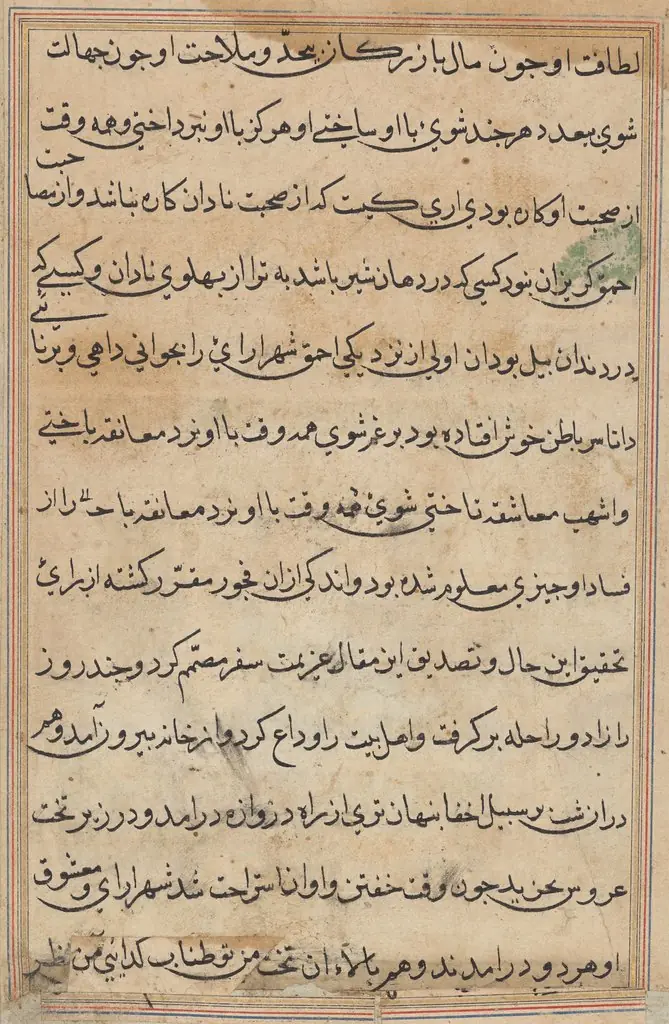
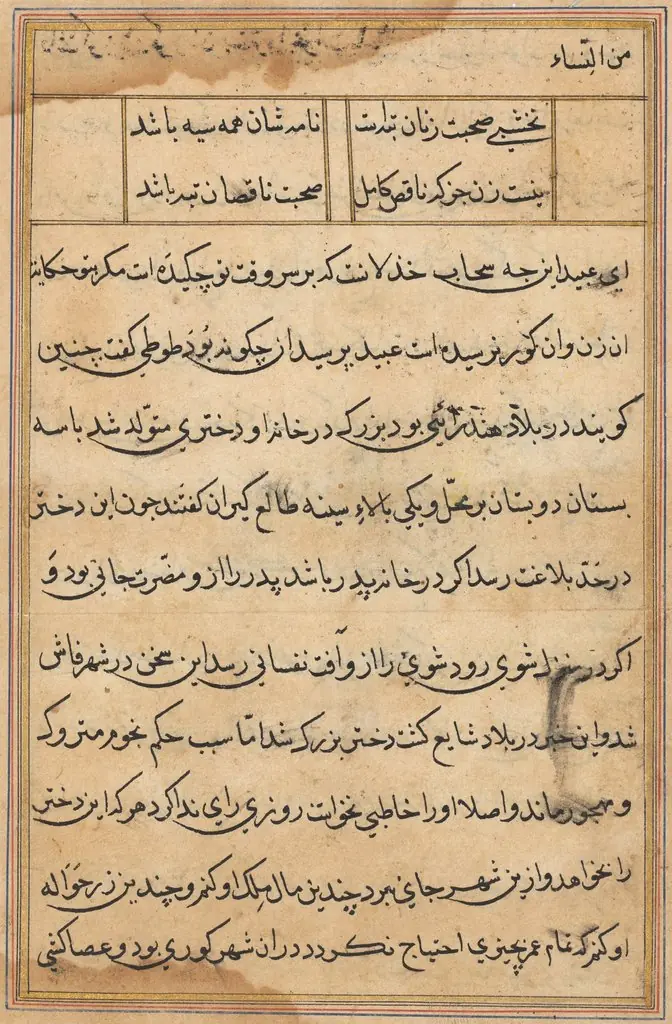
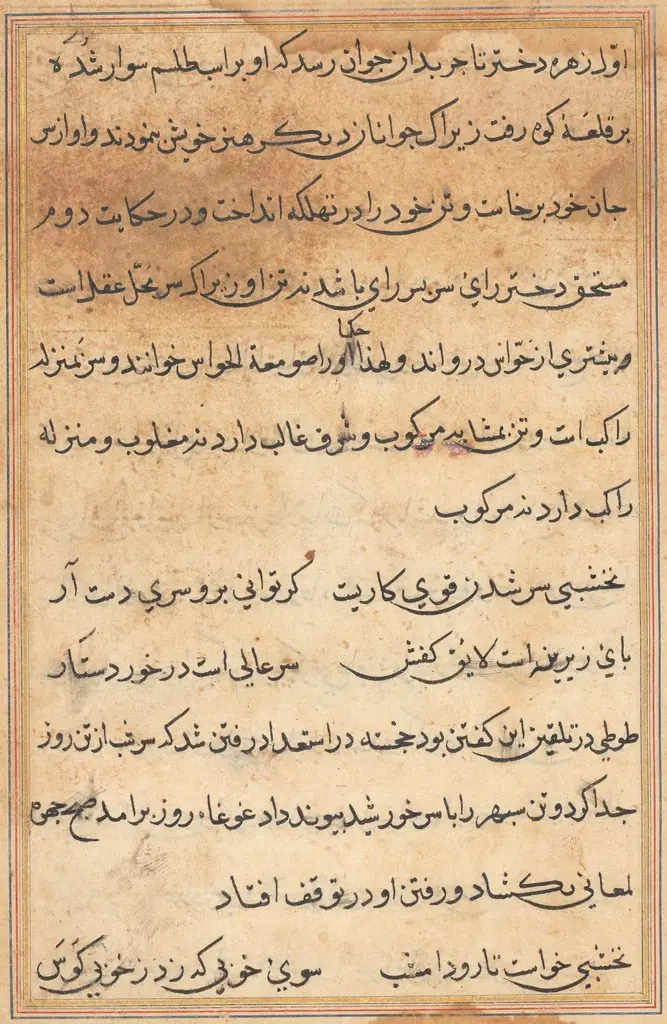
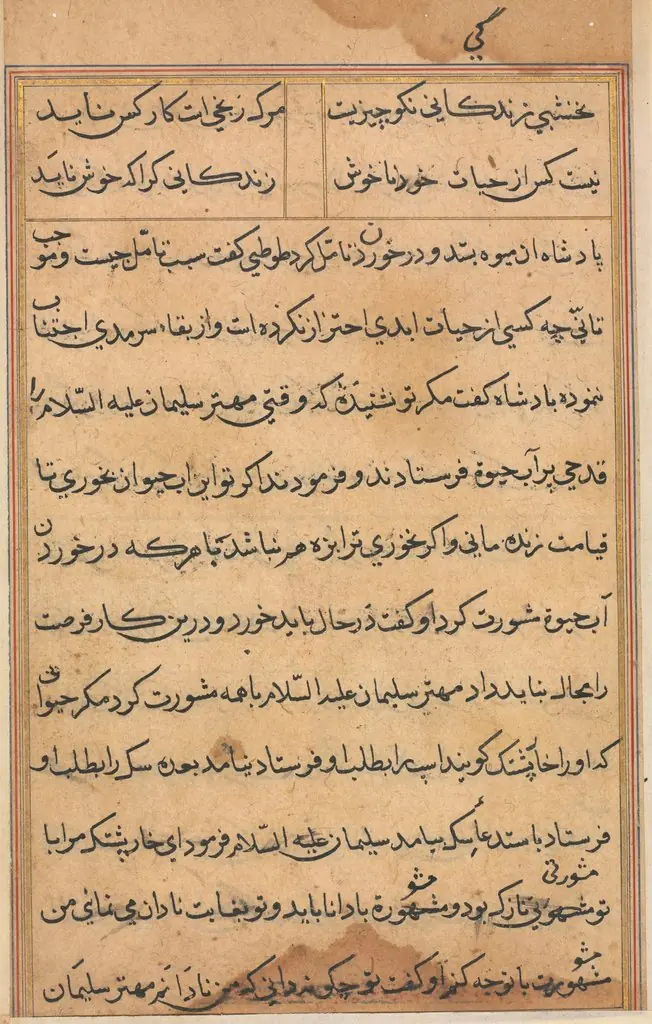
Page from Tales of a Parrot (Tuti-nama): text page
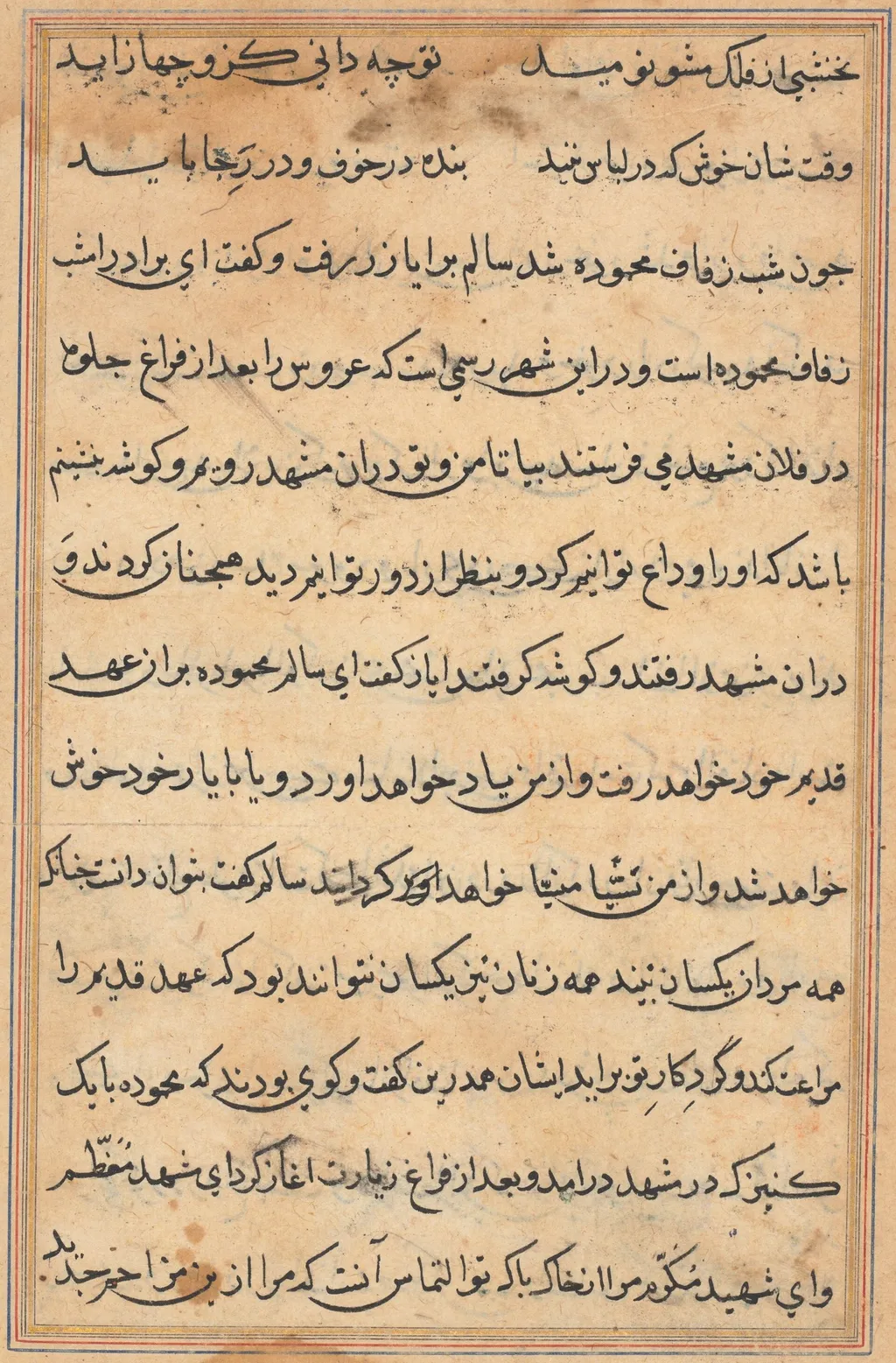
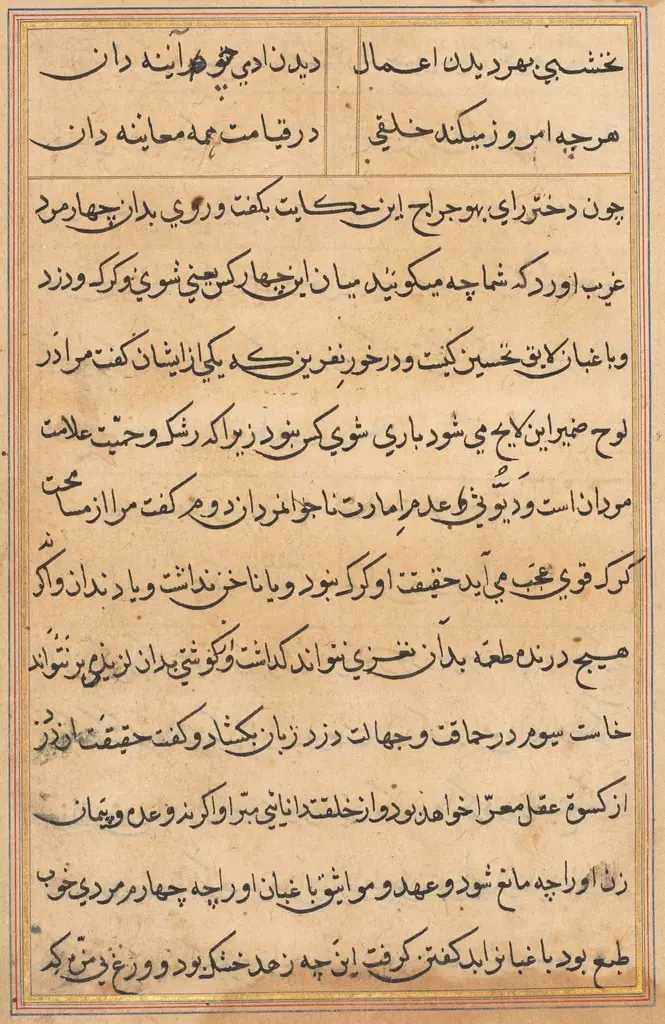
Page from Tales of a Parrot (Tuti-nama): text page is an unspecified painting. It dates from 1560 and is held in the collection of the Cleveland Museum of Art. The object is a single page from the illustrated manuscript known as Tales of a Parrot (Tuti‑nama).
About this work
Technique & Style
The text page originates from a 16th-century Persian illustrated manuscript, likely produced in the imperial atelier during Akbar's reign.
The page is a miniature painting executed in opaque pigments and gold on paper, characteristic of Mughal manuscript illumination. The composition features delicate line work and flattened perspective, with figures rendered in profile against an idealized landscape. The text page originates from a 16th-century Persian illustrated manuscript, likely produced in the imperial atelier during Akbar's reign. Its condition reflects careful preservation, retaining vibrant pigments despite centuries of handling.
History & Provenance
The page originates from a 1560 manuscript produced in the Mughal Empire. It was created as part of the Tuti-nama, a Persian illustrated story collection, and is attributed to an unknown artist working within that tradition. The work entered the collection of the Cleveland Museum of Art, where it remains on view today.
The page is held by the Cleveland Museum of Art, where it is catalogued under the inventory number 1962.279.220.b. The accession year is 1962, indicating that the work entered the museum's collection in that year. The object was produced in 1560 within the Mughal Empire. No exhibition history is recorded in the available sources.
Overview
The object is a single page from the illustrated manuscript known as Tales of a Parrot (Tuti‑nama). It consists of black ink lettering set against a light tan vellum, framed by a narrow border that subtly shifts in hue to give a sense of depth. The page is composed of multiple lines of text, some of which are emphasized by darker strokes or underlining.
Subject & Meaning
The inscription appears to be a passage from a narrative or poetic work, though the script has not been identified, leaving the precise content and its literary significance uncertain. The decorative flourishes suggest the text was intended for a cultivated audience familiar with the story’s cultural context.
Artist & collection

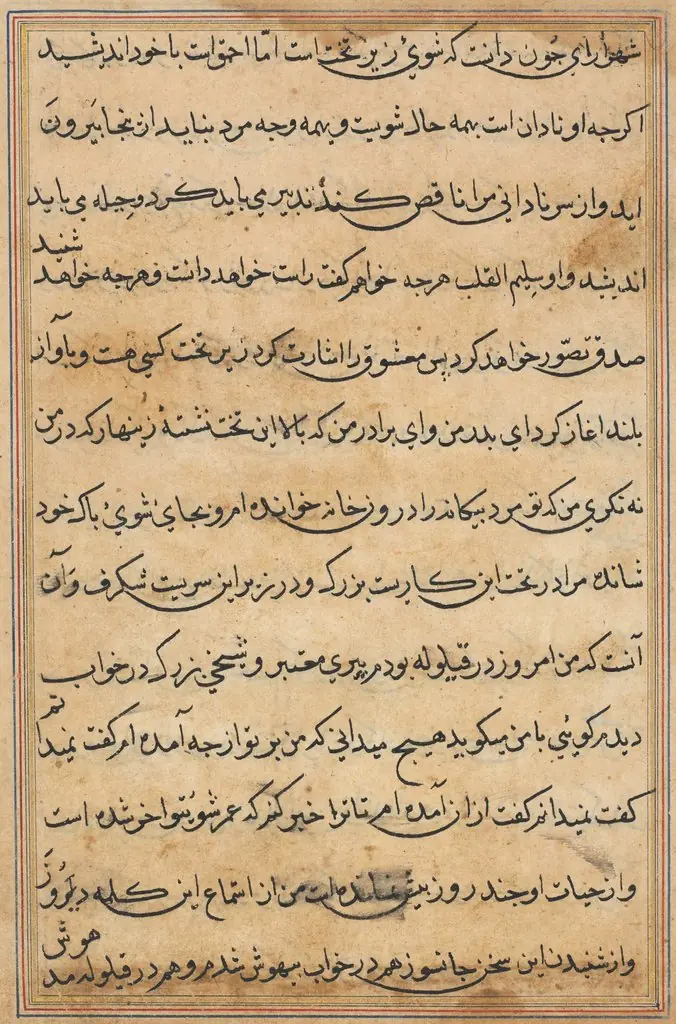 Page from Tales of a Parrot (Tuti-nama): text page
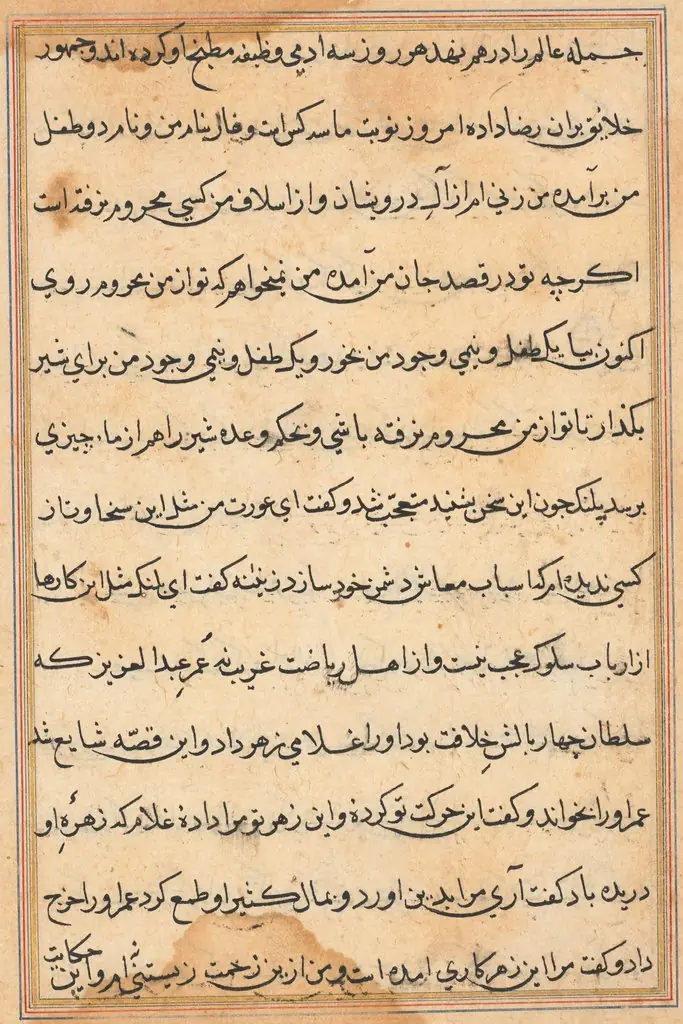 Page from Tales of a Parrot (Tuti-nama): text page
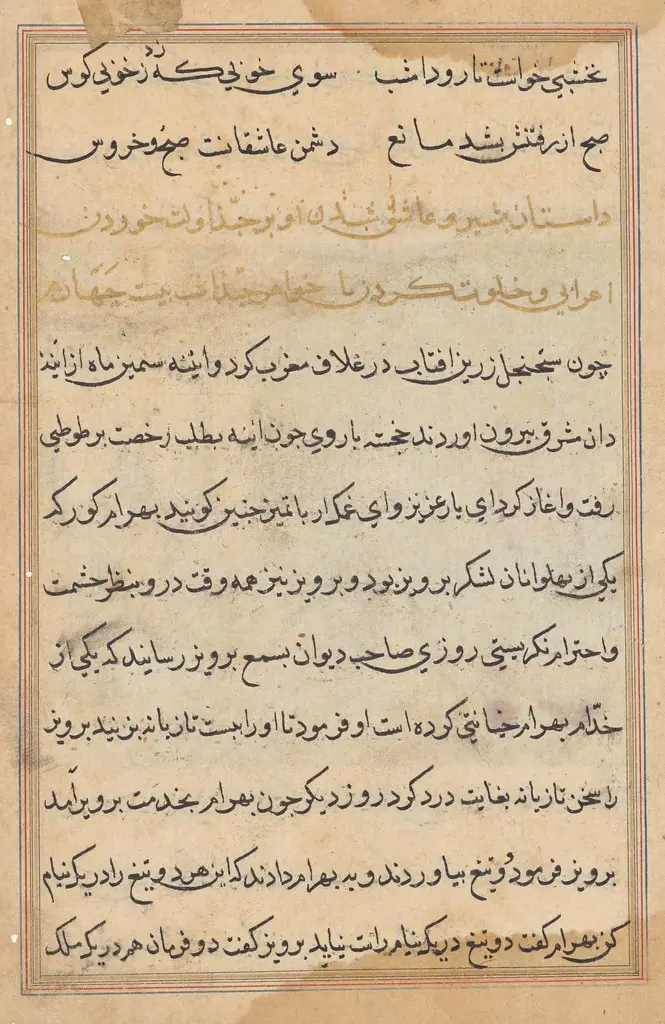 Page from Tales of a Parrot (Tuti-nama): text page
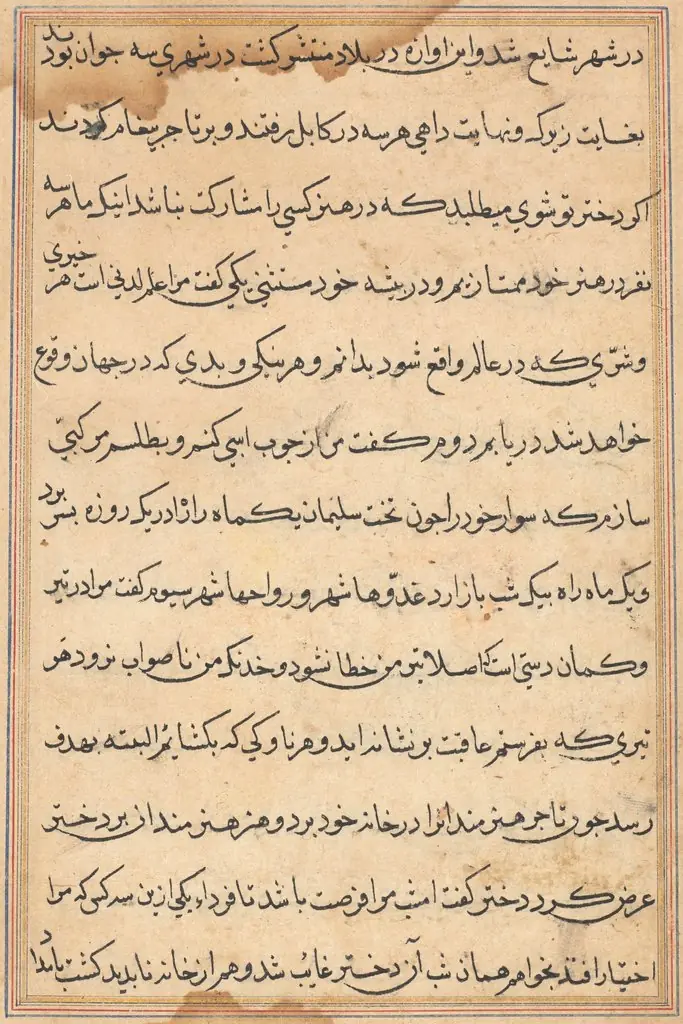 Page from Tales of a Parrot (Tuti-nama): text page
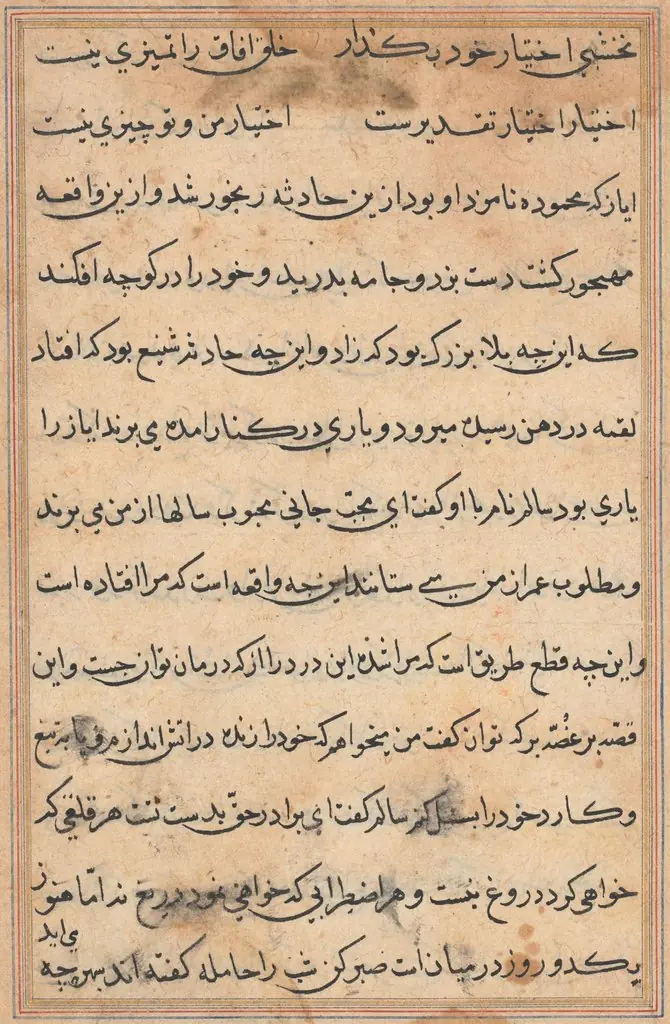 Page from Tales of a Parrot (Tuti-nama): text page
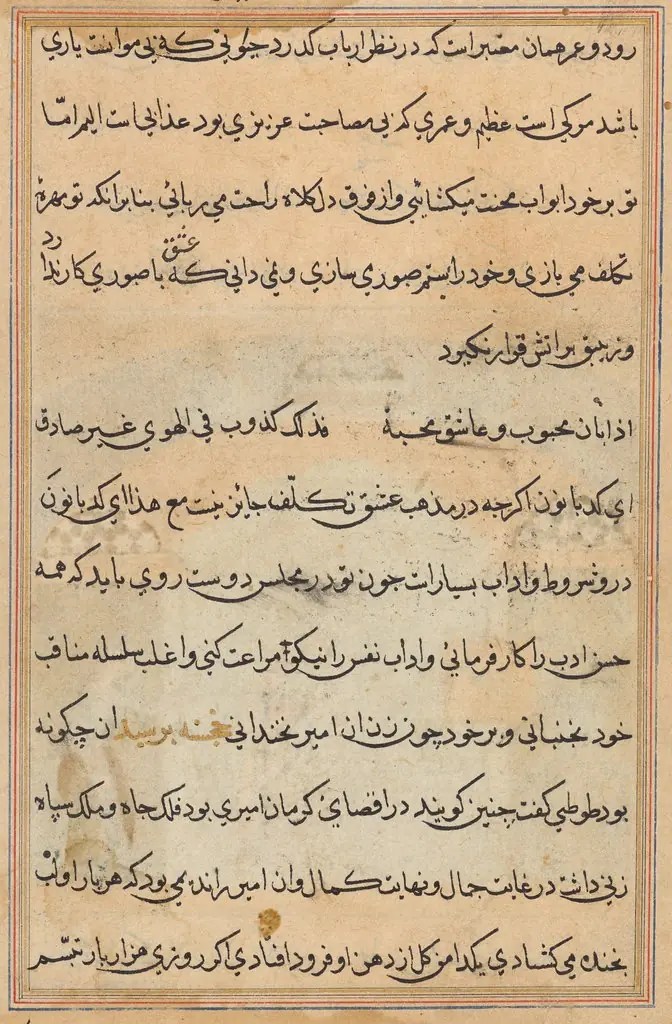 Page from Tales of a Parrot (Tuti-nama): text page
 Page from Tales of a Parrot (Tuti-nama): text page