Artwork
Page from Tales of a Parrot (Tuti-nama): text page
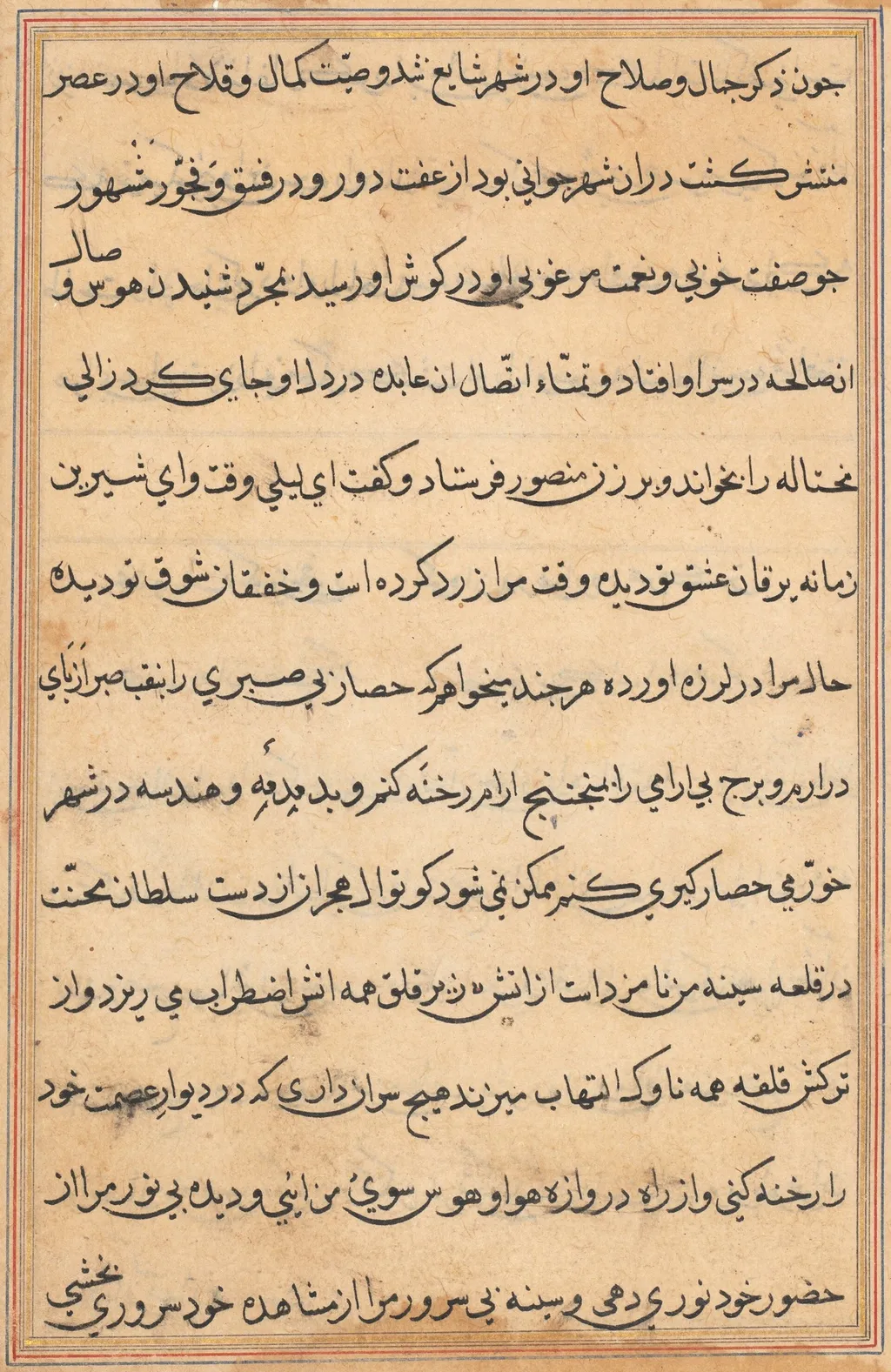
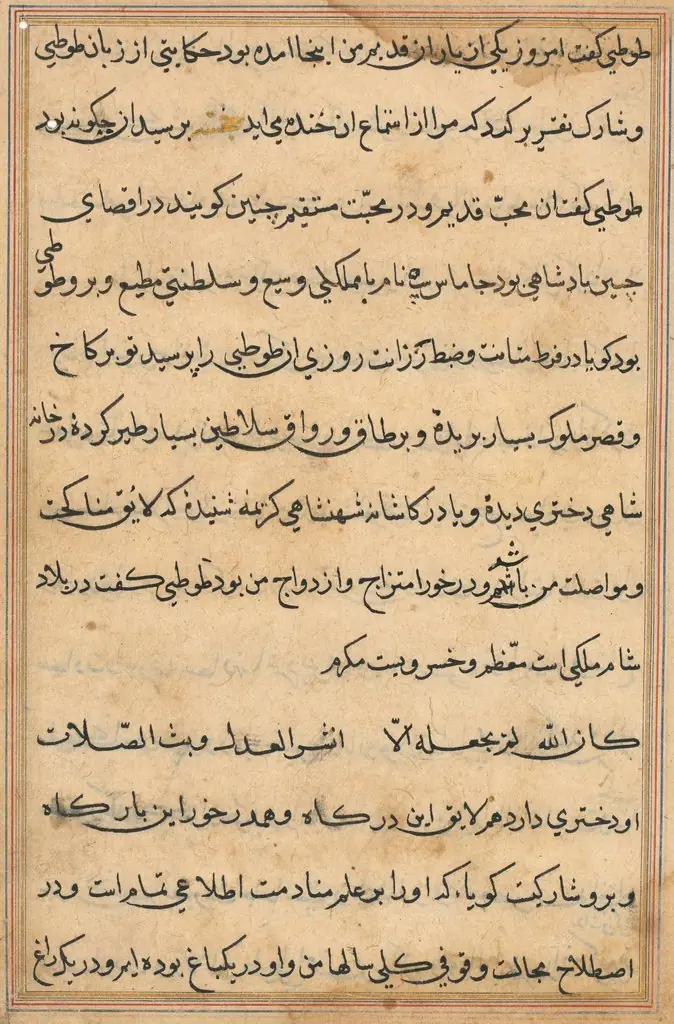
Page from Tales of a Parrot (Tuti-nama): text page is an unspecified painting. It dates from 1560 and is held in the collection of the Cleveland Museum of Art. The object is a single folio from a Persian manuscript titled Tales of a Parrot.
About this work
History & Provenance
It is classified as a painting and is held in the collection of the Cleveland Museum of Art, where it is catalogued under accession number 1962.
This text page from the Tales of a Parrot (Tuti-nama) was created in 1560 within the Mughal Empire. It is classified as a painting and is held in the collection of the Cleveland Museum of Art, where it is catalogued under accession number 1962.279.126.a. The artist responsible for the work is not identified in the available records.
The sources do not provide further details about the original commission, intermediate ownership, or acquisition history of the page prior to its arrival at the Cleveland Museum of Art.
The text page is held by the Cleveland Museum of Art, where it carries the accession number 1962.279.126.a.
It has been exhibited at the Cleveland Museum of Art in the installation “Indian Miniature Rotations” (1962–1965) and again in the reinstallation “Indian Miniatures Rotation” (1970–1975).
Overview
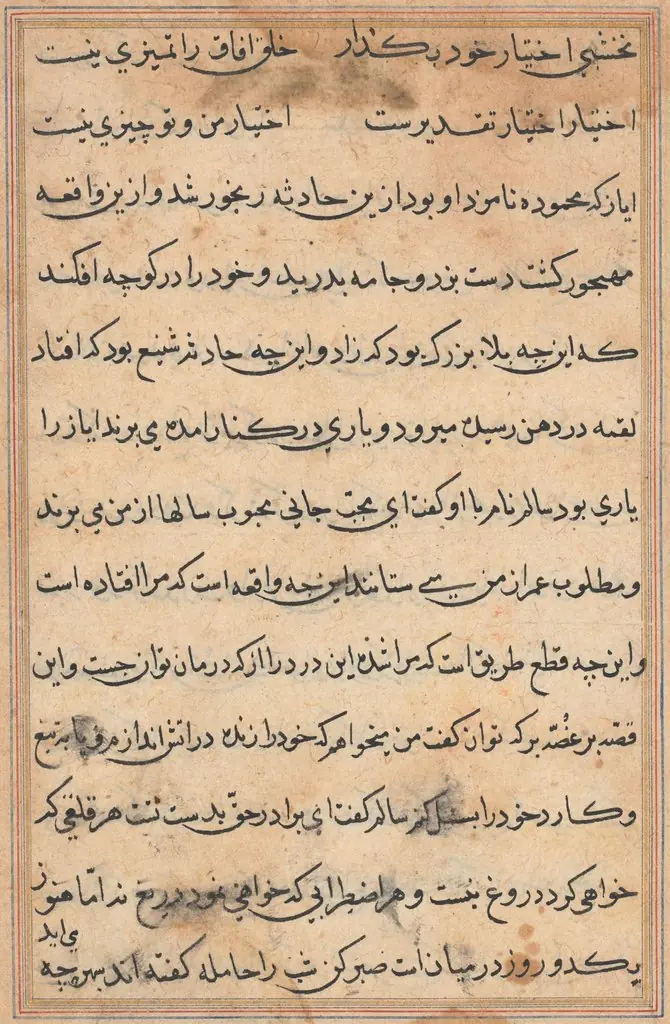
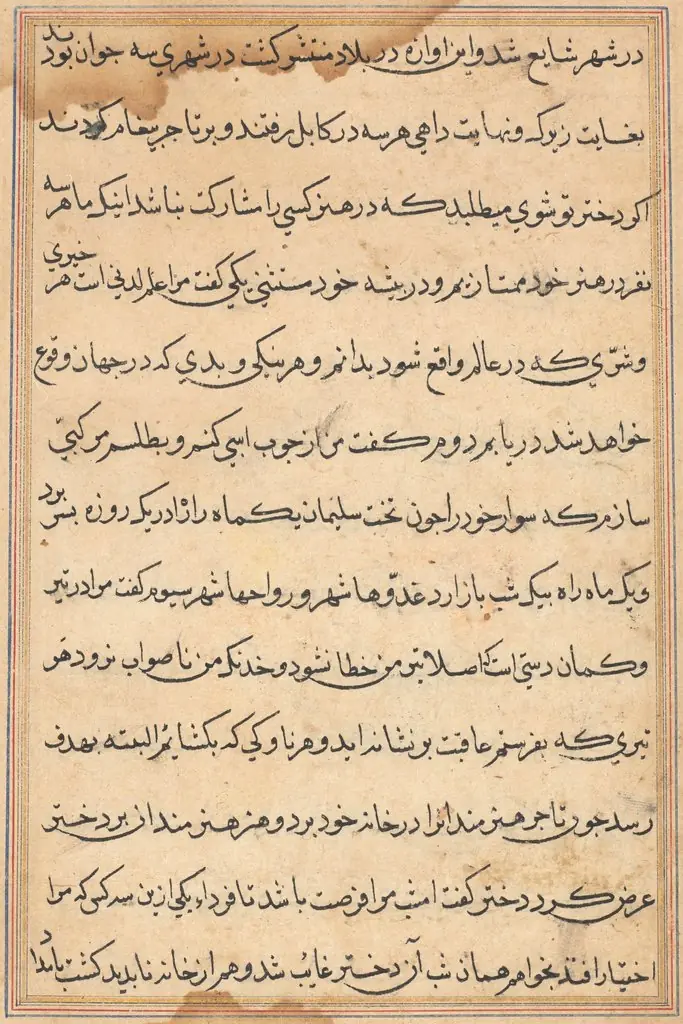
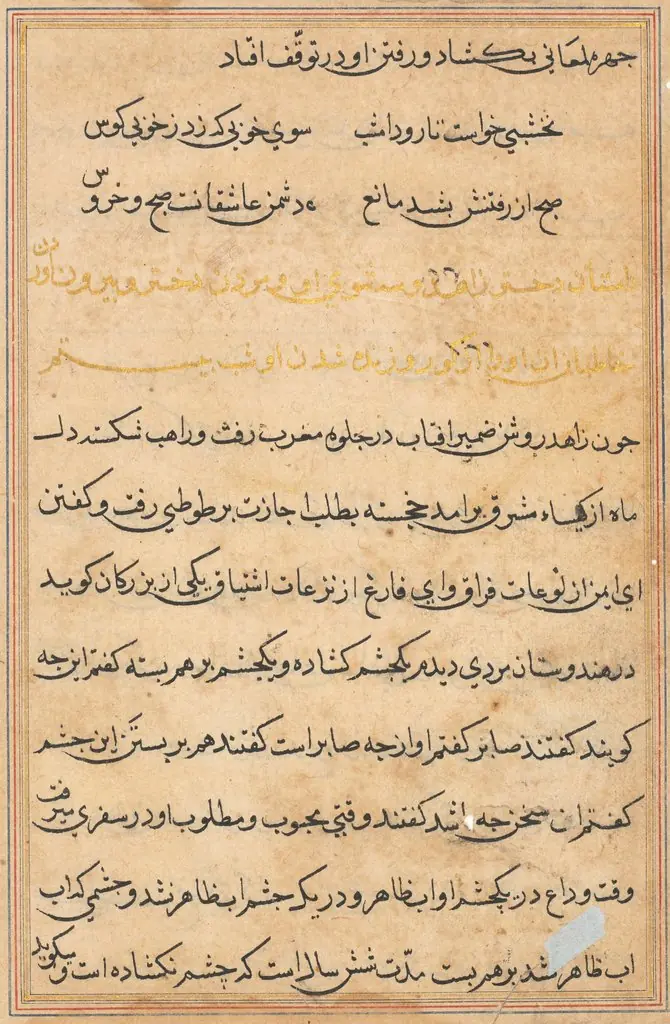
The object is a single folio from a Persian manuscript titled Tales of a Parrot. Rendered in black ink on a light, slightly yellowed paper, the page is bordered by a thin red line. The calligraphy occupies the entire surface in orderly, flowing lines, with occasional ornamental flourishes that mark the beginnings of verses.
Subject & Meaning
The text belongs to a narrative collection composed for a princely patron named Salim. While the exact story on this leaf is not specified, the work as a whole is known for its moral and entertaining episodes, conveyed through the voice of a parrot that relays tales to its audience.
Technique & Style
The script exemplifies a careful, deliberate hand typical of high‑status Persian book production. Ink is applied in smooth, continuous strokes, creating a legible, elegant line. The red border, likely added with mineral pigment, frames the page and underscores the manuscript’s refined aesthetic, while the decorative initial flourishes hint at a modest illumination.
Artist & collection

- Page from Tales of a Parrot (Tuti-nama): text page
 Page from Tales of a Parrot (Tuti-nama): text page
 Page from Tales of a Parrot (Tuti-nama): text page
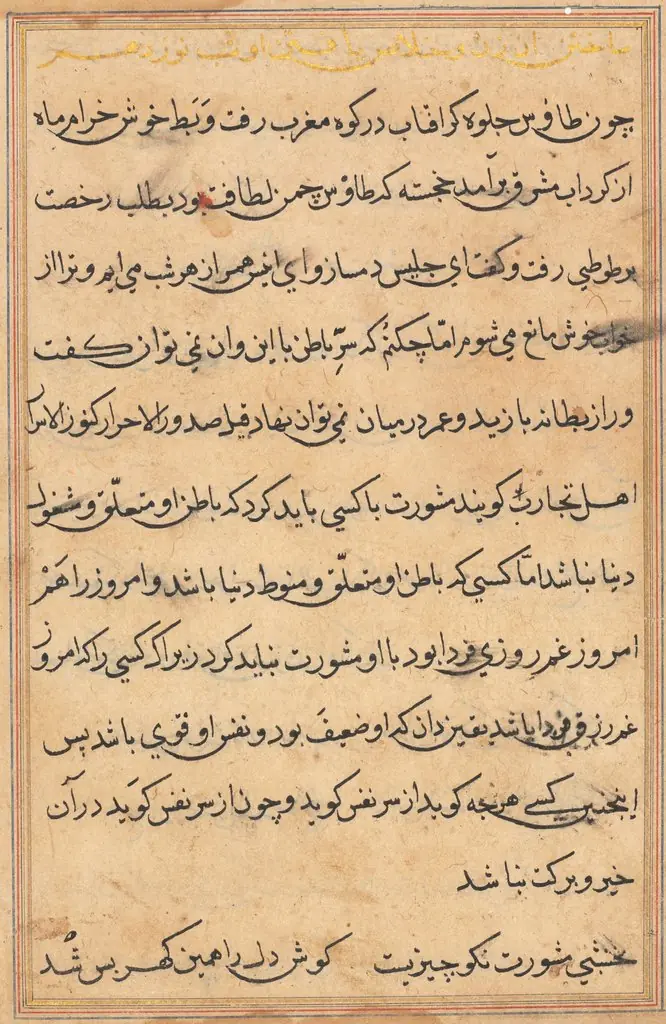 Page from Tales of a Parrot (Tuti-nama): text page
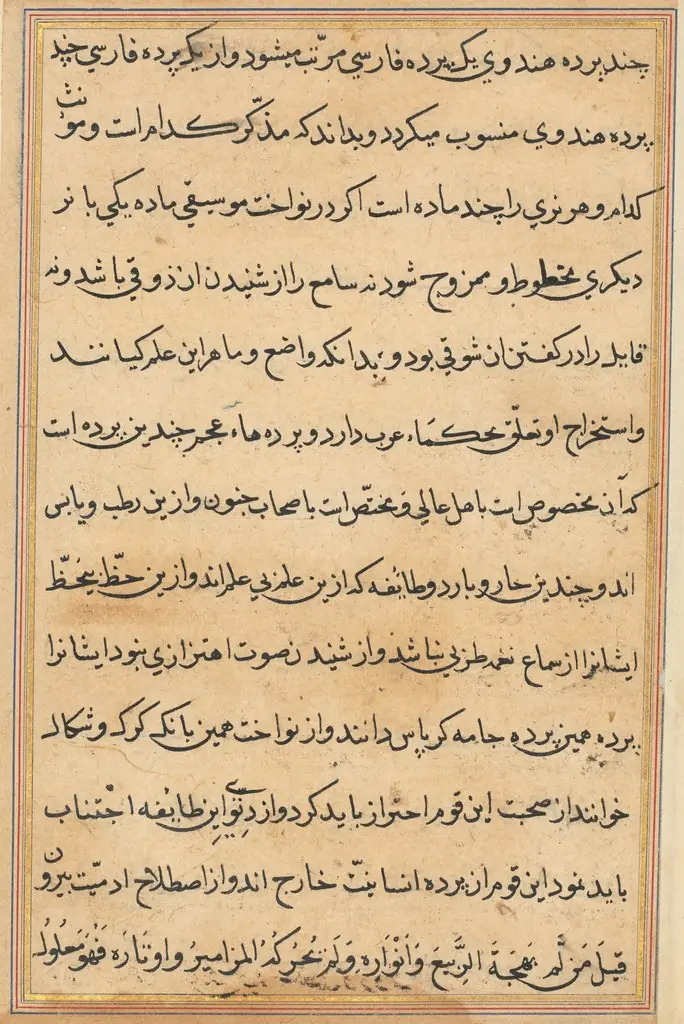 Page from Tales of a Parrot (Tuti-nama): text page
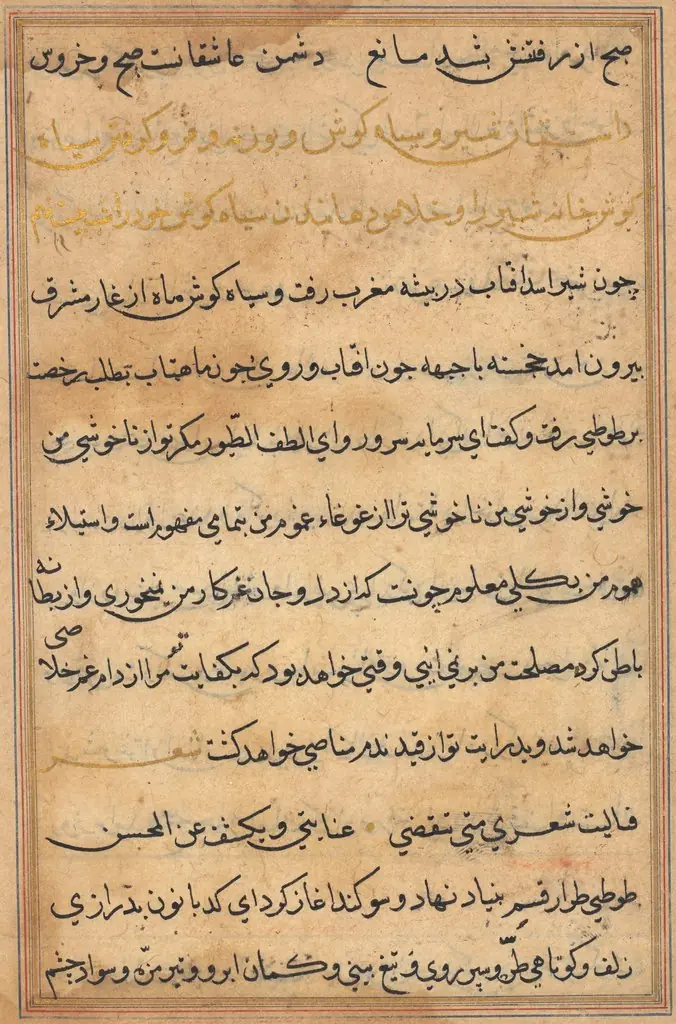 Page from Tales of a Parrot (Tuti-nama): text page
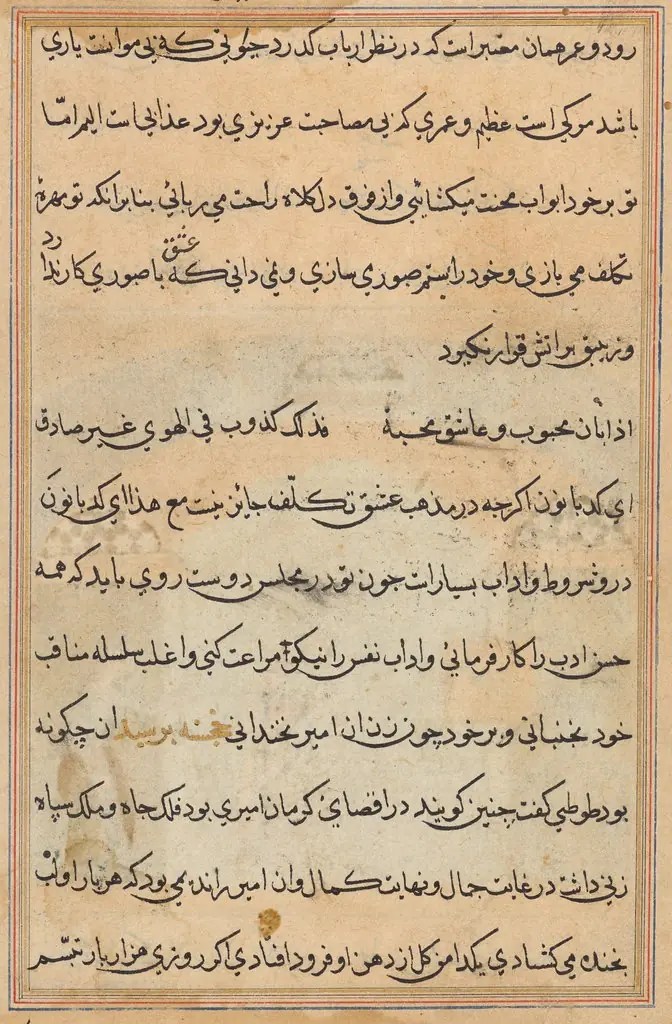 Page from Tales of a Parrot (Tuti-nama): text page
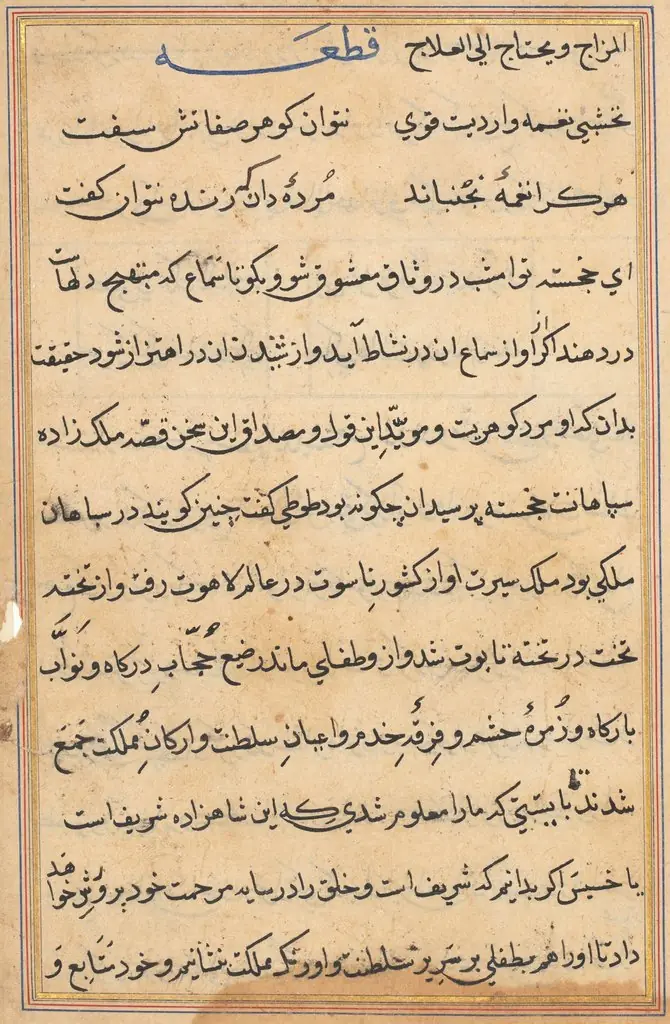 Page from Tales of a Parrot (Tuti-nama): text page
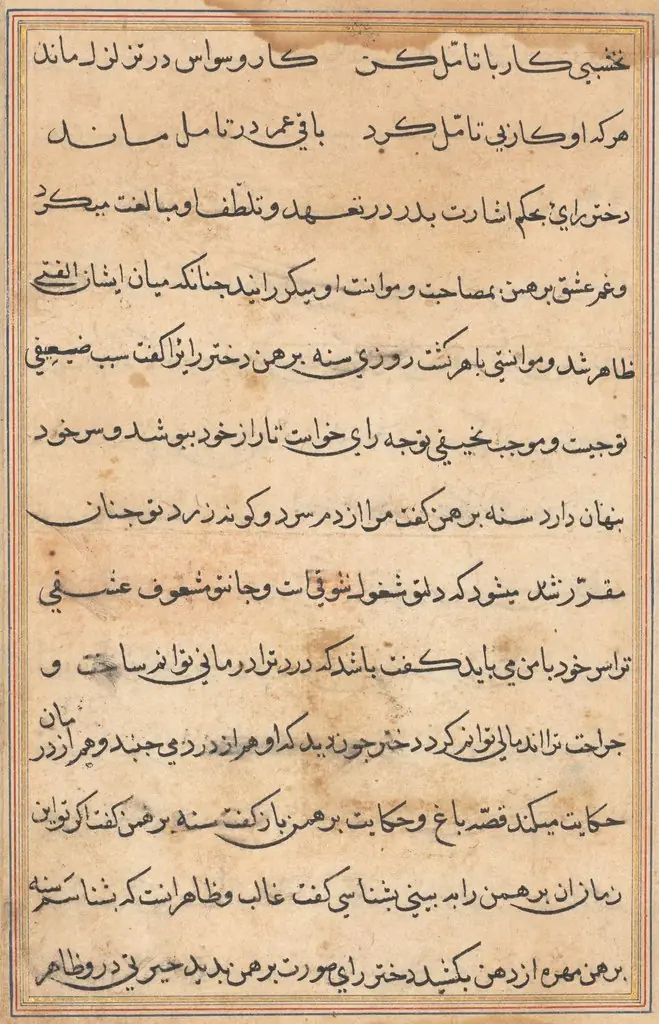 Page from Tales of a Parrot (Tuti-nama): text page
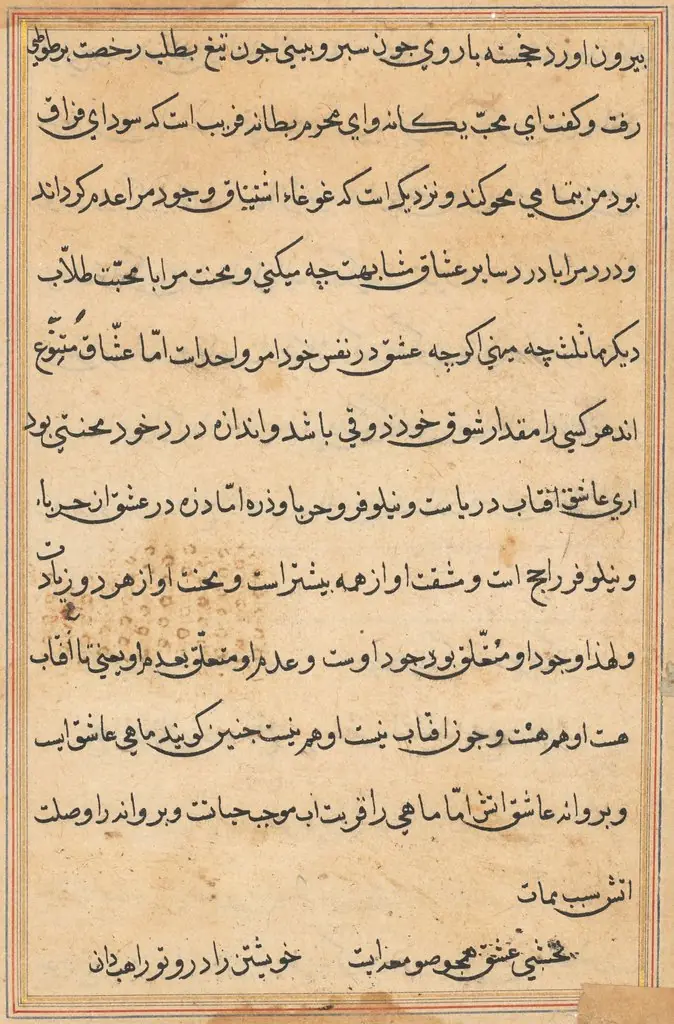 Page from Tales of a Parrot (Tuti-nama): text page
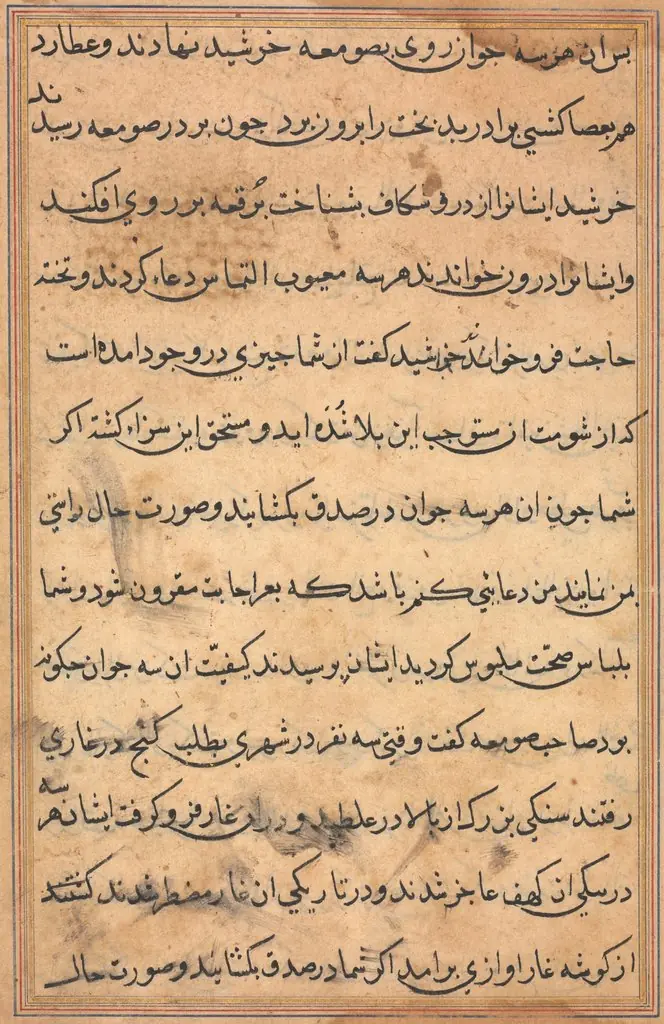 Page from Tales of a Parrot (Tuti-nama): text page
 Page from Tales of a Parrot (Tuti-nama): text page