Artwork
Page from Tales of a Parrot (Tuti-nama): text page
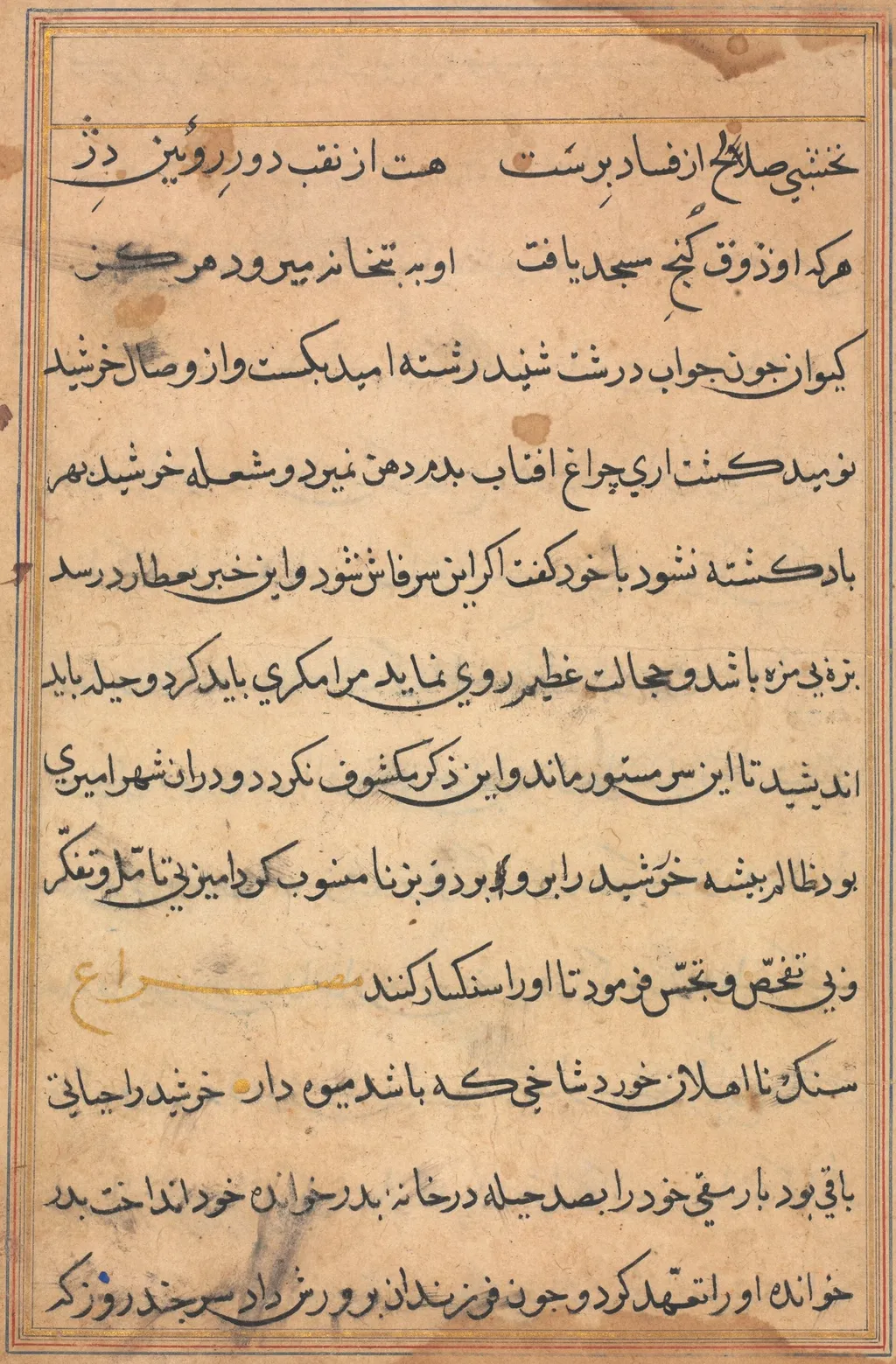
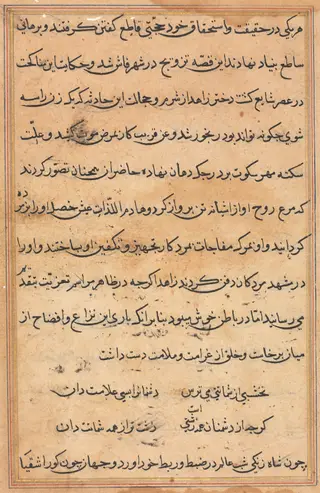
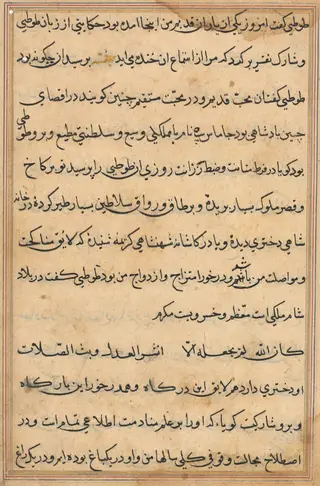
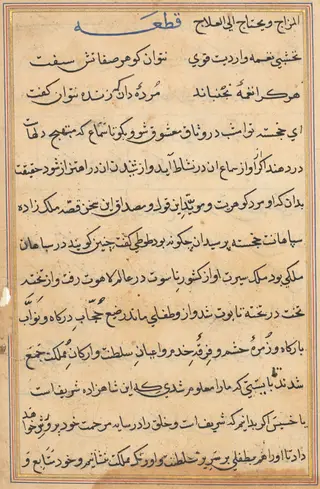
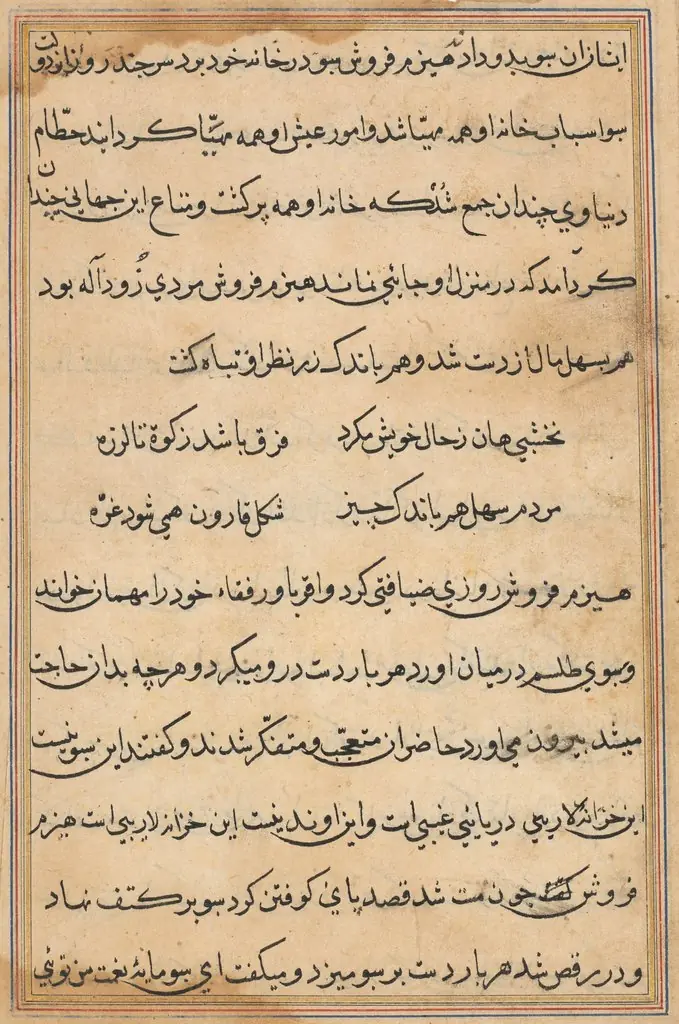
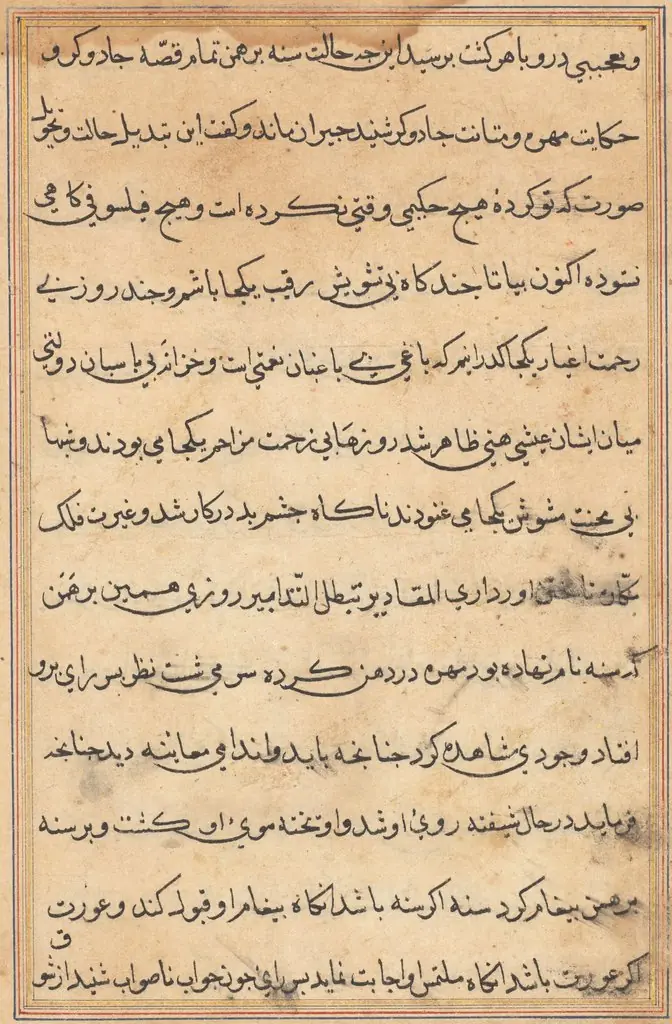
Page from Tales of a Parrot (Tuti-nama): text page is an unspecified painting by Unknown. It dates from 1560 and is held in the collection of the Cleveland Museum of Art. This folio is a textual page from the Tuti-nama, a collection of moral fables framed by a parrot’s stories.
About this work
Overview
The script fills the page with rhythmic precision, enclosed within a delicate border that isolates the text as a sacred object of visual discipline.
This folio is a textual page from the Tuti-nama, a collection of moral fables framed by a parrot’s stories. Executed in black ink on a pale ground, it emphasizes calligraphic artistry over illustration. The script fills the page with rhythmic precision, enclosed within a delicate border that isolates the text as a sacred object of visual discipline. Created for Prince Salim, it reflects the Mughal court’s reverence for written word as aesthetic form.
Subject & Meaning
The content derives from a Persian literary tradition where a parrot recounts tales to dissuade its mistress from adultery. Though the image shows only script, the text’s moral narratives underpin the page’s purpose: to instruct through narrative. The elegance of the writing mirrors the sophistication of its audience, reinforcing the idea that wisdom is conveyed not just by content but by its refined presentation.
Technique & Style
The calligraphy is rendered in a flowing nasta‘liq script, characterized by elongated verticals and sweeping curves that create a sense of motion. Ink tones vary subtly, lending depth without shading. Each line is spaced with mathematical care, and the border, likely drawn with a ruling pen, frames the text like a reliquary. The absence of imagery focuses attention entirely on the hand of the scribe as artist.
History & Provenance
Commissioned during the reign of Emperor Akbar for his son Prince Salim, this folio belongs to a deluxe manuscript produced in the imperial atelier. It was later acquired by the Cleveland Museum of Art, where it remains as part of a dispersed set of Tuti-nama pages. Its survival reflects the enduring value placed on Mughal book arts, even as the original codex was separated over time.
Context
In early 17th-century Mughal India, calligraphy was elevated to a high art, rivaling painting in prestige. Manuscripts like this were luxury objects, made for royal patrons who valued textual beauty as much as visual splendor. The Tuti-nama, translated from Sanskrit into Persian, exemplifies the court’s synthesis of Indian and Islamic literary traditions, with script serving as both vessel and ornament.
Legacy
This page exemplifies how Mughal scribes transformed functional writing into an expressive medium. Its preservation highlights the shift from illustrated narrative to textual contemplation in later Mughal manuscripts. Today, it stands as evidence of a culture where the discipline of handwriting carried spiritual and intellectual weight, influencing later traditions of Islamic calligraphy across South Asia.
Artist & collection









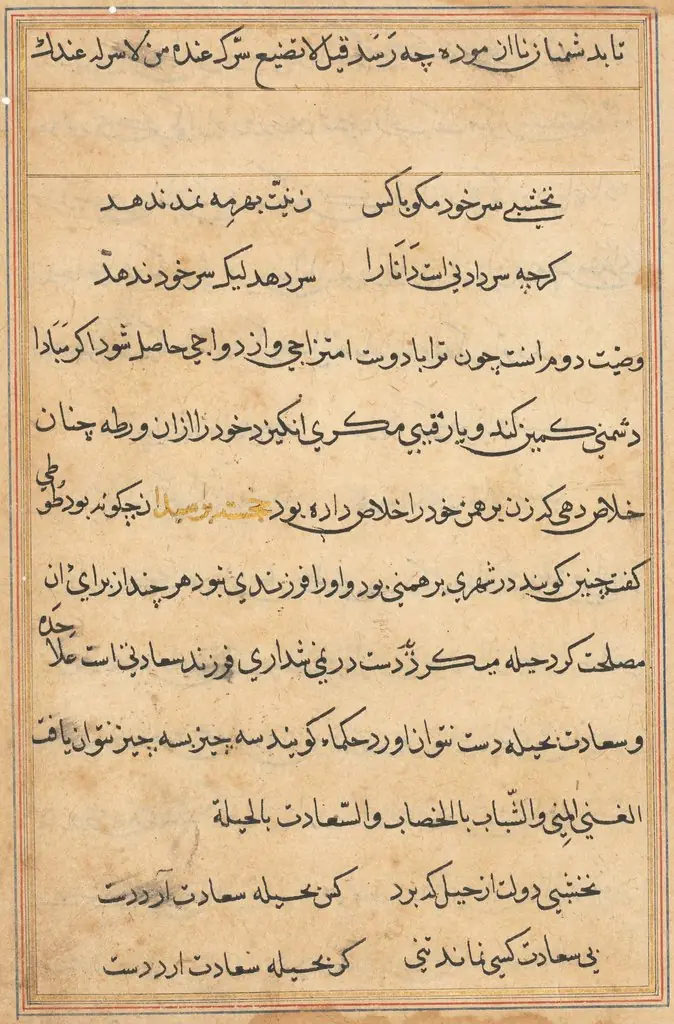
 Page from Tales of a Parrot (Tuti-nama): text page
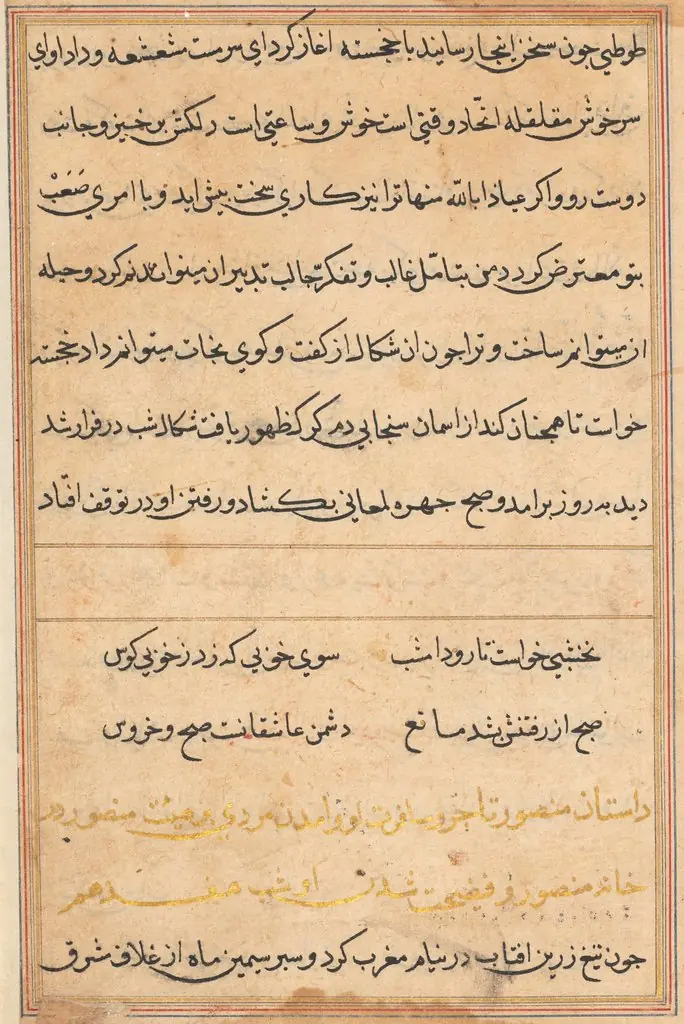
 Page from Tales of a Parrot (Tuti-nama): text page
 Page from Tales of a Parrot (Tuti-nama): text page
 Page from Tales of a Parrot (Tuti-nama): text page
 Page from Tales of a Parrot (Tuti-nama): text page
 Page from Tales of a Parrot (Tuti-nama): text page
 Page from Tales of a Parrot (Tuti-nama): text page