Artwork
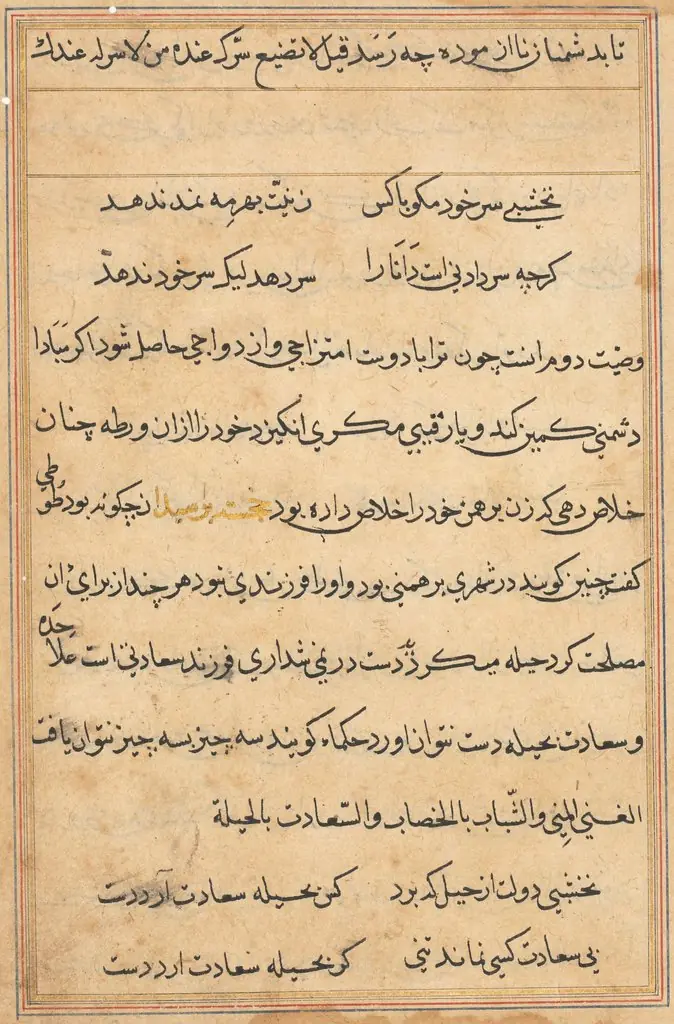
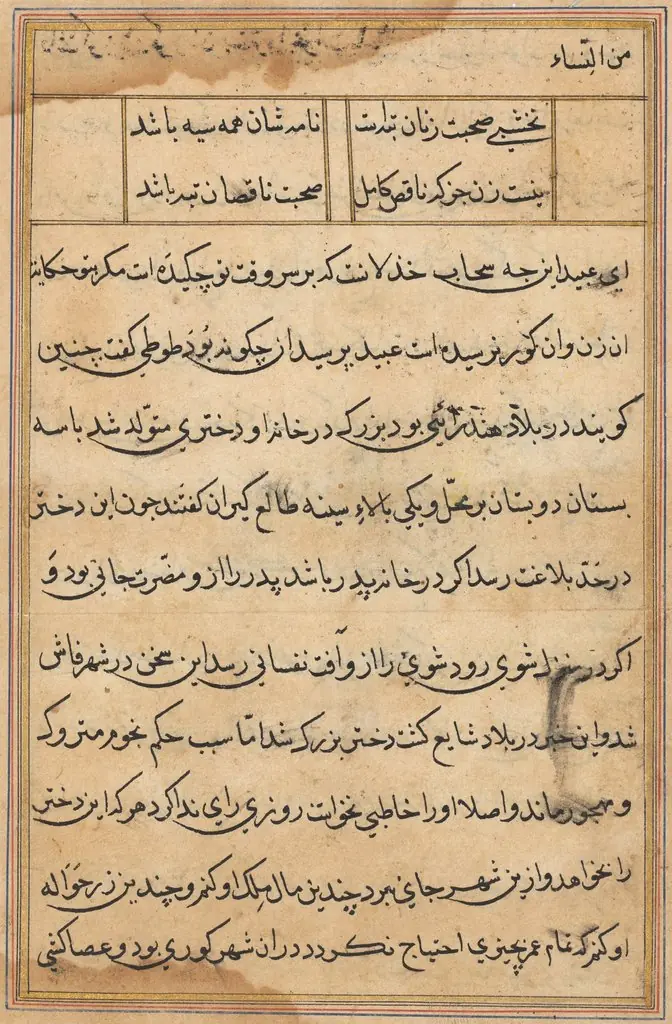
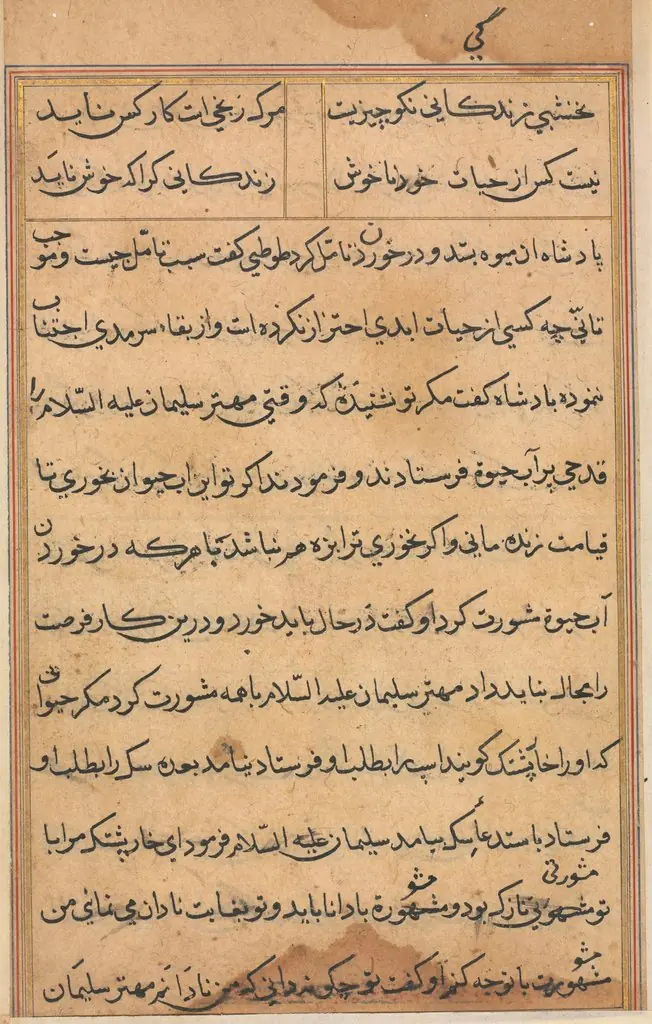
Page from Tales of a Parrot (Tuti-nama): text page
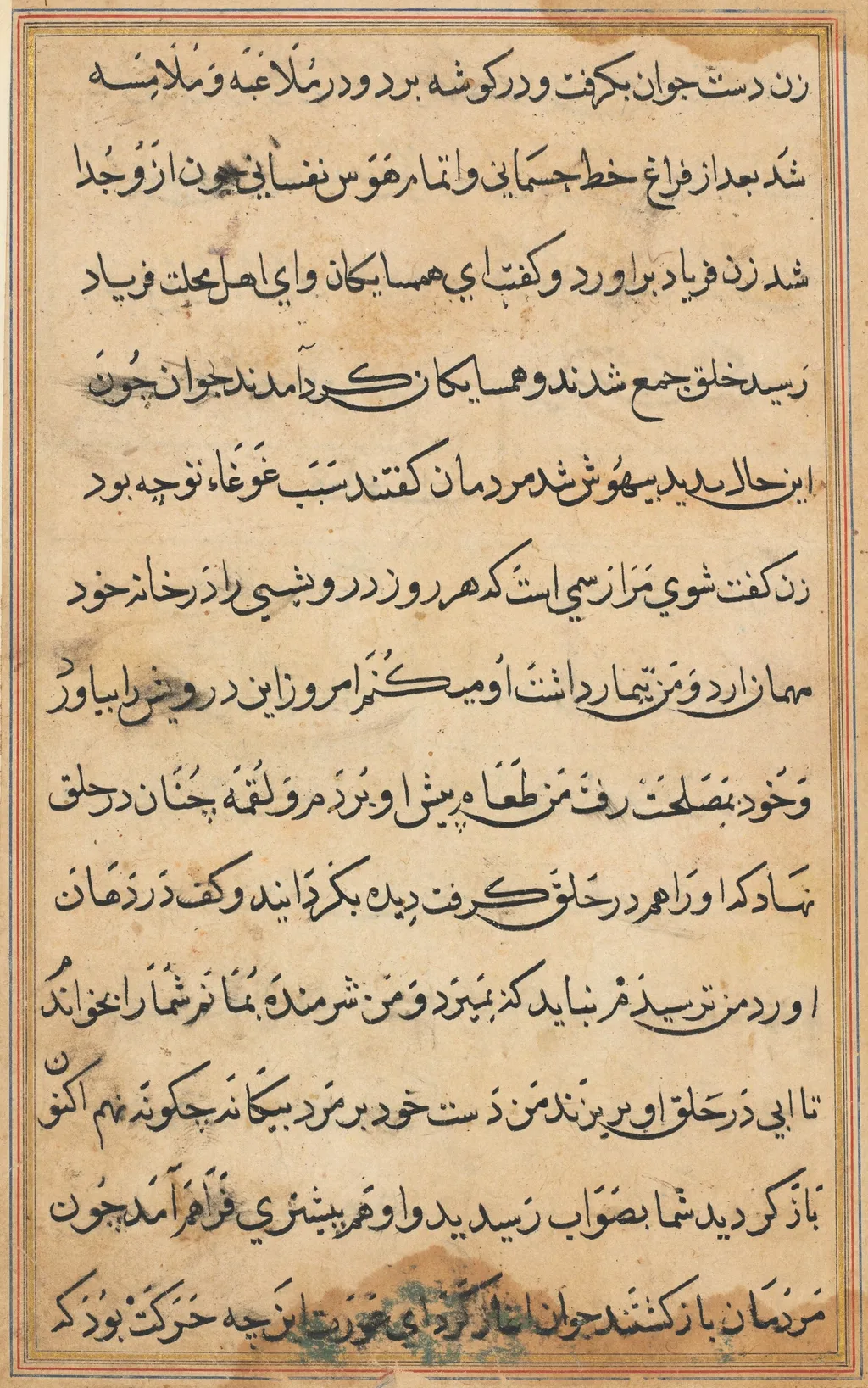
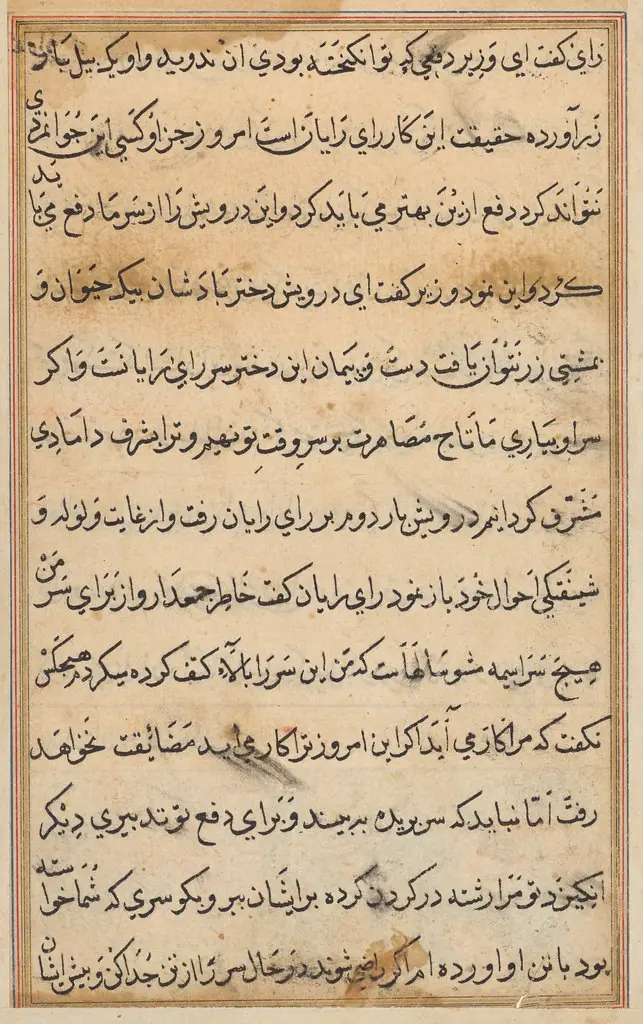
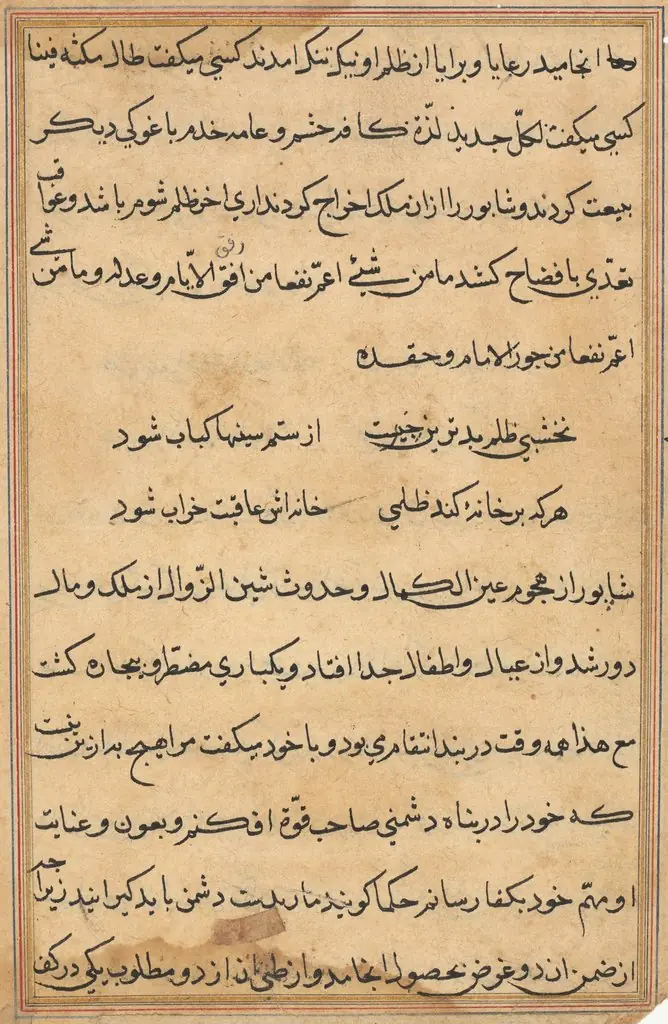
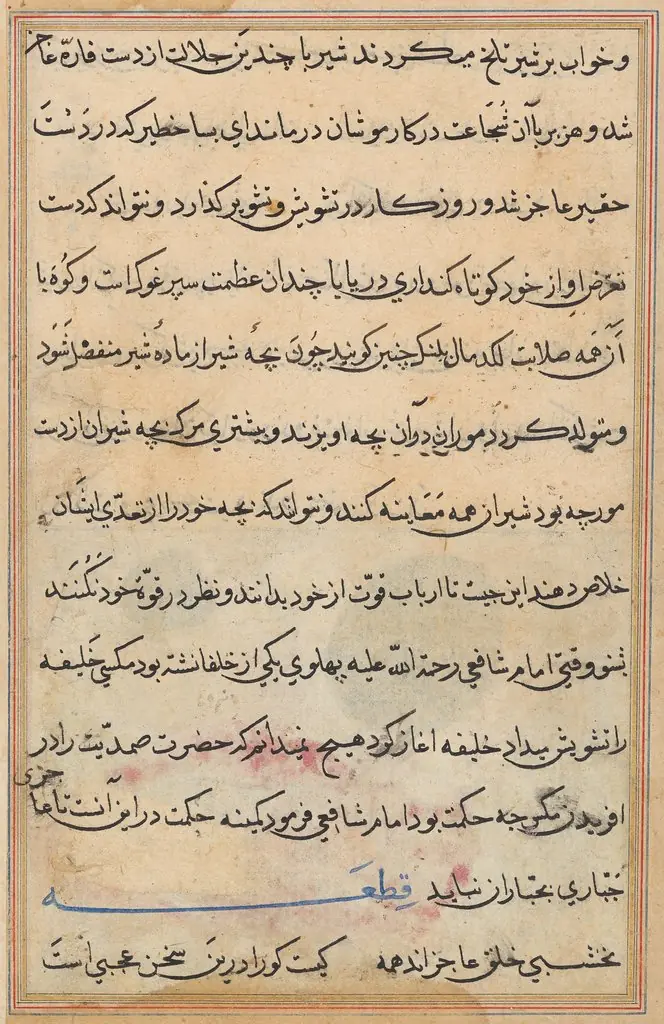
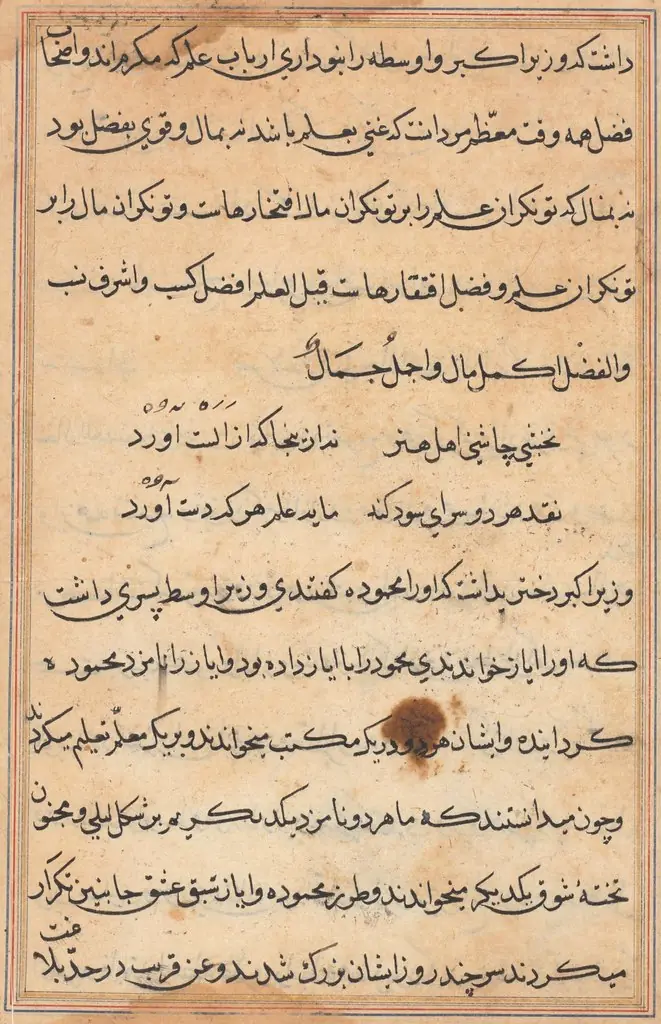
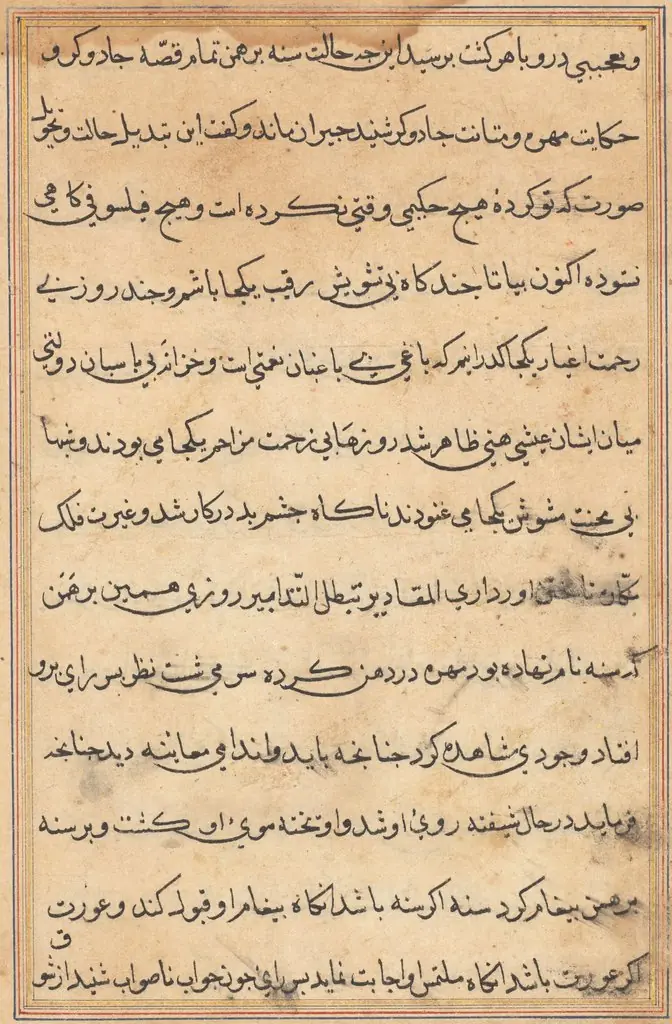
Page from Tales of a Parrot (Tuti-nama): text page is an unspecified painting. It dates from 1560 and is held in the collection of the Cleveland Museum of Art. This illuminated page originates from the manuscript Tales of a Parrot, a narrative work composed for a patron named Prince Salim.
About this work
Technique & Style
Created in 1560 within the Mughal Empire, this work is classified as a painting. It was produced by an unknown artist and functions as a text page from the Tales of a Parrot (Tuti-nama). The object is currently held in the collection of the Cleveland Museum of Art.
History & Provenance
The page originates from the Tuti-nama manuscript, commissioned in 1560 during the Mughal period. It was created in India and later entered the collection of the Cleveland Museum of Art, accessioned under the identifier 1962.279.65.a. The work is attributed to an unknown artist and classified as a miniature painting from the mid-16th century.
Overview
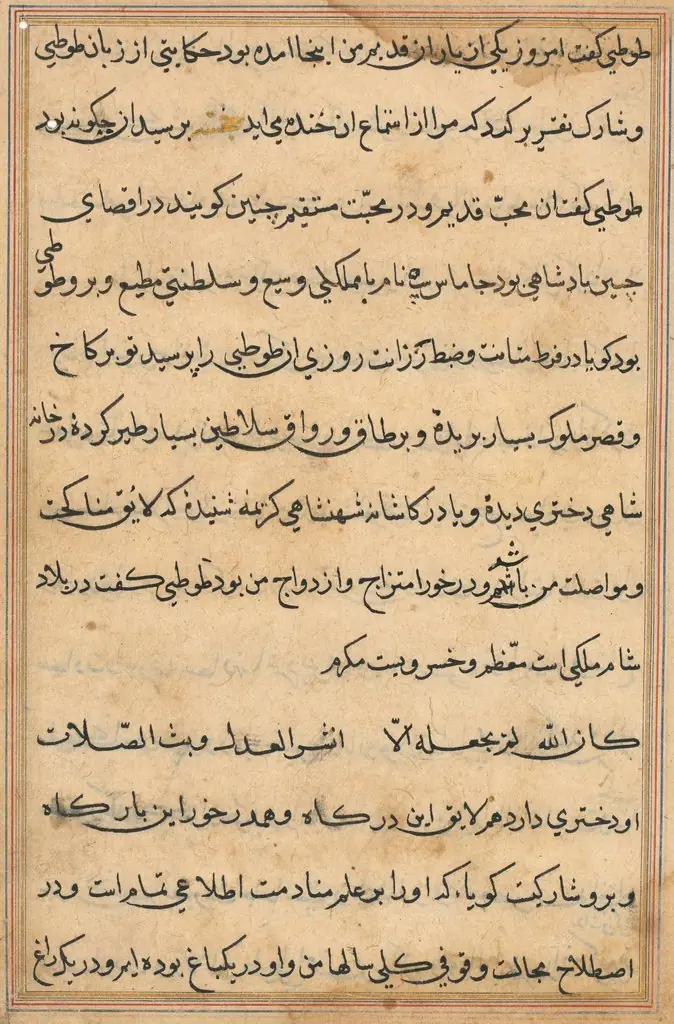
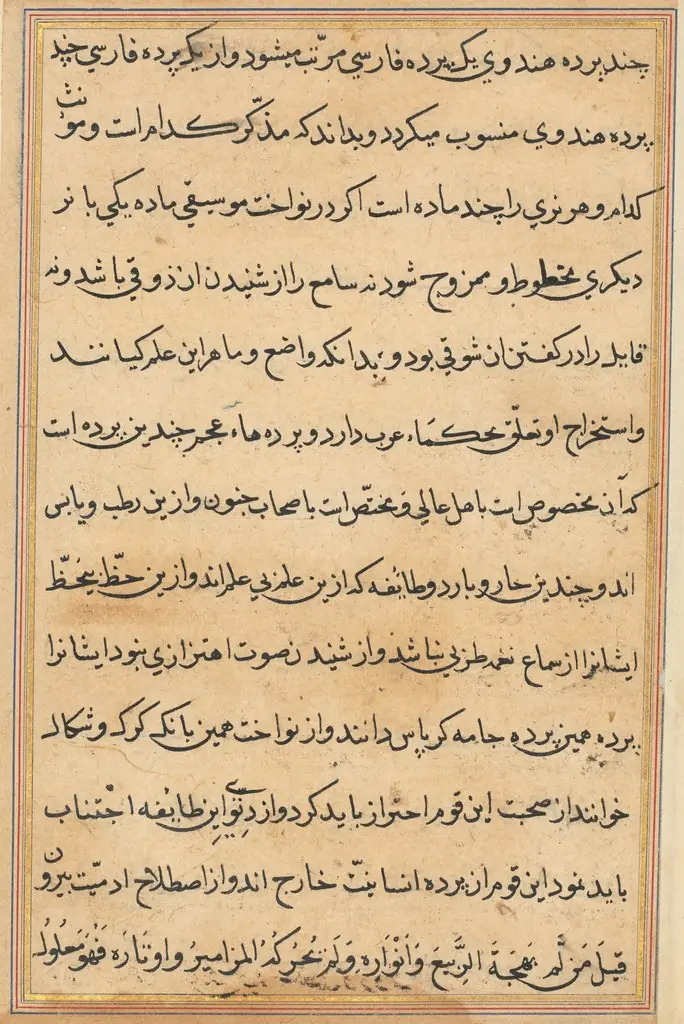
This illuminated page originates from the manuscript Tales of a Parrot, a narrative work composed for a patron named Prince Salim. Executed in black ink on a warm, yellowed sheet of paper, the surface is densely covered with tightly spaced, curved Arabic calligraphy, framed by a slender red border that defines the page’s limits.
Subject & Meaning
The text presents a segment of the Tales of a Parrot story, a collection of moral and entertaining episodes traditionally conveyed through a talking bird. The manuscript’s dedication to Prince Salin underscores its role as a courtly object, intended to educate and amuse a princely audience.
Context
Arabic manuscript culture prized legibility and aesthetic balance, qualities evident in this page’s meticulous lettering. The Tales of a Parrot belongs to a broader tradition of didactic literature that blended storytelling with moral instruction, often circulated among elite circles.
Artist & collection

- Page from Tales of a Parrot (Tuti-nama): text page
 Page from Tales of a Parrot (Tuti-nama): text page
 Page from Tales of a Parrot (Tuti-nama): text page
 Page from Tales of a Parrot (Tuti-nama): text page
 Page from Tales of a Parrot (Tuti-nama): text page
 Page from Tales of a Parrot (Tuti-nama): text page
 Page from Tales of a Parrot (Tuti-nama): text page
 Page from Tales of a Parrot (Tuti-nama): text page