Artwork
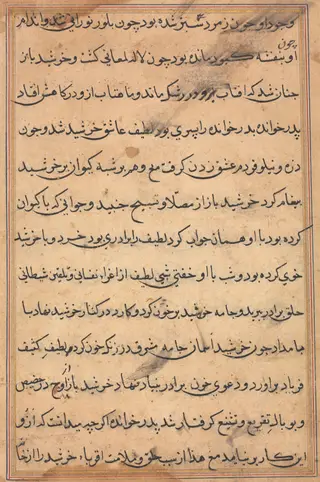
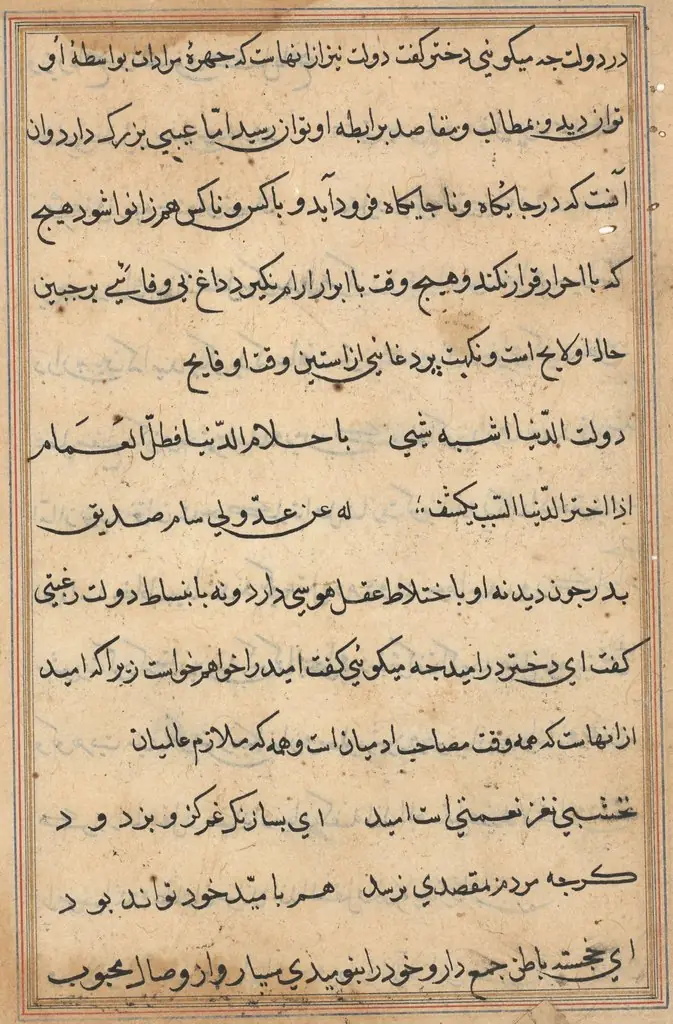
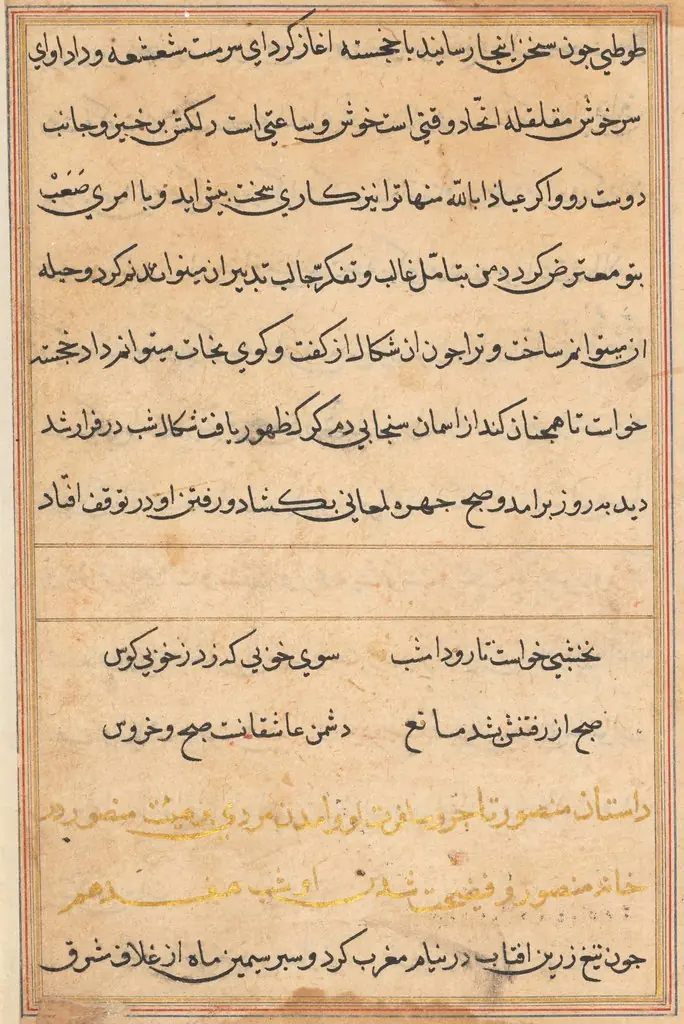
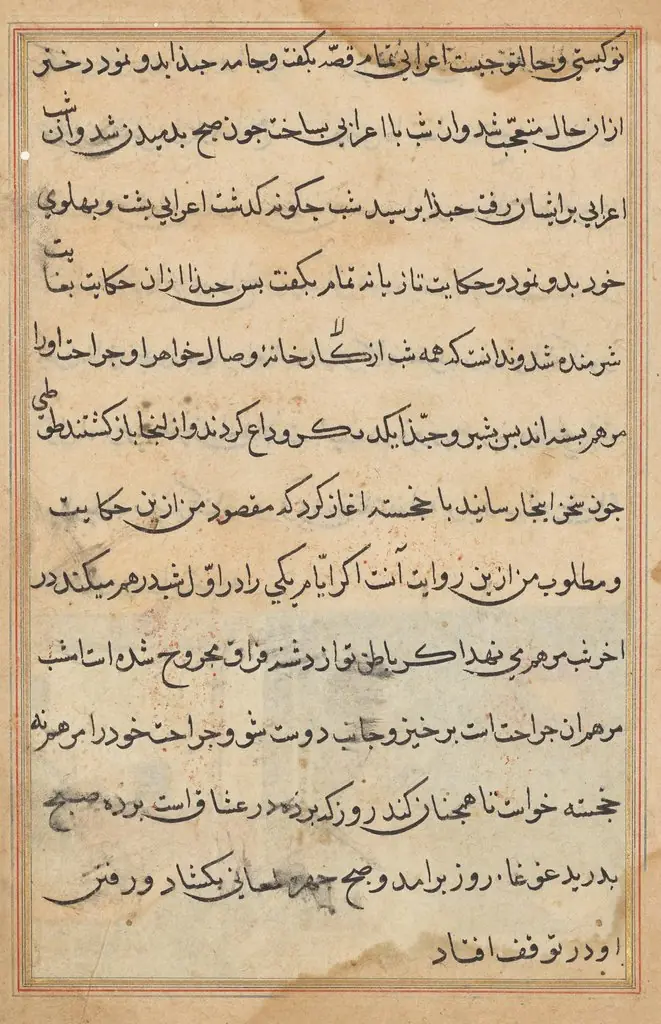
Page from Tales of a Parrot (Tuti-nama): text page
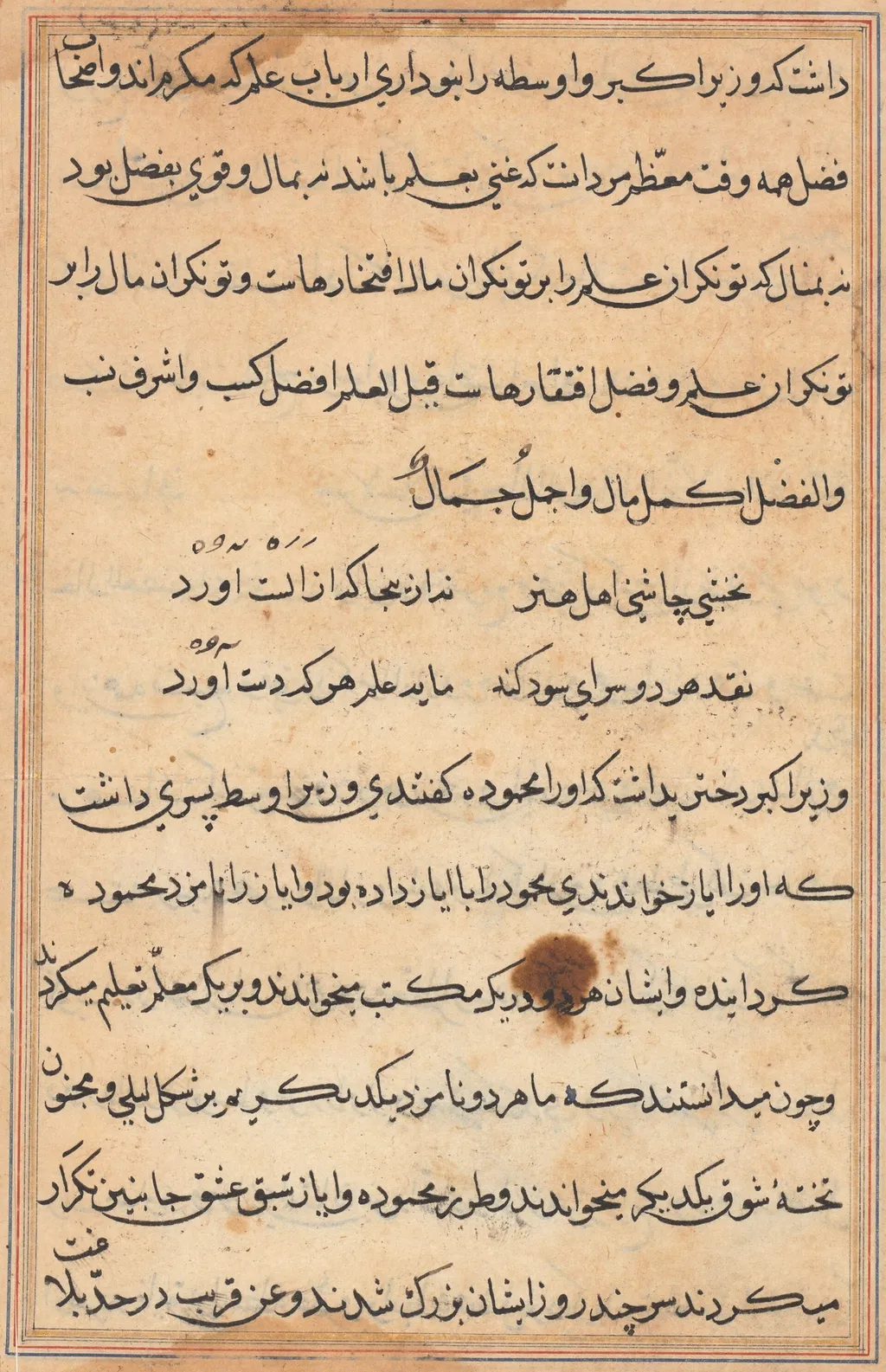
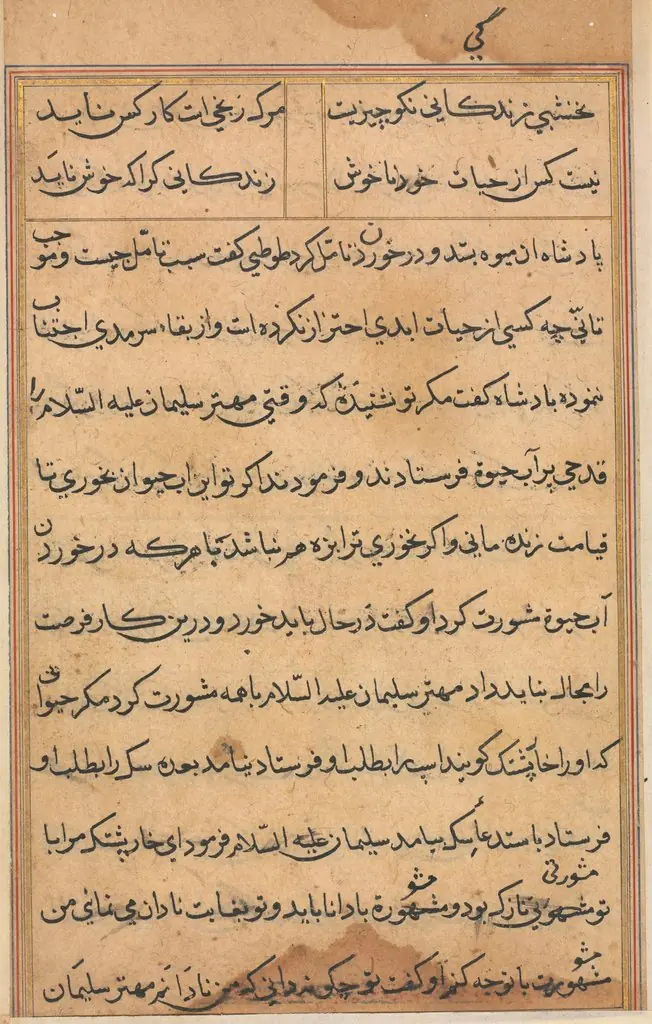
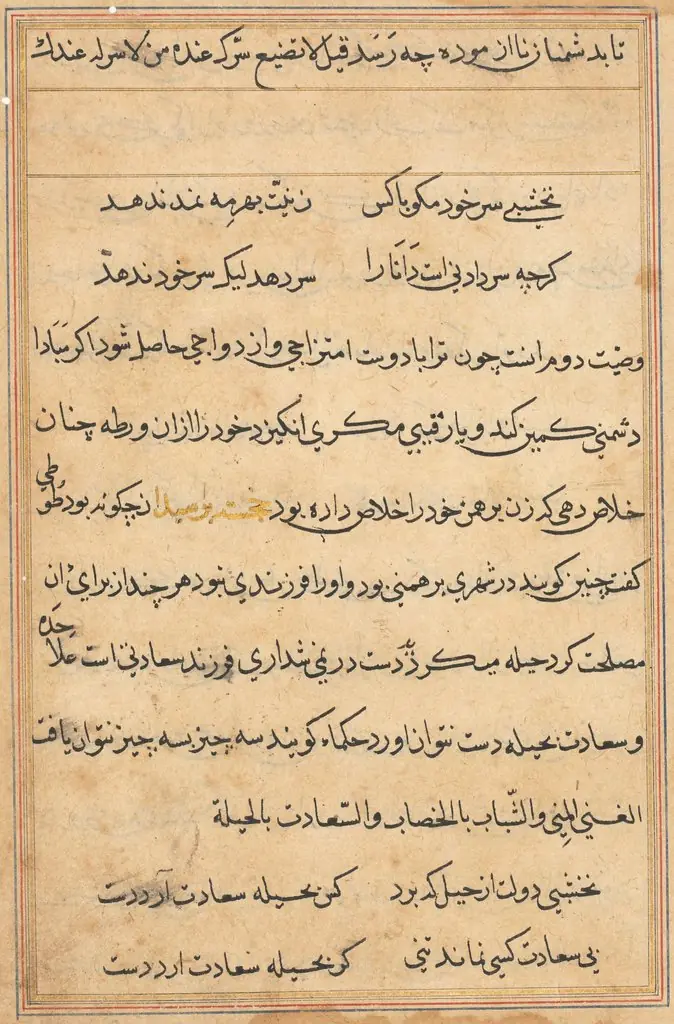
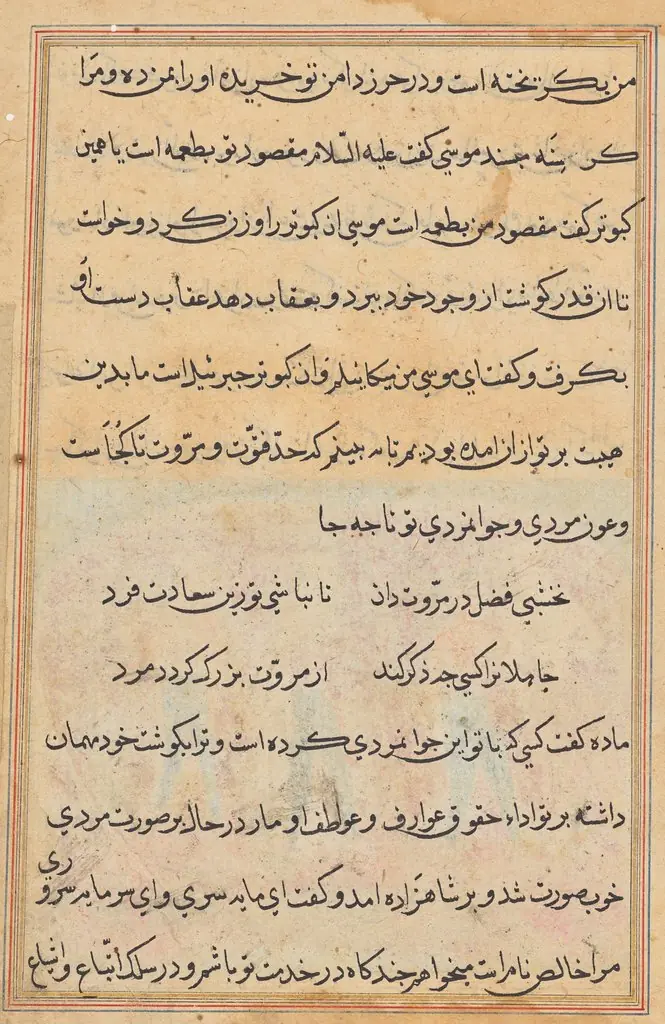
Page from Tales of a Parrot (Tuti-nama): text page is an unspecified painting. It dates from 1560 and is held in the collection of the Cleveland Museum of Art. This object is a single folio from the illustrated manuscript Tales of a Parrot (Tuti‑nama).
About this work
Technique & Style
The work originates from the Mughal imperial workshop and was produced circa 1560 for a copy of the Tuti-nama, a didactic collection of moral tales.
The miniature was created using tempera and ink on paper, a technique typical of Mughal manuscript painting. The support is paper, handled as a delicate folio within the manuscript. The composition features a parrot perched among stylized foliage, rendered in fine line work and flat color fields characteristic of 16th-century Persianate illustration.
The stylistic qualities include flattened perspective, intricate border patterning, and a restrained palette of blues and ochres, reflecting the formal conventions of courtly narrative art.
The work originates from the Mughal imperial workshop and was produced circa 1560 for a copy of the Tuti-nama, a didactic collection of moral tales. It is currently held by the Cleveland Museum of Art, accessioned under the identifier 1962.279.218.b.
The piece is in stable condition, with minimal pigment loss and intact margins, though it shows faint foxing along the edges. Formal analysis emphasizes the rhythmic repetition of the bird motif and the balanced compositional layout, which convey narrative clarity through visual symbolism.
History & Provenance
The single surviving text page from the Mughal manuscript Tales of a Parrot (Tuti-nama) is dated to 1560 and is attributed to an unknown artist working in the Mughal Empire.
The sheet entered the Cleveland Museum of Art in 1962 as part of a larger acquisition (1962.279.218.b), where it remains in the permanent collection.
The text page from the Tales of a Parrot (Tuti-nama), created in 1560, is held in the collection of the Cleveland Museum of Art in Cleveland. The work is identified by the accession number 1962.279.218.b within the museum's records. It was produced in the Mughal Empire.
No specific exhibition history is provided in the available sources.
Legacy
The single surviving text page from the Tuti-nama manuscript, produced in 1560 within the Mughal imperial workshop, has become a key reference for scholars studying early Indo-Persian miniature painting and narrative illustration. Its compositional balance and naturalistic detail influenced later Mughal and Deccan manuscript traditions, particularly in the treatment of courtly figures and garden settings. The page’s inclusion in the Cleveland Museum of Art collection has ensured its continued study as an exemplar of 16th-century Persianate narrative art.
Its reputation grew through 20th-century catalogues of Mughal art, where it was cited as evidence of the cosmopolitan artistic exchanges between Safavid and Indian courts. The work is frequently referenced in academic literature on Persian manuscript illumination and the diffusion of Islamic narrative painting into South Asia.
Overview
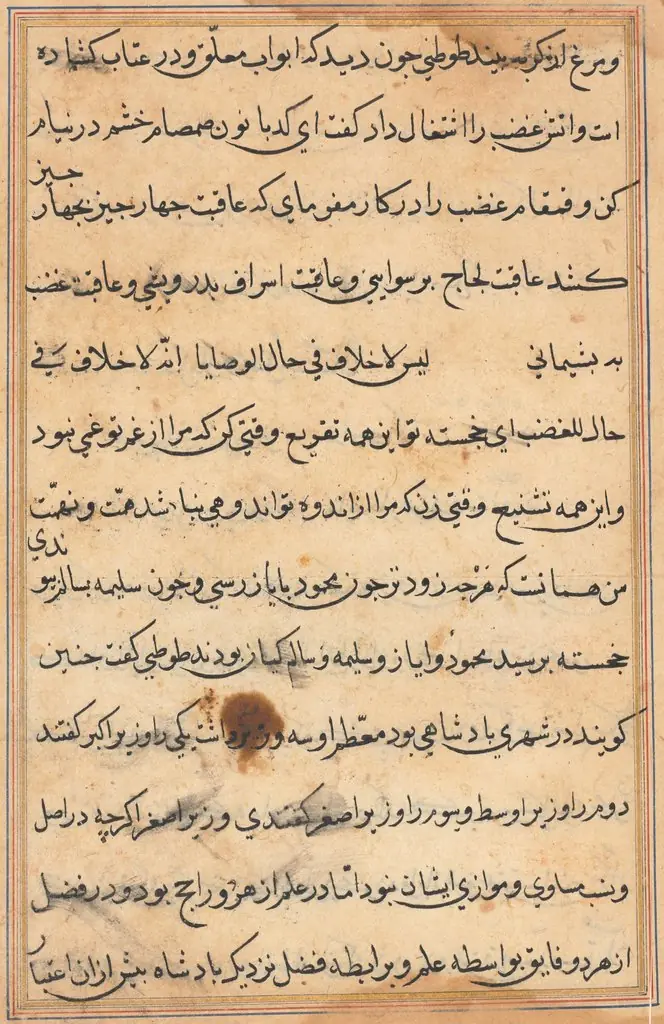
This object is a single folio from the illustrated manuscript Tales of a Parrot (Tuti‑nama). Executed on paper, the page is densely covered with black calligraphic script arranged in tight, orderly rows. The ink appears smooth and controlled, while occasional faint blue markings and a small brown spot interrupt the uniformity of the text.
Subject & Meaning
The written passage forms part of a narrative composed for Prince Salim, a member of the Mughal court. The story, centered on a talking parrot, was intended both as entertainment and as a vehicle for moral instruction, reflecting the courtly taste for didactic literature presented in an elegant, readable form.
Context
Produced in the Mughal period, the Tales of a Parrot manuscript reflects the synthesis of Persian literary tradition with Indian courtly culture. Such works were often commissioned for princes, combining literary content with visual elegance to reinforce royal patronage of the arts.
Artist & collection

 Page from Tales of a Parrot (Tuti-nama): text page
 Page from Tales of a Parrot (Tuti-nama): text page
 Page from Tales of a Parrot (Tuti-nama): text page
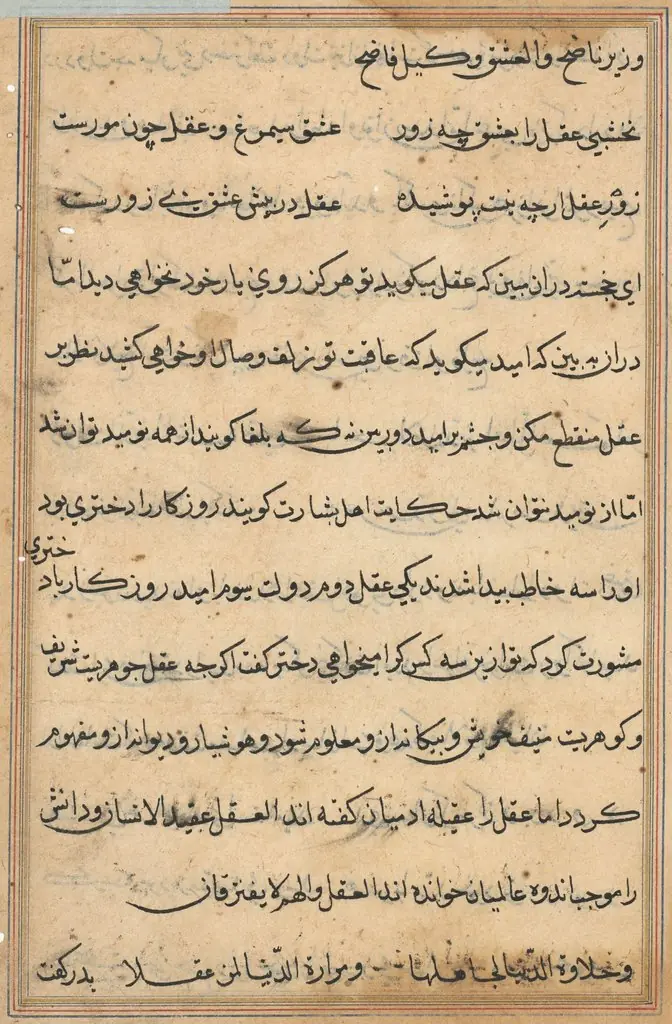 Page from Tales of a Parrot (Tuti-nama): text page
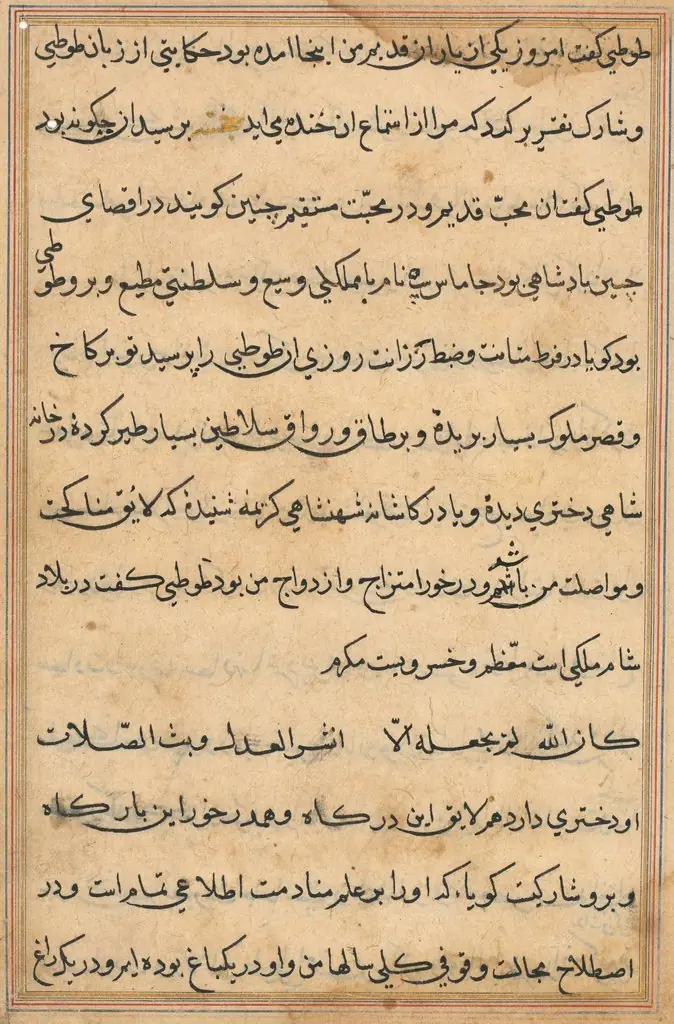 Page from Tales of a Parrot (Tuti-nama): text page
 Page from Tales of a Parrot (Tuti-nama): text page
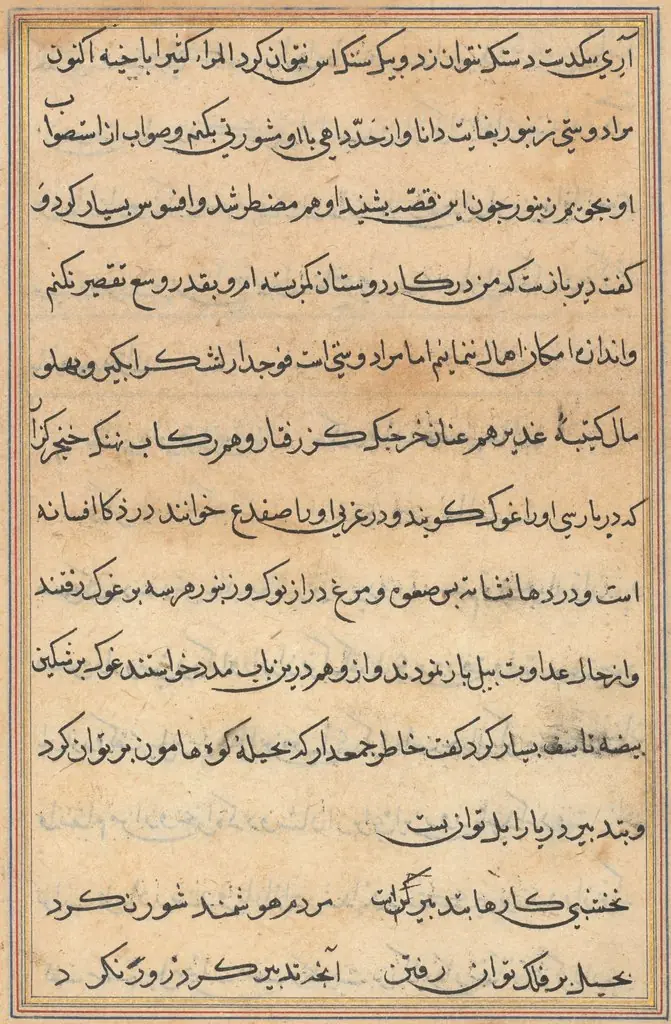 Page from Tales of a Parrot (Tuti-nama): text page
 Page from Tales of a Parrot (Tuti-nama): text page