Artwork
Page from Tales of a Parrot (Tuti-nama): text page
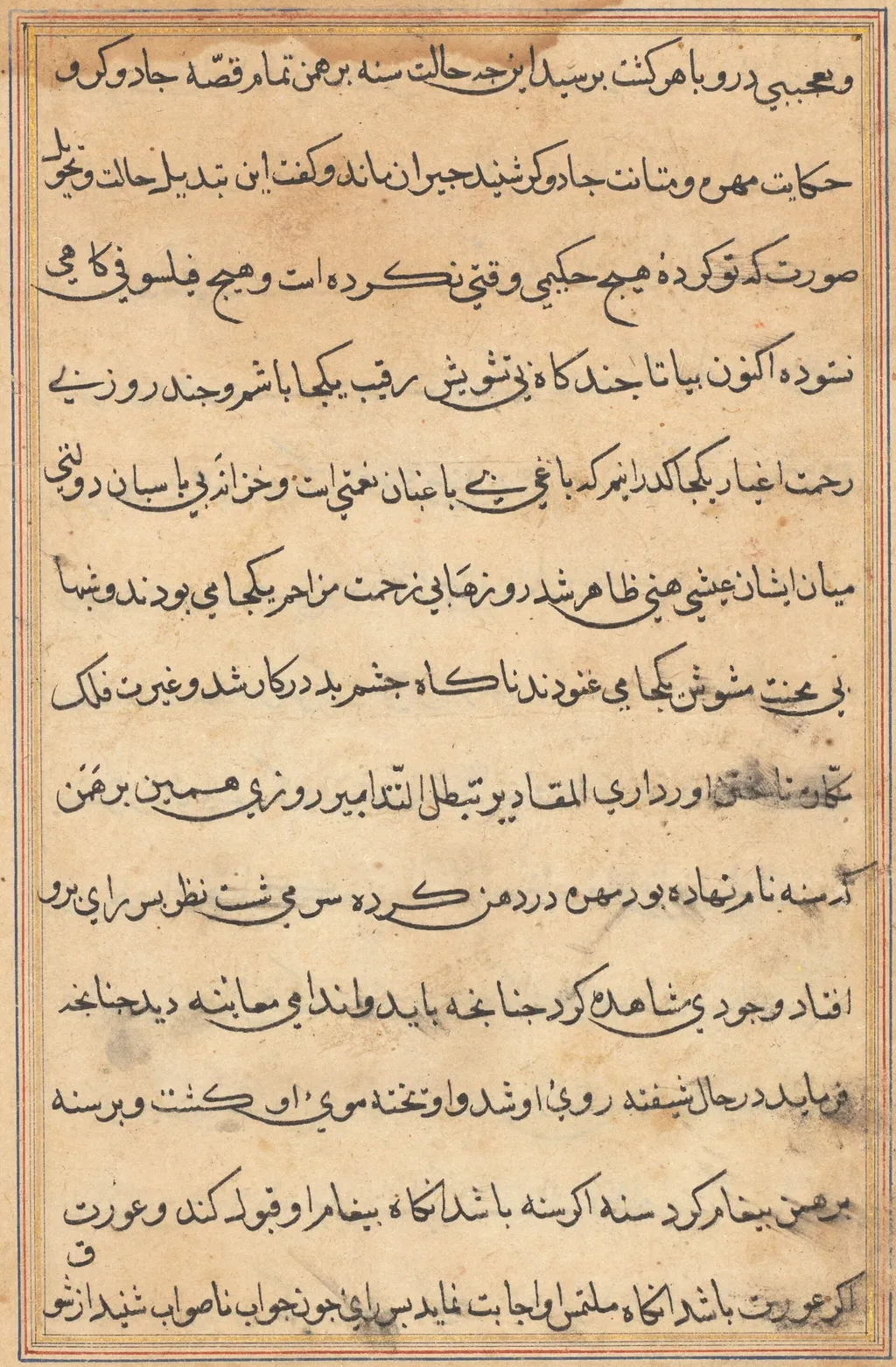
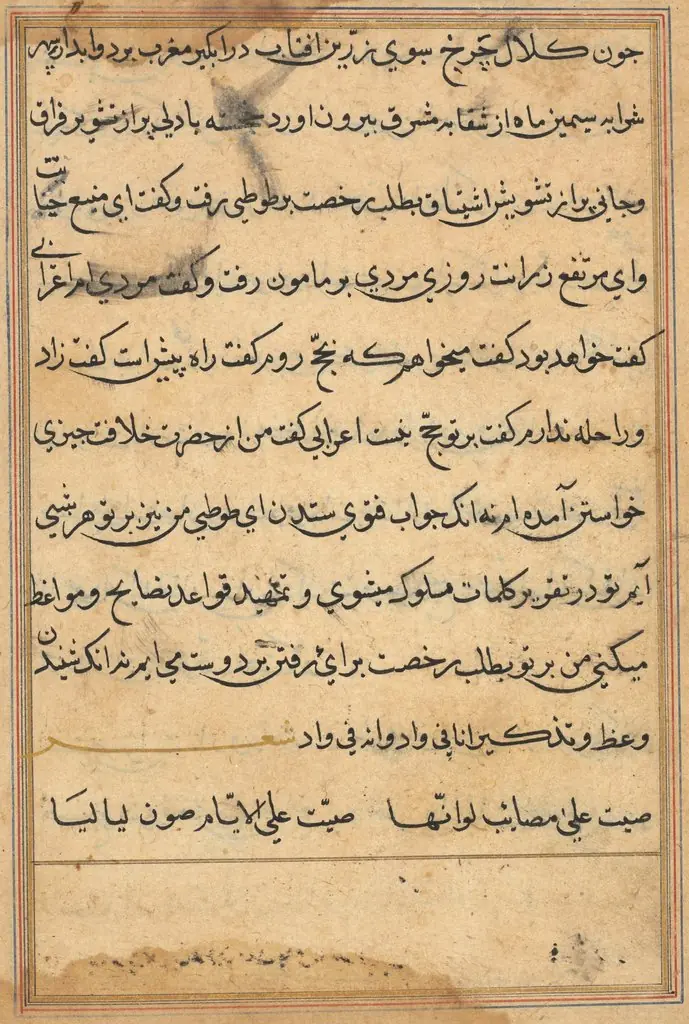
Page from Tales of a Parrot (Tuti-nama): text page is an unspecified painting. It dates from 1560 and is held in the collection of the Cleveland Museum of Art. This object is a painted page from the 1560 illustrated manuscript known as the Tales of a Parrot (Tuti‑nama).
About this work
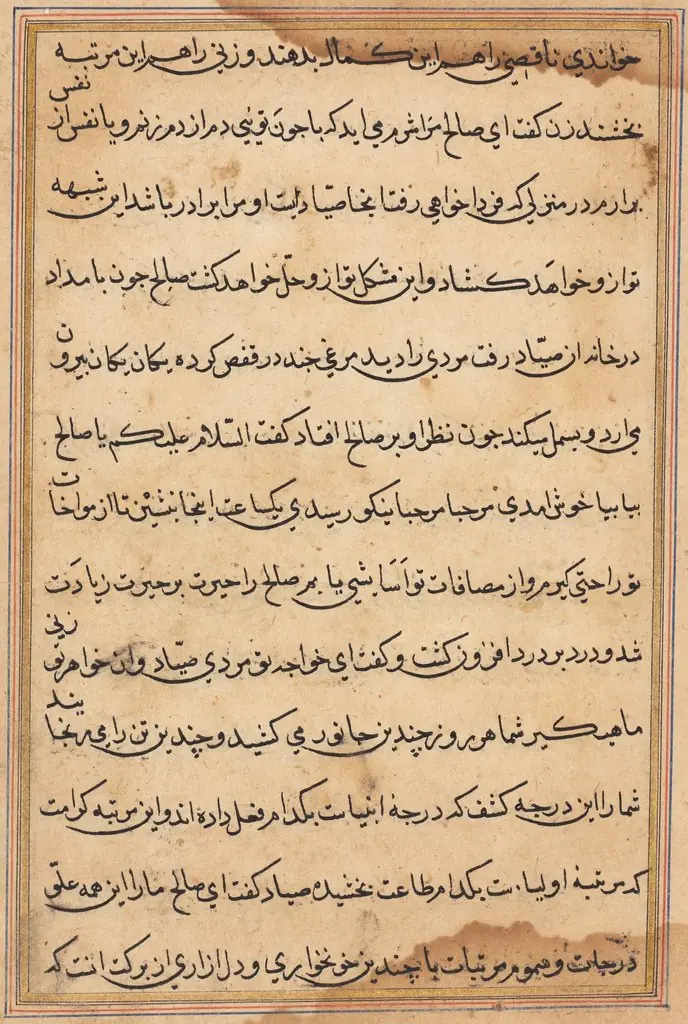
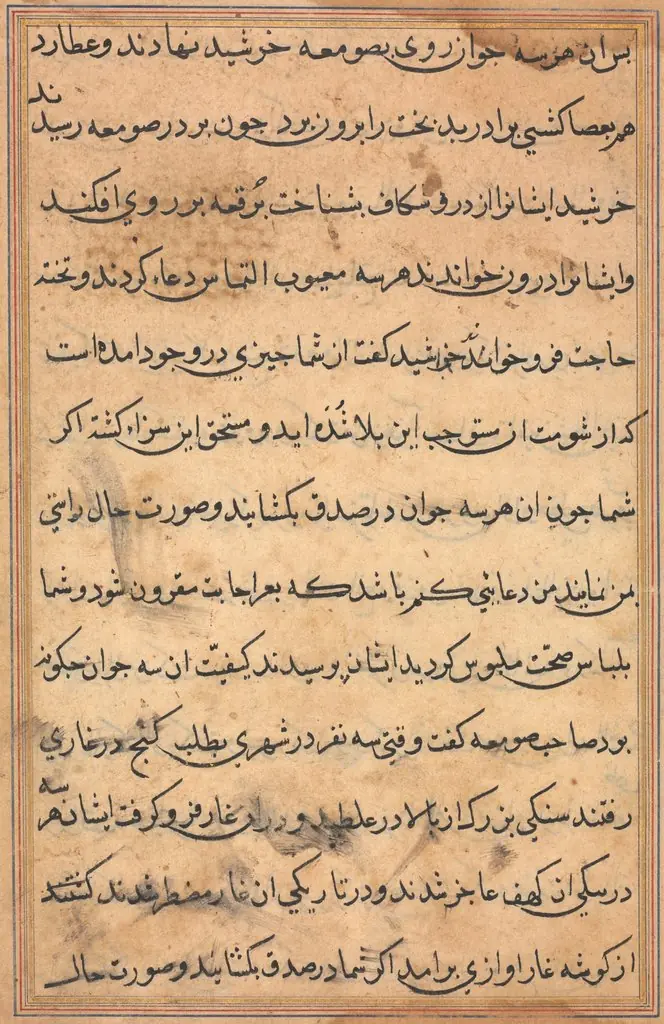
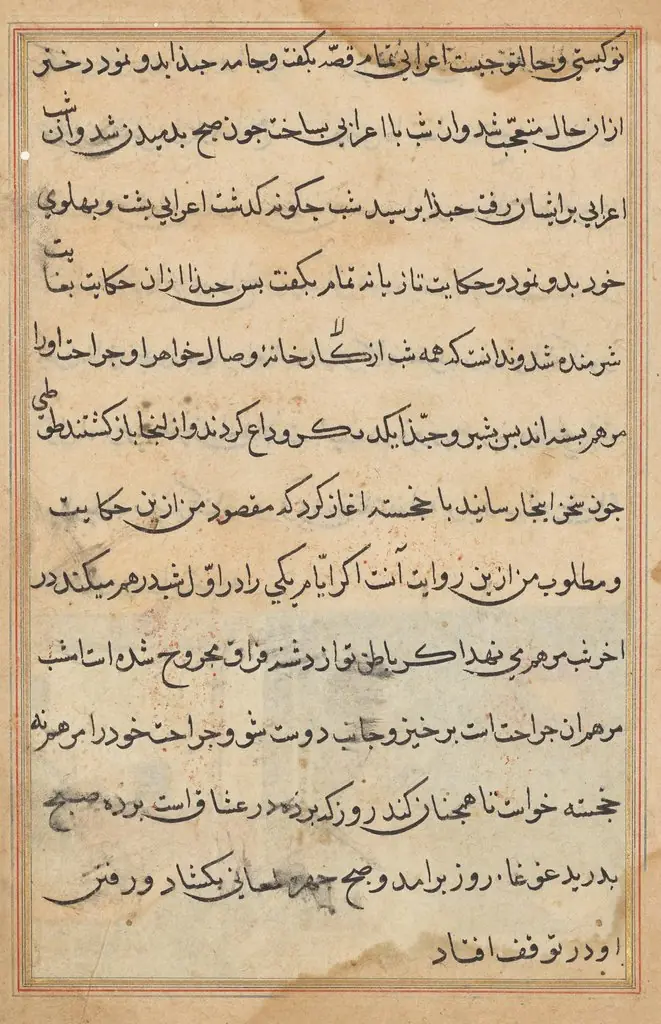
The image features a text page with black calligraphy on a beige background, surrounded by a thin border.
This painting is a page from the "Tales of a Parrot" (Tuti-nama), created in 1560. The image features a text page with black calligraphy on a beige background, surrounded by a thin border. The text is written in a flowing script, with some words and phrases underlined or highlighted.
The page appears to be a passage from a story or poem, with the text arranged in a decorative pattern. The use of black ink on a beige background creates a striking contrast, making the text stand out. The painting is held at The Cleveland Museum of Art, and was made for Prince Salim.
Subject & Meaning
The page depicts a textual episode from the Tuti-nama, a 16th-century Persian illustrated narrative cycle. The text illustrates a parrot’s moral lesson, reflecting Sufi themes of wisdom and cautionary counsel. Symbolically, the parrot functions as a didactic voice, its speech encoding ethical instruction within a courtly setting of the Mughal Empire.
The work’s meaning lies in its didactic role, merging visual narrative with didactic storytelling to convey moral teachings through textual representation.
History & Provenance
The text page from the Tales of a Parrot (Tuti-nama), dated 1560, is held in the collection of the Cleveland Museum of Art in Cleveland. The work is cataloged under the accession number 1962.279.233.b. It was created within the Mughal Empire by an unknown artist.
The provided sources do not list a specific exhibition history for this object.
Overview
This object is a painted page from the 1560 illustrated manuscript known as the Tales of a Parrot (Tuti‑nama). Executed on a beige surface, the page displays black calligraphic text arranged in a decorative layout and framed by a thin border. It is part of the collection of the Cleveland Museum of Art and was originally created for Prince Salim.
Technique & Style
The artist employed black ink on a light ground, achieving high contrast that emphasizes the calligraphy. The script follows a graceful, cursive hand, while the surrounding border is rendered in a simple linear fashion, allowing the text to dominate the visual field.
Artist & collection

- Page from Tales of a Parrot (Tuti-nama): text page
 Page from Tales of a Parrot (Tuti-nama): text page
 Page from Tales of a Parrot (Tuti-nama): text page
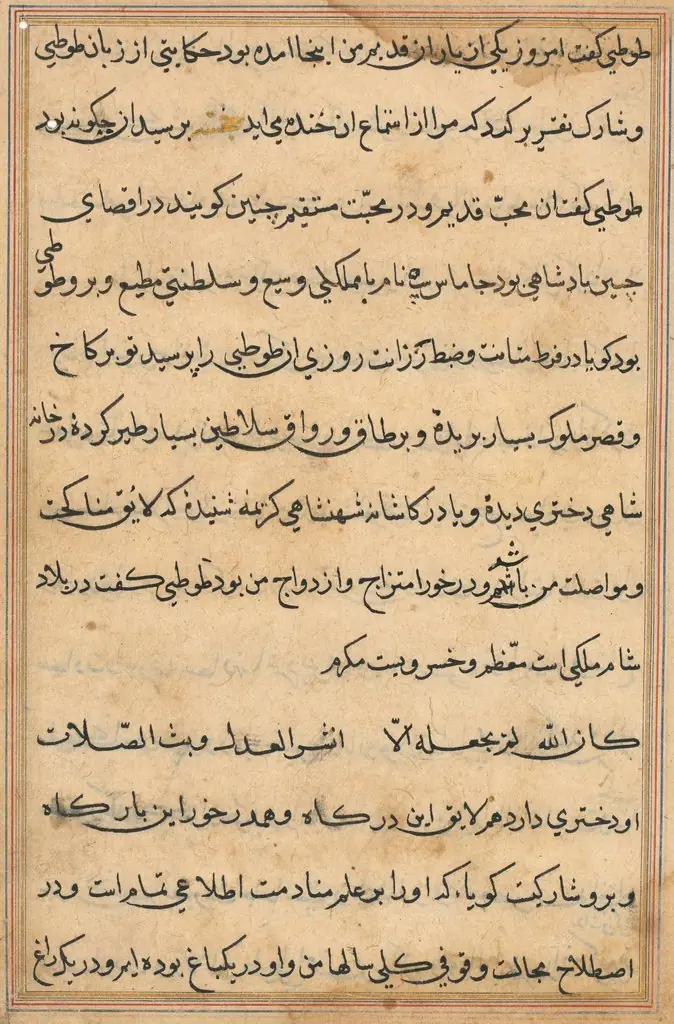 Page from Tales of a Parrot (Tuti-nama): text page
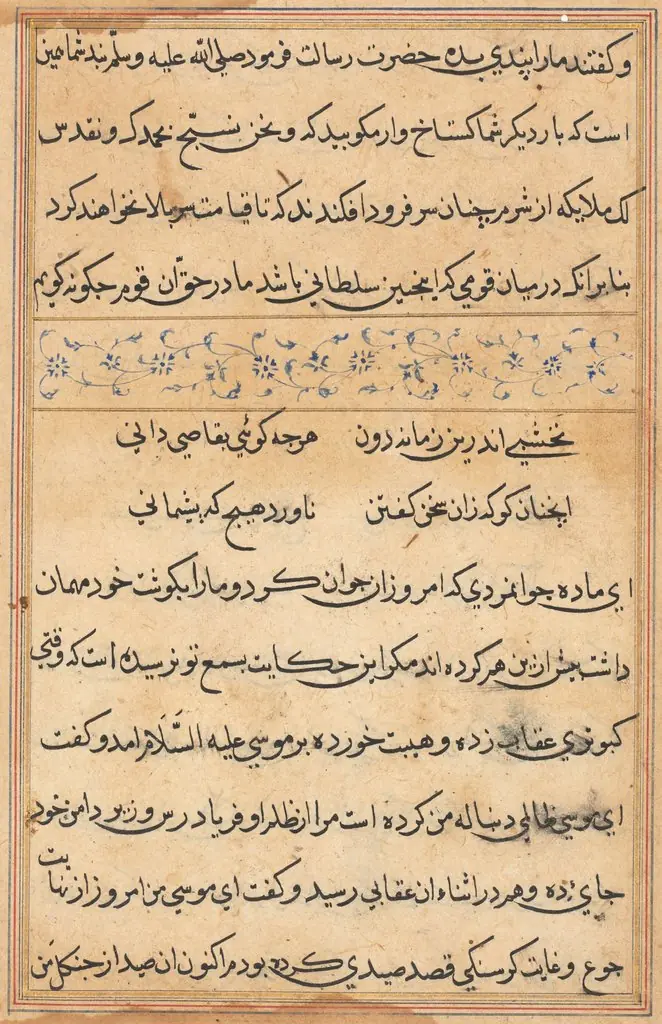 Page from Tales of a Parrot (Tuti-nama): text page
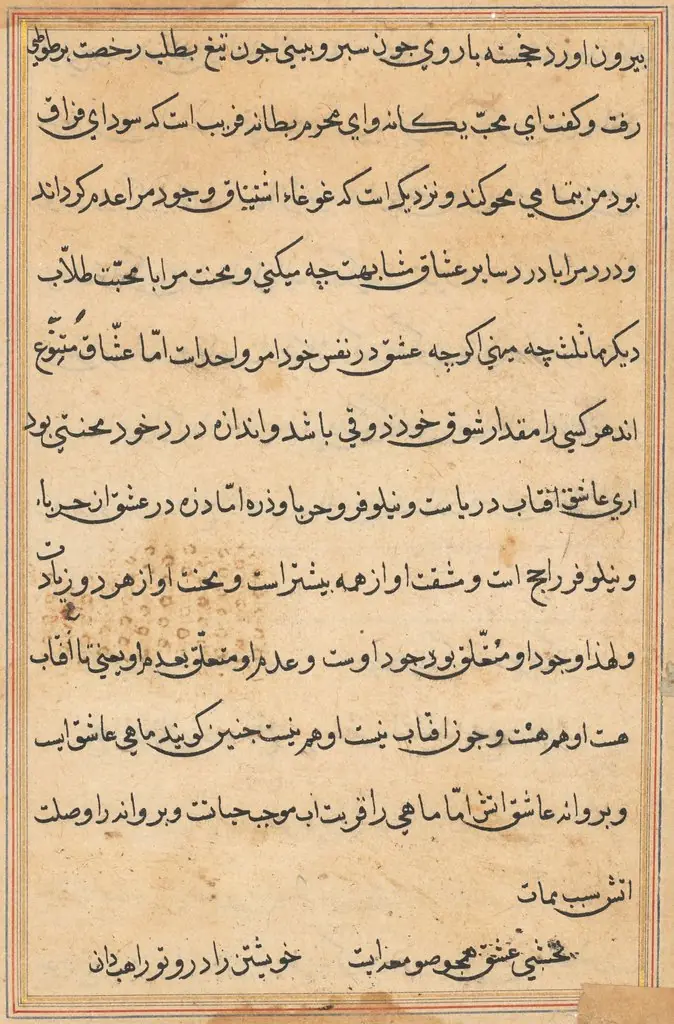 Page from Tales of a Parrot (Tuti-nama): text page
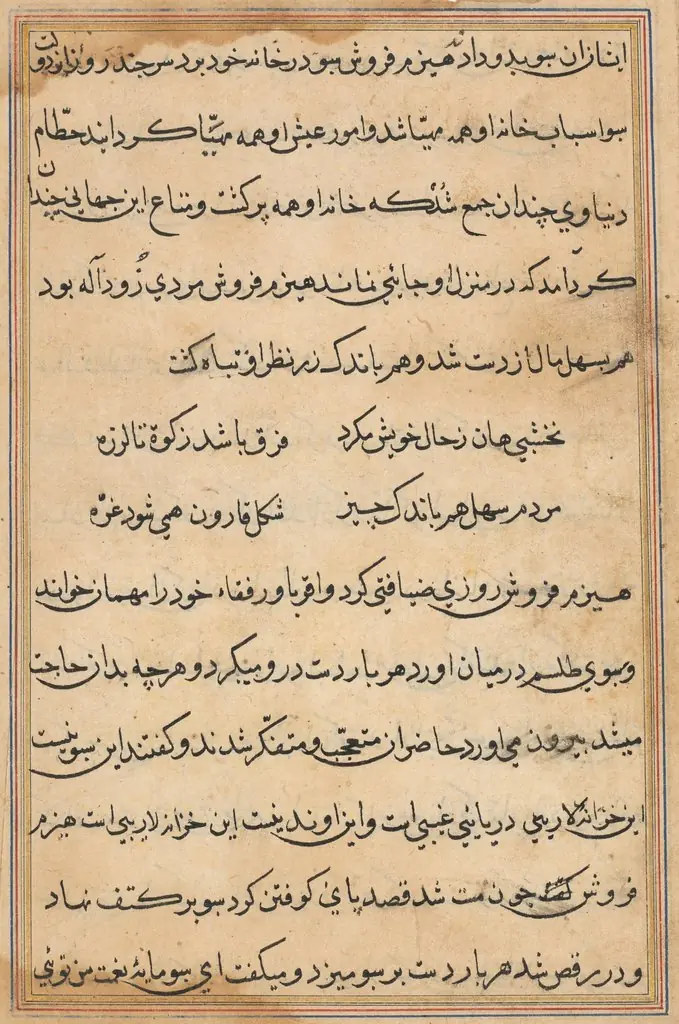 Page from Tales of a Parrot (Tuti-nama): text page
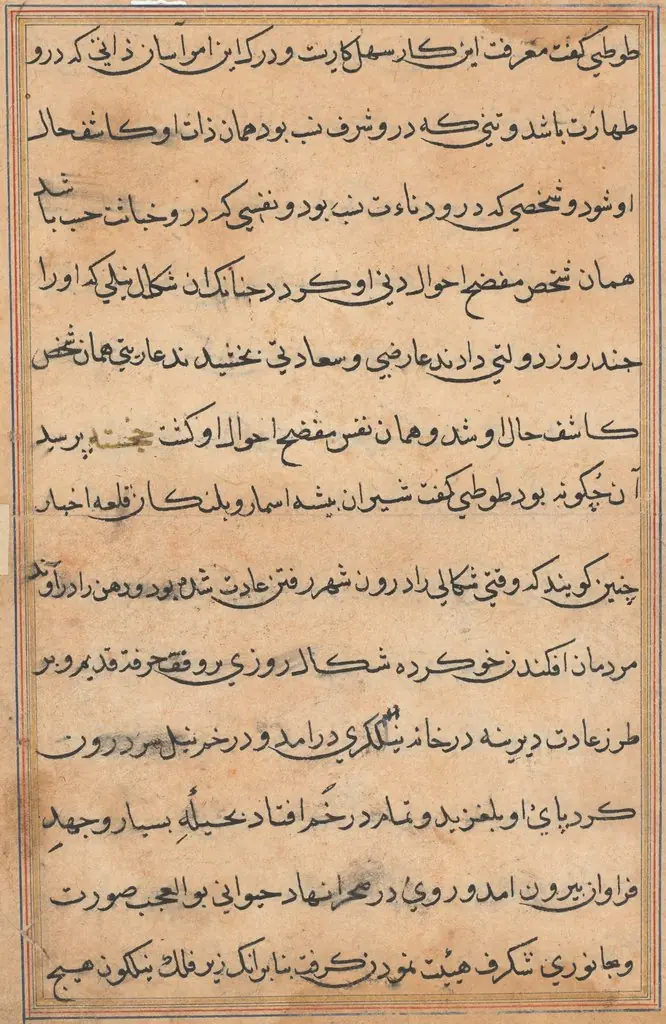 Page from Tales of a Parrot (Tuti-nama): text page
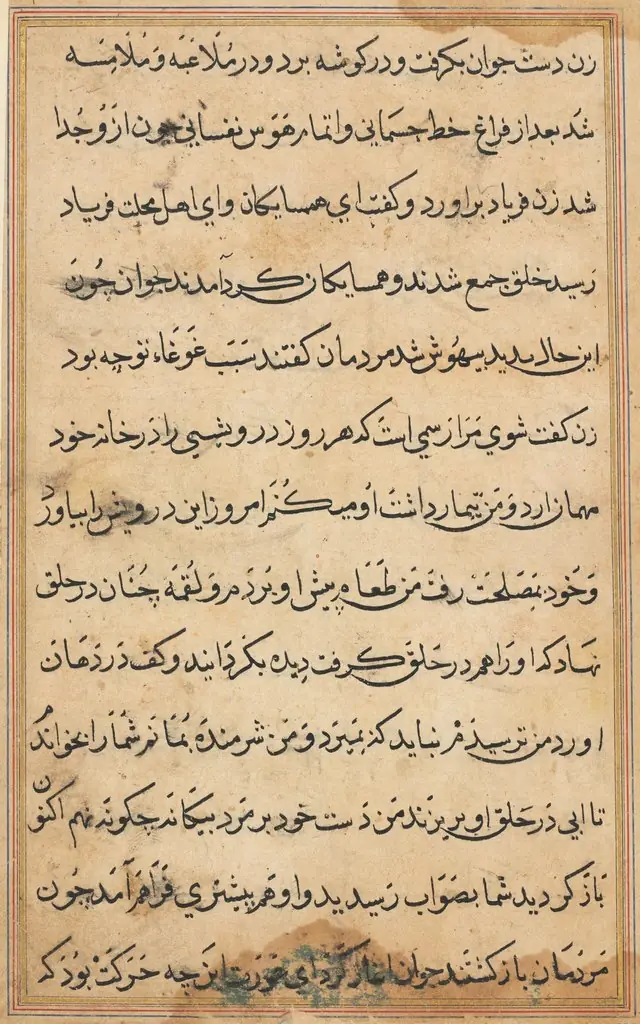 Page from Tales of a Parrot (Tuti-nama): text page
 Page from Tales of a Parrot (Tuti-nama): text page
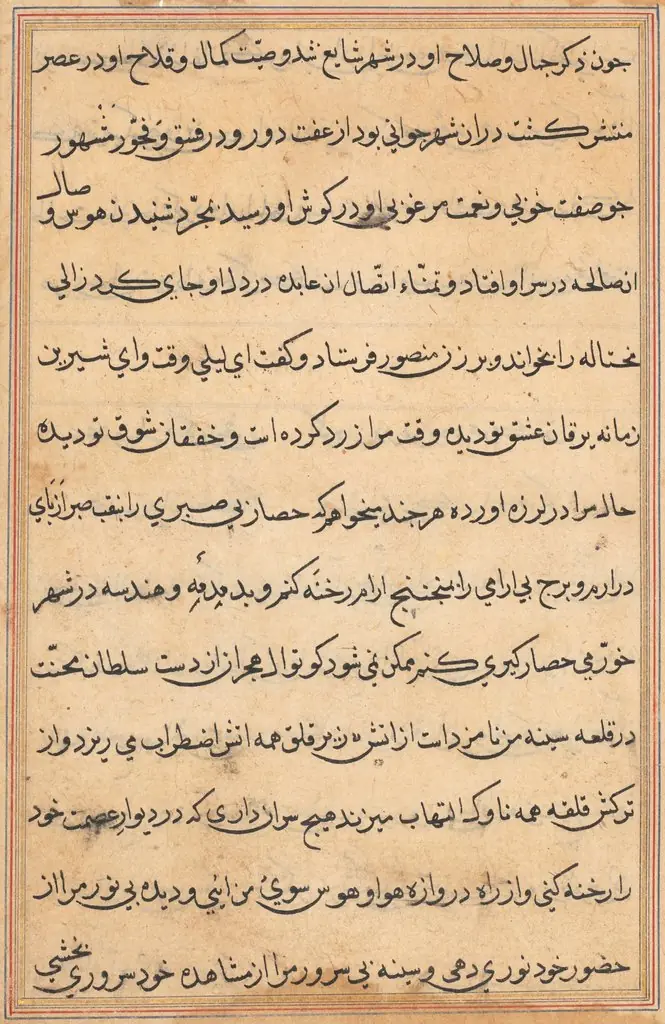 Page from Tales of a Parrot (Tuti-nama): text page
 Page from Tales of a Parrot (Tuti-nama): text page