Artwork
Page from Tales of a Parrot (Tuti-nama): text page
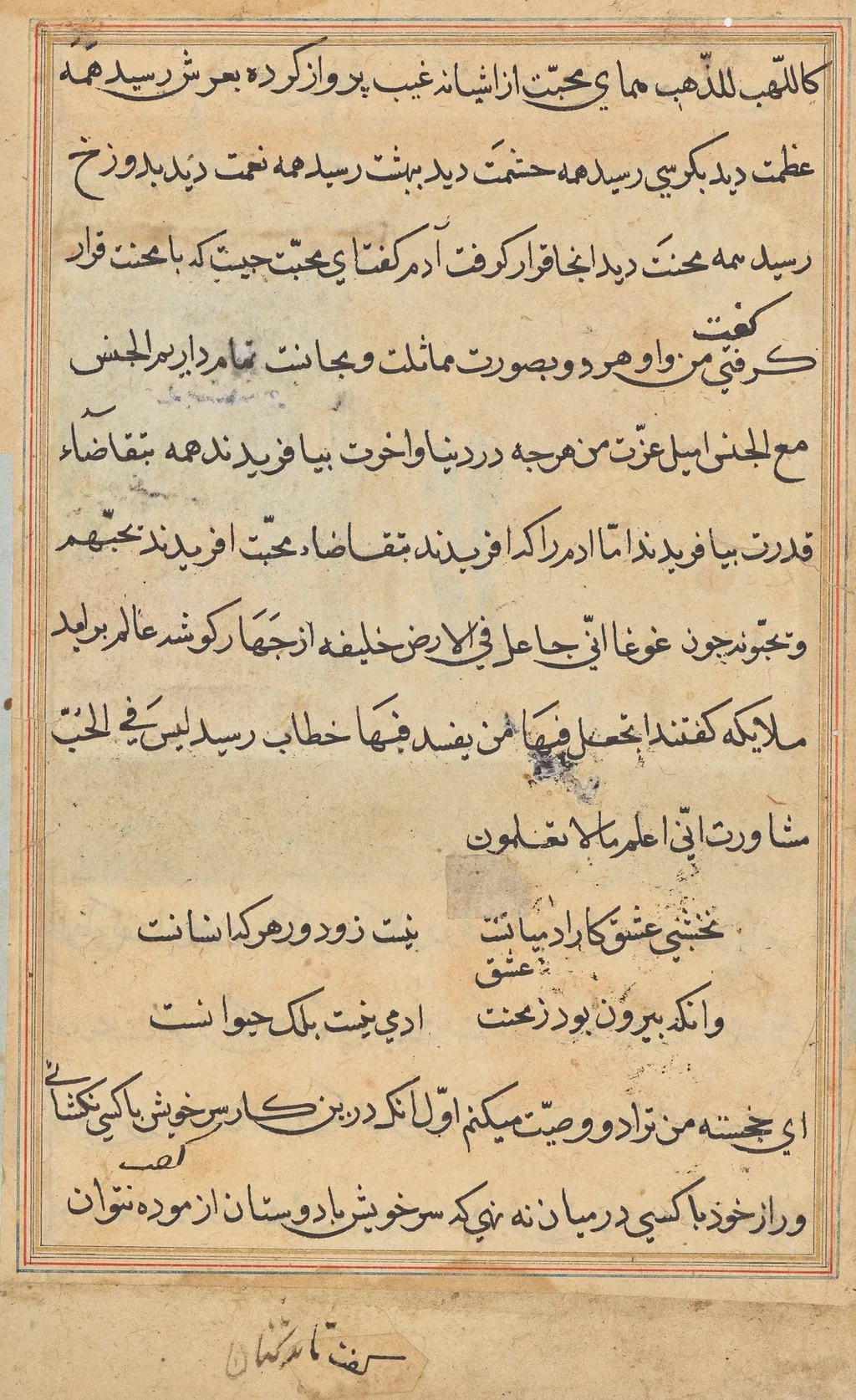
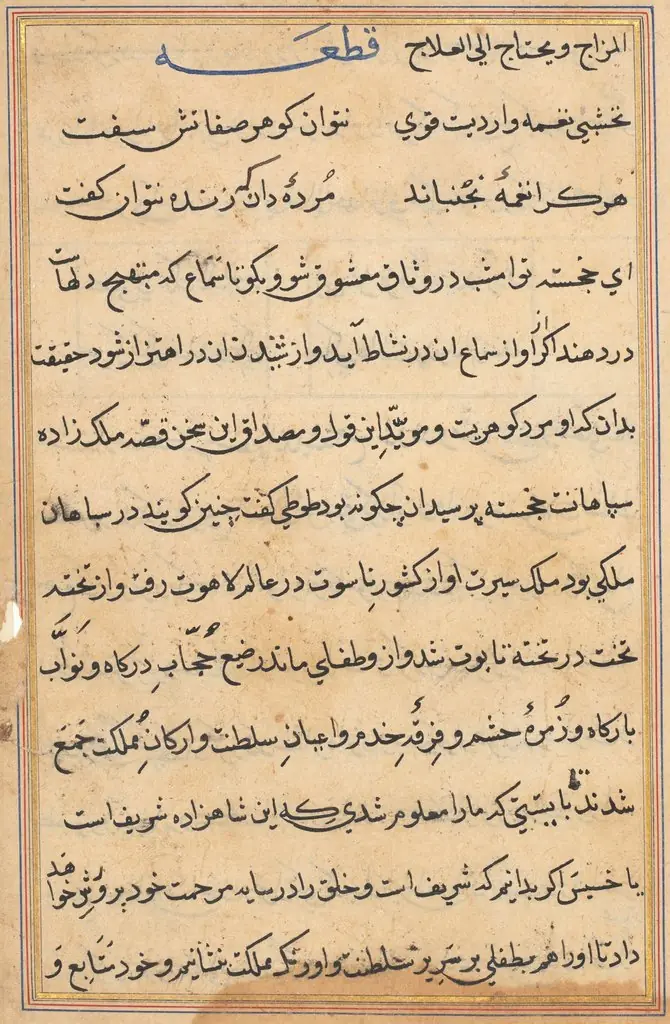
Page from Tales of a Parrot (Tuti-nama): text page is an unspecified painting. It dates from 1560 and is held in the collection of the Cleveland Museum of Art. This object is a single folio from the medieval manuscript known as the Tales of a Parrot (Tuti‑nama).
About this work
Subject & Meaning
In this text page, a parrot narrates moral tales to a prince, using allegory to convey lessons about wisdom, justice, and the consequences of poor governance.
The page depicts a scene from the Tuti-nama, a 14th-century Persian collection of fables that was translated and illustrated in Mughal India during the 16th century. In this text page, a parrot narrates moral tales to a prince, using allegory to convey lessons about wisdom, justice, and the consequences of poor governance. The figure of the parrot functions as a symbol of eloquent counsel, while the surrounding courtly setting reflects Mughal artistic patronage of Persian literary traditions.
The work thus represents the cultural synthesis of Persian narrative forms and Indian artistic production under imperial rule.
The iconography centers on the talking parrot as a didactic device, emphasizing the role of verbal instruction in moral education. Symbolic elements such as the courtly attire and ornate background allude to the political responsibilities of rulership, aligning the narrative with the ideal conduct expected of a just sovereign. This theme resonates within the broader corpus of Mughal manuscript painting, where didactic texts were rendered in richly detailed compositions to instruct both elite audiences and future administrators.
The painting is part of the Cleveland Museum of Art's collection, cataloged as 1962.279.138.b, and was likely produced in a workshop active in Fatehpur Sikri around 1560. Its creation coincides with the early reign of Akbar, when imperial patronage fostered the translation of Persian texts into illustrated manuscripts that blended Persian literary themes with Indian aesthetic conventions. The work therefore embodies the cross-cultural artistic exchange that defined Mughal manuscript production in the late 16th century.
History & Provenance
Created in 1560 within the Mughal Empire, this text page from the Tuti-nama (Tales of a Parrot) was produced by an unidentified artist. The work forms part of a larger manuscript commission from this period, though specific details regarding the original patron or the circumstances of its creation remain unattributed in available records.
The page eventually entered the collection of the Cleveland Museum of Art, where it is cataloged under the accession number 1962.279.138.b. Its presence in this institution marks its modern provenance, preserving the sixteenth-century Indian painting for contemporary study.
The text page from the Tales of a Parrot (Tuti-nama), created in 1560, is held in the collection of the Cleveland Museum of Art in Cleveland. The work is identified by the accession number 1962.279.138.b. While the artwork originates from the Mughal Empire, its current institutional home is the Cleveland Museum of Art, which acquired it as part of its holdings of Mughal painting.
The provided sources do not list any specific exhibition history for this particular text page.
Overview
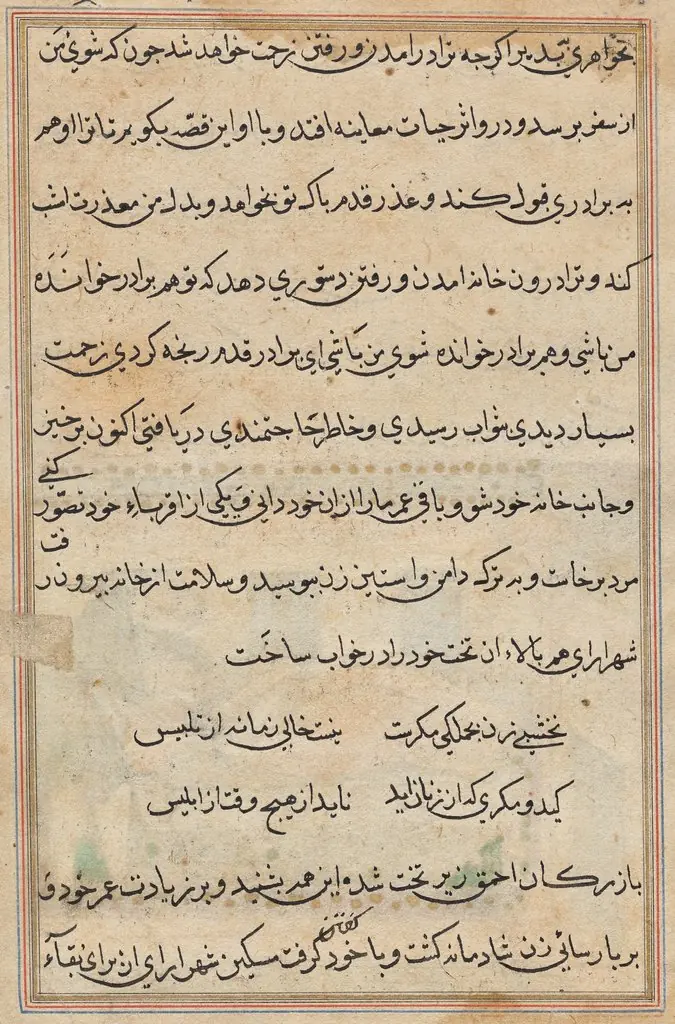
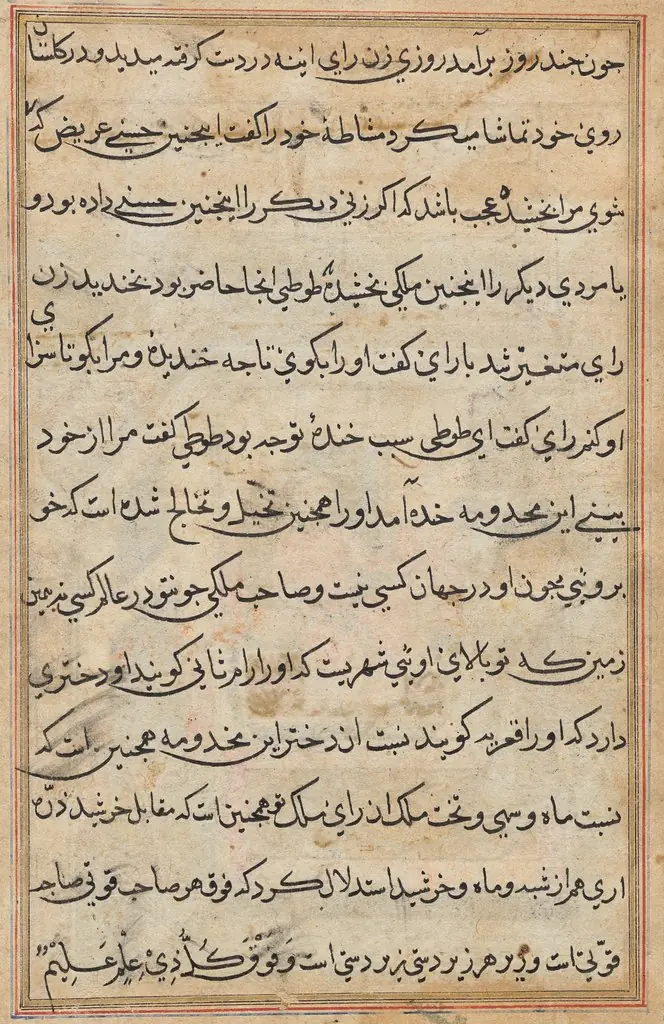
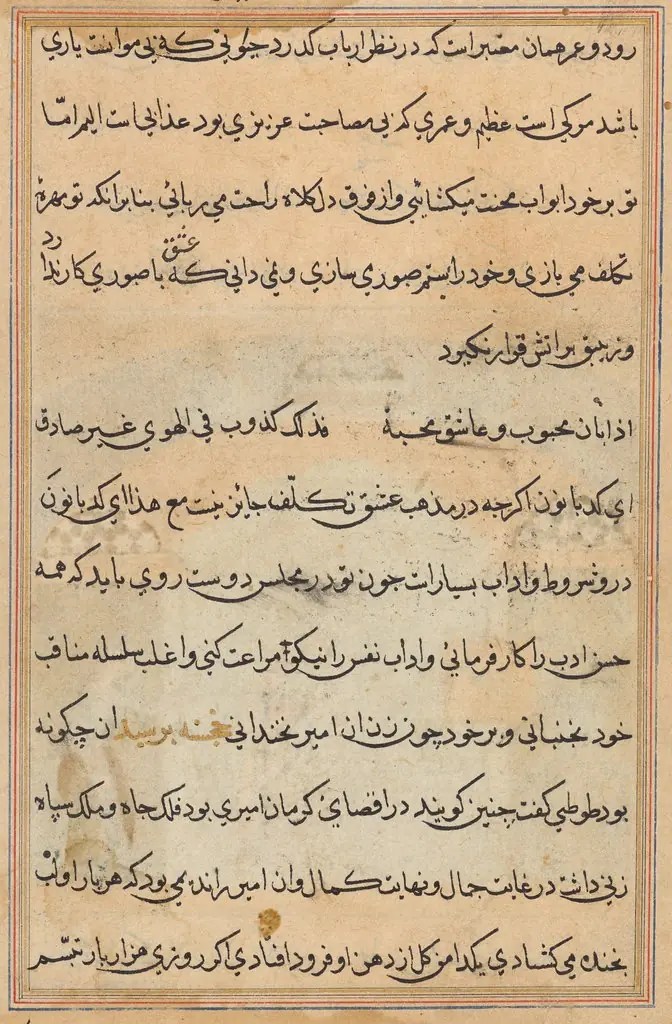
This object is a single folio from the medieval manuscript known as the Tales of a Parrot (Tuti‑nama). The leaf measures roughly the size of a hand‑held page and retains its original thin border and muted colour palette, indicating its origin as a luxury codex produced for a princely patron.
Technique & Style
The calligraphy is executed in a fluid, cursive hand, with fine, interlaced strokes that reveal a high degree of scribal skill. The surrounding border is modest, employing subtle pigments that have faded with age, while the parchment itself shows the characteristic wear and discoloration of a centuries‑old document.
Context
The Tales of a Parrot belongs to a genre of Persianate literature that blends didactic tales with courtly romance. Such works were often illustrated and illuminated, though this particular leaf emphasizes textual elegance over pictorial decoration, aligning with the tastes of elite patrons who valued literary refinement.
Legacy
Although the script remains undeciphered in this excerpt, the folio contributes to scholarly understanding of manuscript production for royal audiences in the Mughal era. Its preservation offers insight into the material culture of bookmaking and the transmission of literary traditions across South‑Asian courts.
Artist & collection

- Page from Tales of a Parrot (Tuti-nama): text page
 Page from Tales of a Parrot (Tuti-nama): text page
 Page from Tales of a Parrot (Tuti-nama): text page
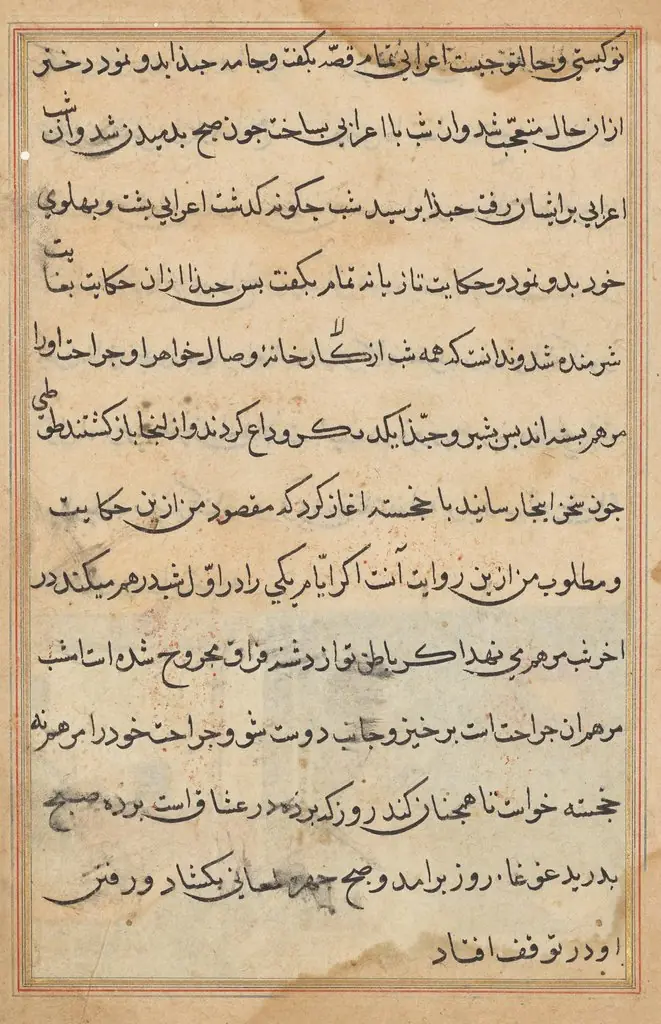 Page from Tales of a Parrot (Tuti-nama): text page
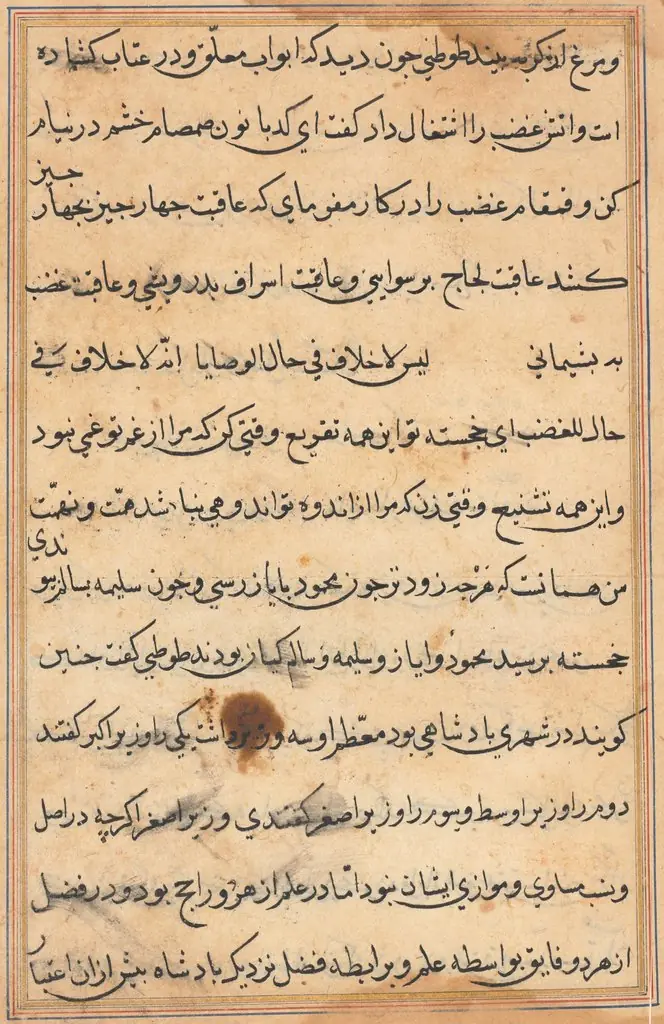 Page from Tales of a Parrot (Tuti-nama): text page
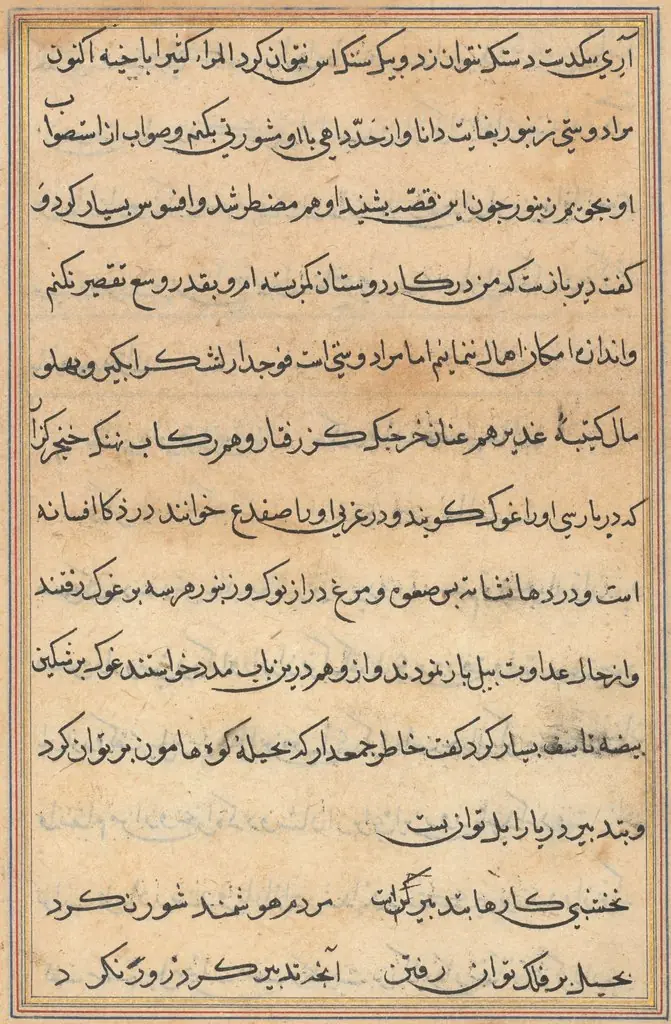 Page from Tales of a Parrot (Tuti-nama): text page
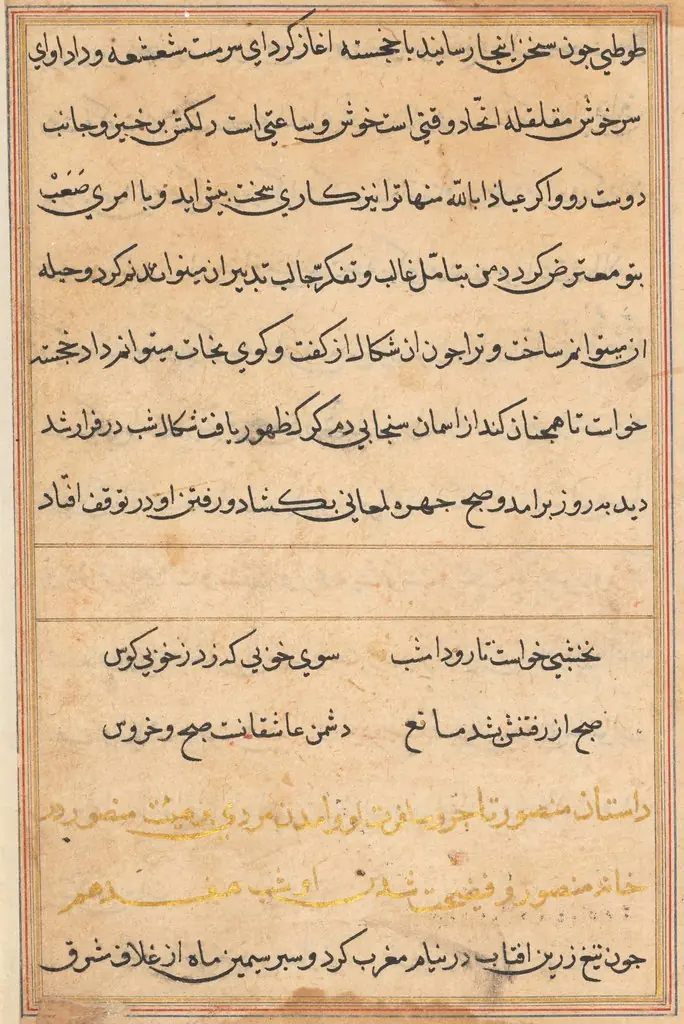 Page from Tales of a Parrot (Tuti-nama): text page
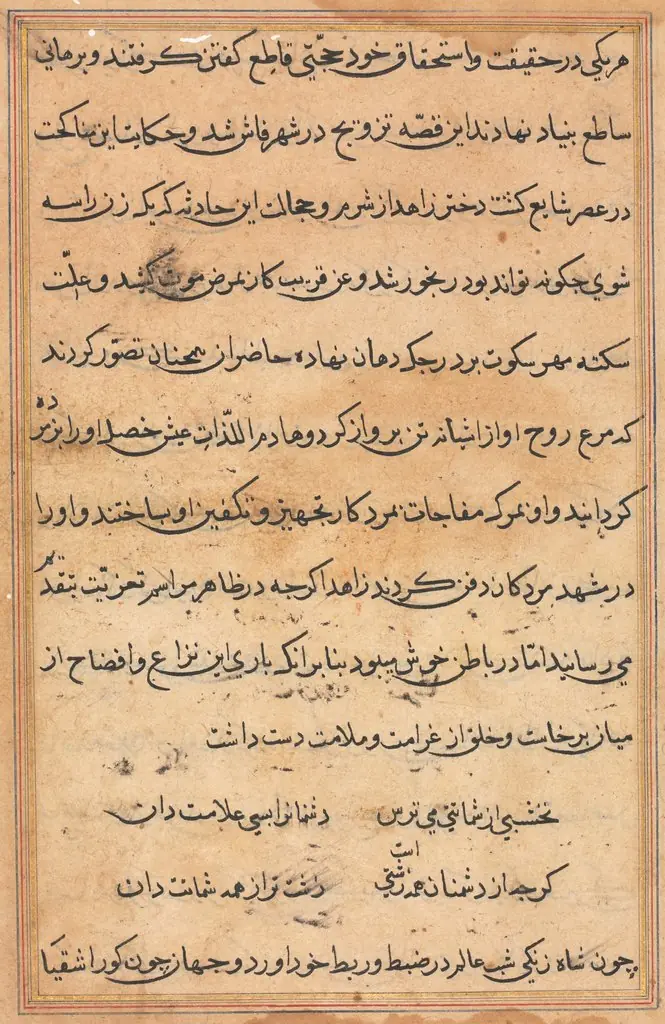 Page from Tales of a Parrot (Tuti-nama): text page
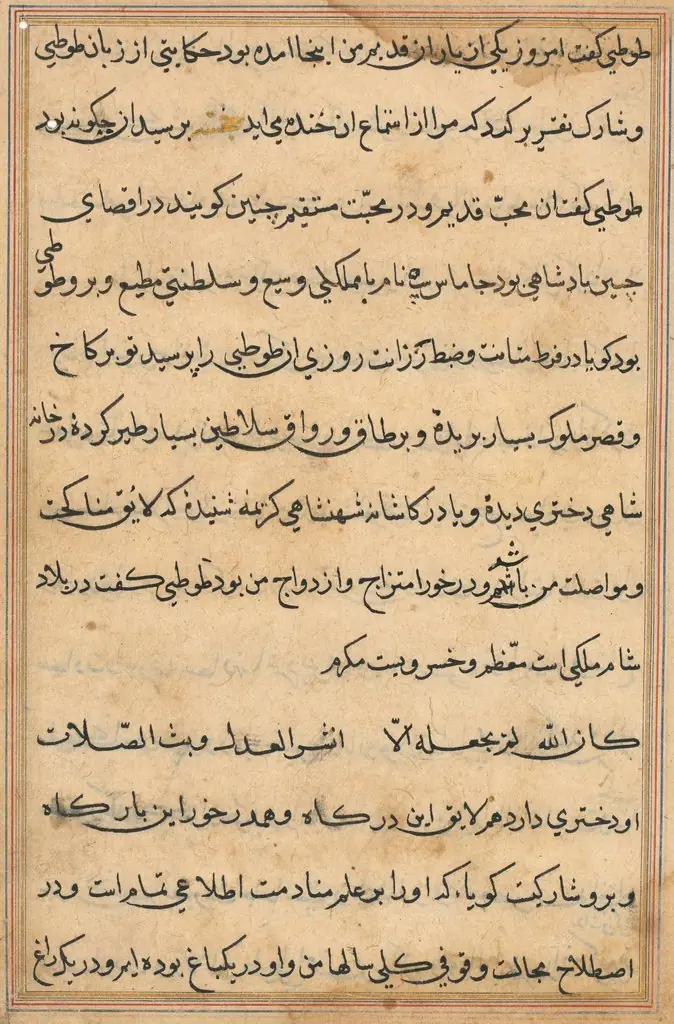 Page from Tales of a Parrot (Tuti-nama): text page
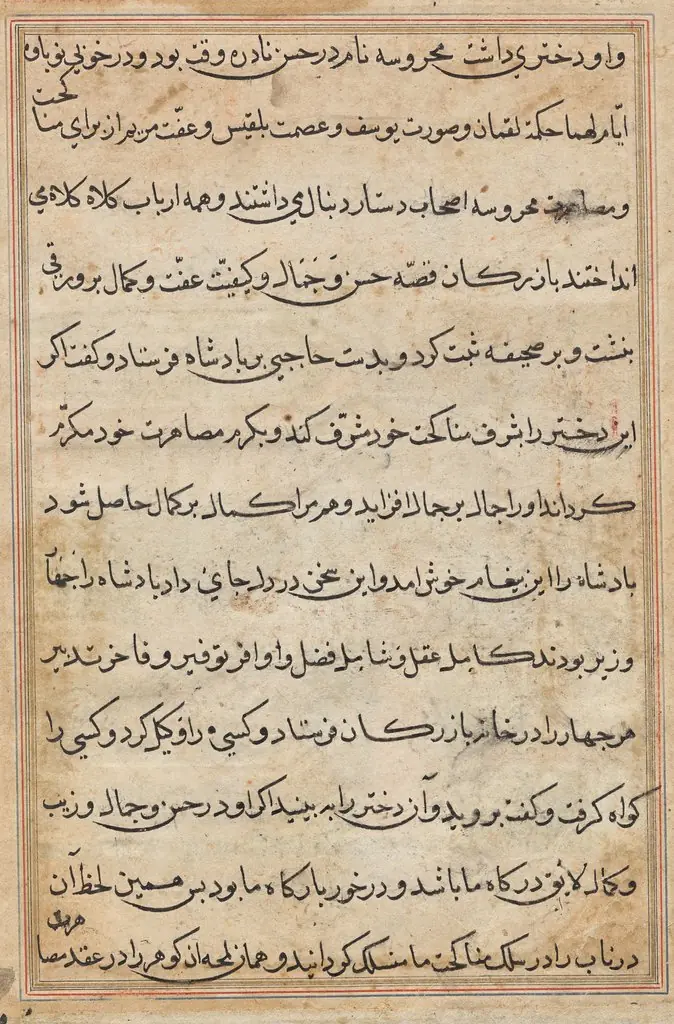 Page from Tales of a Parrot (Tuti-nama): text page
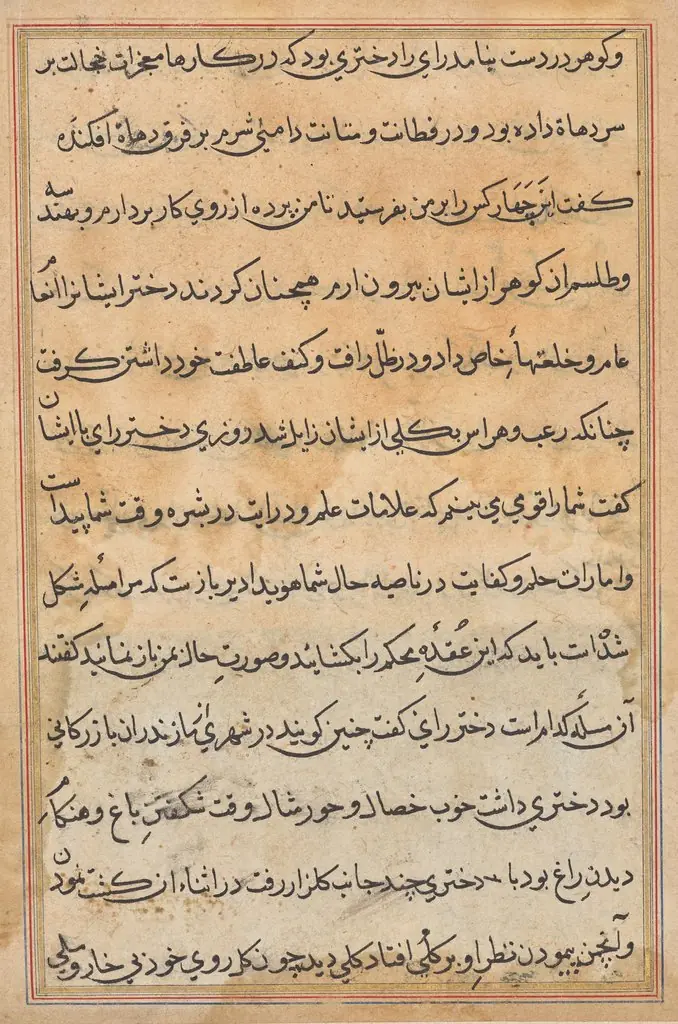 Page from Tales of a Parrot (Tuti-nama): text page
 Page from Tales of a Parrot (Tuti-nama): text page