Artwork
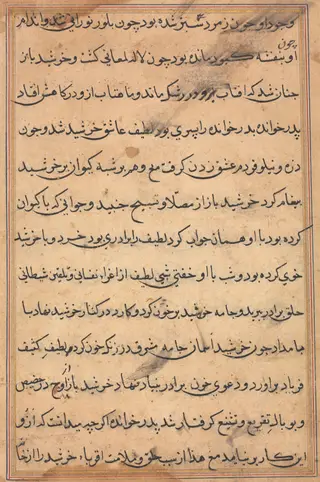
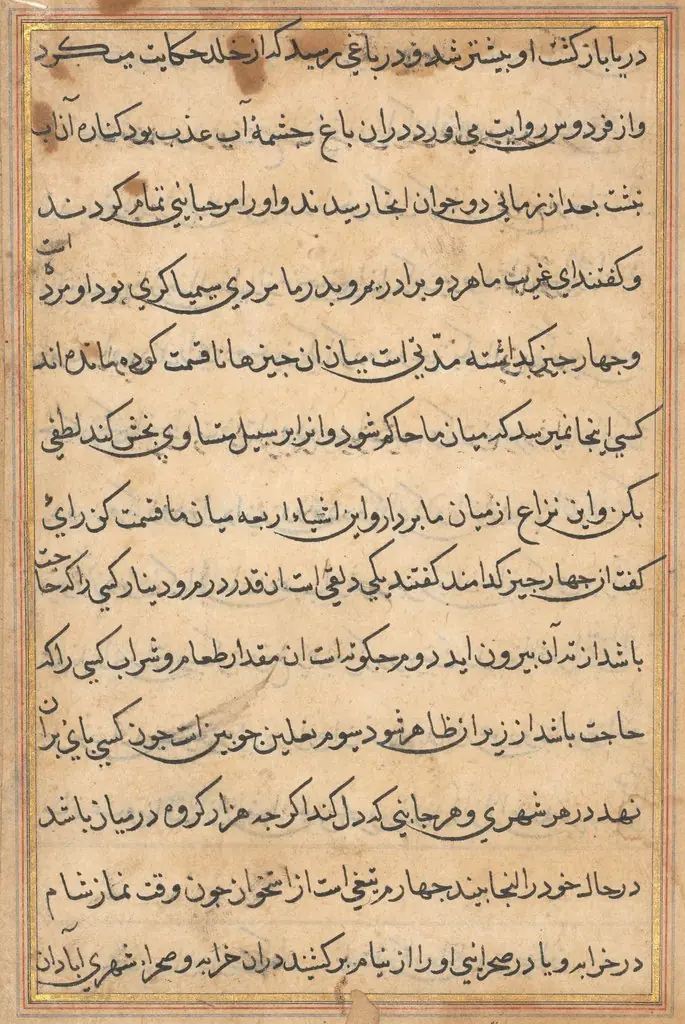
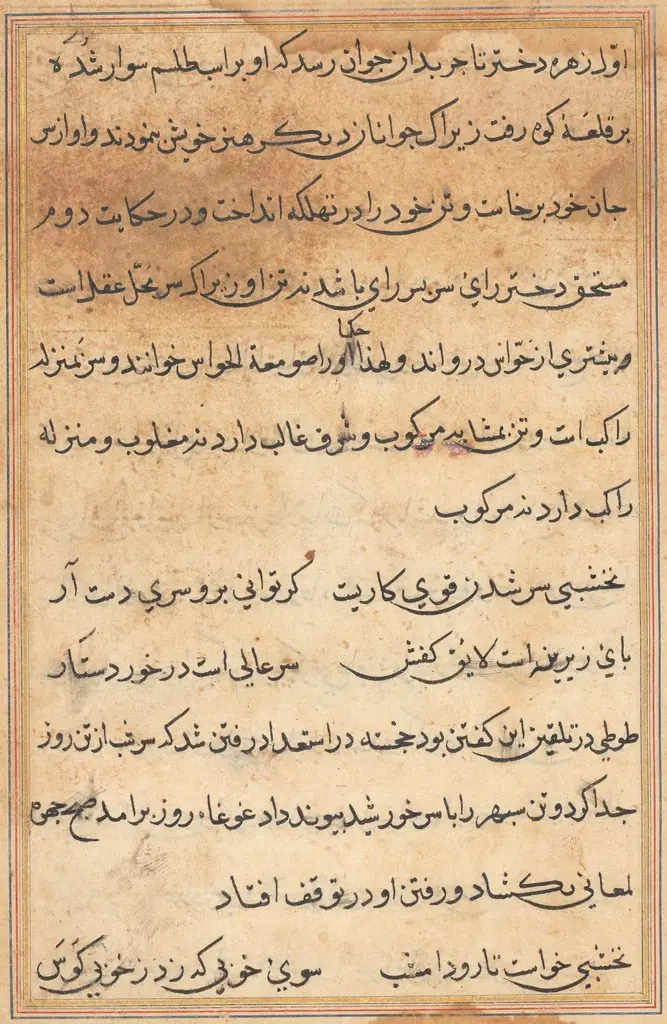
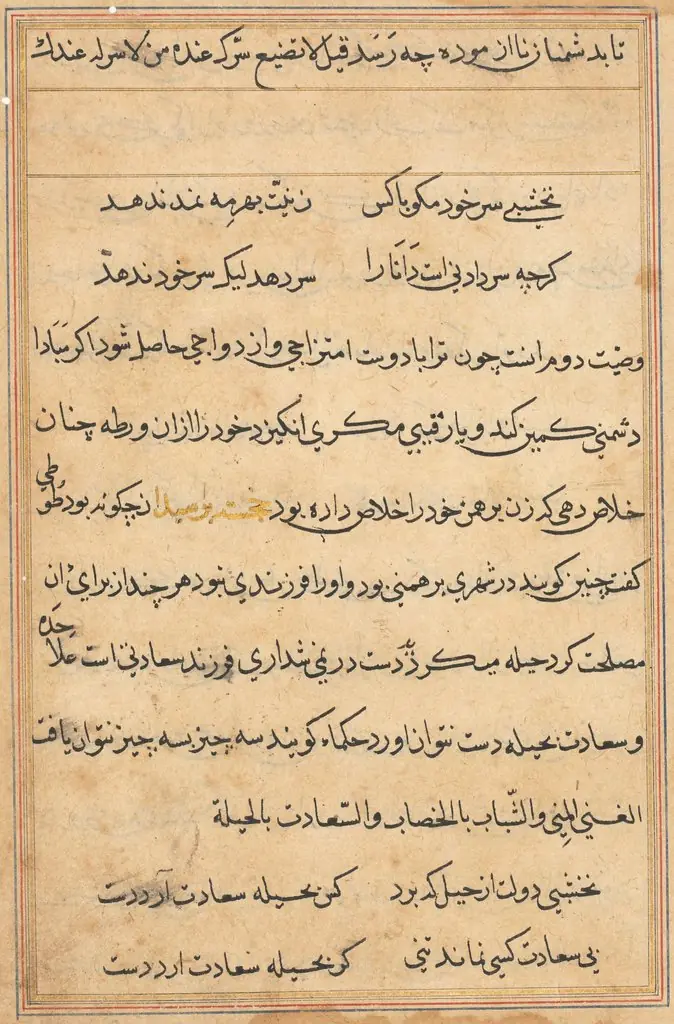
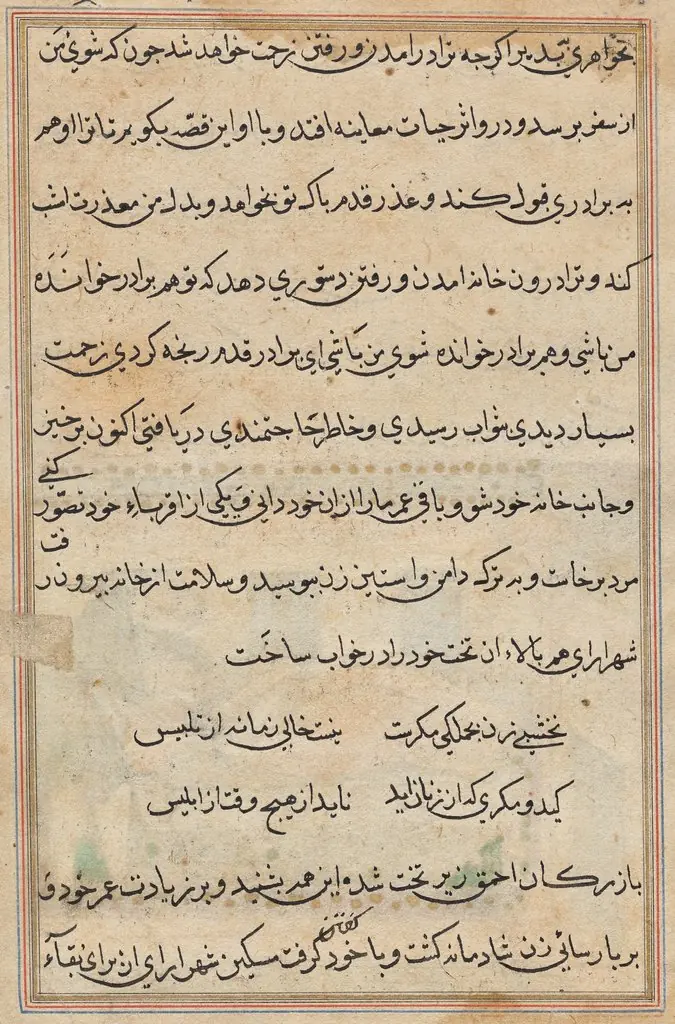
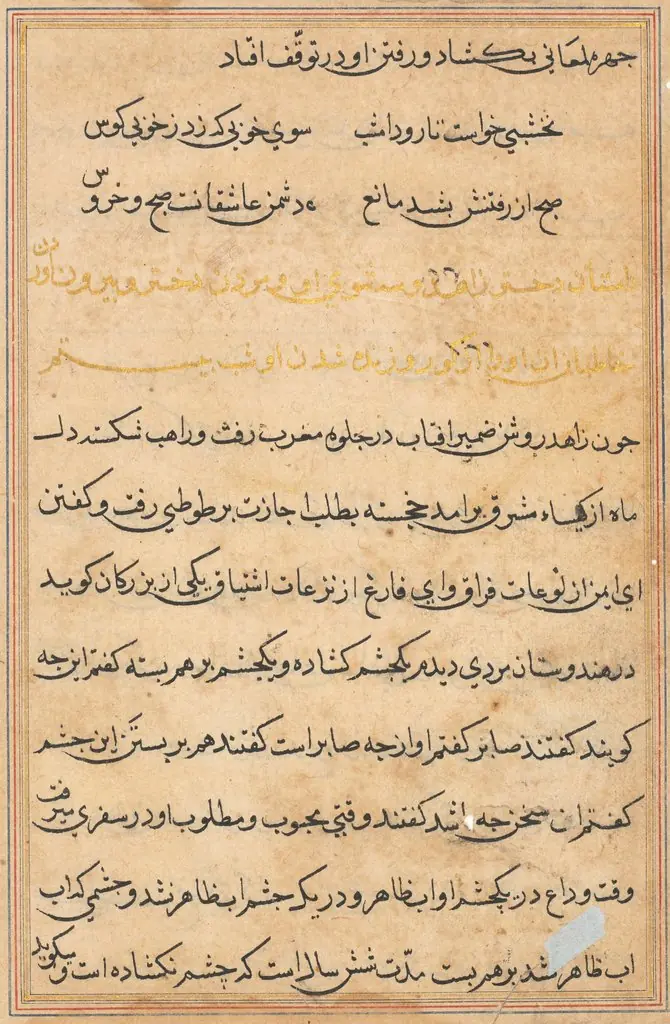
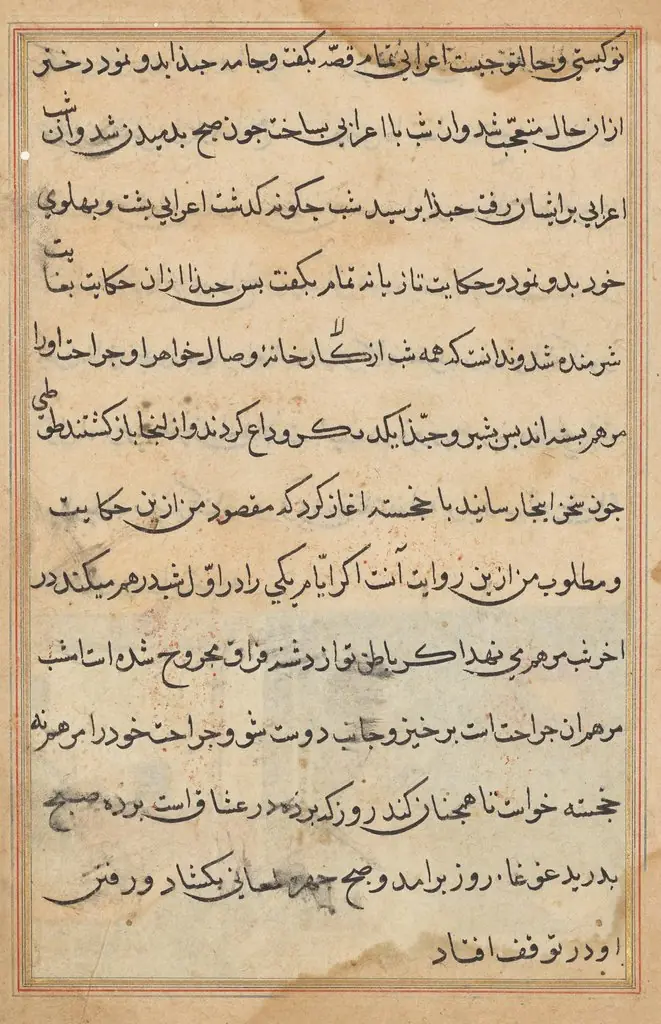
Page from Tales of a Parrot (Tuti-nama): text page
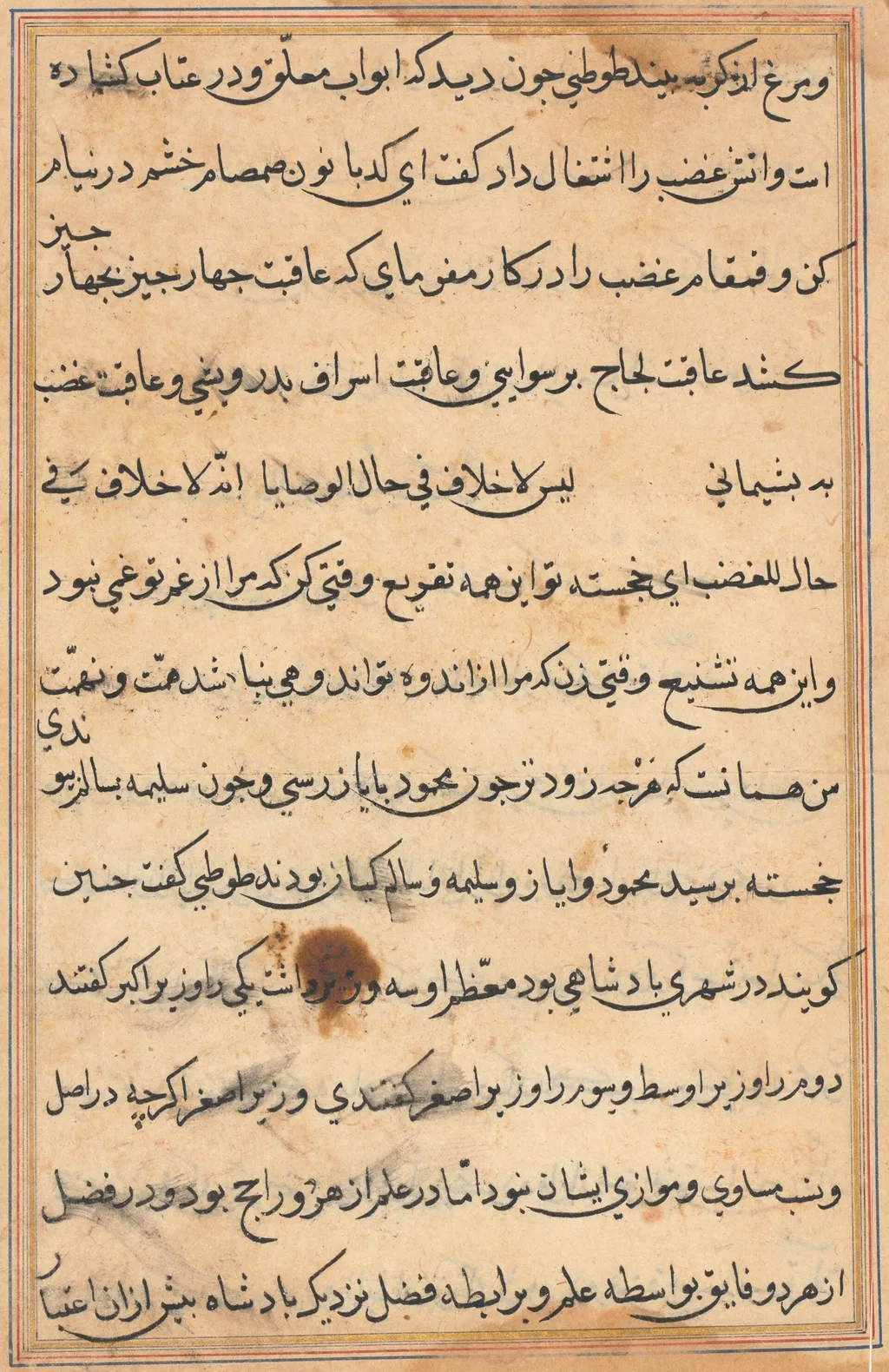
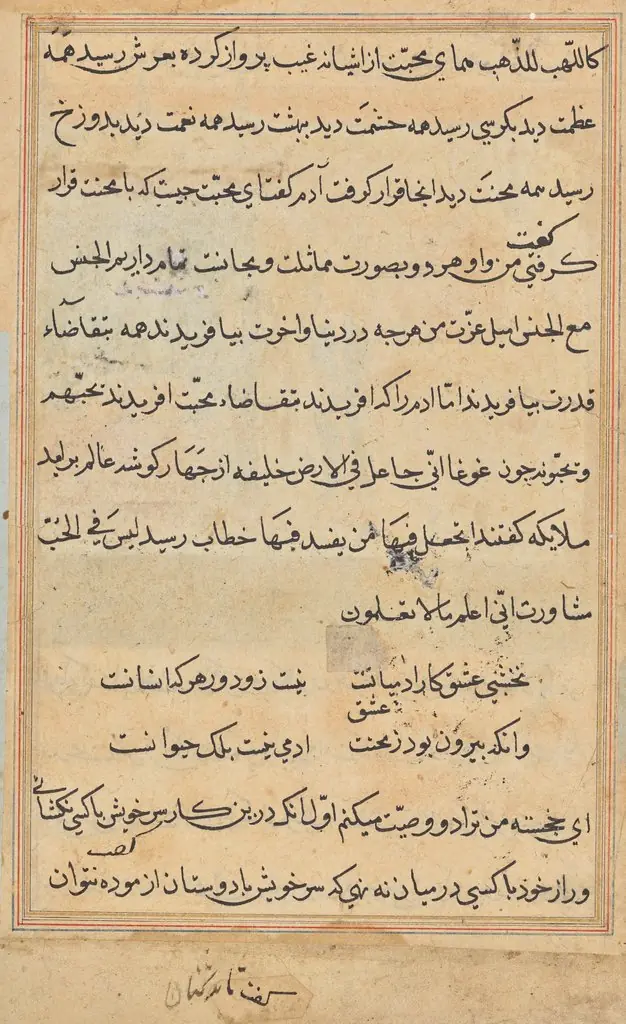
Page from Tales of a Parrot (Tuti-nama): text page is an unspecified painting. It dates from 1560 and is held in the collection of the Cleveland Museum of Art. The object is a single leaf from an illuminated manuscript titled Tales of a Parrot (Tuti‑nama).
About this work
Technique & Style
The text page originates from a Tuti-nama manuscript produced in the Mughal Empire, likely intended for a royal or aristocratic patron.
The page is executed in ink and watercolor on paper, typical of Mughal manuscript painting from the mid-16th century. The delicate linework and flat areas of color define the stylized figures and architectural motifs characteristic of the period. The text page originates from a Tuti-nama manuscript produced in the Mughal Empire, likely intended for a royal or aristocratic patron.
It is currently held in the collection of the Cleveland Museum of Art, where it is cataloged under accession number 1962.279.218.a.
The composition balances narrative clarity with ornamental detail, reflecting the manuscript’s didactic purpose. Formal elements include stylized facial features, patterned borders, and a restrained palette dominated by blues, reds, and golds. The work’s condition is stable, with minimal discoloration and intact margins, suggesting careful handling over centuries.
History & Provenance
The page from Tales of a Parrot (Tuti-nama) was created in 1560 within the Mughal Empire, as recorded in its cataloguing data. It is classified as a painting and is now held in the collection of the Cleveland Museum of Art, where it is catalogued under the accession number 1962.279.218.a. No further details regarding its commission, intermediate ownership, or chain of custody prior to its acquisition by the museum are documented in the available sources.
Context
The miniature from the Tuti-nama exemplifies Mughal manuscript painting's synthesis of Persian narrative tradition and Indian naturalism, with its 1560 execution reflecting the imperial atelier's stylistic consolidation under Akbar's patronage. The work's compositional economy, flattened space, rhythmic line work, and restrained palette, demonstrates how court artists translated Sufi allegory into visual syntax while maintaining textual legibility. Its presence in the Cleveland Museum of Art collection preserves one of the finest surviving examples of 16th-century Indo-Persian book arts, where didactic storytelling served both spiritual instruction and elite cultural display.
Overview
The object is a single leaf from an illuminated manuscript titled Tales of a Parrot (Tuti‑nama). It consists of handwritten text rendered in black ink on a light‑colored parchment, showing the characteristic aging marks of a historic codex.
Subject & Meaning
The page contains narrative prose, presumably part of a collection of fables involving a parrot. The language appears to be written in an Arabic‑derived script, suggesting the work originates from a Persian or broader Islamic literary tradition.
Artist & collection

- Page from Tales of a Parrot (Tuti-nama): text page
 Page from Tales of a Parrot (Tuti-nama): text page
 Page from Tales of a Parrot (Tuti-nama): text page
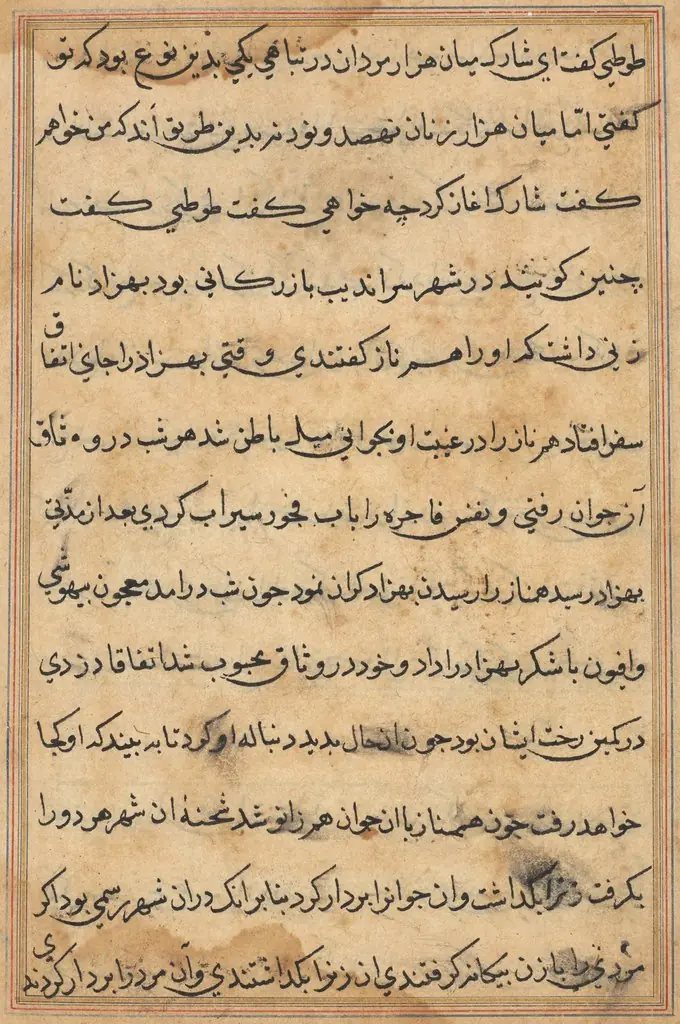 Page from Tales of a Parrot (Tuti-nama): text page
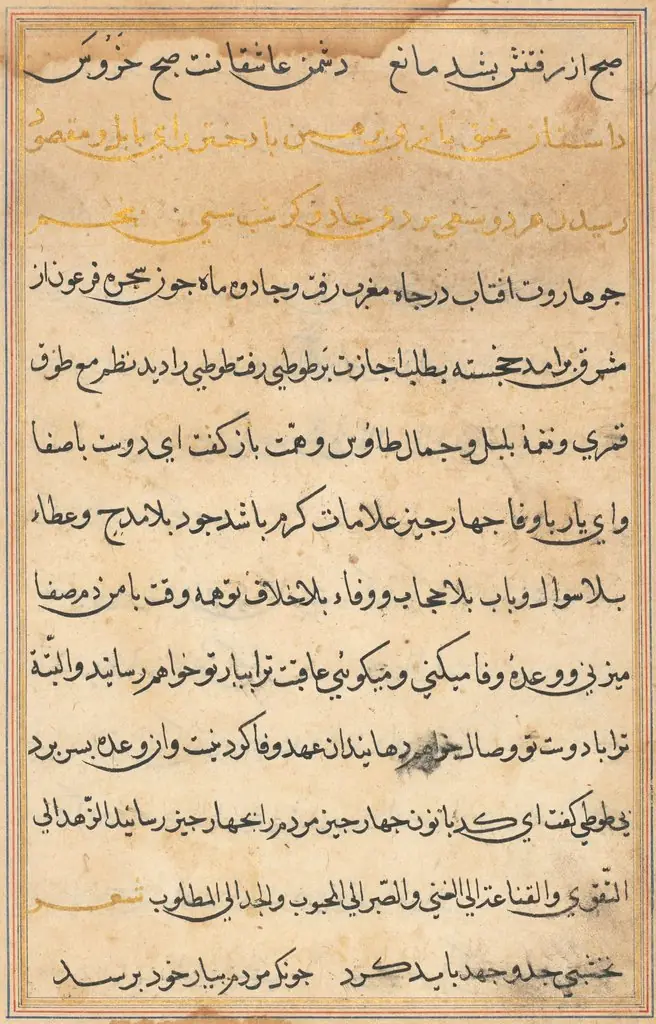 Page from Tales of a Parrot (Tuti-nama): text page
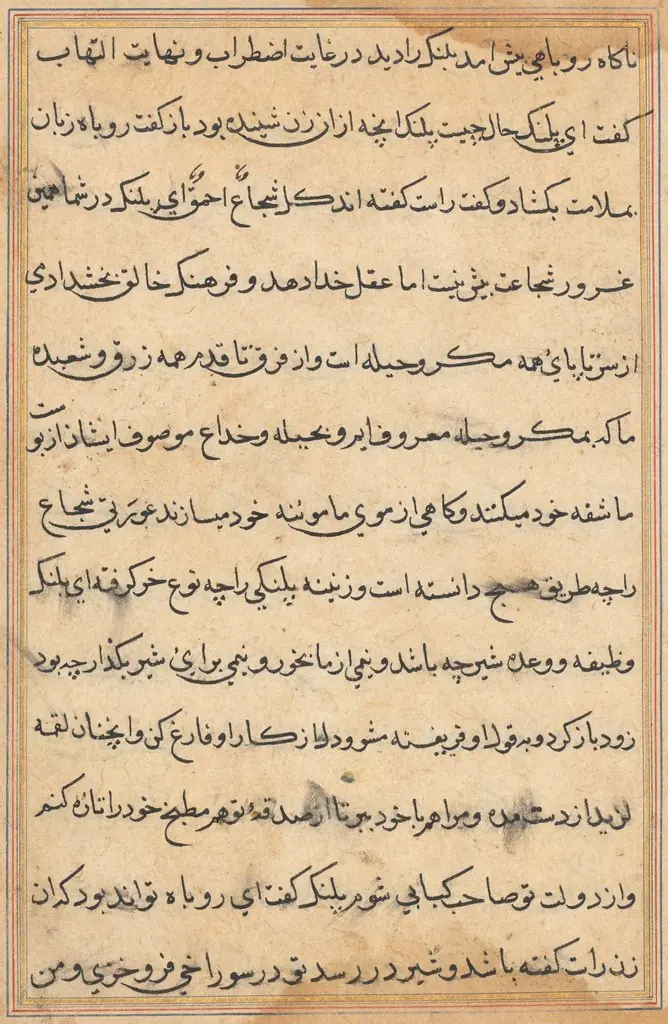 Page from Tales of a Parrot (Tuti-nama): text page
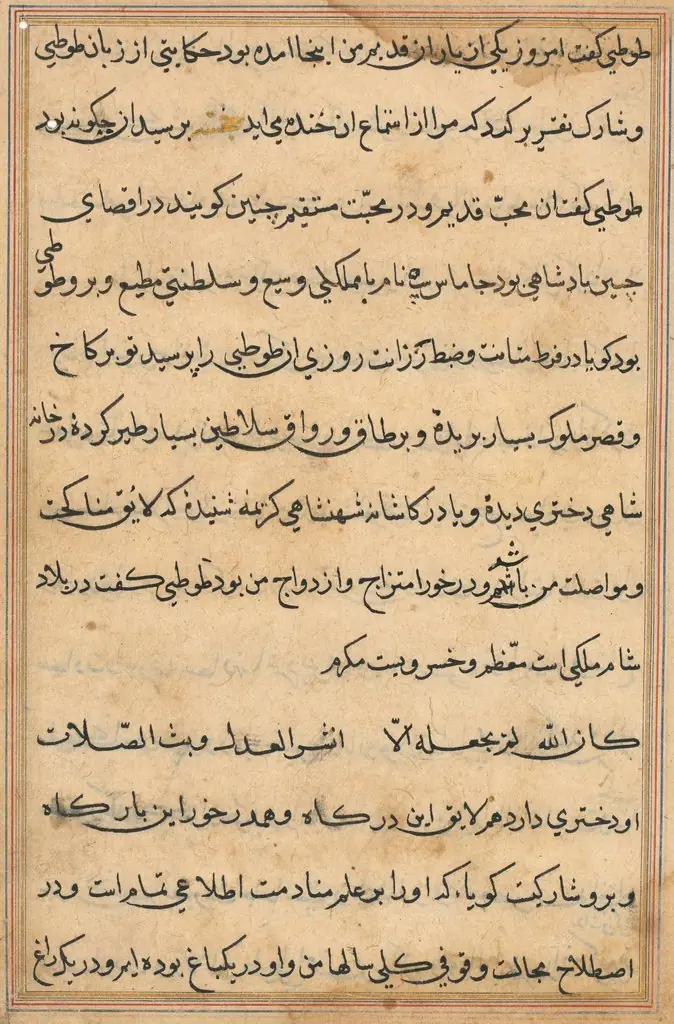 Page from Tales of a Parrot (Tuti-nama): text page
 Page from Tales of a Parrot (Tuti-nama): text page