Artwork
Page from Tales of a Parrot (Tuti-nama): text page
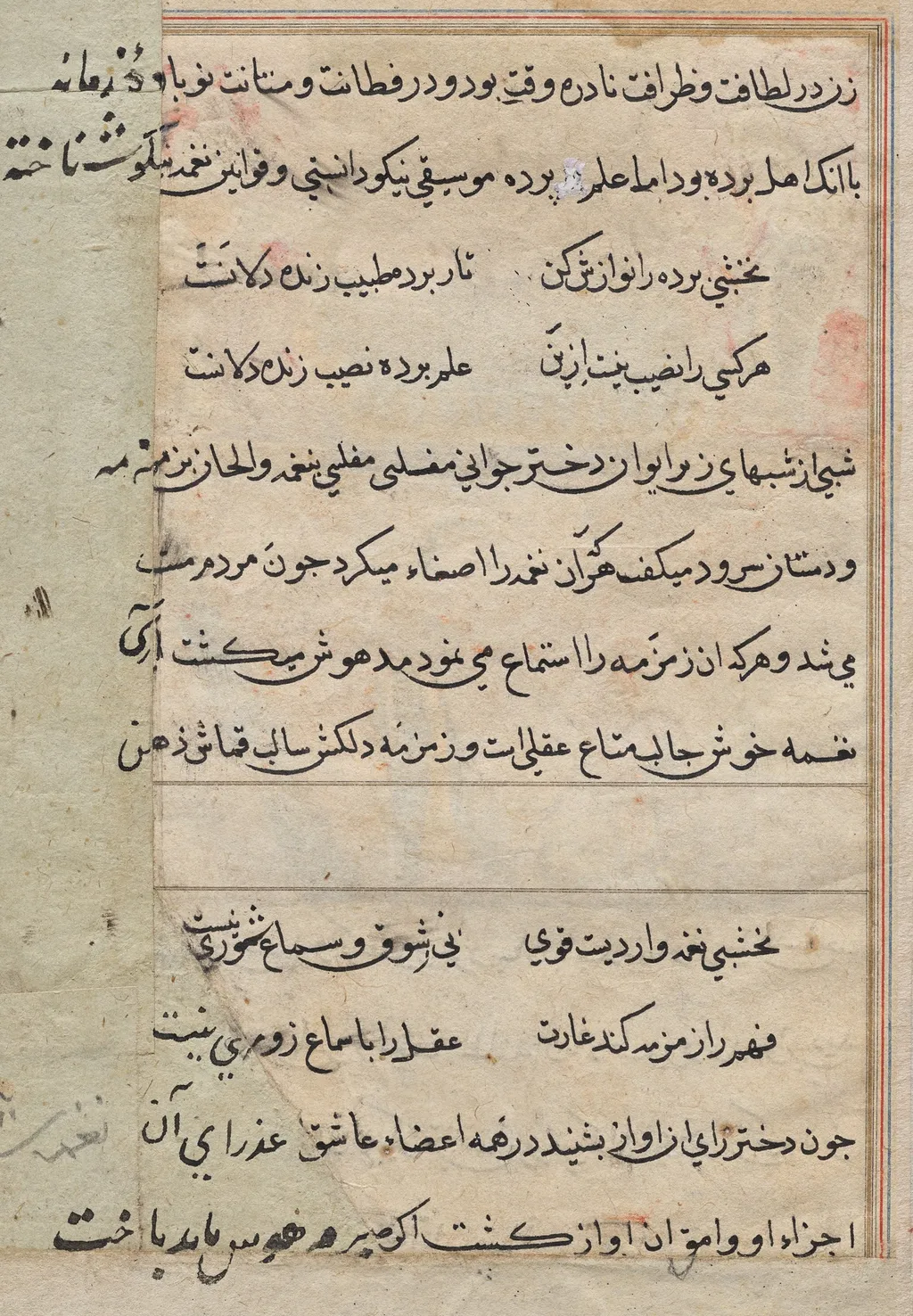
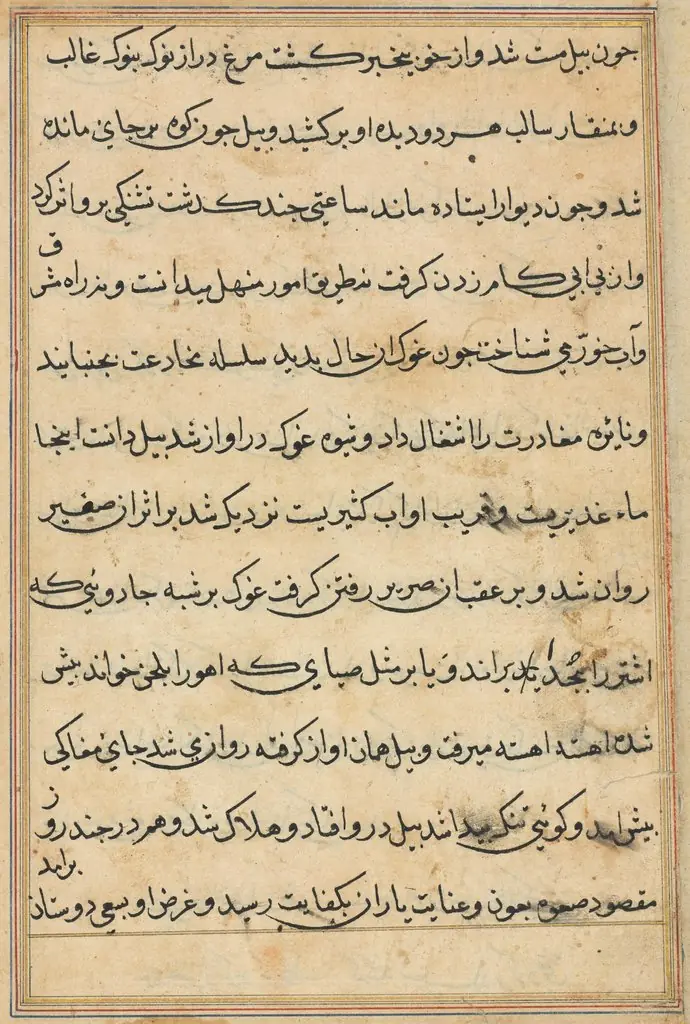
Page from Tales of a Parrot (Tuti-nama): text page is an unspecified painting. It dates from 1560 and is held in the collection of the Cleveland Museum of Art. This object is a single folio from the medieval Persian manuscript Tuti‑nama (also known as Tales of a Parrot).
About this work
Subject & Meaning
The work originates from the Mughal Empire and was produced circa 1560, aligning with imperial patronage of illustrated manuscripts.
The page illustrates a narrative scene from the Tuti-nama, a Persian collection of animal fables. It depicts a parrot recounting moral tales, a motif that symbolizes wisdom and didactic instruction within Mughal literary culture. The composition reflects the courtly aesthetic of 16th-century Persianate manuscript painting, where textual excerpts serve both narrative and didactic functions.
The work originates from the Mughal Empire and was produced circa 1560, aligning with imperial patronage of illustrated manuscripts.
The parrot functions as a didactic emblem, embodying moral instruction and the transmission of wisdom through allegory.
History & Provenance
Created in 1560 within the Mughal Empire, this text page from the Tuti-nama (Tales of a Parrot) was produced by an artist whose identity remains unknown. The work entered the collection of the Cleveland Museum of Art, where it is cataloged under the accession number 1962.279.119.a. The museum has held the piece since its acquisition in 1962, preserving it as part of their holdings of Mughal paintings.
Context
The miniature from the Tuti-nama manuscript, created in 1560 within the Mughal imperial workshop, exemplifies the synthesis of Persian narrative tradition and emerging Mughal visual language. Its page from the 'Tales of a Parrot' demonstrates sophisticated compositional balance and subtle naturalism characteristic of early Mughal painting, while reflecting the cultural patronage of Emperor Akbar's court that encouraged cross-cultural artistic exchange. The work's significance lies in its role as a transitional artifact showing how Safavid artistic conventions were adapted through local workshops in the Indian subcontinent, forming part of a broader corpus of illustrated Persianate manuscripts produced under imperial sponsorship.
Legacy
The text page from the Tuti-nama, created in 1560 within the Mughal artistic milieu, contributed to the evolving visual storytelling tradition of Persianate manuscript illumination. Its compositional strategies and didactic function influenced subsequent manuscript production in regional courts, particularly in the transmission of narrative cycles across Persian and Indo-Persian artistic networks. The work's presence in a major institutional collection has facilitated scholarly examination of early Mughal manuscript aesthetics and their cross-cultural resonances.
The page is housed in the Cleveland Museum of Art, accessioned as 1962.279.119.a and documented in their collection database.
Scholarly interest in this folio continues to inform studies of narrative illustration in pre-modern South and Central Asian art, with the work cited in discussions of artistic exchange and manuscript culture.
Overview
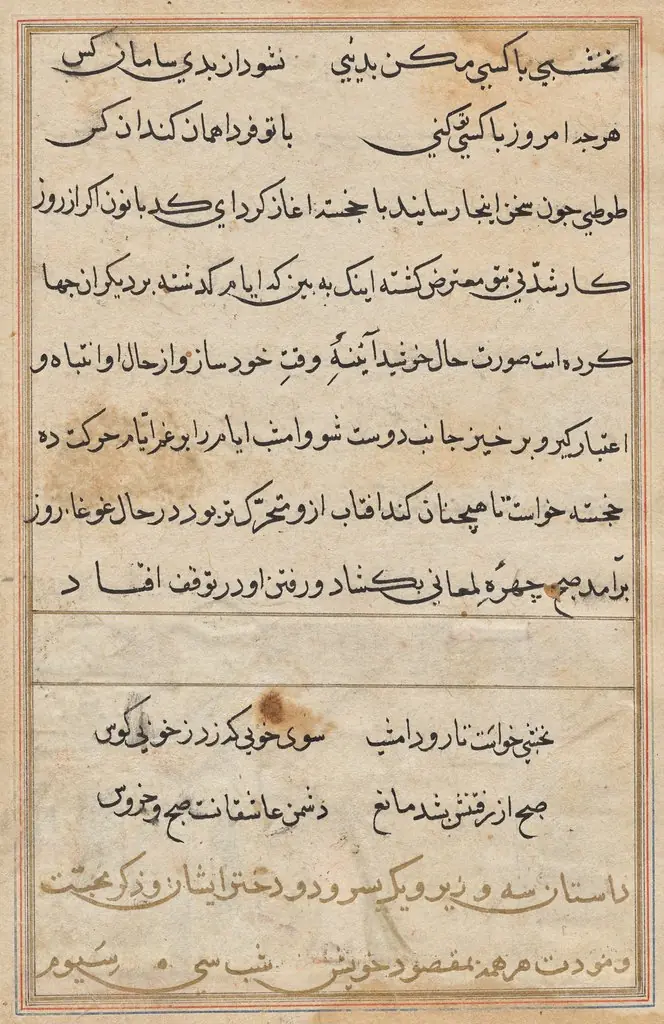
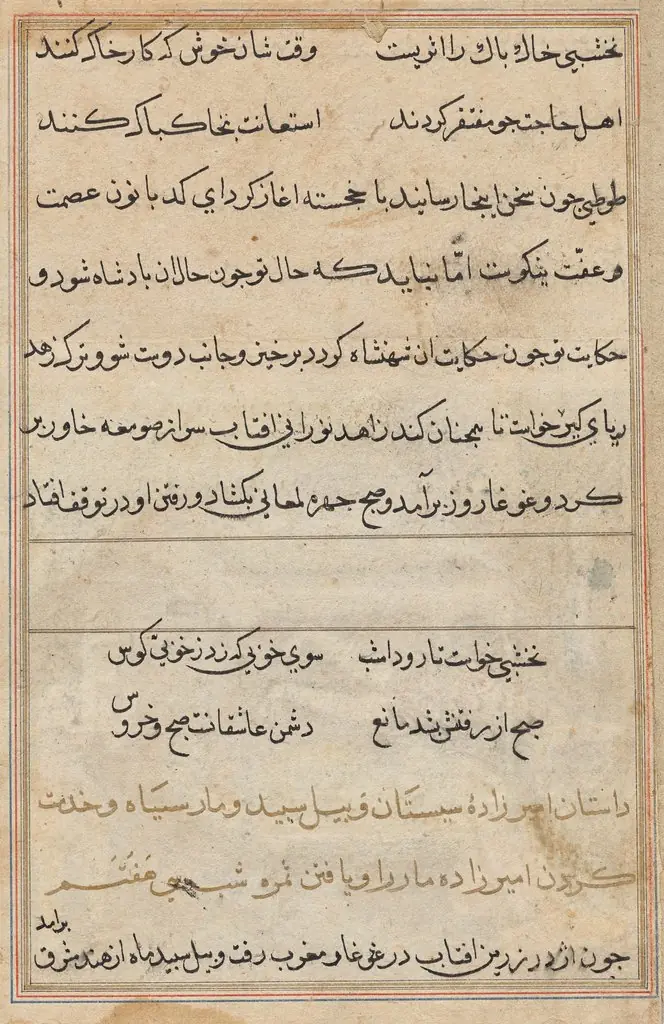
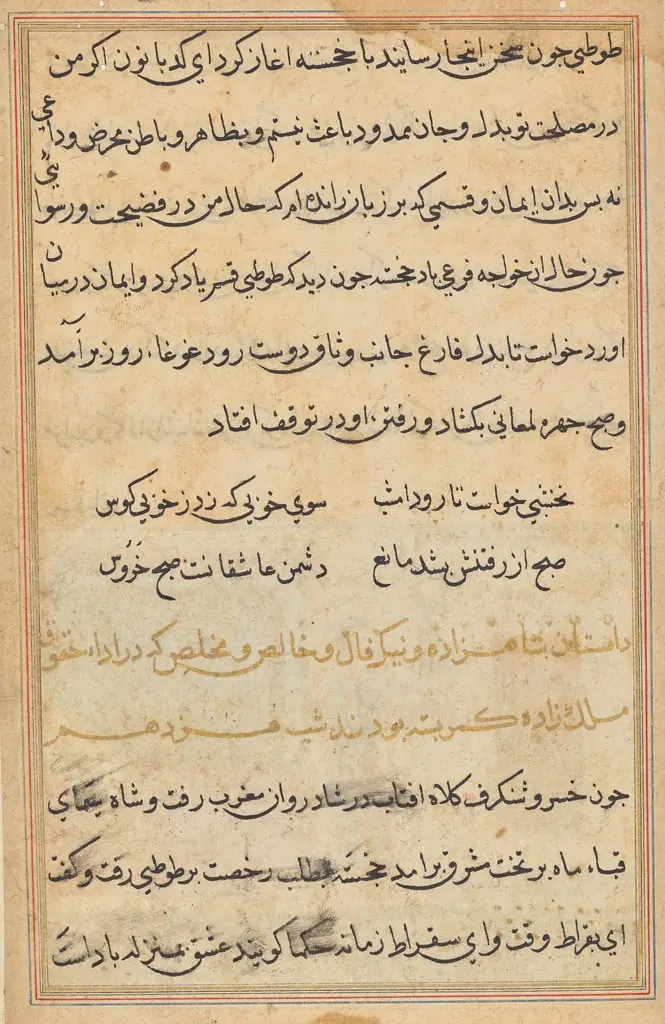
This object is a single folio from the medieval Persian manuscript Tuti‑nama (also known as Tales of a Parrot). The page is entirely covered with black ink in a flowing, curved Arabic script, filling the surface without illustration. The paper, now aged, shows a faint pinkish tint along its edges and minor stains near the lower margin, indicating its antiquity.
Technique & Style
The calligraphy is executed in a precise, miniature script characterized by fine, elongated strokes and the strategic use of tiny diacritical dots that accentuate each letter. The uniform density of the text demonstrates a disciplined hand, typical of professional scribes in the Islamic world, who balanced legibility with aesthetic elegance on parchment or paper.
Artist & collection

- Page from Tales of a Parrot (Tuti-nama): text page
 Page from Tales of a Parrot (Tuti-nama): text page
 Page from Tales of a Parrot (Tuti-nama): text page
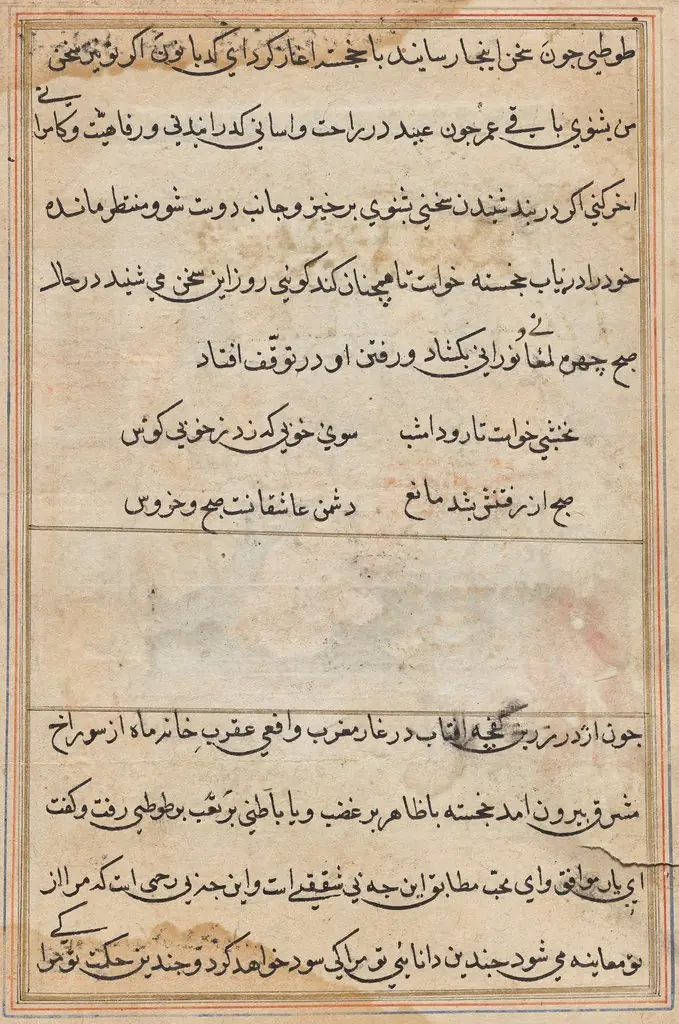 Page from Tales of a Parrot (Tuti-nama): text page
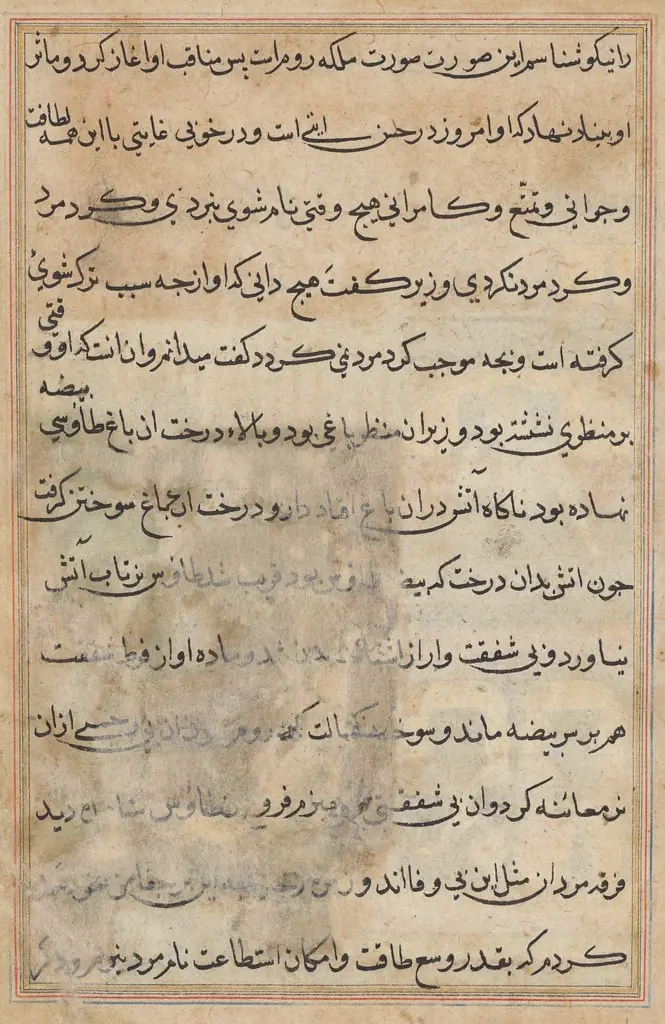 Page from Tales of a Parrot (Tuti-nama): text page
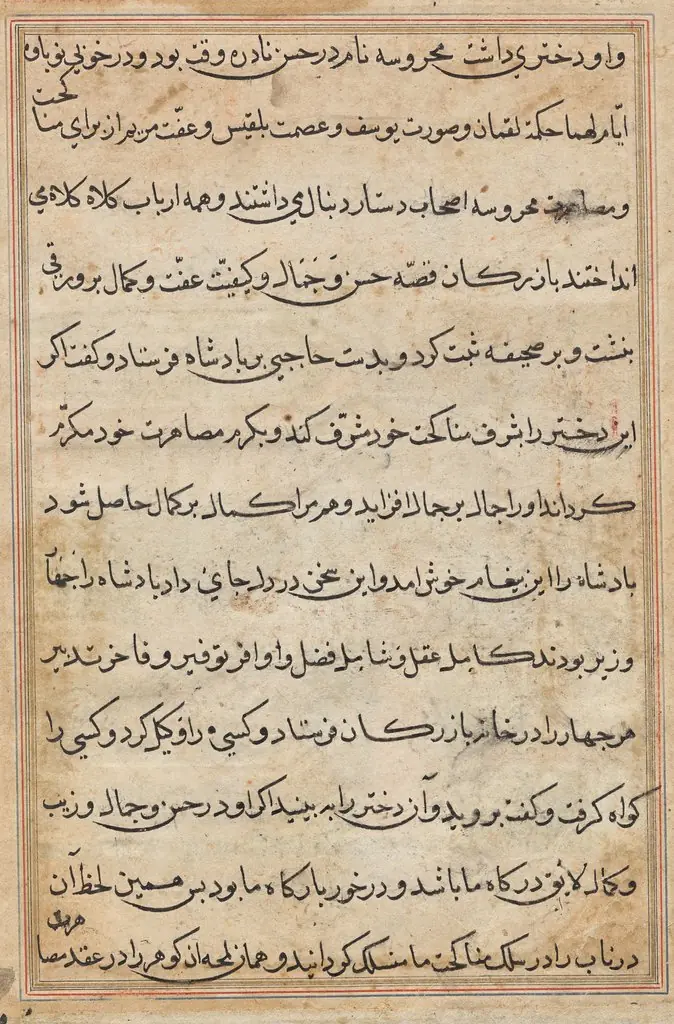 Page from Tales of a Parrot (Tuti-nama): text page
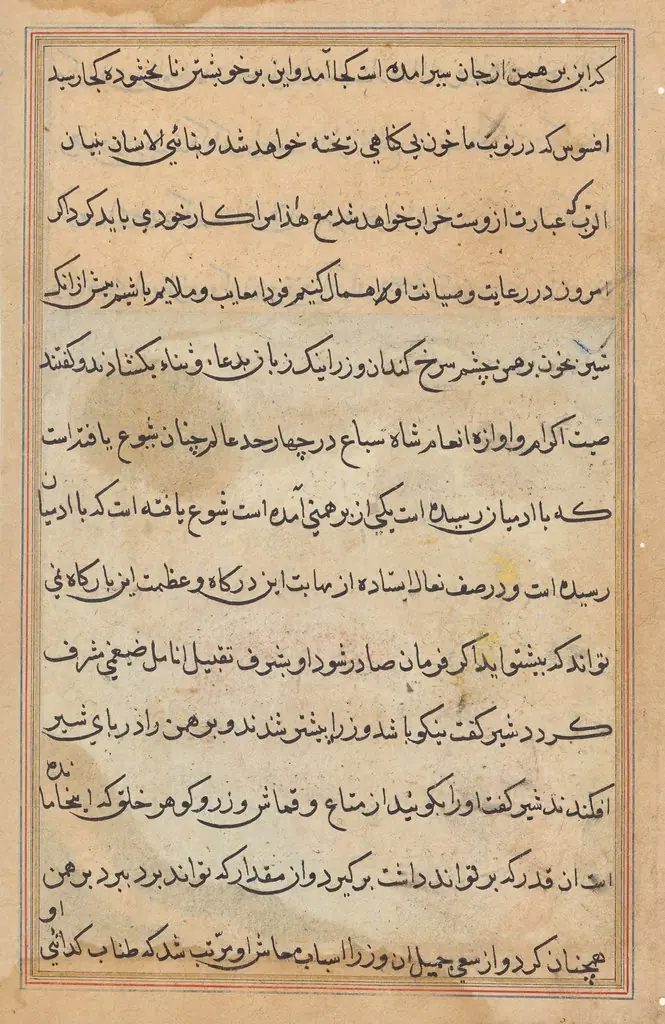 Page from Tales of a Parrot (Tuti-nama): text page
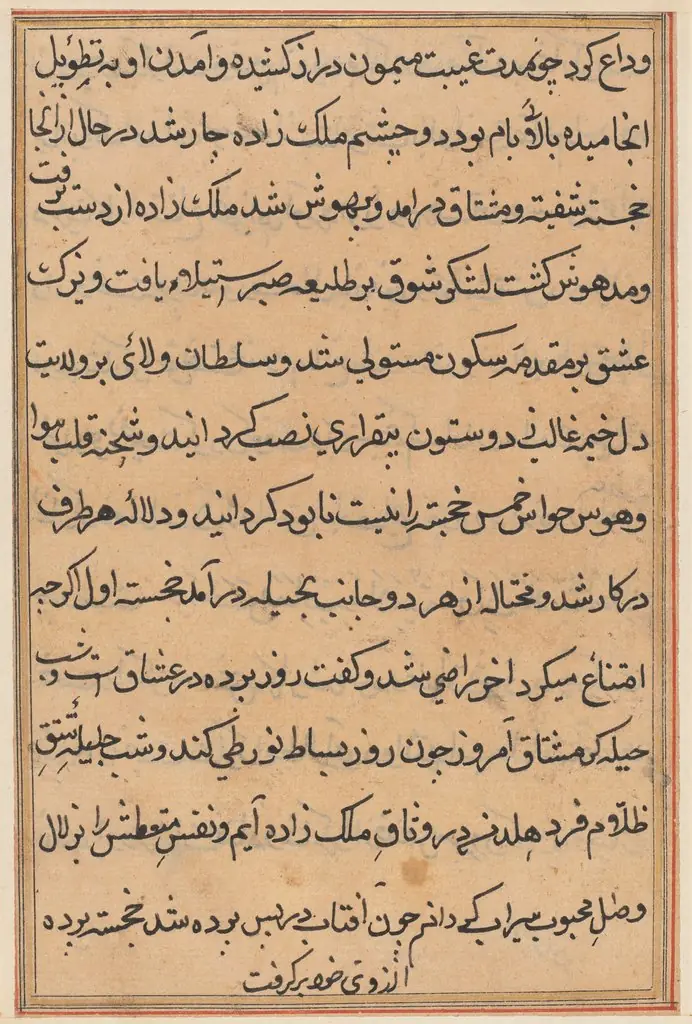 Page from Tales of a Parrot (Tuti-nama): text page
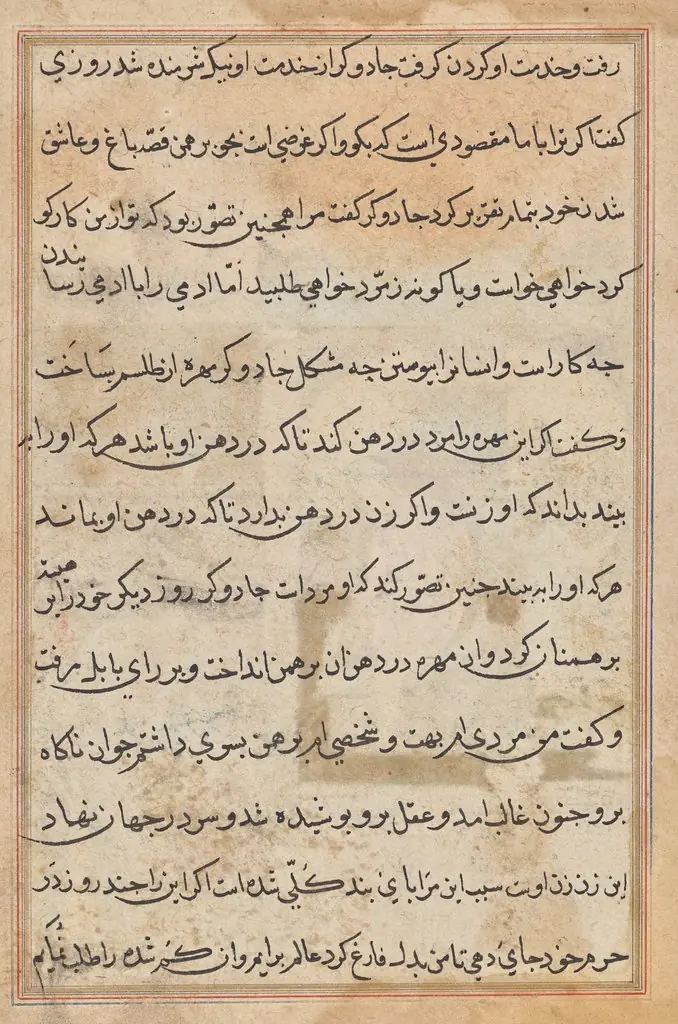 Page from Tales of a Parrot (Tuti-nama): text page
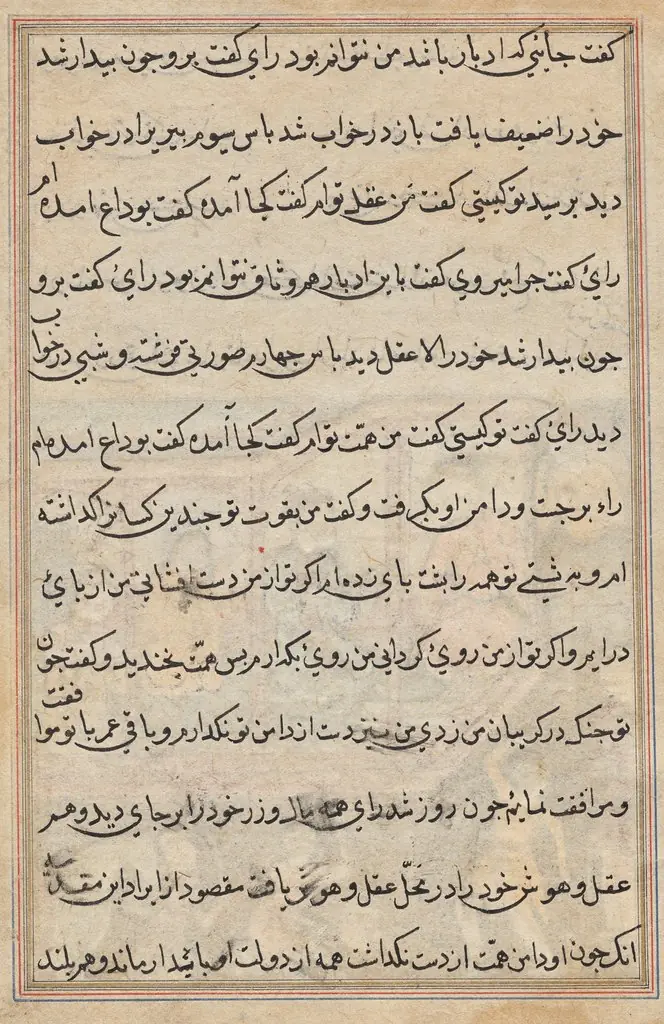 Page from Tales of a Parrot (Tuti-nama): text page
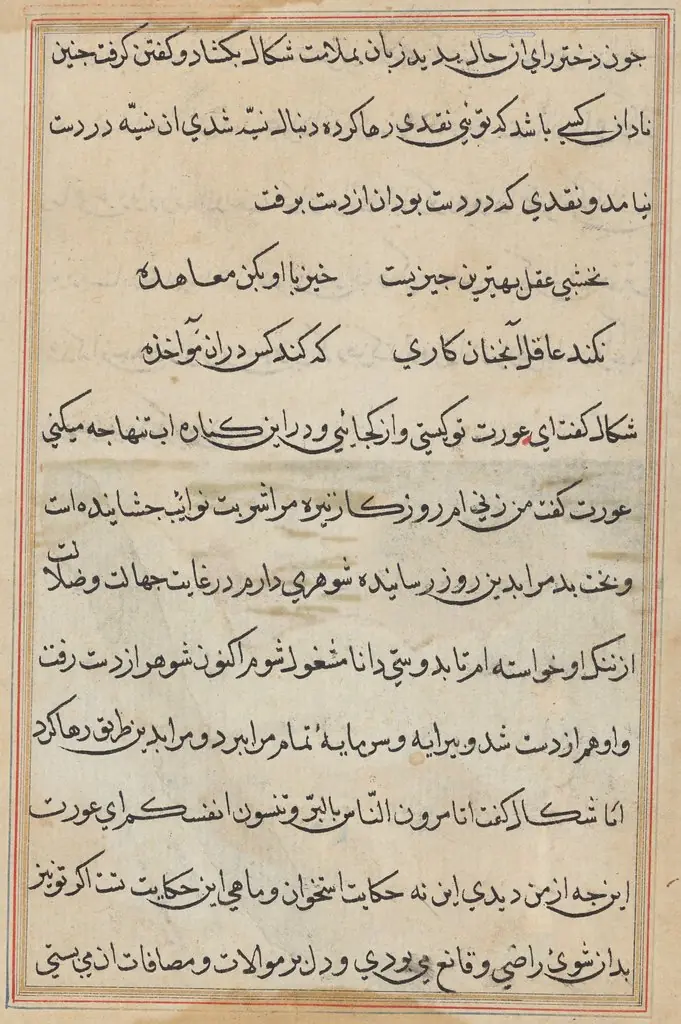 Page from Tales of a Parrot (Tuti-nama): text page
 Page from Tales of a Parrot (Tuti-nama): text page