Artwork
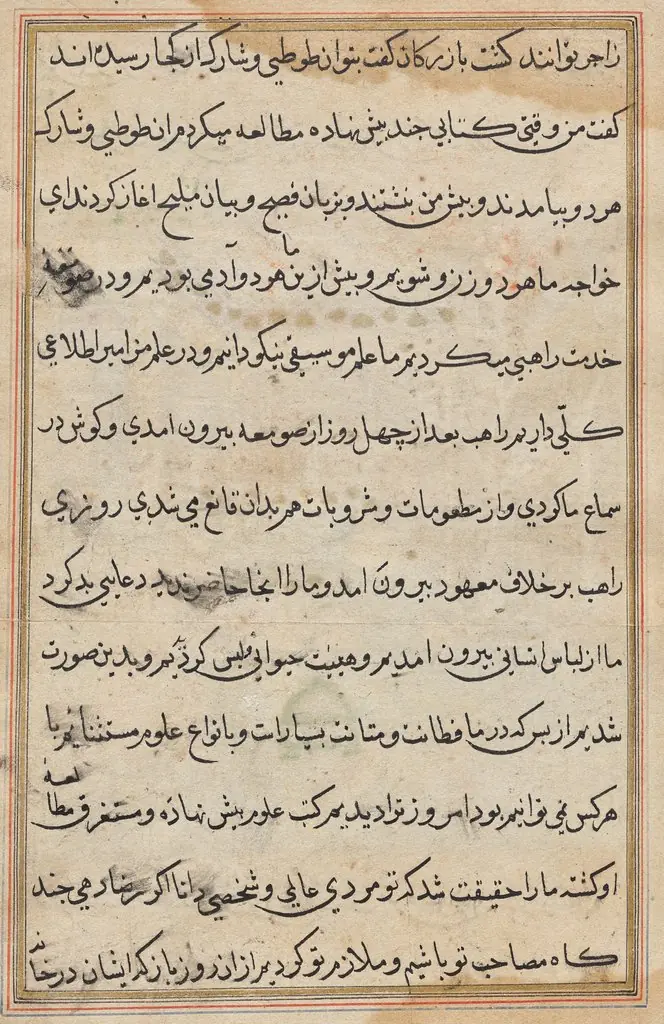
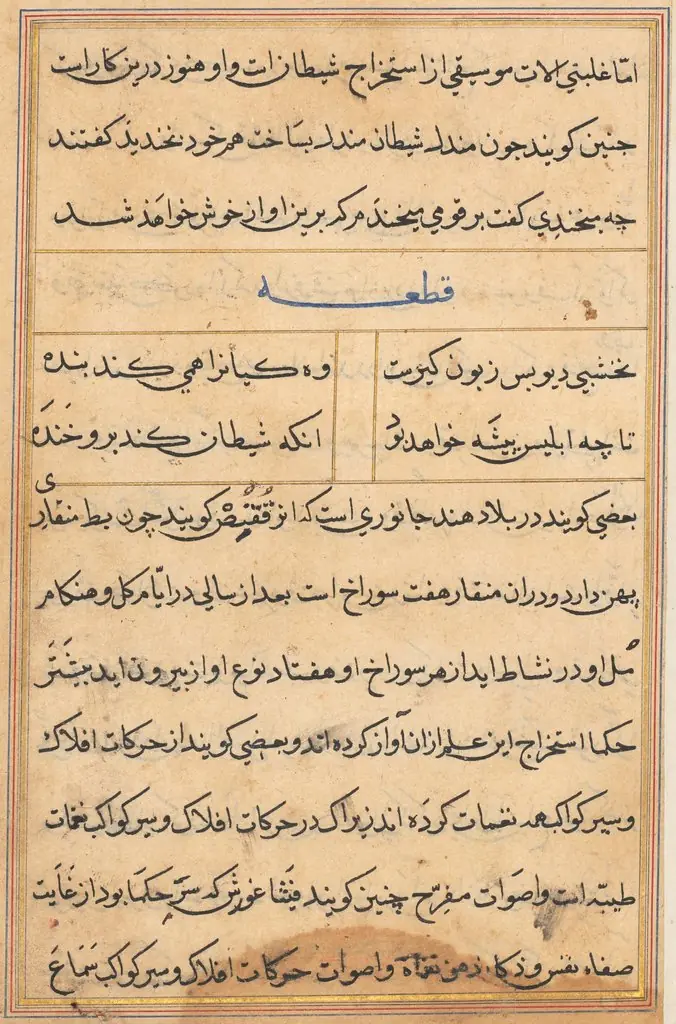
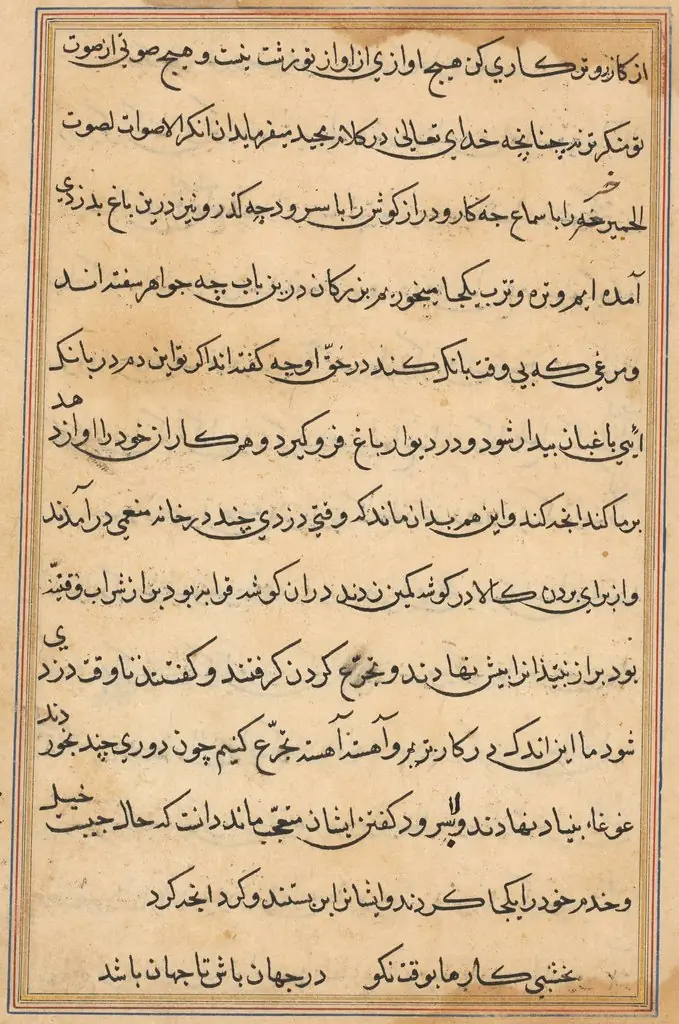
Page from Tales of a Parrot (Tuti-nama): text page
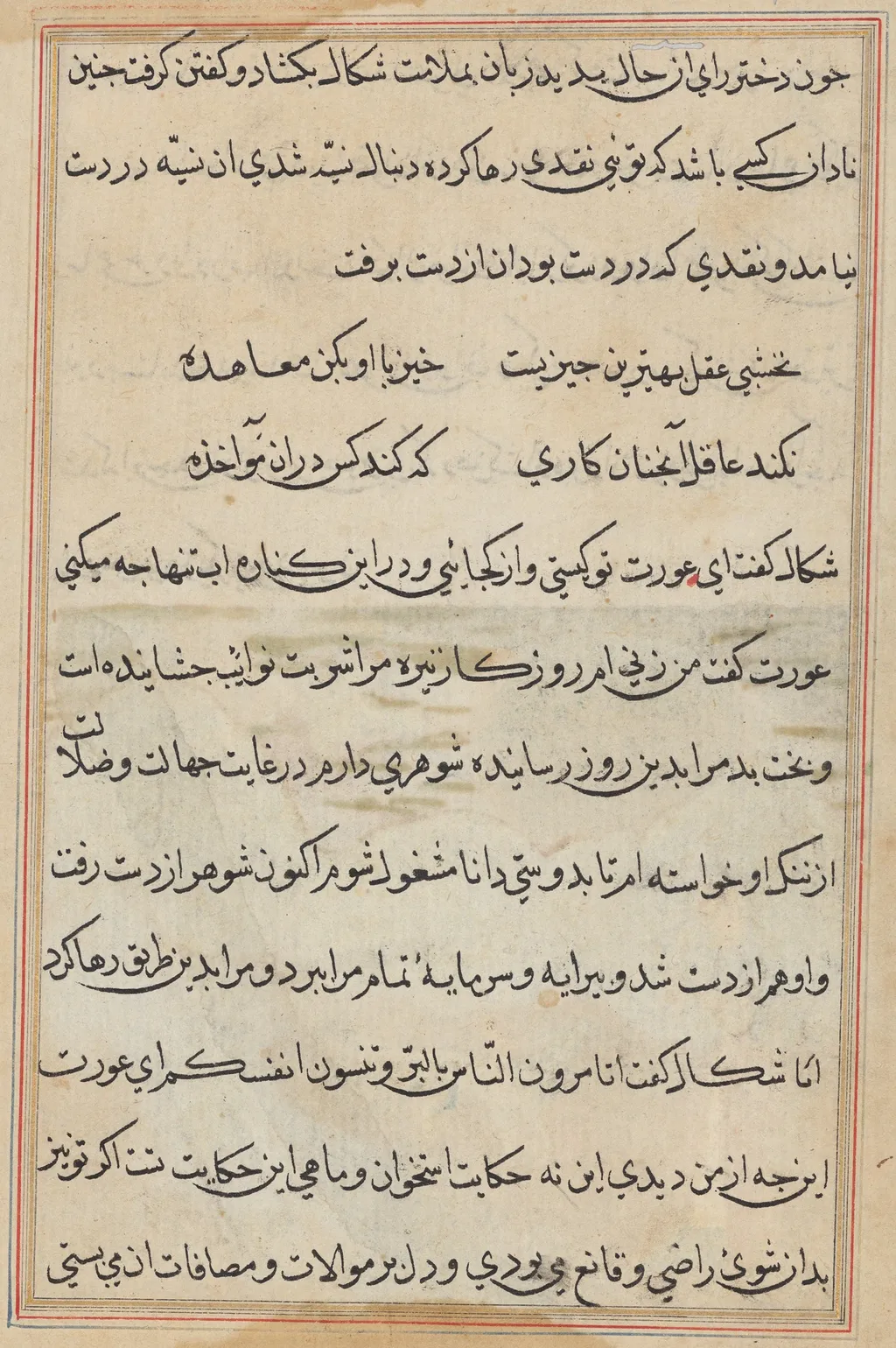
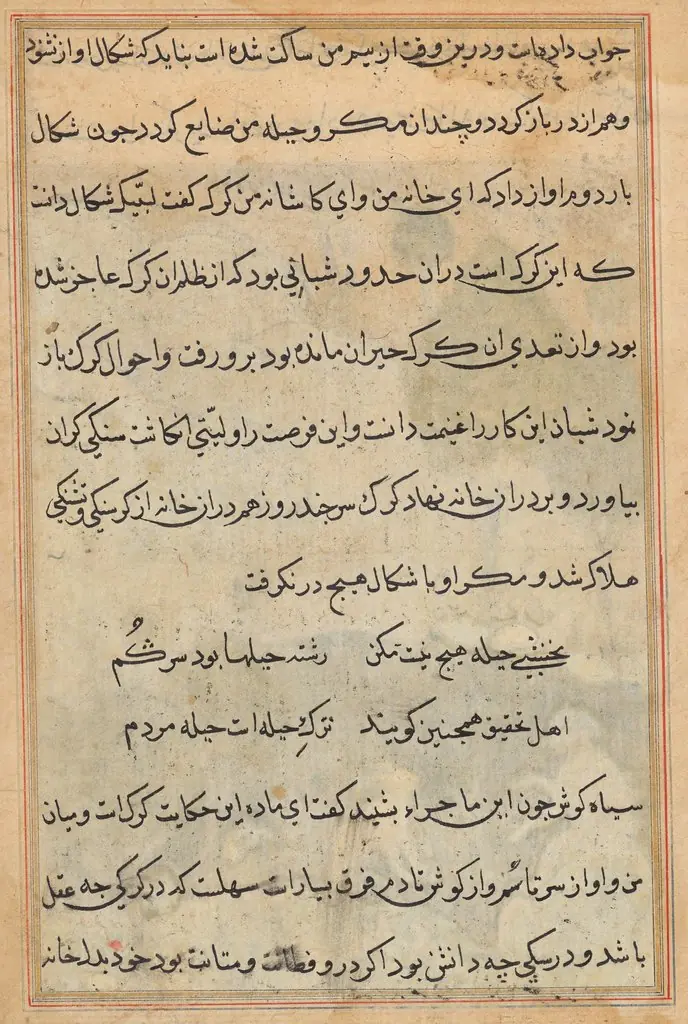
Page from Tales of a Parrot (Tuti-nama): text page is an unspecified painting. It dates from 1560 and is held in the collection of the Cleveland Museum of Art. This artwork is a text page from the Tales of a Parrot (Tuti-nama), a Persian manuscript.
About this work
Subject & Meaning
The parrot functions both as a literal character and symbolic moral guide within the fable tradition, embodying wisdom and moral instruction.
The miniature page depicts a courtly scene from the Tuti-nama, a Persian narrative of animal fables, featuring a parrot in a garden setting surrounded by figures in Mughal dress. The composition emphasizes storytelling through text and miniature illustration, reflecting the didactic purpose of the work. The parrot functions both as a literal character and symbolic moral guide within the fable tradition, embodying wisdom and moral instruction.
The page originates from the Mughal cultural milieu, where Persian literary themes were adapted into visual narratives for elite audiences.
This integration of text and image served didactic and aesthetic functions within the manuscript tradition, illustrating moral lessons through allegorical animal narratives. The miniature thus represents a synthesis of literary and visual storytelling in the Mughal artistic context.
The work is part of the Cleveland Museum of Art's collection and was created during the mid-16th century in the Mughal Empire.
Technique & Style
The work is a painted page from the Persian Tuti-nama, executed in ink and pigment on paper. Executed circa 1560 in the Mughal Empire, it features fine line work and restrained color typical of contemporary manuscript painting. The sheet shows typical handling marks from binding and remains in stable condition, with only minor surface abrasion noted in conservation records.
Stylistically, the composition emphasizes flat patterning and narrative clarity over naturalistic depth, reflecting the formal conventions of 16th‑century Persian illustration.
History & Provenance
The page from Tales of a Parrot (Tuti-nama) is dated to 1560, placing its creation within the Mughal Empire during the mid-sixteenth century. The work is held in the collection of the Cleveland Museum of Art, where it is catalogued under the accession number 1962.279.121.b. No information is available regarding the original patron, commissioner, or subsequent ownership chain prior to its acquisition by the museum.
The text page from the Tales of a Parrot (Tuti-nama) is held in the collection of the Cleveland Museum of Art. The institution identifies the work with the accession number 1962.279.121.b. Created in 1560 within the Mughal Empire, the painting remains part of the museum's holdings in Cleveland.
Overview
This artwork is a text page from the Tales of a Parrot (Tuti-nama), a Persian manuscript. It features flowing black ink text on a light background, framed by a thin red border, on well-preserved aged paper.
Context
Part of a larger manuscript, Tales of a Parrot, this page would have been used for reading and storytelling in a Persianate cultural context, reflecting the era's literary and artistic values.
Artist & collection

- Page from Tales of a Parrot (Tuti-nama): text page
 Page from Tales of a Parrot (Tuti-nama): text page
 Page from Tales of a Parrot (Tuti-nama): text page
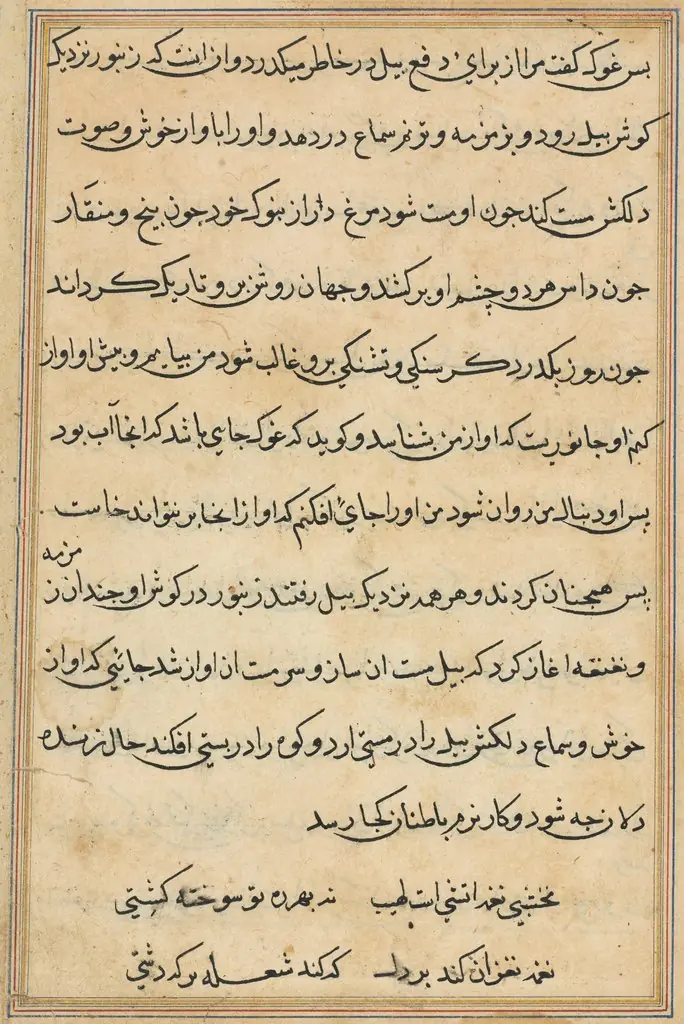 Page from Tales of a Parrot (Tuti-nama): text page
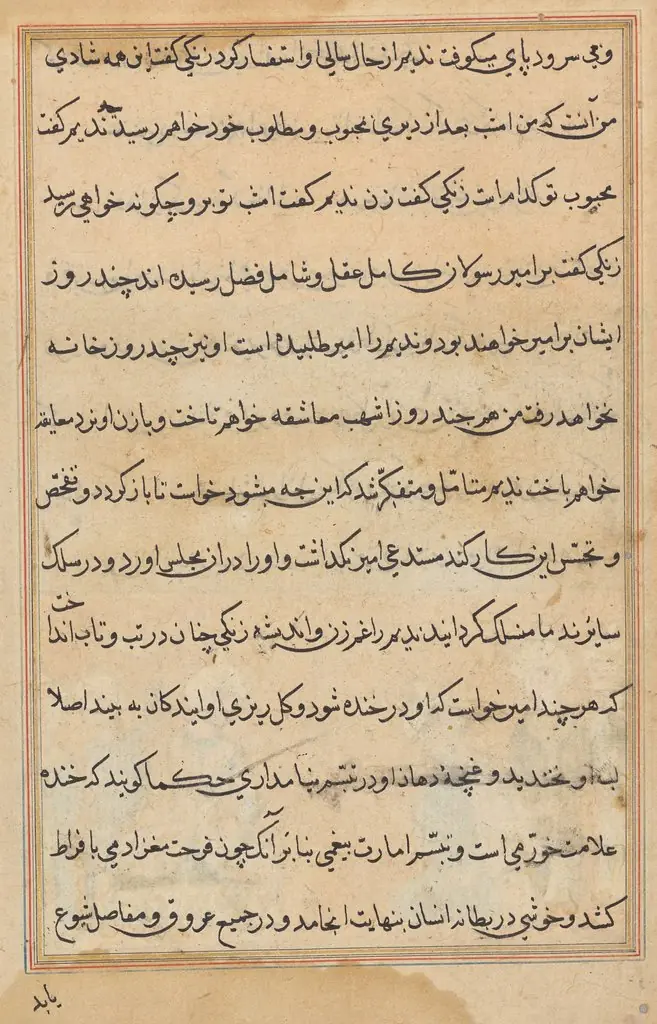 Page from Tales of a Parrot (Tuti-nama): text page
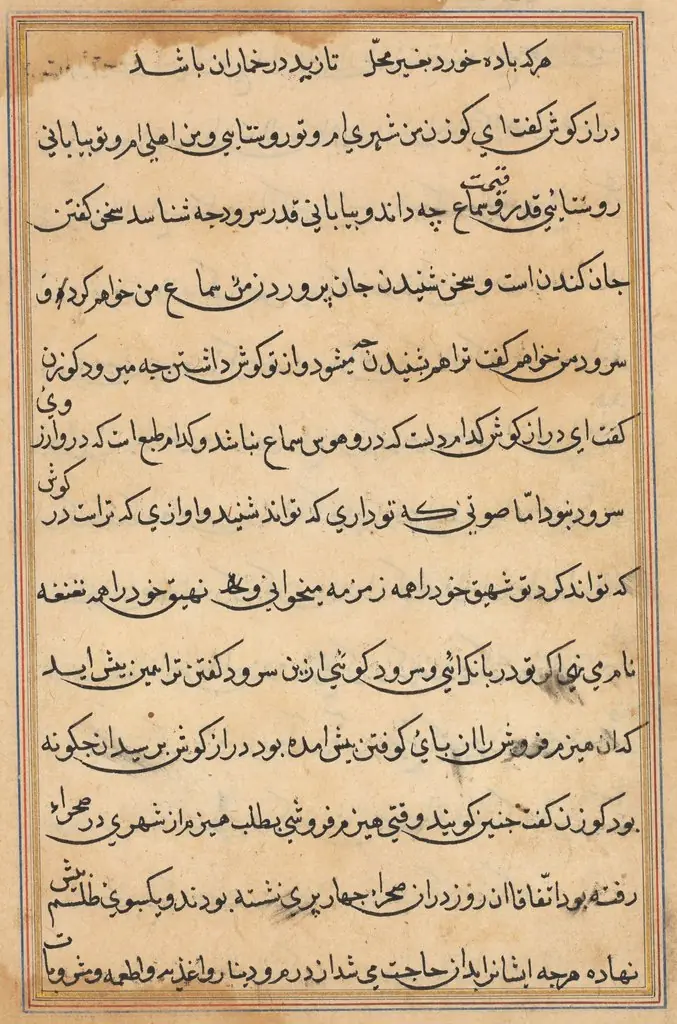 Page from Tales of a Parrot (Tuti-nama): text page
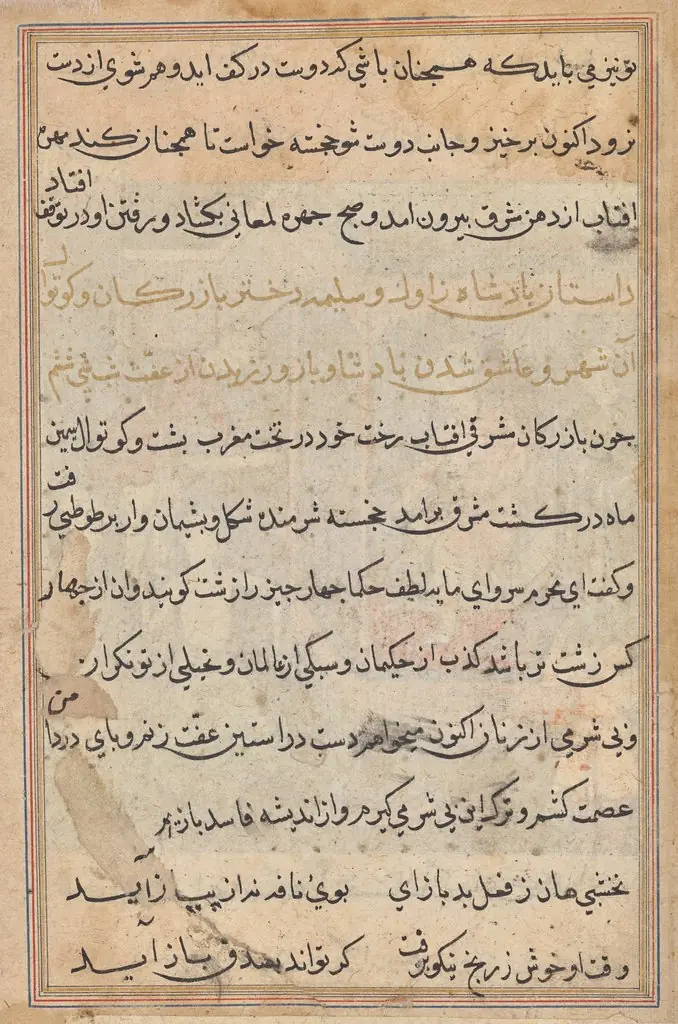 Page from Tales of a Parrot (Tuti-nama): text page
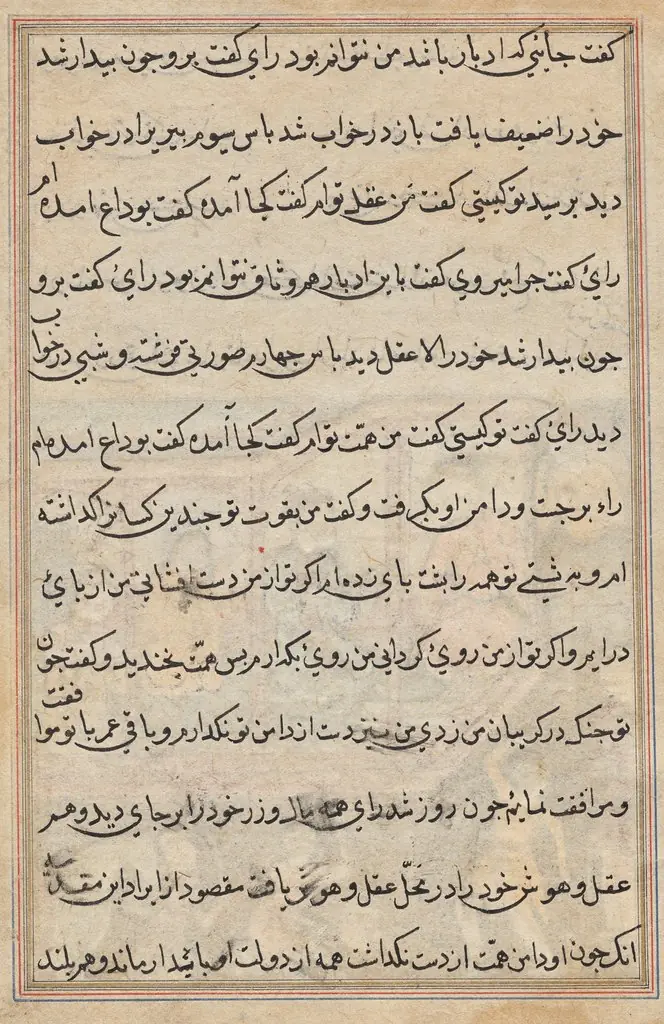 Page from Tales of a Parrot (Tuti-nama): text page
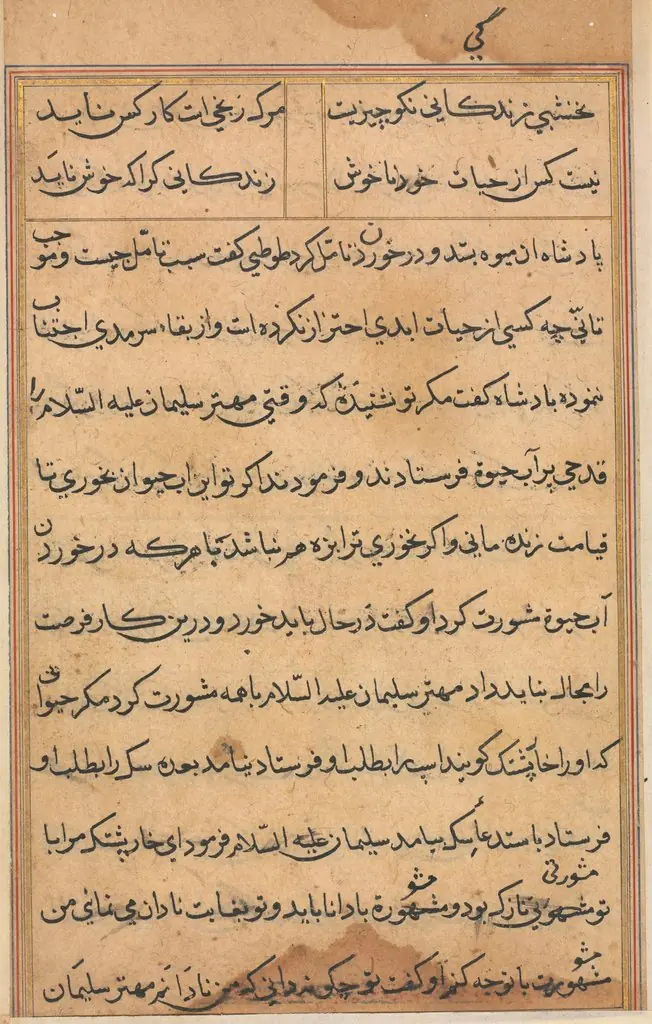 Page from Tales of a Parrot (Tuti-nama): text page
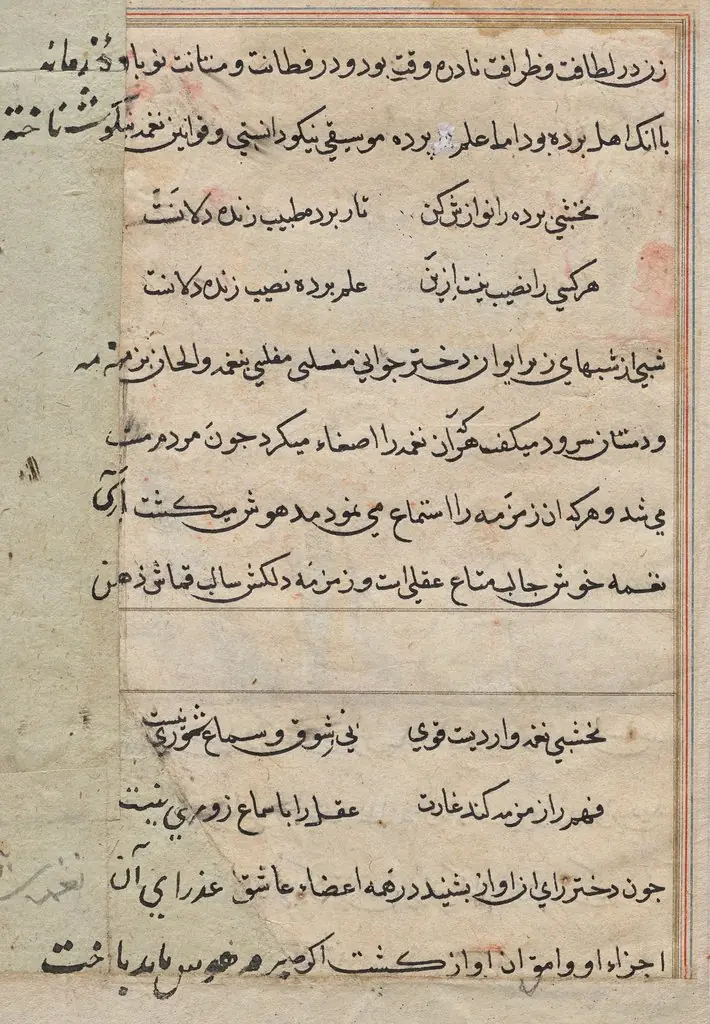 Page from Tales of a Parrot (Tuti-nama): text page
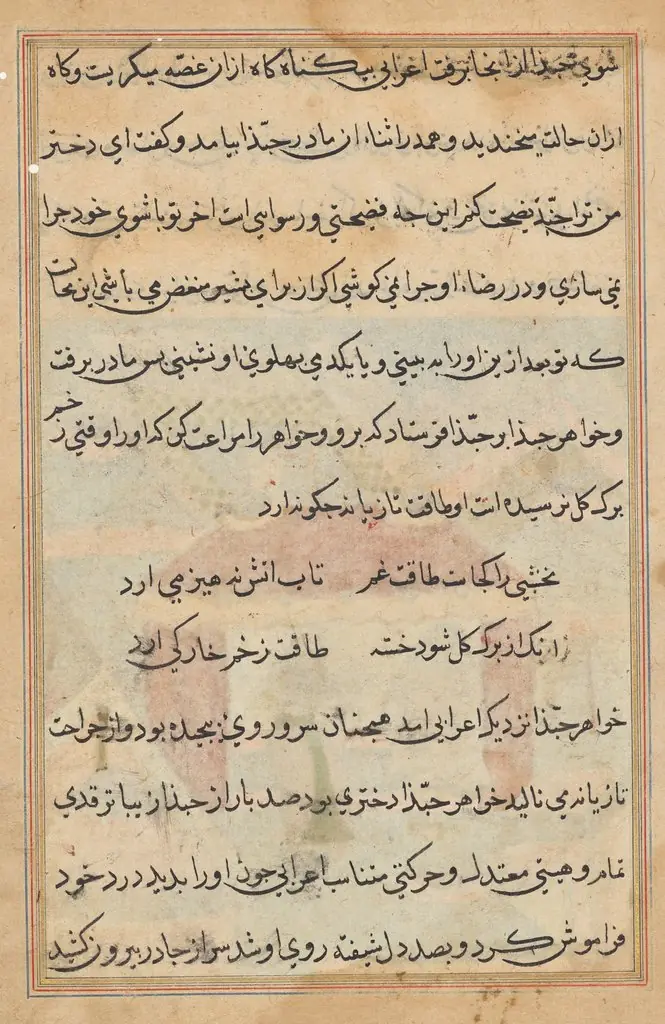 Page from Tales of a Parrot (Tuti-nama): text page
 Tuti-Nama (Tales of a Parrot)