Artwork
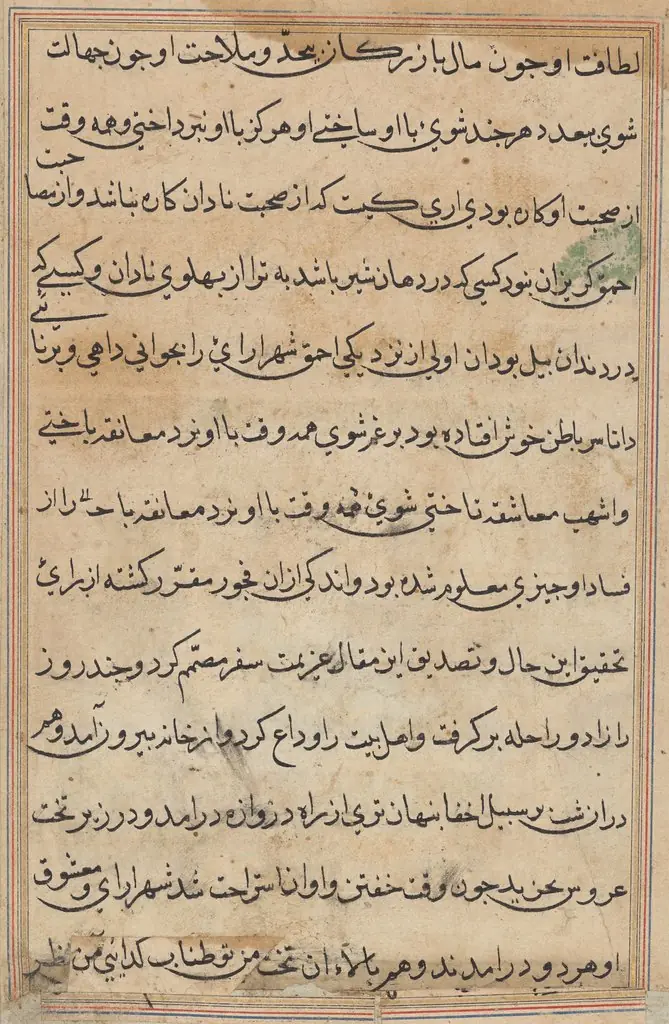
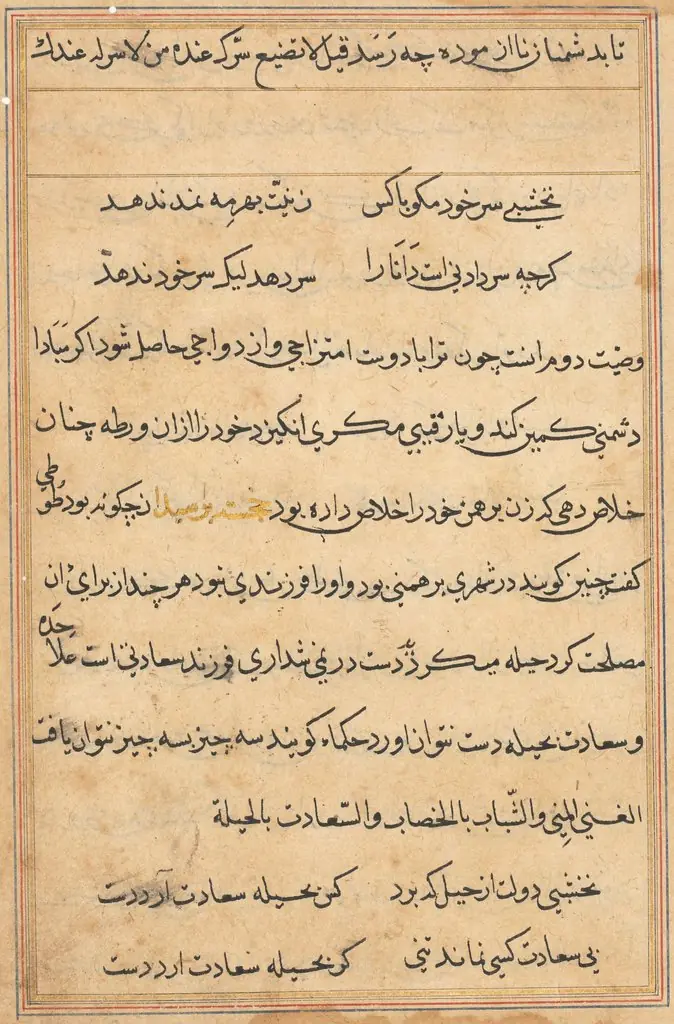
Page from Tales of a Parrot (Tuti-nama): text page
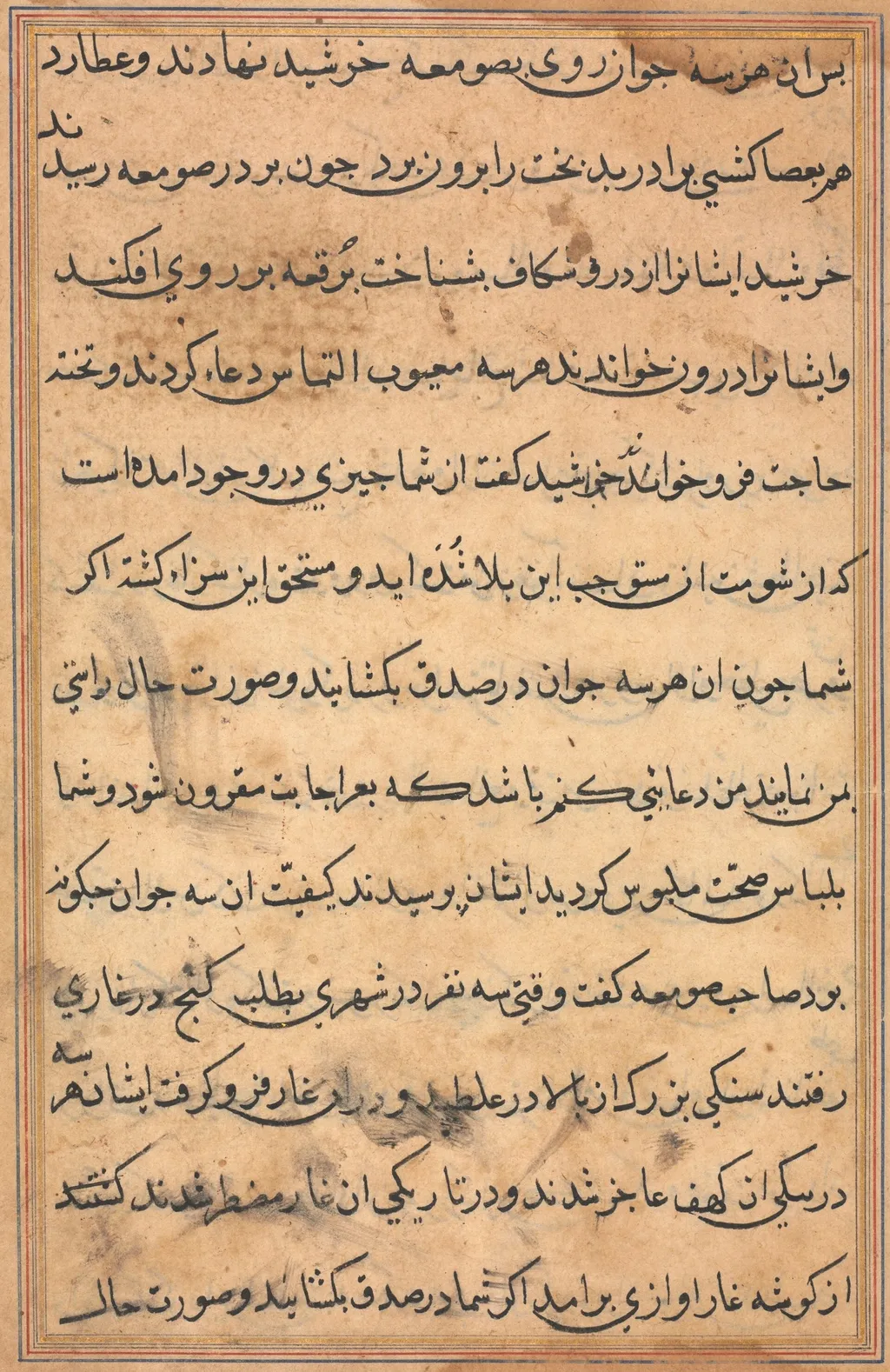
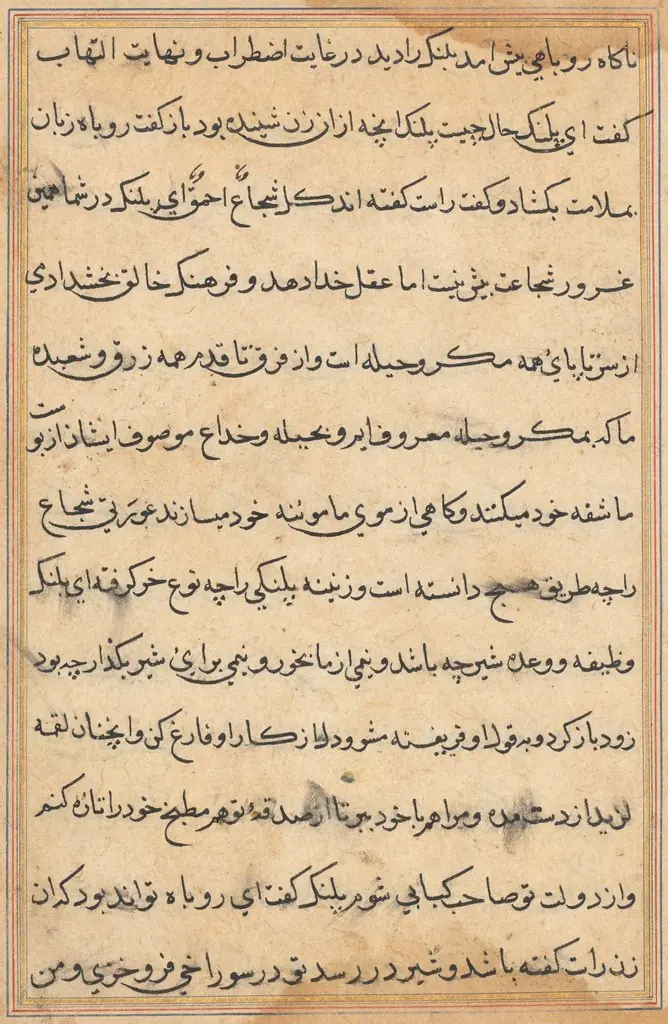
Page from Tales of a Parrot (Tuti-nama): text page is an unspecified painting. It dates from 1560 and is held in the collection of the Cleveland Museum of Art. The work presents an enlarged view of a single leaf from an illuminated manuscript, rendered as a painted reproduction.
About this work
Subject & Meaning
Its content consists of calligraphic script arranged in a decorative layout, reflecting the manuscript's literary function rather than figurative imagery.
The work is a text page from the Persian-derived illustrated narrative Tuti-nama, which recounts moral tales featuring a talking parrot. Its content consists of calligraphic script arranged in a decorative layout, reflecting the manuscript's literary function rather than figurative imagery. The page represents the transmission of wisdom and didactic instruction within the Mughal cultural milieu, emphasizing the role of literature in courtly education and the aesthetic appreciation of manuscript art.
History & Provenance
The text page from the Tales of a Parrot (Tuti-nama), created around 1560, is held by the Cleveland Museum of Art in Cleveland. The museum lists the work under accession number 1962.279.214.a. The work originates from the Mughal Empire, and the available sources do not document any specific exhibitions or display history for this particular page.
Context
As a text page, this folio carries the calligraphic narrative of the Tuti-nama rather than figurative imagery, and reflects the Mughal court's adaptation of Persianate literary traditions in the mid-sixteenth century. Produced in the imperial atelier during Akbar's reign, it formed part of the illustrated Cleveland Tuti-nama manuscript. Its presence in the Cleveland Museum of Art collection supports continued scholarly interest in the manuscript and in the transmission of Indo-Persian narrative art.
Overview
The work presents an enlarged view of a single leaf from an illuminated manuscript, rendered as a painted reproduction. Black ink lettering occupies the central field, set against a light brown paper ground that shows age-related discoloration and occasional stains. A delicate ornamental border frames the page, emphasizing its function as a document of historical significance.
Technique & Style
The artist employed a realistic painting technique to simulate the texture of aged paper, using thin washes of brown to convey the substrate and precise brushwork for the inked script. The ornamental border is rendered with fine linear strokes, echoing the intricate pen work typical of manuscript illumination.
Artist & collection

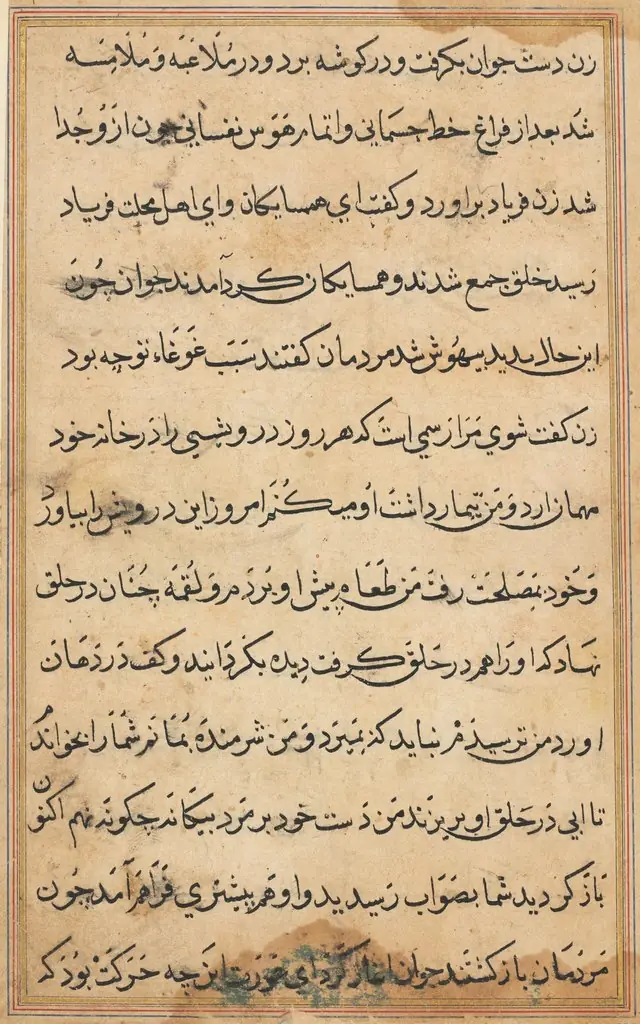 Page from Tales of a Parrot (Tuti-nama): text page
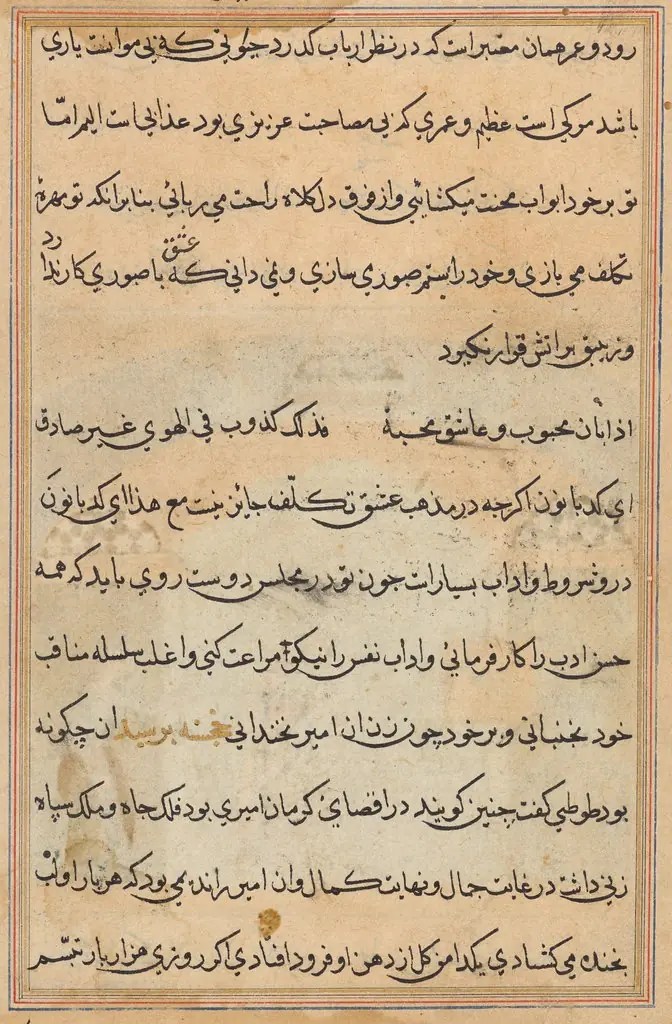 Page from Tales of a Parrot (Tuti-nama): text page
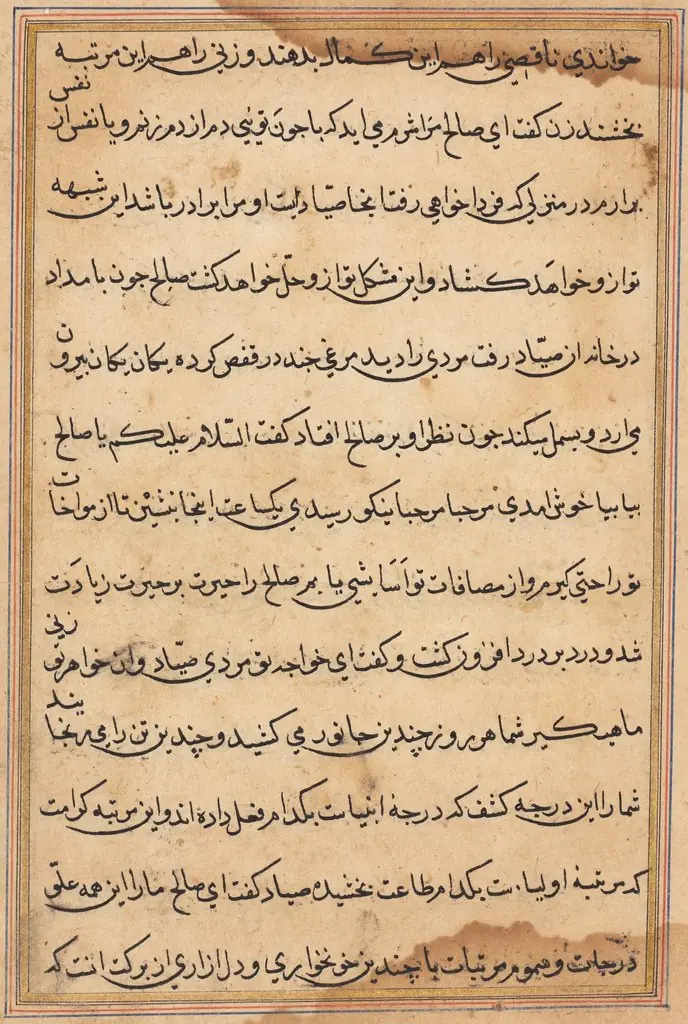 Page from Tales of a Parrot (Tuti-nama): text page
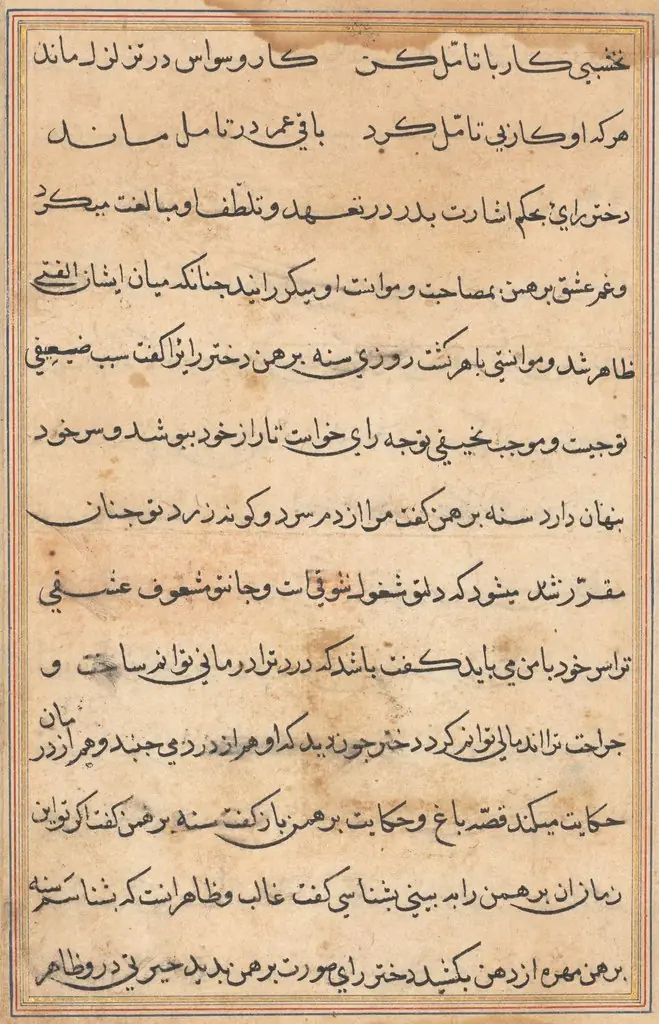 Page from Tales of a Parrot (Tuti-nama): text page
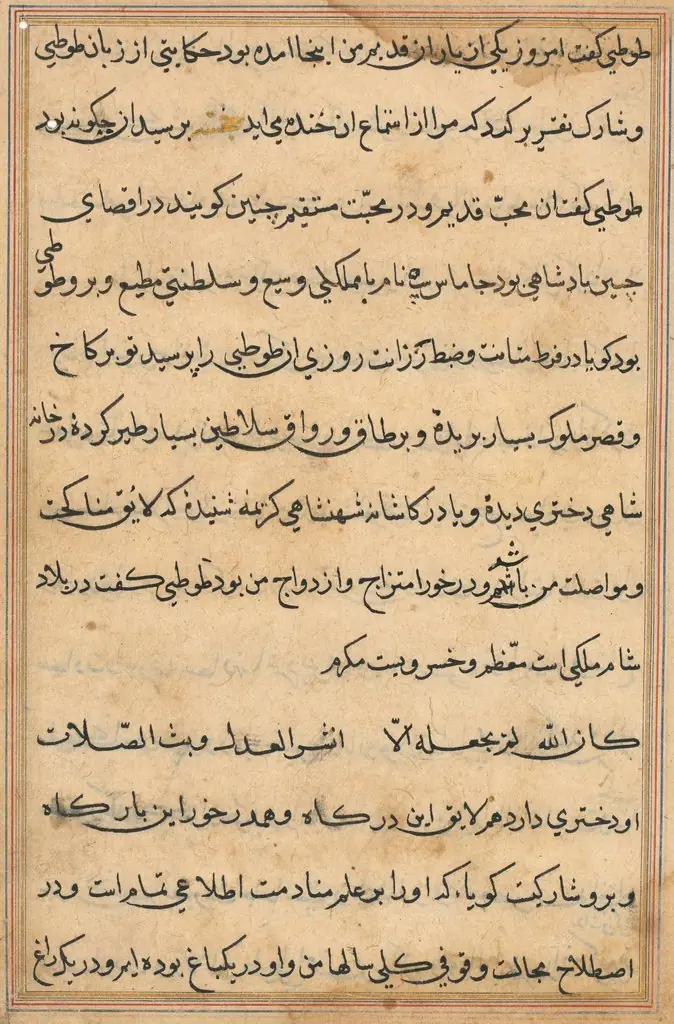 Page from Tales of a Parrot (Tuti-nama): text page
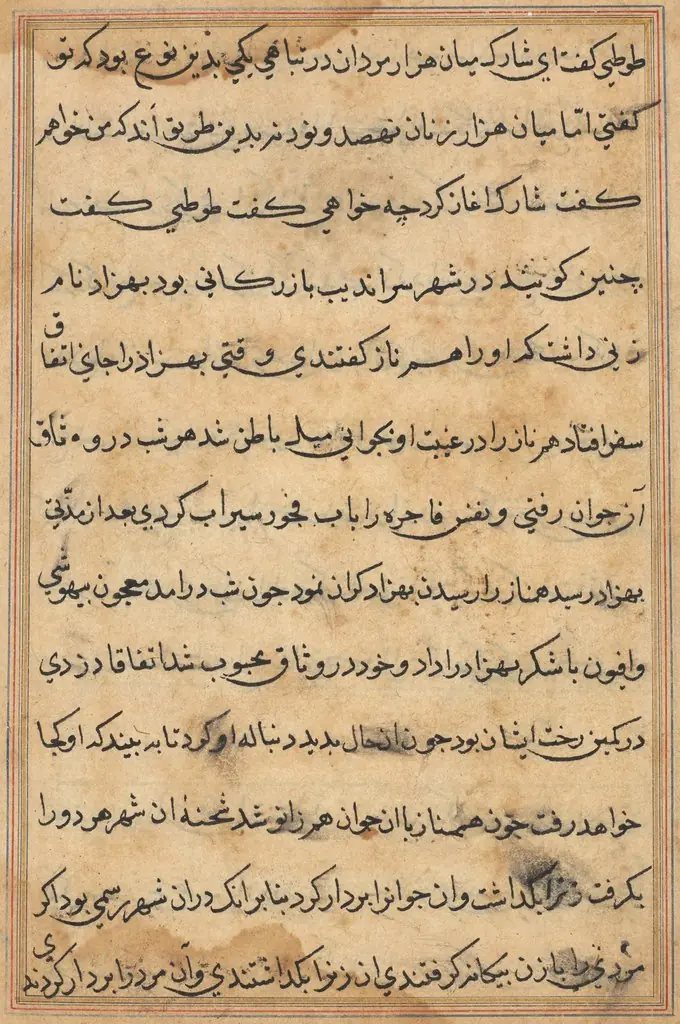 Page from Tales of a Parrot (Tuti-nama): text page
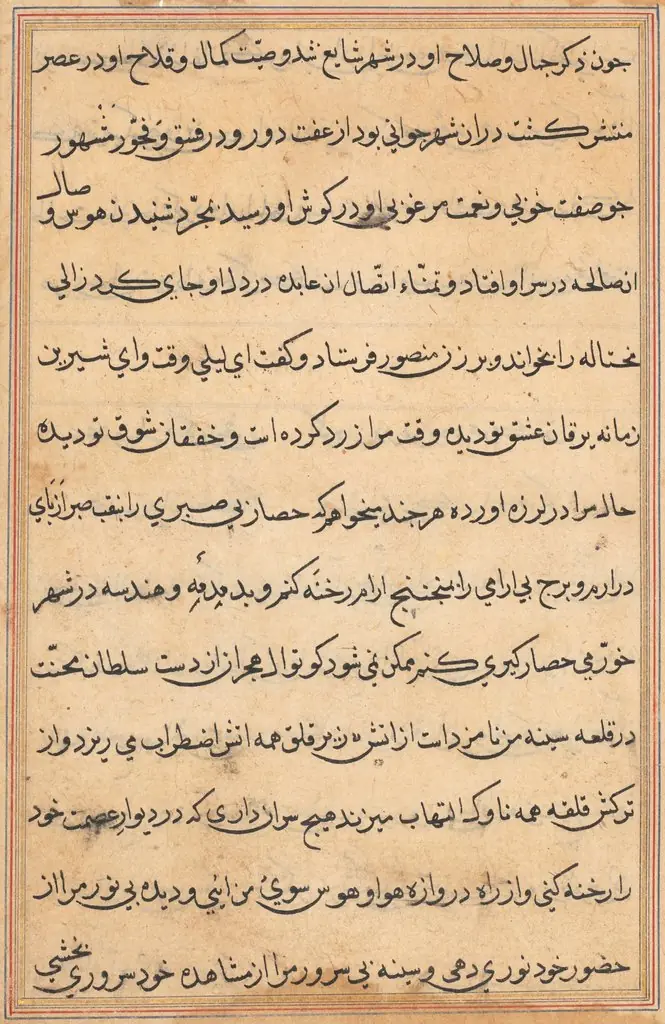 Page from Tales of a Parrot (Tuti-nama): text page
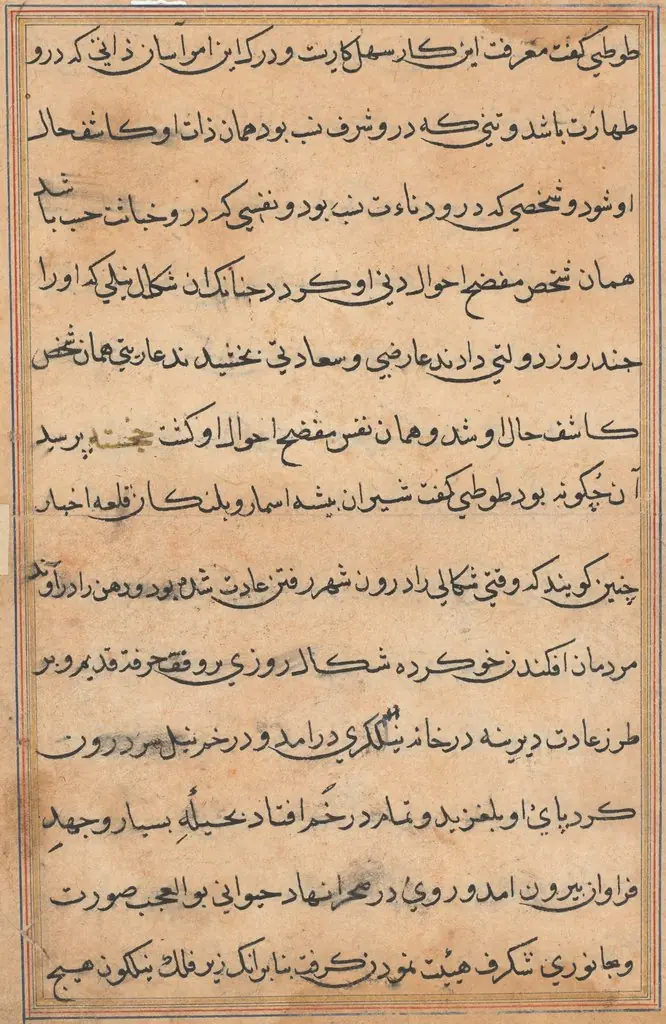 Page from Tales of a Parrot (Tuti-nama): text page
 Page from Tales of a Parrot (Tuti-nama): text page