Artwork
Page from Tales of a Parrot (Tuti-nama): text page
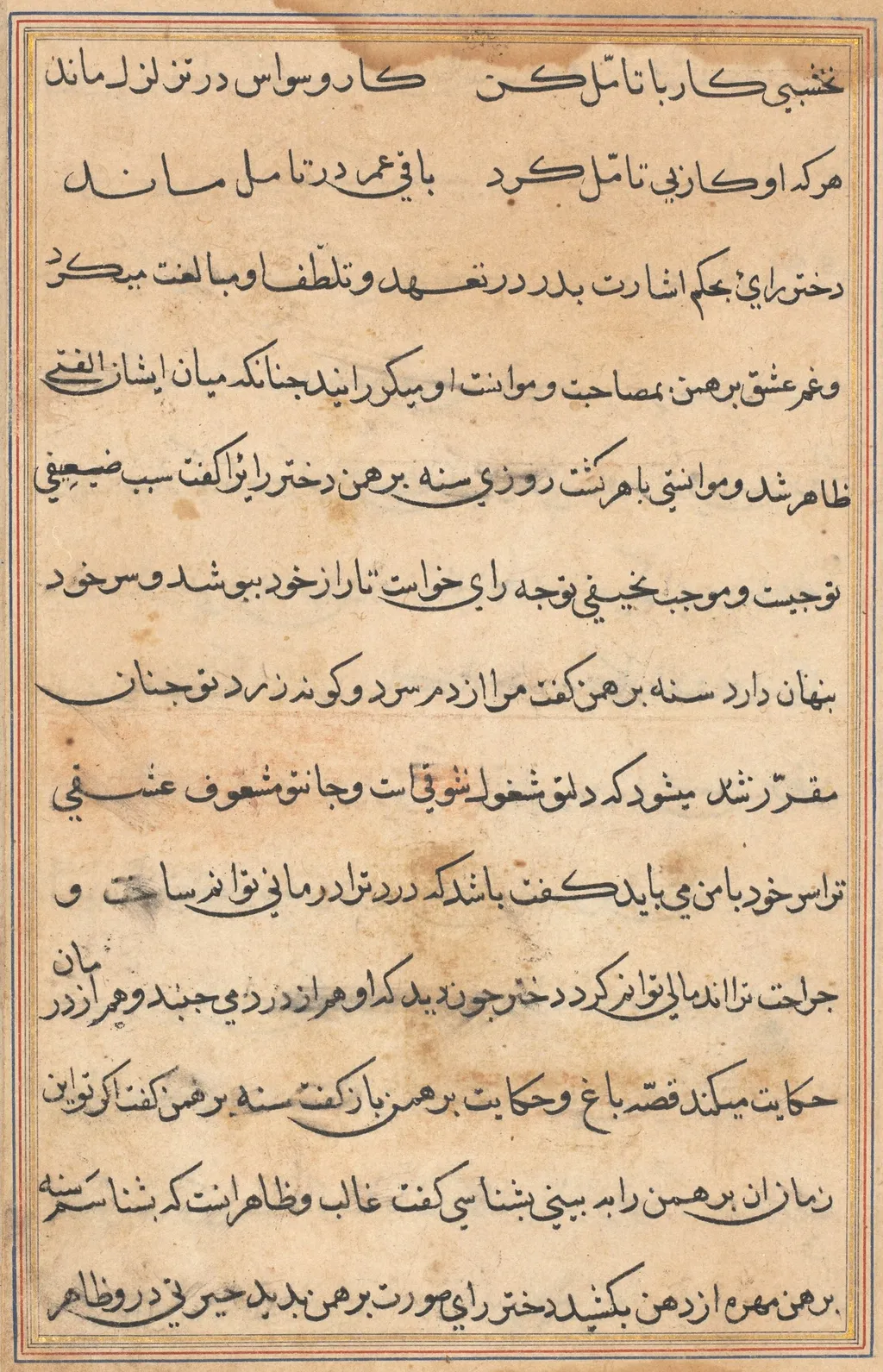
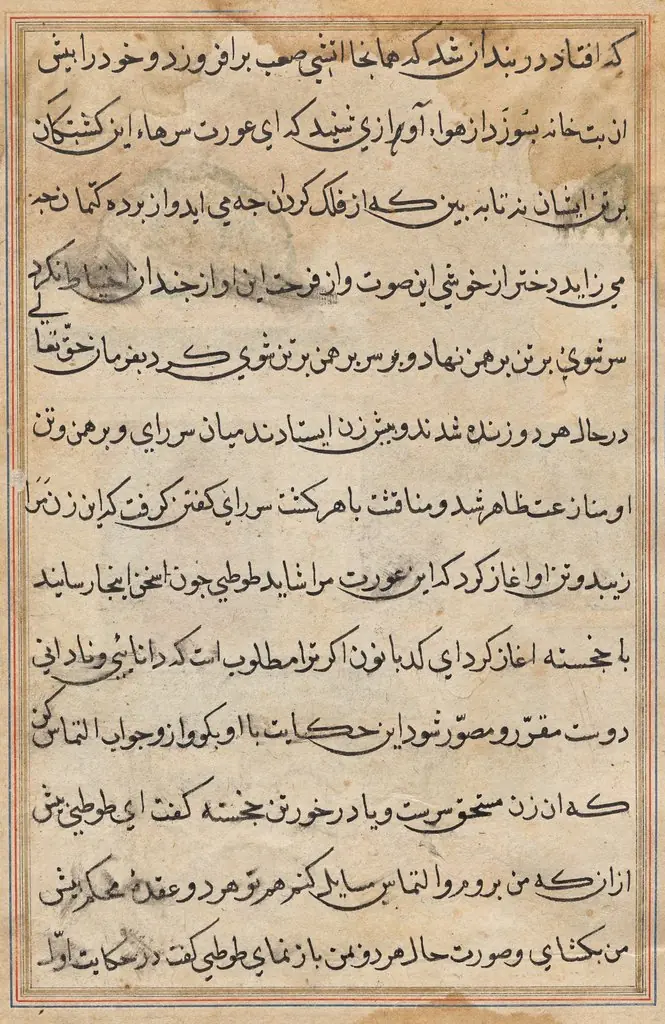
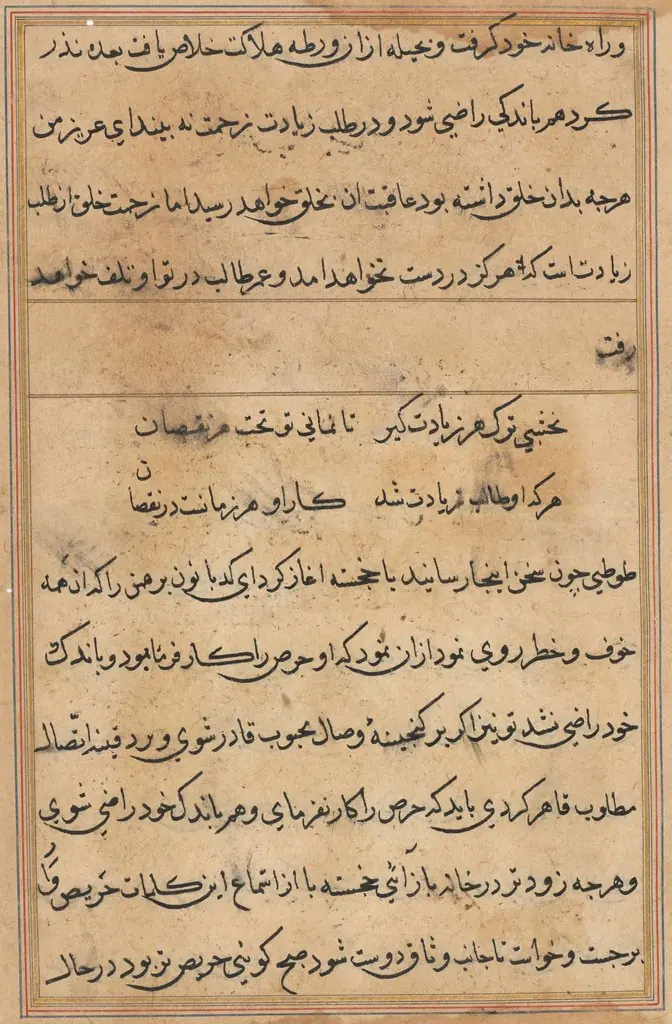
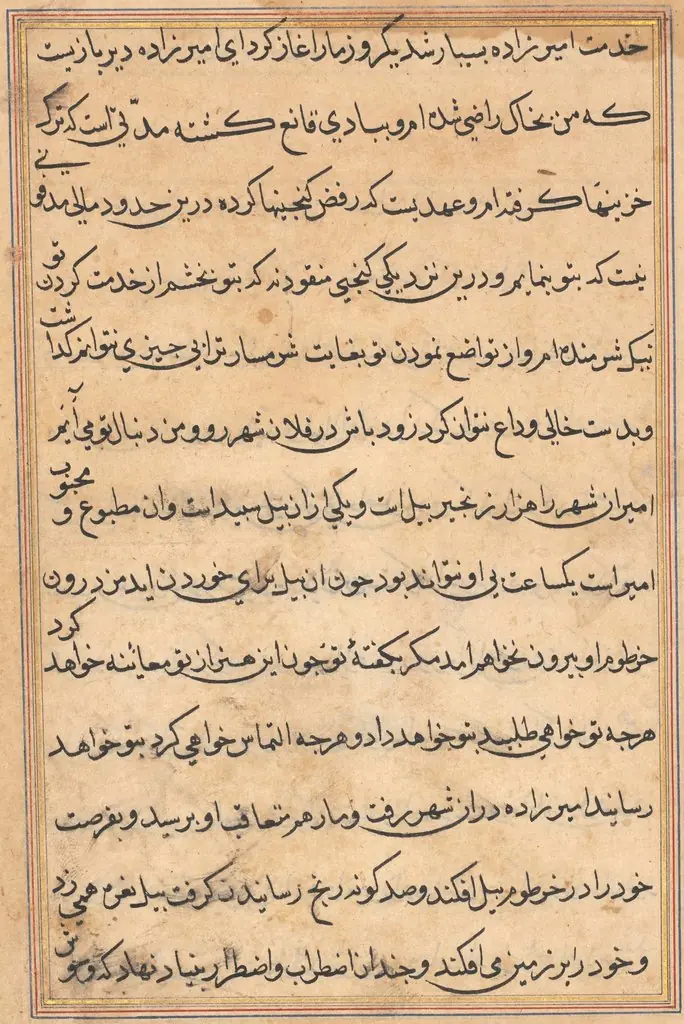
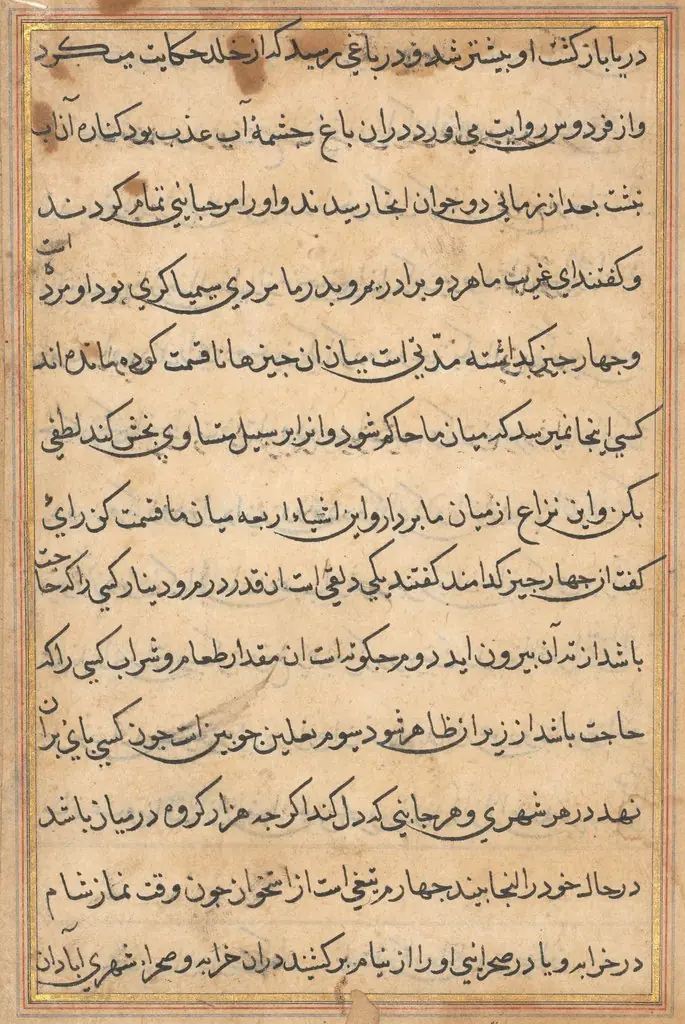
Page from Tales of a Parrot (Tuti-nama): text page is an unspecified painting. It dates from 1560 and is held in the collection of the Cleveland Museum of Art. This object is a single folio from the illustrated manuscript known as Tuti‑nama (Tales of a Parrot).
About this work
History & Provenance
No further details regarding its original commission or intermediate ownership history prior to its museum acquisition are provided in the available records.
Created in 1560 within the Mughal Empire, this text page originates from the illustrated manuscript known as the Tuti-nama (Tales of a Parrot). While the specific artist remains unidentified, the work was produced during the mid-sixteenth century. The page eventually entered the collection of the Cleveland Museum of Art, where it is cataloged under the accession number 1962.279.233.a.
No further details regarding its original commission or intermediate ownership history prior to its museum acquisition are provided in the available records.
The painting is held in the collection of the Cleveland Museum of Art, where it is catalogued under accession number 1962.279.233.a. It was created in 1560 in the Mughal Empire and has been part of the museum's collection since its acquisition, remaining on permanent display as part of the institution's South Asian art holdings.
Overview
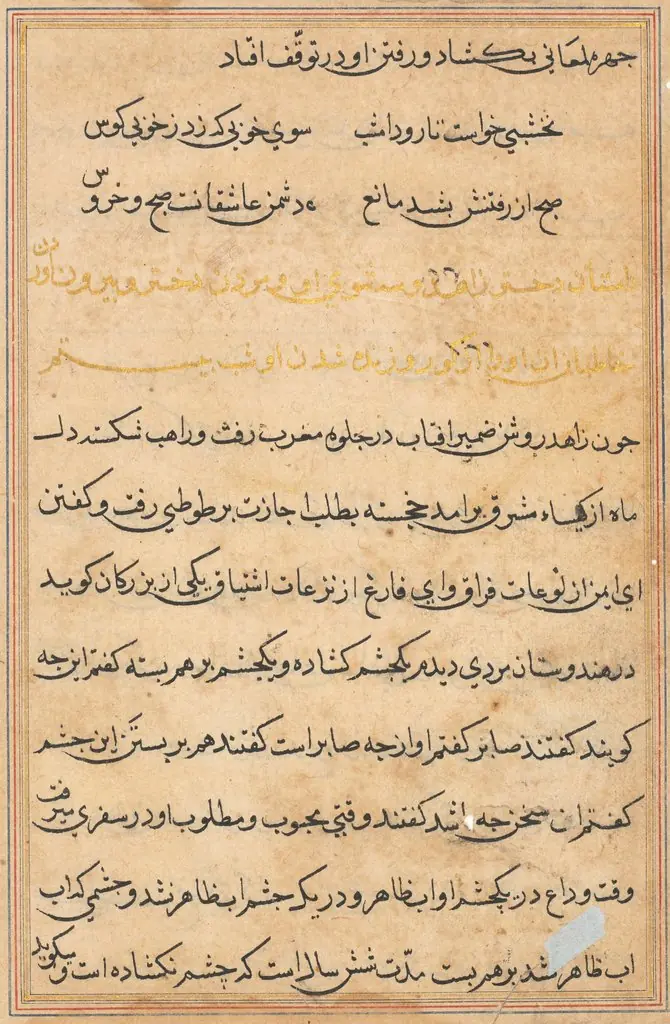
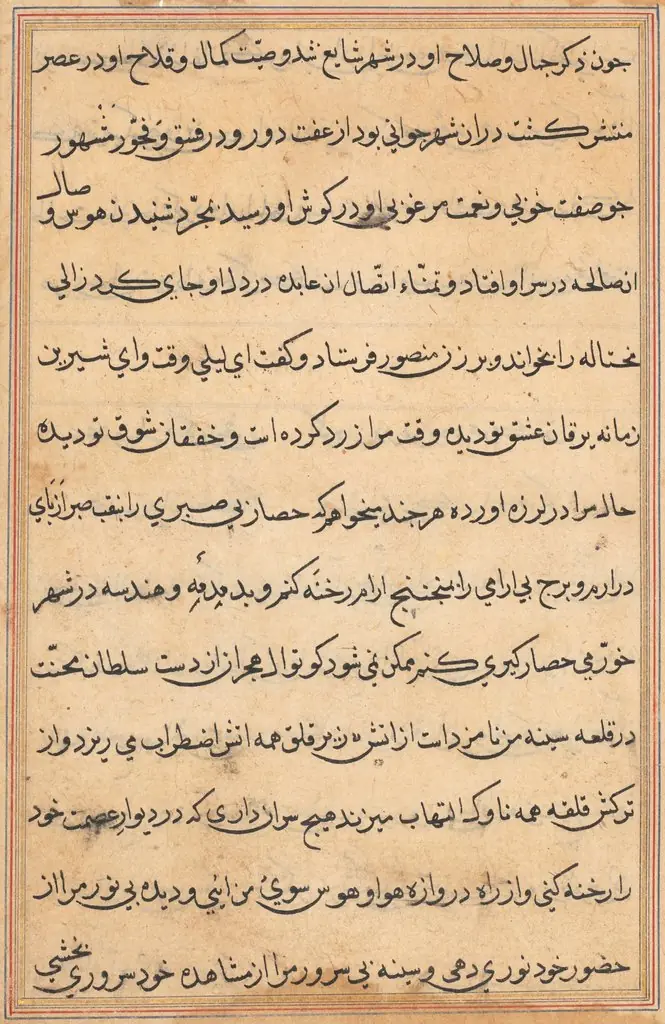
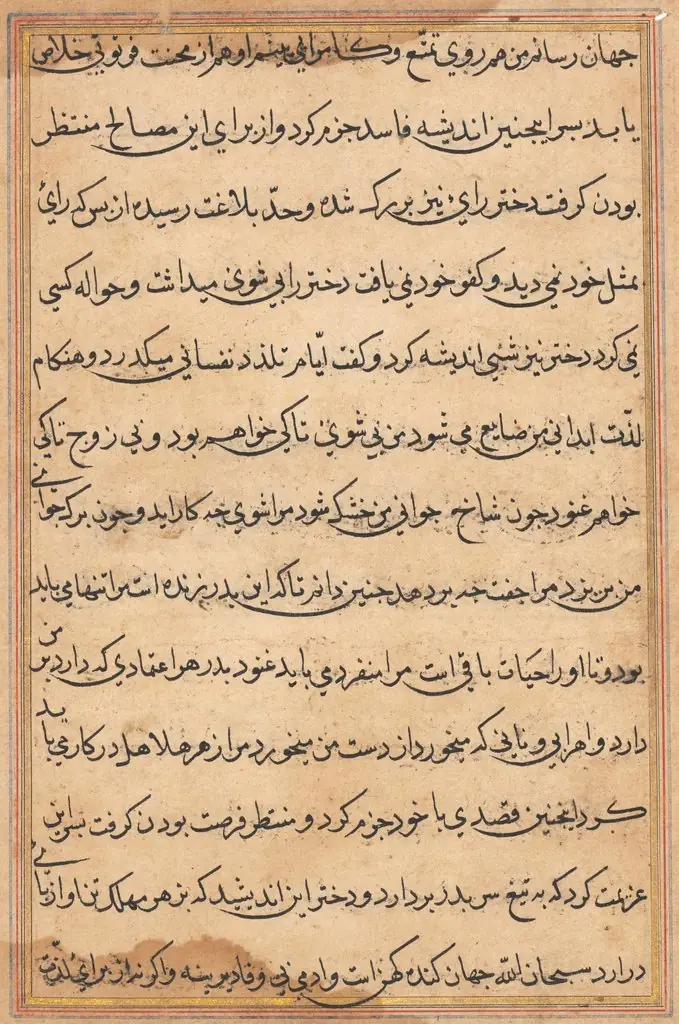
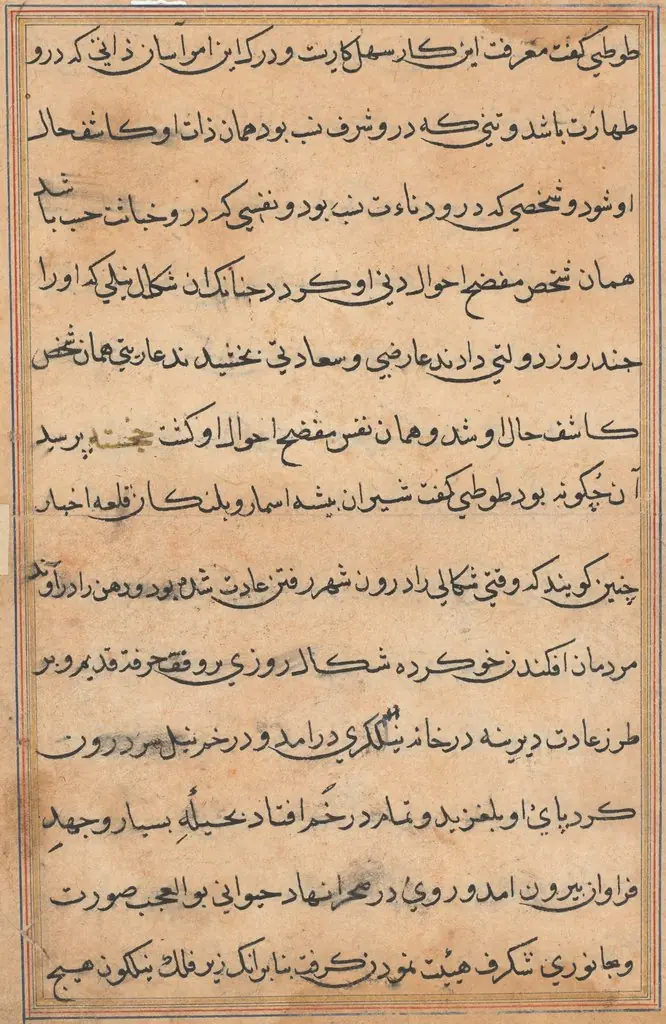
This object is a single folio from the illustrated manuscript known as Tuti‑nama (Tales of a Parrot). The page measures roughly the size of a standard sheet of paper and is composed of a light‑brown, aged parchment on which dense black calligraphy fills the surface. A narrow red line runs along the outer margin, providing a subtle decorative frame.
Subject & Meaning
The script, written in Persian and arranged for right‑to‑left reading, conveys a narrative segment from the Tuti‑nama, a collection of moral and didactic stories featuring a talking parrot. The compact arrangement of the text suggests it was intended for continuous reading, preserving the flow of the tale.
Technique & Style
The calligrapher employed a neat, flowing hand characteristic of Persian manuscript tradition, with tightly set lines that maximize the use of space. The ink, now partially faded in places, is a deep black, while the red marginal band is applied with a fine brush, adding a modest visual accent without detracting from the text.
Context
Tuti‑nama manuscripts were often richly illustrated, pairing prose with miniature paintings that visualized key episodes. This particular page, however, presents only the textual component, reflecting a stage in the book’s production where the narrative was recorded prior to the addition of decorative images.
Legacy
Pages such as this provide insight into the literary culture of Persian-speaking societies and the transmission of ethical stories across generations. Their preservation in museum holdings enables scholars to study the interplay of text, calligraphy, and materiality in historic bookmaking.
Artist & collection

- Page from Tales of a Parrot (Tuti-nama): text page
 Page from Tales of a Parrot (Tuti-nama): text page
 Page from Tales of a Parrot (Tuti-nama): text page
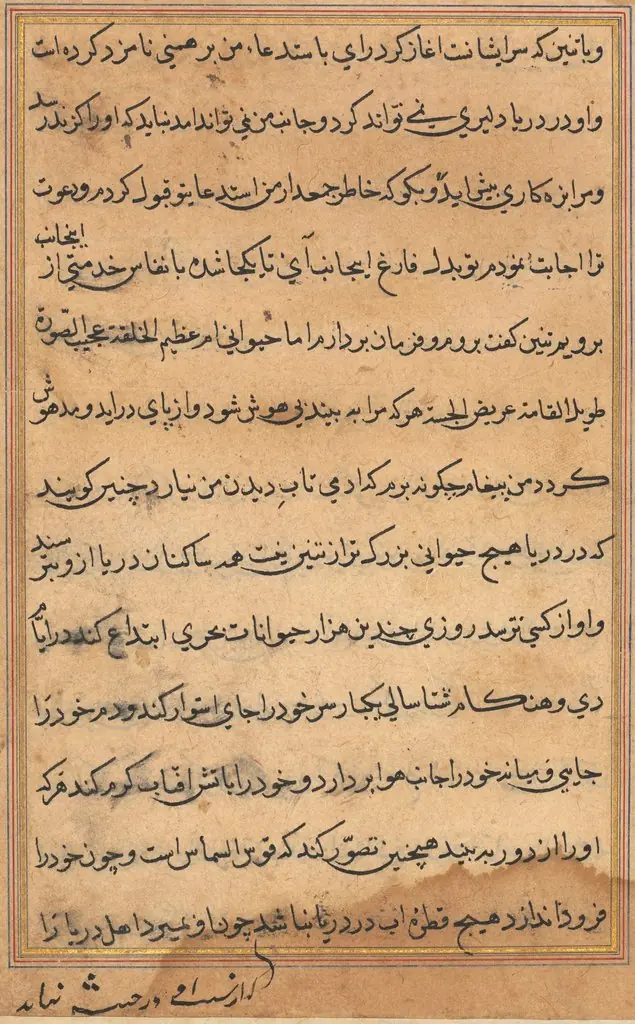 Page from Tales of a Parrot (Tuti-nama): text page
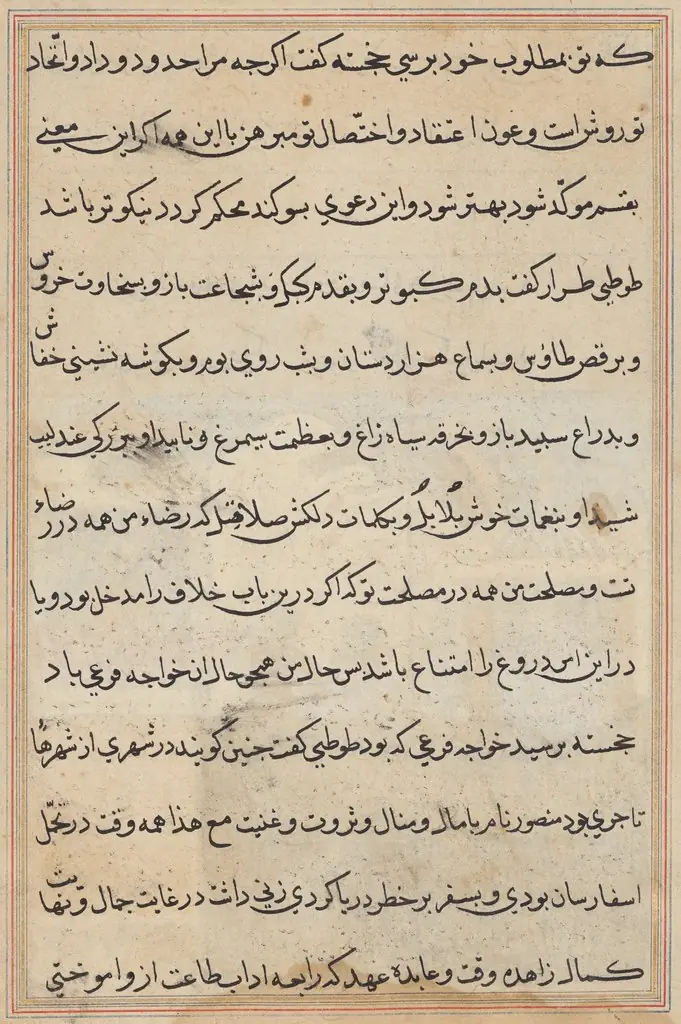 Page from Tales of a Parrot (Tuti-nama): text page
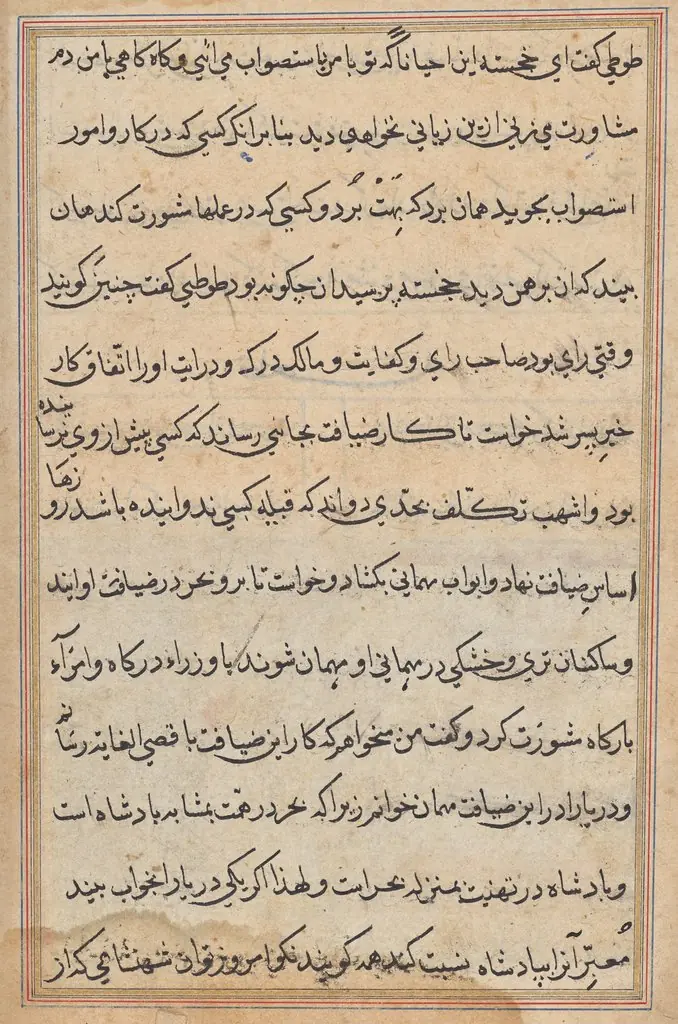 Page from Tales of a Parrot (Tuti-nama): text page
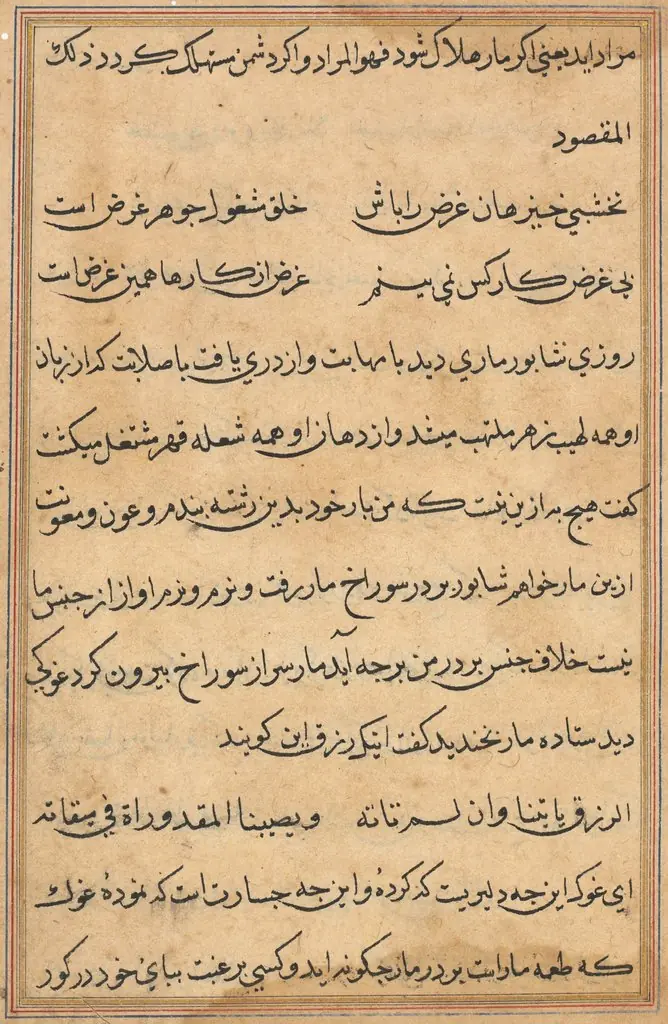 Page from Tales of a Parrot (Tuti-nama): text page
 Page from Tales of a Parrot (Tuti-nama): text page
 Page from Tales of a Parrot (Tuti-nama): text page
 Page from Tales of a Parrot (Tuti-nama): text page
 Page from Tales of a Parrot (Tuti-nama): text page
 Page from Tales of a Parrot (Tuti-nama): text page