Artwork
Page from Tales of a Parrot (Tuti-nama): text page
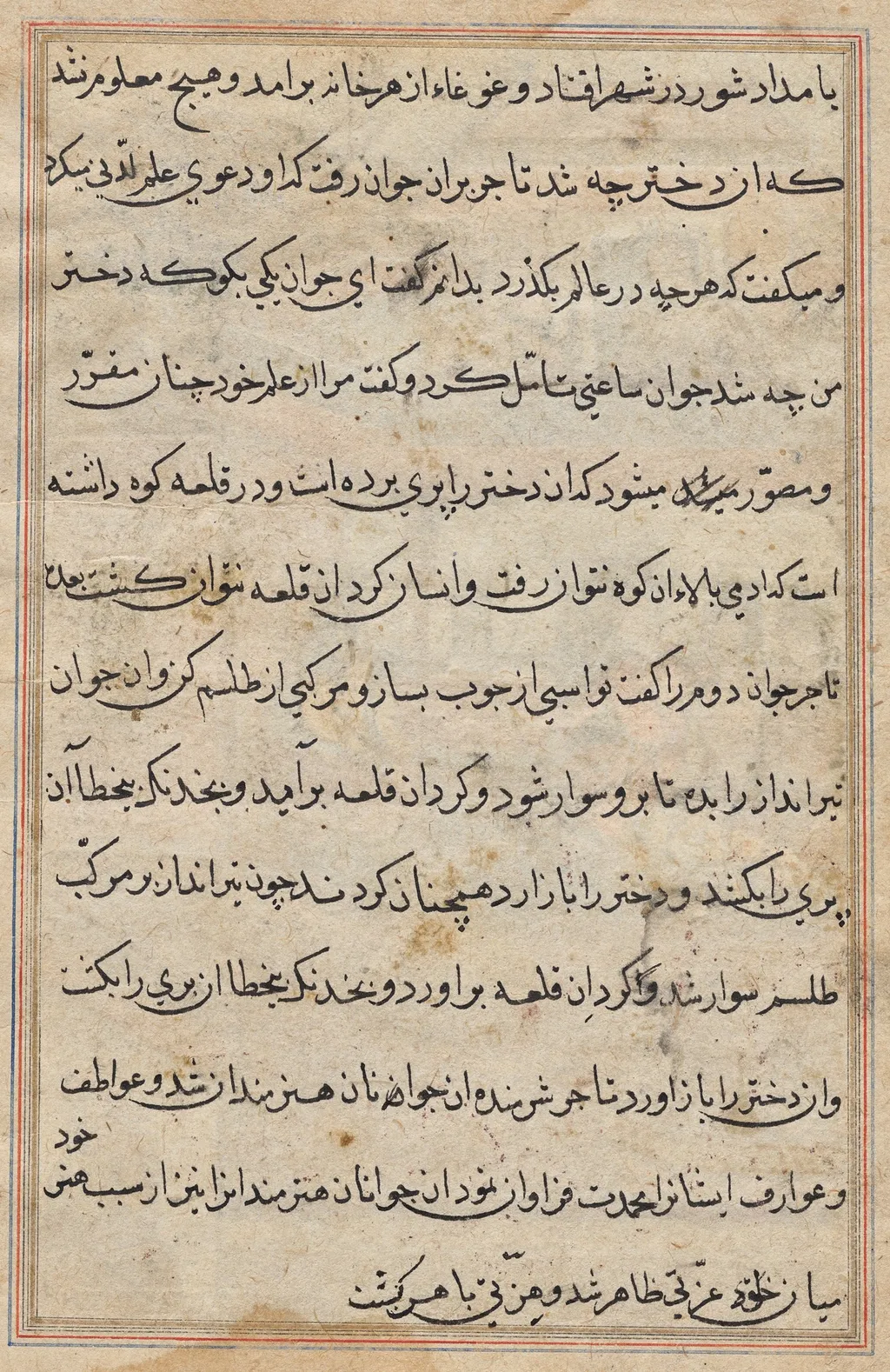
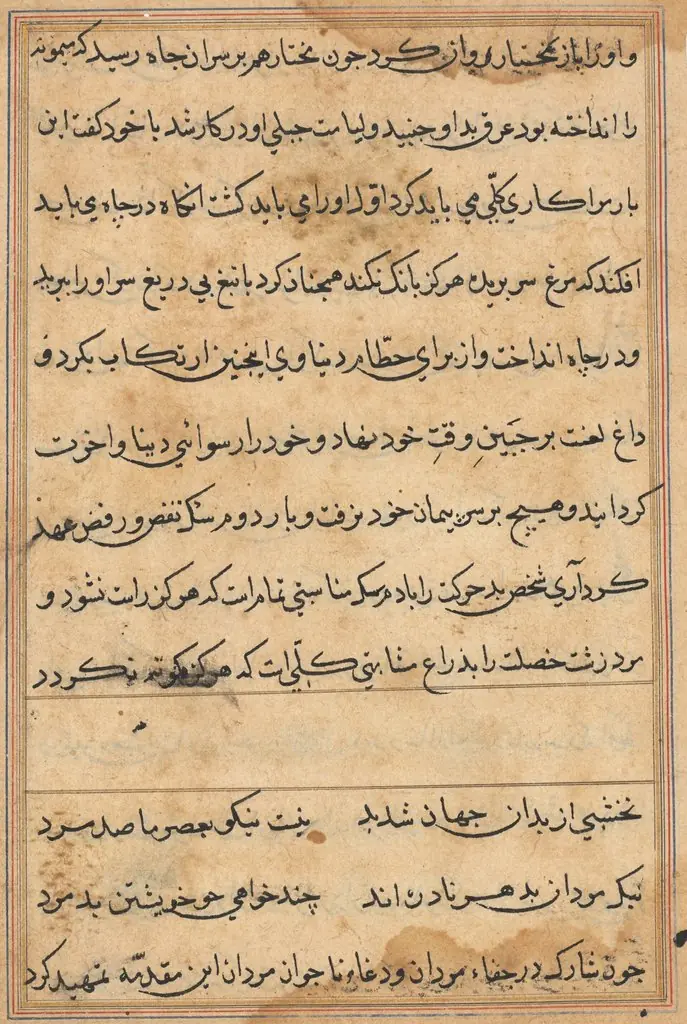
Page from Tales of a Parrot (Tuti-nama): text page is an unspecified painting. It dates from 1560 and is held in the collection of the Cleveland Museum of Art. This object is a single leaf from a manuscript titled Tales of a Parrot (Tuti‑nama).
About this work
Subject & Meaning
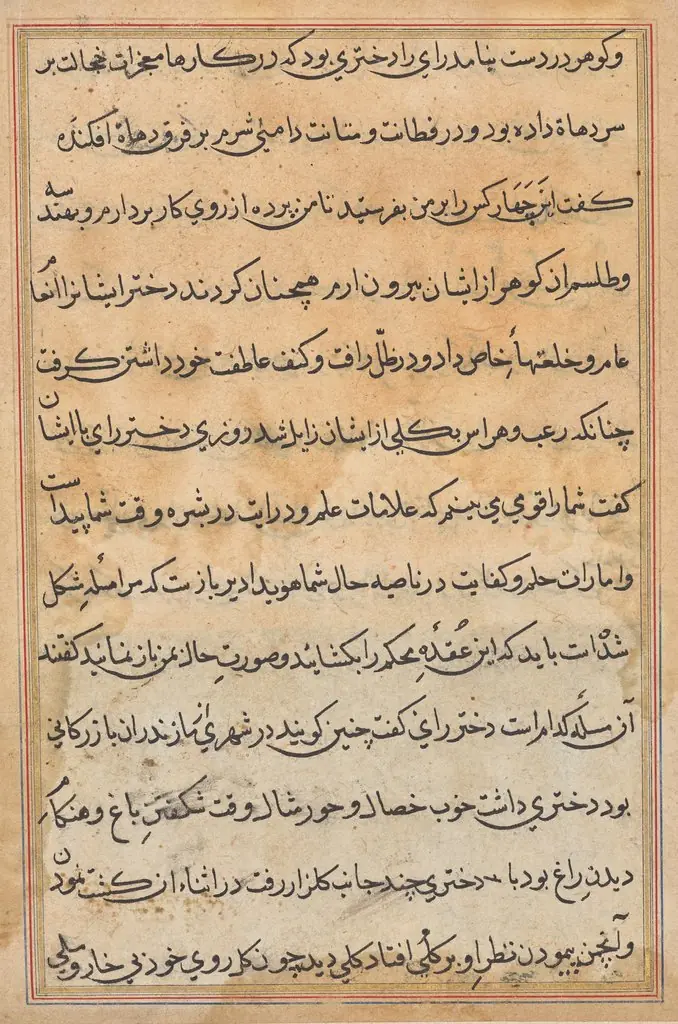
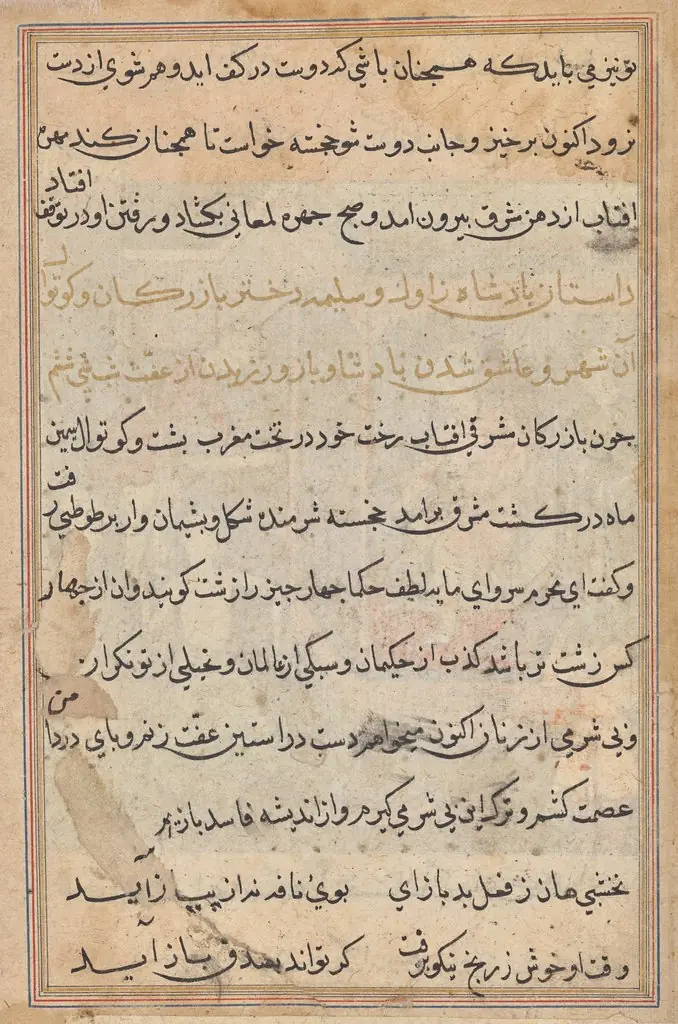
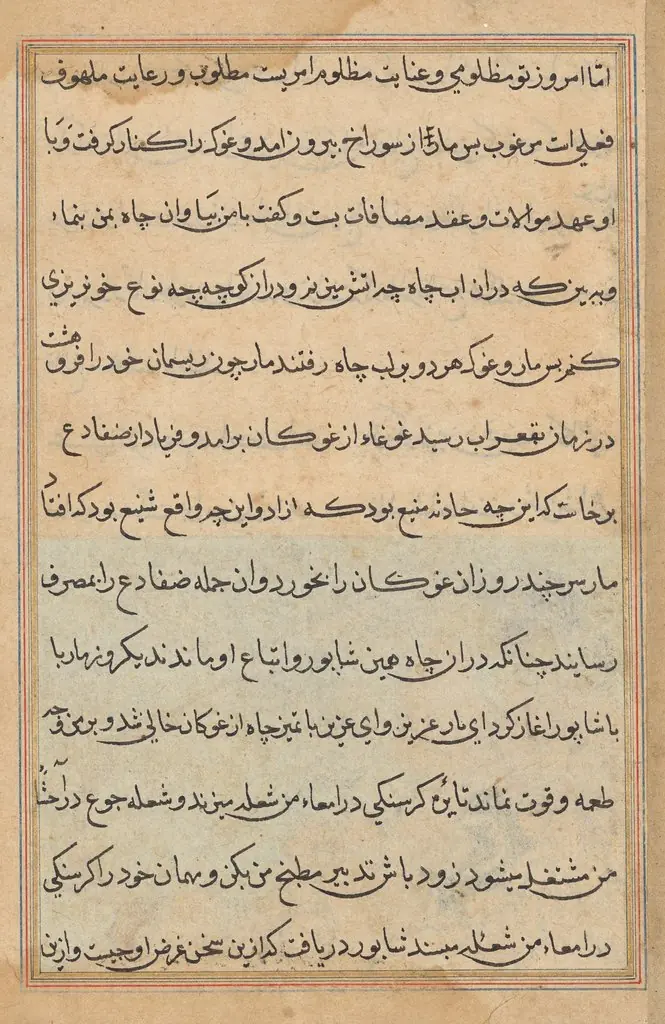
This folio from the Tuti-nama (Tales of a Parrot) is a text page, so its primary content is the written narrative rather than an illustration.
This folio from the Tuti-nama (Tales of a Parrot) is a text page, so its primary content is the written narrative rather than an illustration. The Tuti-nama is a collection of moral and romantic tales told by a parrot to its mistress to delay her over successive nights, a framing device that makes storytelling itself a vehicle for ethical instruction. Within the manuscript, the parrot functions as a figure of wisdom and rhetorical skill, and the page advances this didactic narrative.
Produced in the Mughal Empire and now in the Cleveland Museum of Art, the manuscript reflects the adaptation of Persian literary themes into Indian book arts during the mid-sixteenth century.
History & Provenance
This text page from the Tales of a Parrot (Tuti-nama) was created in 1560 within the Mughal Empire. The work is attributed to an unknown artist and is classified as a painting from the Mughal period. It is currently held in the collection of the Cleveland Museum of Art, where it is cataloged under the accession number 1962.279.225.b. The specific circumstances regarding its original commission or the precise chain of ownership prior to its arrival at the Cleveland museum are not detailed in the available records.
Legacy
The miniature from the Tuti-nama manuscript circulated widely across Mughal elite circles in the mid-16th century and later influenced European travelers' accounts of Indian storytelling traditions. Its compositional style informed later Persianate miniature workshops in Rajasthan during the 17th century, particularly in depictions of didactic animal fables. Contemporary scholarship highlights its role in shaping narrative visual grammar within Indo-Persian book arts, though specific attribution remains debated among researchers.
The work is held in the Cleveland Museum of Art collection, where it is catalogued as part of their South Asian manuscript holdings.
Overview
This object is a single leaf from a manuscript titled Tales of a Parrot (Tuti‑nama). The page consists of densely written black ink script arranged in orderly lines across the surface, framed by a narrow red margin. The support is paper that has acquired a soft, aged patina, and the sheet contains no illustrative imagery, only the continuous text.
Technique & Style
The calligraphy displays a careful, uniform hand, suggesting a professional scribe’s involvement. Black iron‑gall ink fills the page in tight, regular columns, while a thin red pigment outlines the margins, providing a subtle decorative frame without disrupting the textual focus.
Artist & collection

- Page from Tales of a Parrot (Tuti-nama): text page
 Page from Tales of a Parrot (Tuti-nama): text page
 Page from Tales of a Parrot (Tuti-nama): text page
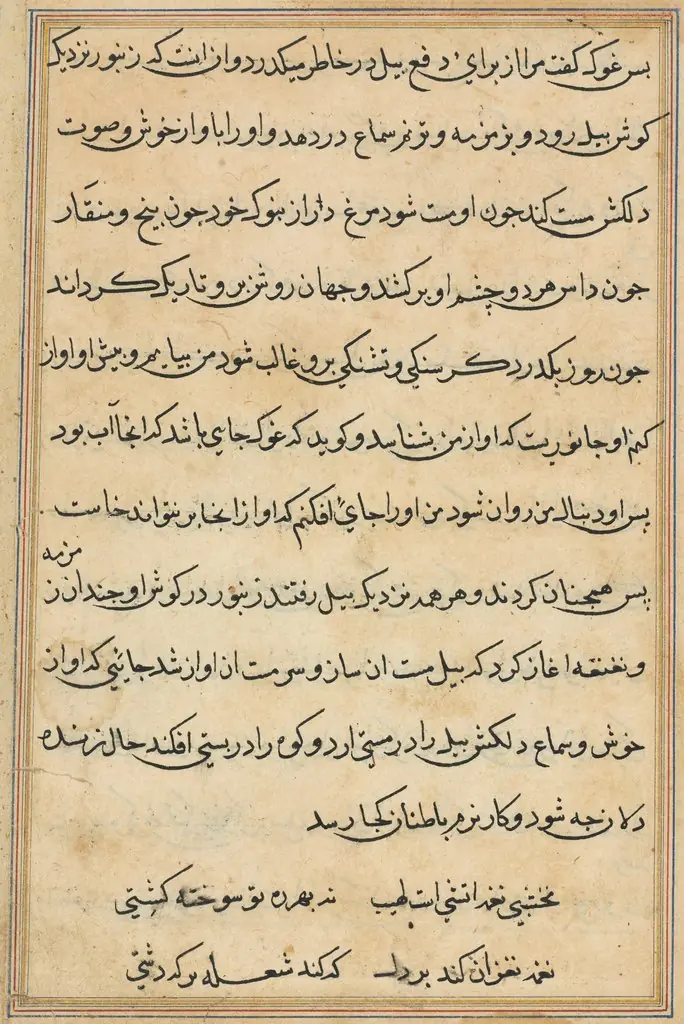 Page from Tales of a Parrot (Tuti-nama): text page
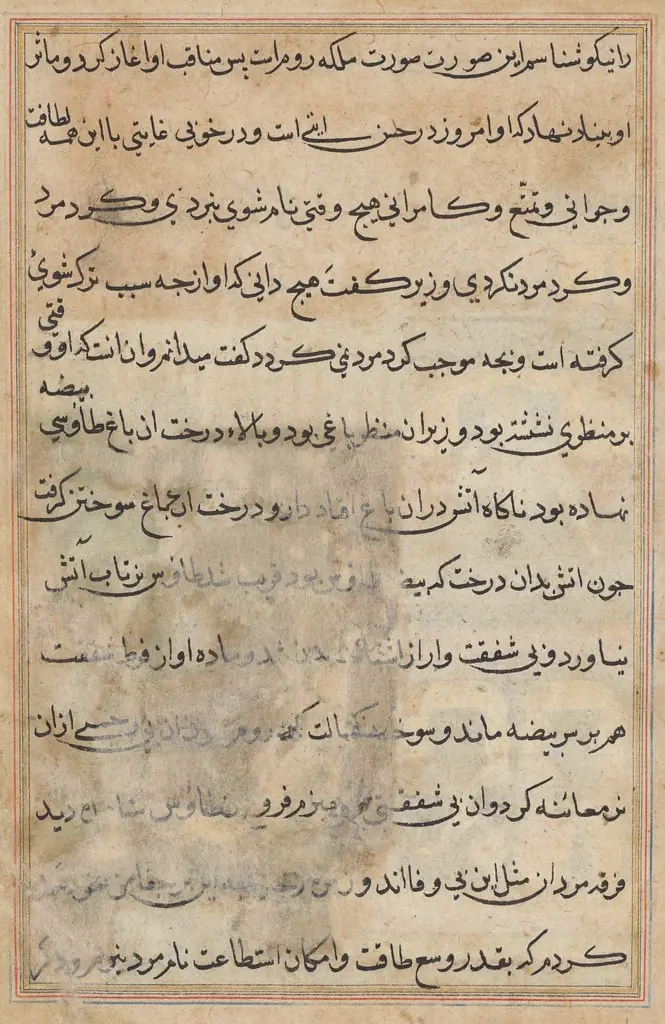 Page from Tales of a Parrot (Tuti-nama): text page
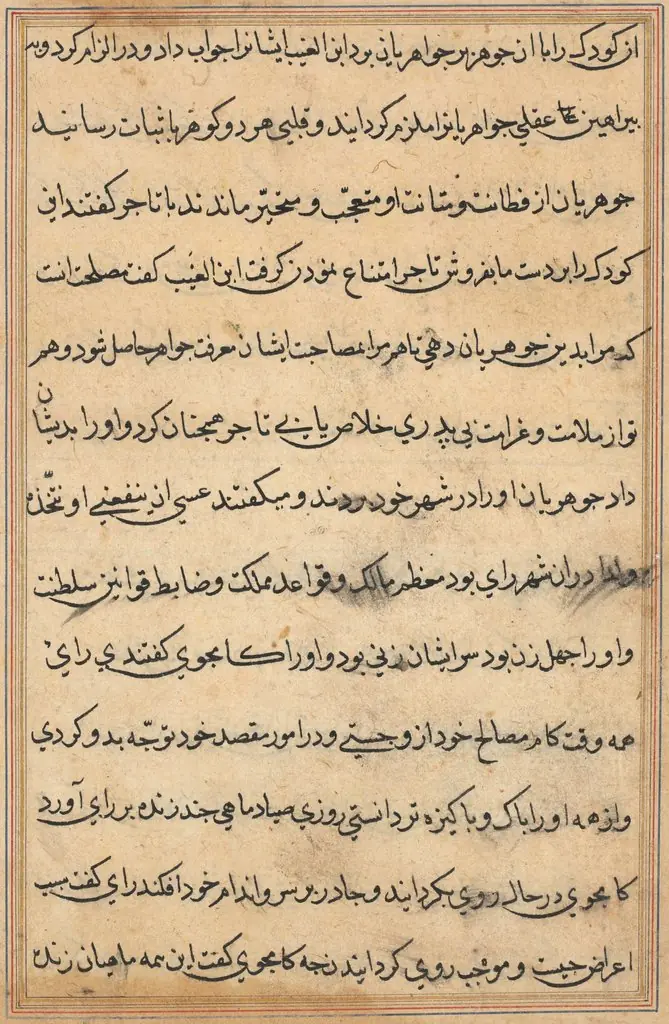 Page from Tales of a Parrot (Tuti-nama): text page
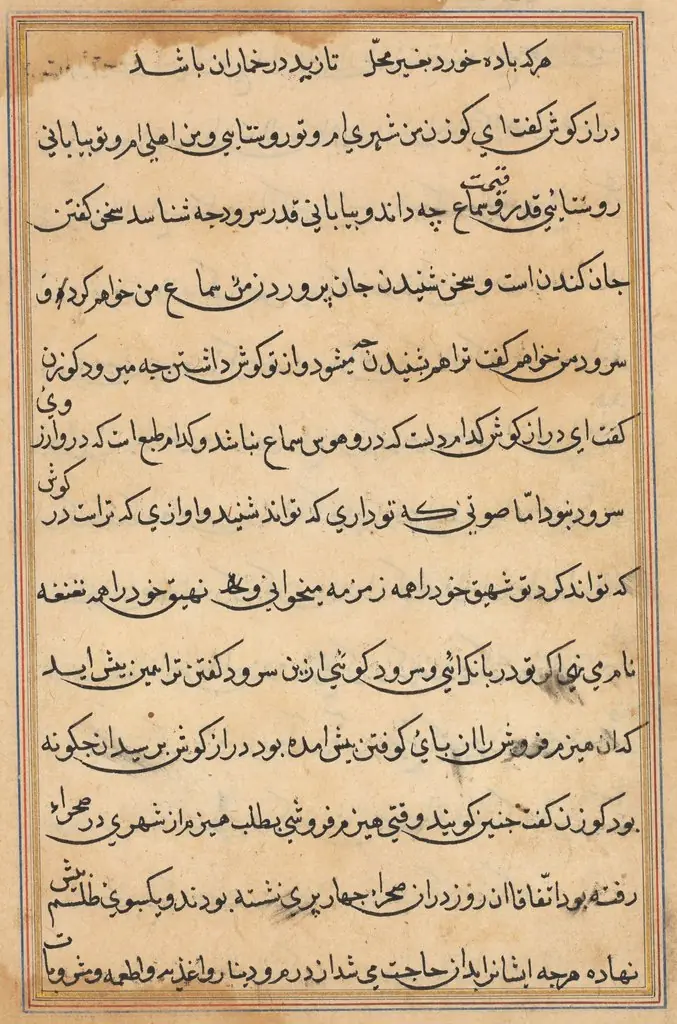 Page from Tales of a Parrot (Tuti-nama): text page
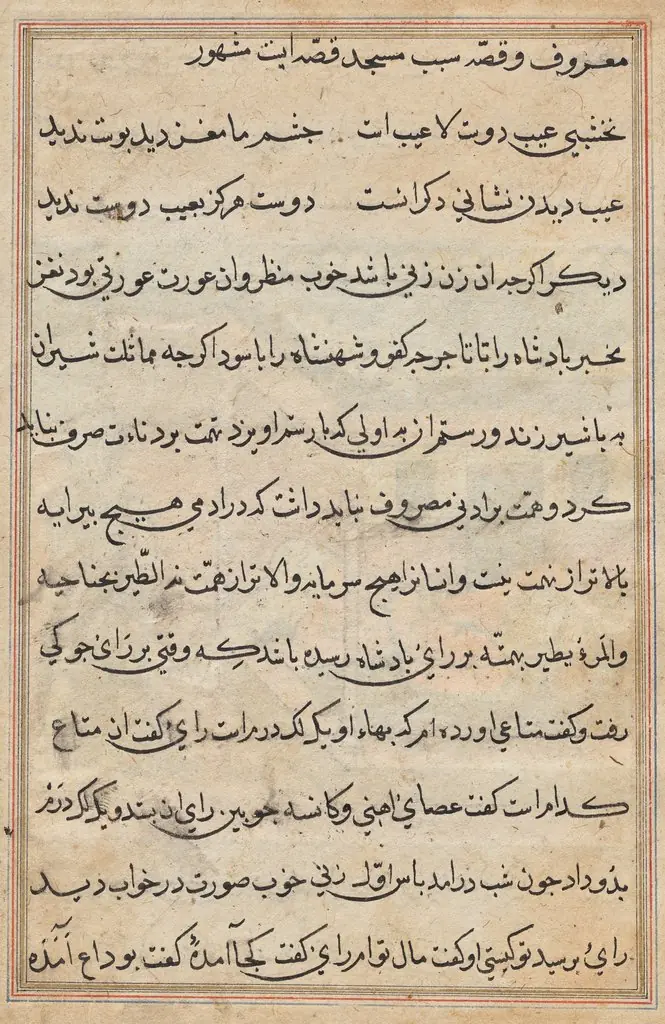 Page from Tales of a Parrot (Tuti-nama): text page
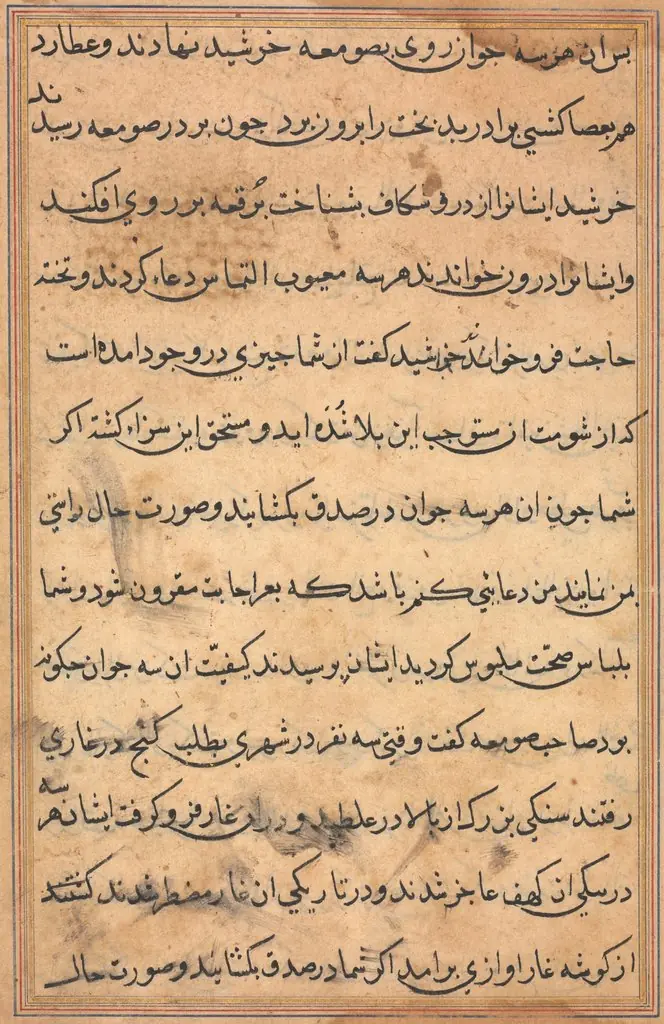 Page from Tales of a Parrot (Tuti-nama): text page
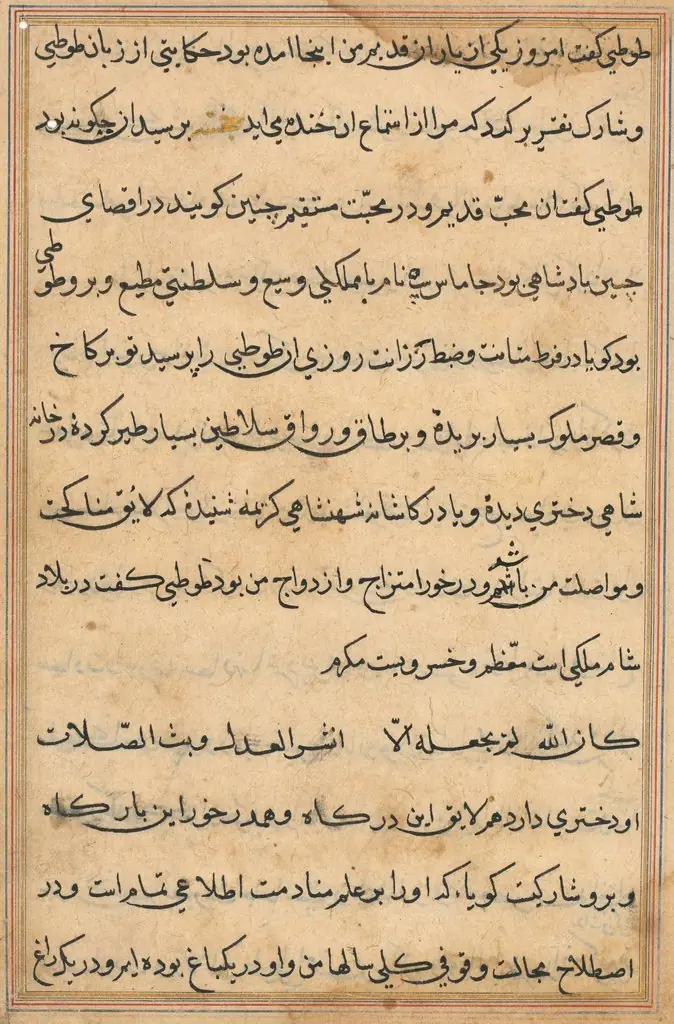 Page from Tales of a Parrot (Tuti-nama): text page
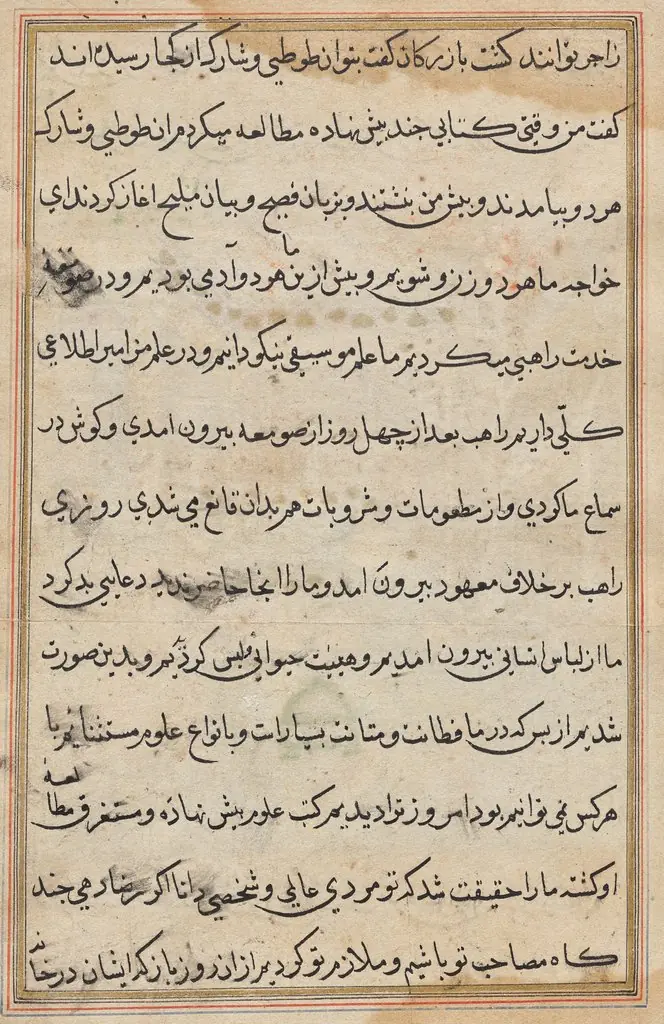 Page from Tales of a Parrot (Tuti-nama): text page
 Page from Tales of a Parrot (Tuti-nama): text page