Artwork
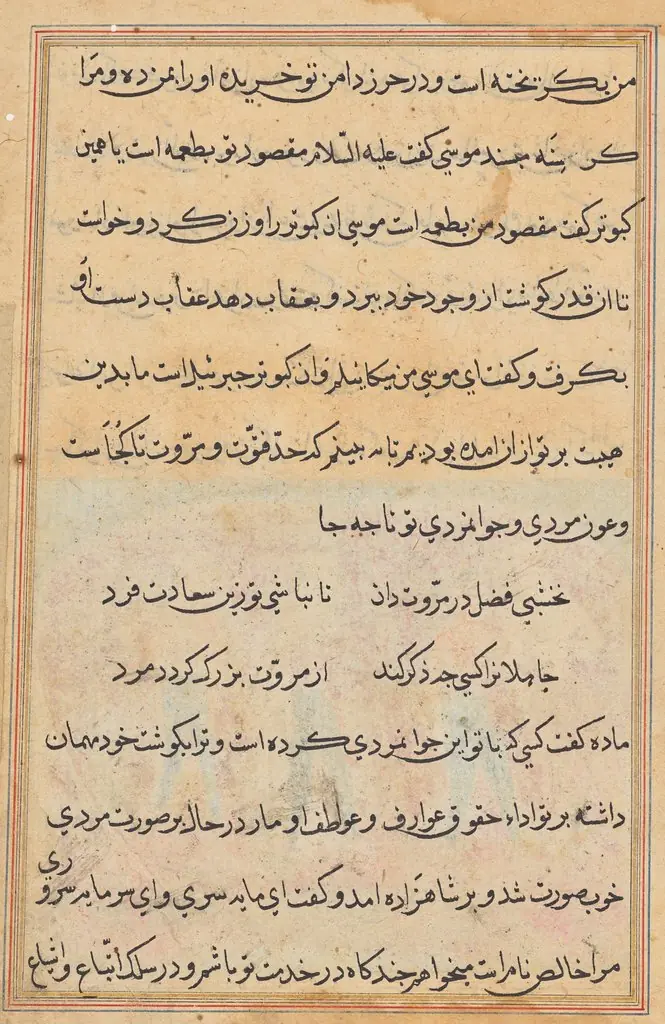
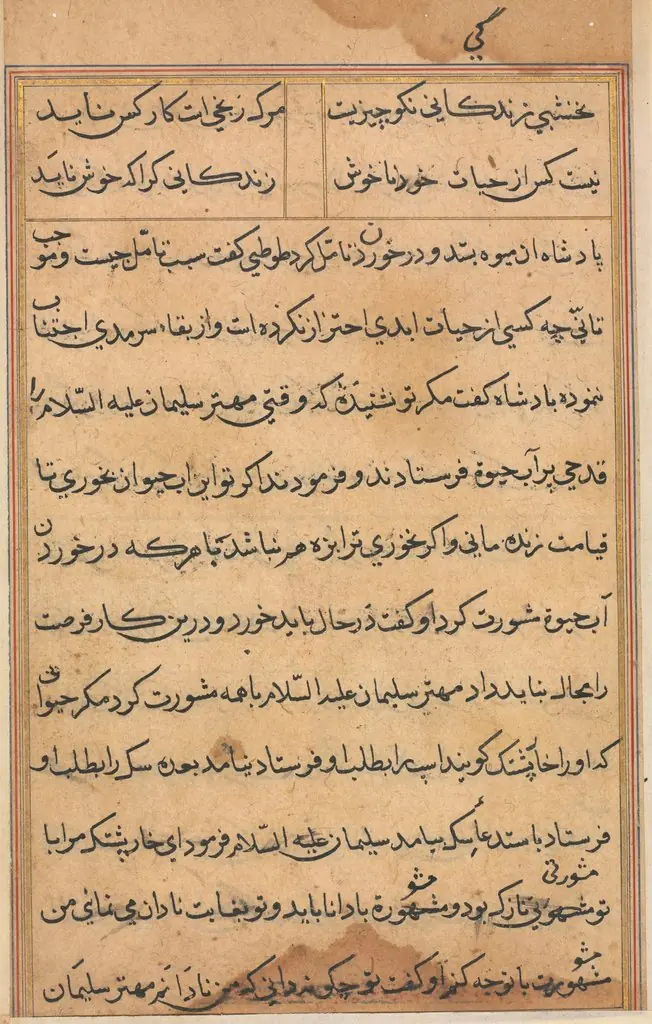
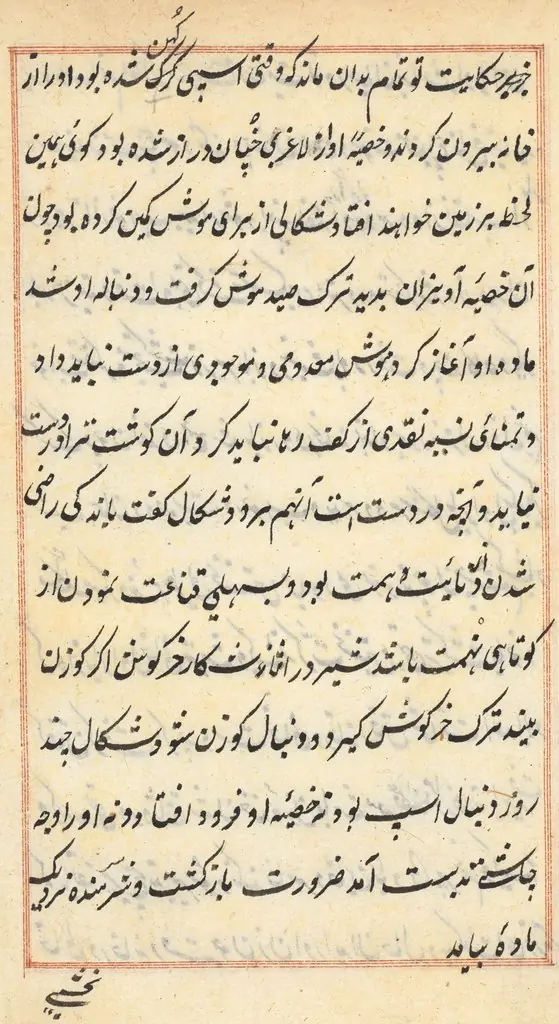
Page from Tales of a Parrot (Tuti-nama): text page
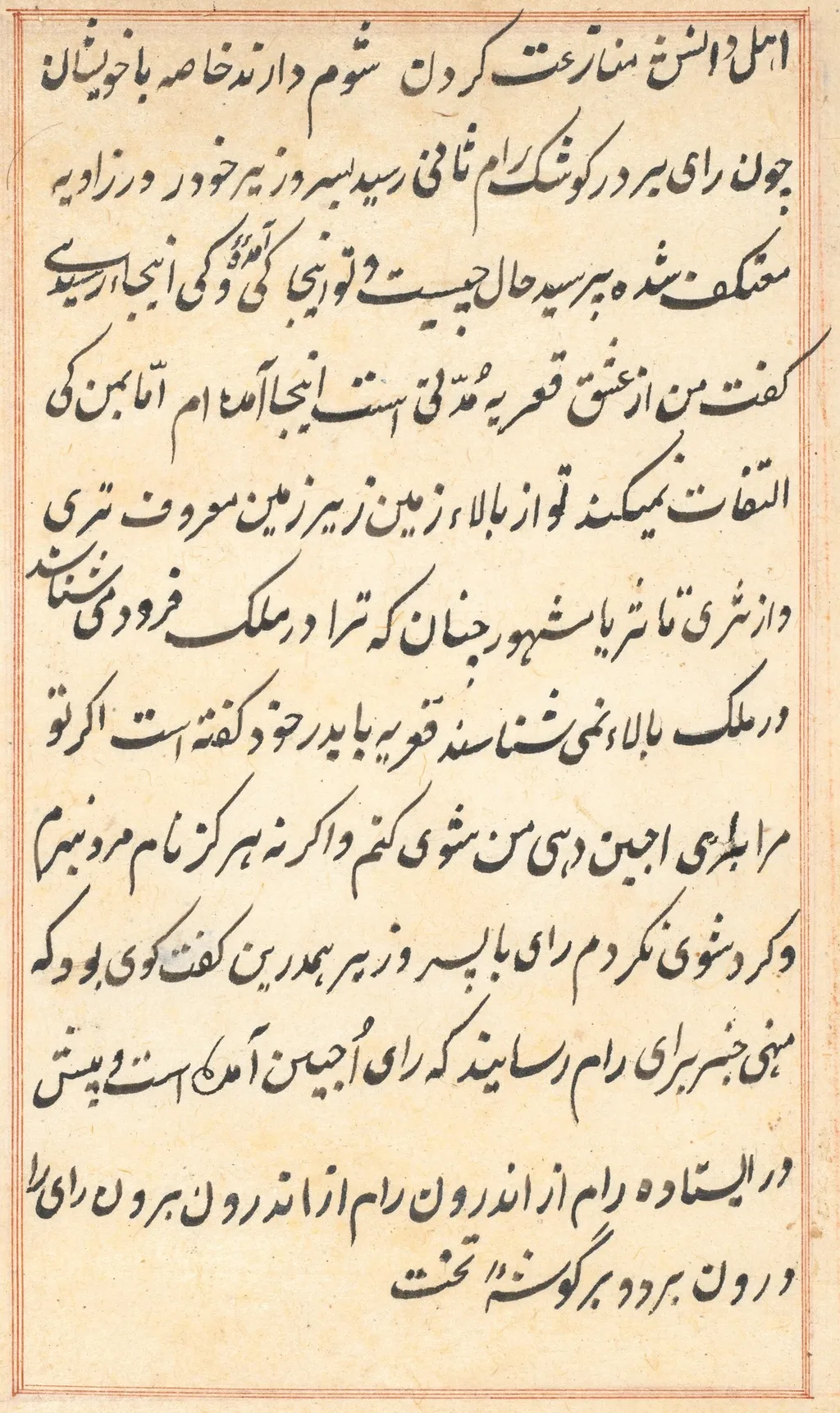
Page from Tales of a Parrot (Tuti-nama): text page is an unspecified painting. It dates from 1560 and is held in the collection of the Cleveland Museum of Art. The object is a painted page from the illustrated manuscript known as Tales of a Parrot (Tuti‑nama).
About this work
Technique & Style
The painting was created using tempera pigments on paper, executed in the Mughal artistic tradition during the mid-sixteenth century.
The painting was created using tempera pigments on paper, executed in the Mughal artistic tradition during the mid-sixteenth century. The support is a single sheet of paper bearing a single column of Persian text illustrating a parrot fable, with fine brushwork defining the bird and decorative borders. The composition features a stylized parrot perched among scrolling vines, rendered in muted earth tones with delicate linework characteristic of courtly manuscript production.
The work shows signs of careful handling, with intact edges and no major tears, though minor foxing is visible along the margins. Its formal qualities reflect the narrative clarity and ornamental precision typical of Safavid-influenced Mughal book arts.
The page originates from a copy of the Tuti-nama, a Persian illustrated tale popular in imperial workshops, and was produced in the imperial atelier under Mughal patronage. The artist employed a restrained palette and precise draftsmanship to balance textual content with visual storytelling, adhering to established conventions of manuscript illumination.
Citation: []
Citation: []
History & Provenance
The text page from the Tales of a Parrot (Tuti-nama) is held by the Cleveland Museum of Art, where it is recorded under accession number 1962.279.295.a. The work entered the museum’s collection in 1962, aligning with its documented inception date of 1560.
No exhibition history for this specific text page is provided in the cited sources.
Context
The miniature comes from a 1560 manuscript produced during the Mughal period in India, reflecting the cross-cultural transmission of Persianate storytelling traditions into South Asian artistic practice. The Cleveland Museum of Art holds this work as part of its collection of South Asian paintings, providing scholarly context for its study within the broader narrative of manuscript production in the region.
Overview
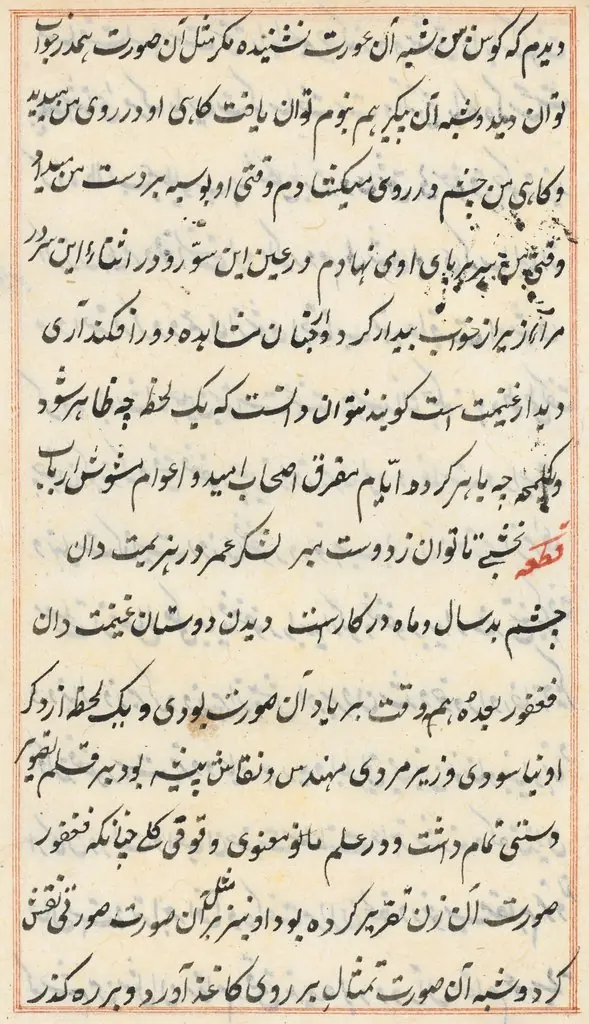
The object is a painted page from the illustrated manuscript known as Tales of a Parrot (Tuti‑nama). It consists of a single sheet of paper on which a continuous block of black calligraphic script fills the surface, framed by a subtle border that hints at its original codex format.
Subject & Meaning
The text appears to be a passage from a Persian poem, though the specific verses are not identifiable without knowledge of the language. The narrative content is therefore obscure to viewers unfamiliar with the source literature, emphasizing the visual qualities of the script over explicit storytelling.
Artist & collection

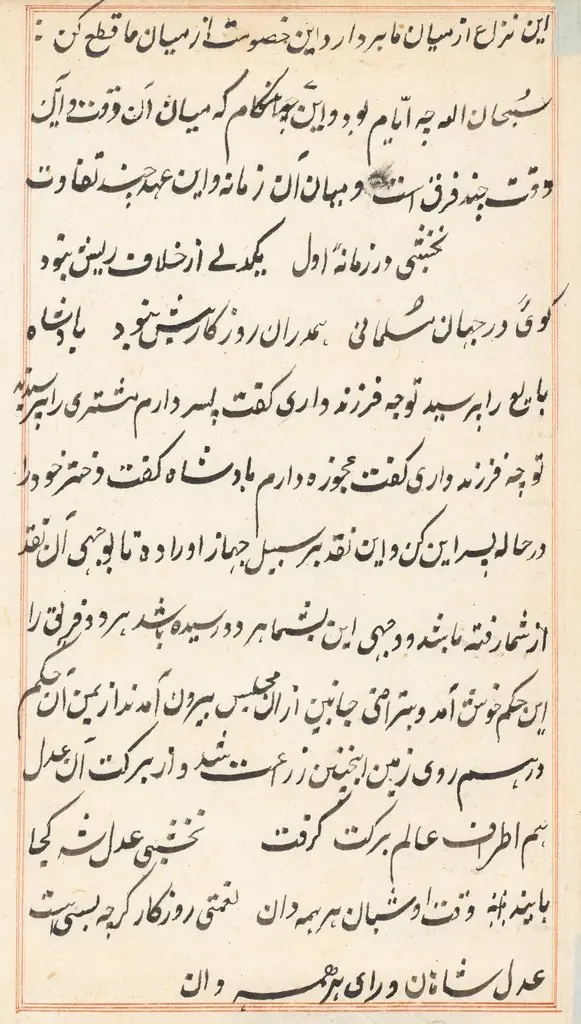 Page from Tales of a Parrot (Tuti-nama): text page
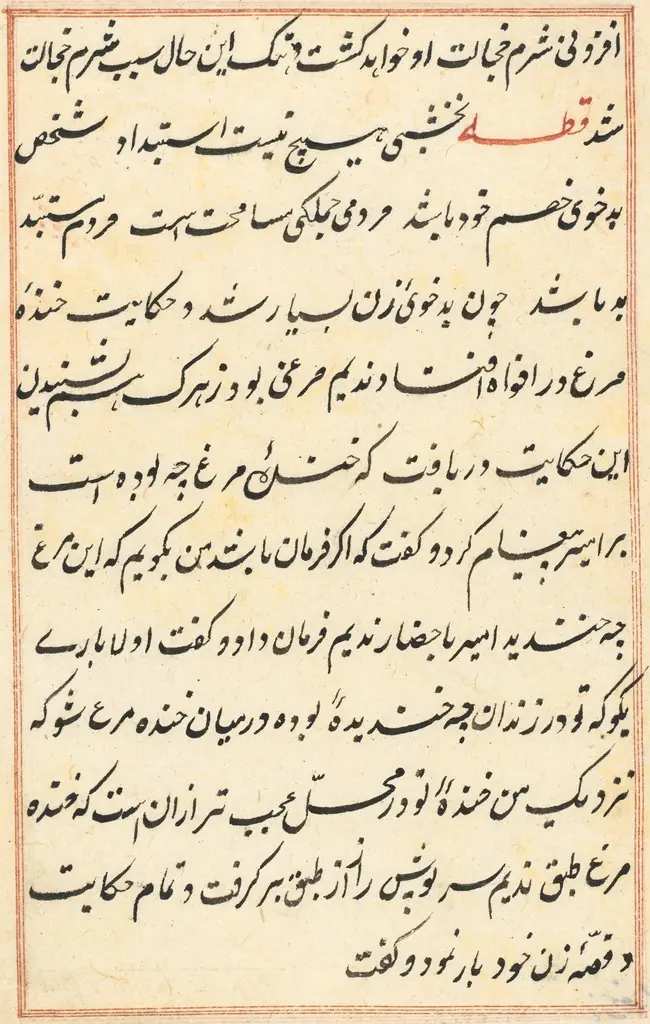 Page from Tales of a Parrot (Tuti-nama): text page
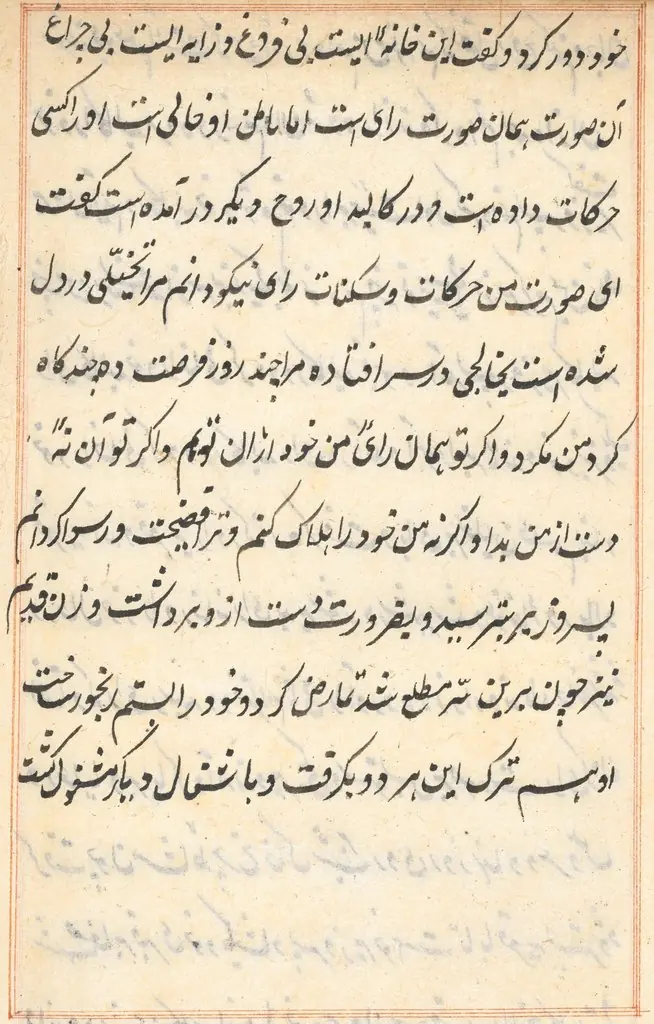 Page from Tales of a Parrot (Tuti-nama): text page
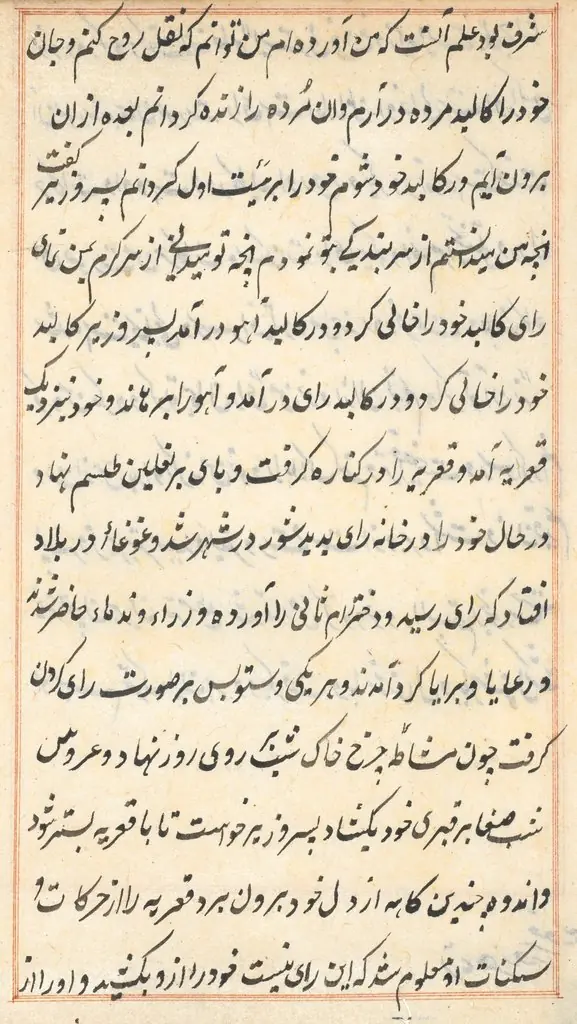 Page from Tales of a Parrot (Tuti-nama): text page
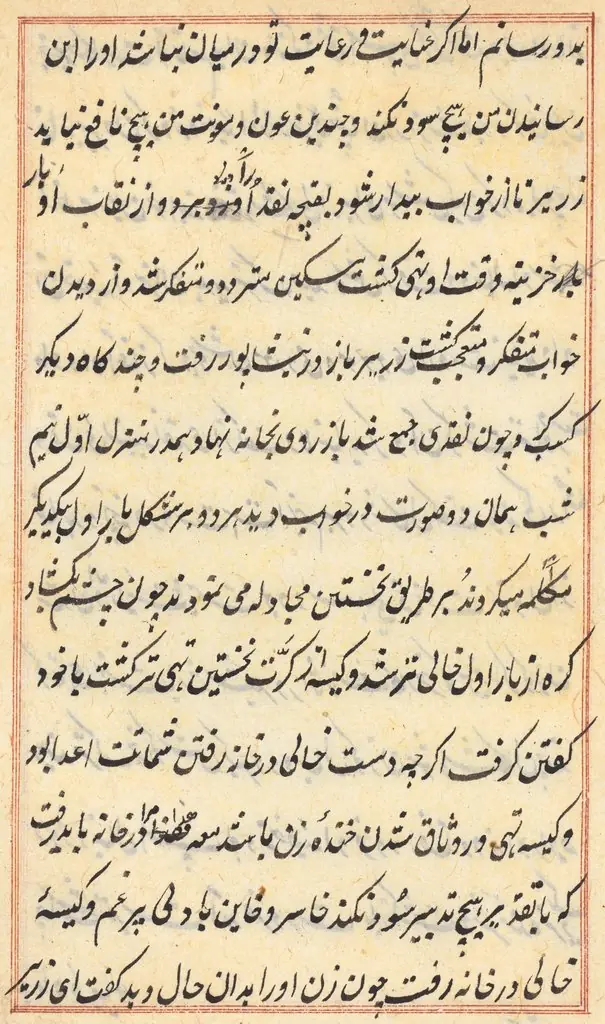 Page from Tales of a Parrot (Tuti-nama): text page
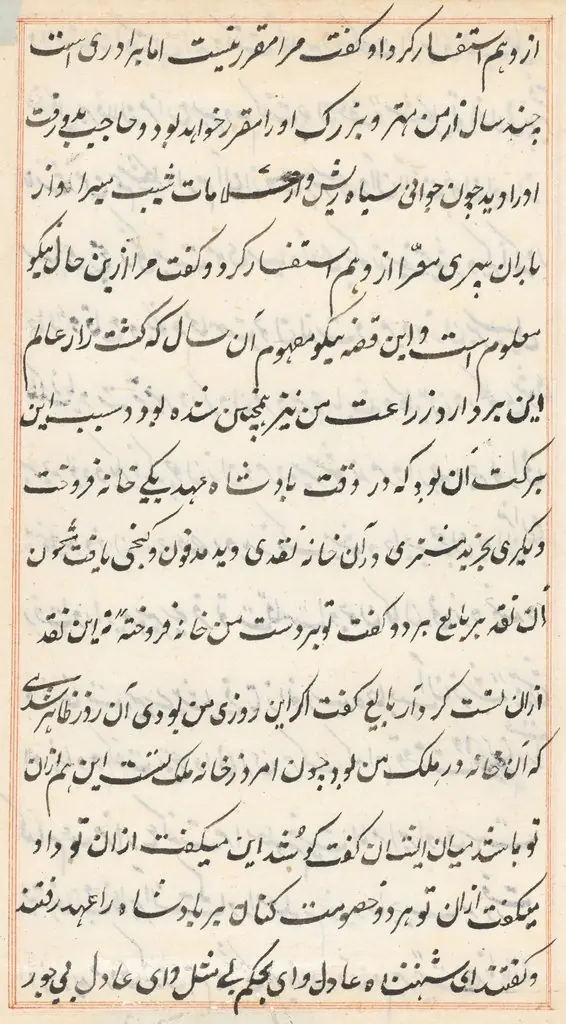 Page from Tales of a Parrot (Tuti-nama): text page
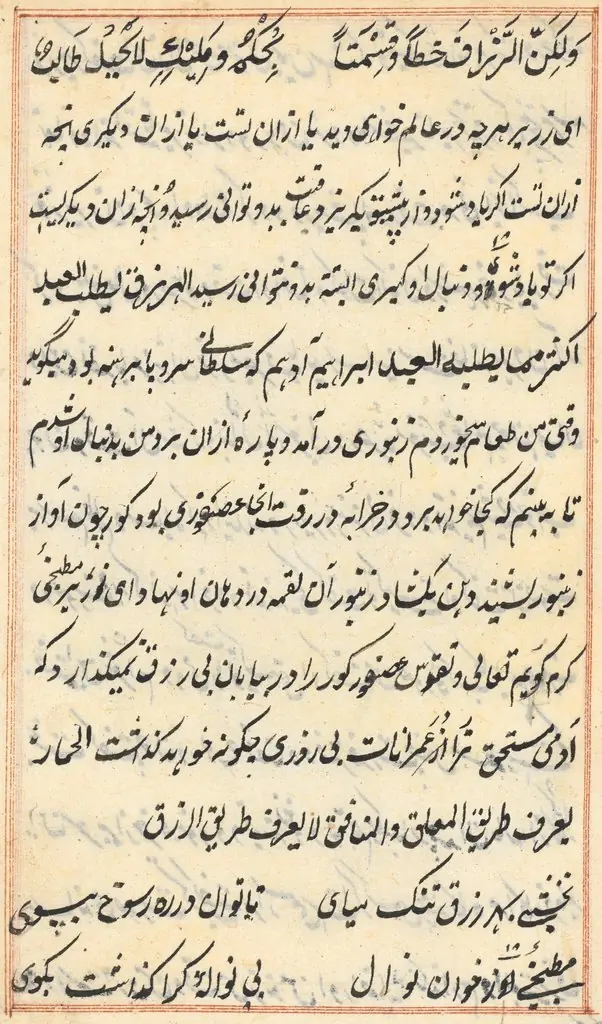 Page from Tales of a Parrot (Tuti-nama): text page
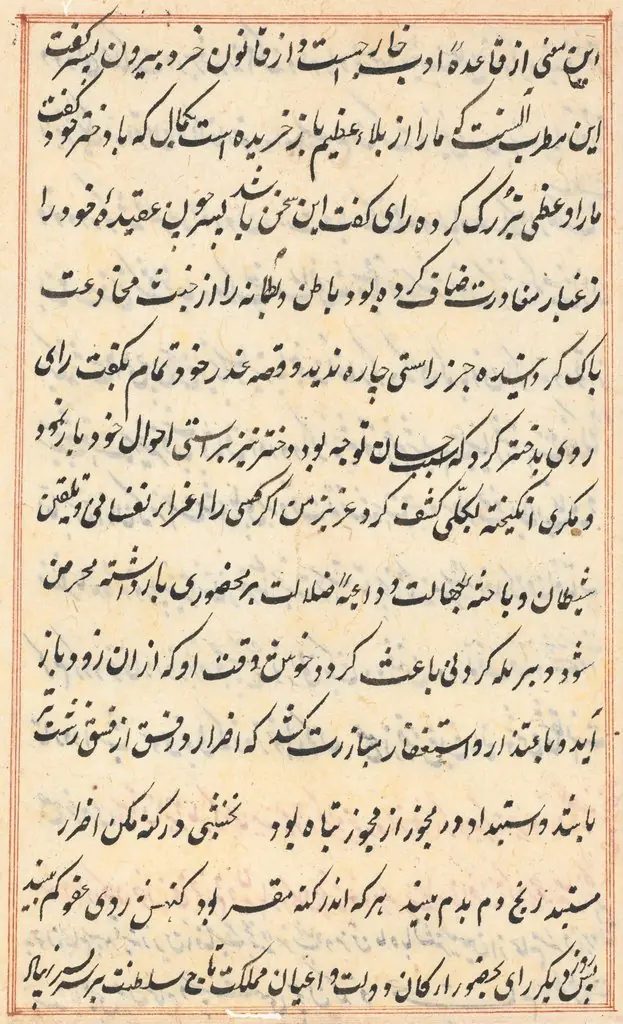 Page from Tales of a Parrot (Tuti-nama): text page
 Page from Tales of a Parrot (Tuti-nama): text page