Artwork
Page from Tales of a Parrot (Tuti-nama): text page
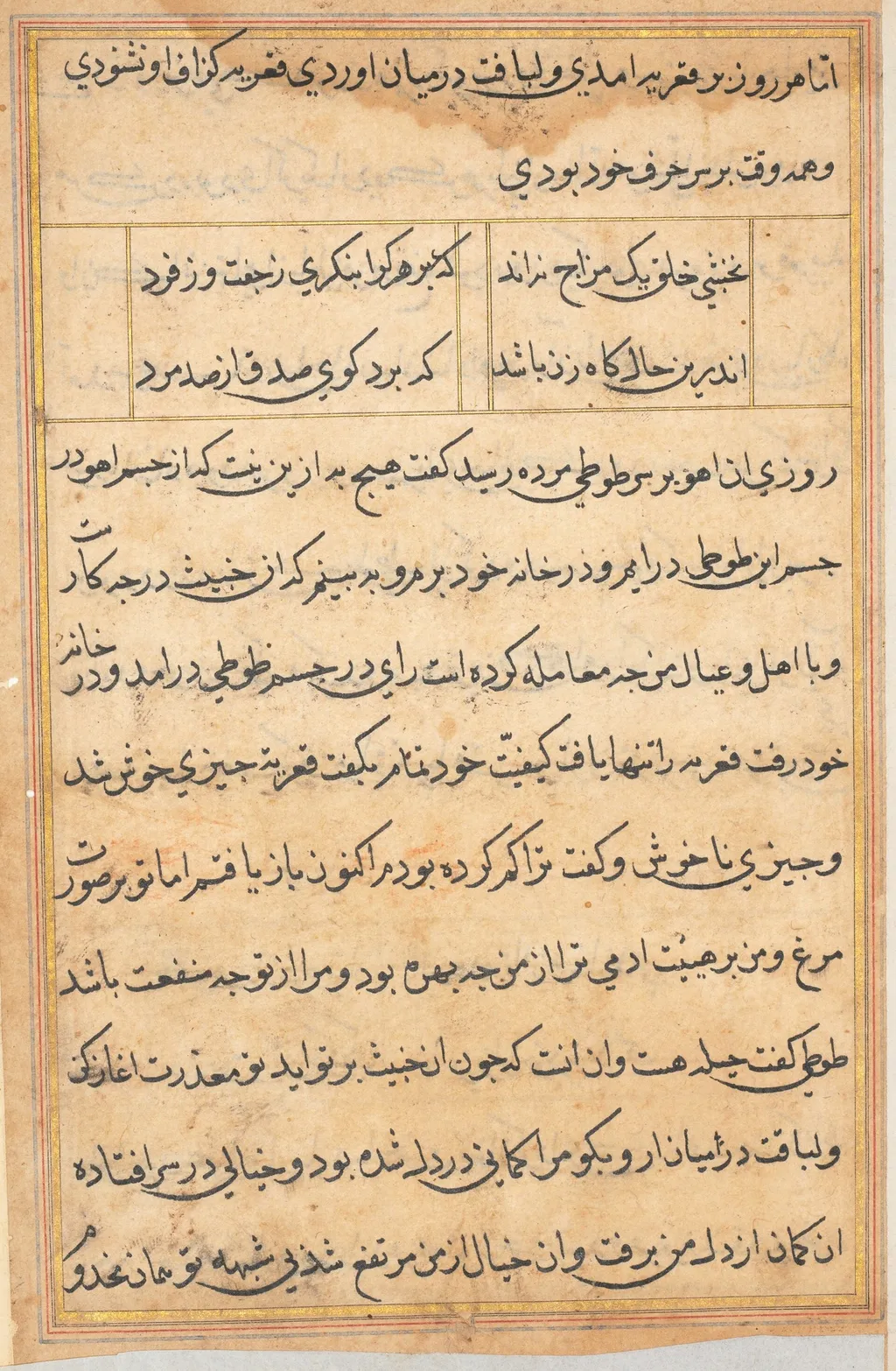
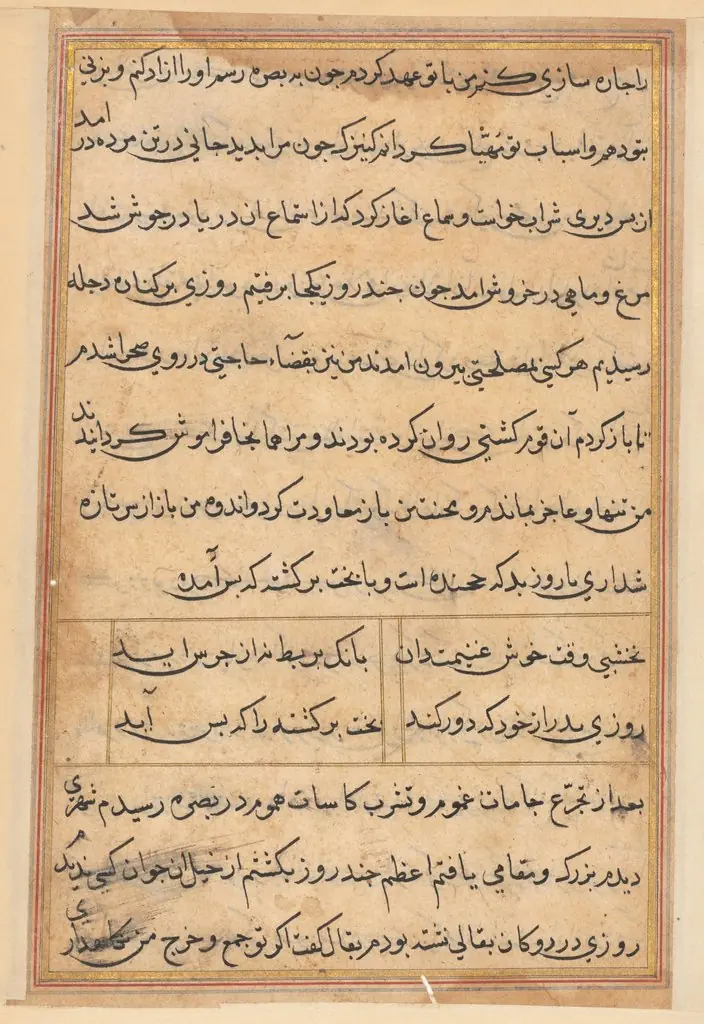
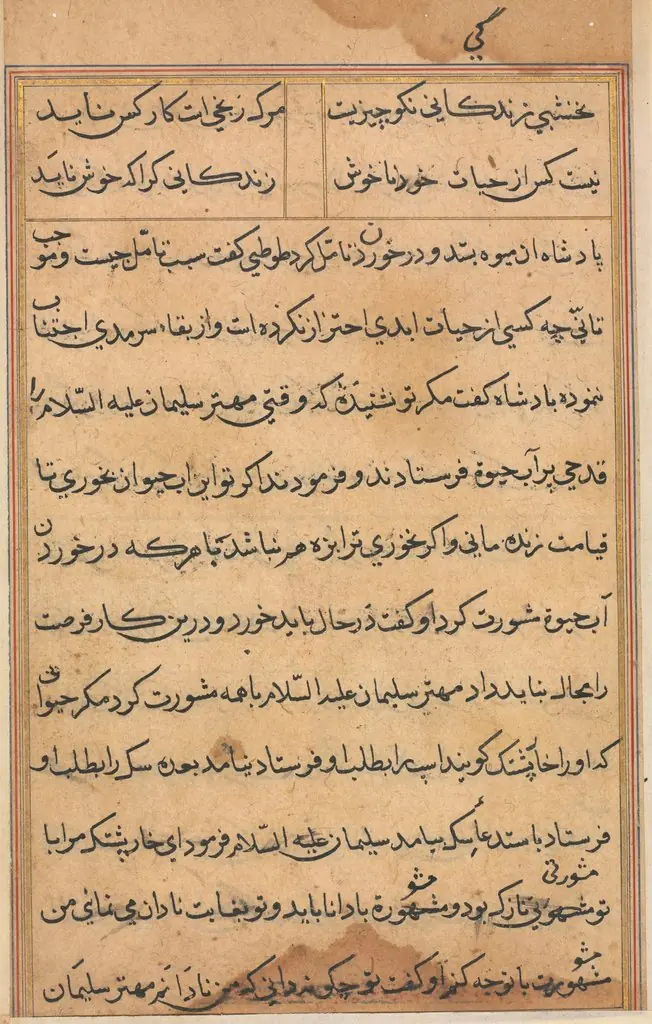
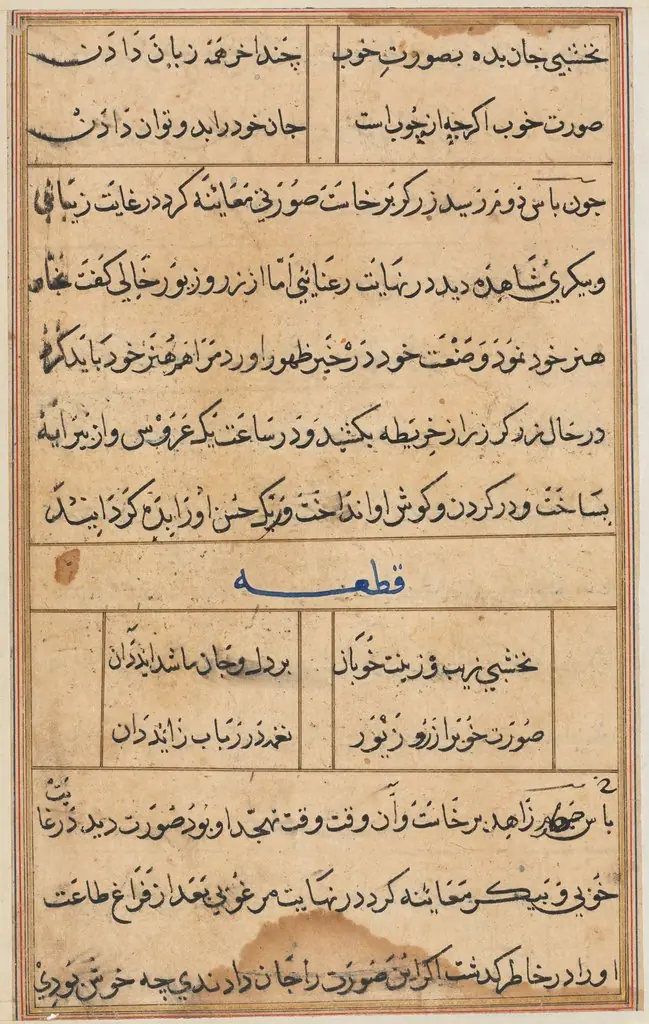
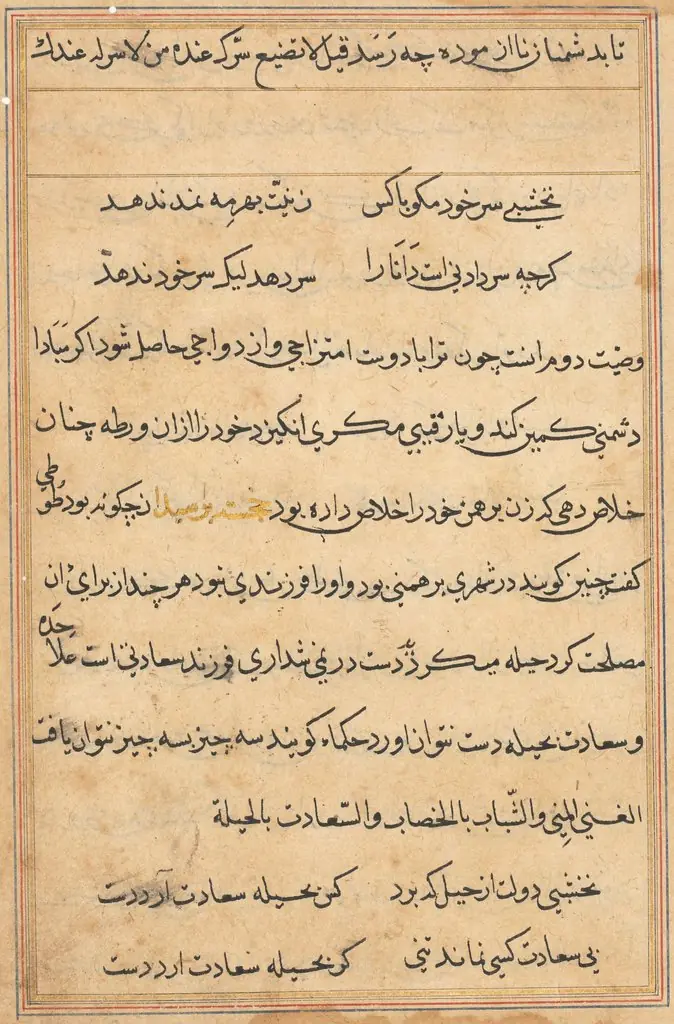
Page from Tales of a Parrot (Tuti-nama): text page is an unspecified painting. It dates from 1560 and is held in the collection of the Cleveland Museum of Art. The object is a single leaf from the 16th‑century Persian manuscript known as the Tuti‑nama or Tales of a Parrot.
About this work
The page has a worn, aged look, with some discoloration and staining that suggests it has been handled and preserved over time.
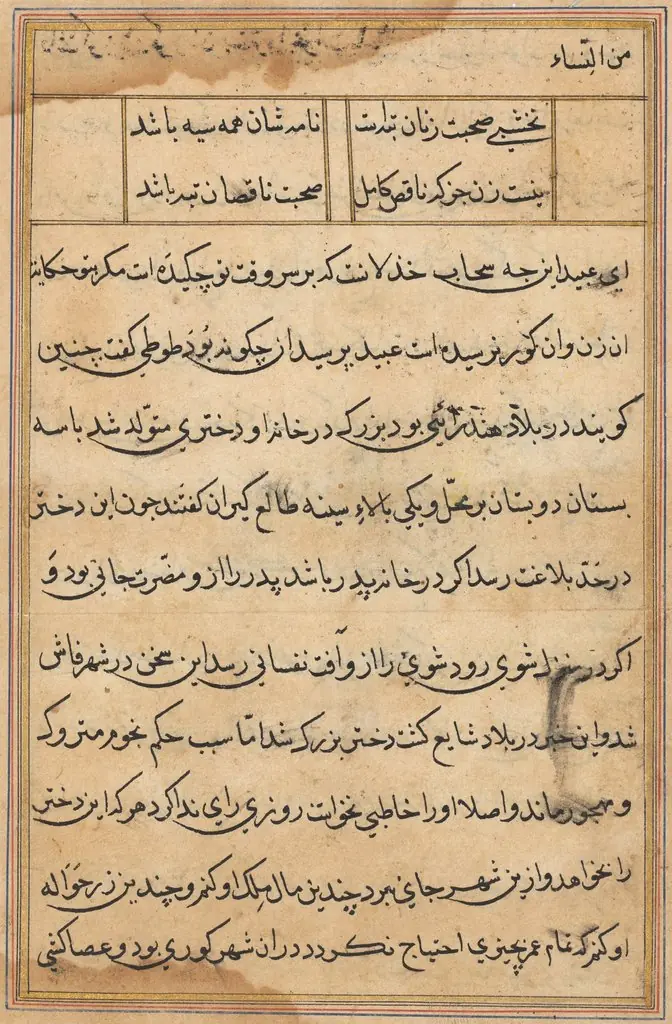
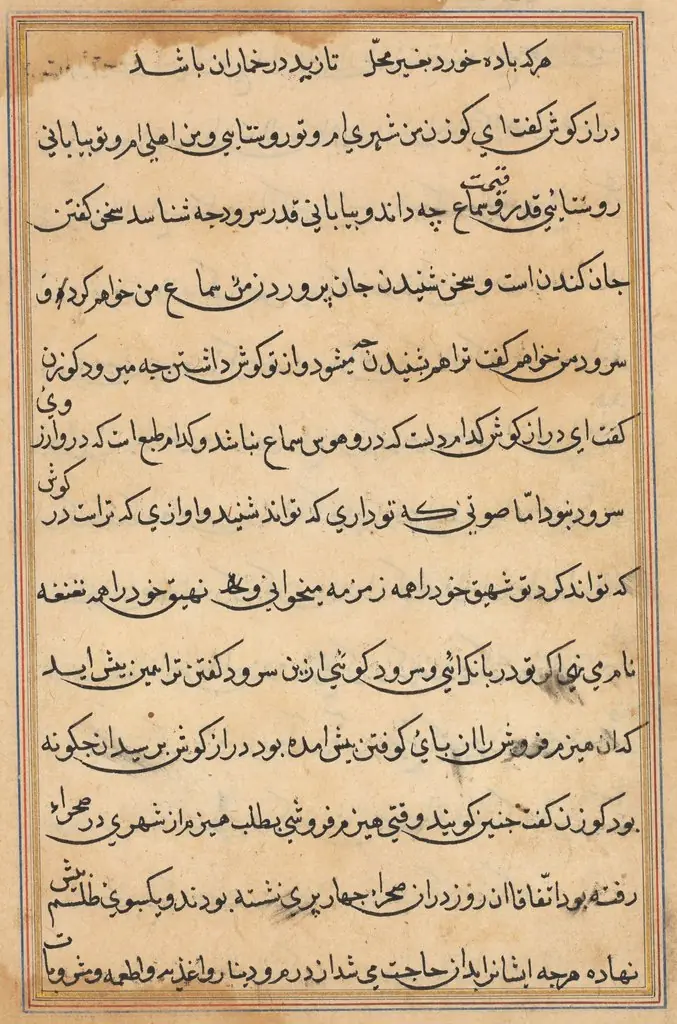
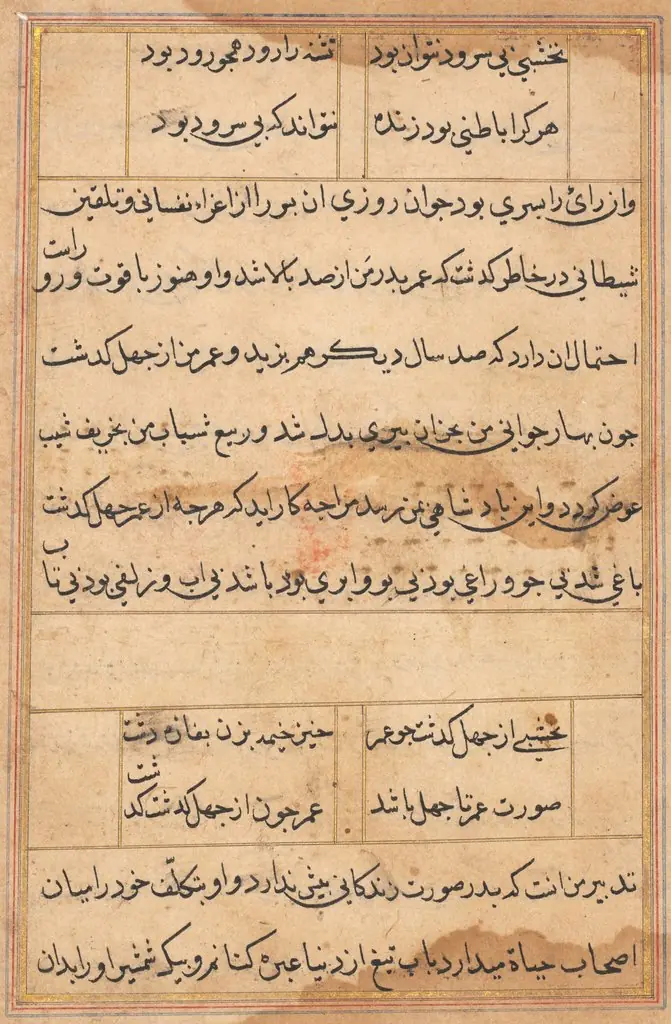
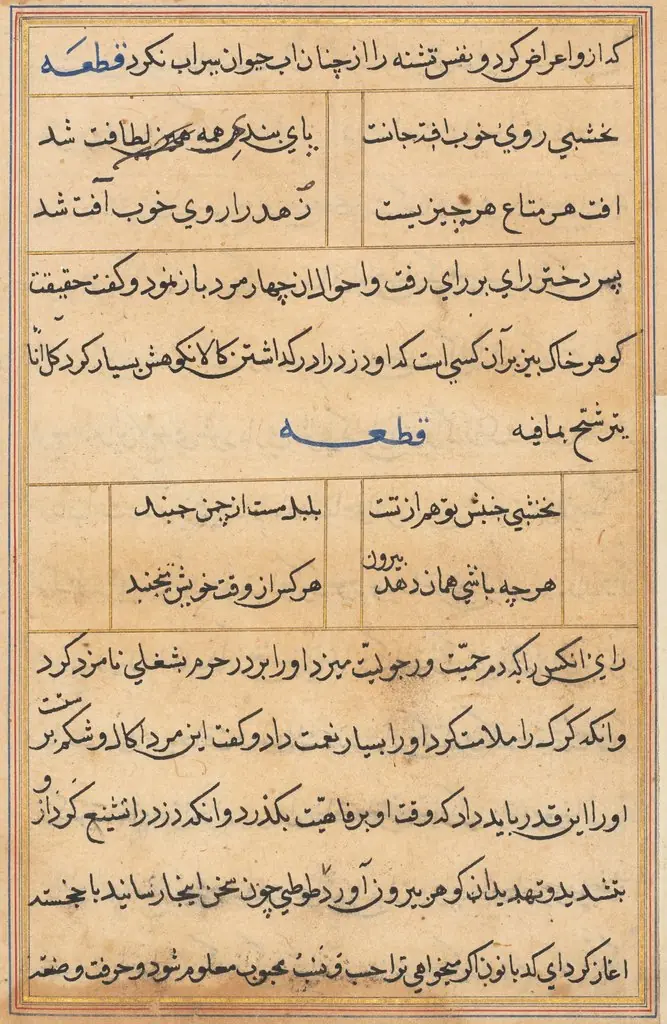
This painting is a page from the "Tales of a Parrot" (Tuti-nama), dated 1560. The page is dominated by text, written in a flowing script that fills most of the space. The text is in black ink, with some decorative elements and borders that add visual interest to the page.
The text itself appears to be a story or poem, with each line carefully written in a consistent style. The page has a worn, aged look, with some discoloration and staining that suggests it has been handled and preserved over time. The page is a beautiful example of calligraphy and book art from the 16th century.
Subject & Meaning
The depicted subject is a page of text from the Tuti-nama, a 16th-century Persian illustrated story collection. The work originates from the Mughal Empire and is housed in the Cleveland Museum of Art. Its iconography consists of written narrative without figurative imagery, reflecting the textual focus of this particular page.
The painting represents a segment of the moral and didactic tales compiled in the Tuti-nama, emphasizing storytelling as a cultural and literary form during the Mughal period.
Technique & Style
This painting on paper was created in 1560 during the Mughal period. It is a miniature from the Tuti-nama series rendered in opaque watercolor and gold leaf on paper, typical of Mughal manuscript illumination. The work shows delicate line work, flattened pictorial space, and a restrained palette of earth tones accented with gold, reflecting the manuscript's narrative style. It is housed at the Cleveland Museum of Art.
History & Provenance
This text page from the Tales of a Parrot (Tuti-nama) was created in 1560 within the Mughal Empire. The work is attributed to an unknown artist. It is currently held in the collection of the Cleveland Museum of Art, where it was accessioned with the catalog number 1962.279.299.a.
The text page from Tales of a Parrot (Tuti-nama) is held in the collection of the Cleveland Museum of Art, cataloged under the accession number 1962.279.299.a. It was created in 1560 within the Mughal Empire and forms part of the museum's Indian miniature painting holdings. The work has been included in exhibitions focused on Indian miniature painting and the Tuti-nama manuscript tradition at the Cleveland Museum of Art.
Context
The solitary text page from the 1560 manuscript of the Tuti-nama, executed in the Mughal imperial atelier, occupies a pivotal position in the evolution of Indo-Persian illustration, reflecting the synthesis of Persian narrative traditions with indigenous Indian aesthetics during the reign of Akbar. The work's understated composition and inscriptional density exemplify scholarly debates on anonymity and workshop collaboration in 16th-century manuscript painting, as highlighted by the Cleveland Museum of Art's cataloguing of the folio bearing the accession number 1962.279.299.a and its provenance from a dispersed manuscript associated with the imperial workshops of Fatehpur Sikri.
Overview
The object is a single leaf from the 16th‑century Persian manuscript known as the Tuti‑nama or Tales of a Parrot. Dated to around 1560, the page consists primarily of continuous black‑ink calligraphy, framed by modest ornamental borders. Its surface shows signs of age, discoloration, staining, and wear, that attest to centuries of handling and preservation.
Artist & collection

 Page from Tales of a Parrot (Tuti-nama): text page
 Page from Tales of a Parrot (Tuti-nama): text page
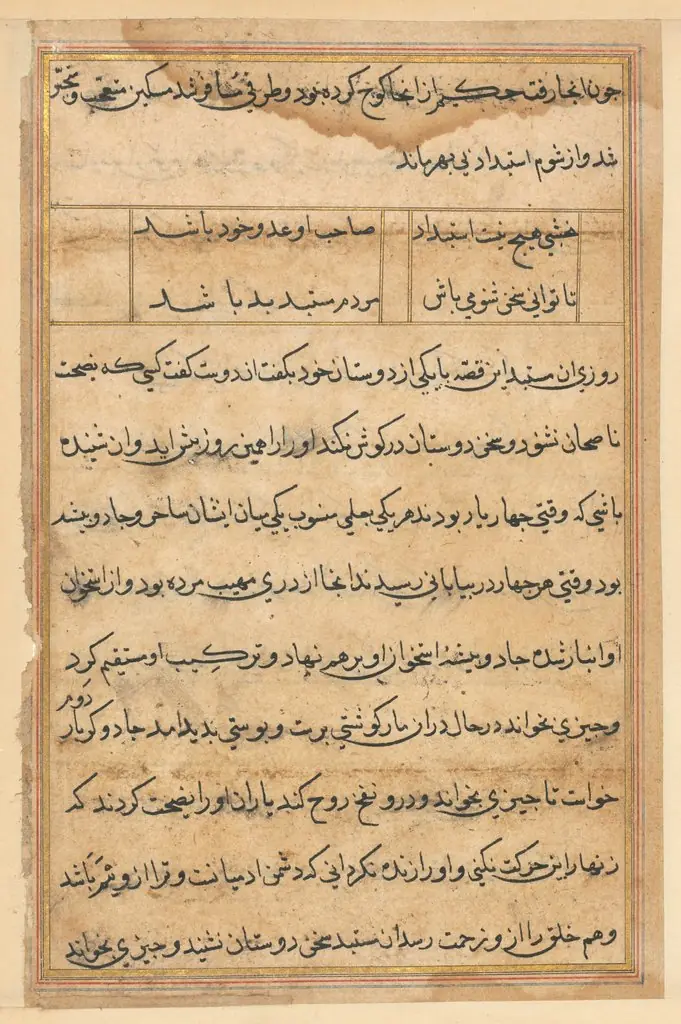 Page from Tales of a Parrot (Tuti-nama): text page
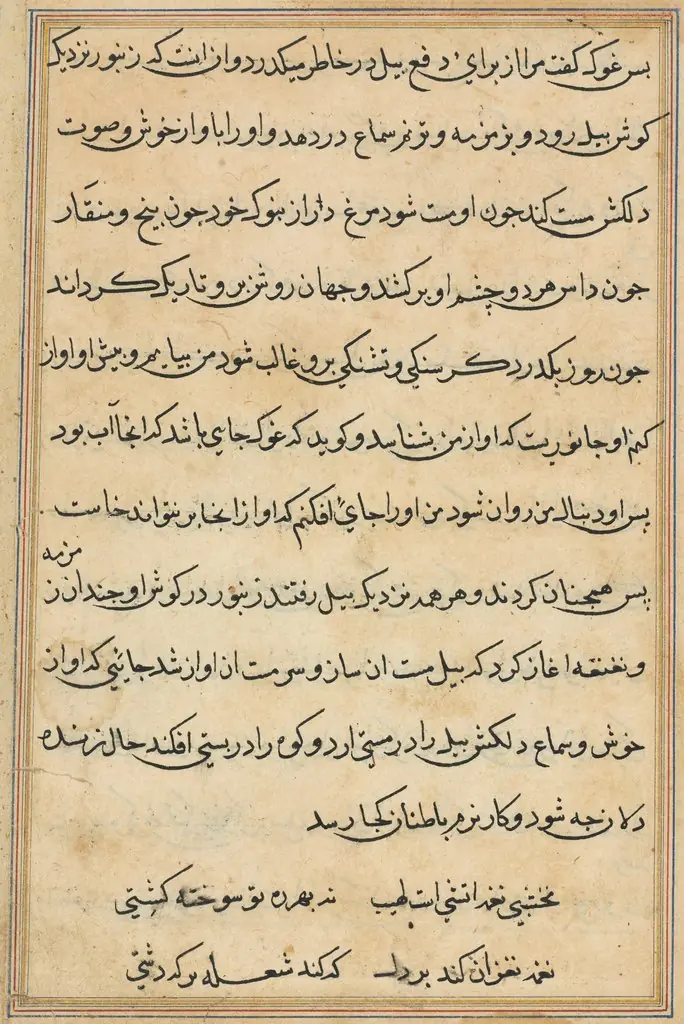 Page from Tales of a Parrot (Tuti-nama): text page
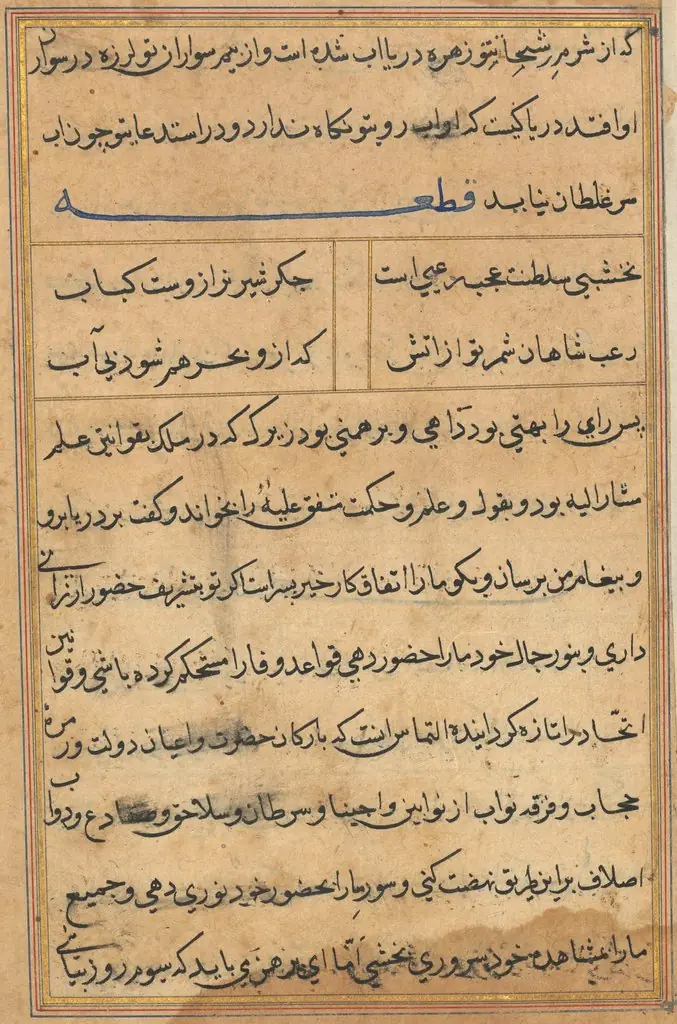 Page from Tales of a Parrot (Tuti-nama): text page
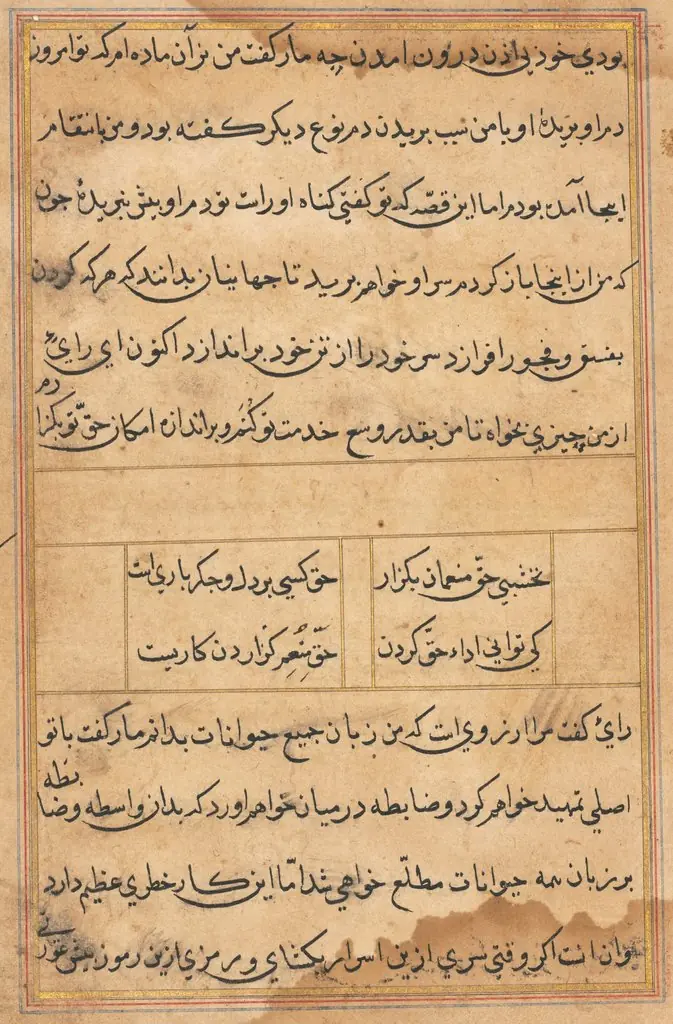 Page from Tales of a Parrot (Tuti-nama): text page
 Page from Tales of a Parrot (Tuti-nama): text page