Artwork
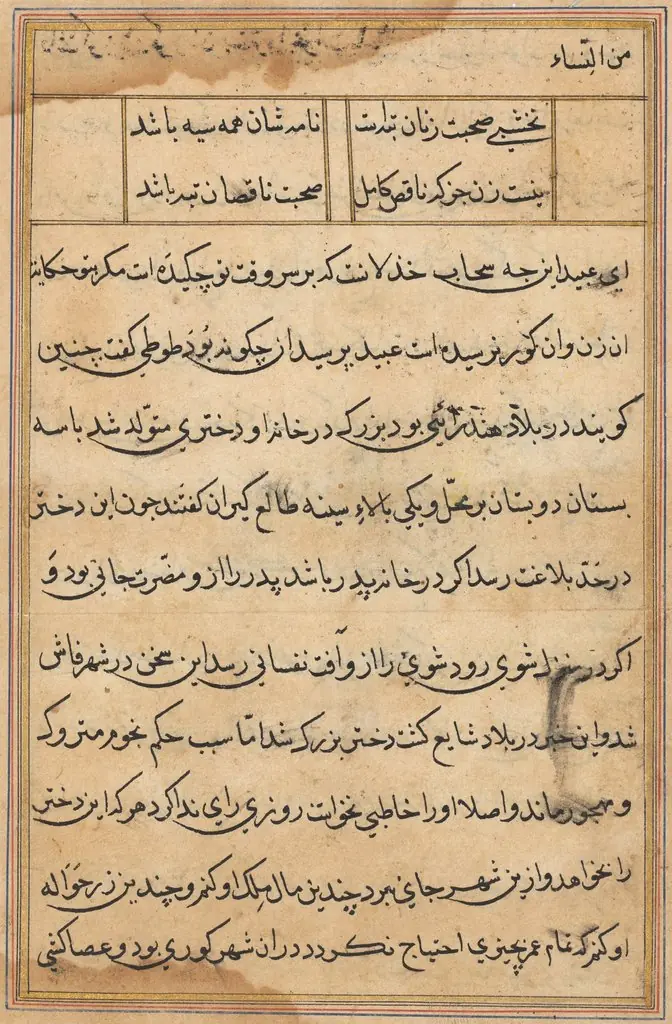
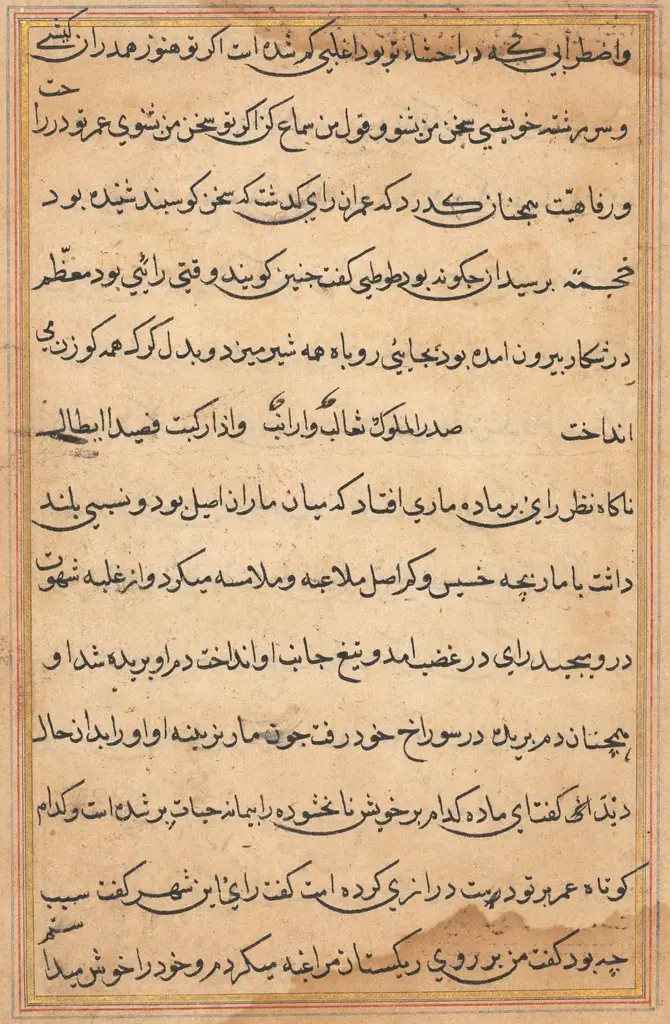
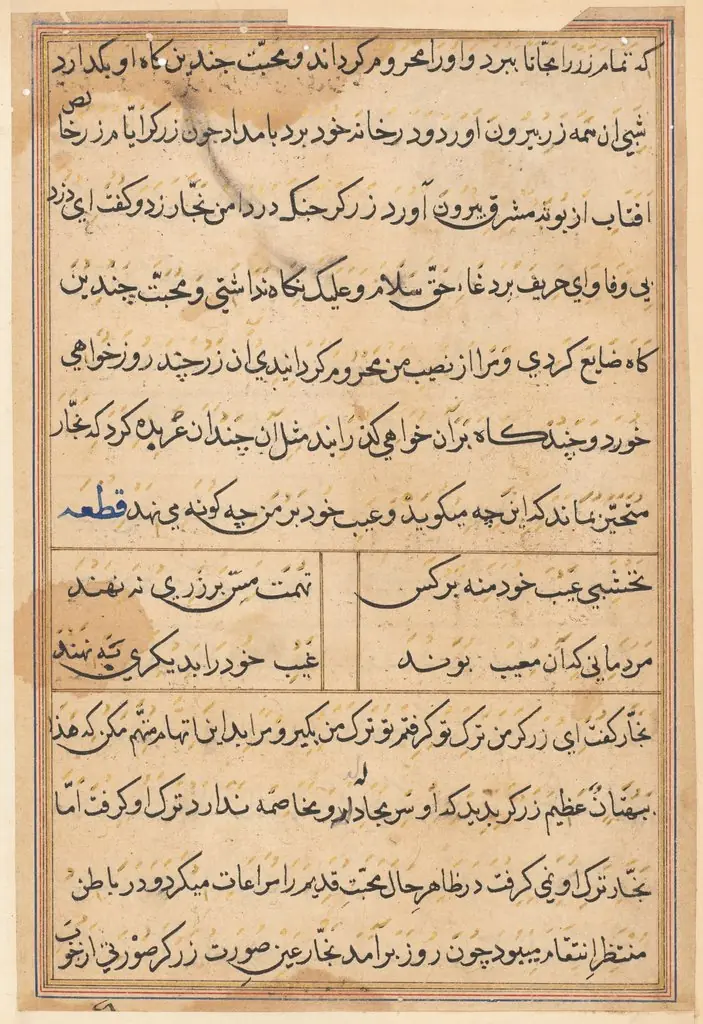
Page from Tales of a Parrot (Tuti-nama): text page
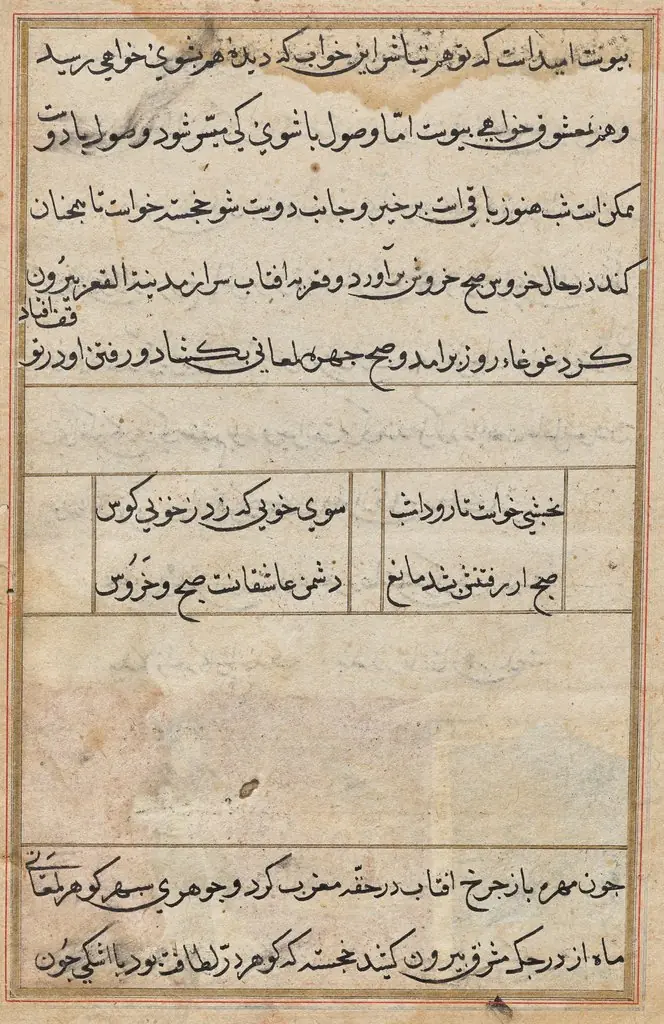
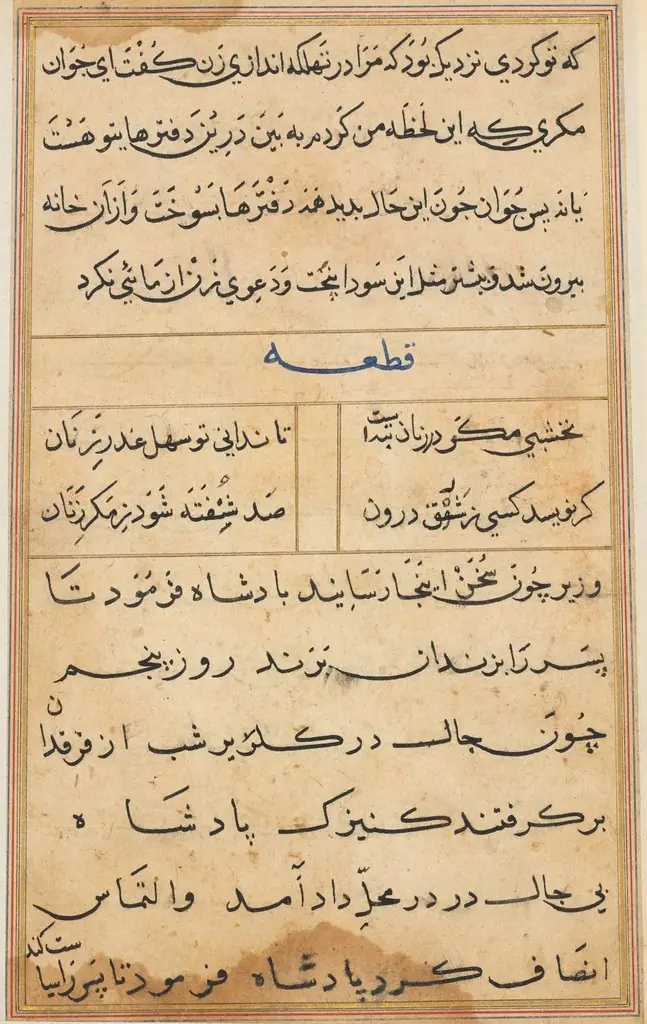
Page from Tales of a Parrot (Tuti-nama): text page is an unspecified painting. It dates from 1560 and is held in the collection of the Cleveland Museum of Art. This object is a painted page taken from the Persian narrative work Tales of a Parrot (Tuti‑nama).
About this work
History & Provenance
The work was created as a text page from the Persian narrative Tuti-nama, a series of illustrated fables produced during the reign of Akbar.
The miniature was executed in 1560 within the Mughal imperial context and is attributed to an anonymous artist. It entered the collection of the Cleveland Museum of Art, where it remains on view as part of their manuscript holdings.
The work was created as a text page from the Persian narrative Tuti-nama, a series of illustrated fables produced during the reign of Akbar. Its production reflects the courtly workshop practice of employing unnamed painters to copy and adapt literary texts for elite patrons.
The folio was later catalogued under the accession number 1962.279.303.b and documented in the museum's records as a Mughal-era painting.
No further ownership transfers are recorded prior to its acquisition by the Cleveland Museum of Art.
Legacy
The miniature from the 1560 Tuti-nama manuscript has shaped later Persian and Indo-Persian book arts, inspiring compositions that blend narrative text with intricate figural scenes. Its compositional strategies were widely emulated in Mughal atelier workshops, where the text page format informed the visual pacing of subsequent illustrated manuscripts. The work's inclusion in the Cleveland Museum of Art collection has ensured continued scholarly attention, reinforcing its reputation as a pivotal example of Safavid narrative painting.
Overview
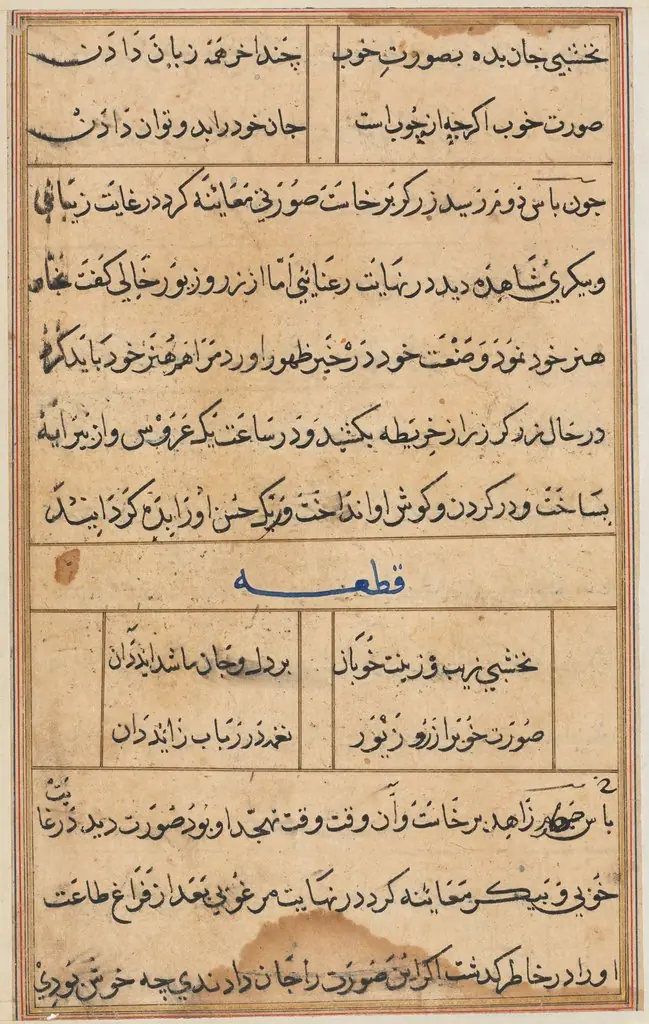
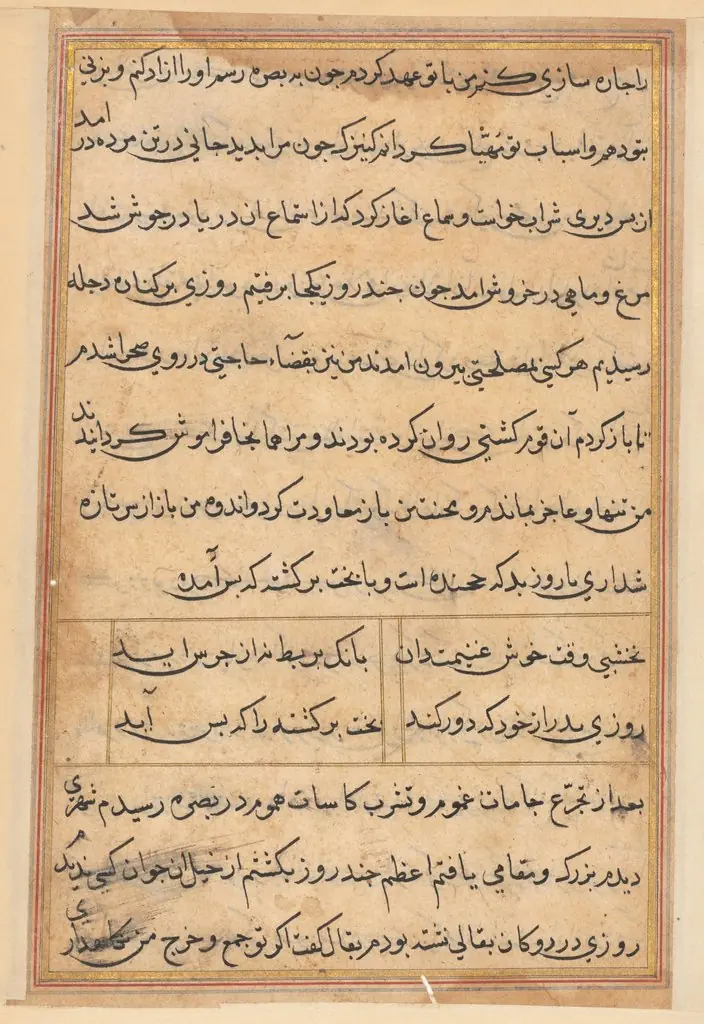
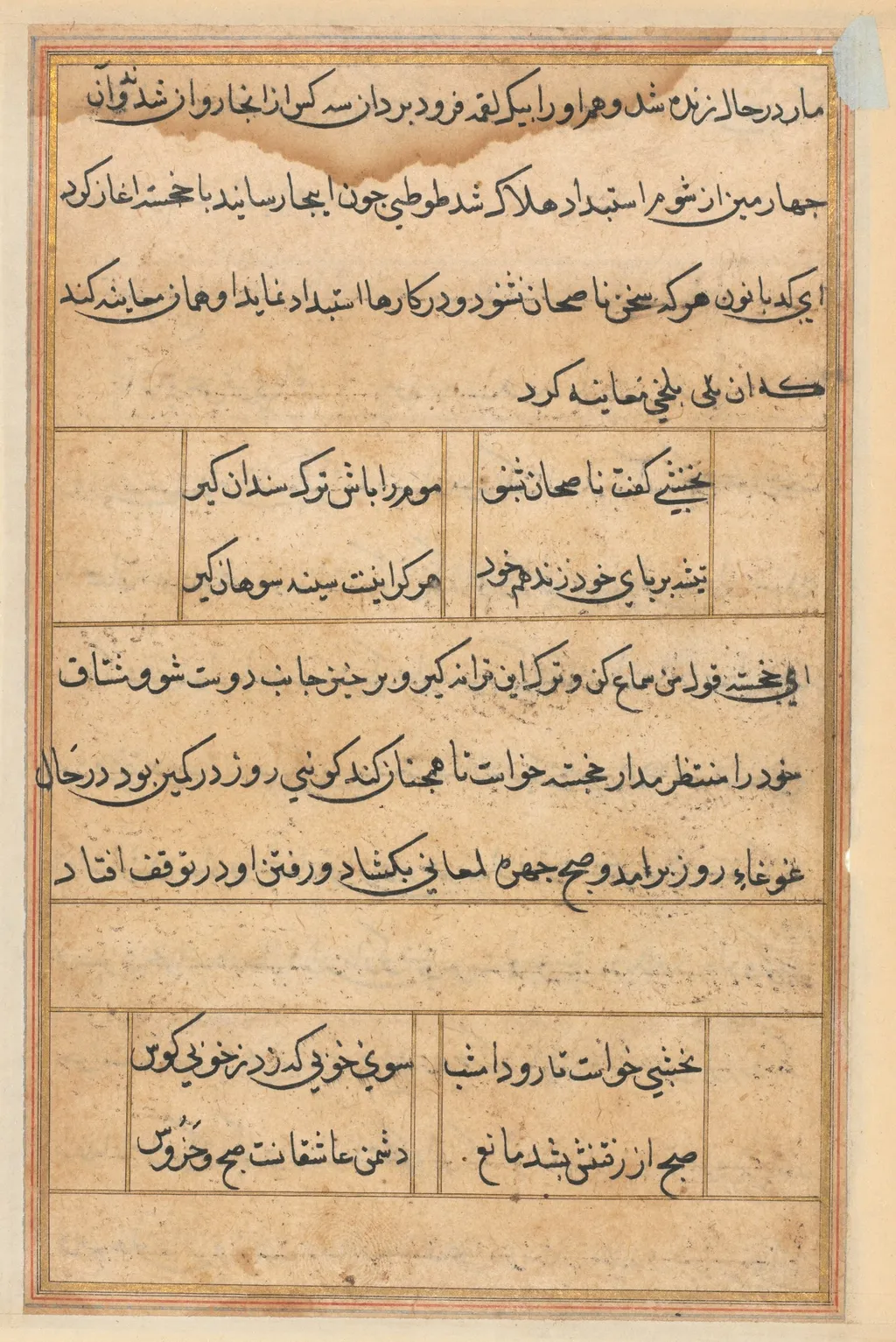
This object is a painted page taken from the Persian narrative work Tales of a Parrot (Tuti‑nama). The surface consists of a light brown paper sheet framed by a thin red margin. Across the page runs dense black calligraphy organized into tidy rectangular blocks, forming the story’s text.
Subject & Meaning
The script conveys the literary content of the Tuti‑nama, a collection of moral and entertaining anecdotes traditionally illustrated for courtly audiences. The page functions as a textual fragment rather than a visual illustration, emphasizing the literary art of Persian prose and poetry.
Technique & Style
The calligraphic hand is executed in a controlled, elegant style, with slightly curved lines that balance precision and fluidity. Ink application varies subtly, producing darker and lighter strokes that suggest careful brushwork on a prepared paper support, while the red border was added with a thin pigment wash.
Artist & collection

 Page from Tales of a Parrot (Tuti-nama): text page
 Page from Tales of a Parrot (Tuti-nama): text page
 Page from Tales of a Parrot (Tuti-nama): text page
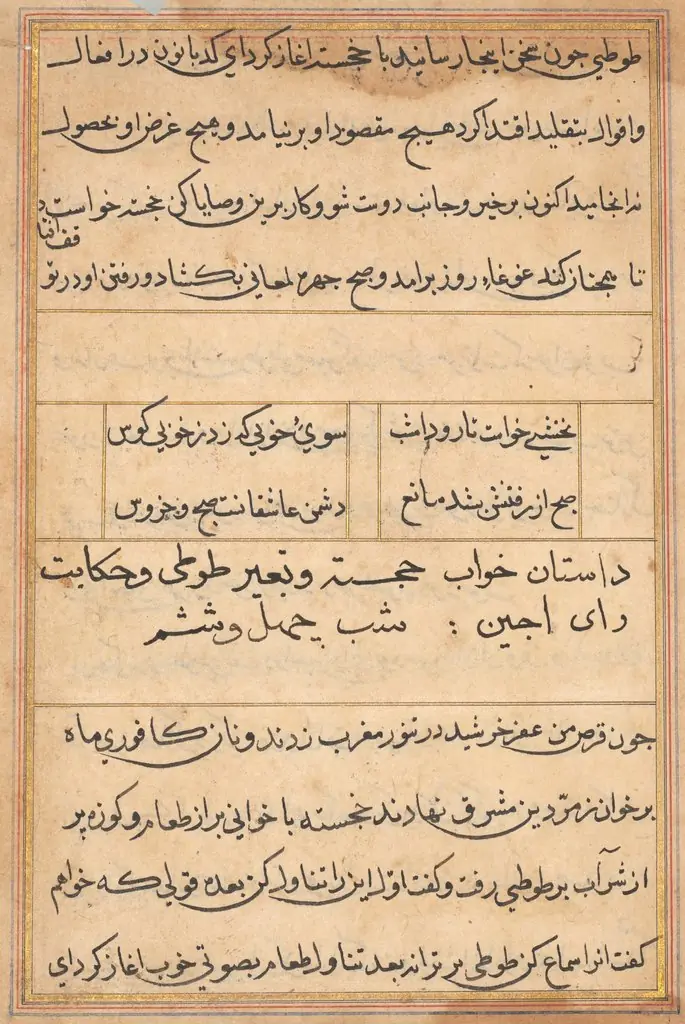 Page from Tales of a Parrot (Tuti-nama): text page
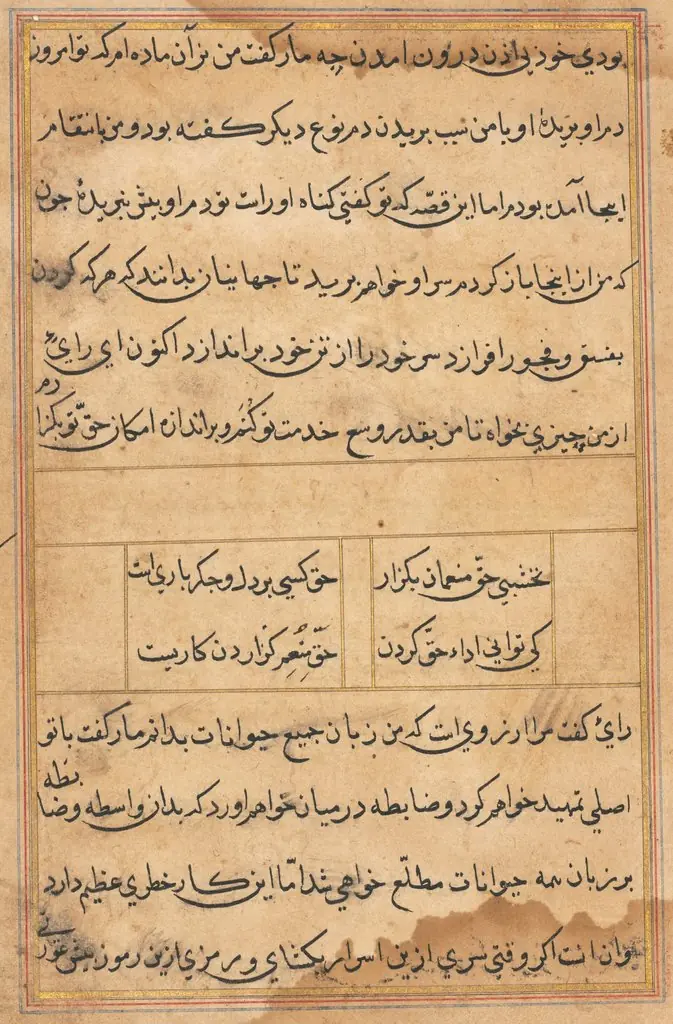 Page from Tales of a Parrot (Tuti-nama): text page
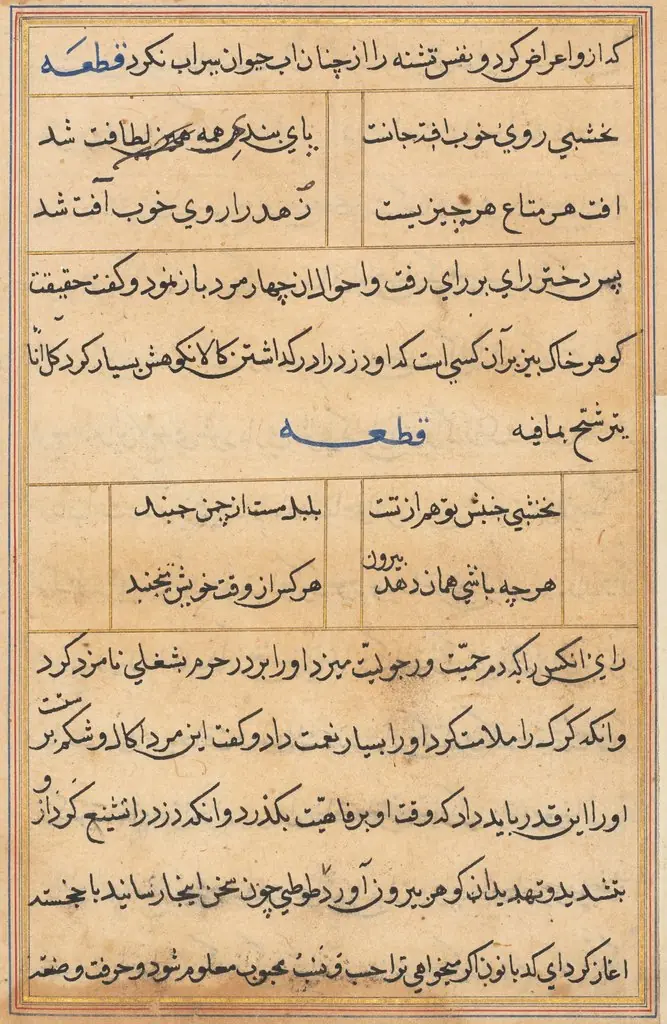 Page from Tales of a Parrot (Tuti-nama): text page
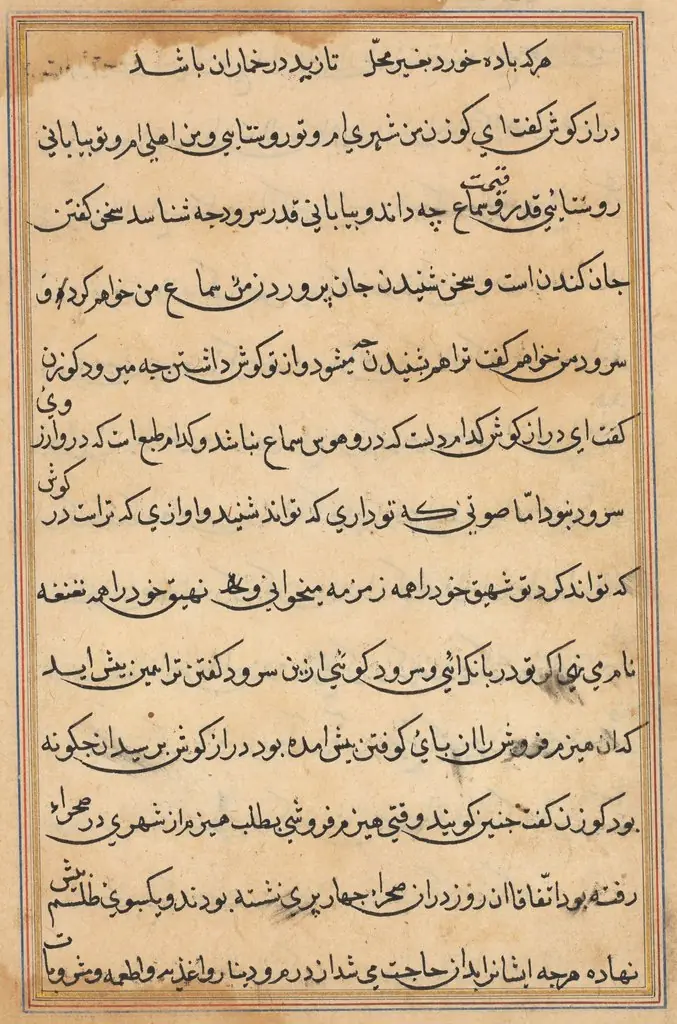 Page from Tales of a Parrot (Tuti-nama): text page
 Page from Tales of a Parrot (Tuti-nama): text page