Artwork
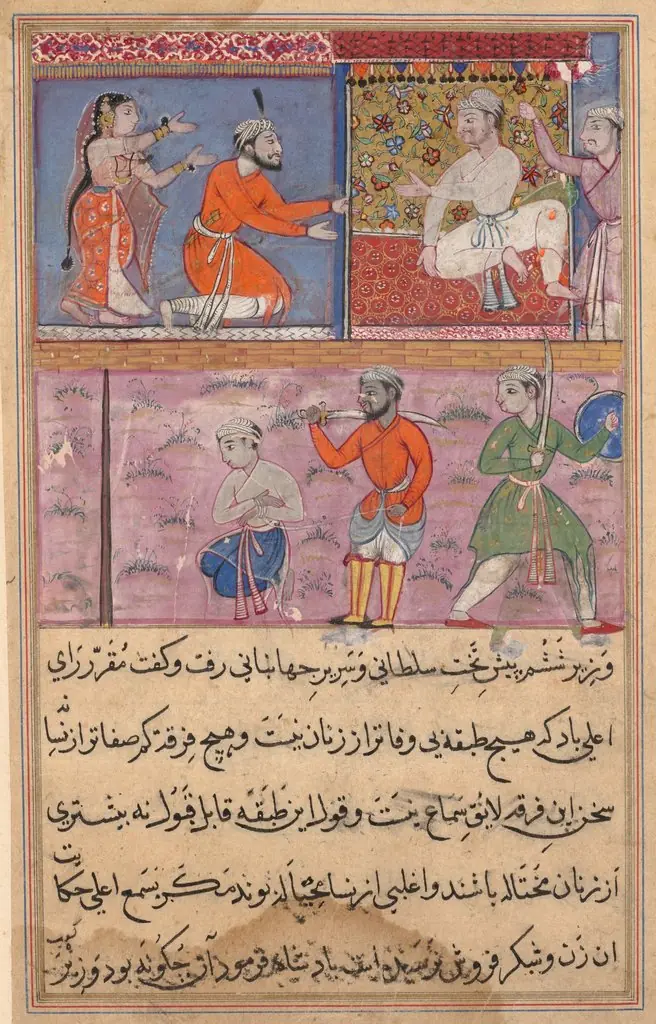
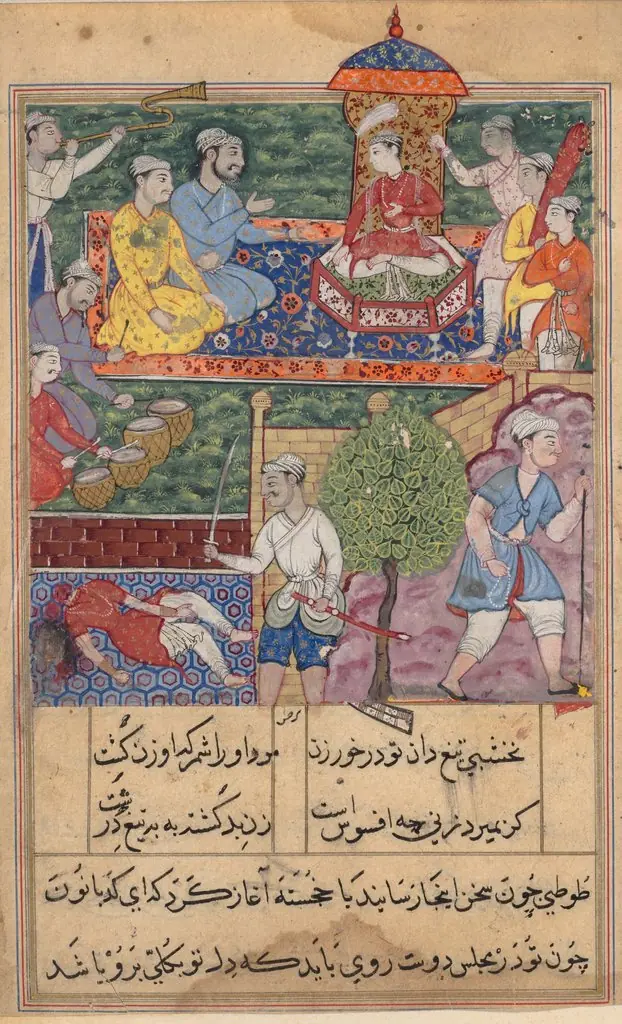
The prince sent back to the place of execution for the sixth time, from a Tuti-nama (Tales of a Parrot): Eighth Night
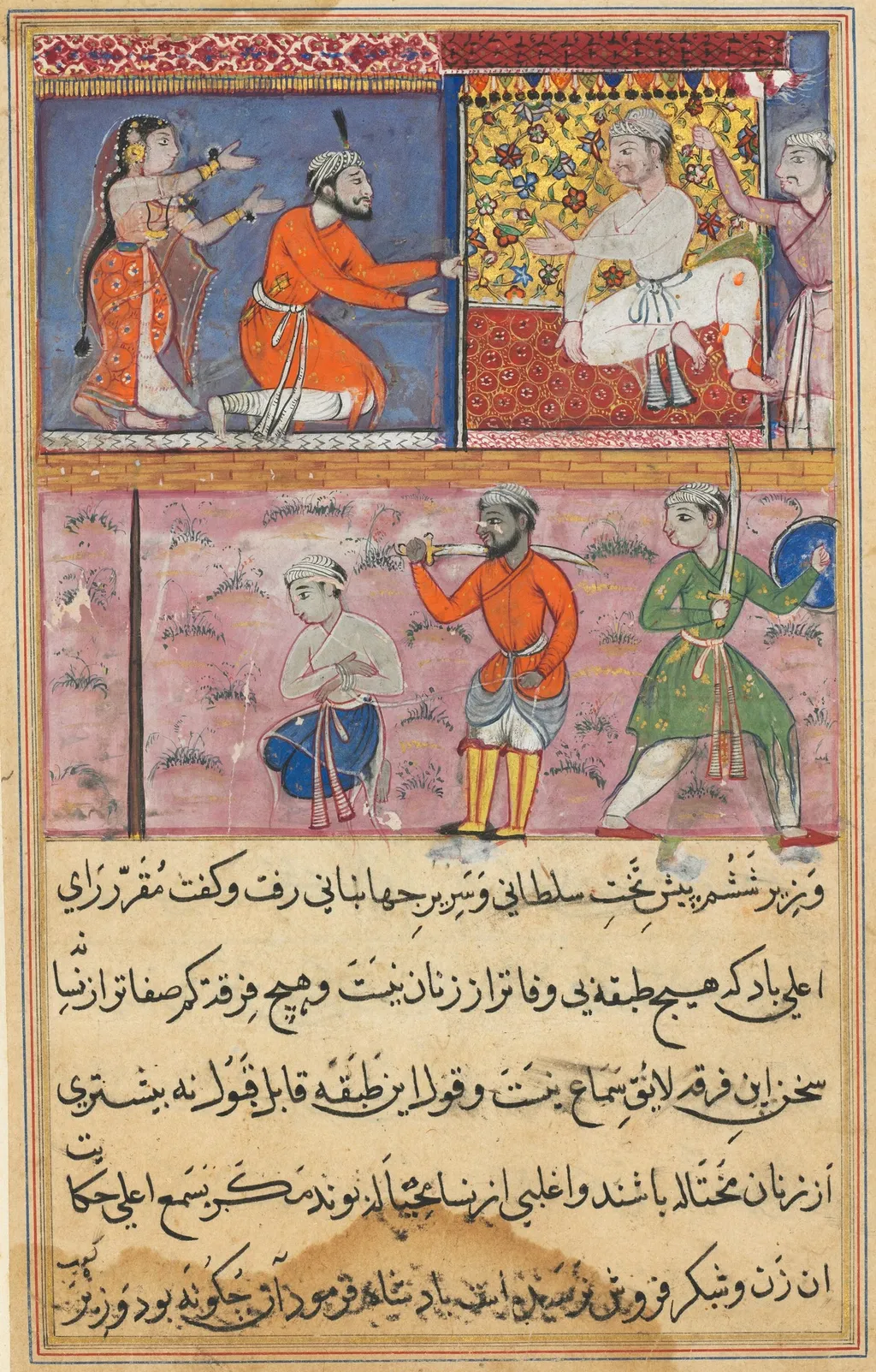
The prince sent back to the place of execution for the sixth time, from a Tuti-nama (Tales of a Parrot): Eighth Night is an unspecified painting. It dates from 1560 and is held in the collection of the Cleveland Museum of Art.
About this work
History & Provenance
Created in 1560 within the Mughal Empire, this painting illustrates the Eighth Night of the Tuti-nama (Tales of a Parrot).
Created in 1560 within the Mughal Empire, this painting illustrates the Eighth Night of the Tuti-nama (Tales of a Parrot). The work was produced by an unknown artist for a manuscript commissioned during the mid-sixteenth century. It is cataloged under the accession number 1962.279.69.b, indicating its acquisition by the Cleveland Museum of Art in 1962.
The piece depicts the narrative moment where a prince is returned to the execution site for the sixth time, serving as a specific folio from this larger literary cycle.
Context
The sixth return of the prince to his place of execution, depicted in the Eighth Night of the Tuti-nama, reflects a recurring narrative of imperial justice within Mughal manuscript painting, situating the work within the broader tradition of Persianate storytelling adapted to Indian court aesthetics. The miniature, attributed to an anonymous artist, dates to 1560 and was created in the Mughal Empire, a context that informs both its stylistic conventions and thematic preoccupations. Held in the Cleveland Museum of Art, the piece contributes to scholarly discussions on narrative cycles in 16th-century Indian painting, where visual repetition underscores moral and political themes.
Overview
The work, titled The prince sent back to the place of execution for the sixth time, from a Tuti‑nama (Tales of a Parrot): Eighth Night, is a miniature painting that arranges four narrative vignettes within a single frame. Each vignette depicts figures in vivid, patterned garments against a richly colored backdrop of deep blues, reds and gold, all bounded by ornamental borders.
Subject & Meaning
The scenes illustrate a sequence from the Persian literary collection Tuti‑nama, portraying a prince repeatedly returned to an execution site. The figures, an orange‑clad kneeling man urged forward, a green‑dressed man with a spear, and a white‑robed spectator, suggest moments of tension and authority within the story’s moral or didactic context.
Technique & Style
Executed in the traditional Persian miniature manner, the painting employs fine brushwork for intricate costume patterns and delicate facial features. The palette relies on saturated pigments, while the decorative borders frame the narrative panels, reflecting the courtly aesthetic of Safavid‑era manuscript illustration.
Artist & collection

- The prince sent back to the place of execution for the sixth time, from a Tuti-nama (Tales of a Parrot): Eighth Night
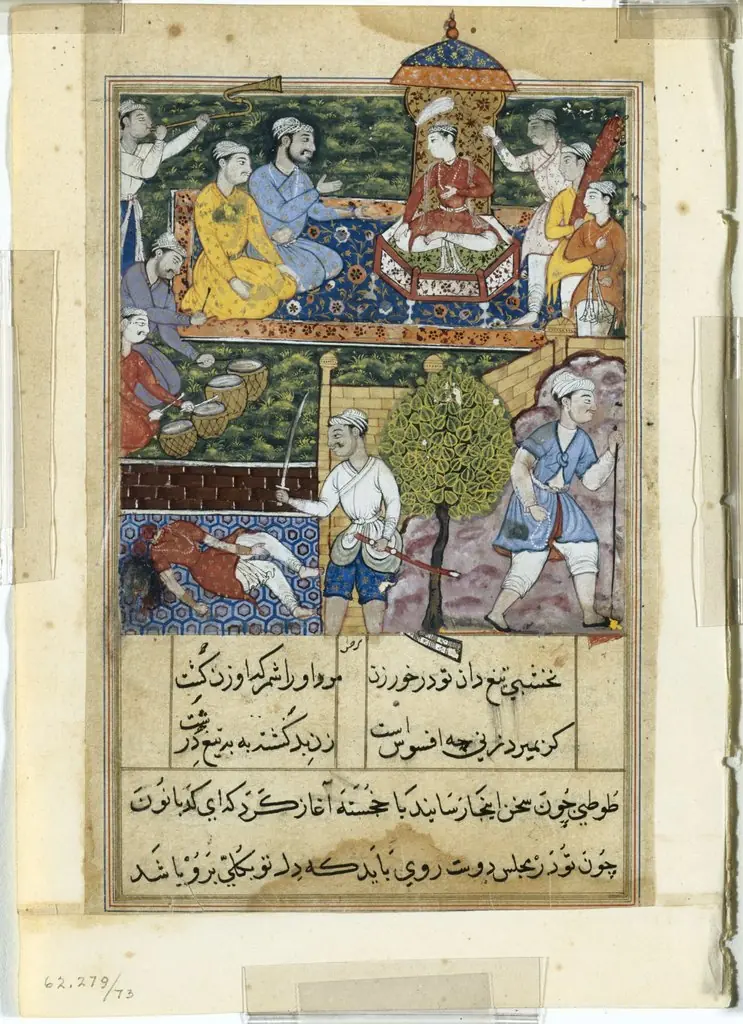 The young prince is crowned and the wicked handmaiden is executed, from a Tuti-nama (Tales of a Parrot): Eighth Night
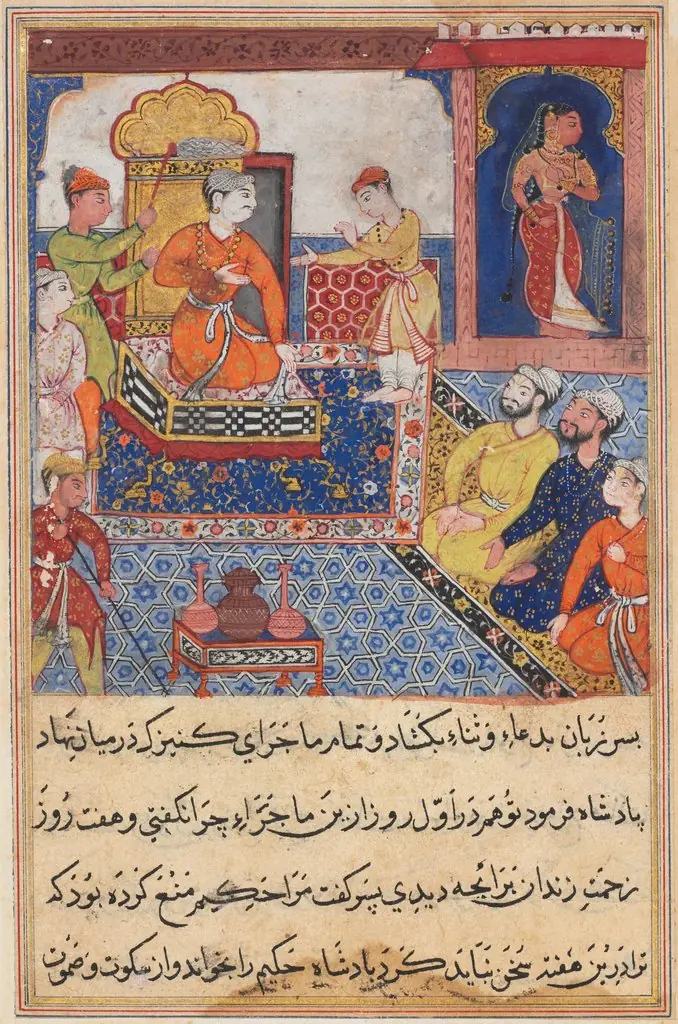 The young prince recounts his experiences to his father, the king, from a Tuti-nama (Tales of a Parrot): Eighth Night
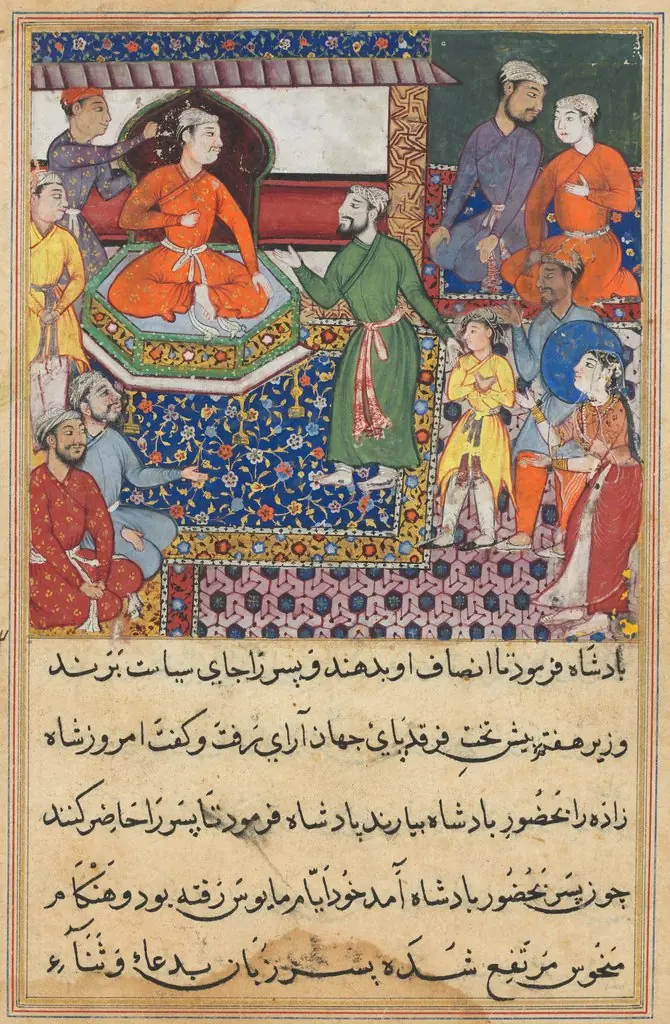 The handmaiden again pleads for the death of the prince, from a Tuti-nama (Tales of a Parrot): Eighth Night
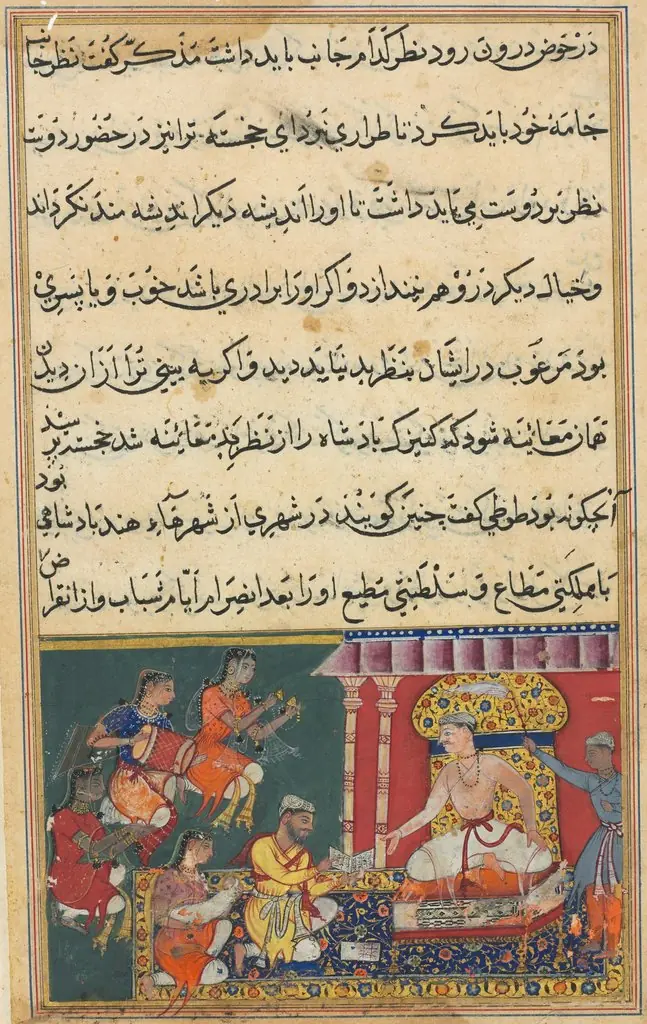 The astrologer predicts a calamity for the newly born prince in his thirteenth year, but one which he would be able to overcome, from a Tuti-nama (Tales of a Parrot): Eighth Night
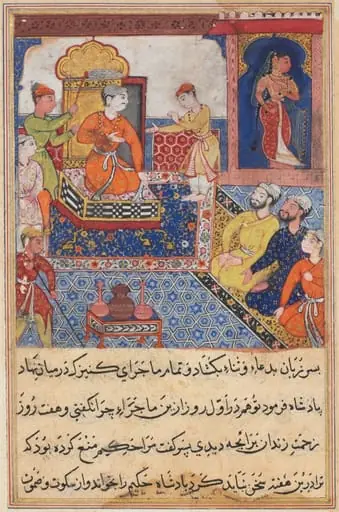 The young prince recounts his experiences to his father, the king, from a Tuti-nama (Tales of a Parrot): Eighth Night
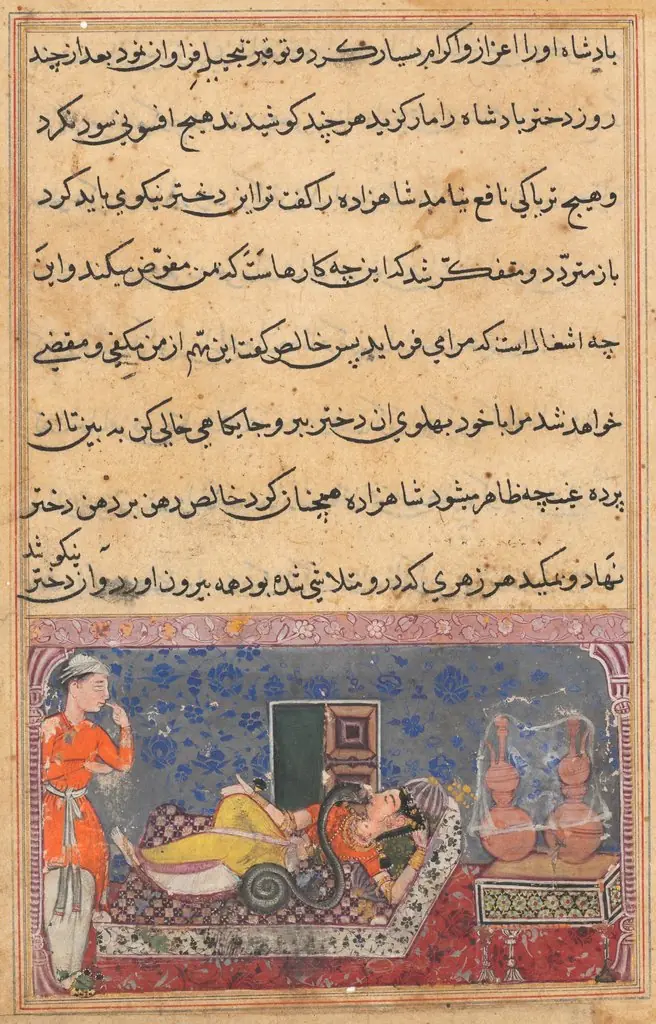 Khalis repays the prince for his kindness by changing into a snake and sucking the poison from the king’s daughter, from a Tuti-nama (Tales of a Parrot): Eighteenth Night
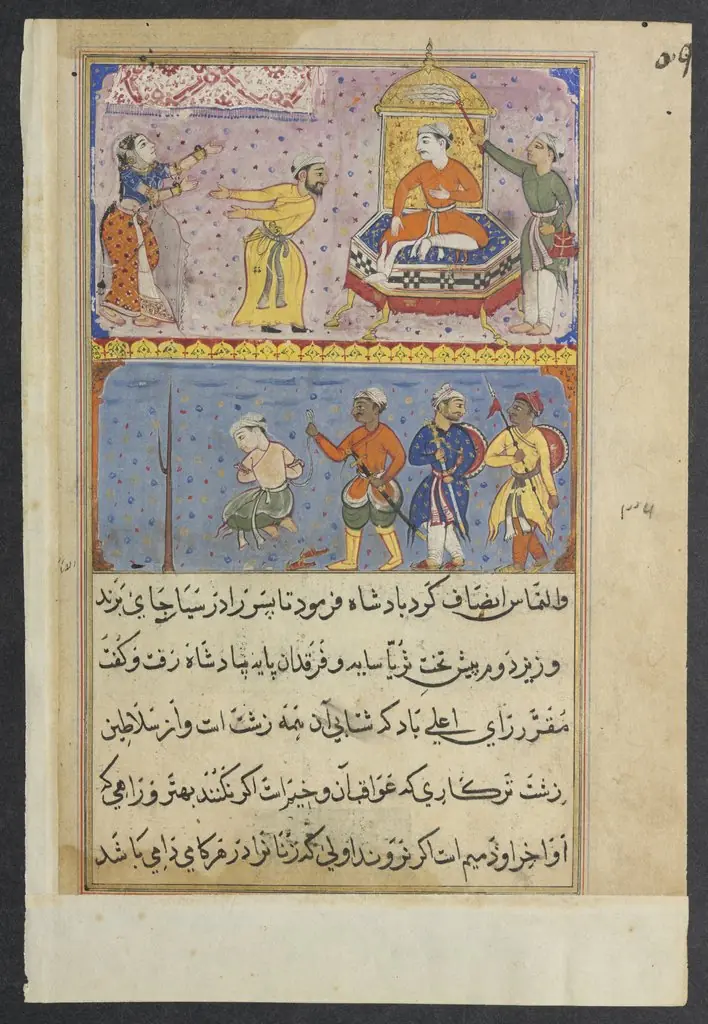 The prince, once reprieved, is returned to the palace of execution a second time on the plea of the king’s handmaiden, from a Tuti-nama (Tales of a Parrot): Eighth Night
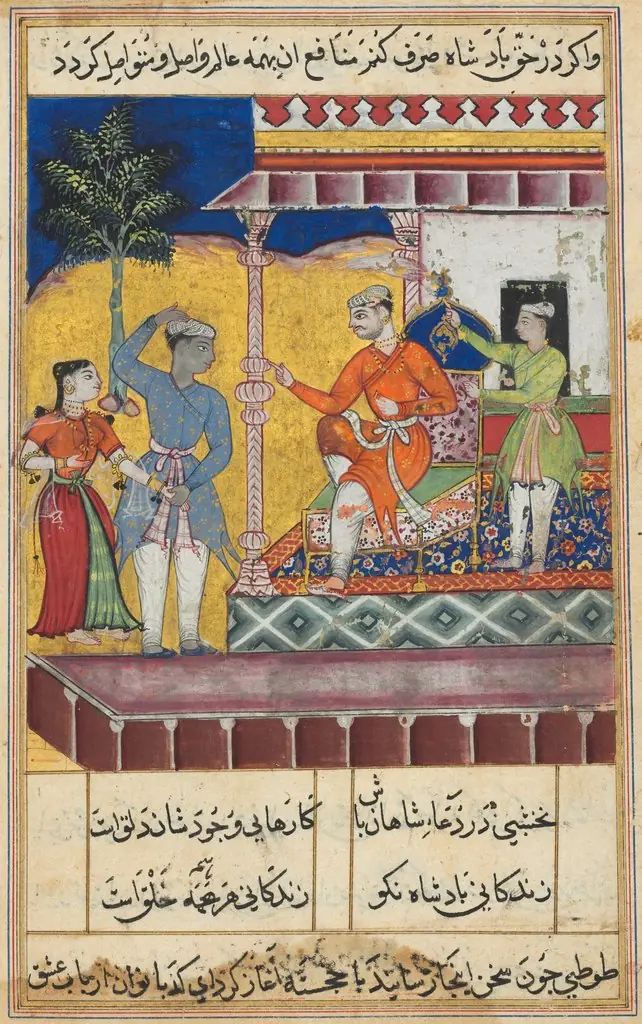 The rejuvenated old man and the daughter of the king of the jinns take leave of the King of Kings, from a Tuti-nama (Tales of a Parrot): Seventh Night
 The prince, once reprieved, is returned to the palace of execution a second time on the plea of the king’s handmaiden, from a Tuti-nama (Tales of a Parrot): Eighth Night
 Page from Tales of a Parrot (Tuti-nama): text page
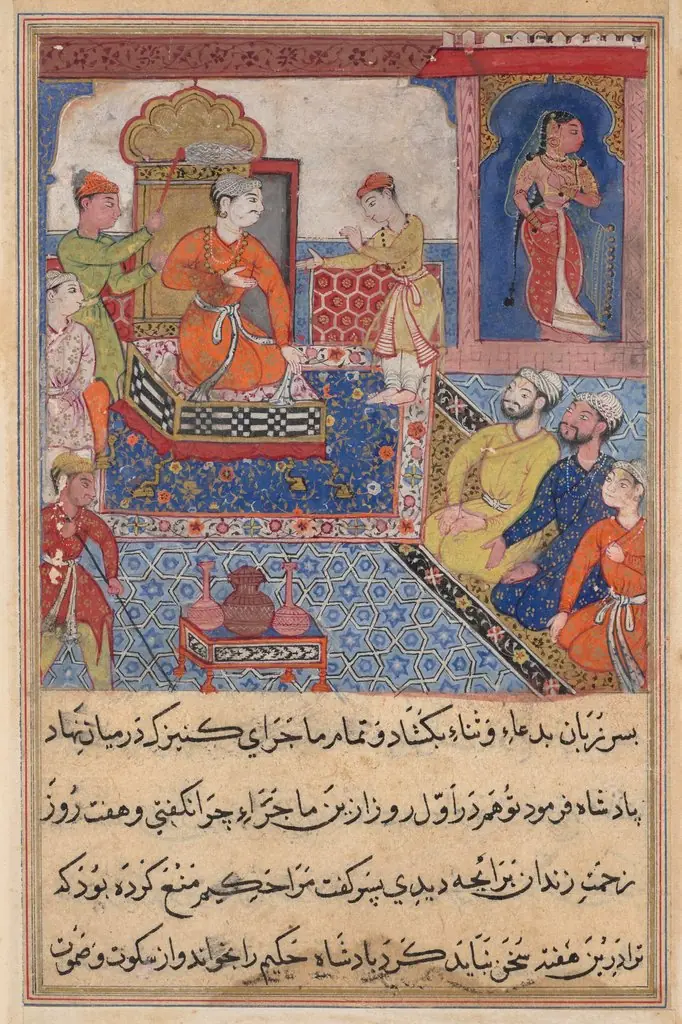
 Page from Tales of a Parrot (Tuti-nama): text page
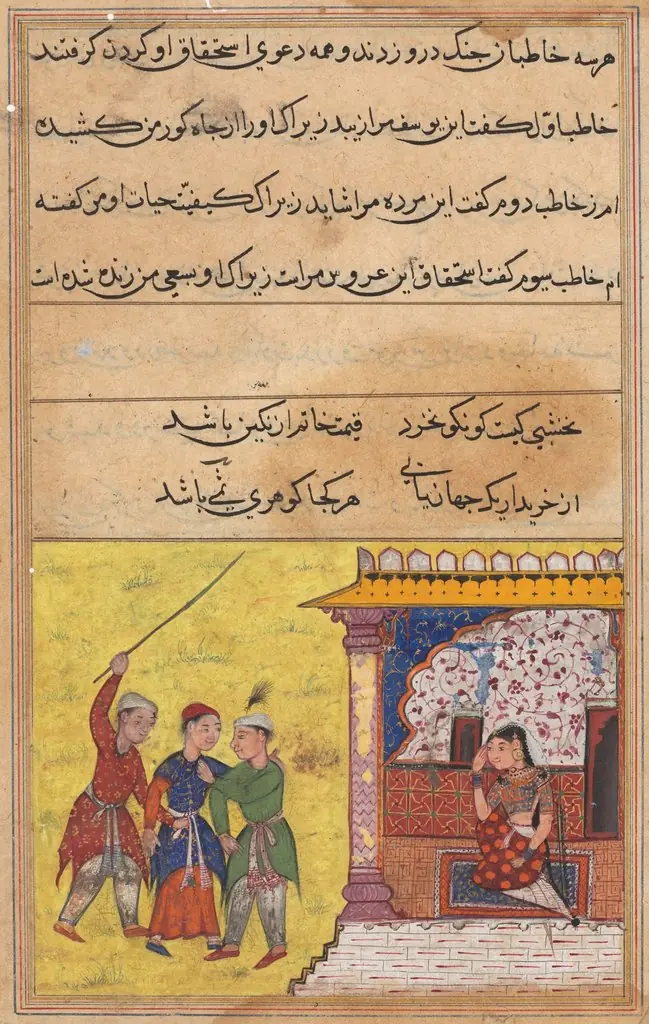 The three suitors again begin to quarrel among themselves for the hand of the devotee’s daughter, from a Tuti-nama (Tales of a Parrot): Twentieth Night
 Page from Tales of a Parrot (Tuti-nama): text page
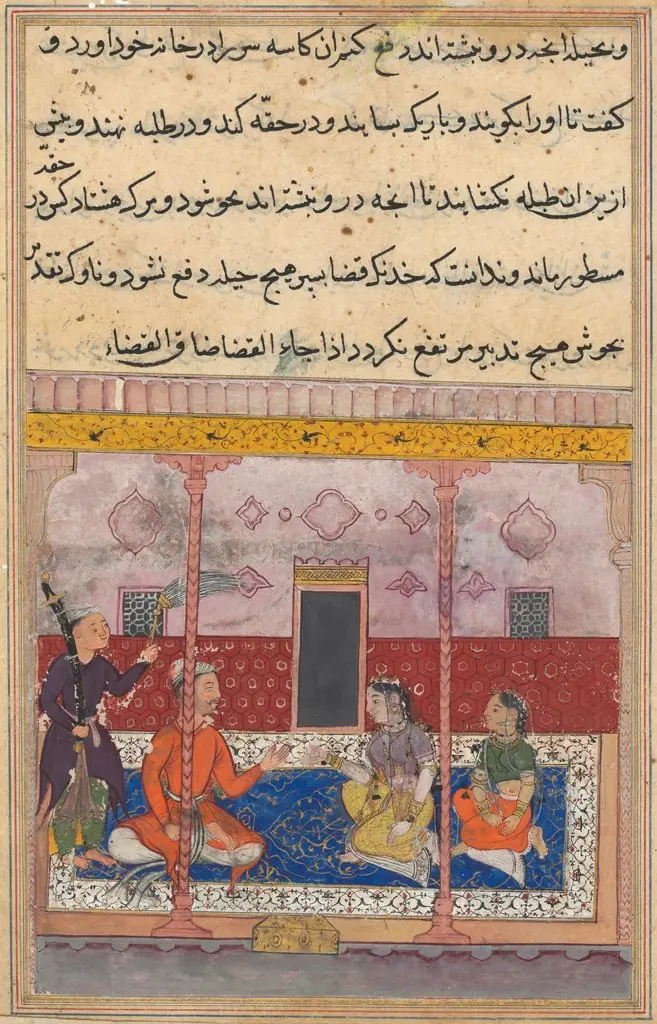 The merchant has the hateful skull ground and put into a box, from a Tuti-nama (Tales of a Parrot): Twenty-third Night
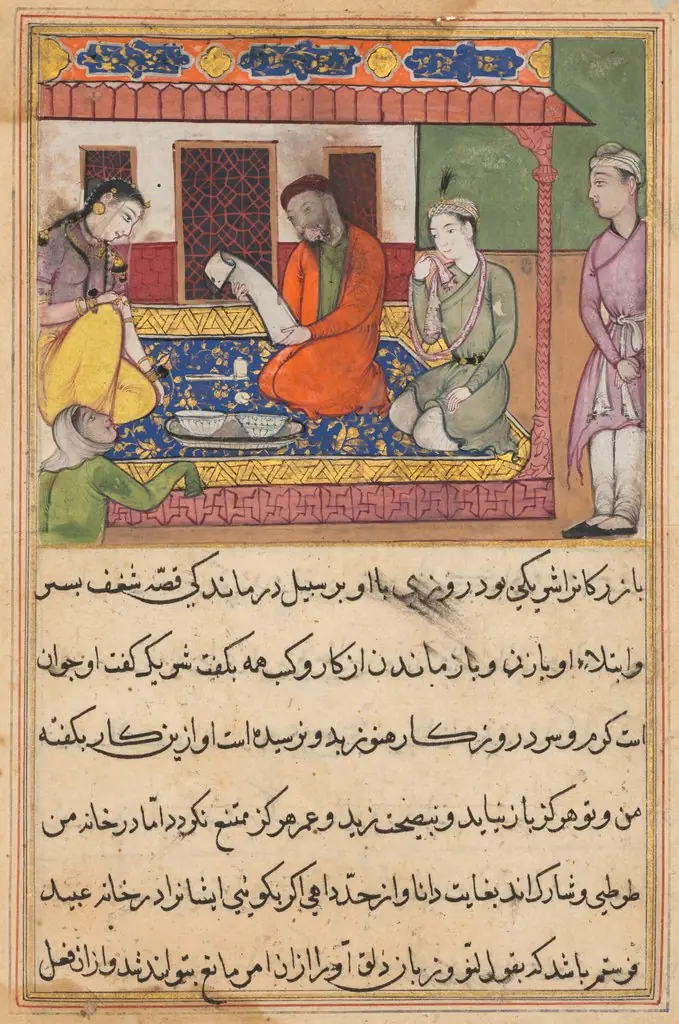 The marriage of ‘Ubaid, son of a merchant of Tirmiz, from a Tuti-nama (Tales of a Parrot): Forty-second Night
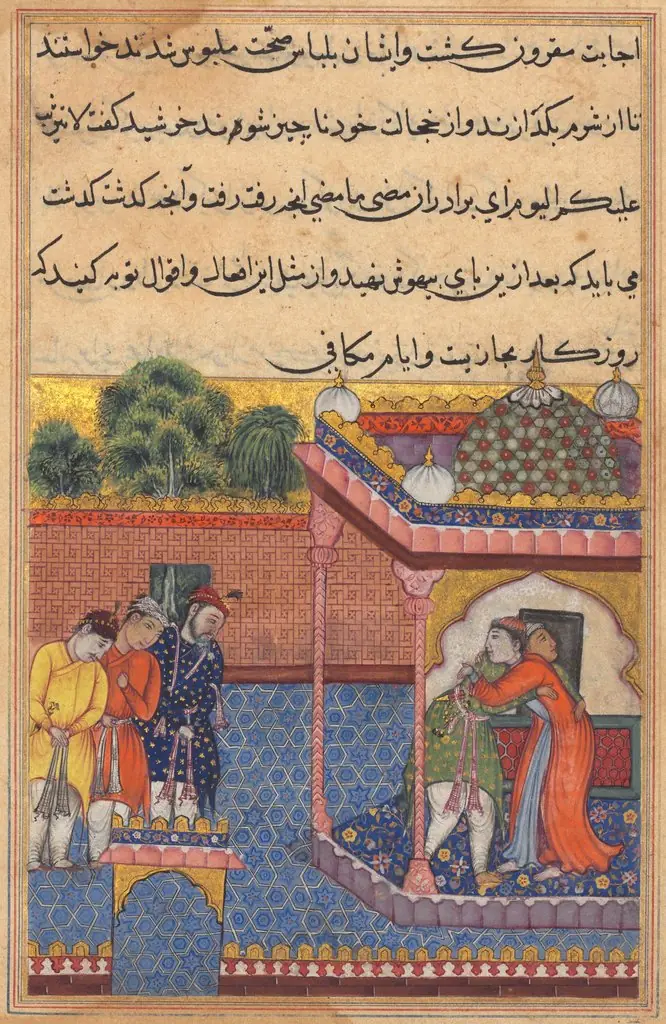 Khurshid reunited with her husband Utarid, from a Tuti-nama (Tales of a Parrot): Thirty-second Night