Artwork
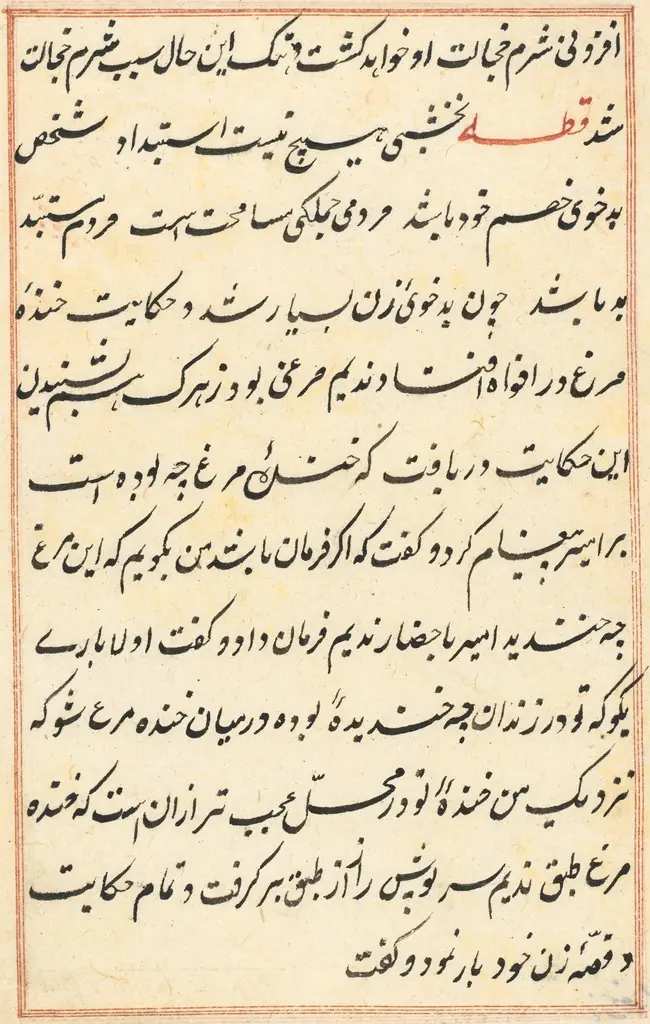
Page from Tales of a Parrot (Tuti-nama): text page
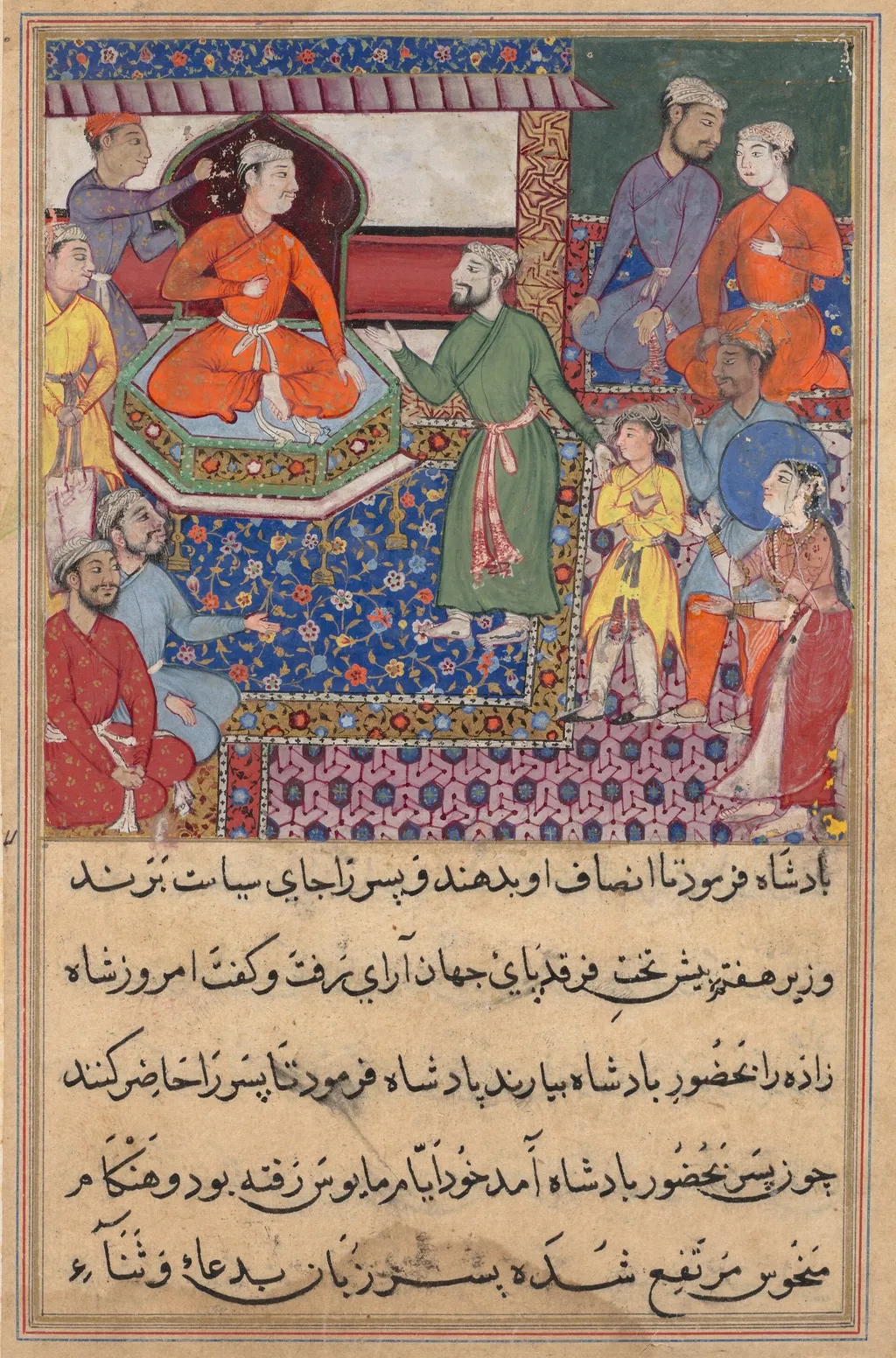
Page from Tales of a Parrot (Tuti-nama): text page is an unspecified painting. It dates from 1560 and is held in the collection of the Cleveland Museum of Art. The work is a painted page from the Persian manuscript known as the Tales of a Parrot (Tuti‑nama).
About this work
History & Provenance
The institution has maintained ownership of the work since its acquisition in 1962, preserving it as part of their holdings of Mughal painting.
Created in 1560 within the Mughal Empire, this text page originates from the manuscript known as the Tales of a Parrot (Tuti-nama). The work was produced by an artist whose specific identity remains unrecorded in available documentation. While the exact circumstances of its original commission are not detailed in the provided records, the piece is firmly dated to the mid-sixteenth century based on historical attribution.
In the modern era, the folio entered the collection of the Cleveland Museum of Art, where it is cataloged under the accession number 1962.279.71.a. The institution has maintained ownership of the work since its acquisition in 1962, preserving it as part of their holdings of Mughal painting.
The folio originates from a 1560 manuscript painted in the Mughal Empire and is presently housed in the collection of the Cleveland Museum of Art (accession 1962.279.71.a). It was included in the museum’s 2015 exhibition "Mughal Masterpieces: Paintings from the Indian Subcontinent," which presented works dating to the mid‑sixteenth century.
Overview
The work is a painted page from the Persian manuscript known as the Tales of a Parrot (Tuti‑nama). It presents a single folio that combines illustration and text, showing a gathering of figures around a central person amid elaborate decorative motifs.
Subject & Meaning
The scene depicts a group assembled before a focal individual, suggesting a narrative moment from the collection of stories. The presence of an unreadable script adds an element of mystery, inviting viewers to contemplate the tale being recounted.
Technique & Style
Executed with vivid pigments, the composition relies on dominant blues, reds and yellows, while gold leaf highlights accentuate ornamental patterns in the background. The intricate designs reflect the manuscript’s decorative tradition, emphasizing both visual richness and textual function.
Context
Tuti‑nama manuscripts were popular in the Persianate world for their illustrated storytelling. This page exemplifies the integration of text and image typical of such works, where lavish coloration and gilding underscore the cultural value placed on literary art.
Artist & collection

- Page from Tales of a Parrot (Tuti-nama): text page
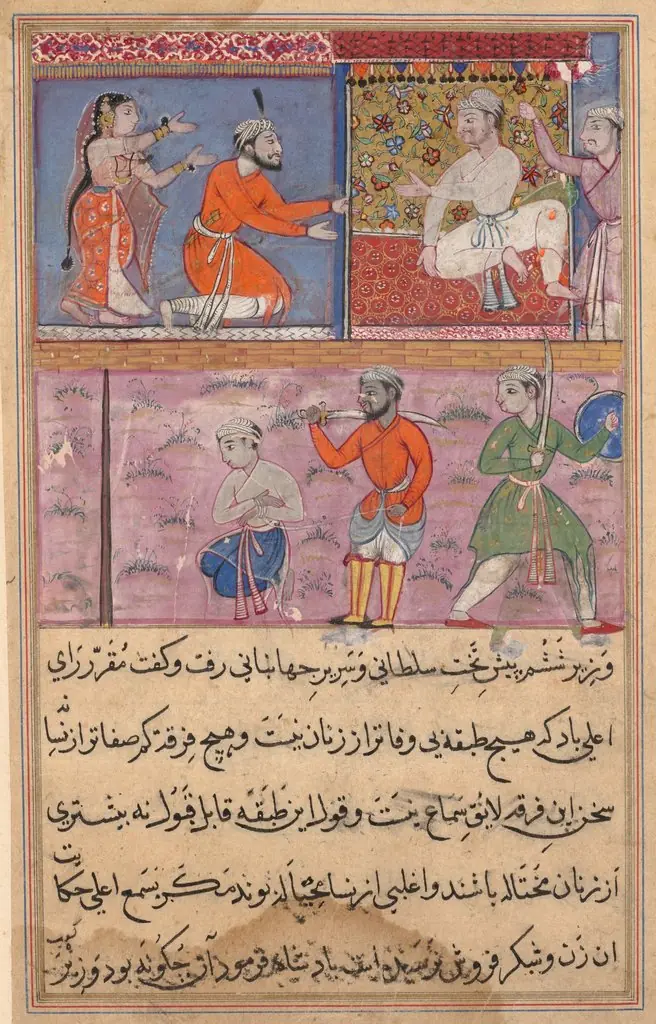
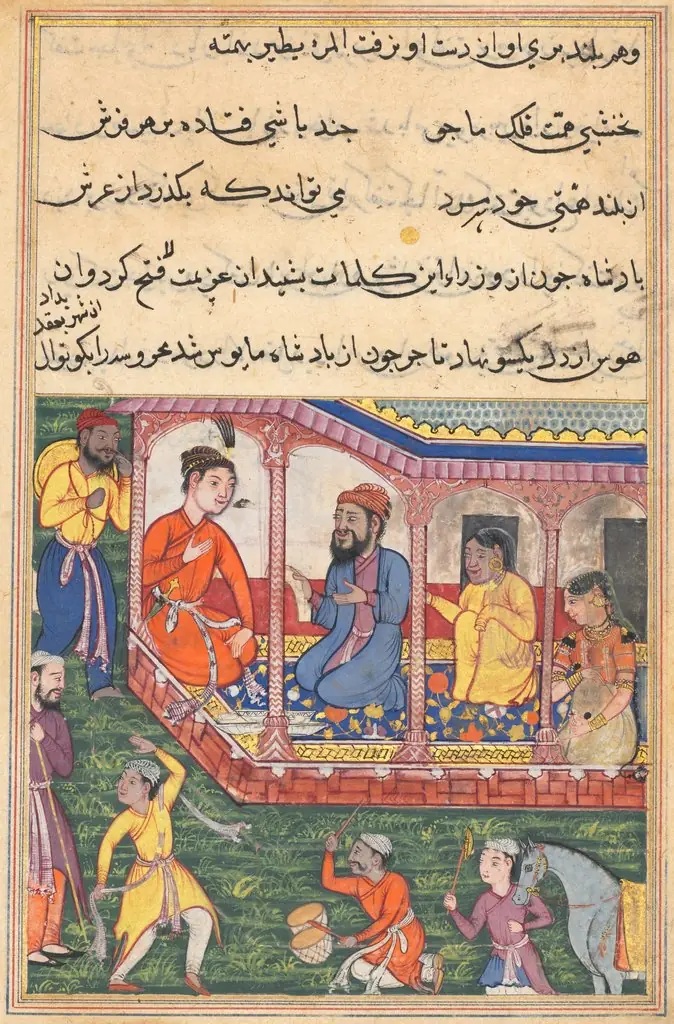 Mahrusa’s marriage to the prefect of the city, from a Tuti-nama (Tales of a Parrot): Thirty-sixth Night
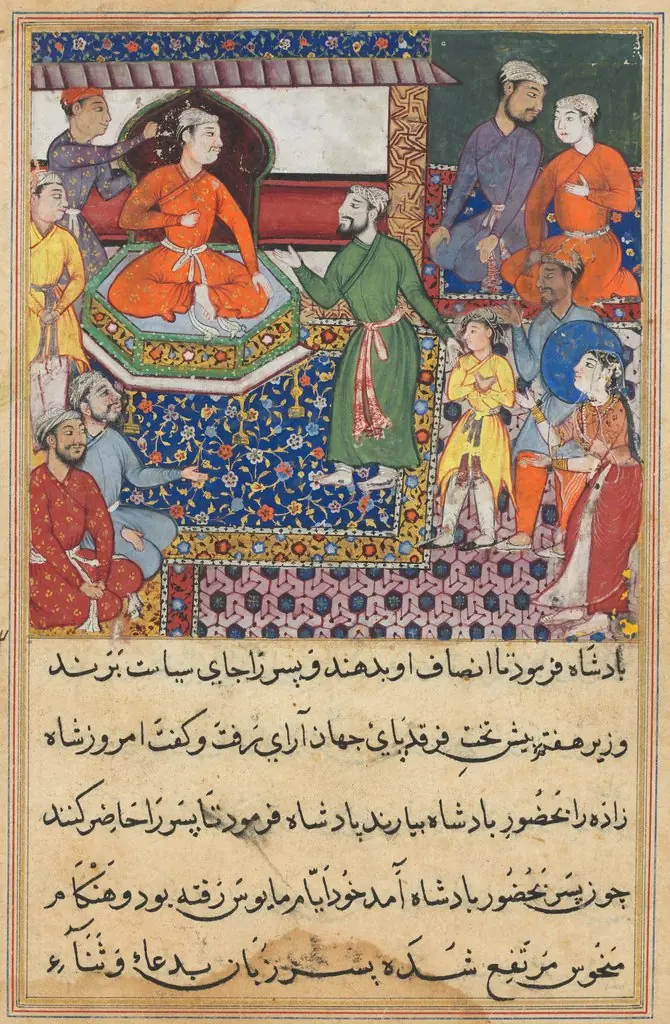 The handmaiden again pleads for the death of the prince, from a Tuti-nama (Tales of a Parrot): Eighth Night
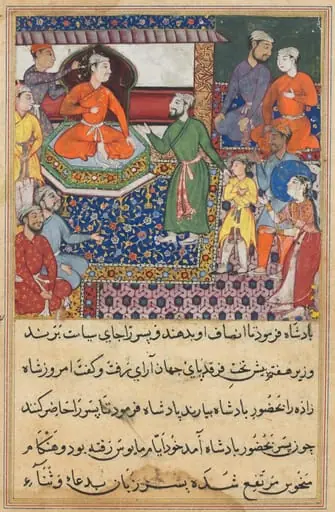 The handmaiden again pleads for the death of the prince, from a Tuti-nama (Tales of a Parrot): Eighth Night
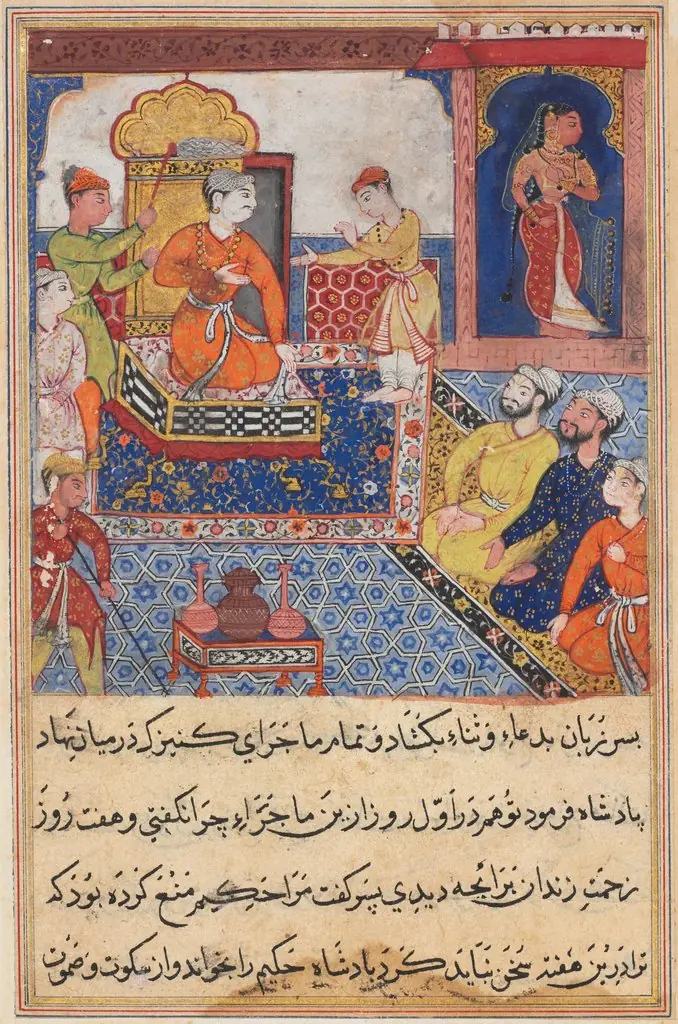 The young prince recounts his experiences to his father, the king, from a Tuti-nama (Tales of a Parrot): Eighth Night
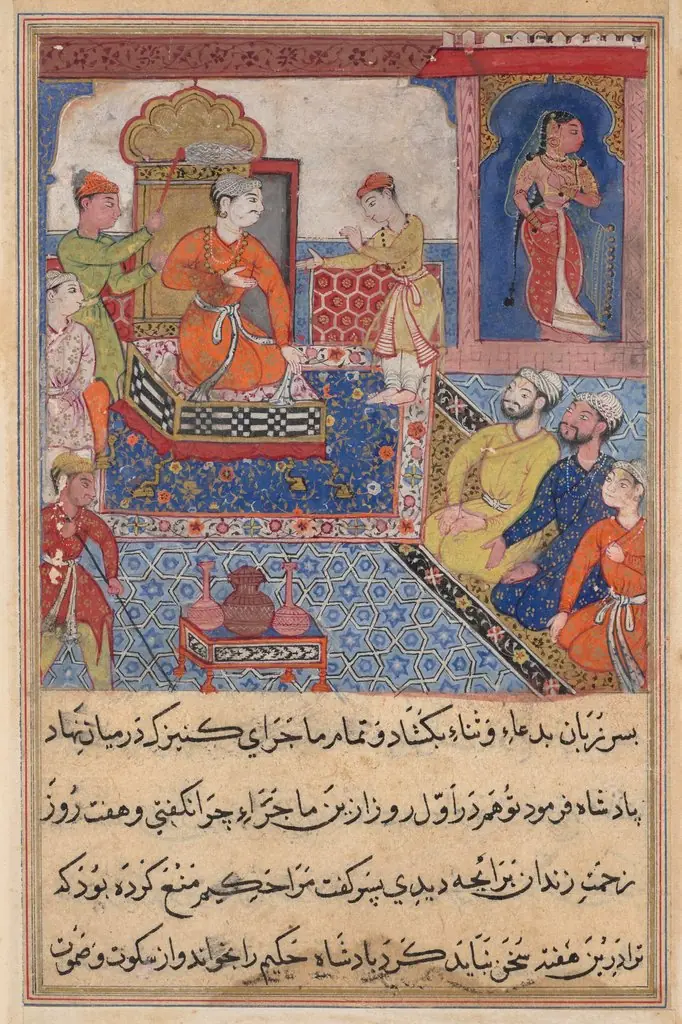 Page from Tales of a Parrot (Tuti-nama): text page
 The young prince recounts his experiences to his father, the king, from a Tuti-nama (Tales of a Parrot): Eighth Night
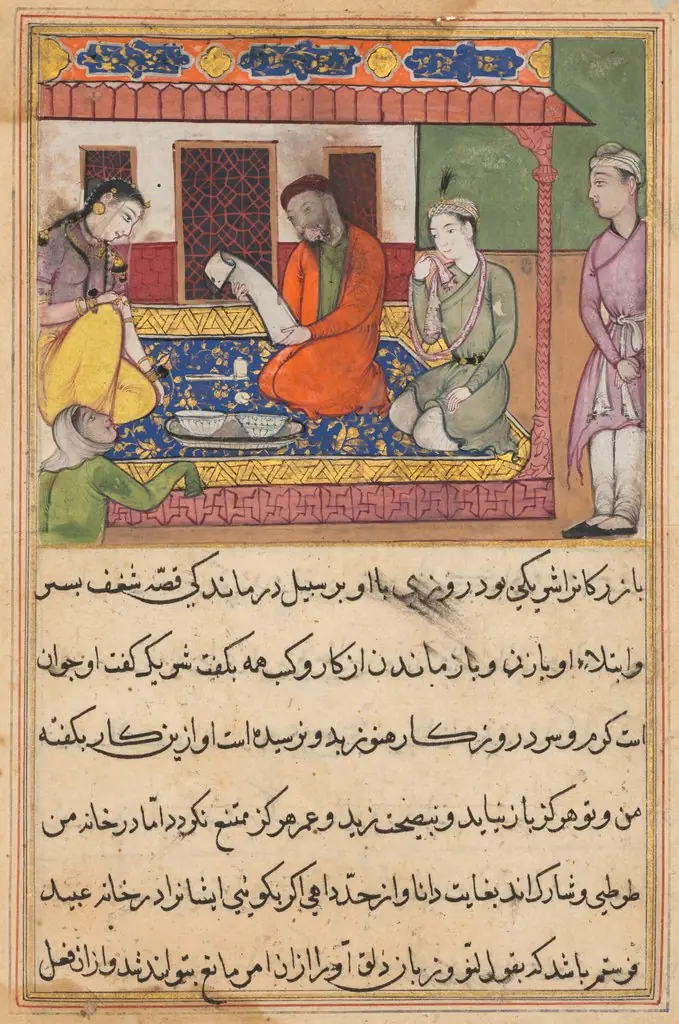 The marriage of ‘Ubaid, son of a merchant of Tirmiz, from a Tuti-nama (Tales of a Parrot): Forty-second Night
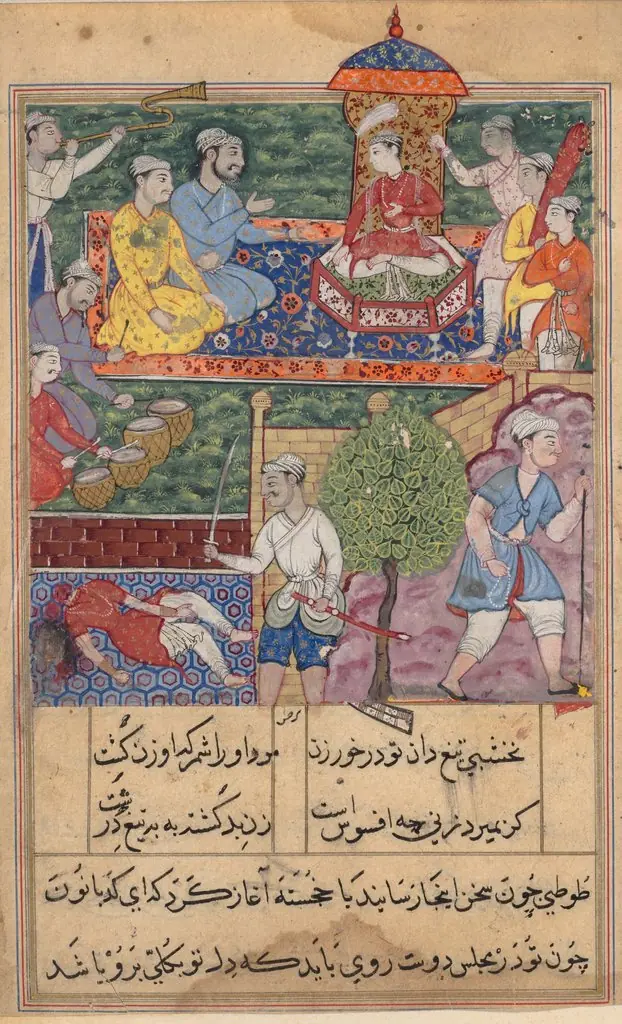 Page from Tales of a Parrot (Tuti-nama): text page
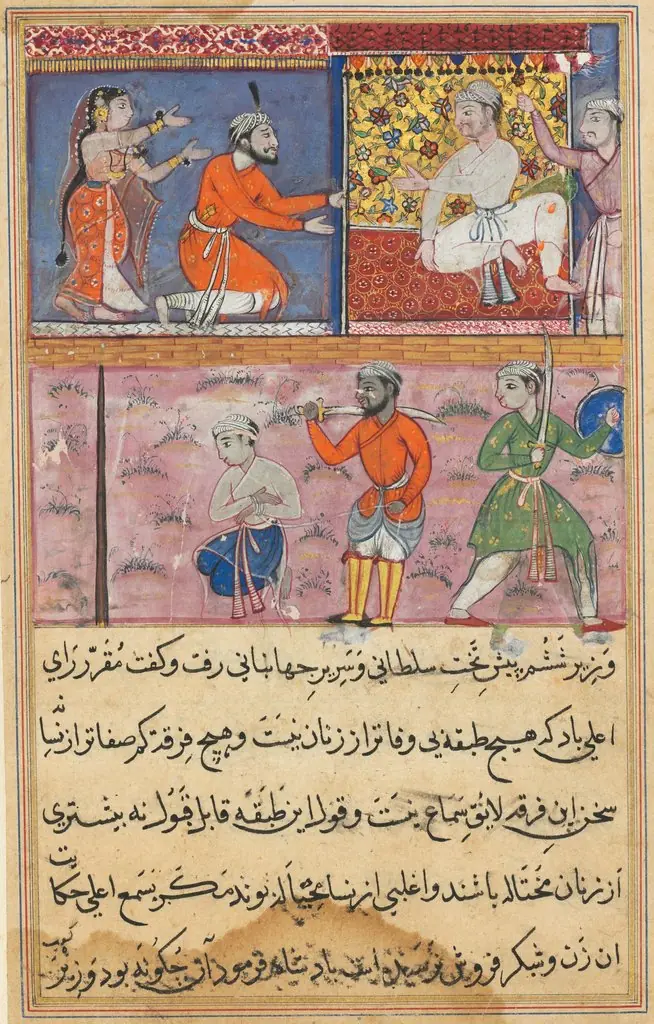 The prince sent back to the place of execution for the sixth time, from a Tuti-nama (Tales of a Parrot): Eighth Night
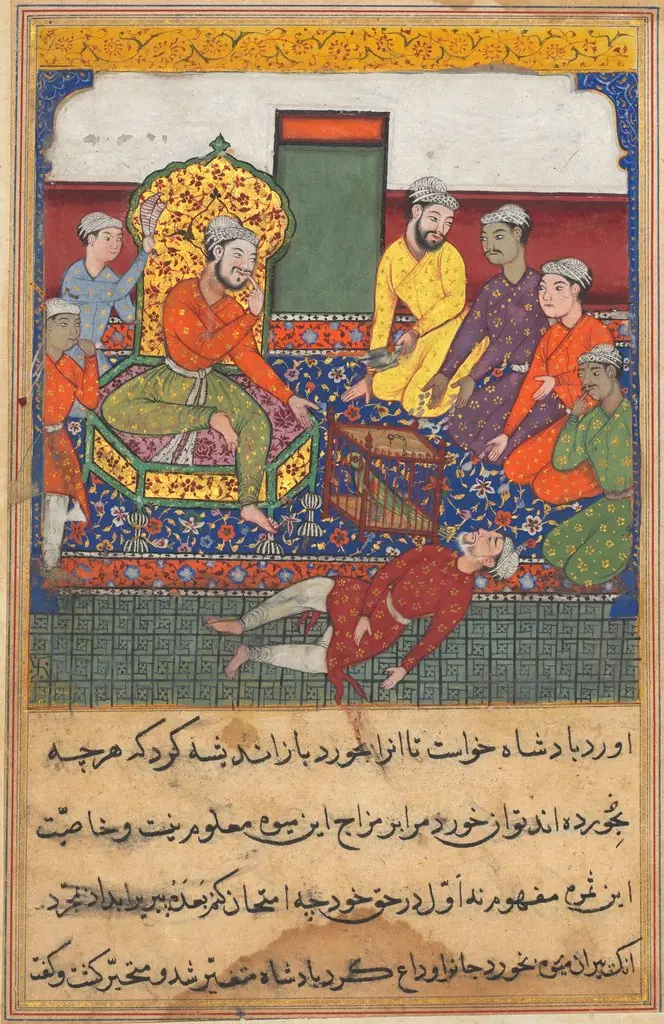 The old man eats of the fruit of the Tree of Life, but drops dead, from a Tuti-nama (Tales of a Parrot): Ninth Night
 Page from Tales of a Parrot (Tuti-nama): text page