Artwork
The young prince is presented to the king, his father, by his teacher, but refuses to speak, from a Tuti-nama (Tales of a Parrot): Eighth Night
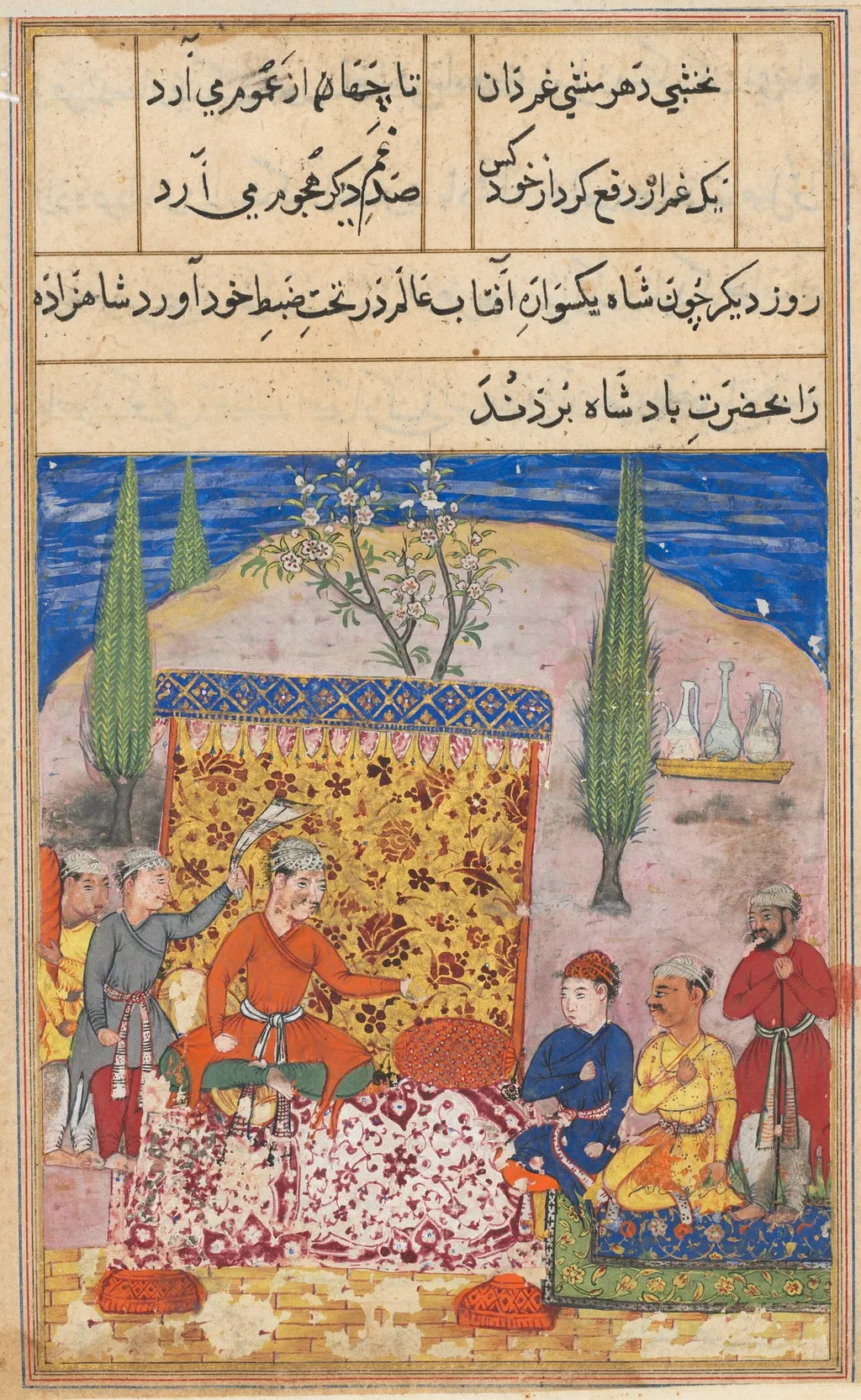
The young prince is presented to the king, his father, by his teacher, but refuses to speak, from a Tuti-nama (Tales of a Parrot): Eighth Night is an unspecified painting. It dates from 1560 and is held in the collection of the Cleveland Museum of Art. The work illustrates a ceremonial introduction in which a young prince is brought before his father, the king, by his teacher.
About this work
Subject & Meaning
The composition centers on three figures, the prince, the seated king, and the standing teacher, set within a Mughal court interior.
The painting illustrates a narrative episode from the Tuti‑nama (Tales of a Parrot), specifically the Eighth Night, in which a young prince is brought before his father the king by his teacher but elects to remain silent. The composition centers on three figures, the prince, the seated king, and the standing teacher, set within a Mughal court interior. The prince’s refusal to speak is the focal point of the scene, underscoring the episode’s emphasis on restraint and the moral weight of silence within the story.
Technique & Style
The miniature depicts a young prince presented before his father by his instructor, rendered in opaque watercolor and gold leaf on paper. The composition emphasizes hierarchical scale, with the prince positioned centrally yet rendered in muted tones, reflecting restraint in gesture and speech. Formal stylization includes flattened perspective and intricate patterning in the garments, characteristic of 16th‑century Persian manuscript illumination. The work measures 29.5 cm × 20.3 cm and remains well‑preserved, retaining vivid pigments and fine brushwork.
History & Provenance
The painting dates to 1560, a period associated with the late Mughal artistic milieu in which illustrated manuscripts of the Tuti-nama circulated. It is classified as a painting and is presently held in the collection of the Cleveland Museum of Art, where it is catalogued under accession reference 1962.279.54.b. No further details regarding its original commission, early ownership, or chain of custody prior to its acquisition by the museum are documented in the available sources.
The work's recorded inception date of 1560 establishes its creation within the mid-sixteenth century, consistent with the manuscript tradition to which the Tuti-nama series belongs. Beyond this dating and its current institutional home, the provenance history remains undocumented in the provided records.
The painting is part of the Cleveland Museum of Art collection, accessioned under the identifier 1962.279.54.b. It has been exhibited in the museum’s galleries dedicated to Indian miniature painting, though specific exhibition titles and dates are not documented in the available sources.
Context
The painting depicts a prince presented to his father by his tutor while remaining silent, a moment drawn from the eighth night of the Tuti-nama. Executed circa 1560, it belongs to the Mughal artistic milieu of the sixteenth century, reflecting courtly narrative traditions. The work is housed in the Cleveland Museum of Art, where it is catalogued under accession number 1962.279.54.b and attributed to an anonymous painter associated with the Mughal atelier.
Scholarship emphasizes its role within the broader corpus of Persian miniature painting, highlighting the interplay of literary source and visual storytelling in Mughal manuscript production. Its composition and subdued palette have been discussed in relation to contemporary Safavid and Deccanate experiments with narrative figuration, situating it within the evolution of courtly illustration in Indo-Persian art.
The painting’s provenance and stylistic analysis contribute to ongoing studies of artistic anonymity and workshop practices in early Mughal manuscript illumination, reinforcing its significance within the corpus of 16th-century Indian subcontinental art.
Overview
The work illustrates a ceremonial introduction in which a young prince is brought before his father, the king, by his teacher. The prince sits on an elaborately patterned rug, while the monarch occupies a throne‑like seat draped in yellow and blue fabric. The scene is populated by the teacher and additional attendants, set against a blue sky dotted with trees and a modest table bearing vases.
Artist & collection

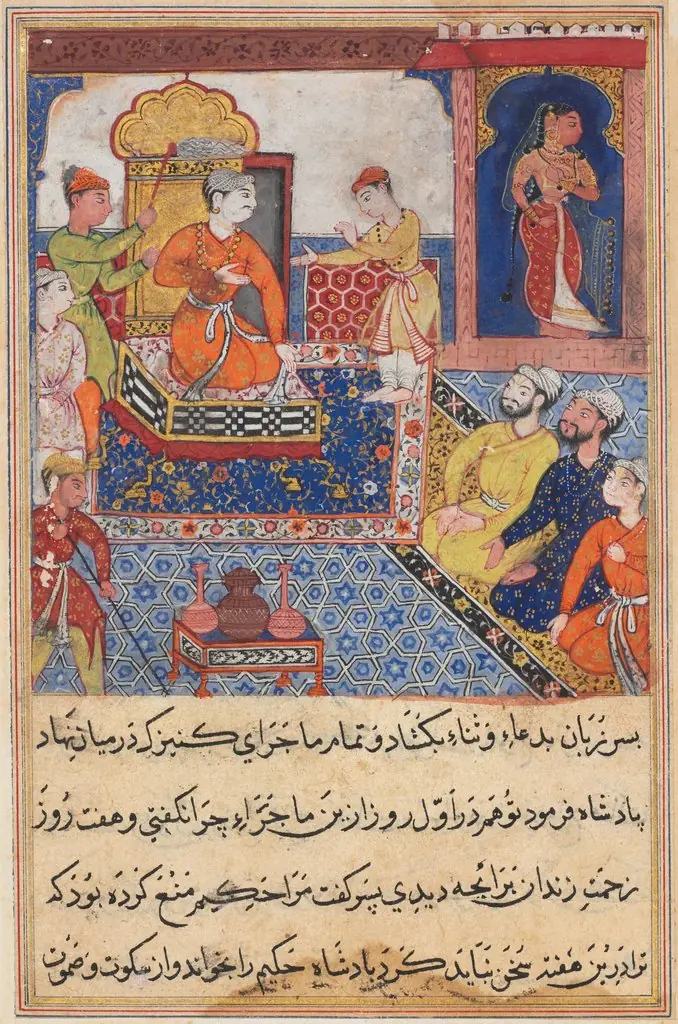
- The young prince recounts his experiences to his father, the king, from a Tuti-nama (Tales of a Parrot): Eighth Night
 The young prince is presented to the king, his father, by his teacher, but refuses to speak, from a Tuti-nama (Tales of a Parrot): Eighth Night
 The young prince recounts his experiences to his father, the king, from a Tuti-nama (Tales of a Parrot): Eighth Night
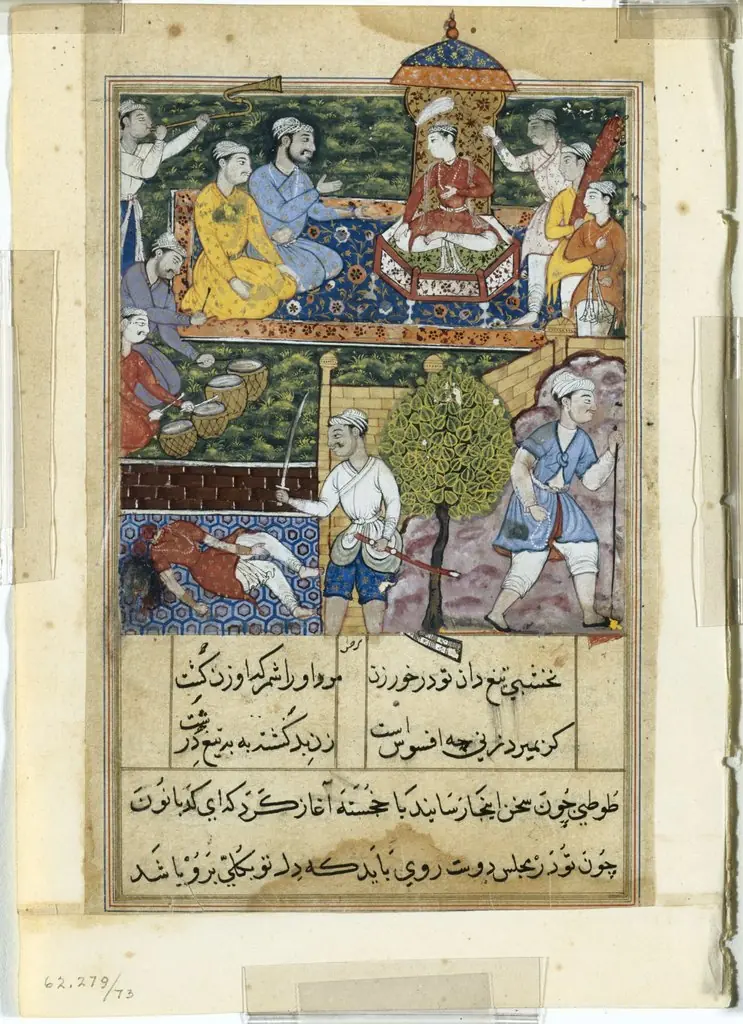 The young prince is crowned and the wicked handmaiden is executed, from a Tuti-nama (Tales of a Parrot): Eighth Night
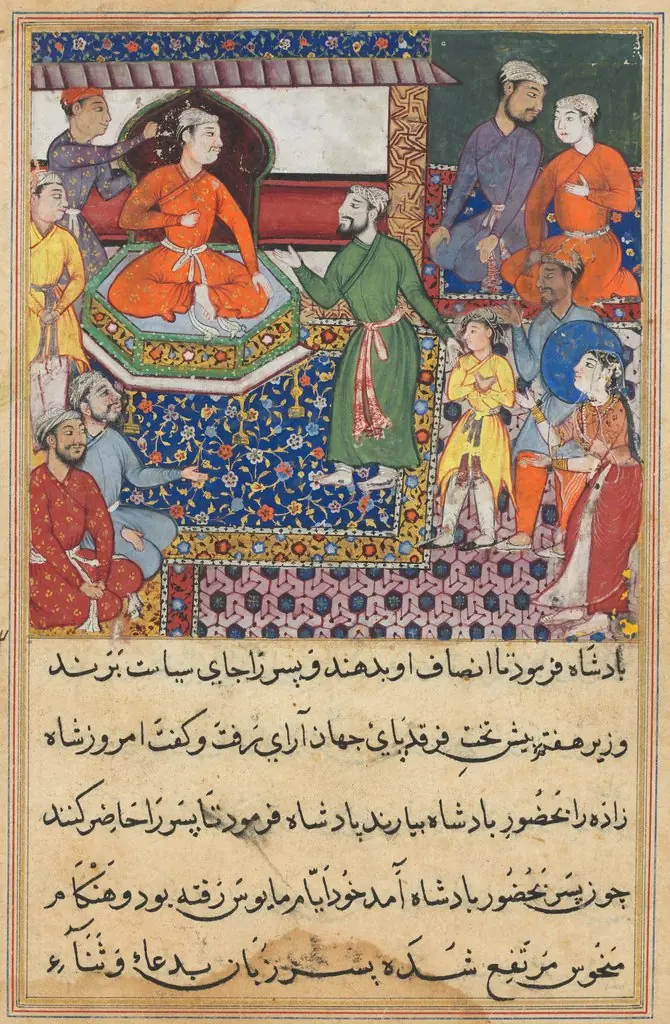 The handmaiden again pleads for the death of the prince, from a Tuti-nama (Tales of a Parrot): Eighth Night
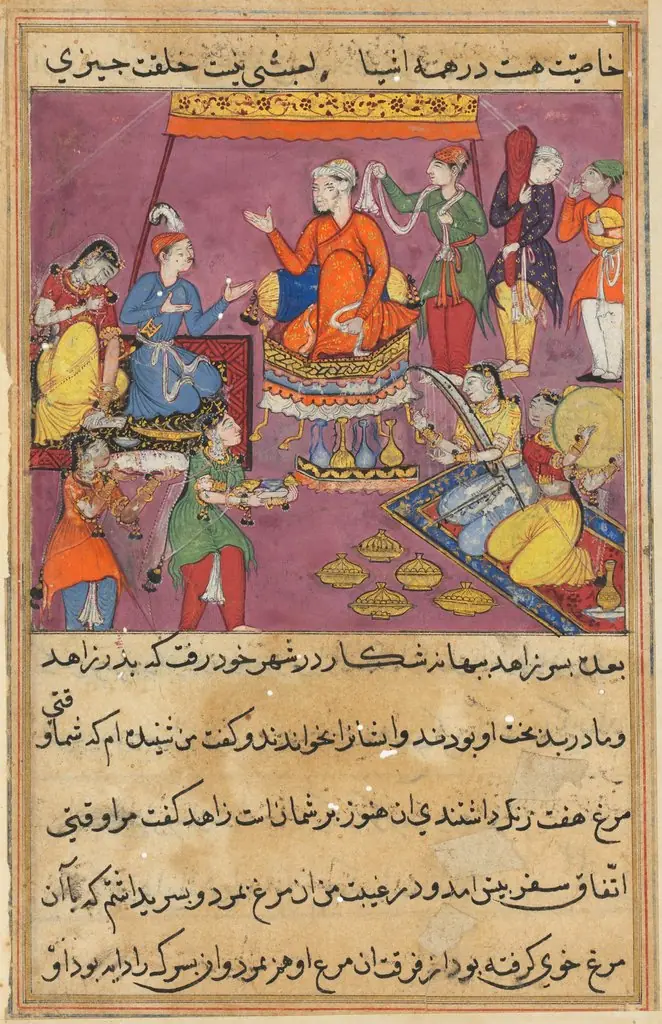 The king gives his daughter in marriage to the pious man’s son, from a Tuti-nama (Tales of a Parrot): Fifty-second Night
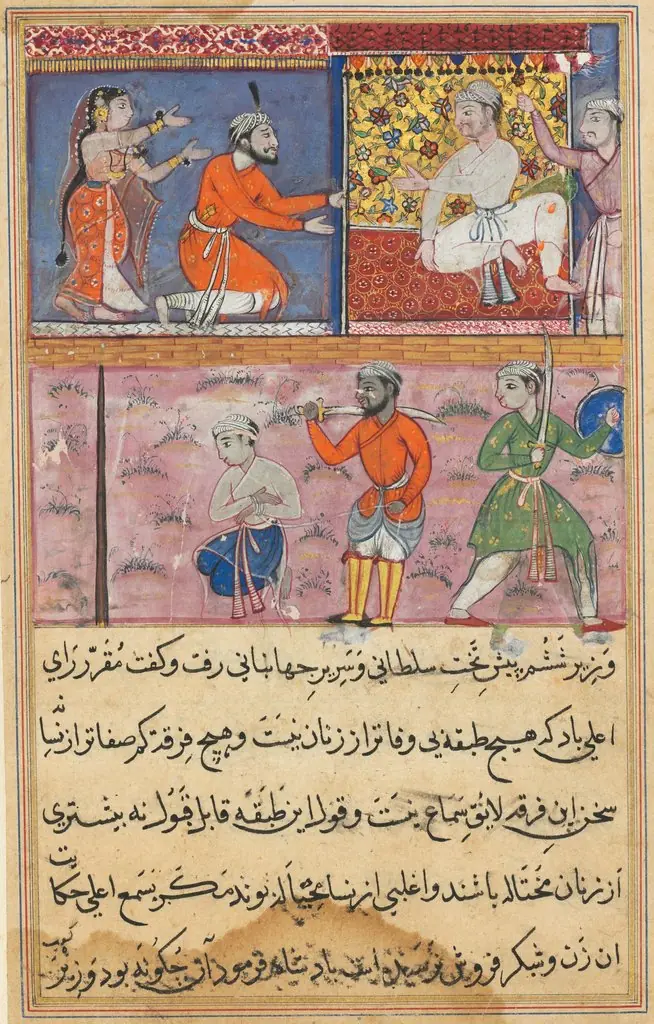 The prince sent back to the place of execution for the sixth time, from a Tuti-nama (Tales of a Parrot): Eighth Night
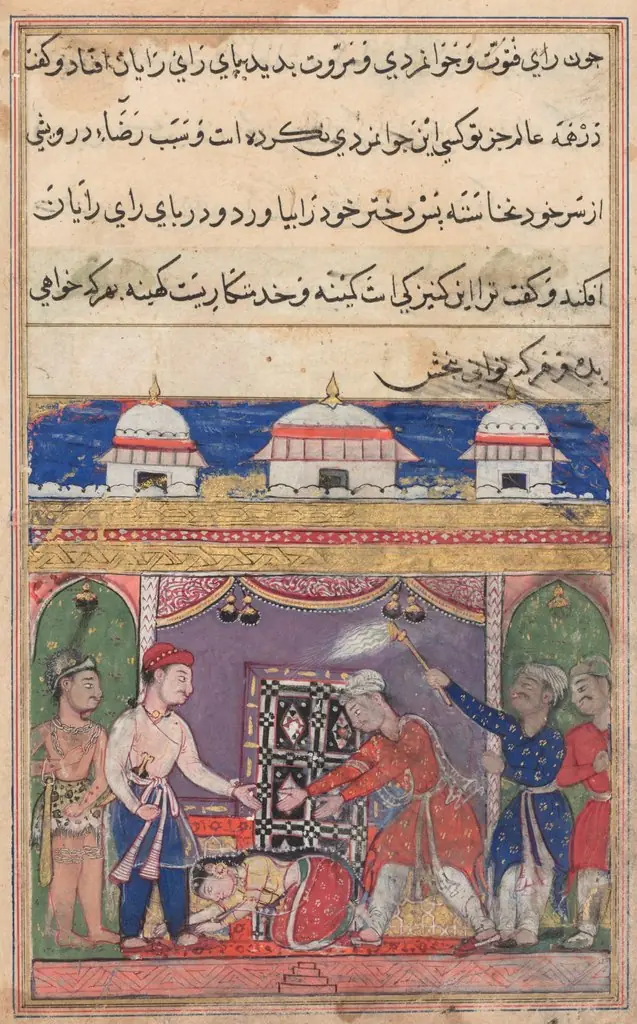 The king of Bahilistan offers his daughter to the King of Kings, from a Tuti-nama (Tales of a Parrot): Seventh Night
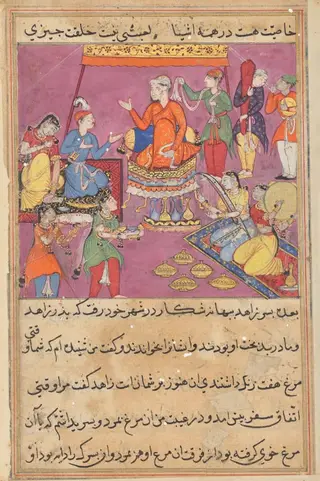 The king gives his daughter in marriage to the pious man’s son, from a Tuti-nama (Tales of a Parrot): Fifty-second Night
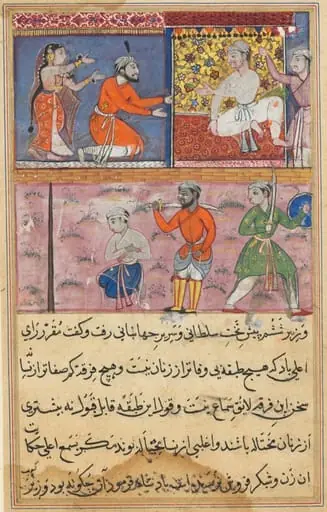 The prince sent back to the place of execution for the sixth time, from a Tuti-nama (Tales of a Parrot): Eighth Night
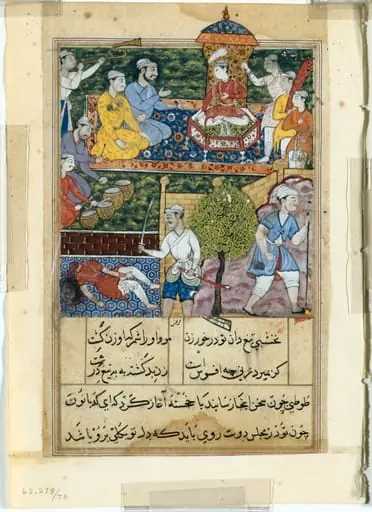 The young prince is crowned and the wicked handmaiden is executed, from a Tuti-nama (Tales of a Parrot): Eighth Night
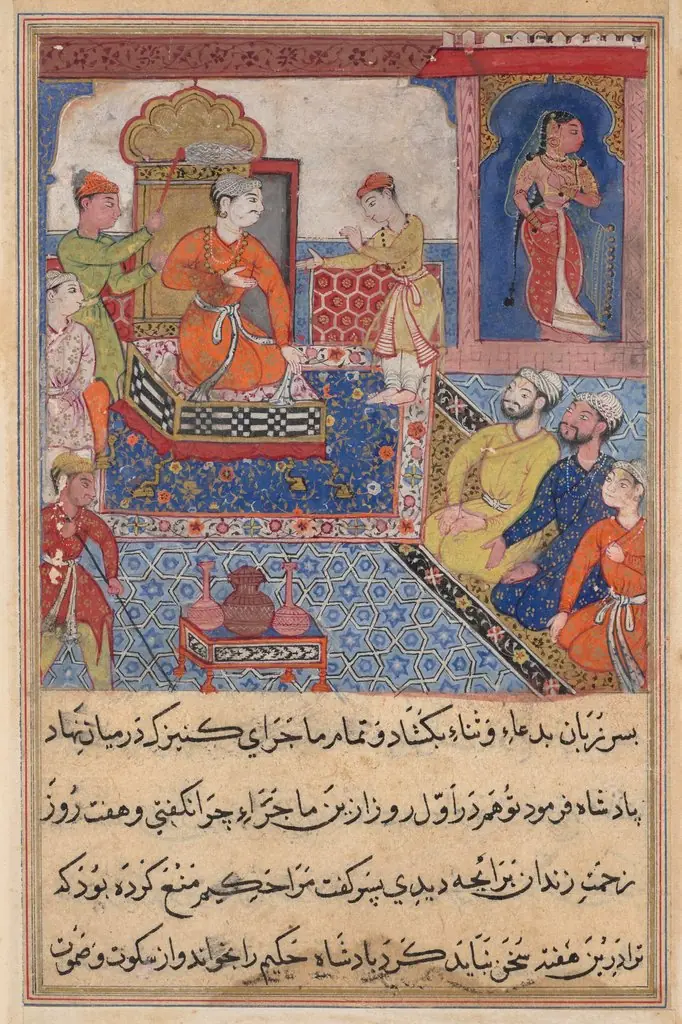 Page from Tales of a Parrot (Tuti-nama): text page
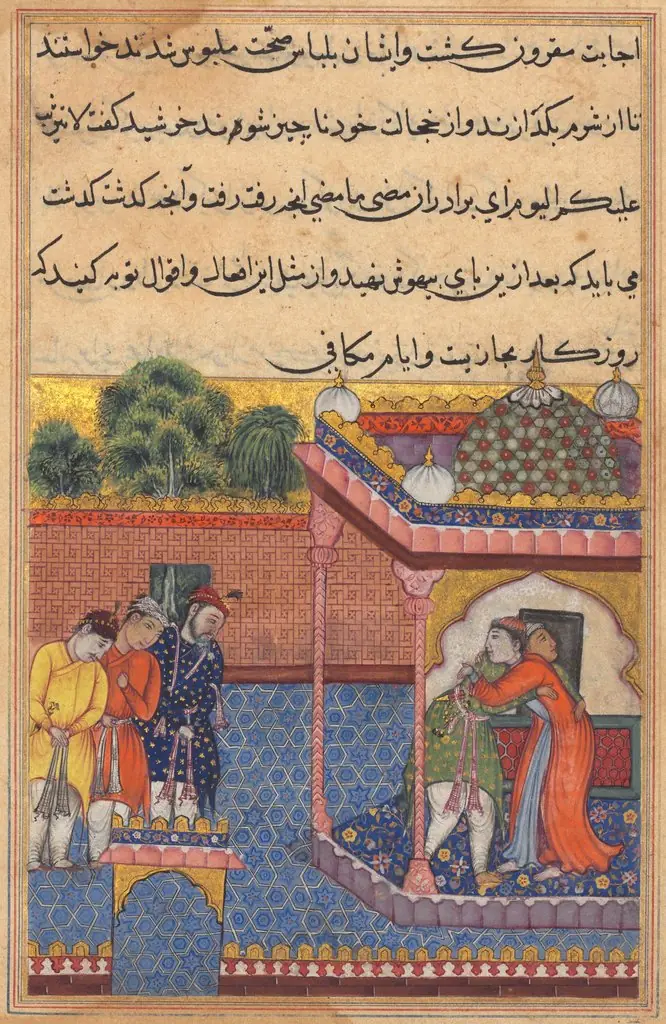 Khurshid reunited with her husband Utarid, from a Tuti-nama (Tales of a Parrot): Thirty-second Night
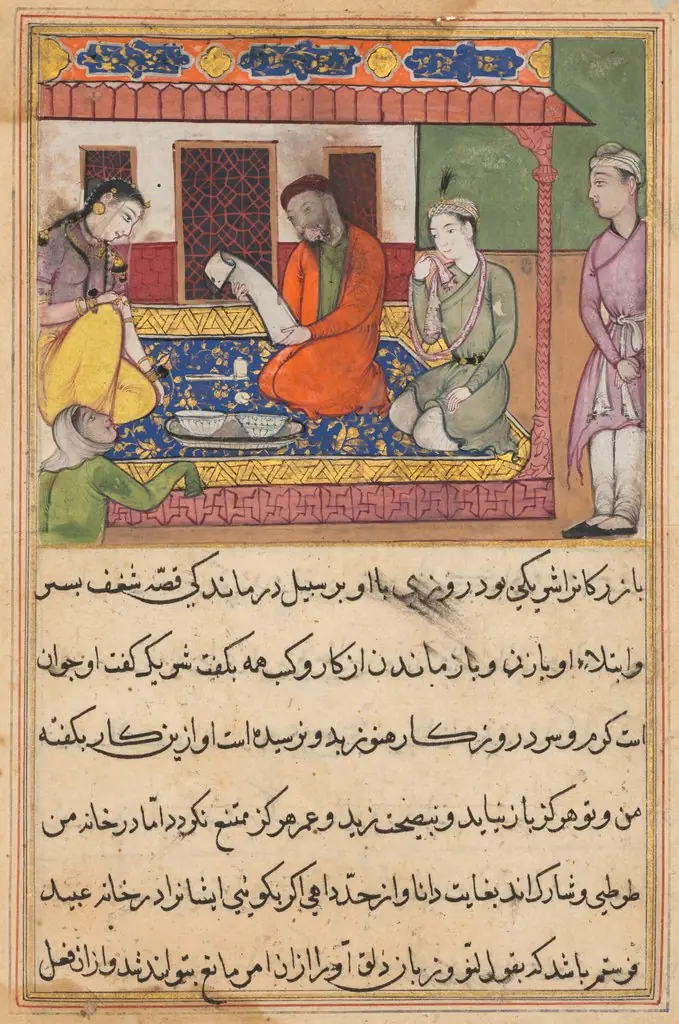 The marriage of ‘Ubaid, son of a merchant of Tirmiz, from a Tuti-nama (Tales of a Parrot): Forty-second Night
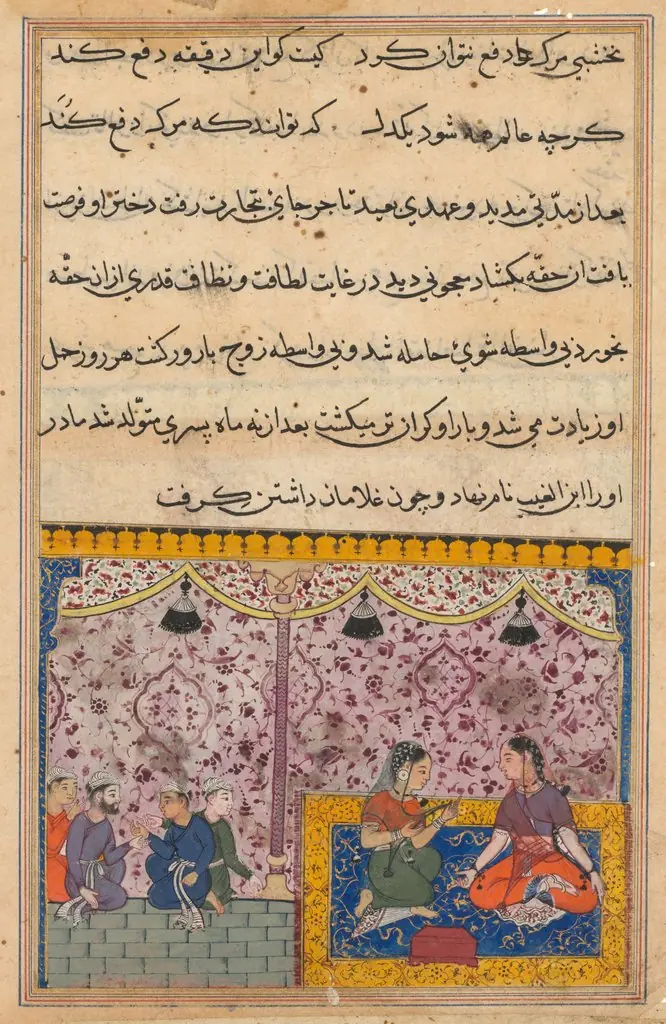 The merchant’s daughter gives birth to a son as a result of eating out of the box. The clever child recognizes the false gems from true, from a Tuti-nama (Tales of a Parrot): Twenty-third Night
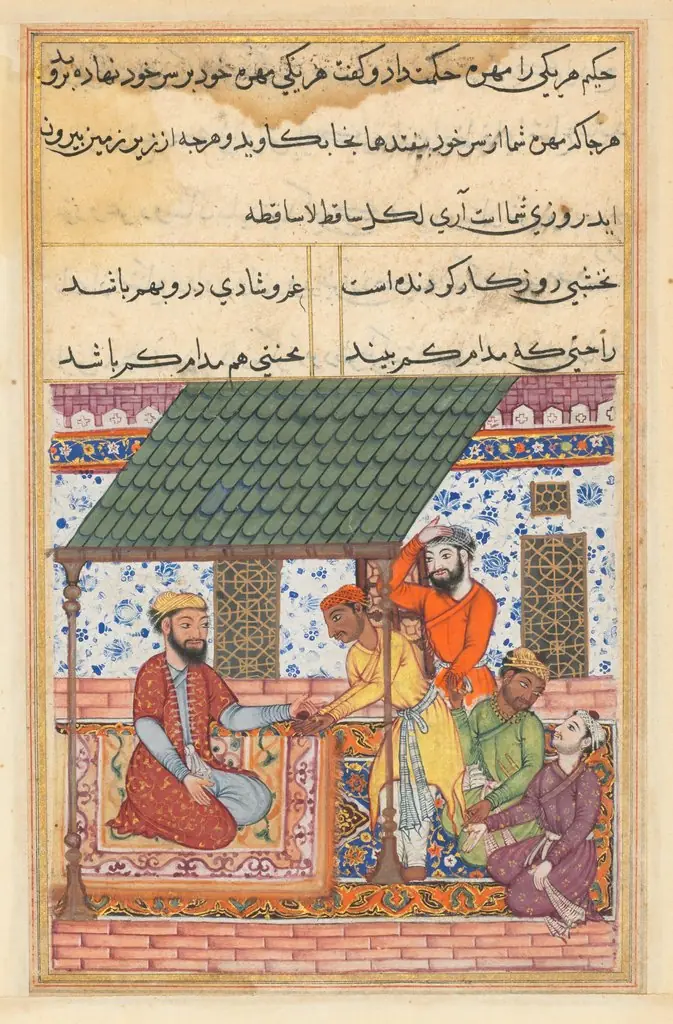 The four destitute friends go to a wise man who gives each one of them a magic shell to be placed on top of the turban, from a Tuti-nama (Tales of a Parrot): Forty-seventh Night
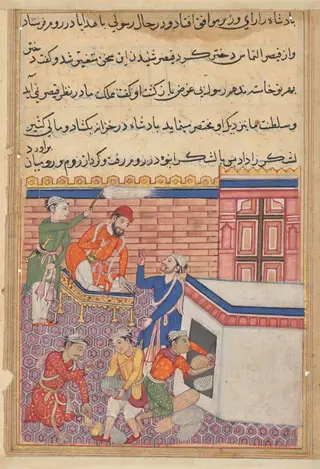 The king’s emissary being provided with gifts for his mission to Rum in order to seek the hand of the emperor’s daughter in marriage, from a Tuti-nama (Tales of a Parrot): Fiftieth Night
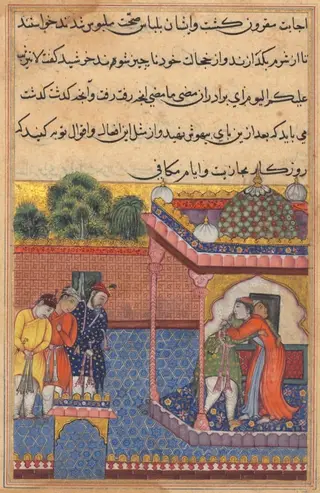 Khurshid reunited with her husband Utarid, from a Tuti-nama (Tales of a Parrot): Thirty-second Night