Artwork
Page from Tales of a Parrot (Tuti-nama): text page
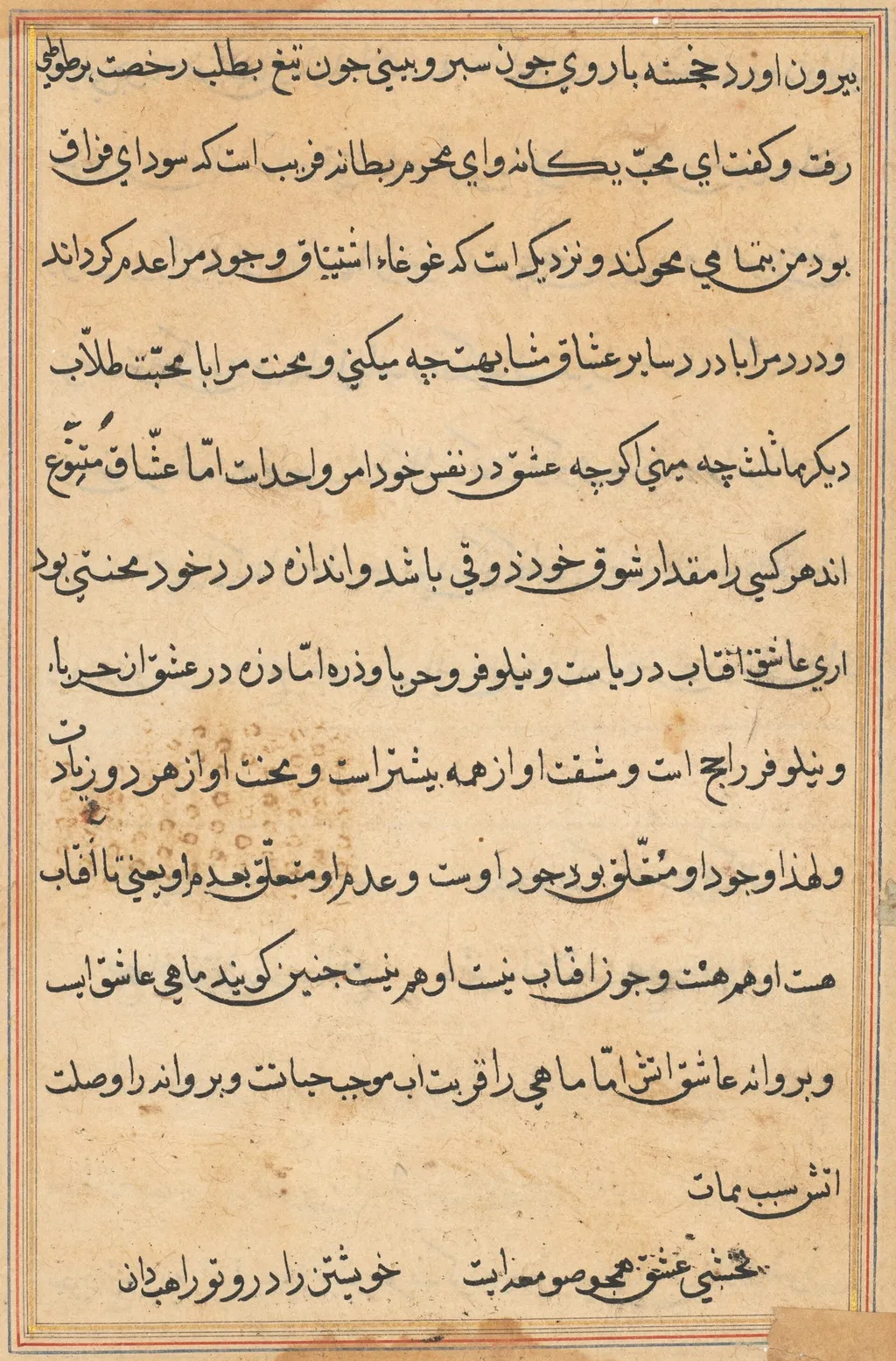
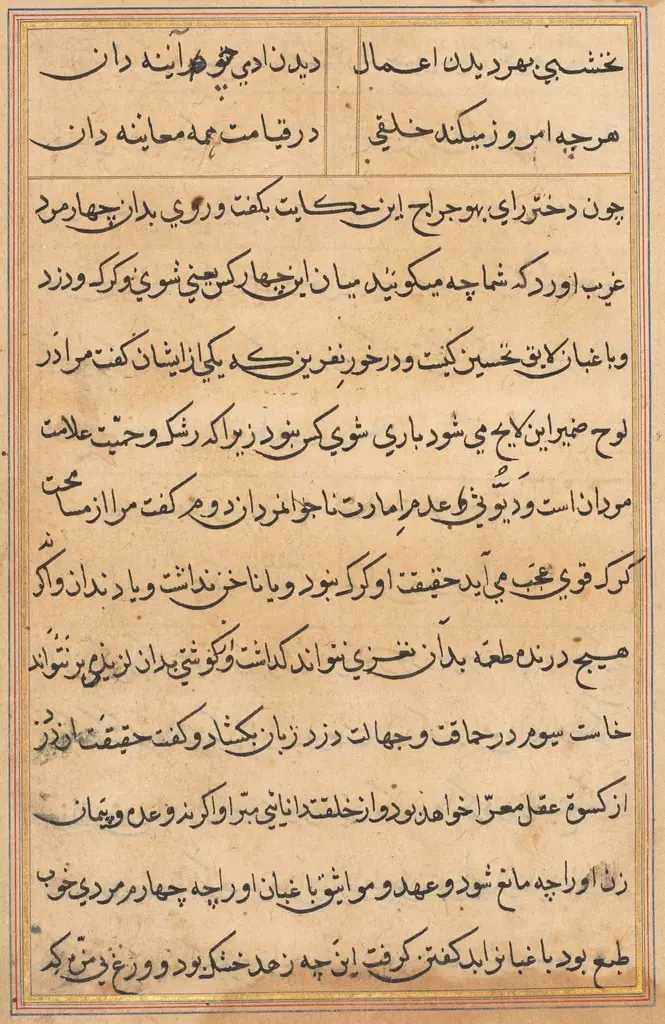
Page from Tales of a Parrot (Tuti-nama): text page is an unspecified painting. It dates from 1560 and is held in the collection of the Cleveland Museum of Art. This object is a single folio from the illustrated manuscript Tales of a Parrot (Tuti‑nama).
About this work
History & Provenance
The text page from the Tales of a Parrot (Tuti-nama) is dated to 1560, aligning with the manuscript’s creation during the Mughal Empire.
The text page from the Tales of a Parrot (Tuti-nama) is dated to 1560, aligning with the manuscript’s creation during the Mughal Empire. The Cleveland Museum of Art holds the work, where it is catalogued as part of their holdings (accession number 1962.279.123.b). The exact circumstances of its commission remain undocumented, though it is attributed to an unknown artist of the period. Its provenance prior to the 20th century is not recorded in the available sources.
Legacy
The text page from the Tuti-nama, produced in 1560 within the Mughal artistic milieu, has been recognized for its role in shaping Persianate narrative painting traditions and influencing later manuscript illustration across South and Central Asia. Its compositional strategies and didactic function are frequently cited in studies of Mughal manuscript culture and the diffusion of illustrated moral tales. The work is held in the Cleveland Museum of Art collection, accessioned as 1962.279.123.b, and remains a key reference point in scholarship on Indo-Persian book arts.
Overview
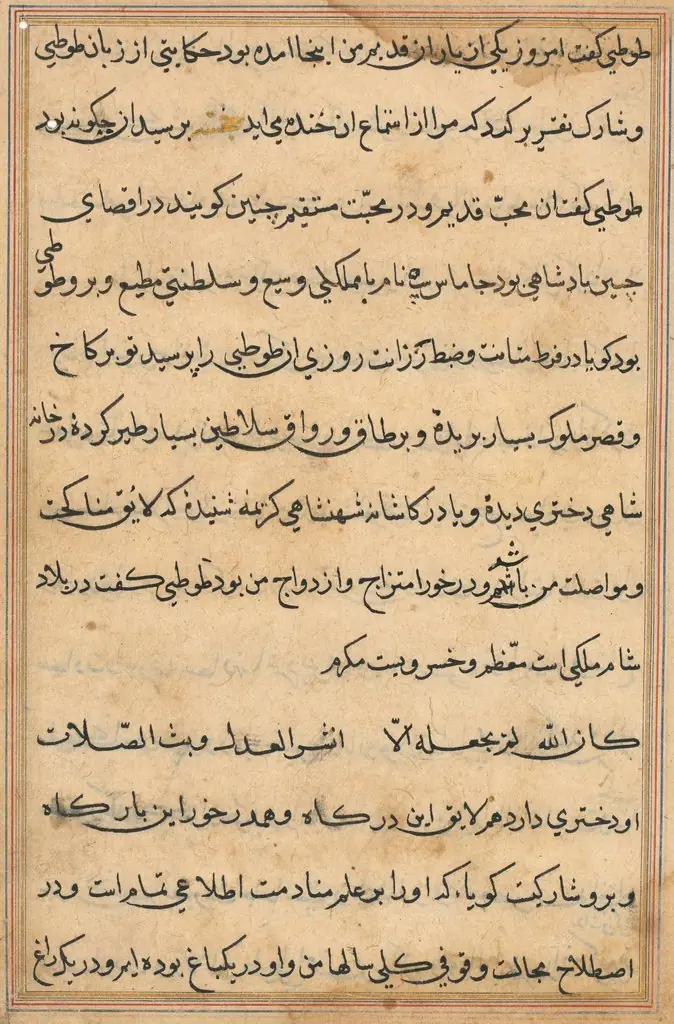
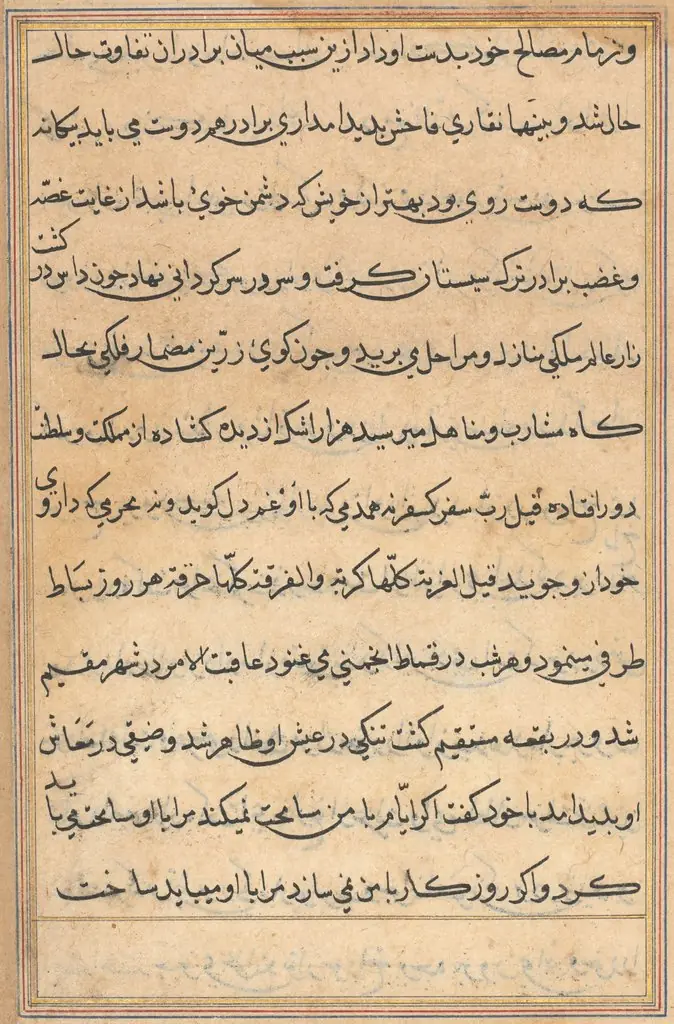
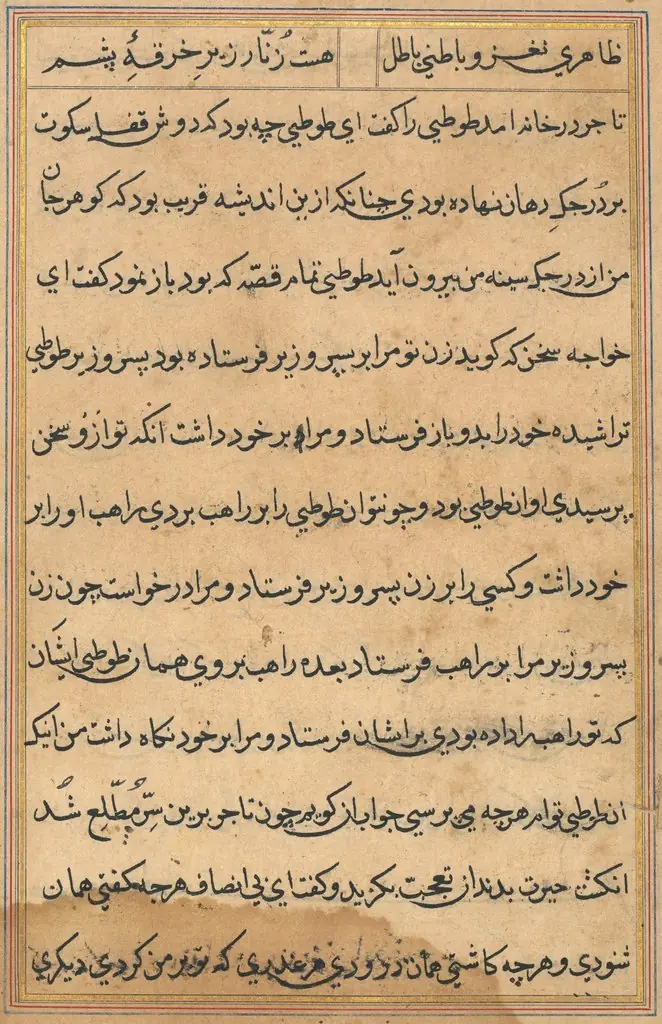
This object is a single folio from the illustrated manuscript Tales of a Parrot (Tuti‑nama). The sheet measures a modest size, its surface a pale, slightly yellowed paper marked by faint brown specks. A thin red line runs along the perimeter, framing rows of black calligraphic text rendered in an elegant, curved hand.
Subject & Meaning
The page contains a portion of the narrative composed for Prince Salim, a royal patron of the early seventeenth‑century Mughal court. The story, centered on a parrot’s adventures, served both as entertainment and as a vehicle for moral instruction, reflecting the court’s taste for refined literary works.
Technique & Style
The script is executed in flowing black ink, each line carefully aligned, demonstrating the high level of calligraphic training typical of court scribes. The red border, applied with a fine brush, provides a subtle decorative element without detracting from the textual focus. The paper’s slight discoloration indicates an aged, natural fiber support.
Artist & collection

- Page from Tales of a Parrot (Tuti-nama): text page
 Page from Tales of a Parrot (Tuti-nama): text page
 Page from Tales of a Parrot (Tuti-nama): text page
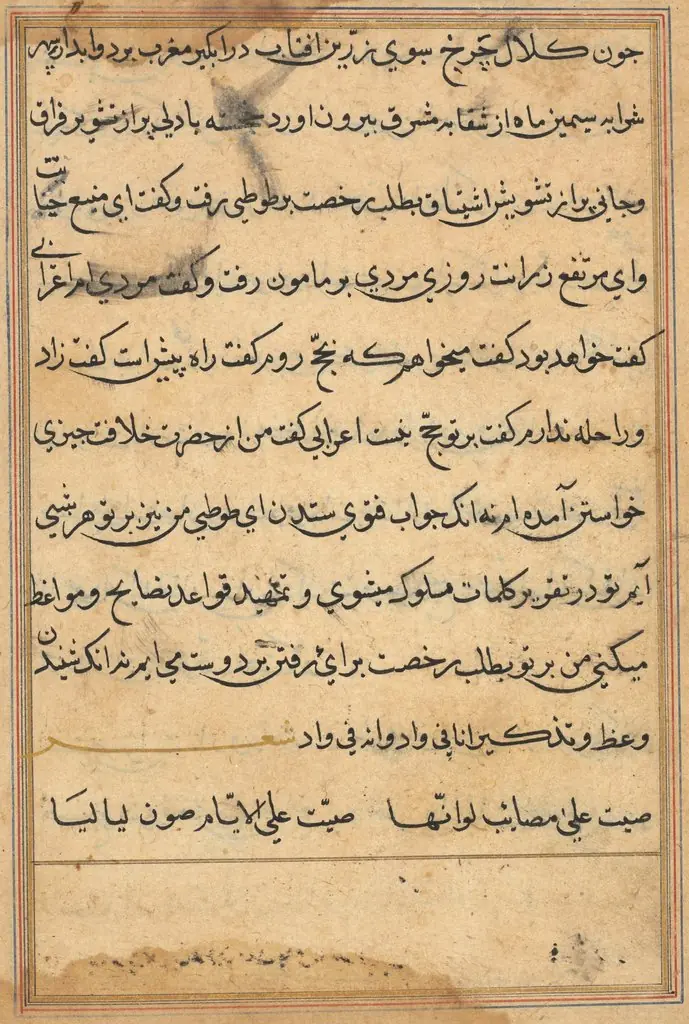 Page from Tales of a Parrot (Tuti-nama): text page
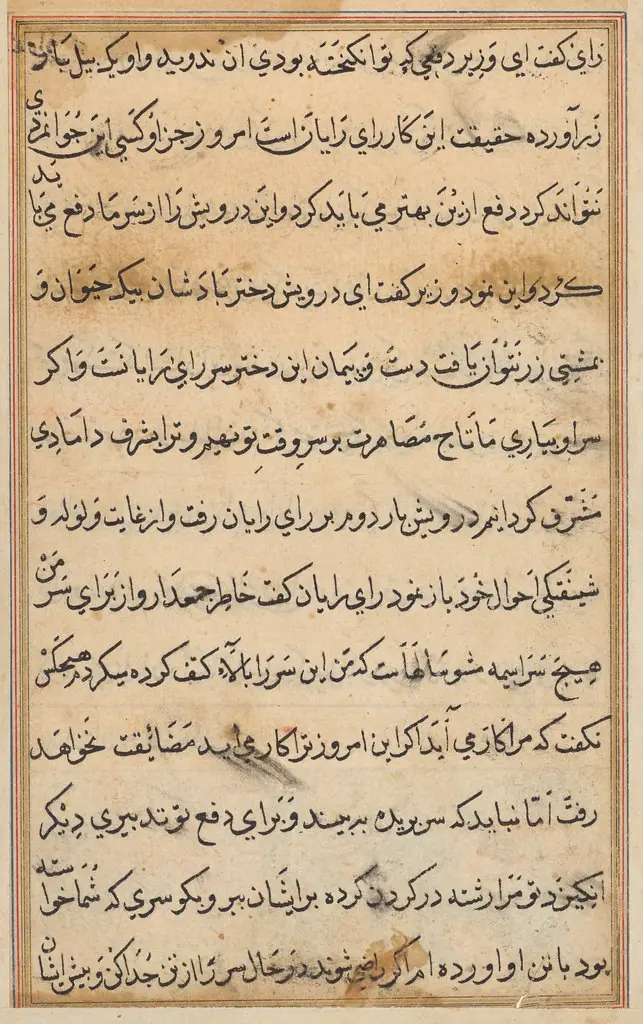 Page from Tales of a Parrot (Tuti-nama): text page
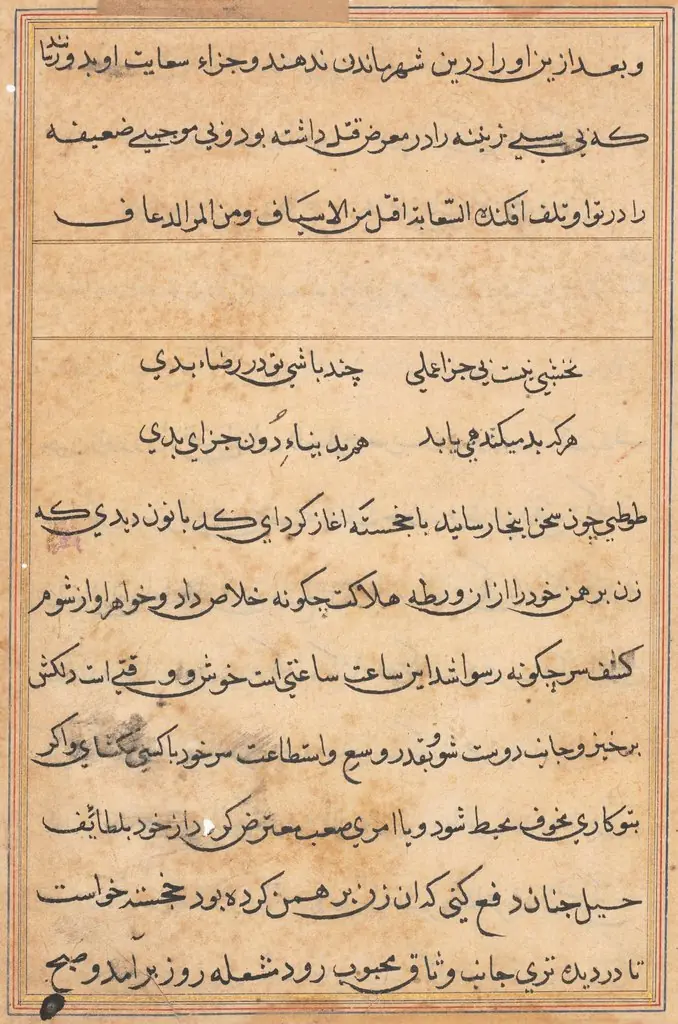 Page from Tales of a Parrot (Tuti-nama): text page
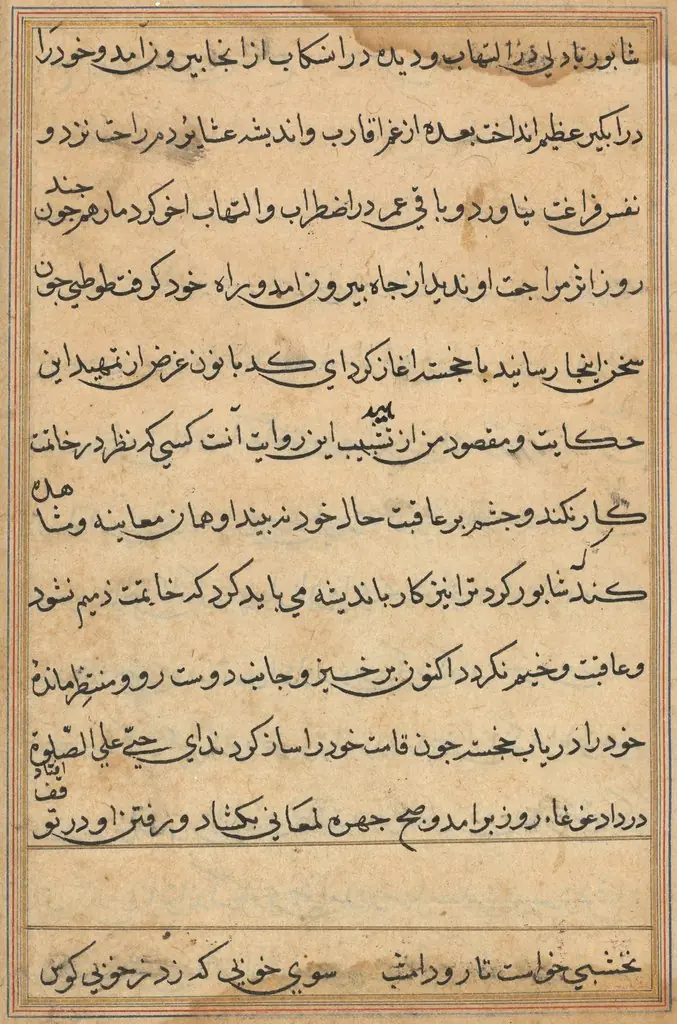 Page from Tales of a Parrot (Tuti-nama): text page
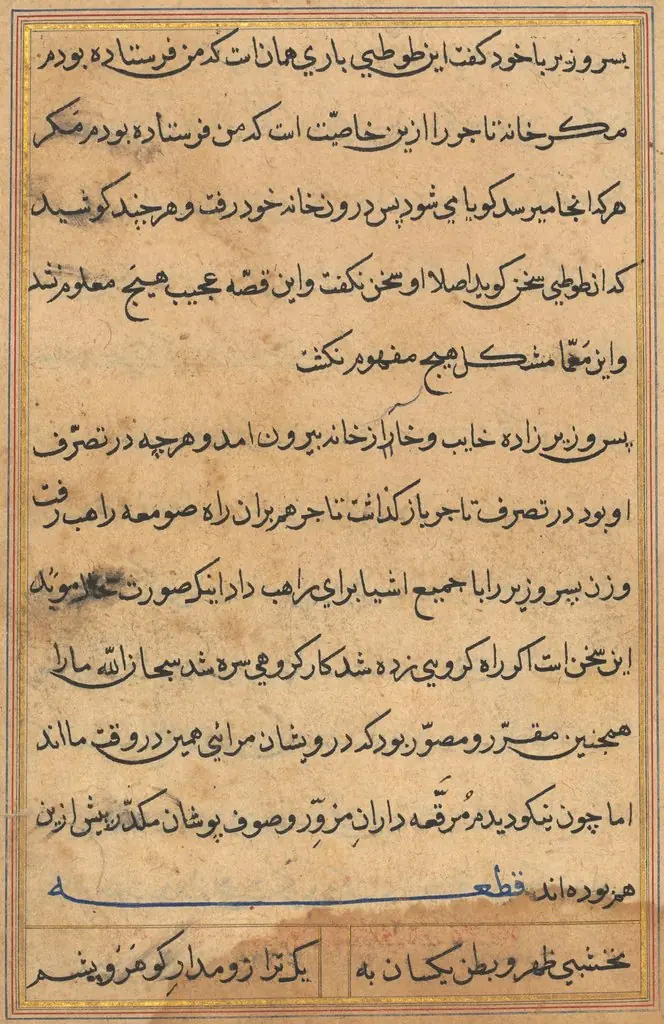 Page from Tales of a Parrot (Tuti-nama): text page
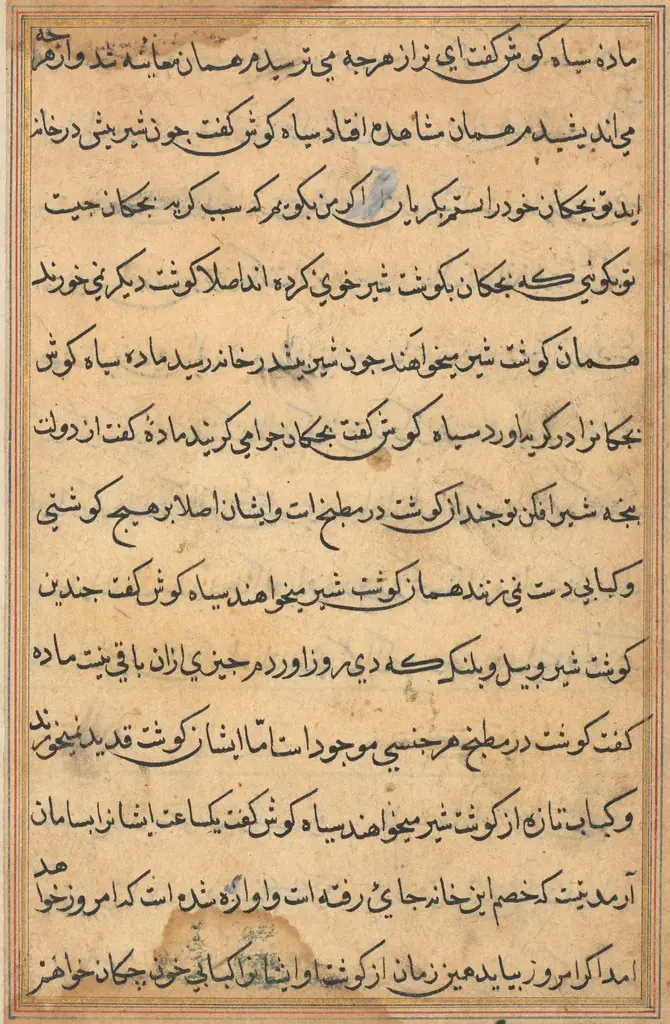 Page from Tales of a Parrot (Tuti-nama): text page
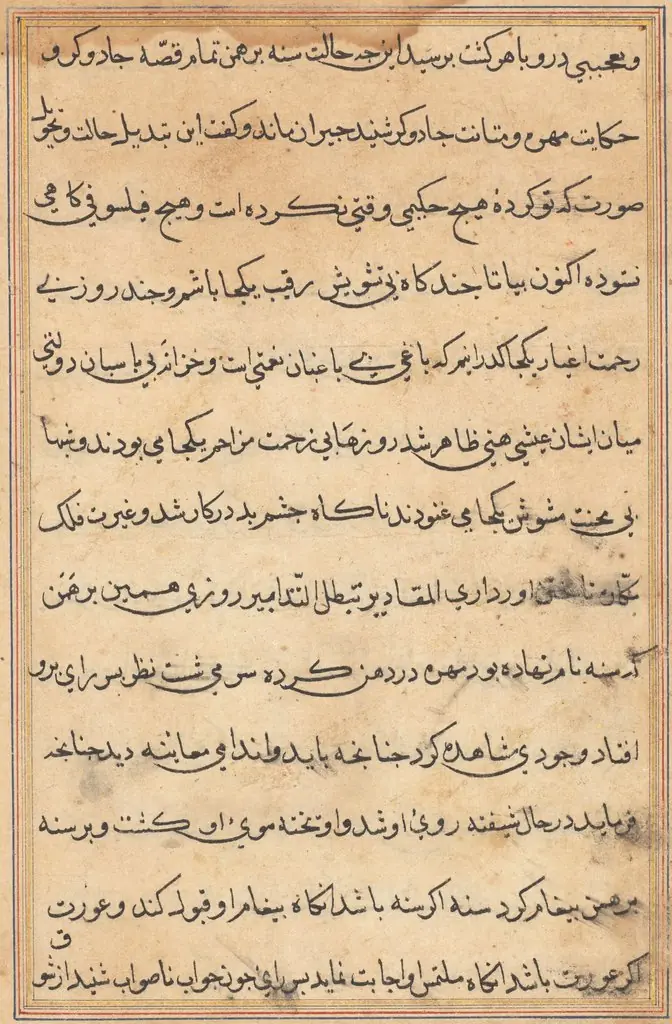 Page from Tales of a Parrot (Tuti-nama): text page
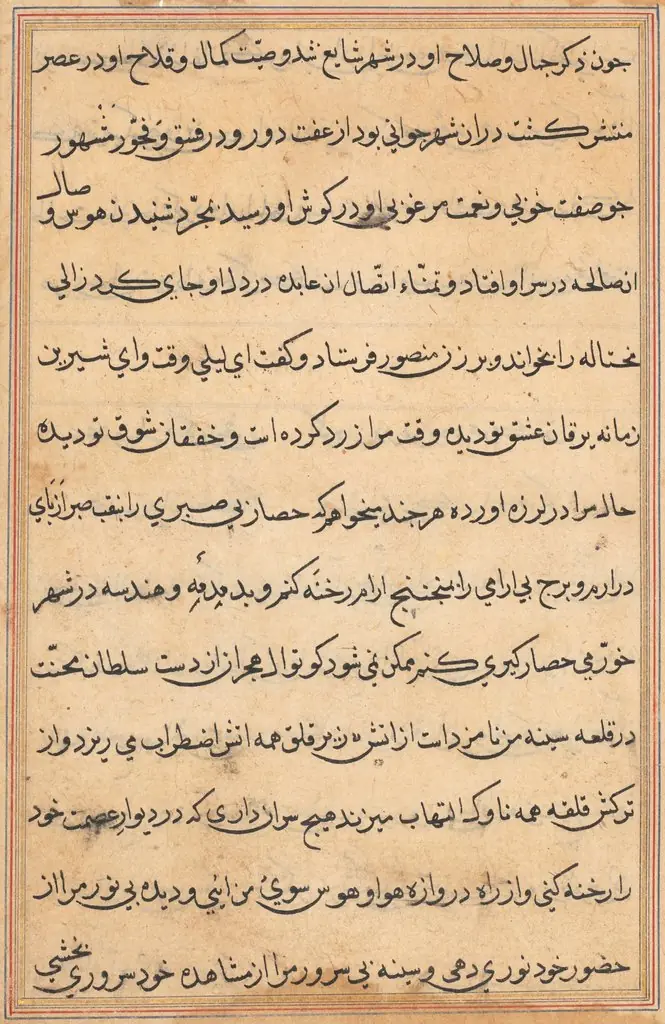 Page from Tales of a Parrot (Tuti-nama): text page
 Page from Tales of a Parrot (Tuti-nama): text page