Artwork
Page from Tales of a Parrot (Tuti-nama): text page
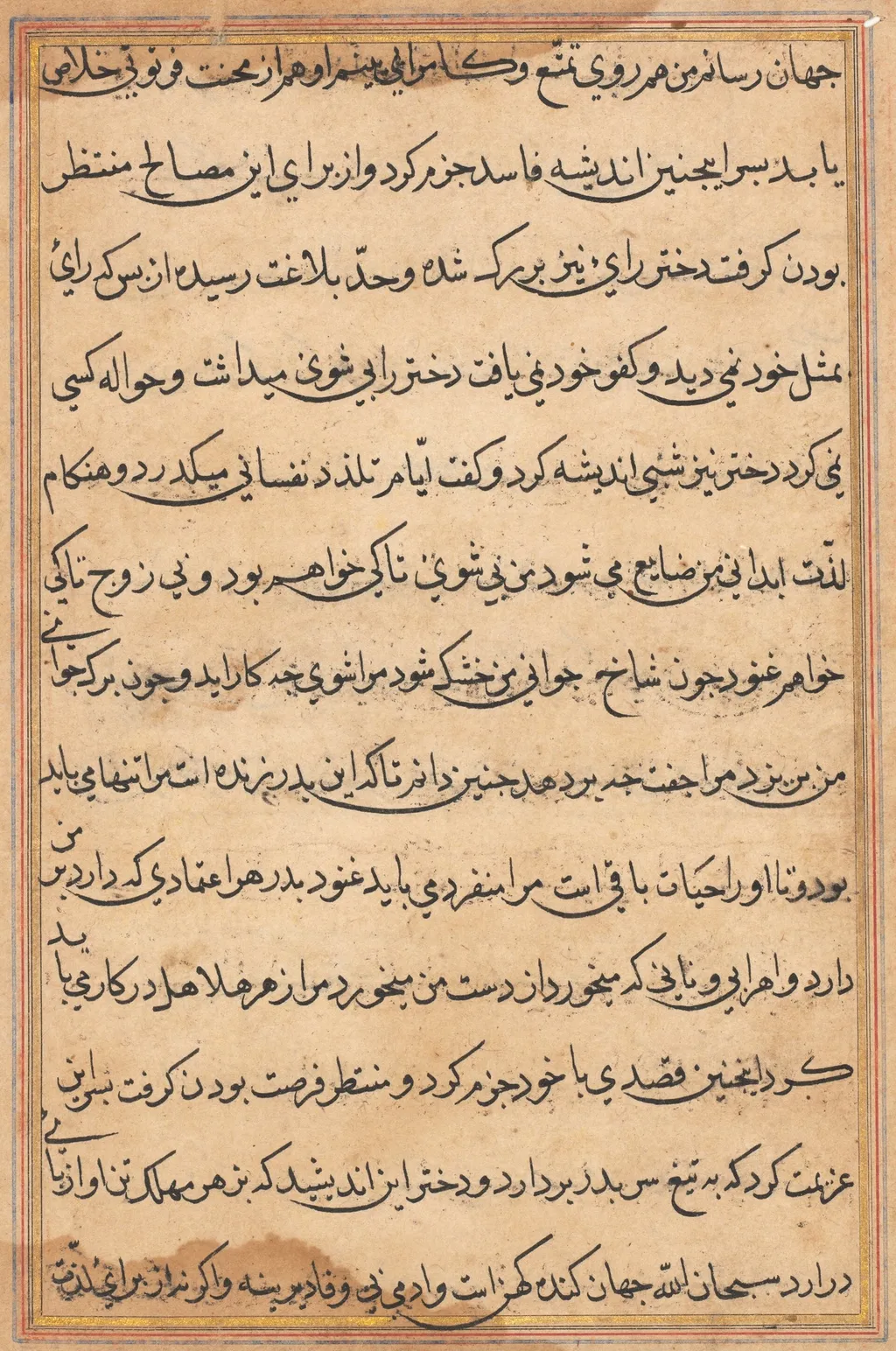
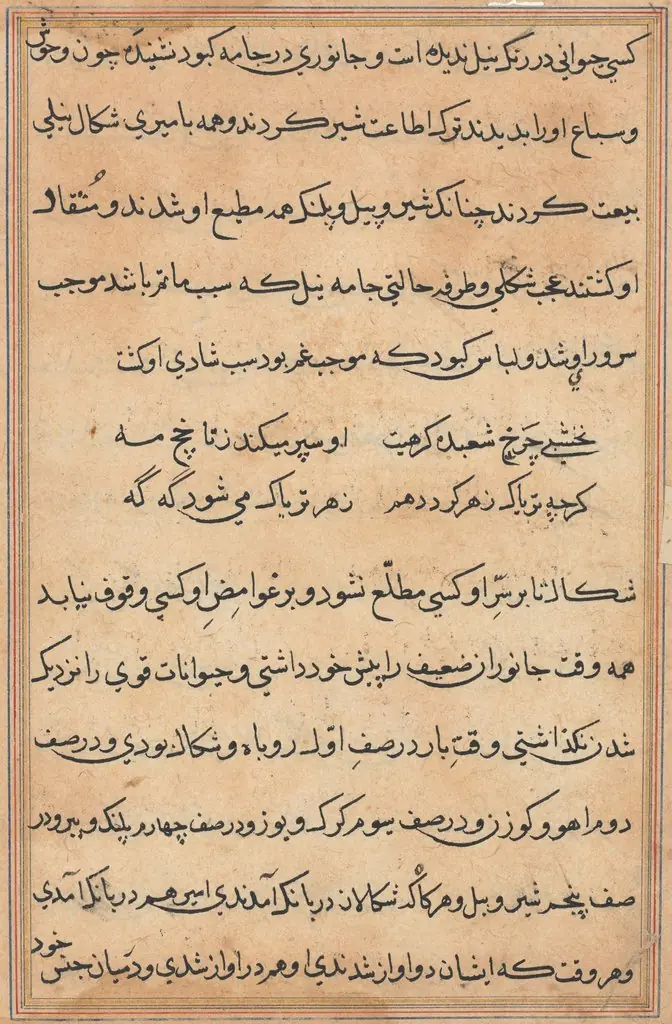
Page from Tales of a Parrot (Tuti-nama): text page is an unspecified painting. It dates from 1560 and is held in the collection of the Cleveland Museum of Art. The object is a single folio from the illustrated manuscript known as the Tuti‑nama or Tales of a Parrot.
About this work
Technique & Style
The page is an ink and pigment painting on paper, created in 1560 within the Mughal Empire. Executed as a text page from the Tuti-nama, it reflects manuscript illumination techniques characteristic of Mughal artistic practice, combining delicate line work with flat areas of color applied to a paper support. The work is attributed to an unknown artist and is housed in the Cleveland Museum of Art.
History & Provenance
Exhibition history is limited to institutional display at the Cleveland Museum of Art, where it has been part of the permanent collection since its acquisition.
This text page from the Tuti-nama (Tales of a Parrot) was created in 1560 within the Mughal Empire. The work is attributed to an unknown artist. It currently forms part of the collection at the Cleveland Museum of Art, where it is cataloged under the accession number 1962.279.283.b. No specific details regarding the original commissioner or the intermediate ownership history prior to its acquisition by the museum are provided in the available records.
The painting is held in the collection of the Cleveland Museum of Art, where it is accessioned as 1962.279.283.b. Its provenance traces back to Mughal India, with the work created in 1560.
Exhibition history is limited to institutional display at the Cleveland Museum of Art, where it has been part of the permanent collection since its acquisition.
Overview
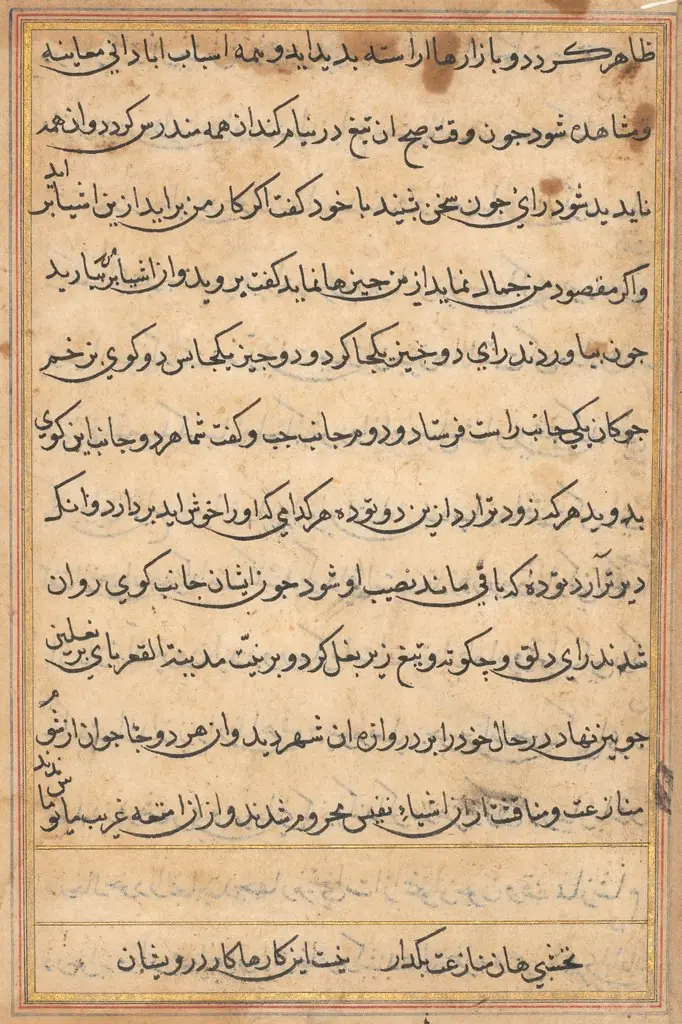
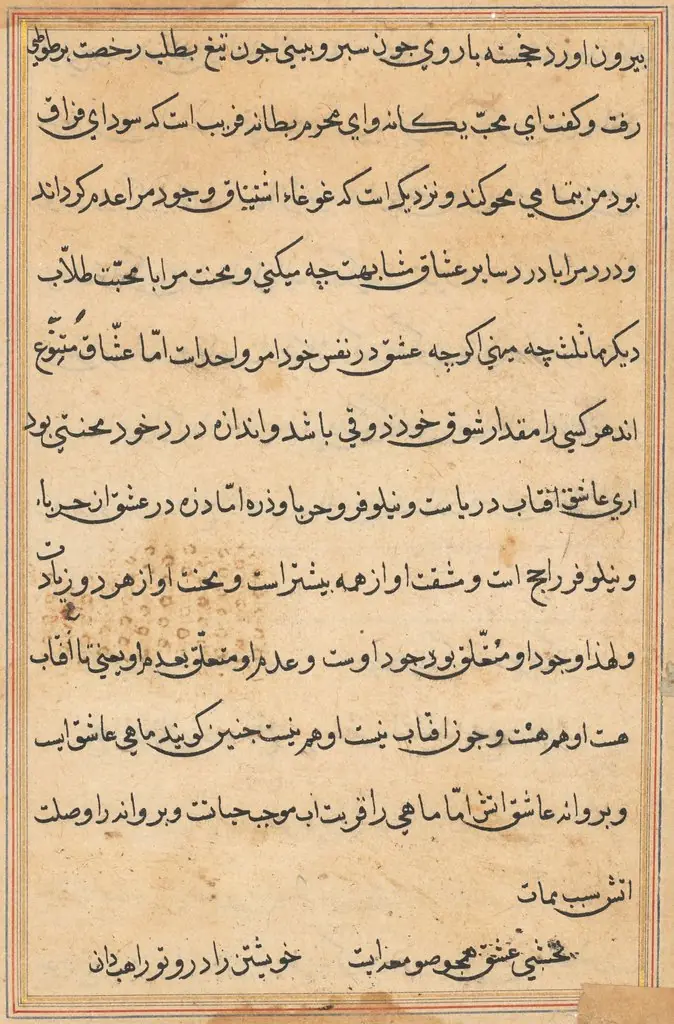
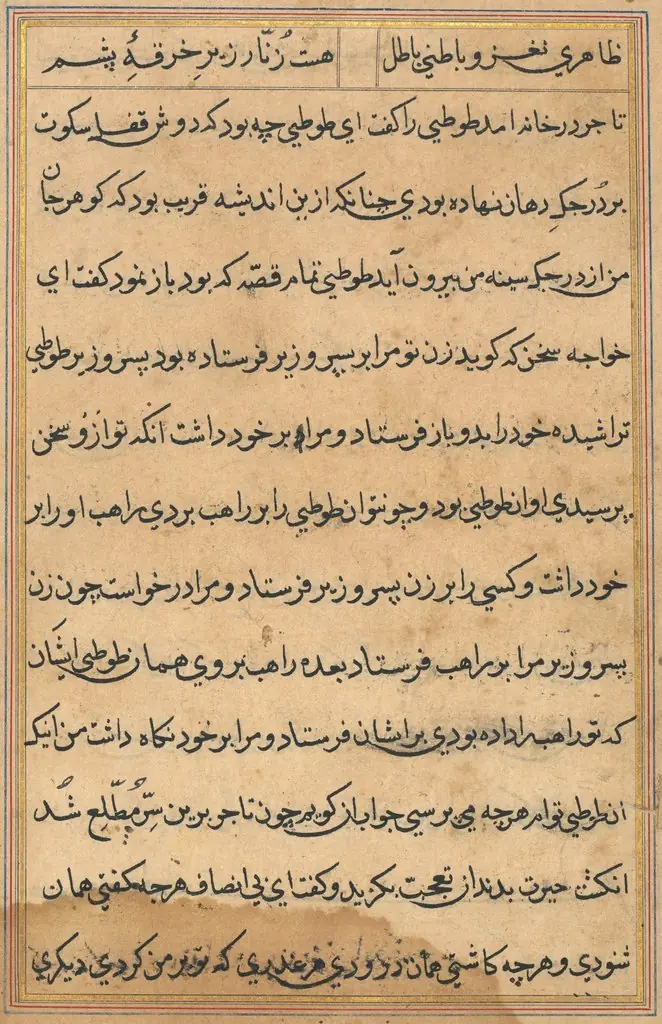
The object is a single folio from the illustrated manuscript known as the Tuti‑nama or Tales of a Parrot. The page consists of black ink calligraphy on a light‑colored paper, framed by ornamental borders that echo the aesthetic of Persianate book production. The text is composed in a flowing script typical of Arabic‑derived writing systems, suggesting a literary work intended for an elite audience.
Subject & Meaning
The verses on the page form part of a narrative poem or story, a common genre in courtly literature where a parrot recounts moral or romantic tales. While the precise content of this fragment is not transcribed here, the Tuti‑nama traditionally served as an entertaining and didactic collection for royal patrons, blending allegory with courtly values.
Context
Produced within the Mughal artistic milieu, the folio illustrates the synthesis of Persian literary tradition and Indian courtly culture. The use of Arabic‑style script and Persian decorative motifs aligns the work with the broader Persianate world, while its creation for a Mughal prince situates it within the empire’s efforts to forge a distinct yet cosmopolitan identity.
Artist & collection

- Page from Tales of a Parrot (Tuti-nama): text page
 Page from Tales of a Parrot (Tuti-nama): text page
 Page from Tales of a Parrot (Tuti-nama): text page
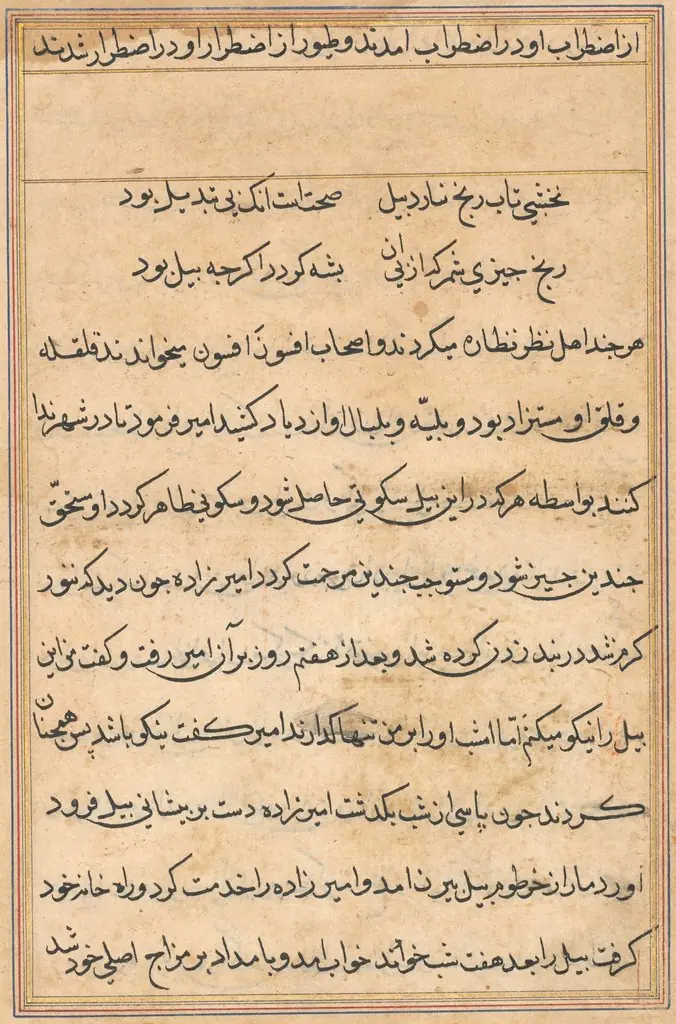 Page from Tales of a Parrot (Tuti-nama): text page
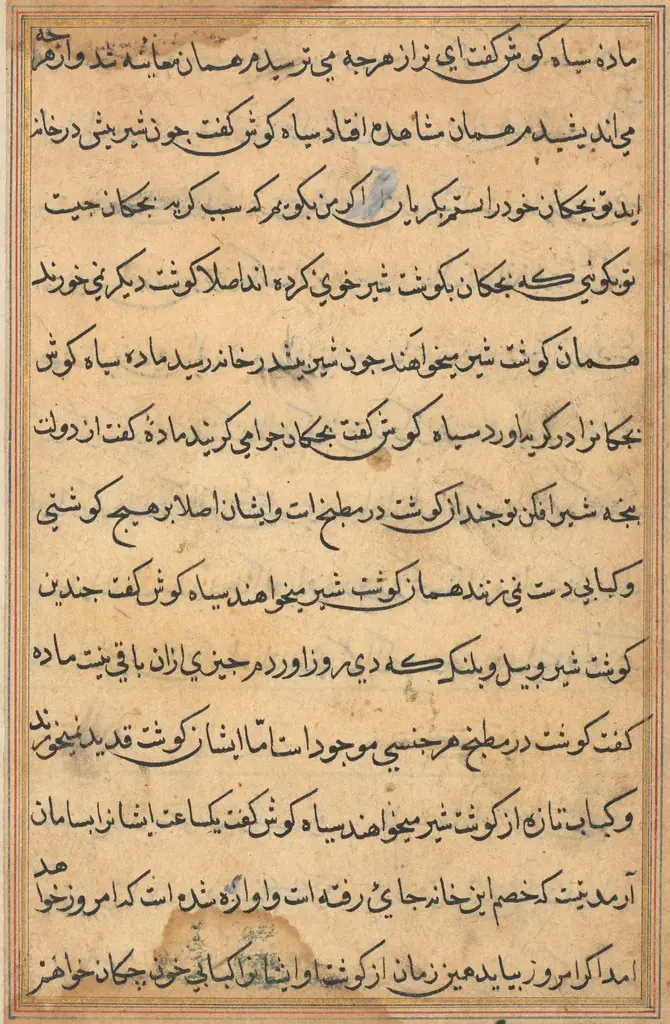 Page from Tales of a Parrot (Tuti-nama): text page
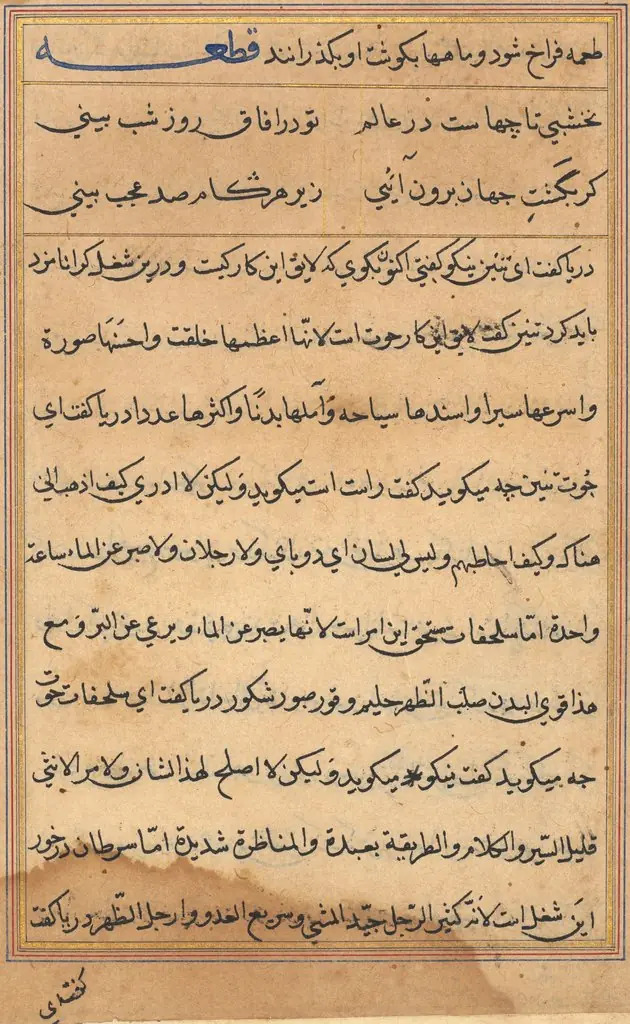 Page from Tales of a Parrot (Tuti-nama): text page
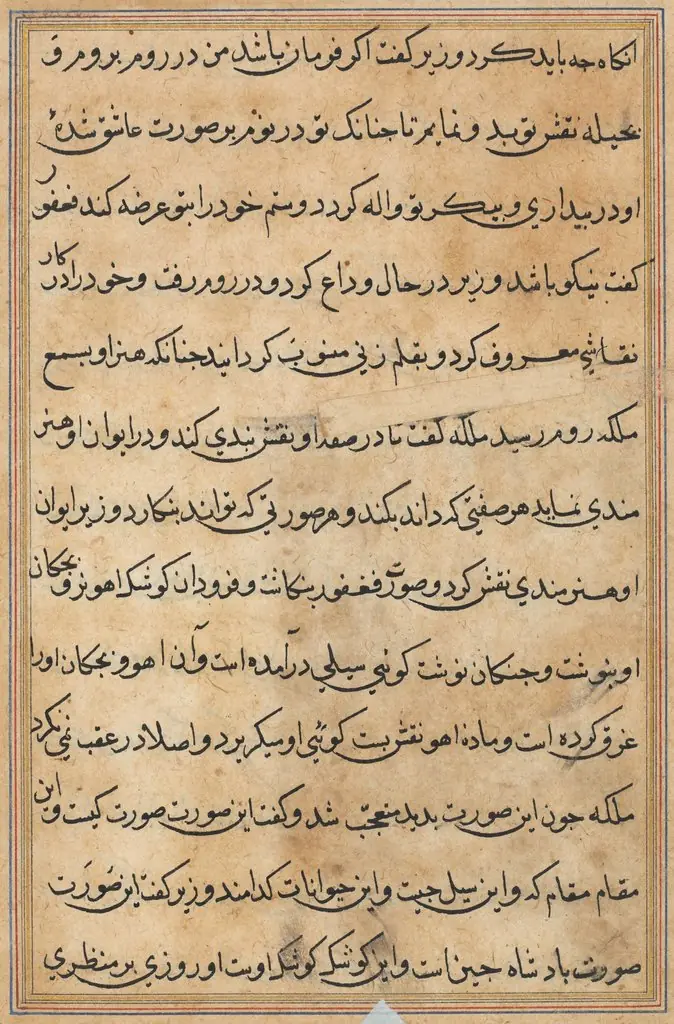 Page from Tales of a Parrot (Tuti-nama): text page
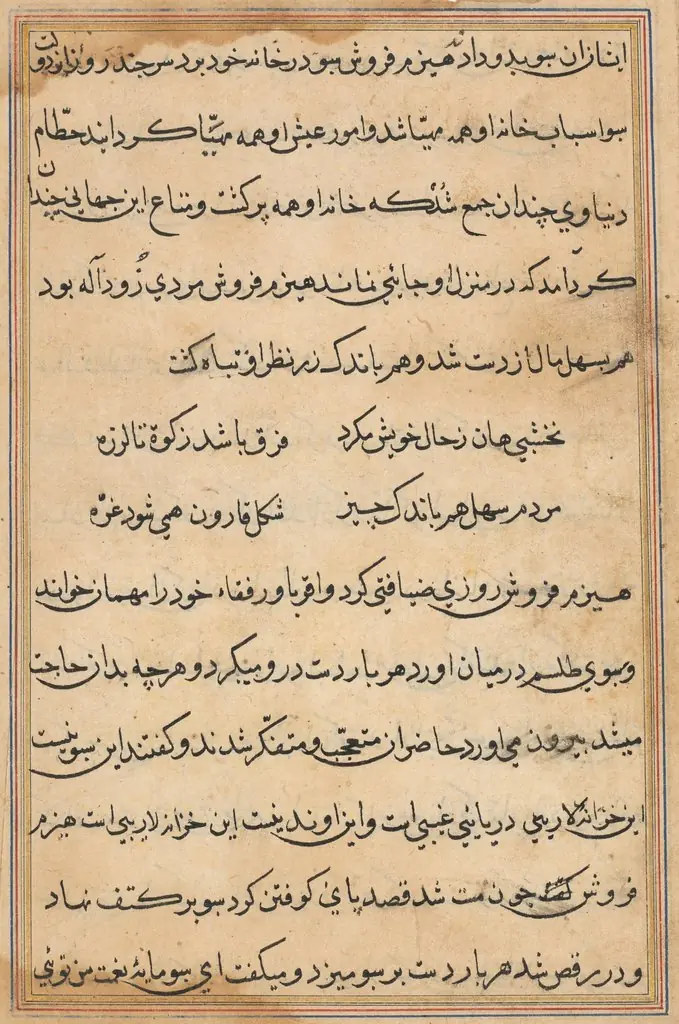 Page from Tales of a Parrot (Tuti-nama): text page
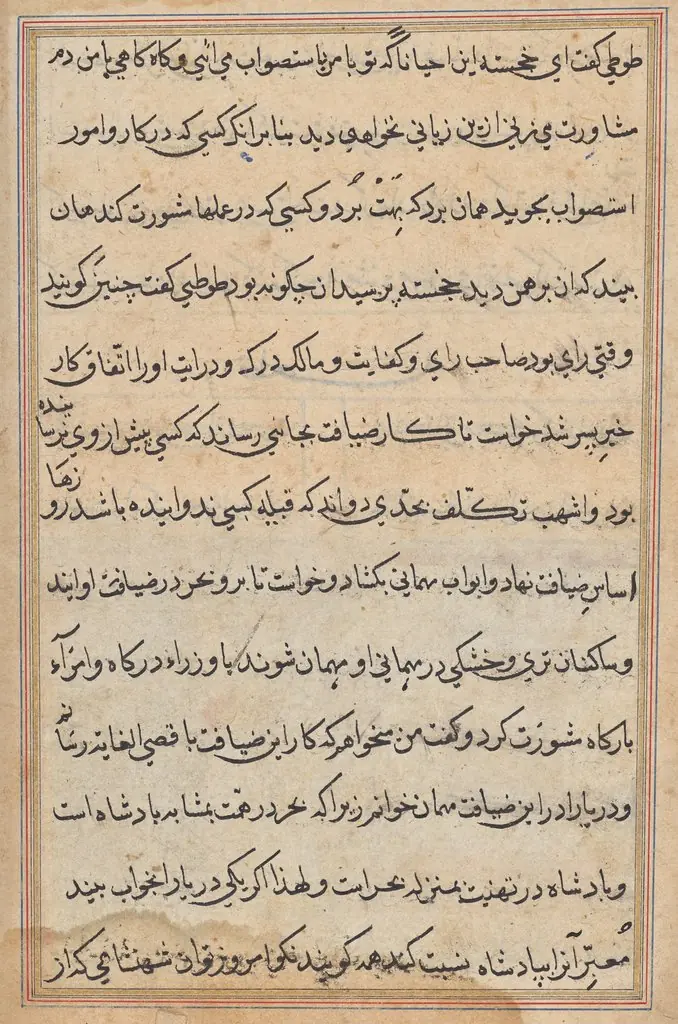 Page from Tales of a Parrot (Tuti-nama): text page
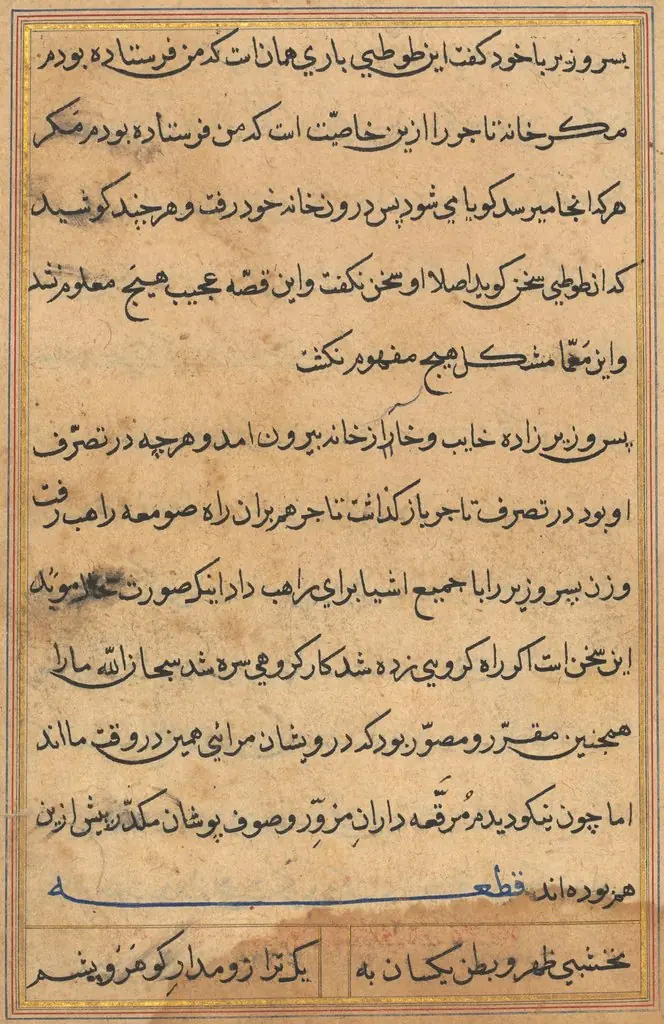 Page from Tales of a Parrot (Tuti-nama): text page
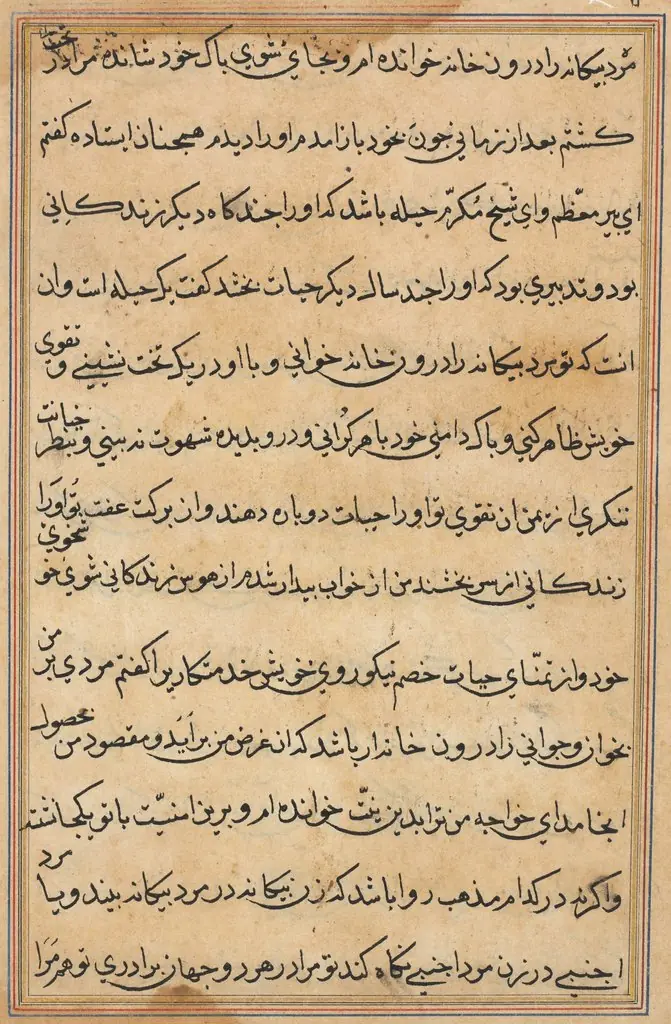 Page from Tales of a Parrot (Tuti-nama): text page
 Page from Tales of a Parrot (Tuti-nama): text page