Artwork
Page from Tales of a Parrot (Tuti-nama): text page
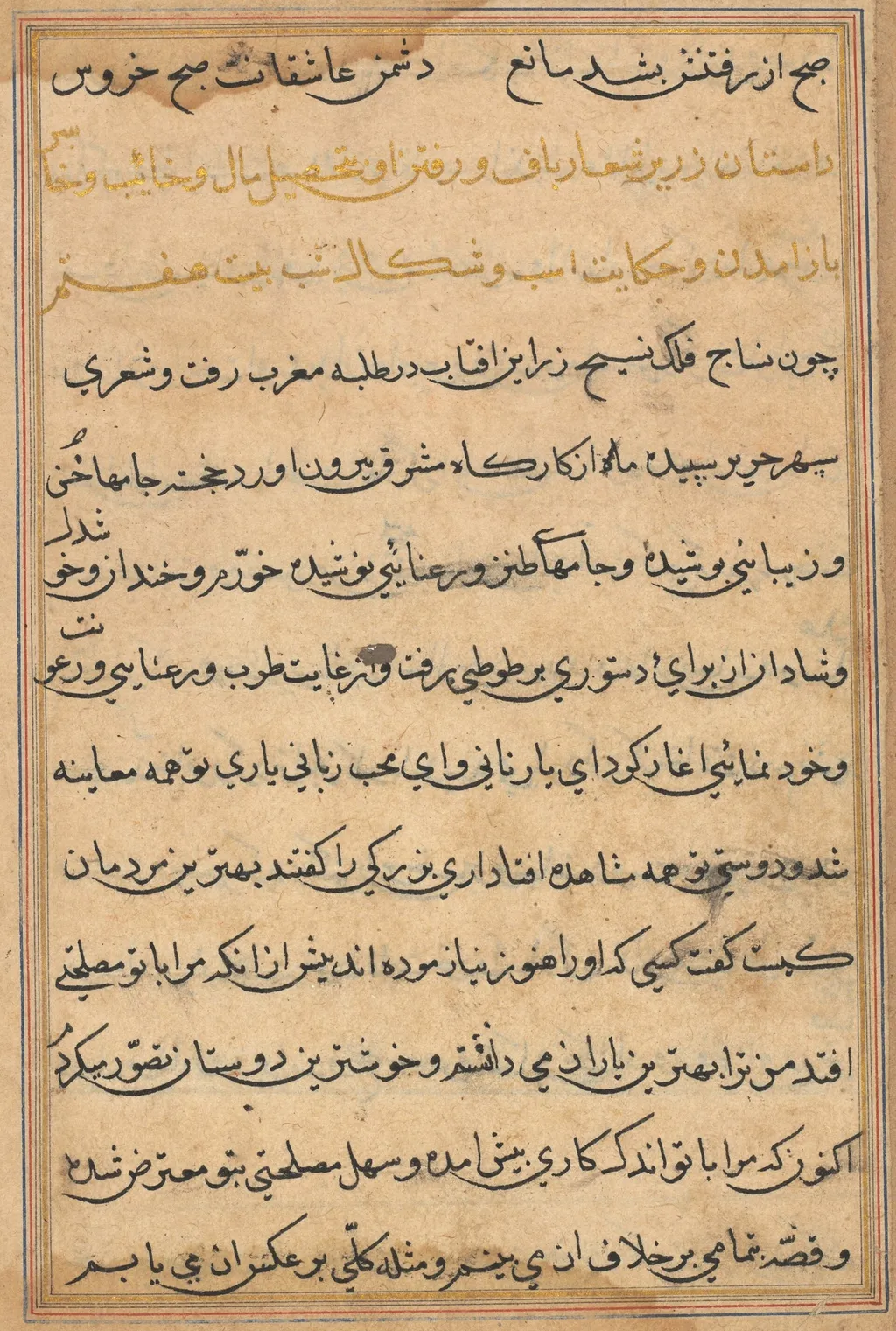
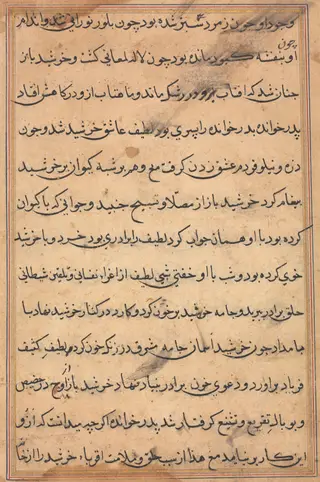
Page from Tales of a Parrot (Tuti-nama): text page is an unspecified painting. It dates from 1560 and is held in the collection of the Cleveland Museum of Art. This artwork is a single page from the illustrated manuscript 'Tales of a Parrot' (Tuti-nama), featuring a text page without illustrations.
About this work
History & Provenance
This text page comes from a Tuti-nama (Tales of a Parrot) manuscript produced about 1560 in Mughal India.
This text page comes from a Tuti-nama (Tales of a Parrot) manuscript produced about 1560 in Mughal India. Executed within the Mughal manuscript tradition, the folio later entered the collection of the Cleveland Museum of Art, where it is catalogued under accession number 1962.279.184.b. It was acquired through the bequest of Mrs. John L. Severance in 1962. The artist is unidentified, consistent with the anonymous workshop practices of Mughal book arts during this period, and no further ownership history or commissioning details are documented in the available sources.
Subject & Meaning
The page depicts a narrative scene drawn from the Persian tale of the parrot, a didactic story about moral instruction and the consequences of poor judgment. In this miniature, a parrot perched on a branch is shown listening to a human interlocutor, symbolizing the role of counsel and the transmission of wisdom. The iconography of the bird functions as a moral emblem within the Mughal courtly tradition, reflecting the cultural emphasis on verbal instruction and ethical conduct.
The work is attributed to the Mughal imperial workshop and was created circa 1560, exemplifying the synthesis of Persian literary themes with Indian artistic practice.
The miniature serves as a visual commentary on the didactic purpose of the Tuti-nama, where animal allegories convey lessons about human behavior. Its presence in the Cleveland Museum of Art collection underscores its significance as a representative example of 16th‑century Mughal book illustration.
The subject’s meaning is rooted in the broader literary context of the Tuti-nama, wherein the parrot’s discourse illustrates the virtues of prudence and the perils of indiscretion. The artwork thus operates as both a narrative fragment and a symbolic illustration of moral instruction within the Mughal cultural milieu.
Overview
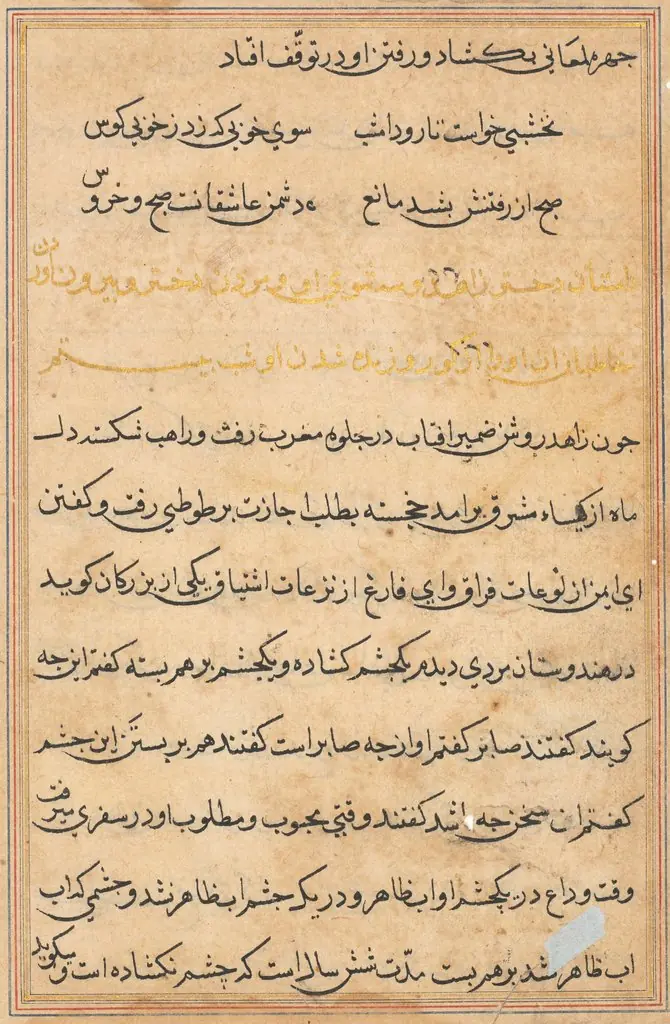
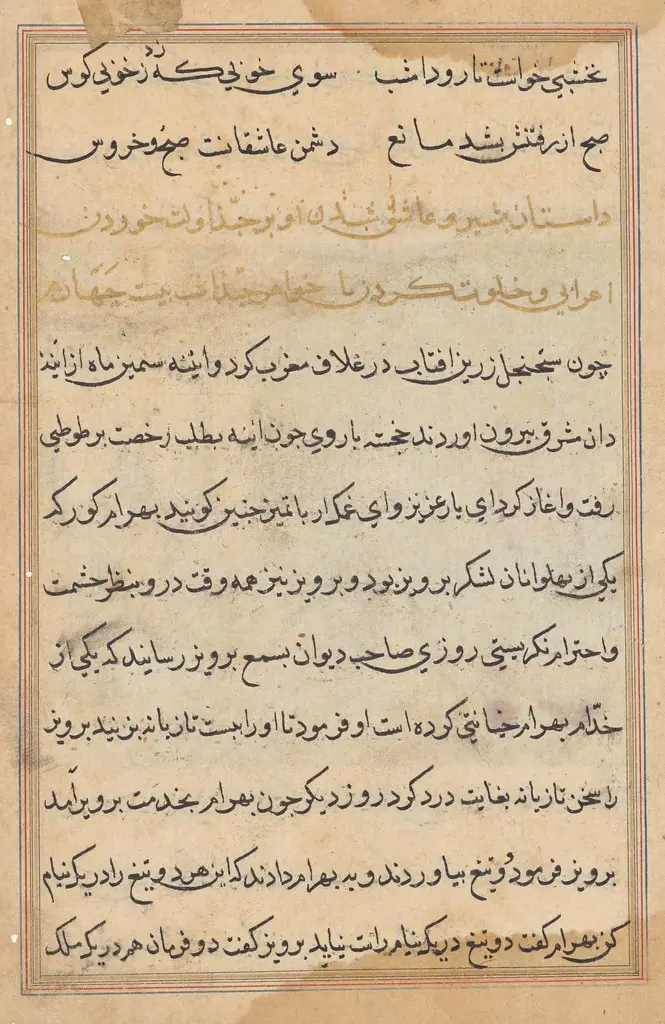
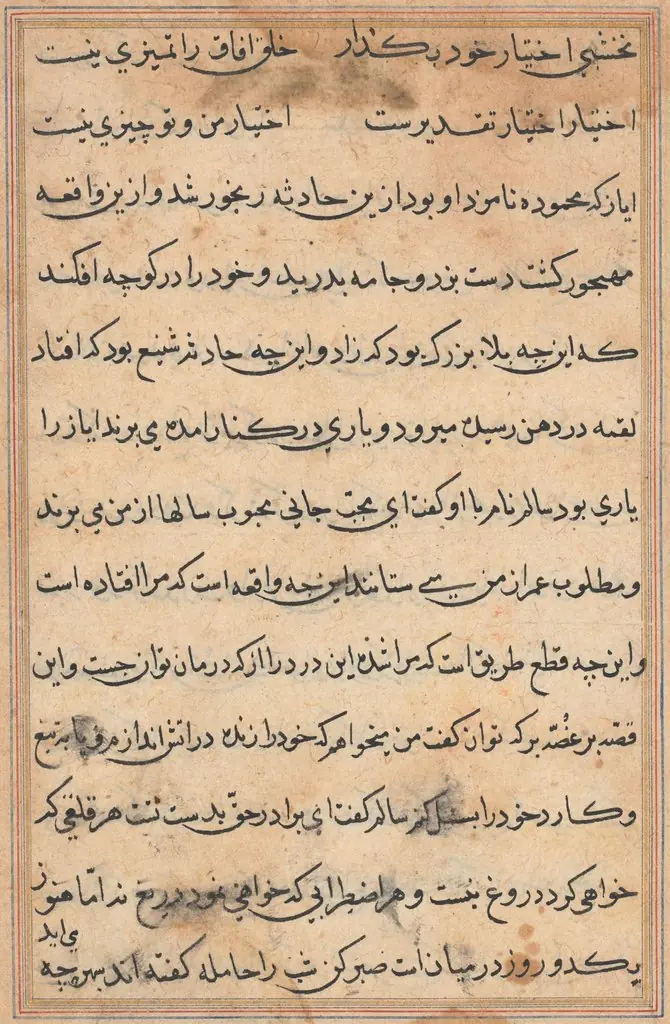
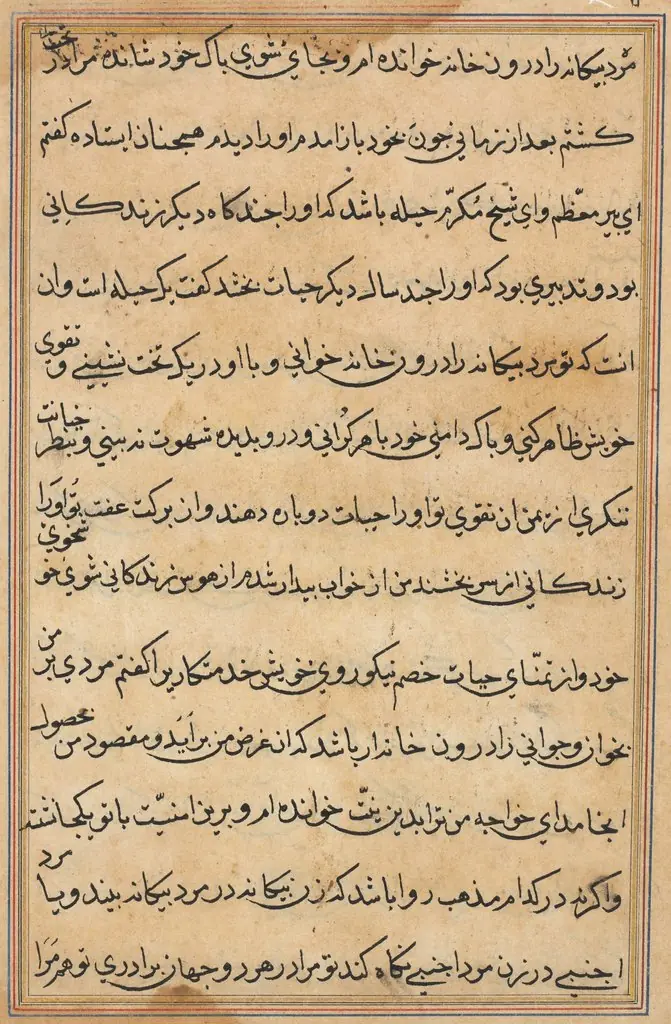
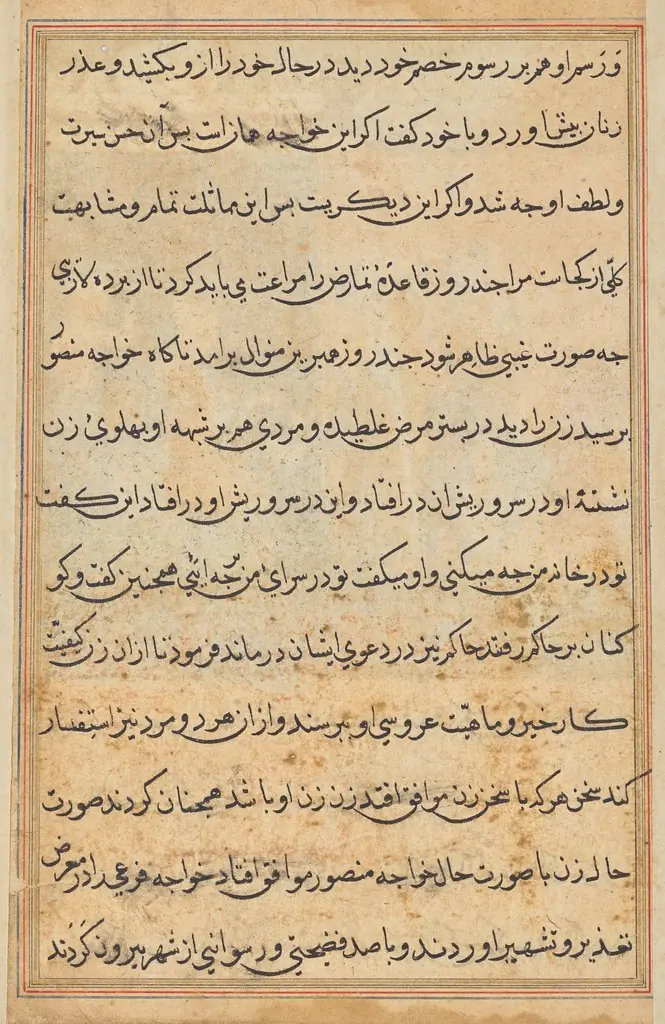
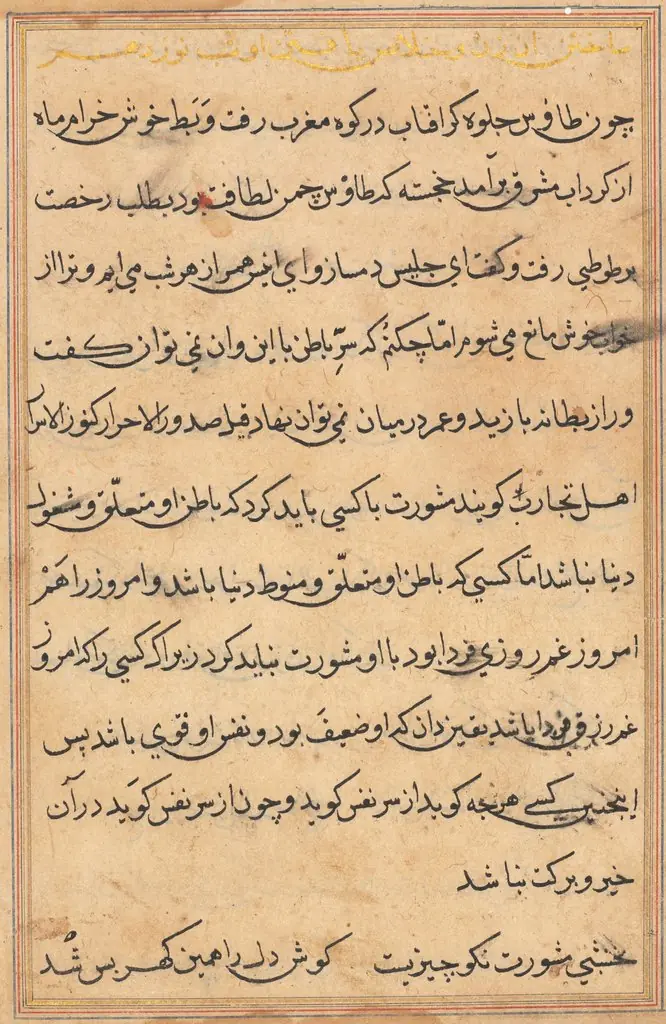
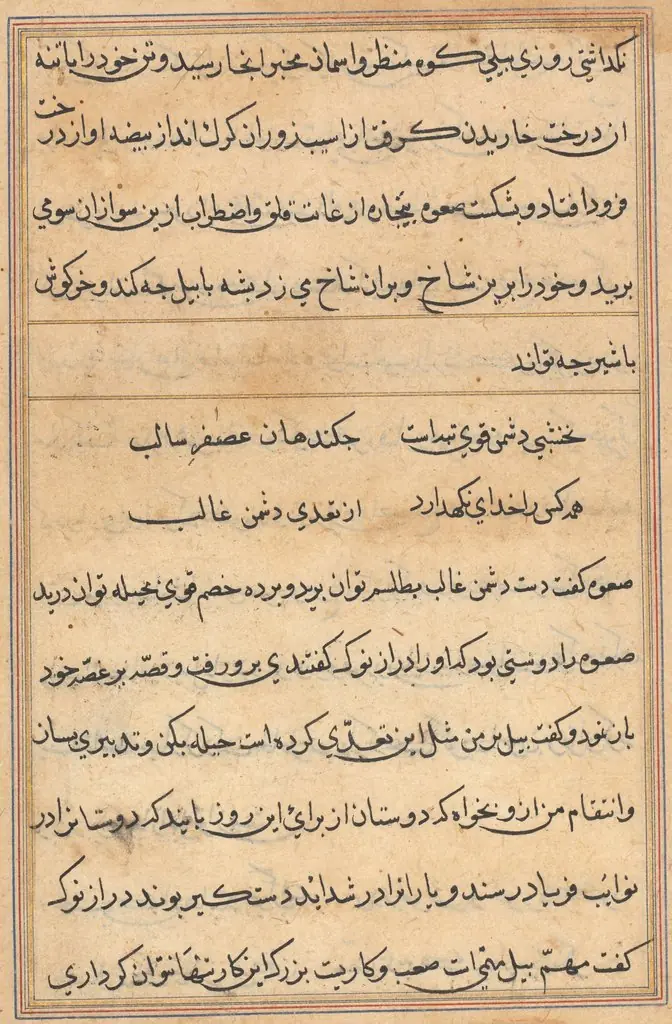
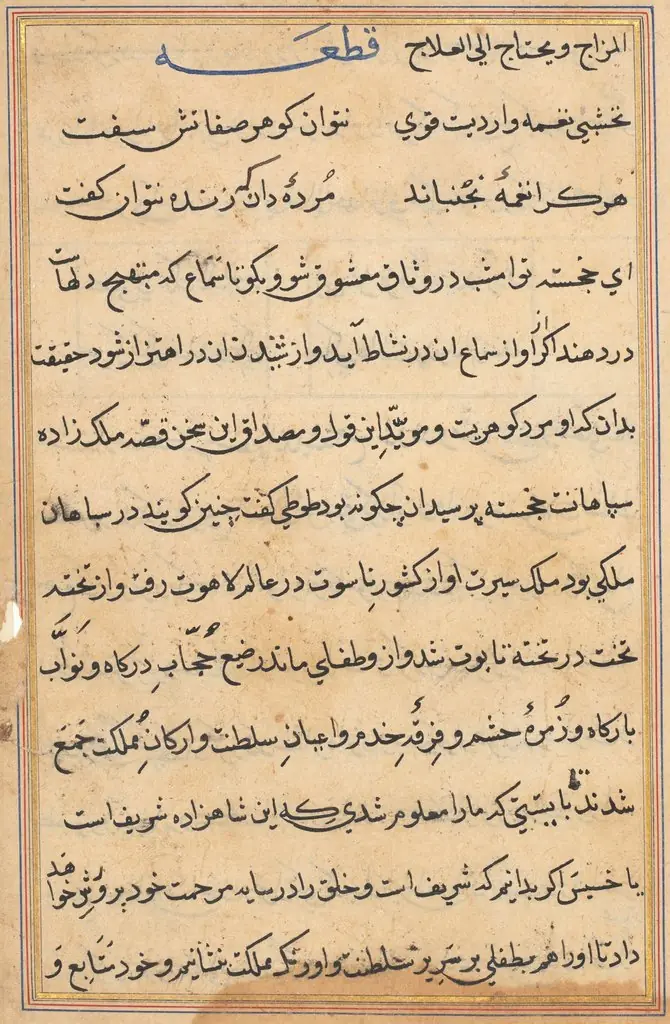
This artwork is a single page from the illustrated manuscript 'Tales of a Parrot' (Tuti-nama), featuring a text page without illustrations. The page exhibits a brown background with black ink text, accented by gold writing at the top and bordered by thin red, blue, and yellow lines.
Technique & Style
The page showcases traditional manuscript techniques of its time, including black ink calligraphy on a brown ground, selective use of gold for emphasis, and multicolored border lines. The script, while aesthetically pleasing, prioritizes legibility for readers familiar with the language.
Context
This page would have been part of a larger, possibly luxurious, manuscript intended for reading and contemplation by its owner. Its context within the broader 'Tales of a Parrot' narrative is literary, contributing to a series of fables or anecdotes.
Legacy
As part of 'Tales of a Parrot', this page contributes to the cultural and literary heritage of Indian and Persian manuscript traditions. Its preservation and display in institutions like The Cleveland Museum of Art facilitate ongoing study and appreciation of these artistic and literary achievements.
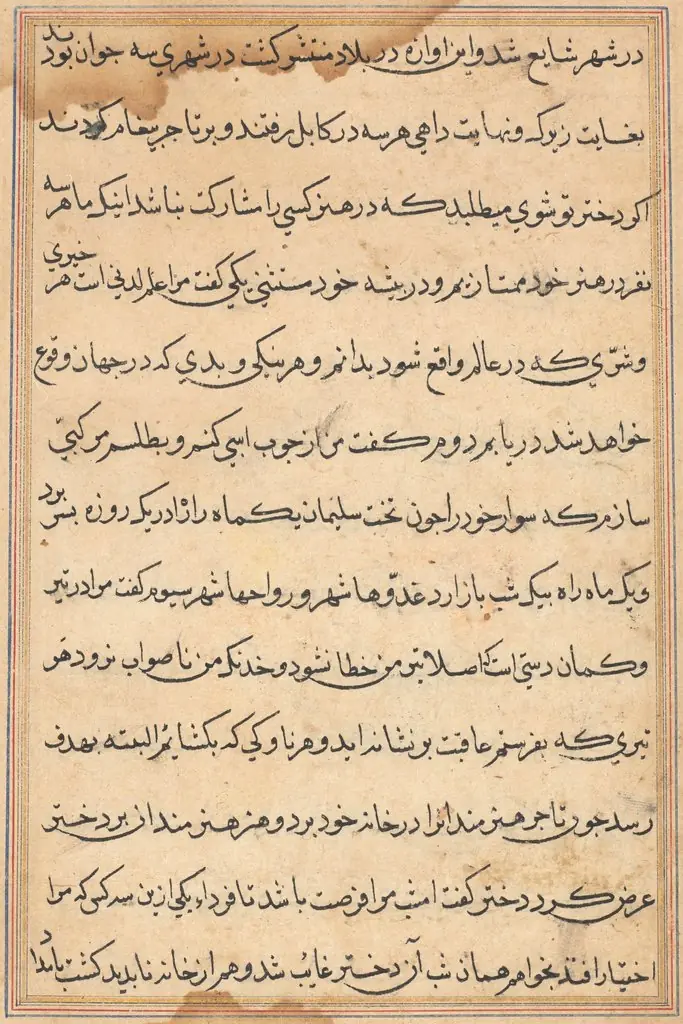
Artist & collection

- Page from Tales of a Parrot (Tuti-nama): text page
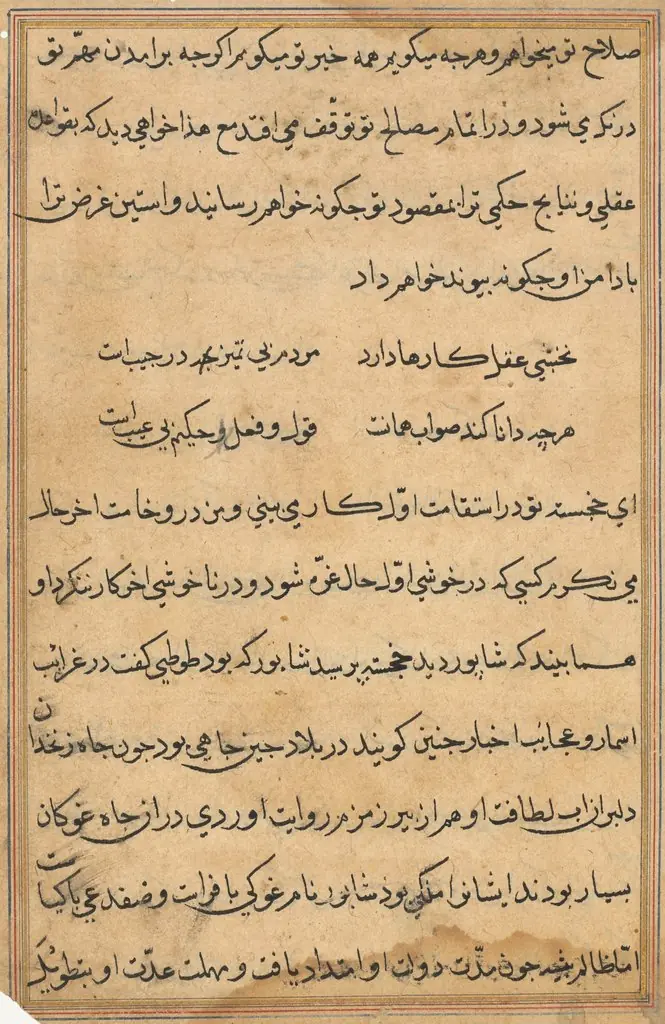 Page from Tales of a Parrot (Tuti-nama): text page
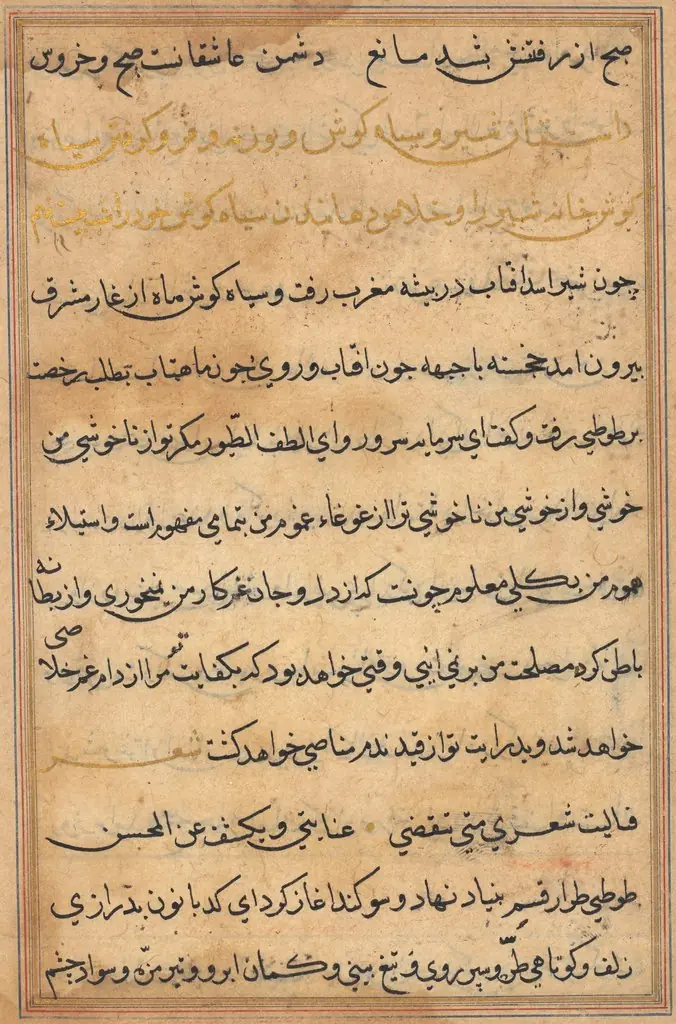 Page from Tales of a Parrot (Tuti-nama): text page
 Page from Tales of a Parrot (Tuti-nama): text page
 Page from Tales of a Parrot (Tuti-nama): text page
 Page from Tales of a Parrot (Tuti-nama): text page
 Page from Tales of a Parrot (Tuti-nama): text page
 Page from Tales of a Parrot (Tuti-nama): text page
 Page from Tales of a Parrot (Tuti-nama): text page
 Page from Tales of a Parrot (Tuti-nama): text page
 Page from Tales of a Parrot (Tuti-nama): text page
 Page from Tales of a Parrot (Tuti-nama): text page