Artwork
Page from Tales of a Parrot (Tuti-nama): text page
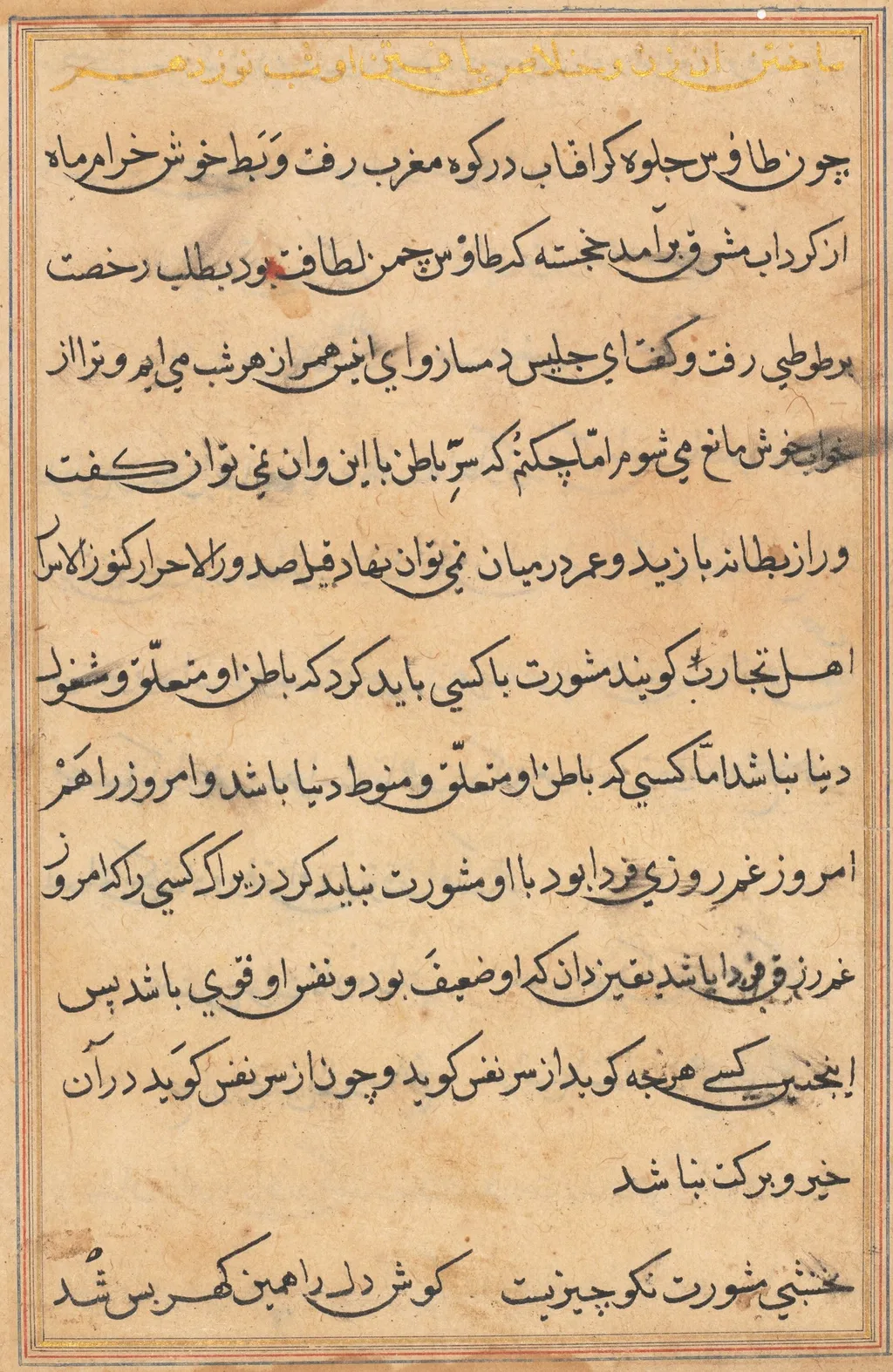
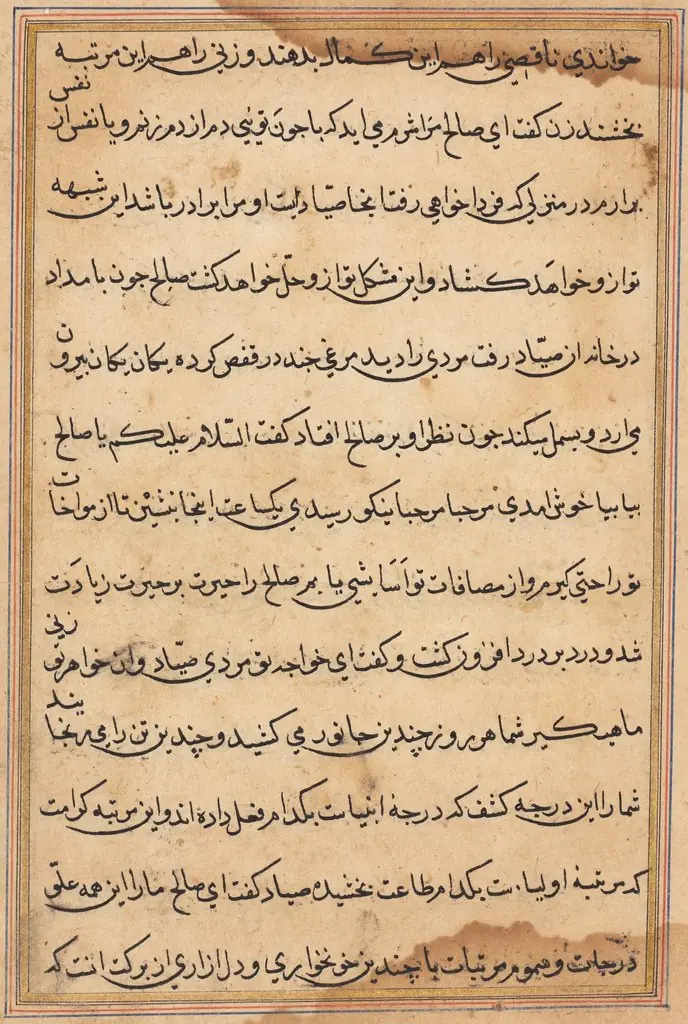
Page from Tales of a Parrot (Tuti-nama): text page is an unspecified painting. It dates from 1560 and is held in the collection of the Cleveland Museum of Art. The work is a painted representation of an open book page, titled Page from Tales of a Parrot (Tuti‑nama).
About this work
Technique & Style
The composition employs flattened perspective and intricate detailing characteristic of the period, emphasizing narrative clarity within the manuscript format.
The painting is an opaque watercolor illustration on paper, depicting a text page from the Tuti-nama. Executed circa 1560 in the Mughal Empire, it forms part of the Cleveland Museum of Art's collection. The work measures 27.3 cm in height and 38 cm in width, reflecting the stylistic conventions of Mughal manuscript painting.
Its condition is stable, with the pigments and paper support showing typical aging of 16th‑century Indian works. The composition employs flattened perspective and intricate detailing characteristic of the period, emphasizing narrative clarity within the manuscript format.
History & Provenance
The page from Tales of a Parrot (Tuti-nama) was created in 1560 within the Mughal Empire, as recorded in its cataloguing data. The work is classified as a painting and is held in the collection of the Cleveland Museum of Art, where it is accessioned as 1962.279.137.b. No further information about its commission, earlier ownership, or chain of custody prior to its acquisition by the museum is documented in the available sources.
The text page from Tales of a Parrot (Tuti-nama) is housed in the collection of the Cleveland Museum of Art, cataloged under accession number 1962.279.137.b. It was created circa 1560 in the Mughal Empire and has not been documented as part of any exhibition history.
Context
The miniature from the Tuti-nama exemplifies Mughal painting's synthesis of Persian narrative tradition and imperial naturalism, reflecting the courtly patronage of Akbar's era. Its treatment of flora and animal anatomy demonstrates the period's technical refinement while maintaining the didactic purpose of the Persian illustrated manuscript genre. The work's presence in the Cleveland Museum of Art's collection underscores contemporary scholarly interest in South Asian miniature traditions, though its attribution to an anonymous workshop highlights the anonymous collaborative nature of courtly artistic production in 16th-century India.
Overview
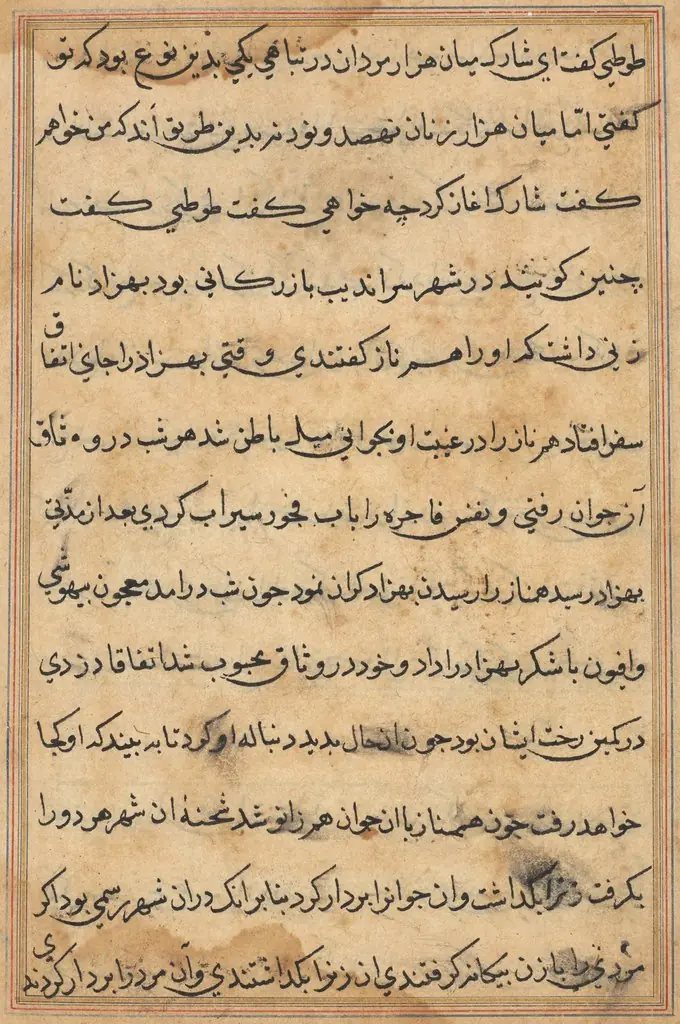
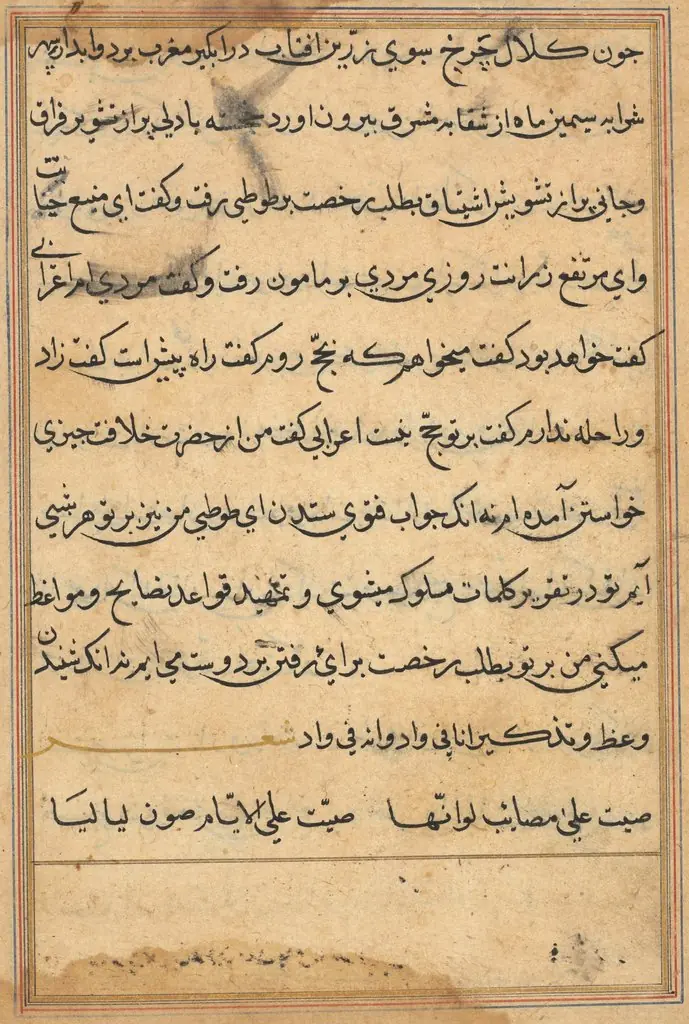
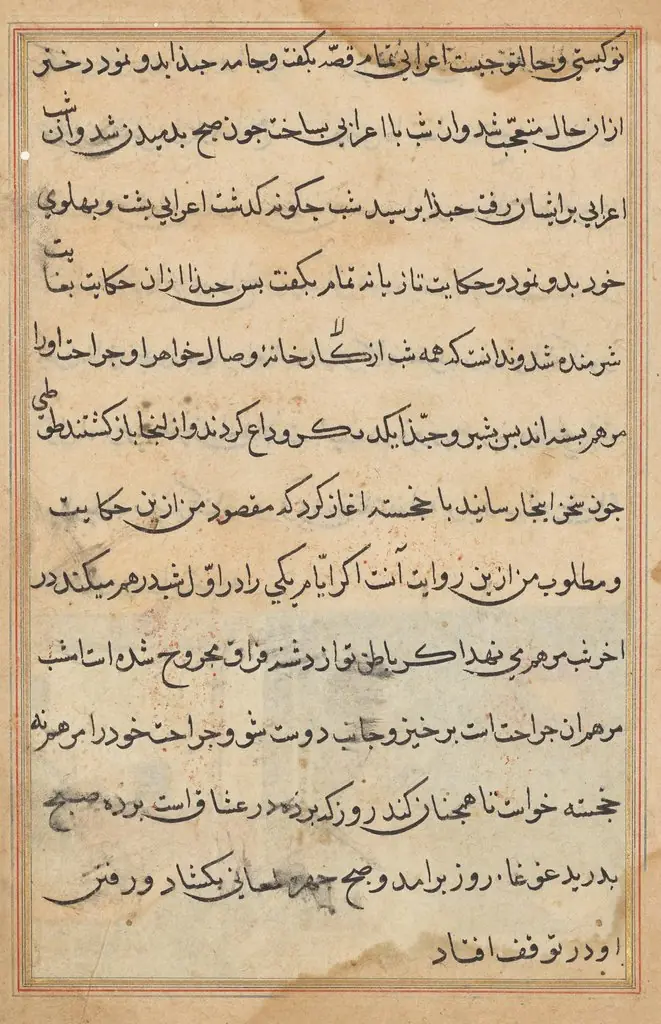
The work is a painted representation of an open book page, titled Page from Tales of a Parrot (Tuti‑nama). It depicts a single sheet of text rendered in black ink upon a light beige ground, accented with touches of red. A narrow inner frame encloses the script, while a broader outer border defines the composition’s limits.
Subject & Meaning
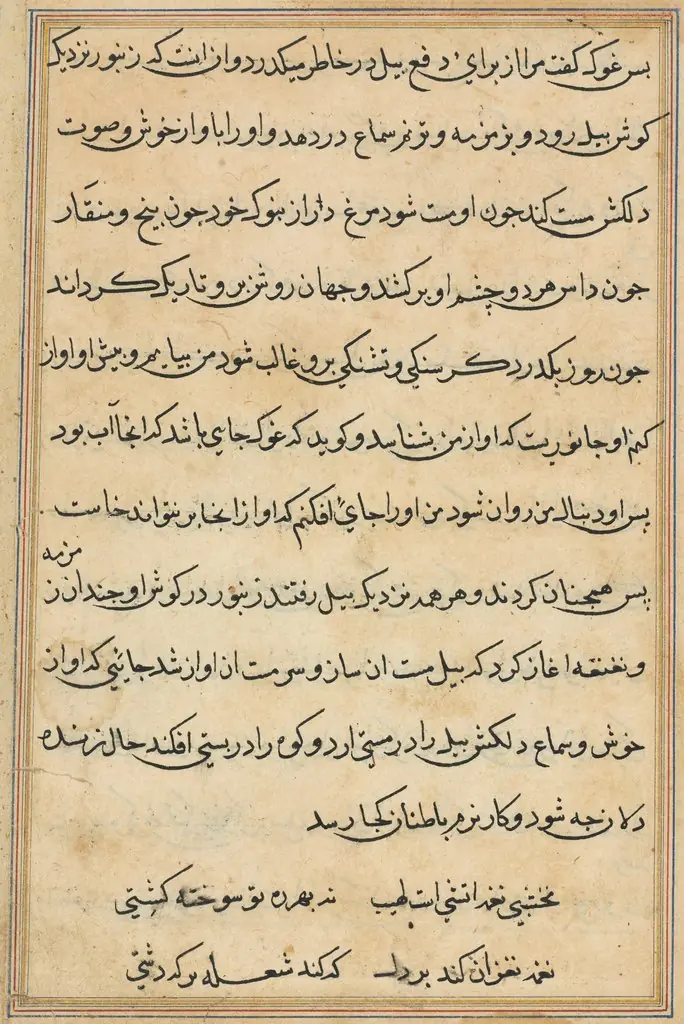
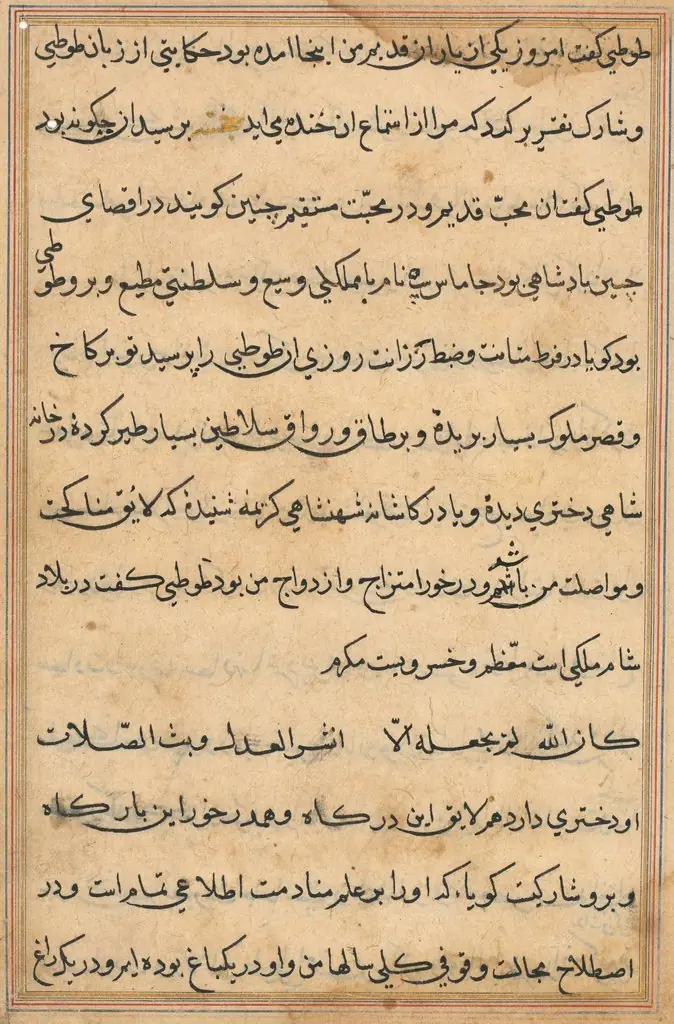
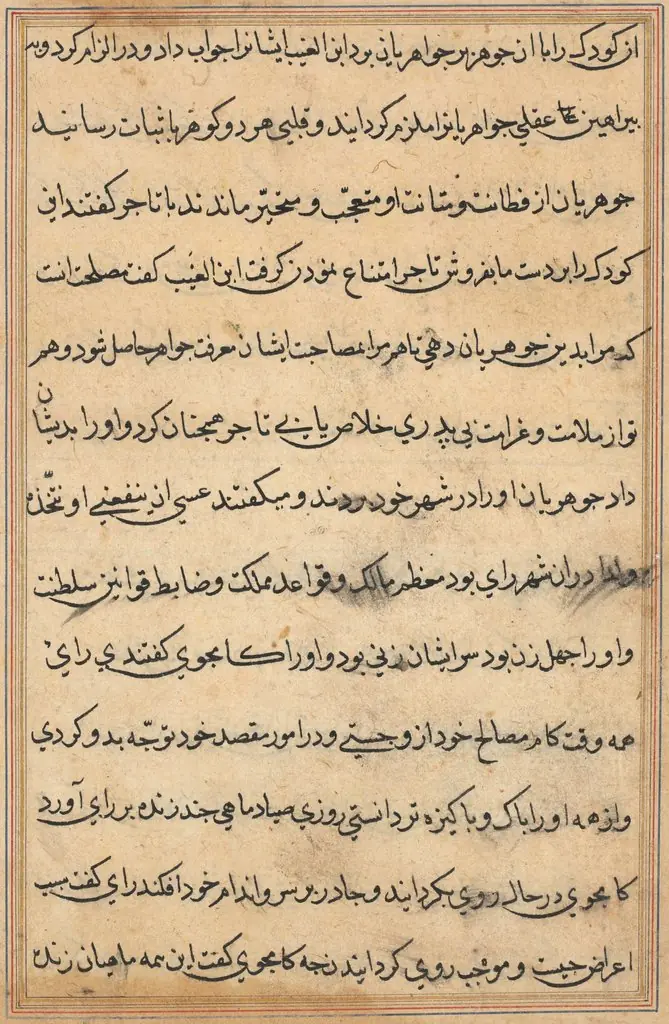
The illustrated page appears to contain a narrative or poetic passage, written in an unidentified language. The calligraphic treatment suggests a literary source of cultural significance, possibly a folk tale or moral story, though the exact content cannot be determined from the visual alone.
Artist & collection

- Page from Tales of a Parrot (Tuti-nama): text page
 Page from Tales of a Parrot (Tuti-nama): text page
 Page from Tales of a Parrot (Tuti-nama): text page
 Page from Tales of a Parrot (Tuti-nama): text page
 Page from Tales of a Parrot (Tuti-nama): text page
 Page from Tales of a Parrot (Tuti-nama): text page
 Page from Tales of a Parrot (Tuti-nama): text page
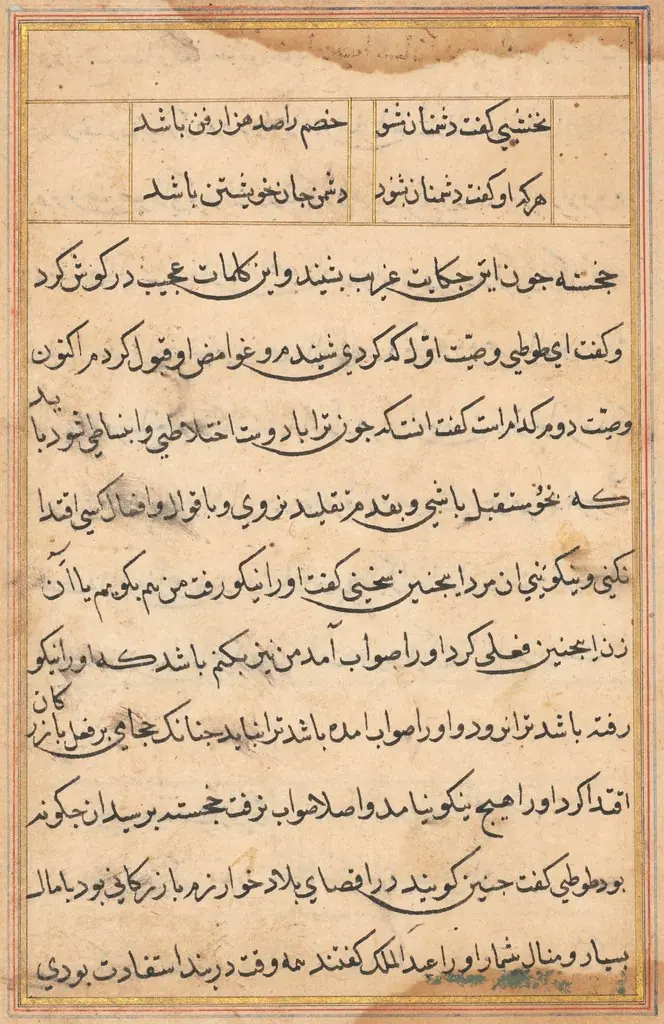 Page from Tales of a Parrot (Tuti-nama): text page
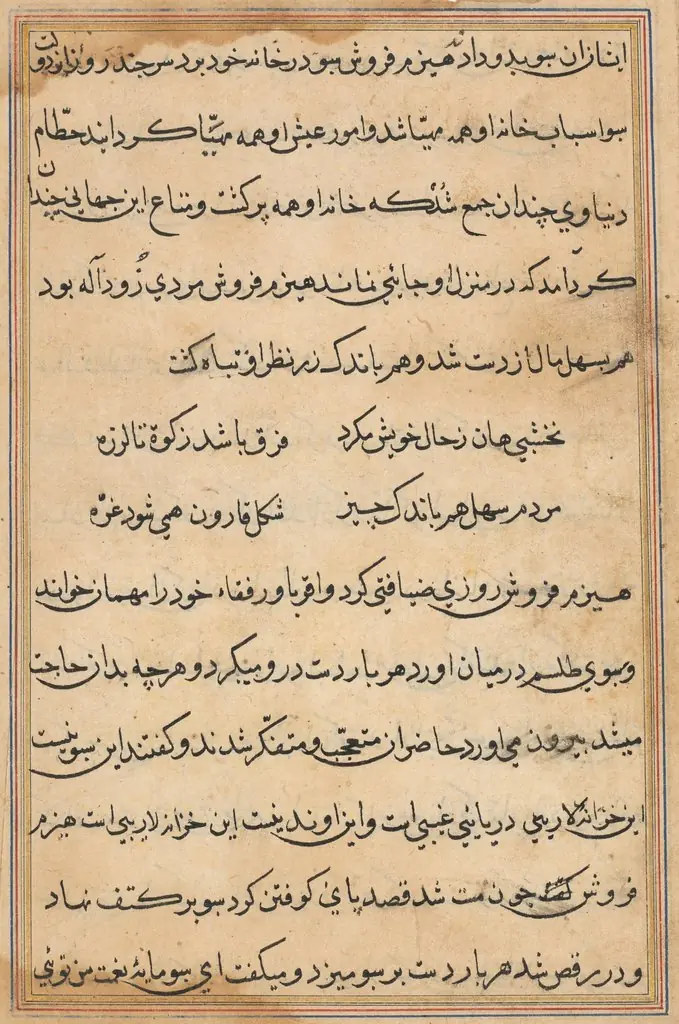 Page from Tales of a Parrot (Tuti-nama): text page
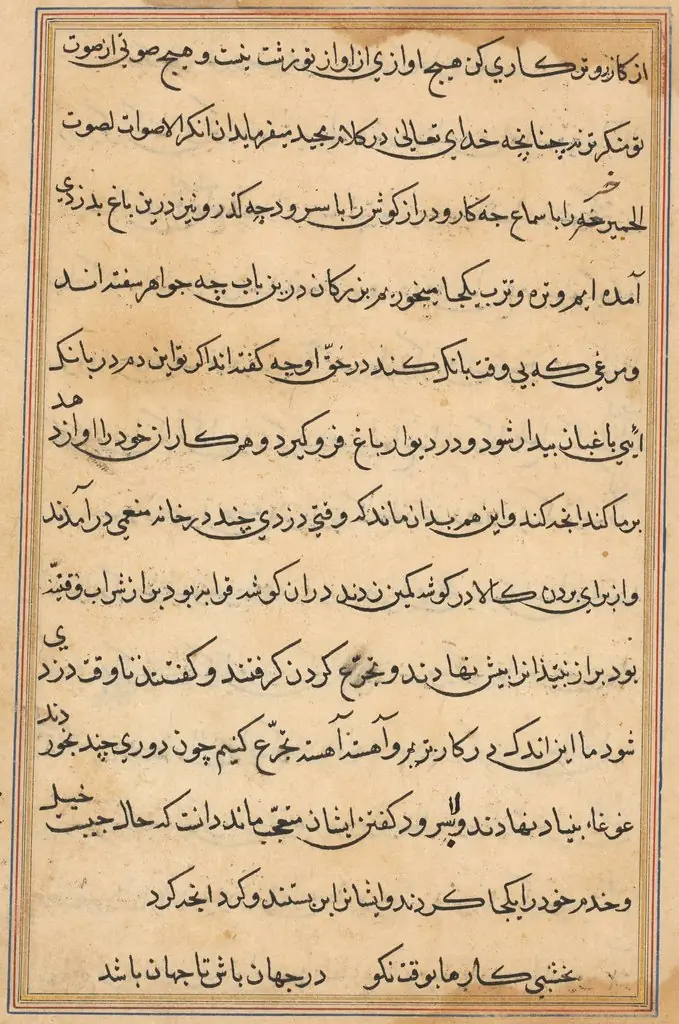 Page from Tales of a Parrot (Tuti-nama): text page
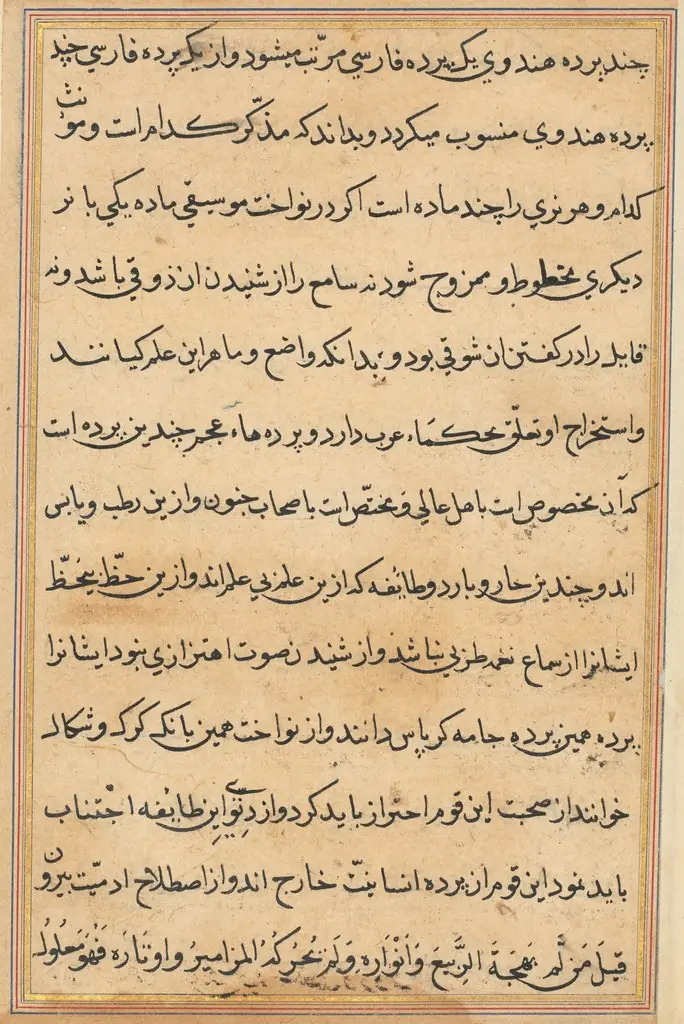 Page from Tales of a Parrot (Tuti-nama): text page
 Page from Tales of a Parrot (Tuti-nama): text page